49/100
#3 of 196 worldwide
#1 of 54 in Africa
A 2018 Constitutional Court ruling protects adult possession, use and cultivation in private, and the 2024 Cannabis for Private Purposes Act writes that into law. The Act is not yet in force: draft regulations published in February 2026 propose caps of 750 g and five plants. Buying and selling remain illegal.
In short all countries →
- Can I carry it?YesLegal up to a limit
- Can I grow it?YesA few plants at home are legal
- Can I buy it?LimitedOn prescription only
- Can I use it in public?NoIn private only
- What if I'm caught?NothingIf you stay within the limits
A rough guide read from the scores and the rules below, not legal advice. The details and the exceptions are in each segment: select an answer to jump to it.
Cannabis in South Africa not part of the score · all 20 datasets ↓
Who uses it
About 1 in 9
people aged 15–64 in South Africa used cannabis in the past year: 4.9 million people.
- Past year
- 11.2%
- Africa median
- 3.1%
UNODC · survey 2017
Source Past-year cannabis use among people aged 15–64. People who used cannabis in the past year, from a 2017 survey, applied to today's population aged 15–64.Survey ages and years vary, and some surveys include children. Rates are not age-standardised; do not compare countries directly.
UNODC World Drug Report 2026, annex table 1.2. Population from the World Bank, aged 15–64. The whole dataset →
Use across Africa
2ndhighest of 28 surveyed countries
- 🇬🇭 Ghana21.5%
- 🇿🇦 South Africa11.2%
- 🇳🇬 Nigeria10.8%
- 🇲🇦 Morocco10.5%
- 🇿🇲 Zambia9.5%
Past-year use, latest survey of each. Survey years and ages differ. On the map →
What they think of it
“Is using marijuana morally acceptable?”
48% say it is morally unacceptable
- Acceptable 23%
- Not a moral issue 26%
- Depends or no answer 4%
- Unacceptable 48%
The 10th least disapproving of the 25 countries surveyed, where the median is 52%. On the map →
Source Pew Research Center, surveyed January to May 2025, 1,570 adults (topline, question 17g).Cannabis in figures
- Police contact for drug use or possession0.3per 100,000 people · 2021
- Cannabis seized122,782kg in 2024 · 2024
- Cannabis shops on the map23shops mapped · 2026
- Research on cannabis1.4papers per million people · 2025
- Clinical trials of cannabis medicines2studies so far · 2026
The dot: where it stands among the countries each dataset covers, lowest to highest. All datasets ↓
Score breakdown 49/100 · how the scores are made
Neighbours
- 🇿🇦 South Africa49
- 🇧🇼 Botswana12
- 🇸🇿 Eswatini11
- 🇱🇸 Lesotho11
- 🇲🇿 Mozambique11
- 🇳🇦 Namibia9
- 🇿🇼 Zimbabwe9
Adults may possess cannabis in private for their own use, with no gram limit: the Constitutional Court's 2018 ruling reads that exception into the drugs law.[1] Outside that protection, possession is still a crime under the 1992 Drugs and Drug Trafficking Act, punishable by a fine, up to 15 years in prison, or both.[2] The 2024 Act would also allow carrying cannabis in public, but it is not yet in force.[3] Draft regulations gazetted in February 2026 propose a cap of 750 g, at home or carried out of sight in public.[4]
| Amount | What happens | Punishment | Fine |
| Adult, in private, for own useNo gram limit set; 750 g proposed in the 2026 draft regulations | Legal | — | — |
| Possession outside that protection, such as in publicPrison or a fine, or both; the fine has no set maximum | CriminalUse or possession of an undesirable dependence-producing substance | Up to 15 years | — |
Adults may grow cannabis in a private place for their own consumption, with no licence, registration or plant limit.[1] Growing for anyone else counts as dealing, which carries up to 25 years in prison.[2] A Cape Town court ruled in 2022 that the right cannot be handed to a grow club.[5] The February 2026 draft regulations would cap growing at five plants per adult, of any size or strain; if adopted, this segment's score would fall.[4]
| Amount | What happens | Punishment | Fine |
| Adult, private place, for own consumptionNo plant limit set; five plants proposed in the 2026 draft regulations | Legal | — | — |
| Growing for others or for salePrison must be imposed; a fine may be added | CriminalDealing (the law counts cultivation as dealing) | Up to 25 years | — |
Private adult possession, use and cultivation are not punished.[1] Since August 2023 a directive of the national police commissioner has told officers not to arrest adults on a presumption of dealing, because no law fixes how much an adult may hold; in December 2024 the Human Rights Commission said it still received complaints of such arrests, particularly of Rastafari.[6] Public possession and dealing remain crimes.[2] On 29 September 2022 the Constitutional Court ruled that no child may be arrested, prosecuted or diverted for using or possessing cannabis; a child may be referred to civil processes, and dealing stays outside the order.[7]
Any sale or supply of cannabis is dealing, punishable by up to 25 years in prison, and a court must impose prison.[2] Since 1997 dealing in drugs worth more than R50,000, or more than R10,000 by a syndicate, carries a minimum of 15 years for a first offender.[8] The 2024 Act would let one adult give cannabis to another in private without payment and lower the maximum for dealing to ten years, but it has not come into force.[3] The 2018 ruling protects only possession, use and growing for oneself.[1]
| Amount | What happens | Punishment | Fine |
| Dealing (selling, supplying or growing for others)Prison must be imposed; a fine may be added | CriminalDealing in an undesirable dependence-producing substance | Up to 25 years | — |
| Dealing in drugs worth more than R50,000Also over R10,000 by a group or syndicate; 20 and 25 years minimum for later offences | CriminalDealing under the minimum-sentence law | 15–25 years | — |
An adult may use cannabis in private.[1] Use elsewhere still falls under the drugs law's offence of using an undesirable substance.[2] The 2024 Act would turn public use, use in a vehicle on a public road and use in front of a child or a non-consenting adult into offences punished by a fine of up to R2,000, but it has not come into force.[3]
There is no legal way to buy cannabis for adult use, and the 2024 Act would not create one.[3] The health regulator has licensed no shop: retail outlets calling themselves dispensaries, sometimes displaying cultivation licences that do not cover sales, operate illegally.[9][10] Private grow clubs remain open to prosecution.[5] The only lawful route to THC is a doctor's application for an unregistered medicine.[9]
Context not part of the score · every country, by topic →
A South African adult can lawfully grow and smoke dagga at home but cannot lawfully buy it, so most cannabis is grown at home, shared, or bought from the illicit trade.[1][3] Recent (past three months) cannabis use among people aged 15 and over rose from 1.5% in 2002 to 7.8% in 2017, according to five national household surveys.[11] Since 2018 the supply has shifted from the old outdoor dagga of Mpondoland in the Eastern Cape towards home grows and imported high-potency strains, and Mpondoland growers reported in 2024 that a 20-litre bucket had fallen to 500 rand.[12] In towns, cannabis shops, smoking lounges and "private clubs" have spread; in Durban's Chatsworth in 2025 residents said they were opening in every area, and police said they would act against both sellers and buyers.[10] Low-dose CBD is sold legally over the counter (see Hemp and CBD).[13]
A patient who needs THC must find a doctor willing to apply to the South African Health Products Regulatory Authority for permission to prescribe an unregistered medicine for that named patient; by December 2025 no THC-containing medicine had been registered, and the regulator does not publish how many such permits it grants.[9] CBD above the over-the-counter limits is a prescription-only medicine.[13] The regulator had issued a little over a hundred licences to grow and export cannabis for medical use by late 2025, but these cover raw material, not sales to patients.[9] The 2024 Act would let a responsible adult give a child cannabis prescribed by a doctor, and it has not come into force.[3]
After the 2018 ruling allowed private growing, many grow clubs appeared: members supply seed, the club grows the plants and hands back the harvest, charging for the gardening and not for the cannabis.[5] Police raided one, The Haze Club, in October 2020.[5] In August 2022 the Western Cape High Court refused to declare the model lawful, holding that the right to grow for private use cannot be outsourced and that an unregulated club could in practice legalise dealing.[5][14] Until the law provides for them, clubs risk prosecution under the Drugs and Drug Trafficking Act.[14]
Nothing in the law names seeds or cuttings for private growers: the 2018 ruling protects an adult's own cultivation in private, and selling cannabis for adult use remains dealing.[1] The Cannabis for Private Purposes Act defines cannabis as the flowering or fruiting tops and leaves out the seed and the seedling, and would let an adult, without payment, give cannabis to or receive it from another adult in a private place; it has not come into force.[3] For hemp, the agricultural framework in effect since 1 December 2025 uses a 2% delta-9 THC crop limit and requires permits for cultivation and propagation material.[15][16]
Hemp is a farm crop under the agriculture department, and since 1 December 2025 a plant counts as hemp if its leaves and flowering heads hold no more than 2% delta-9 THC, up from 0.2%.[15] Growing, breeding and selling propagation material need permits under the plant improvement rules.[16] By April 2025 the department had issued 1,400 hemp cultivation permits and registered 24 businesses to grow and sell hemp seed and seedlings.[17] Since 2019 low-dose CBD can be sold without a prescription: a product with no more than 600 mg per pack and 20 mg a day, making only a low-risk health claim, is a complementary medicine.[13] Processed products with no more than 0.001% THC are also exempt from the medicine schedules.[13]
Cannabis may be grown commercially only for medicine and export, under a licence from the health regulator; just over a hundred such licences had been issued by late 2025, and none allows sales to the public.[9] Since 1 December 2025 hemp, with no more than 2% delta-9 THC in its leaves and flowering heads, is a separate agricultural crop with its own permits.[15][16] Commercial adult-use sales remain illegal, and the 2024 Act would not change that.[3] The trade department planned a commercialisation policy for Cabinet by April 2026 and an overarching cannabis bill by mid-2027; none of this had been adopted.[9] In September 2026 the small-business department sought legal options for recognising indigenous growers; its notice commissions policy work while existing licensing rules continue.[18]
Adult-use cannabis sales remain illegal, but the market has changed shape since the Constitutional Court allowed private growing in 2018.[12] The traditional source, Mpondoland in the Eastern Cape, where villages have grown dagga for more than a century and police never managed to stop the trade, has been collapsing.[19][12] Growers reported in 2024 that a 20-litre bucket that once fetched 1,500 to 2,000 rand now sold for 500, and some burned harvest they could not sell.[12] A researcher puts this down to the rise of home growing, to imported high-potency strains (the local landrace has 2.5 to 8% THC against 20 to 28%), and to an often illicit but largely unpoliced city trade of businesses he calls a "cowboy" sector.[12] In 2025 the health regulator warned that so-called dispensaries were displaying its licences, which do not authorise them to sell.[10]
Nobody can buy cannabis legally, visitor or resident.[9] The 2018 ruling protects an adult's own possession, growing and use in a private place, and it does not separate residents from visitors.[1] The 2024 Act is not in force, and draft regulations published in February 2026 would cap possession at 750 g and growing at five plants.[4] A visitor therefore has no legal source, and use or possession in public can still be prosecuted under the drugs law.[2]
There is no THC limit for drivers.[20] The road traffic law prohibits driving under the influence of alcohol or of a drug having a narcotic effect, so a prosecution depends on showing impairment.[20] A 2019 review in the South African Crime Quarterly found that testing drivers for substances other than alcohol is rarely done, and called for a statutory definition and detailed testing provisions.[20] The 2024 Act would add a fine of up to R2,000 for using cannabis in a vehicle on a public road, once it comes into force.[3]
No current national count of cannabis arrests was found.[6] The last long series is historical: police reported 5,762 dagga arrests in 1932, 23,289 at the 1955 peak and over 30,000 a year in 1967 and 1968.[21] Since 23 August 2023 a police directive has told officers that adults may not be arrested on a presumption of selling.[6] In December 2024 the Human Rights Commission said it was still receiving complaints of cannabis users being arrested, especially from the Rastafari community, and urged the government to bring the 2024 Act into force.[6]
A conviction for dagga stays on the criminal record, and many South Africans carry one from decades of mass arrests.[21] The 2024 Act would expunge convictions for using or possessing cannabis under the 1971 and 1992 drug laws and the laws of the former homelands, some automatically, but it has not come into force.[3] Since the 2022 judgment a child's conviction for use or possession can be expunged on application.[7] Workplace testing and dismissal for a positive test remain contested in the courts, and driving under the influence is an offence.[22][20]
South Africa's word for cannabis, dagga, came from a Khoisan language of the Western Cape and had entered Cape Town speech by 1658.[23] Men across the region smoked it through horn water pipes and earth pipes, with pastimes such as the spit-bubble game and the smoker's cough.[23] When the 1922 ban was debated, Natal officials said older men who smoked by custom should not be made criminals by a stroke of the pen, and the health department promised police discretion; the atlas tells this as the elder's morning pipe.[24] The ban fell hardest on Black and Coloured South Africans: in 1948 almost all possession convictions were of Africans and Coloured people.[25] Gareth Prince, who had lost a 2002 case to be admitted as an attorney despite his Rastafarian use of cannabis, was the lead applicant, with Jeremy Acton of the Dagga Party, in the 2018 ruling.[1] Rastafari remain among those most often arrested, the Human Rights Commission said in 2024.[6] Since 2018 grow clubs modelled loosely on cannabis social clubs have spread, without legal footing.[5]
The local landrace of Mpondoland is low in THC, 2.5 to 8% by one researcher's account, and is losing ground to imported high-potency strains.[12] A September 2026 report describes the African Cultural Heritage Trust, Druids Garden and farmer partners' plans to characterise landrace genetics and return verified cultivars through community nurseries.[26] Druids Garden's chief executive said a seed bank collected in Southern Africa in 1948–1972 was donated in 2024.[26] The broader research partnership dates to 2019; community nurseries, shared ownership and royalties are described as programme objectives.[26]
Taking cannabis into or out of South Africa is a separate offence from possessing it, normally charged as smuggling or trafficking, with far heavier penalties. That holds almost everywhere, including between two places where cannabis is legal.
The rules that allow or tolerate small amounts inside South Africa do not cover the border, an airport or the post.
A prescription or medical card from another country is generally not recognised. Travellers who need a cannabis-based medicine should ask South Africa's embassy before travelling.[27]
General guidance that applies to almost every country, not a check of South Africa's customs rules.
Legal to grow, illegal to buy
Since 2018 an adult may grow and smoke as much cannabis as they like at home, yet there is still no legal way to buy a seed, a clone or a gram.[1][3] Into that gap stepped grow clubs, which a court said in 2022 were still dealing, and shops calling themselves dispensaries, which the health regulator says it has never licensed.[5][9] Police warn that they will act against buyers as well as sellers, so the customer of a shop that looks legal can still be charged.[10]
Culture the atlas →
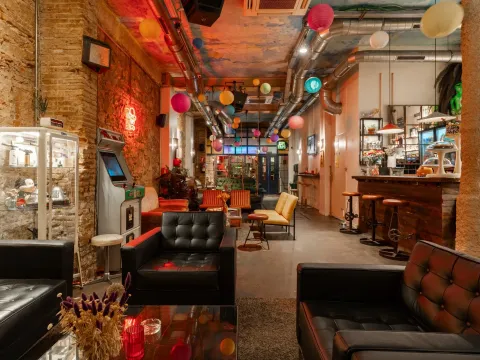 TraditionsCannabis social clubsIn Spain, users found a gap in the law and grew their cannabis together in members-only associations. Uruguay later wrote the model into law.
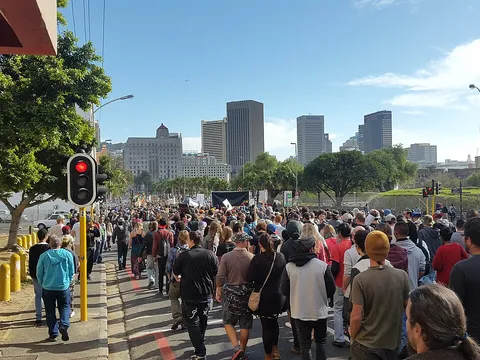 LanguageDaggaThe southern African word, from Khoekhoe. First written down by the Dutch at the Cape in 1658, later a word of contempt, now reclaimed.
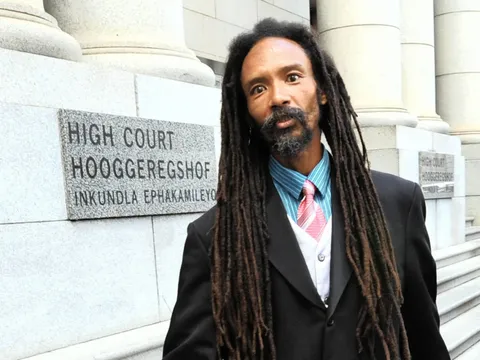 PeopleGarreth PrinceA Rastafari law graduate from Cape Town who was refused admission as an attorney because he would keep using cannabis. He lost a religious-freedom claim in 2002, helped win the 2018 privacy ruling that protected private use, and returned to court in 2026 over the Cannabis for Private Purposes Act and the exclusion of traditional growers.
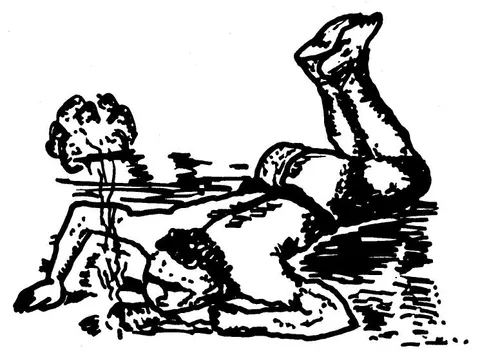 TraditionsThe earth pipeAcross southern and central Africa people smoked cannabis through a pipe made of nothing but soil, moulded on the surface or dug into the ground, often drawn on lying flat. Under prohibition, it left little durable evidence for police to find.
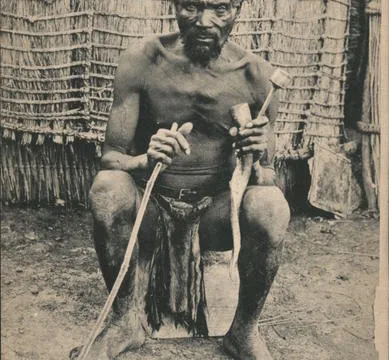 TraditionsThe elder's morning pipeIn Zululand and the eastern Cape, smoking dagga was a privilege of grown men. South Africa's first national ban was quietly not enforced against it.
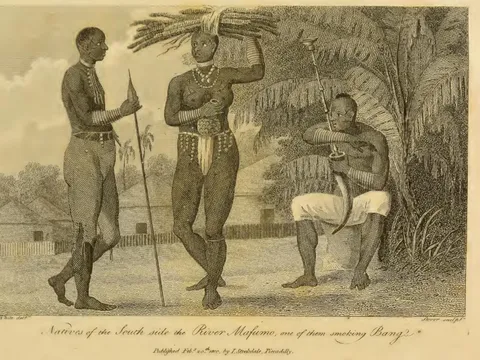 TraditionsThe smoker's coughIn nineteenth-century Africa the cough that followed a pipe of cannabis was often a performance. Travellers called it affected; Zulu smokers sang praises between coughs, and a lake island was said to have been found by hearing one.
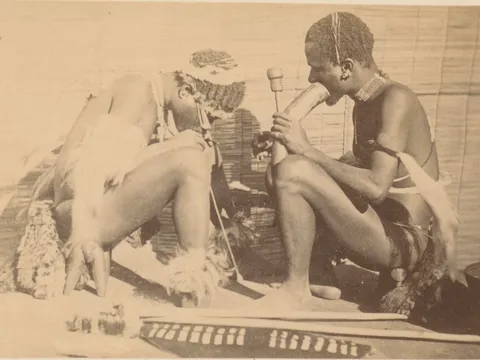 TraditionsThe spit-bubble gameIn Zulu, Swazi and Tonga country, men smoking dagga through horn water pipes blew bubbles of saliva through a hollow reed onto the floor and played them as armies, fences and mazes.
Did you know? all cases →
1923 · South Africa
It was South Africa that asked the League of Nations in 1923 to treat cannabis like opium and cocaine. A century later it ranks #3 in the world for cannabis freedom.
The full story →2002 · South Africa
A law graduate in South Africa was refused entry to the profession because his Rastafari faith meant using cannabis. He lost his case by five votes to four in 2002 — and in 2018 won the case that legalised private use.
The full story →Legal to have, nowhere to buy
6 countries let adults possess cannabis but offer no real legal way to obtain it — among them South Africa, Czechia, Dominica and Grenada.
Games · South Africa
Zulu, Swazi and Tonga men smoking dagga in South Africa blew bubbles of saliva through a long reed onto the floor and played them as armies. The thickened bubbles took a long time to burst.
Read the entry →Pipes · Southern Africa
The simplest cannabis pipe had no parts: a bowl and a channel dug in the soil, smoked lying flat. After South Africa banned dagga, it was the pipe that left no evidence.
Read the entry →
Datasets not part of the score
What other organisations publish about South Africa, and where it stands among the countries each one covers. Each dataset has a page of its own, with a world map and every country's figure.
Use
UNODC · 2017
Cannabis use
11.22%of people aged 15–64
4.26% · 20085.73% · 201211.22% · 201720082017 ages 15–64 · survey 2017 · 4,900,000 people · UNODC 2026
Source Survey ages and years vary, and some surveys include children. Rates are not age-standardised; do not compare countries directly.WHO, Our World in Data · 2020
Alcohol drunk per person
7.13litres of pure alcohol a year
8.96 · 20008.96 · 20018.79 · 20028.72 · 20038.70 · 20048.75 · 20058.81 · 20068.83 · 20078.78 · 20088.67 · 20098.68 · 20108.79 · 20118.90 · 20128.92 · 20138.93 · 20148.88 · 20158.80 · 20168.72 · 20178.77 · 20188.77 · 20197.13 · 202020002020 Higher than 68% of 187 countriesLowestHighestper person aged 15 or over · 2020 · 8.96 in 2000 · 8.68 in 2010
Law
UNODC · 2021
Police contact for drug use or possession
0.3per 100,000 people
Higher than 4% of 101 countriesFewerMore224 people in 2021 · all drugs together
UNODC · 2024
Cannabis seized
122,782kg in 2024
2,180 · 20156,917 · 20183,251 · 2020158,238 · 2021145,552 · 2022197,969 · 2023122,782 · 202420152024 Higher than 91% of 163 countriesLess seizedMore seized122,782 kg of herb · 2,180 kg in 2015 · 3,251 kg in 2020
Society
Pew Research Center · 2025
Is using marijuana morally wrong?
48%call it immoral
Higher than 36% of 25 countriesFewer disapproveMore disapprove23% acceptable · 26% not a moral issue · 1,570 people asked
OpenAlex · 2025
Research on cannabis
1.4papers per million people
0.0 · 19580.0 · 19670.0 · 19690.0 · 19720.0 · 19730.0 · 19770.0 · 19790.0 · 19800.0 · 19820.0 · 19830.0 · 19840.0 · 19880.0 · 19900.1 · 19920.0 · 19930.0 · 19940.1 · 19960.0 · 19970.0 · 19990.0 · 20000.1 · 20010.1 · 20020.1 · 20030.1 · 20040.1 · 20050.2 · 20060.1 · 20070.2 · 20080.4 · 20090.2 · 20100.2 · 20110.3 · 20120.3 · 20130.3 · 20140.4 · 20150.4 · 20160.5 · 20170.6 · 20180.8 · 20190.9 · 20201.0 · 20211.0 · 20221.5 · 20231.2 · 20241.4 · 202519582025 Higher than 57% of 176 countriesLowestHighest93 papers in 2025 · 2 in 1990 · 12 in 2010
Cato and Fraser Institutes · 2023
Human Freedom Index
7.07of 10
7.31 · 20007.44 · 20017.36 · 20027.40 · 20037.43 · 20047.43 · 20057.37 · 20067.37 · 20077.26 · 20087.23 · 20097.31 · 20107.55 · 20117.37 · 20127.38 · 20137.30 · 20147.21 · 20157.22 · 20167.17 · 20177.19 · 20187.11 · 20196.89 · 20206.93 · 20217.11 · 20227.07 · 202320002023 Higher than 56% of 164 countriesLess freeFreerrank #71 of 165 · personal freedom 7.40 · economic freedom 6.61
V-Dem, Our World in Data · 2025
Civil liberties
0.86of 1 in 2025
0.28 · 19000.28 · 19010.28 · 19020.28 · 19030.28 · 19040.28 · 19050.28 · 19060.28 · 19070.28 · 19080.28 · 19090.29 · 19100.29 · 19110.29 · 19120.29 · 19130.29 · 19140.29 · 19150.29 · 19160.29 · 19170.29 · 19180.29 · 19190.29 · 19200.29 · 19210.29 · 19220.29 · 19230.29 · 19240.29 · 19250.29 · 19260.29 · 19270.29 · 19280.29 · 19290.29 · 19300.29 · 19310.29 · 19320.29 · 19330.29 · 19340.29 · 19350.29 · 19360.29 · 19370.29 · 19380.29 · 19390.29 · 19400.29 · 19410.29 · 19420.29 · 19430.29 · 19440.29 · 19450.29 · 19460.28 · 19470.20 · 19480.18 · 19490.17 · 19500.17 · 19510.17 · 19520.17 · 19530.17 · 19540.17 · 19550.17 · 19560.17 · 19570.17 · 19580.17 · 19590.15 · 19600.15 · 19610.14 · 19620.14 · 19630.14 · 19640.14 · 19650.14 · 19660.14 · 19670.14 · 19680.14 · 19690.14 · 19700.14 · 19710.14 · 19720.14 · 19730.13 · 19740.13 · 19750.13 · 19760.13 · 19770.13 · 19780.13 · 19790.12 · 19800.12 · 19810.12 · 19820.12 · 19830.12 · 19840.13 · 19850.13 · 19860.13 · 19870.13 · 19880.14 · 19890.25 · 19900.29 · 19910.29 · 19920.30 · 19930.58 · 19940.85 · 19950.86 · 19960.86 · 19970.86 · 19980.86 · 19990.86 · 20000.86 · 20010.86 · 20020.86 · 20030.86 · 20040.86 · 20050.86 · 20060.86 · 20070.86 · 20080.86 · 20090.87 · 20100.87 · 20110.86 · 20120.86 · 20130.86 · 20140.87 · 20150.87 · 20160.84 · 20170.85 · 20180.84 · 20190.83 · 20200.84 · 20210.83 · 20220.85 · 20230.87 · 20240.86 · 202519002025 Higher than 68% of 175 countriesFewer libertiesMore liberties0.29 in 1925 · 0.15 in 1961 · 0.25 in 1990
Our World in Data, World Bank · 2025
Population
64,747,319people in 2025
5,163,858 · 19006,093,688 · 19107,168,076 · 19208,793,161 · 193010,736,810 · 194013,038,501 · 195016,440,175 · 196022,279,990 · 197029,518,857 · 198040,746,274 · 199047,159,715 · 200052,344,047 · 201060,562,374 · 202064,747,319 · 202519002025 Higher than 88% of 196 countriesLowestHighest5,163,858 in 1900 · 13,038,501 in 1950 · 47,159,715 in 2000
CEPII
Former colonial rulers
Once ruled by United Kingdom; Netherlands
World Bank · 2025
Government effectiveness
52of 100
64 · 199658 · 199861 · 200060 · 200261 · 200361 · 200462 · 200560 · 200659 · 200761 · 200862 · 200961 · 201061 · 201161 · 201261 · 201361 · 201460 · 201559 · 201659 · 201757 · 201858 · 201956 · 202055 · 202154 · 202250 · 202349 · 202452 · 202519962025 Higher than 48% of 195 countriesLowestHighestestimate -0.02 on a scale of −2.5 to 2.5 · 2025 · 61 in 2000 · 60 in 2015
Transparency International · 2024
Corruption Perceptions Index
41of 100
43 · 201242 · 201344 · 201444 · 201545 · 201643 · 201743 · 201844 · 201944 · 202044 · 202143 · 202241 · 202341 · 202420122024 Higher than 52% of 178 countriesLowestHighest0 highly corrupt, 100 very clean · 2024 · 44 in 2015 · 44 in 2020
Pew Research Center · 2020
Most common religion
Christians
the largest group · 2020
World Bank · 2025
Income per person
$13,592per person
10,811 · 199010,459 · 199110,054 · 19929,977 · 199310,131 · 199410,319 · 199510,624 · 199610,770 · 199710,694 · 199810,832 · 199911,184 · 200011,387 · 200111,698 · 200211,923 · 200312,341 · 200412,862 · 200513,444 · 200614,016 · 200714,298 · 200813,911 · 200914,165 · 201014,434 · 201114,564 · 201214,681 · 201314,643 · 201414,542 · 201514,501 · 201614,574 · 201714,554 · 201814,353 · 201913,251 · 202013,682 · 202113,767 · 202213,695 · 202313,598 · 202413,592 · 202519902025 Higher than 42% of 187 countriesLowestHighestat purchasing power parity, 2021 dollars · 2025 · $10,811 in 1990 · $14,165 in 2010
World Bank · 2024
Development indicators
78.4%use the internet
0% · 19900% · 19910% · 19920.1% · 19930.2% · 19940.7% · 19950.8% · 19961.6% · 19972.9% · 19984.1% · 19995.3% · 20006.3% · 20016.7% · 20027% · 20038.4% · 20047.5% · 20057.6% · 20068.1% · 20078.4% · 200810% · 200924% · 201034% · 201141% · 201246.5% · 201349% · 201451.9% · 201554% · 201656.2% · 201762.4% · 201869.7% · 201972.1% · 202075% · 202178.3% · 202278.3% · 202378.4% · 202419902024 Higher than 47% of 195 countriesLowestHighest63.7% live in towns · 6.7% aged 65+ · life expectancy 66.3 · 2024 · 5.3% in 2000 · 24% in 2010
Wikidata · 2009
Parties for legal cannabis
Dagga Party
founded 2009
GDELT · 2025
Cannabis in the news
0.0003%of global news: cannabis articles from here
0.0008% · 20170.001% · 20180.0011% · 20190.0008% · 20200.0008% · 20210.0011% · 20220.0006% · 20230.0005% · 20240.0003% · 202520172025 Higher than 56% of 147 countriesLowestHighest2025 average, 348 days · 0.001% in 2018 · 0.0008% in 2021
Plant and market
OpenStreetMap · 2026
Cannabis shops on the map
23shops mapped
Higher than 69% of 59 countriesFewer shopsMore shops0.4 per million people · 2026
GBIF · 2026
Records of the cannabis plant
354dated records
1 · 18572 · 18874 · 18915 · 19007 · 19038 · 19049 · 190610 · 190811 · 190912 · 191013 · 191214 · 192016 · 192318 · 192419 · 193021 · 193423 · 193525 · 193726 · 194927 · 195028 · 195236 · 195437 · 195939 · 196246 · 196752 · 196857 · 197061 · 197162 · 197363 · 197867 · 197968 · 198169 · 198271 · 198572 · 200075 · 200276 · 200377 · 200479 · 200682 · 200788 · 201192 · 201296 · 201397 · 2014101 · 2015103 · 2016105 · 2017109 · 2019135 · 2020160 · 2021194 · 2022231 · 2023265 · 2024318 · 2025354 · 202618572026 Higher than 87% of 128 countriesLowestHighest9 more without a date · 36 in 2026 · 5 by 1900 · 72 by 2000
ClinicalTrials.gov · 2026
Clinical trials of cannabis medicines
2studies so far
1 · 20181 · 20191 · 20201 · 20211 · 20222 · 20232 · 20242 · 20252 · 202620182026 Higher than 14% of 50 countriesLowestHighest0 actual starts in 2026 · as of 2026–10–26 · 1 by 2020
Enforcement 4 reports · the Cannabis Enforcement Tracker →
How the law above is applied: raids, seizures, fields destroyed, arrests and sentences, as recorded by the Cannabis Enforcement Tracker, our companion site.
- RaidThree arrested as dagga lab found in Paarl house
Crime Intelligence and Paarl police raided a house in Lemoenkloof on 27 October, finding a cannabis cultivation lab with plants, products, magic mushrooms and growing equipment.
- ArrestSix Eswatini nationals held with 325 kg of dagga in Mpumalanga
Mpumalanga police arrested six Eswatini nationals in two Safer Festive Season stops on 22 and 23 October 2026, seizing 325 kg of dagga worth R1.95 million from a bakkie at Mahamba and a Golf at Carolina.
- ArrestHawks arrest two at dagga plantation with firearms
A multidisciplinary Hawks team raided a farm outside Nelspruit on 7 October, finding a dagga plantation, processed extract, two rifles, two handguns and ammunition on expired licences.
- EradicationPolice clear R2.9 million dagga plantation on Mpumalanga river bank
Acting on a tip-off, a large team led by Mpumalanga's acting police commissioner removed a dense field of mature dagga plants on Buffelspruit Farm near Malelane, valued at about R2.9 million.
History 49 of 49 checked against a source
Score and entries per decade
49 today, from 100 before its first recorded change
This country's score Entries that moved the score Context only
20263 entries0 score changes
Culture & science ✓
South African landrace project sets out plans to return community genetics
Cannabiz Africa reported plans by the African Cultural Heritage Trust, Druids Garden and farmer partners to characterise landrace seed and return verified cultivars through community nurseries. Druids Garden’s chief executive said a seed collection dating from 1948–1972 had been donated in 2024; the broader research partnership began in 2019. The report describes intended community ownership, training and royalties, with nursery development planned over forty-eight months.
Debate ✓
South Africa seeks legal options for recognising indigenous cannabis growers
The small-business department invited legal experts to develop options for recognising, protecting and regulating indigenous growers’ participation in the formal cannabis and hemp economy. Its procurement notice opened on 21 September and closed on 2 October. The work concerns how traditional growers could enter the regulated industry; the notice grants them no new production or selling rights.
Debate ✓
South Africa publishes draft limits for private cannabis
The justice department gazetted draft regulations under the 2024 Cannabis for Private Purposes Act and invited comments until 5 March 2026. They would cap an adult's possession at 750 grams, in private or in public, and private growing at five plants of any size or strain, and set rules for carrying cannabis in a vehicle out of sight and for expunging old convictions. Until they are made final the Act is not in force.
20251 entry0 score changes
20241 entry0 score changes
20231 entry0 score changes
20222 entries0 score changes
Easing ✓
South Africa's top court bars criminal diversion of children
The Constitutional Court confirmed that criminalising a child's use or possession of cannabis is invalid. It suspended that finding for 24 months and, during the suspension, ordered that no child may be arrested, prosecuted or diverted for that contravention. A child who is apprehended may be referred to civil processes. Use or possession by a child is still not permitted. Dealing, and an adult who uses a child to possess or use cannabis, are outside the order. The 2024 Act that would replace this criminal rule has not come into force.
Enforcement ✓
A South African court rules that growing cannabis for club members is still dealing
The Western Cape High Court in Cape Town refused to declare grow clubs lawful. The Haze Club, raided by police in October 2020, rented out space, equipment and gardening to members and grew their cannabis for them. Judge Hayley Slingers held that the right to grow for oneself cannot be handed to a club, and that allowing the model without regulation would in practice legalise dealing. Grow clubs, which had spread across the country after 2018, stayed open to prosecution.
20201 entry0 score changes
20191 entry0 score changes
20181 entry1 score change
20171 entry0 score changes
20091 entry0 score changes
20071 entry0 score changes
20041 entry0 score changes
20021 entry0 score changes
19981 entry0 score changes
19971 entry0 score changes
19951 entry0 score changes
19921 entry0 score changes
19861 entry1 score change
19751 entry0 score changes
19712 entries1 score change
International ✓
South Africa joins the Single Convention on Narcotic Drugs
South Africa acceded to the Single Convention on Narcotic Drugs of 1961 on 16 November 1971. The convention lists cannabis and cannabis resin among its controlled drugs and obliges its parties to limit their production, trade, possession and use to medical and scientific purposes.
Tightening ✓ Article
South Africa imposes mandatory prison for dagga
From 1 December 1971 a first conviction for possessing dagga meant at least two years in prison and up to ten, and dealing at least five years and up to fifteen; repeat offenders faced longer minimums. Until then the maximum had been a fine of R1,000 or five years. The minister said dagga led to stronger drugs; Helen Suzman moved to reject the bill, objecting to the minimum sentences, the reversed burden of proof and detention for questioning. The law also created rehabilitation centres to which users could be committed.
117−4 points
19681 entry0 score changes
19552 entries0 score changes
Tightening ✓
South Africa raises the fines and prison terms for dagga
Amendments raised the maximum punishment for a dagga offence from a fine of £100, six months in prison or both, to a fine of £500 and twelve months. The change came as police, following a 1952 government report, turned their attention from users to suppliers and arrests reached their highest level of the decade. The law then stayed much the same until the far harsher Act of 1971.
Enforcement ✓
South African police destroy more than a thousand tonnes of dagga in a year
The police confiscated and destroyed 2,515,563 pounds of dagga in 1954 and 2,757,965 pounds in 1955, most of the 1955 total in a single district, Nelspruit. Arrests for dagga peaked the same year at 23,289. By the end of the decade newspapers were warning that the habit, long regarded as confined to Africans and Coloured people, was spreading among young white people in Johannesburg.
19541 entry0 score changes
19521 entry0 score changes
19481 entry0 score changes
19321 entry0 score changes
19281 entry0 score changes
19231 entry0 score changes
19222 entries1 score change
Enforcement ✓ Article
South Africa tells police to go easy on dagga in remote African areas
Native affairs officials had lobbied against the new prohibition, saying that in parts of Zululand and the eastern Cape an older man's morning pipe was a custom almost amounting to a religious rite. A month after the law was gazetted, the health secretary wrote that police were expected to use judgement and avoid drastic attempts to enforce the letter of the law in remote localities where moderate smoking mattered little for public order.
Ban ✓ Article
South Africa bans dagga nationwide
Provinces had restricted dagga since the nineteenth century, at first only for Indian labourers. A national law now prohibited growing, selling and possessing it. South Africa then asked the League of Nations to put cannabis under international control.
10011−89 points
19161 entry0 score changes
19121 entry0 score changes
19111 entry0 score changes
19091 entry0 score changes
19081 entry0 score changes
19071 entry0 score changes
19061 entry0 score changes
19051 entry0 score changes
19031 entry0 score changes
18872 entries0 score changes
Debate ✓
Natal's Indian immigration commission hears doctors condemn dagga
Doctors in the sugar districts told the Indian Immigrant (Wragg) Commission of 1885–1887 that cannabis endangered life, health, sanity and social order among indentured workers, and that it incapacitated them for work. The commission gave the subject a section of its report, but no control beyond the 1870 law was introduced; workers judged to be suffering from overuse were treated in hospital.
Debate ✓ Article
Natal’s immigration commission recommends cannabis prohibition
The Indian Immigrants Commission of 1885–1887 asked the Governor in Council to use section 70 of the 1870 law to prohibit cannabis use and possession among Indian immigrants. Paterson reports that no implementing rule appears to have followed; Waetjen likewise finds no additional legal controls. This was a recommendation rather than a verified tightening of an operative ban.
18841 entry0 score changes
18701 entry0 score changes
16581 entry0 score changes
Sources hover a number in the text to see its source
- Cited
- 27
- Websites
- 23
- 1
- Last reviewed
- History checked
- 49/49
Most cited
- gov.za4
- adams.africa1
- allafrica.com1
- businessday.co.za1
- cannabiz-africa.com1
- collections.concourt.org.za1
All 27 sources
- Constitutional Court — Minister of Justice and Constitutional Development v Prince [2018] ZACC 30, 18 September 2018 (PDF)order, paras 10–15archived
- Government Gazette No. 14143, 15 July 1992 — Drugs and Drug Trafficking Act, No. 140 of 1992 (PDF)sections 1 ('deal in'), 4, 5, 13 and 17; Schedule 2, Part IIIarchived
- Cannabis for Private Purposes Act 7 of 2024 — full textarchived
- Business Day — Proposed rules cap private cannabis possession at 750g (February 2026)archived
- Daily Maverick — Take me to your dealer: grow club model dealt a blow as growing pot for others is still deemed criminal (31 August 2022)archived
- South African Human Rights Commission — Reminds law enforcement to adhere to the moratorium on cannabis-related arrests (23 December 2024)archived
- Constitutional Court — Centre for Child Law v Director of Public Prosecutions, Johannesburg [2022] ZACC 3529 September 2022; order and paragraphs 29 and 98archived
- Government Gazette — Criminal Law Amendment Act, No. 105 of 1997 (PDF)section 51(2)(a); Schedule 2, Part IIarchived
- Spotlight via AllAfrica — Andy Gray, Where are we on the road to more coherent cannabis regulation? (3 December 2025)archived
- IOL The Post — Community leaders call for action against illegal cannabis stores in Chatsworth (July 2025)archived
- International Journal of Drug Policy 125 — Mutai et al., Trends and factors associated with illicit drug use in South Africa, 2002–2017 (2024)archived
- GroundUp via TalkingDrugs — Mpondoland cannabis growers left out to dry (12 August 2024)archived
- SAHPRA — THC and CBD informationarchived
- SD Law — Cannabis grow clubs declared illegal (14 September 2022)archived
- South African Department of Agriculture — Hemp threshold and commencement, 1 December 2025archived
- South Africa — Plant Improvement Regulations, Gazette 53707, G.N. R.6852archived
- Parliamentary Monitoring Group — Question NW1552 to the Minister of Agriculture: hemp permits (2025)archived
- Department of Small Business Development — RFQ for legal options recognising and protecting indigenous cannabis growers (21 September 2026)Official procurement listing: advertising date, scope and closing date; retrieved in indexed text
- GroundUp — "People feel betrayed": small-scale dagga growers fear exclusion from legal trade (14 October 2019)archived
- South African Crime Quarterly 67 — Drugged driving in South Africa: an urgent need for review and reform (2019)archived
- Historia 65(1) — Nkosi, Devey and Waetjen, Cannabis policing in mid-twentieth century South Africa (May 2020, PDF)archived
- Adams & Adams — Cannabis for Private Purposes Act signed into lawarchived
- The African Roots of MarijuanaChris S. Duvall · Duke University Press · 2019 · chapter 4, pp. 86–87 (dagga); smoking practices in southern Africa · ISBN 9781478004530
- Points — Thembisa Waetjen, How cannabis became a 'drug' in South Africa (10 July 2018)archived
- John Mitchell Watt — Dagga in South Africa, UN Bulletin on Narcotics, 1961, issue 3archived
- Cannabiz Africa — African Cultural Heritage Trust project to reintroduce landrace genetics (24 September 2026)archived
- International Narcotics Control Board — Travellers carrying medicines containing controlled substances