Eswatini
11/100
#84 of 196 worldwide
#9 of 54 in Africa
Illegal, though "Swazi Gold" is a major smallholder cash crop. A 1922 Act and the 1929 Pharmacy Act both apply; the Pharmacy Act allows up to fifteen years for possession. Bills to license medical and hemp production have been debated for years but not enacted.
In short all countries →
- Can I carry it?NoIt is a crime
- Can I grow it?NoIt is a crime
- Can I buy it?NoThere is no legal source
- Can I use it in public?NoNot in public, and even at home the law does not protect it
- What if I'm caught?Fine or prisonUsually a fine; prison is possible
A rough guide read from the scores and the rules below, not legal advice. The details and the exceptions are in each segment: select an answer to jump to it.
Cannabis in Eswatini not part of the score · all 16 datasets ↓
Who uses it
Perhaps 1 in 33
people aged 15–64 (assumed) in Eswatini used cannabis in the past year: about 24,000 people.
- Past year
- 3.1%
- Africa median
- 3.1%
This site’s estimate: there is no national survey.
Source Past-year cannabis use among people aged 15–64 (assumed). This site's figure: there is no national survey, so the median rate of surveyed countries in Africa is applied to people aged 15–64.Survey ages and years vary, and some surveys include children. Rates are not age-standardised; do not compare countries directly.
A median computed on this site from surveyed countries in Africa, using UNODC World Drug Report 2026 figures. Population from the World Bank, aged 15–64. The whole dataset →
Cannabis in figures
- Police contact for drug use or possession203per 100,000 people · 2024
- Cannabis seized24,708kg in 2024 · 2024
- Research on cannabis2.4papers per million people · 2024
- Cannabis in the news0%of global news: cannabis articles from here · 2025
The dot: where it stands among the countries each dataset covers, lowest to highest. All datasets ↓
What they call it
- insangu[1]siSwaticannabis
Score breakdown 11/100 · how the scores are made
Possession of cannabis (insangu, or dagga) is an offence under the colonial-era Opium and Habit-Forming Drugs Act 1922, punishable by a fine of up to E2,000 or five years, or both.[1] The Pharmacy Act 1929 also lists cannabis as a poison: unlawful possession carries E15,000 or fifteen years on a first conviction, and E20,000 or twenty years subsequently.[2] Modern possession and transport cases are often charged under the Pharmacy Act, so the lower 1922 maximum is not a reliable ceiling.[2]
| Amount | What happens | Punishment | Fine |
| Possession under the 1922 Act | CriminalPossession | Up to 5 years | Up to SZL 2,000 |
| Possession under the Pharmacy Act, first offence | CriminalPossession | Up to 15 years | Up to SZL 15,000 |
| Possession under the Pharmacy Act, subsequent offence | CriminalPossession | Up to 20 years | Up to SZL 20,000 |
Cultivation without authorisation is an offence under the 1922 Act, with up to E2,000 or five years.[1] The Act allows ministerial licences only for reasonable medical, surgical, dental or veterinary demand.[1] A "manufacture" charge under the Pharmacy Act could reach E15,000 or fifteen years, though the reported large cultivation cases have been sentenced under the 1922 Act.[2]
| Amount | What happens | Punishment | Fine |
| Cultivation under the 1922 Act | CriminalCultivation | Up to 5 years | Up to SZL 2,000 |
| Manufacture under the Pharmacy Act, first offence | CriminalManufacture | Up to 15 years | Up to SZL 15,000 |
Fines are common for small amounts, with prison possible; enforcement falls mainly on rural growers and couriers.[3] Police destroyed fields and seized hundreds of kilograms in Operation Thunder in 2025, and the Eswatini Cannabis Association accused the government of spraying fields with herbicides without assessment.[4] No cannabis-only arrest series is published.[5]
Sale, supply and giving are offences under the 1922 Act, with up to E2,000 or five years.[1] The Pharmacy Act sets a higher sale penalty: E10,000 or ten years on a first conviction, and E15,000 or fifteen years subsequently.[2] There is no statutory quantity threshold in either Act.[1][2]
| Amount | What happens | Punishment | Fine |
| Sale or supply under the 1922 Act | CriminalSupply | Up to 5 years | Up to SZL 2,000 |
| Sale under the Pharmacy Act, first offence | CriminalSale | Up to 10 years | Up to SZL 10,000 |
| Sale under the Pharmacy Act, subsequent offence | CriminalSale | Up to 15 years | Up to SZL 15,000 |
Context not part of the score · every country, by topic →
All recreational use is prohibited. The 1922 Act covers possession, cultivation, sale and use with up to E2,000 or five years, while the Pharmacy Act allows up to E15,000 or fifteen years for possession and E10,000 or ten years for a first sale.[1][2] There are no statutory quantity thresholds; sentencing bands come from the 1986 Phiri judgment.[3]
No medical programme and no patient access. The pending bill would allow medical and industrial cannabis only, not adult use, and would repeal both the 1922 and 1929 Acts.[7] No registered cannabis medicine or domestic pharmacy route was found.[2]
No cannabis clubs are known, and the law leaves no room for them: growing cannabis and supplying it to another person are both prohibited.[1]
The 1922 Act defines cannabis, dagga, intsangu or Indian hemp as "the whole or any portion of the plant" and all its extracts and preparations, under whatever name.[1] Seed and cuttings are portions of the plant, and the Act has no exception for them.[1]
No low-THC or industrial-hemp exemption. "Cannabis", "dagga" and "Indian hemp" cover the whole plant and all extracts, and the Pharmacy Act lists cannabis as a poison.[1][2] Ministry of Agriculture hemp trials were research-only; commercial cultivation awaited the bill.[7]
The only commercial route reported is a disputed licence for medical and industrial cannabis said to have been granted to US-based Profile Solutions/StemPro in 2019; VOA described it in 2024 as the only authorised grower.[8] No patient-access scheme or domestic medical supply followed, and the government denied knowledge of the deal in 2020.[8] A bill to replace both drug Acts with medical and industrial cannabis legislation was still pending in 2026.[7]
Cannabis is an export crop for smallholders, especially "Swazi Gold" from the northern Hhohho hills, sold at a premium to dealers and buyers in South Africa.[9] UNODC records 24,708 kg of cannabis herb and resin seized in 2024, against 13,170 kg in 2023; the figure may include plants destroyed in the field.[10] Police reported 2,550 people in formal contact for all drug use or possession in 2024, not cannabis alone.[5]
There is no legal recreational supply for anyone. The 1922 Act and the Pharmacy Act apply to visitors as to residents, with possession exposed to up to fifteen years under the Pharmacy Act.[1][2]
Road Traffic Act section 91(1) prohibits driving on a public road, or occupying the driver's seat, while under the influence of a drug having a narcotic effect.[11] Section 122(2) sets a maximum E5,000 fine or four years, or both.[11] There is no numeric THC limit or confirmed cannabis testing protocol.[11]
UNODC records 2,550 people in formal contact with the police for drug use or possession in 2024; the figure covers all drugs and is not a cannabis arrest count.[5] Reported cannabis cases include 8.4 kg sentenced to 24 months in March 2024, a 15-year transport sentence in April 2024, 2,169 kg seized at Nyonyane in September 2025 and 445.6 kg recovered in October 2026.[5][4] No annual cannabis arrest series is published.[5]
A conviction is a criminal record. The 1922 Act allows a court to suspend a driver's licence for up to five years where a vehicle was used to convey drugs.[1] The Pharmacy Act provides for forfeiture of the drug and any vehicle or receptacle used.[2]
Cannabis is known as insangu or dagga in siSwati, and smoking traditions include the earth pipe and the spit-bubble game.[1] "Swazi Gold" from the northern hills is the country's best-known variety, grown by smallholders for decades.[9] Prohibition and eradication have pushed the trade underground.[4]
Taking cannabis into or out of Eswatini is a separate offence from possessing it, normally charged as smuggling or trafficking, with far heavier penalties. That holds almost everywhere, including between two places where cannabis is legal.
A prescription or medical card from another country is generally not recognised. Travellers who need a cannabis-based medicine should ask Eswatini's embassy before travelling.[12]
General guidance that applies to almost every country, not a check of Eswatini's customs rules.
Culture the atlas →
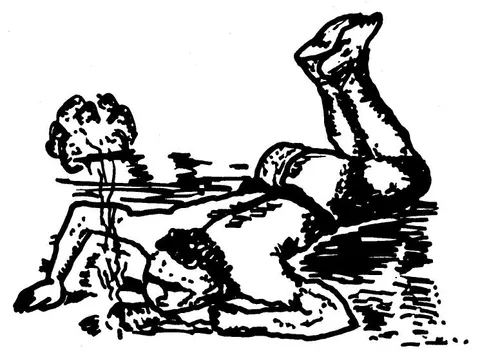 TraditionsThe earth pipeAcross southern and central Africa people smoked cannabis through a pipe made of nothing but soil, moulded on the surface or dug into the ground, often drawn on lying flat. Under prohibition, it left little durable evidence for police to find.
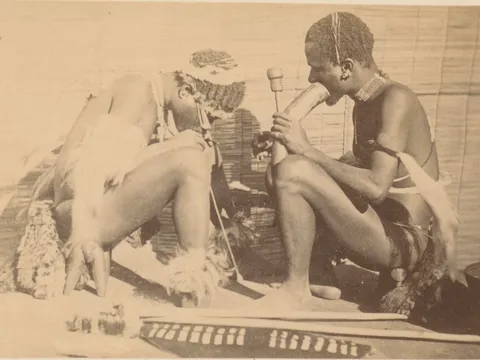 TraditionsThe spit-bubble gameIn Zulu, Swazi and Tonga country, men smoking dagga through horn water pipes blew bubbles of saliva through a hollow reed onto the floor and played them as armies, fences and mazes.
Datasets not part of the score
What other organisations publish about Eswatini, and where it stands among the countries each one covers. Each dataset has a page of its own, with a world map and every country's figure.
Use
UNODC
Cannabis use
3.07%of people aged 15–64 (assumed)
24,000 people · computed here: the median of surveyed countries in the region, or the figure of the country a territory is part of
Source Survey ages and years vary, and some surveys include children. Rates are not age-standardised; do not compare countries directly.WHO, Our World in Data · 2020
Alcohol drunk per person
6.79litres of pure alcohol a year
9.43 · 20009.43 · 20019.44 · 20028.63 · 20038.56 · 20048.09 · 20058.13 · 20067.96 · 20077.75 · 20087.25 · 20097.15 · 20106.90 · 20117.61 · 20127.91 · 20138.03 · 20147.73 · 20157.74 · 20168.04 · 20178.09 · 20188.09 · 20196.79 · 202020002020 Higher than 66% of 187 countriesLowestHighestper person aged 15 or over · 2020 · 9.43 in 2000 · 7.15 in 2010
Law
UNODC · 2024
Police contact for drug use or possession
203per 100,000 people
Higher than 77% of 101 countriesFewerMore2,550 people in 2024 · all drugs together
UNODC · 2024
Cannabis seized
24,708kg in 2024
13,975 · 20184,575 · 201922,130 · 202119,598 · 202213,170 · 202324,708 · 202420182024 Higher than 81% of 163 countriesLess seizedMore seized24,708 kg of herb
Society
OpenAlex · 2024
Research on cannabis
2.4papers per million people
0.8 · 19940.8 · 20190.8 · 20212.4 · 202419942024 Higher than 69% of 176 countriesLowestHighest3 papers in 2024
Cato and Fraser Institutes · 2023
Human Freedom Index
5.19of 10
4.70 · 20004.79 · 20014.85 · 20024.84 · 20034.77 · 20044.74 · 20055.06 · 20064.87 · 20074.83 · 20084.71 · 20095.26 · 20105.28 · 20115.40 · 20125.41 · 20135.30 · 20145.26 · 20155.25 · 20165.25 · 20175.30 · 20185.42 · 20195.14 · 20204.97 · 20215.14 · 20225.19 · 202320002023 Higher than 14% of 164 countriesLess freeFreerrank #142 of 165 · personal freedom 5.04 · economic freedom 5.39
V-Dem, Our World in Data · 2025
Civil liberties
0.21of 1 in 2025
0.33 · 19000.33 · 19010.33 · 19020.33 · 19030.33 · 19040.33 · 19050.33 · 19060.33 · 19070.33 · 19080.35 · 19090.35 · 19100.35 · 19110.35 · 19120.35 · 19130.35 · 19140.35 · 19150.35 · 19160.35 · 19170.35 · 19180.35 · 19190.35 · 19200.35 · 19210.35 · 19220.35 · 19230.35 · 19240.35 · 19250.35 · 19260.35 · 19270.35 · 19280.35 · 19290.35 · 19300.35 · 19310.35 · 19320.35 · 19330.35 · 19340.35 · 19350.35 · 19360.35 · 19370.35 · 19380.35 · 19390.35 · 19400.35 · 19410.35 · 19420.35 · 19430.35 · 19440.35 · 19450.35 · 19460.35 · 19470.35 · 19480.35 · 19490.35 · 19500.35 · 19510.35 · 19520.35 · 19530.35 · 19540.35 · 19550.35 · 19560.35 · 19570.35 · 19580.35 · 19590.35 · 19600.35 · 19610.35 · 19620.35 · 19630.34 · 19640.35 · 19650.35 · 19660.35 · 19670.35 · 19680.36 · 19690.36 · 19700.36 · 19710.34 · 19720.32 · 19730.31 · 19740.31 · 19750.31 · 19760.31 · 19770.31 · 19780.31 · 19790.31 · 19800.31 · 19810.31 · 19820.31 · 19830.31 · 19840.31 · 19850.31 · 19860.31 · 19870.31 · 19880.31 · 19890.29 · 19900.29 · 19910.29 · 19920.29 · 19930.29 · 19940.29 · 19950.29 · 19960.29 · 19970.29 · 19980.29 · 19990.31 · 20000.31 · 20010.31 · 20020.31 · 20030.31 · 20040.31 · 20050.29 · 20060.28 · 20070.29 · 20080.29 · 20090.28 · 20100.30 · 20110.30 · 20120.31 · 20130.31 · 20140.31 · 20150.31 · 20160.31 · 20170.32 · 20180.32 · 20190.32 · 20200.20 · 20210.19 · 20220.19 · 20230.20 · 20240.21 · 202519002025 Higher than 8% of 175 countriesFewer libertiesMore liberties0.35 in 1925 · 0.35 in 1961 · 0.29 in 1990
Our World in Data, World Bank · 2025
Population
1,256,174people in 2025
109,096 · 1900127,720 · 1910149,409 · 1920183,282 · 1930223,795 · 1940271,670 · 1950345,339 · 1960441,223 · 1970596,657 · 1980872,436 · 19901,041,428 · 20001,111,651 · 20101,192,734 · 20201,256,174 · 202519002025 Higher than 20% of 196 countriesLowestHighest109,096 in 1900 · 271,670 in 1950 · 1,041,428 in 2000
CEPII
Former colonial rulers
Once ruled by United Kingdom
World Bank · 2025
Government effectiveness
35of 100
46 · 199646 · 199846 · 200046 · 200235 · 200328 · 200429 · 200539 · 200638 · 200745 · 200843 · 200946 · 201044 · 201147 · 201247 · 201346 · 201446 · 201547 · 201646 · 201742 · 201842 · 201939 · 202037 · 202139 · 202236 · 202333 · 202435 · 202519962025 Higher than 16% of 195 countriesLowestHighestestimate -0.84 on a scale of −2.5 to 2.5 · 2025 · 46 in 2000 · 46 in 2015
Transparency International · 2024
Corruption Perceptions Index
27of 100
37 · 201239 · 201343 · 201439 · 201738 · 201834 · 201933 · 202032 · 202130 · 202230 · 202327 · 202420122024 Higher than 23% of 178 countriesLowestHighest0 highly corrupt, 100 very clean · 2024 · 33 in 2020
Pew Research Center · 2020
Most common religion
Christians
the largest group · 2020
World Bank · 2025
Income per person
$10,707per person
5,448 · 19905,325 · 19915,292 · 19925,300 · 19935,427 · 19945,694 · 19955,797 · 19965,877 · 19975,953 · 19986,062 · 19996,106 · 20006,135 · 20016,336 · 20026,578 · 20036,775 · 20047,142 · 20057,585 · 20067,867 · 20077,926 · 20087,989 · 20098,246 · 20108,351 · 20118,646 · 20128,951 · 20139,084 · 20149,187 · 20159,403 · 20169,661 · 20179,578 · 201810,100 · 20199,696 · 20209,990 · 20219,928 · 202210,182 · 202310,386 · 202410,707 · 202519902025 Higher than 36% of 187 countriesLowestHighestat purchasing power parity, 2021 dollars · 2025 · $5,448 in 1990 · $8,246 in 2010
World Bank · 2024
Development indicators
63.4%use the internet
0% · 19900% · 19950.1% · 19960.1% · 19970.1% · 19980.5% · 19990.9% · 20001.3% · 20011.8% · 20022.4% · 20033.2% · 20043.7% · 20053.7% · 20064.1% · 20076.8% · 20088.9% · 200911% · 201018.1% · 201120.8% · 201224.7% · 201325% · 201425.6% · 201528.6% · 201635.3% · 201739.4% · 201843.9% · 201949% · 202054% · 202157.3% · 202261.3% · 202363.4% · 202419902024 Higher than 32% of 195 countriesLowestHighest26.2% live in towns · 4.3% aged 65+ · life expectancy 64.3 · 2024 · 0.9% in 2000 · 11% in 2010
GDELT · 2025
Cannabis in the news
0%of global news: cannabis articles from here
0% · 20170% · 20180% · 20190% · 20200% · 20210% · 20220% · 20230% · 20240% · 202520172025 Higher than 0% of 147 countriesLowestHighest2025 average, 348 days · 0% in 2018 · 0% in 2021
Plant and market
GBIF · 2023
Records of the cannabis plant
1dated records
Higher than 0% of 128 countriesLowestHighest0 more without a date · 1 in 2023
Enforcement 1 report · the Cannabis Enforcement Tracker →
How the law above is applied: raids, seizures, fields destroyed, arrests and sentences, as recorded by the Cannabis Enforcement Tracker, our companion site.
- EradicationCannabis association challenges herbicide spraying of dagga fields
The Eswatini Cannabis Association demanded an immediate halt to aerial and drone spraying of cannabis fields with herbicides, alleging paraquat, glyphosate and dicamba use without environmental assessment or registered applicators.
History 17 of 17 checked against a source
Score and entries per decade
11 today, from 100 before its first recorded change
This country's score Entries that moved the score Context only
20261 entry0 score changes
20241 entry0 score changes
20231 entry0 score changes
20201 entry0 score changes
20191 entry0 score changes
20081 entry0 score changes
19952 entries0 score changes
International ✓
Eswatini joins the Single Convention on Narcotic Drugs
Eswatini acceded to the Single Convention on Narcotic Drugs of 1961 as amended by the 1972 Protocol on 18 October 1995. The convention lists cannabis and cannabis resin among its controlled drugs and obliges its parties to limit their production, trade, possession and use to medical and scientific purposes.
International ✓
Eswatini joins the 1988 UN convention against drug trafficking
Eswatini acceded to the United Nations Convention against Illicit Traffic in Narcotic Drugs and Psychotropic Substances of 1988 on 3 October 1995. Article 3 of the convention requires each party, subject to its constitutional principles, to make the possession, purchase and cultivation of drugs for personal consumption a criminal offence.
19891 entry0 score changes
19861 entry0 score changes
19761 entry0 score changes
19681 entry0 score changes
19551 entry0 score changes
19521 entry0 score changes
19481 entry0 score changes
19391 entry0 score changes
19221 entry1 score change
Sources hover a number in the text to see its source
- Cited
- 12
- Websites
- 9
- Last reviewed
- History checked
- 17/17
Most cited
- eswatinilii.org4
- africa.com1
- cannabiz-africa.com1
- data.unodc.org1
- hightimes.com1
- incb.org1
All 12 sources
- Eswatini — Opium and Habit-forming Drugs Act 37 of 1922, 1998 consolidationSections 2, 4, 7, 8, 11 and 15.archived
- Eswatini — Pharmacy Act 38 of 1929, 1998 consolidationSection 10 and Schedule C; section 12 penalties as amended in 1993.archived
- Eswatini High Court — King v Phiri [1986] SZHC 13 (19 November 1986)Sentencing bands; 14.85 kg; three years, 18 months suspended.archived
- Eswatini Daily News — Cannabis association calls on government to halt dagga-field spraying (1 October 2025)ECA letter; herbicide spraying; Operation Thunder.archived
- UNODC World Drug Report 2026 — drug-related crimes annex2,550 people in formal contact for drug use/possession in 2024, all drugs.archived
- High Times — Eswatini introduces medical cannabis legislation (20 March 2024)archived
- Cannabiz Africa — No place for Swazi Gold or general adult use in Eswatini's new framework (10 August 2026)Minister's 7 August 2026 statement; repeal of both Acts; medical/industrial only.archived
- VOA — Eswatini moves to revise century-old colonial law to legalize medical cannabis (18 March 2024)Bill; Profile Solutions as only authorised grower; three-quarters claim.archived
- Semafor via Africa.com — More and more African countries are legalizing cannabis: Eswatini (May 2023)archived
- UNODC Data Portal — Drug seizures, reported seizures in kilogram equivalentsarchived
- Eswatini — Road Traffic Act 6 of 2007Sections 91(1) and 122(2).archived
- International Narcotics Control Board — Travellers carrying medicines containing controlled substances