Mozambique
11/100
#92 of 196 worldwide
#12 of 54 in Africa
Use and personal possession carry up to two years plus a fine, with possible waivers for occasional users. More than three days' personal supply brings a one-year minimum.
In short all countries →
- Can I carry it?NoIt is a crime
- Can I grow it?NoIt is a crime
- Can I buy it?NoThere is no legal source
- Can I use it in public?NoNot in public, and even at home the law does not protect it
- What if I'm caught?Fine or prisonUsually a fine; prison is possible
A rough guide read from the scores and the rules below, not legal advice. The details and the exceptions are in each segment: select an answer to jump to it.
Cannabis in Mozambique not part of the score · all 15 datasets ↓
Who uses it
Perhaps 1 in 33
people aged 15–64 (assumed) in Mozambique used cannabis in the past year: about 580,000 people.
- Past year
- 3.1%
- Africa median
- 3.1%
This site’s estimate: there is no national survey.
Source Past-year cannabis use among people aged 15–64 (assumed). This site's figure: there is no national survey, so the median rate of surveyed countries in Africa is applied to people aged 15–64.Survey ages and years vary, and some surveys include children. Rates are not age-standardised; do not compare countries directly.
A median computed on this site from surveyed countries in Africa, using UNODC World Drug Report 2026 figures. Population from the World Bank, aged 15–64. The whole dataset →
Cannabis in figures
- Police contact for drug use or possession2.6per 100,000 people · 2023
- Cannabis seized1,856kg in 2024 · 2024
- Research on cannabis0.0papers per million people · 2025
The dot: where it stands among the countries each dataset covers, lowest to highest. All datasets ↓
Score breakdown 11/100 · how the scores are made
Neighbours
- 🇿🇦 South Africa49
- 🇸🇿 Eswatini11
- 🇲🇼 Malawi11
- 🇲🇿 Mozambique11
- 🇿🇼 Zimbabwe9
- 🇹🇿 Tanzania8
- 🇿🇲 Zambia3
Law 3/97 punishes use and personal possession with up to two years in prison plus a fine.[2] Above three days' average personal supply, the law sets a one-year minimum.[2] Courts may waive punishment for occasional users under Article 55(4), while a separate exemption for minors requires no repeat offence, a promise to stop and acceptance of treatment if dependent.[2]
| Amount | What happens | Punishment | Fine |
| Personal use or holding (article 55(1))Plus a fine. Waiver and treatment possible | CriminalDrug use | Up to 2 years | — |
| Above three days' average personal supply (article 55(2))One-year minimum | CriminalDrug use | At least 1 year | — |
Unauthorised cannabis cultivation carries three days to one year in prison under Article 34.[2] Growing for personal use carries up to one year or a fine under Article 55(3), with possible waivers for occasional users.[2]
| Amount | What happens | Punishment | Fine |
| Unauthorised cultivation (article 34)Waiver possible for occasional users | CriminalUnlicensed cultivation | 3 days – 1 year | — |
| Growing for personal use (article 55(3))Or a fine. Waiver possible for occasional users | CriminalPersonal use | Up to 1 year | — |
Giving or selling cannabis without authority falls within trafficking, ordinarily punished with sixteen to twenty years.[2] Small-scale or substantially less serious cases can receive two to eight years plus a fine under Article 36; in May 2024 the Supreme Court applied that lesser offence to a seller with 590 grams, reducing his sentence from seventeen years to six.[2][3]
| Amount | What happens | Punishment | Fine |
| Trafficking (article 33)Plus a fine | CriminalTrafficking | 16–20 years | — |
| Small-scale trafficking (article 36)Law states 10–30 million pre-2006 meticais | CriminalSmall-scale trafficking | 2–8 years | MZN 10,000 – MZN 30,000 |
Consumption is itself criminalised under Article 55, which distinguishes personal use (up to two years plus a fine) from supply above three days' average, carrying a one-year minimum.[2]
| Amount | What happens | Punishment | Fine |
| Personal use (article 55(1))Plus a fine. Waiver and treatment possible | CriminalDrug use | Up to 2 years | — |
| Above three days' average personal supply (article 55(2))One-year minimum | CriminalDrug use | At least 1 year | — |
There is no recreational route: unauthorised growing, handling and use are all offences under Law 3/97.[2]
Context not part of the score · every country, by topic →
Cannabis is prohibited, but personal use and holding fall under the lighter Article 55 bands, with waiver and treatment routes for occasional users and minors.[2] Supply draws the heavy trafficking tariffs, though courts apply the lesser Article 36 offence to small-scale sellers, as the 2024 Supreme Court cut from seventeen to six years for 590 grams shows.[2][3]
The sources reviewed establish no operating medical cannabis programme: treatment provisions address dependent users, not patient supply.[2]
No cannabis clubs are known, and the law leaves no room for them: growing cannabis and supplying it to another person are both prohibited.[2]
Article 34 of Law 3/97 punishes unauthorised cannabis cultivation; the provisions reviewed do not mention seeds.[2] Growing for personal use falls under the lighter Article 55(3) tier.[2]
No hemp exception operates: the law punishes unauthorised growing, production and manufacture, with an exception only for authorised industrial, scientific and therapeutic activities.[2] No THC line for hemp and no general fibre or food regime was found in the provisions reviewed.[2]
No licensed cannabis production was found: the law punishes unauthorised production and manufacture, excepting only authorised industrial, scientific and therapeutic activities.[2]
Figures reported by the government to the UN drugs office record 1,856 kg of herbal cannabis seized in 2024, against 1,853 kg in 2023.[4] The UN publishes them as kilogram equivalents, and countries count seizures differently, so the figures are not comparable across borders.[4] For 2025 the government reported more than 4.4 tonnes of illicit drugs seized, including significant quantities of cocaine and cannabis.[5]
There is no legal recreational supply for anyone.[2] Use and personal possession carry up to two years plus a fine, with a one-year minimum above three days' personal supply.[2]
The annual report of the Central Office for Drug Prevention and Combat counted at least 732 people detained for drug use and trafficking in 2024, 229 fewer than in 2023; Sofala province had the most, 199.[6] Seizures of cannabis were almost unchanged at 1,856 kg, against 1,853 kg the year before, with 44 kg of hashish.[6]
A conviction brings a criminal record and, for trafficking, long prison terms plus fines.[2][7] Courts may suspend sentences on treatment conditions, and the Supreme Court reduces excessive trafficking sentences on appeal: seventeen years to six, plus a fine, for 590 grams in 2024.[2][3]
Across the border the plant is mbanje, but in Mozambique it is suruma: Duvall records the name in an 1895 Quelimane wordlist, in the colonial law that banned it in 1914, and among Ndau speakers near the Zimbabwe border in 2005.[1] The atlas traces the word in mbanje, whose history runs from an 1851 Sierra Leone account of seeds brought by recaptives to the Kasai Bena Riamba movement.[1] Smoking itself has deep local roots: the atlas keeps an 1800 engraving of a Delagoa Bay water-pipe smoker in the smoker's cough.[1]
Taking cannabis into or out of Mozambique is a separate offence from possessing it, normally charged as smuggling or trafficking, with far heavier penalties. That holds almost everywhere, including between two places where cannabis is legal.
A prescription or medical card from another country is generally not recognised. Travellers who need a cannabis-based medicine should ask Mozambique's embassy before travelling.[8]
General guidance that applies to almost every country, not a check of Mozambique's customs rules.
Culture the atlas →
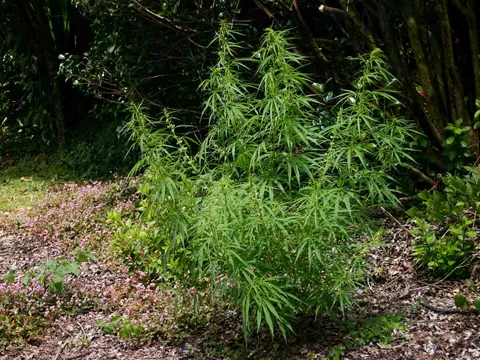 LanguageMbanjeZimbabwe's word for a crop that has grown there for centuries. Near the Mozambican border, and across it, the name is suruma.
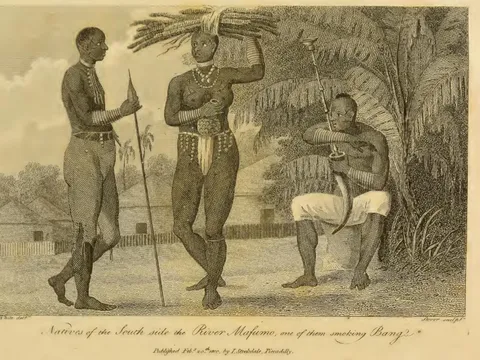 TraditionsThe smoker's coughIn nineteenth-century Africa the cough that followed a pipe of cannabis was often a performance. Travellers called it affected; Zulu smokers sang praises between coughs, and a lake island was said to have been found by hearing one.
Did you know? all cases →
Customs · Africa
In 1798 an English sailor in Mozambique noted that men smoking bang through a cow's horn would “cough exceedingly”, “in a very affected manner”. Richard Burton later called the cough a way of announcing that the fast youths were smoking.
Read the entry →
Datasets not part of the score
What other organisations publish about Mozambique, and where it stands among the countries each one covers. Each dataset has a page of its own, with a world map and every country's figure.
Use
UNODC
Cannabis use
3.07%of people aged 15–64 (assumed)
580,000 people · computed here: the median of surveyed countries in the region, or the figure of the country a territory is part of
Source Survey ages and years vary, and some surveys include children. Rates are not age-standardised; do not compare countries directly.WHO, Our World in Data · 2020
Alcohol drunk per person
1.89litres of pure alcohol a year
1.09 · 20001.09 · 20011.06 · 20021.05 · 20031.06 · 20041.05 · 20051.05 · 20061.08 · 20071.12 · 20081.17 · 20091.23 · 20101.33 · 20111.42 · 20121.51 · 20131.61 · 20141.76 · 20151.88 · 20161.97 · 20172.03 · 20182.03 · 20191.89 · 202020002020 Higher than 26% of 187 countriesLowestHighestper person aged 15 or over · 2020 · 1.09 in 2000 · 1.23 in 2010
Law
UNODC · 2023
Police contact for drug use or possession
2.6per 100,000 people
2.2 · 20222.6 · 202320222023 Higher than 14% of 101 countriesFewerMore923 people in 2023 · all drugs together
UNODC · 2024
Cannabis seized
1,856kg in 2024
5,373 · 20151,461 · 20167,615 · 20175,294 · 20182,729 · 20196,318 · 20203,348 · 20211,556 · 20221,853 · 20231,856 · 202420152024 Higher than 45% of 163 countriesLess seizedMore seized1,856 kg of herb · 5,373 kg in 2015 · 6,318 kg in 2020
Society
OpenAlex · 2025
Research on cannabis
0.0papers per million people
0.1 · 20240.0 · 202520242025 Higher than 2% of 176 countriesLowestHighest1 papers in 2025
Cato and Fraser Institutes · 2023
Human Freedom Index
6.52of 10
6.02 · 20006.14 · 20016.09 · 20026.22 · 20036.28 · 20046.25 · 20056.28 · 20066.37 · 20076.36 · 20086.34 · 20096.28 · 20106.37 · 20116.49 · 20126.55 · 20136.73 · 20146.89 · 20156.76 · 20166.68 · 20176.82 · 20186.78 · 20196.51 · 20206.51 · 20216.46 · 20226.52 · 202320002023 Higher than 39% of 164 countriesLess freeFreerrank #101 of 165 · personal freedom 6.74 · economic freedom 6.21
V-Dem, Our World in Data · 2025
Civil liberties
0.48of 1 in 2025
0.11 · 19000.11 · 19010.11 · 19020.11 · 19030.11 · 19040.11 · 19050.11 · 19060.11 · 19070.11 · 19080.11 · 19090.11 · 19100.11 · 19110.11 · 19120.11 · 19130.11 · 19140.11 · 19150.11 · 19160.11 · 19170.11 · 19180.11 · 19190.11 · 19200.11 · 19210.11 · 19220.11 · 19230.11 · 19240.11 · 19250.11 · 19260.11 · 19270.11 · 19280.11 · 19290.11 · 19300.11 · 19310.11 · 19320.10 · 19330.10 · 19340.10 · 19350.10 · 19360.10 · 19370.10 · 19380.10 · 19390.10 · 19400.10 · 19410.10 · 19420.10 · 19430.10 · 19440.10 · 19450.10 · 19460.10 · 19470.10 · 19480.10 · 19490.10 · 19500.10 · 19510.10 · 19520.10 · 19530.10 · 19540.10 · 19550.10 · 19560.10 · 19570.10 · 19580.10 · 19590.10 · 19600.10 · 19610.09 · 19620.09 · 19630.09 · 19640.09 · 19650.09 · 19660.09 · 19670.09 · 19680.09 · 19690.09 · 19700.09 · 19710.09 · 19720.09 · 19730.09 · 19740.11 · 19750.10 · 19760.10 · 19770.10 · 19780.10 · 19790.10 · 19800.10 · 19810.10 · 19820.10 · 19830.10 · 19840.10 · 19850.10 · 19860.11 · 19870.12 · 19880.12 · 19890.42 · 19900.51 · 19910.56 · 19920.65 · 19930.72 · 19940.72 · 19950.72 · 19960.72 · 19970.72 · 19980.72 · 19990.75 · 20000.75 · 20010.75 · 20020.75 · 20030.75 · 20040.75 · 20050.75 · 20060.75 · 20070.75 · 20080.75 · 20090.74 · 20100.75 · 20110.75 · 20120.74 · 20130.72 · 20140.70 · 20150.69 · 20160.64 · 20170.60 · 20180.61 · 20190.61 · 20200.61 · 20210.59 · 20220.59 · 20230.49 · 20240.48 · 202519002025 Higher than 29% of 175 countriesFewer libertiesMore liberties0.11 in 1925 · 0.10 in 1961 · 0.42 in 1990
Our World in Data, World Bank · 2025
Population
35,631,653people in 2025
4,251,279 · 19003,902,611 · 19103,756,127 · 19204,308,103 · 19304,965,561 · 19405,910,234 · 19506,713,698 · 19608,250,504 · 197011,336,220 · 198013,094,535 · 199018,129,652 · 200022,999,234 · 201030,783,685 · 202035,631,653 · 202519002025 Higher than 77% of 196 countriesLowestHighest4,251,279 in 1900 · 5,910,234 in 1950 · 18,129,652 in 2000
CEPII
Former colonial rulers
Once ruled by Portugal
World Bank · 2025
Government effectiveness
36of 100
48 · 199637 · 199837 · 200035 · 200232 · 200337 · 200438 · 200539 · 200640 · 200743 · 200845 · 200940 · 201039 · 201143 · 201243 · 201342 · 201441 · 201538 · 201638 · 201738 · 201839 · 201935 · 202035 · 202136 · 202236 · 202337 · 202436 · 202519962025 Higher than 19% of 195 countriesLowestHighestestimate -0.81 on a scale of −2.5 to 2.5 · 2025 · 37 in 2000 · 41 in 2015
Transparency International · 2024
Corruption Perceptions Index
25of 100
31 · 201230 · 201331 · 201431 · 201527 · 201625 · 201723 · 201826 · 201925 · 202026 · 202126 · 202225 · 202325 · 202420122024 Higher than 18% of 178 countriesLowestHighest0 highly corrupt, 100 very clean · 2024 · 31 in 2015 · 25 in 2020
Pew Research Center · 2020
Most common religion
Christians
the largest group · 2020
World Bank · 2025
Income per person
$1,451per person
548 · 1990564 · 1991511 · 1992549 · 1993546 · 1994525 · 1995563 · 1996612 · 1997661 · 1998722 · 1999712 · 2000786 · 2001843 · 2002883 · 2003934 · 2004970 · 20051,042 · 20061,095 · 20071,142 · 20081,179 · 20091,224 · 20101,276 · 20111,339 · 20121,386 · 20131,450 · 20141,513 · 20151,538 · 20161,532 · 20171,539 · 20181,529 · 20191,466 · 20201,457 · 20211,477 · 20221,513 · 20231,501 · 20241,451 · 202519902025 Higher than 2% of 187 countriesLowestHighestat purchasing power parity, 2021 dollars · 2025 · $548 in 1990 · $1,224 in 2010
World Bank · 2024
Development indicators
20.5%use the internet
0% · 19900% · 19960% · 19970% · 19980.1% · 19990.1% · 20000.2% · 20010.3% · 20020.4% · 20030.7% · 20040.9% · 20050.8% · 20060.9% · 20071.6% · 20082.7% · 20094.2% · 20104.6% · 20115% · 20125.5% · 20136% · 20146.5% · 20157% · 20167.8% · 201710.9% · 201812.5% · 201914.3% · 202016.4% · 202119% · 202219.9% · 202320.5% · 202419902024 Higher than 9% of 195 countriesLowestHighest36.4% live in towns · 2.8% aged 65+ · life expectancy 63.8 · 2024 · 0.1% in 2000 · 4.2% in 2010
Plant and market
GBIF · 1980
Records of the cannabis plant
3dated records
1 · 18222 · 19373 · 198018221980 Higher than 24% of 128 countriesLowestHighest0 more without a date · 1 in 1980
Enforcement 1 report · the Cannabis Enforcement Tracker →
How the law above is applied: raids, seizures, fields destroyed, arrests and sentences, as recorded by the Cannabis Enforcement Tracker, our companion site.
- SentenceMozambique's top court cuts a cannabis seller's sentence to six years
The Supreme Court reduced Raiva Rafael Meponda's seventeen-year sentence to six years and a 30,000-metical fine after police found 590 grams of cannabis in 232 portions at his Maputo home.
History 9 of 9 checked against a source
Score and entries per decade
11 today, from 100 before its first recorded change
This country's score Entries that moved the score Context only
Sources hover a number in the text to see its source
- Cited
- 8
- Websites
- 6
- 1
- Last reviewed
- History checked
- 9/9
Most cited
- reformar.co.mz2
- data.unodc.org1
- incb.org1
- newscentraltv.com1
- rtp.pt1
- ts.gov.mz1
All 8 sources
- The African Roots of MarijuanaChris S. Duvall · Duke University Press · 2019 · ISBN 9781478004530
- Mozambique — Law 3/97 of 13 March 1997, original gazette (Articles 33–36, 55–59 read via OCR in the October 2026 pass and reconfirmed here)archived
- Mozambique Supreme Court — Raiva Rafael Meponda, appeal 31/2022-P, 2 May 2024archived
- UNODC Data Portal — Drug seizures, reported seizures in kilogram equivalents (World Drug Report data)archived
- News Central TV — Mozambique's fentanyl seizure raises alarm bells (government reports 4.4 tonnes of drugs seized in 2025, including cannabis)ch. 4 (suruma in the 1895 Quelimane wordlist, in the 1914 colonial ban, and among Ndau speakers in 2005; read in the local PDF); ch. 6, printed pp. 112–119 (Bena Riamba)archived
- RTP Notícias (Lusa) — Moçambique apreendeu droga avaliada em 22,5 milhões de euros em 2024archived
- REFORMAR — As problemáticas da criminalização do consumo de drogas ilícitas em Moçambique (PDF)archived
- International Narcotics Control Board — Travellers carrying medicines containing controlled substances