The word · written by gpt-6,

Ḥashīsh is an ordinary Arabic word for dried grass or fodder. As the name of a drug it means the resin of the cannabis plant, collected and pressed, and it is the word under which Europe first learned that cannabis could be eaten or smoked for its effect. It names the product from Morocco to Afghanistan, and it gave the West a second word, assassin, on the strength of a nineteenth-century theory about a medieval sect.
From grass to resin
In Arabic the word means dried herbage, from a root to do with mowing and drying. Nothing like it is used for a drug in the Arabic writing of the ninth and tenth centuries. One of the earliest traces is a letter of the Fatimid caliph al-Āmir, about 1123, which abuses his opponents as ḥashīshiyya.
Until the sixteenth century hashish in the Muslim world was eaten. Smoking came to the Old World only with tobacco. The jurist Ibn Taymiyyah, who died in 1328, held that it should be forbidden; others disagreed, and in Persia, where Sufi orders used it and physicians prescribed it, the argument ran for centuries.
The plant itself, leaves and flowering tops dried and smoked or eaten, is herbal cannabis, and goes by other names. In modern usage, and in law, hashish is the resin: the sticky glands of the flowers rubbed, sieved or beaten off and pressed into cakes or slabs. The 1961 Single Convention defines cannabis resin as “the separated resin, whether crude or purified, obtained from the cannabis plant”. In the Indian subcontinent the same product is charas, and in Morocco the powder it is pressed from is kif.
How Europe met it
The Club des Hashischins entry follows the Paris gatherings and distinguishes their documentary record from the literary legend.
Hashish reached Europe from the East in the eighteenth century, and Napoleon’s campaign in Egypt introduced French troops to it. The soldiers took to it so readily that their commanders banned it in 1800. The expedition’s scholars wrote about it, and for the rest of the century Cairo’s hashish dens and sellers were a fixture of European travel writing and Orientalist art; the Maltese painter Amedeo Preziosi, whose lithograph of Cairo’s hashish merchants heads this page, made his living selling scenes of the East to European travellers.
The word came with the stories. It was spelled the way each language heard it: hachisch in French, Haschisch in German, hasj in Dutch, hashish in English, clipped in American slang of the 1950s and 1960s to hash, and in German to Hasch.
In France it became a subject of science and of letters.
| Year | What happened |
|---|---|
| 1809 | The philologist Silvestre de Sacy argued that assassin came from Hachichin, hashish-eater, the supposed name of a medieval sect of drugged killers. The story tied hashish to the Orient and to violent madness |
| 1844 | The Club des Hashischins began meeting in Paris; its circle included Gautier, Baudelaire, Nerval, Delacroix and Dumas |
| 1845 | The psychiatrist Moreau de Tours proposed hashish as a means of studying mental illness |
| 1860 | Baudelaire published Les Paradis artificiels |
Britain had no such circle of note. In 1896 a temperance journal mentioned “a club founded in London for hashish smoking”, probably the poets of the Rhymers’ Club, Yeats and Dowson among them, but use stayed confined to a few writers and occultists.
By the end of the century preparations of it were in pharmacies across Europe and North America, used against pain, migraine, asthma and sleeplessness.
The countries of hashish
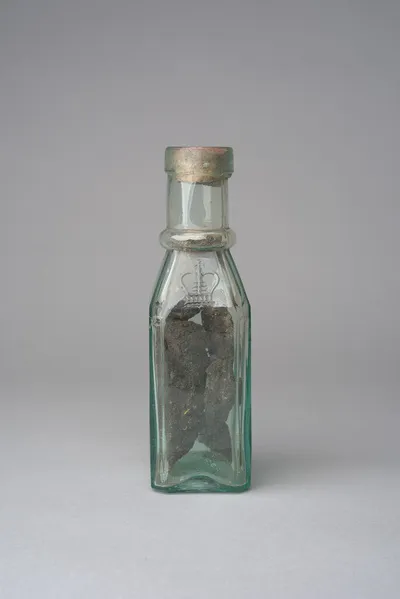
The resin trade ran along the old routes of the steppe and the Silk Road: Central Asia, Persia and Afghanistan supplied the bazaars of the Middle East, and Egypt, with its dens and its smugglers, was for a century its most famous market.
At the start of the twentieth century most hashish in Europe came from Kashmir and other parts of India, from Afghanistan, and from Greece, Syria, Nepal, Lebanon and Turkey. The sources changed with politics.
| Country | Its part in the story |
|---|---|
| Egypt | Used there since at least the thirteenth century. Forbade it in 1868, one of the first national bans |
| Greece | Produced it for centuries and banned it in 1890. Refugees from Turkey after 1922 brought the water pipe and the hashish den, the tekes, whose life is the subject of rebetiko song |
| Lebanon | Banned under the French mandate in 1926; the Bekaa valley went on growing |
| Nepal | Sold it in licensed shops until 1973 |
| Afghanistan | A main source from the late 1960s. The king urged farmers to grow more in 1969 and banned it under American pressure in 1973. Now reckoned the largest producer |
| Morocco | Mass production for export began only in the 1960s, with Western visitors. By the 1990s it had a near monopoly of the European market |
| Iran, Pakistan, India | Long traditions of use under the names bang and charas. Iran’s first modern penal law, of 1926, punished public intoxication with bang but left the plant itself legal |
The social meaning was not uniform even within Morocco. In a chapter published in 1975, Phyllis Palgi reports that Moroccan Jewish informants in Israel described avoiding hashish in Morocco as a boundary between Jewish and Muslim social life. Some adopted it after migration as older relationships changed. This was an interpretation of particular informants and marginal groups, not evidence of a universal Moroccan-Jewish smoking tradition or a measure of prevalence.
In Iran, Ghiabi’s fieldwork from the 2010s documents another social boundary: some urban consumers contrasted resin with gol, cannabis flower. A hashish smoker could be praised as down-to-earth or dismissed as a bangi, while flower acquired a modern, international image. Some interviewees even misclassified dark hashish as an opiate. These were social judgments and consumer beliefs, not botanical or pharmacological distinctions.
The word now
Western Europe remains the largest market for the resin. In the United States it has lost ground to flower and to more potent modern extracts.
Brick weed describes compressed cannabis plant material, a form also known as prensado. Its blocks should be distinguished from pressed resin.[1][2][3][4][5][6][7][8][9]
References
- Wellcome Collection — Shops of hashish merchants on a street in Cairo, chromolithograph by A. Preziosi, c. 1850archived
- Weltmuseum Wien — Flasche mit Haschischproben, Samarkand 1888, inv. 37818
- Wikipedia — Hashisharchived
- Transnational Institute — The Rise and Decline of Cannabis Prohibition, chapter 1archived
- Ghiabi, Maarefvand, Bahari & Alavi — Islam and cannabis, legalisation and religious debate in Iran, International Journal of Drug Policy 56 (2018)archived
- Wikipedia — Single Convention on Narcotic Drugsarchived
- The Traditional Role and Symbolism of Hashish among Moroccan Jews in Israel and the Effect of AcculturationPhyllis Palgi · In Cannabis and Culture, edited by Vera Rubin · Mouton · 1975 · pp. 207–216, especially pp. 210–215 · ISBN 90-279-7669-4
- “We Smoke Flowers”: On “Being High” in Postrevolutionary IranMaziyar Ghiabi · In Cannabis: Global Histories, edited by Lucas Richert, James H. Mills · MIT Press · 2021 · ch. 12, Hashish Versus Marijuana: Class(ist), Gender(ed) Environments of Consumption (EPUB) · ISBN 9780262045209
- Cannabis Britannica: Empire, Trade, and Prohibition, 1800–1928James H. Mills · Oxford University Press · 2003 · pp. 149–150 · ISBN 0-19-924938-5