Lebanon
11/100
#87 of 196 worldwide
#12 of 48 in Asia
A 2020 law legalised licensed cultivation for medical and industrial use, but no licence had been issued by August 2026. Recreational use remains illegal: a small quantity for personal use brings three months to three years, while other possession or supply can bring life.
In short all countries →
- Can I carry it?NoIt is a crime
- Can I grow it?NoIt is a crime
- Can I buy it?NoNo patient or adult-use purchase route verified
- Can I use it in public?NoNot in public, and even at home the law does not protect it
- What if I'm caught?Fine or prisonUsually a fine; prison is possible
A rough guide read from the scores and the rules below, not legal advice. The details and the exceptions are in each segment: select an answer to jump to it.
Cannabis in Lebanon not part of the score · all 16 datasets ↓
Who uses it
About 1 in 50
people aged 15–64 in Lebanon used cannabis in the past year: 75,000 people.
- Past year
- 2.0%
- Asia median
- 2%
UNODC · survey 2009
Source Past-year cannabis use among people aged 15–64. People who used cannabis in the past year, from a 2009 survey, applied to today's population aged 15–64.Survey ages and years vary, and some surveys include children. Rates are not age-standardised; do not compare countries directly.
UNODC World Drug Report 2026, annex table 1.2. Population from the World Bank, aged 15–64. The whole dataset →
Use across Asia
20thhighest of 40 surveyed countries
- 🇰🇿 Kazakhstan2.4%
- 🇯🇴 Jordan2.1%
- 🇱🇧 Lebanon2.0%
- 🇸🇾 Syria2.0%
- 🇱🇰 Sri Lanka2.0%
Past-year use, latest survey of each. Survey years and ages differ. On the map →
Cannabis in figures
- Police contact for drug use or possession21per 100,000 people · 2021
- Cannabis seized8,126kg in 2022 · 2022
- Research on cannabis2.2papers per million people · 2025
- Cannabis in the news0.0002%of global news: cannabis articles from here · 2025
The dot: where it stands among the countries each dataset covers, lowest to highest. All datasets ↓
What they call it
- حشيش[1]Lebanese Arabic · ḥashīsh'hashish'; cannabis resin, and loosely the plantIn the atlas →
- حشيشة الكيف[2]Lebanese Arabic · ḥašīšat al-kayf'hashish of pleasure'; the 1946 law's name for Indian hemp
- القنب[3]Arabic · al-qinnab'cannabis'; the formal term in the 2020 licensing law
- القنب الهندي[2]Arabic · al-qinnab al-hindī'Indian hemp'; the botanical-legal name in the 1946 law
Score breakdown 11/100 · how the scores are made
Law 673 of 16 March 1998 bans possession of cannabis, which is in Table 1 of highly dangerous drugs with no medical use.[4] A small quantity for personal use carries three months to three years in prison and a fine of LBP 2–5 million under article 127; the law sets no gram threshold, leaving the boundary to the court.[4] Any other possession carries life imprisonment with hard labour and a fine of LBP 25–100 million under article 125, read with article 13.[4] Treatment can replace prosecution in some cases, but the Drug Addiction Committee handles fewer than 10% of eligible cases.[4][5]
| Amount | What happens | Punishment | Fine |
| Small quantity for personal useArticle 127; no statutory quantity threshold | CriminalPersonal use | 3 months – 3 years | LBP 2,000,000 – LBP 5,000,000 |
| Possession outside personal use | CriminalPossession | Life imprisonment | LBP 25,000,000 – LBP 100,000,000 |
Article 11 bans cultivating cannabis, including seeds and plants at any stage, and article 125 punishes unlicensed cultivation with life imprisonment with hard labour and LBP 25–100 million.[4] Law 178 of 2020 created a licensing exception for medical, therapeutic, scientific and industrial cultivation, but it did not reschedule cannabis or legalise recreational growing.[3] The Cannabis Regulatory Authority was appointed only in July 2025, and no cultivation licence had been issued by August 2026.[6][7] Licensed growers who break the area or application rules face one to three years and LBP 20–50 million under article 33 of Law 178.[3]
| Amount | What happens | Punishment | Fine |
| Unlicensed cultivation | CriminalCultivation | Life imprisonment | LBP 25,000,000 – LBP 100,000,000 |
| Licensed cultivation outside the authorised areaLicence withdrawal under Law 178 article 33 | CriminalLicensed cultivation | 1–2 years | LBP 20,000,000 – LBP 40,000,000 |
| False statement in a licence applicationLicence withdrawal under Law 178 article 33 | CriminalLicence application | 1–3 years | LBP 30,000,000 – LBP 50,000,000 |
| Violence or resistance to an inspector | CriminalObstruction | 3 months – 2 years | LBP 10,000,000 – LBP 20,000,000 |
Enforcement is uneven: users are jailed, often in pre-trial detention, while large growers have historically enjoyed political protection.[8] In 2023, 790 people were sentenced for substance use, down from 1,202 in 2021, and 87% of prisoners were held without trial.[5] The army destroyed cannabis fields in the Bekaa in 2025 and the interior ministry announced a network bust with 720 kg of hashish in September 2025.[9][10]
Article 126 punishes selling or offering cannabis for personal consumption, facilitating its use free or for payment, keeping a place for use, or supplying a minor with life imprisonment with hard labour and LBP 25–100 million; there is no quantity threshold.[4] Article 125 covers transport, import, export, brokerage and other supply on the same terms.[4] The law does not distinguish small-scale sharing from trafficking.[4]
| Amount | What happens | Punishment | Fine |
| Sale, supply or brokerage | CriminalTrafficking | Life imprisonment | LBP 25,000,000 – LBP 100,000,000 |
| Giving or facilitating useIncludes free supply; | CriminalFacilitation | Life imprisonment | LBP 25,000,000 – LBP 100,000,000 |
| Supplying a minor | CriminalSupply to a minor | Life imprisonment | LBP 25,000,000 – LBP 100,000,000 |
Article 127 punishes use of a small quantity for personal consumption with three months to three years and LBP 2–5 million.[4] Article 197 applies the same penalties when treatment is refused.[4] Treatment before prosecution can exempt an addicted person on certified recovery, but the committee is underused.[4][5]
| Amount | What happens | Punishment | Fine |
| Personal consumptionArticle 127; no statutory quantity threshold | CriminalUse | 3 months – 3 years | LBP 2,000,000 – LBP 5,000,000 |
Context not part of the score · every country, by topic →
There is no legal recreational supply. A small quantity for personal use brings three months to three years and LBP 2–5 million; any other possession or supply can bring life.[4] Bekaa hashish farming is a decades-old open secret, periodically raided, and users face jail while large growers have historically been protected.[8]
No patient route. Cannabis remains Table 1 "no medical use"; Law 178 licenses production, not consumption, and does not reschedule the plant.[4][3] Patients have no legal pathway to medical cannabis, and no product or prescription route was verified.[11][7]
No cannabis clubs are known, and the law leaves no room for them: growing cannabis and supplying it to another person are both prohibited.[4] Law 178 is a production licensing route, not a members' club.[3]
Law 178 article 3 lets the regulator license cannabis seeds for industrial hemp and seedlings at any growth stage for medical use; outside a licence, planting is cultivation under article 11 and carries life.[3][4] There is no personal seed or clone exception.[4]
Law 178 includes industrial hemp among the licensed cannabis uses and lets the regulator license seeds for industrial hemp, but it leaves the THC limit to the authority; a 1% figure appears in ministry guidance, not the law.[3][12] No hemp licence or legal hemp market existed by August 2026, and CBD remains a controlled substance.[7][12]
Law 178 of 2020 allows licensed cultivation for medical, therapeutic, scientific and industrial purposes, aimed at export.[3] The regulator was appointed in July 2025, but no licence had been issued by August 2026 and its chairman said the timetable was too tight for a 2026 harvest.[6][7]
No consolidated official cannabis seizure series is published. Reported cases include 6.4 kg of hashish at Beirut airport in June 2024, army destruction of fields in the Bekaa in August and September 2025, and 720 kg of hashish in a September 2025 network bust.[13][9][10] The Bekaa has produced hashish for a century: a 1928 estimate put output at 60 tonnes, and a 2022 estimate put cultivation at 20,000–40,000 hectares.[8] Fines in Law 673 have been eroded by the currency collapse, while the life sentence remains.[8][12]
There is no legal supply for anyone. A small quantity for personal use brings three months to three years and LBP 2–5 million; other possession or supply can bring life.[4] A foreign national convicted of a felony or repeat misdemeanour faces permanent expulsion, and a misdemeanour can bring removal for one to five years.[4]
Article 143 punishes driving a land vehicle under the influence of an illegally used highly dangerous narcotic with three months to two years and LBP 2–5 million; the court may withdraw the licence for three months to three years, permanently after a mass-casualty accident.[4] Article 144 applies the same penalty for refusing the health ministry's test or continuing to drive.[4] There is no per-se THC limit.[4]
In 2023, 790 people were sentenced for substance use, down 35% from 1,202 in 2021, and 2,518 people were questioned and released without charge in 2021.[5] About 87% of prisoners were held without trial in 2023, with prisons at almost 200% capacity, partly because of low-level drug offences.[5] A 2018 study estimated that about 77% of annual drug arrests targeted users and 15% low- or mid-level supply, with kingpins rarely prosecuted.[8] No consolidated 2024–2026 cannabis arrest series was found.[5]
A drug conviction is a criminal record. Article 152 requires permanent expulsion for a foreign national convicted of a felony or repeat misdemeanour, and removal for one to five years for a misdemeanour; article 161 bars early release during the first two-thirds of a sentence of a year or more.[4] The currency collapse has made the fines nominal while the life sentence remains.[8][12]
Cannabis in Lebanon is known as hashish, and the Bekaa Valley has been the centre of hashish production for a century.[8] The trade shaped village economies and political networks, and the 2020 licensing law was presented as a way to bring it into the legal economy.[8][3] No public cannabis culture is visible today; the crop remains illegal and periodically eradicated.[8][9]
Taking cannabis into or out of Lebanon is a separate offence from possessing it, normally charged as smuggling or trafficking, with far heavier penalties. That holds almost everywhere, including between two places where cannabis is legal.
A prescription or medical card from another country is generally not recognised. Travellers who need a cannabis-based medicine should ask Lebanon's embassy before travelling.[14]
General guidance that applies to almost every country, not a check of Lebanon's customs rules.
Culture the atlas →
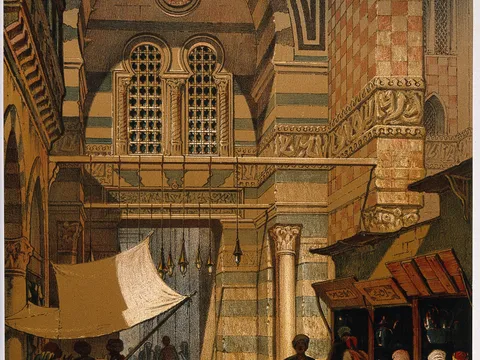 LanguageHashishArabic for dried grass. The word for cannabis resin from Morocco to Afghanistan.
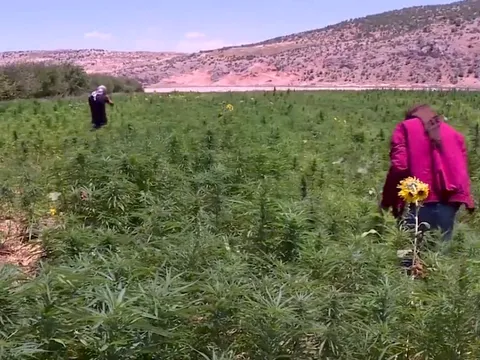 TraditionsHashish in the BekaaThe farmers of Lebanon's northern Bekaa valley have grown cannabis for hashish through a century of bans, a civil war and repeated campaigns to destroy their fields. In 2020 Lebanon became the first Arab country to license the crop, for medicine.
Did you know? all cases →
2025 · Lebanon
Lebanon became the first Arab country to legalise growing cannabis in 2020. It took five more years to appoint the regulator that issues the licences.
The full story →Traditions · Lebanon
“In Yammouneh, we grow either apples or hashish,” the mayor of a village in Lebanon's Bekaa valley said in 2012. A kilogram of apples fetched 30 cents; a kilogram of resin, $1,700.
Read the entry →
Datasets not part of the score
What other organisations publish about Lebanon, and where it stands among the countries each one covers. Each dataset has a page of its own, with a world map and every country's figure.
Use
UNODC · 2009
Cannabis use
2%of people aged 15–64
6.4% · 20012% · 200920012009 ages 15–64 · survey 2009 · 75,000 people · UNODC 2026
Source Survey ages and years vary, and some surveys include children. Rates are not age-standardised; do not compare countries directly.WHO, Our World in Data · 2020
Alcohol drunk per person
1.26litres of pure alcohol a year
2.28 · 20002.28 · 20012.20 · 20022.10 · 20032.04 · 20041.94 · 20051.85 · 20061.82 · 20071.81 · 20081.84 · 20091.82 · 20101.75 · 20111.62 · 20121.55 · 20131.53 · 20141.53 · 20151.52 · 20161.51 · 20171.48 · 20181.48 · 20191.26 · 202020002020 Higher than 21% of 187 countriesLowestHighestper person aged 15 or over · 2020 · 2.28 in 2000 · 1.82 in 2010
Law
UNODC · 2021
Police contact for drug use or possession
21per 100,000 people
Higher than 30% of 101 countriesFewerMore1,202 people in 2021 · all drugs together
UNODC · 2022
Cannabis seized
8,126kg in 2022
6,695 · 20157,689 · 20166,390 · 20178,384 · 20184,450 · 201924,769 · 202015,438 · 20218,126 · 202220152022 Higher than 63% of 163 countriesLess seizedMore seized25 kg of herb · 8,101 kg of resin · 6,695 kg in 2015 · 24,769 kg in 2020
Society
OpenAlex · 2025
Research on cannabis
2.2papers per million people
0.2 · 20020.2 · 20060.2 · 20070.2 · 20080.2 · 20090.7 · 20100.2 · 20110.3 · 20120.5 · 20130.5 · 20141.0 · 20150.7 · 20161.2 · 20171.2 · 20180.3 · 20191.4 · 20201.7 · 20211.5 · 20221.2 · 20232.2 · 20242.2 · 202520022025 Higher than 66% of 176 countriesLowestHighest13 papers in 2025 · 4 in 2010
Cato and Fraser Institutes · 2023
Human Freedom Index
5.91of 10
5.18 · 20005.29 · 20015.28 · 20025.33 · 20035.62 · 20045.48 · 20055.85 · 20065.98 · 20075.84 · 20086.02 · 20096.64 · 20106.76 · 20116.60 · 20126.34 · 20136.31 · 20146.39 · 20156.53 · 20166.58 · 20176.58 · 20186.50 · 20195.85 · 20205.88 · 20216.06 · 20225.91 · 202320002023 Higher than 29% of 164 countriesLess freeFreerrank #117 of 165 · personal freedom 6.39 · economic freedom 5.24
V-Dem, Our World in Data · 2025
Civil liberties
0.69of 1 in 2025
0.64 · 19180.64 · 19190.64 · 19200.64 · 19210.64 · 19220.64 · 19230.64 · 19240.64 · 19250.64 · 19260.65 · 19270.65 · 19280.65 · 19290.65 · 19300.65 · 19310.65 · 19320.65 · 19330.65 · 19340.65 · 19350.65 · 19360.65 · 19370.65 · 19380.65 · 19390.63 · 19400.63 · 19410.64 · 19420.68 · 19430.69 · 19440.69 · 19450.69 · 19460.69 · 19470.69 · 19480.70 · 19490.70 · 19500.70 · 19510.70 · 19520.70 · 19530.69 · 19540.70 · 19550.70 · 19560.70 · 19570.70 · 19580.69 · 19590.69 · 19600.69 · 19610.69 · 19620.69 · 19630.69 · 19640.69 · 19650.69 · 19660.69 · 19670.69 · 19680.69 · 19690.70 · 19700.70 · 19710.69 · 19720.69 · 19730.69 · 19740.61 · 19750.56 · 19760.56 · 19770.56 · 19780.56 · 19790.56 · 19800.56 · 19810.56 · 19820.56 · 19830.56 · 19840.56 · 19850.56 · 19860.56 · 19870.56 · 19880.56 · 19890.58 · 19900.57 · 19910.58 · 19920.58 · 19930.58 · 19940.58 · 19950.58 · 19960.58 · 19970.58 · 19980.58 · 19990.57 · 20000.58 · 20010.57 · 20020.57 · 20030.58 · 20040.65 · 20050.69 · 20060.69 · 20070.69 · 20080.73 · 20090.72 · 20100.73 · 20110.72 · 20120.72 · 20130.72 · 20140.70 · 20150.72 · 20160.70 · 20170.69 · 20180.69 · 20190.71 · 20200.67 · 20210.65 · 20220.67 · 20230.67 · 20240.69 · 202519182025 Higher than 43% of 175 countriesFewer libertiesMore liberties0.64 in 1925 · 0.69 in 1961 · 0.58 in 1990
Our World in Data, World Bank · 2025
Population
5,849,421people in 2025
501,417 · 1900637,099 · 1910769,131 · 1920926,073 · 19301,115,039 · 19401,349,351 · 19501,794,411 · 19602,386,119 · 19702,944,765 · 19803,595,175 · 19904,329,345 · 20005,041,290 · 20105,702,400 · 20205,849,421 · 202519002025 Higher than 41% of 196 countriesLowestHighest501,417 in 1900 · 1,349,351 in 1950 · 4,329,345 in 2000
CEPII
Former colonial rulers
Once ruled by France
World Bank · 2025
Government effectiveness
30of 100
46 · 199651 · 199851 · 200046 · 200246 · 200349 · 200449 · 200549 · 200647 · 200744 · 200844 · 200947 · 201045 · 201144 · 201243 · 201345 · 201444 · 201545 · 201646 · 201741 · 201838 · 201933 · 202031 · 202131 · 202228 · 202329 · 202430 · 202519962025 Higher than 12% of 195 countriesLowestHighestestimate -1.10 on a scale of −2.5 to 2.5 · 2025 · 51 in 2000 · 44 in 2015
Transparency International · 2024
Corruption Perceptions Index
22of 100
30 · 201228 · 201327 · 201428 · 201528 · 201628 · 201728 · 201828 · 201925 · 202024 · 202124 · 202224 · 202322 · 202420122024 Higher than 13% of 178 countriesLowestHighest0 highly corrupt, 100 very clean · 2024 · 28 in 2015 · 25 in 2020
Pew Research Center · 2020
Most common religion
Muslims
the largest group · 2020
World Bank · 2024
Income per person
$10,469per person
5,346 · 19907,828 · 19918,924 · 19929,695 · 199310,295 · 199410,762 · 199511,757 · 199611,668 · 199711,885 · 199811,617 · 199911,572 · 200011,818 · 200112,054 · 200212,272 · 200312,882 · 200413,025 · 200513,004 · 200613,942 · 200714,955 · 200816,264 · 200917,391 · 201017,353 · 201117,323 · 201216,396 · 201315,206 · 201414,980 · 201515,572 · 201616,129 · 201716,290 · 201815,660 · 201912,507 · 202011,600 · 202111,475 · 202211,330 · 202310,469 · 202419902024 Higher than 35% of 187 countriesLowestHighestat purchasing power parity, 2021 dollars · 2024 · $5,346 in 1990 · $17,391 in 2010
World Bank · 2024
Development indicators
80.6%use the internet
0% · 19900.1% · 19950.1% · 19961.2% · 19972.7% · 19985.4% · 19998% · 20006.8% · 20017% · 20028% · 20039% · 200410.1% · 200515% · 200618.7% · 200722.5% · 200830.1% · 200943.7% · 201052% · 201161.2% · 201270.5% · 201373% · 201474% · 201576.1% · 201678.2% · 201780.9% · 201881.5% · 201982.1% · 202082.7% · 202181.5% · 202281.7% · 202380.6% · 202419902024 Higher than 49% of 195 countriesLowestHighest90.7% live in towns · 10.1% aged 65+ · life expectancy 77.9 · 2024 · 8% in 2000 · 43.7% in 2010
GDELT · 2025
Cannabis in the news
0.0002%of global news: cannabis articles from here
0.0003% · 20170.0003% · 20180.0002% · 20190.0001% · 20200.0002% · 20210.0003% · 20220.0001% · 20230.0001% · 20240.0002% · 202520172025 Higher than 48% of 147 countriesLowestHighest2025 average, 348 days · 0.0003% in 2018 · 0.0002% in 2021
Plant and market
GBIF · 2026
Records of the cannabis plant
7dated records
4 · 20095 · 20196 · 20237 · 202620092026 Higher than 39% of 128 countriesLowestHighest3 more without a date · 1 in 2026
Enforcement 6 reports · the Cannabis Enforcement Tracker →
How the law above is applied: raids, seizures, fields destroyed, arrests and sentences, as recorded by the Cannabis Enforcement Tracker, our companion site.
- EradicationArmy destroys 180 dunums of cannabis near Hermel
The Lebanese Army said it destroyed about 180 dunums of cannabis and seized about 60 tonnes of the crop at Jabab al-Hamr near Hermel on 26 October 2026.
- RaidArmy seizes 22 kg of hashish, destroys 14 cannabis tents in Dar al-Wasaa
The Lebanese Army raided wanted men's homes in Dar al-Wasaa, Baalbek, seizing 22 kg of hashish and 22,000 Captagon pills, destroying 14 cannabis-growing tents and arresting two Syrians.
- ArrestLebanon arrests a sanctioned cannabis and Captagon trafficker
The army arrested Nouh Zeaiter, a US-sanctioned Captagon and cannabis trafficker, at Kneiseh in Baalbek-Hermel. He had admitted cannabis cultivation and trafficking.
- RaidLebanon's army kills a clan member in a Bekaa drug raid
A drone strike attributed to the Lebanese Army in Dar al-Wassaa near Yammouneh killed Hassan Abbas Jaafar, a member of the Jaafar clan wanted for drug trafficking, killings and attacks on soldiers; two other clan members were wounded.
- EradicationLebanon's army destroys cannabis fields in the northern Bekaa
Army units destroyed cannabis fields in Zarazir, Deir al-Ahmar and Shleefa in the northern Bekaa, including plants grown inside homes, and arrested a suspect.
- SeizureLebanon seizes 6.4 kg of hashish at Beirut airport
Customs seized 6.416 kg of hashish at Beirut airport from an Egyptian traveller, hidden in a shipping suitcase and bound for an Arab country. The case was one of the few cannabis-specific seizures reported in 2024.
History 27 of 27 checked against a source
Score and entries per decade
11 today, from 100 before its first recorded change
This country's score Entries that moved the score Context only
20263 entries0 score changes
Other law ✓
Six years after legalising cannabis, Lebanon issues no cultivation licence
No cannabis cultivation licence had been issued by 17 August 2026, six years after Law 178. The implementing decrees had still not entered into force, and the regulator said the framework was ready but blocked in the ministries. The delay left the legal export industry unbuilt while the Bekaa crop remained illegal.
Debate ✓
Lebanon's health ministry drafts a new drug law
A July 2026 case study by Harm Reduction International reported that Lebanon's Ministry of Public Health was developing a new drug law to distinguish drug possession from supply, alongside an updated national strategy on substance use. No draft text, date or parliamentary timetable was given. The 1998 drug law still criminalises use and possession, and the plan had not been adopted.
Medical ✓
Lebanon signs a deal for its first public cannabis laboratory
Lebanon signed a $10 million agreement with Zhonghua Lianchuang International Holding, a Hong Kong-based Chinese company, to fund the first public laboratory for testing and research in the therapeutic cannabis sector. The laboratory at Lebanese University's faculty of agronomy in Dikwaneh will operate under the Cannabis Regulatory Authority, test and improve Lebanese seeds for export, map growers and catalogue strains. The company is providing $4 million in equipment and the rest in training and technical assistance. The regulatory framework was still awaiting approval when the agreement was signed.
20252 entries0 score changes
Medical ✓ Article
Lebanon finally appoints its cannabis regulator
Five years after Law 178 legalised growing cannabis for medical and industrial use, the Council of Ministers formed the Cannabis Regulatory Authority that the law required. It is to manage and issue cultivation licences.
Tightening ✓
Lebanon explicitly bans HHC and THCP
A decree published on 22 May 2025 added hexahydrocannabinol (HHC) and tetrahydrocannabiphorol (THCP) to Table 1 of Lebanon's 1998 drug law, the list of highly dangerous substances with no medical use. The decree places both cannabinoids in the national schedule that mirrors the 1971 Convention's most restrictive table. Possession, sale and import of either substance are treated as Table 1 offences.
20201 entry0 score changes
20181 entry0 score changes
20121 entry0 score changes
20111 entry0 score changes
20071 entry0 score changes
20021 entry0 score changes
19972 entries0 score changes
International ✓
The United States takes Lebanon off its list of major drug producers
An eradication campaign in the early 1990s had nearly halted cannabis farming in the Bekaa, and Lebanon was removed from the US list of major drug-producing countries. The money promised for alternative crops never arrived, and the development programme was dropped in 2001.
International ✓
Lebanon joins the 1972 Protocol amending the Single Convention
Lebanon ratified the Protocol amending the Single Convention on Narcotic Drugs on 5 March 1997. The Protocol, adopted in Geneva on 25 March 1972 and in force from 8 August 1975, strengthened the international control board and, among other changes, lets parties provide treatment, education, after-care and rehabilitation for people who use drugs, as an alternative to conviction or punishment or in addition to it.
19961 entry0 score changes
19921 entry0 score changes
19901 entry0 score changes
19841 entry0 score changes
19701 entry0 score changes
19651 entry0 score changes
19511 entry0 score changes
19462 entries1 score change
International ✓
Lebanon carries the 1925 Opium Convention over to the United Nations
Lebanon became a party on 13 December 1946 to the Protocol of 11 December 1946, which transferred to the United Nations the League of Nations' functions under the earlier drug treaties. It thereby remained bound by the International Opium Convention signed at Geneva in 1925, the first treaty to put Indian hemp under international control.
Tightening ✓ Article
Lebanon passes a law against growing cannabis
Lebanon’s parliament passed a general narcotics law on 18 June 1946. Article 2 banned cannabis (al-qinnab al-hindi, “hashishat al-kayf”) and opium poppy cultivation and allowed no licence, unlike article 1’s medical and scientific licensing. Article 3 set one to three years and LBP 100–10,000; landowners, mukhtars and guards who knew could be punished, and fields could be destroyed without a conviction. It repealed the 1934 decree.
1411−3 points
19341 entry0 score changes
19291 entry0 score changes
19261 entry1 score change
19221 entry1 score change
19071 entry0 score changes
Sources hover a number in the text to see its source
- Cited
- 14
- Websites
- 11
- Last reviewed
- History checked
- 27/27
Most cited
- lebaneselegislation.com3
- today.lorientlejour.com2
- arabnews.com1
- cms.law1
- en.wiktionary.org1
- hri.global1
All 14 sources
- Wiktionary — حشيش (South Levantine Arabic)Hashish; cannabis resin.archived
- Lebanon — Law of 18 June 1946 on narcotic substancesArticle 2 (cannabis and opium poppy cultivation ban), article 3 (penalties), Official Gazette 26 of 26 June 1946.archived
- Lebanon — Law No. 178 of 28 May 2020 on licensing cannabis cultivation for medical and industrial useArticles 2–4, 33 and 37; Official Gazette 23/2020, 4 June 2020.archived
- Lebanon — Law No. 673 of 16 March 1998 on narcotic drugs, psychotropic substances and precursorsArticles 5, 11, 13, 125–127, 143–144, 150, 152, 159 and 161; Table 1.archived
- Harm Reduction International — Lebanon's Shift Toward Health-Centred Drug Policy (July 2026)2021–2023 sentencing, pre-trial detention and Drug Addiction Committee figures.archived
- L'Orient Today — Why is Lebanon still behind on regulating medicinal cannabis? (10 February 2026)CRA chairman on the 2026 harvest timetable; Saideh farmers.archived
- The Beiruter — The crop Lebanon legalized but never built (17 August 2026)No cultivation licence issued; implementing decrees not in force.archived
- JIED — Michelle Wazan, The Show Must Go On: A Brief History of Lebanon's Drug Control Politics (2023)Enforcement, Bekaa production and the 1928, 1984 and 2022 estimates.archived
- L'Orient Today — Army destroys cannabis fields in North Bekaa (21 August 2025)Zarazir, Deir al-Ahmar and Shleefa; plants inside homes; one arrest.archived
- Arab News — Lebanon says it busts international drug network (September 2025)720 kg of hashish and Captagon pills.archived
- IDPC/Skoun — The legalization of the cultivation of cannabis in Lebanon (10 May 2023)Law 178 does not create patient access or reschedule cannabis.archived
- CMS — Cannabis law and legislation in Lebanon (expert guide)THC/CBD limits, controlled CBD and the 1% industrial figure.archived
- Lebanon Debate — 6.4 kg of hashish seized at Beirut airport (18 June 2024)Egyptian traveller; 6.416 kg.archived
- International Narcotics Control Board — Travellers carrying medicines containing controlled substances