Kazakhstan
14/100
#67 of 196 worldwide
#7 of 48 in Asia
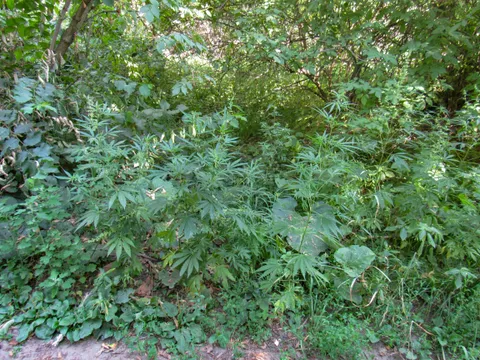
Unauthorized possession of even a small amount, without intent to sell, is a criminal offence under Article 296, with a fine, corrective work, community service or up to 40 days' arrest. An especially large amount can bring three to seven years. A proposal to take simple possession out of the Criminal Code has not been enacted. Wild cannabis covers the Chu valley.
In short all countries →
- Can I carry it?NoEven a small amount can bring a fine or a charge
- Can I grow it?NoIt is a crime
- Can I buy it?NoThere is no legal source
- Can I use it in public?NoNot in public, and even at home the law does not protect it
- What if I'm caught?Fine or prisonUsually a fine; prison is possible
A rough guide read from the scores and the rules below, not legal advice. The details and the exceptions are in each segment: select an answer to jump to it.
Cannabis in Kazakhstan not part of the score · all 17 datasets ↓
Who uses it
About 1 in 42
people aged 15–64 in Kazakhstan used cannabis in the past year: 310,000 people.
- Past year
- 2.4%
- Asia median
- 2%
- Aged 15–16, 2007
- 2.7%
UNODC · survey 2012
Source Past-year cannabis use among people aged 15–64. People who used cannabis in the past year, from a 2012 survey, applied to today's population aged 15–64.Survey ages and years vary, and some surveys include children. Rates are not age-standardised; do not compare countries directly.
UNODC World Drug Report 2026, annex table 1.2. Population from the World Bank, aged 15–64. The whole dataset →
Use across Asia
18thhighest of 40 surveyed countries
- 🇮🇳 India2.8%
- 🇲🇻 Maldives2.5%
- 🇰🇿 Kazakhstan2.4%
- 🇯🇴 Jordan2.1%
- 🇱🇧 Lebanon2.0%
Past-year use, latest survey of each. Survey years and ages differ. On the map →
Cannabis in figures
- Police contact for drug use or possession1.4per 100,000 people · 2021
- Cannabis seized5,653kg in 2024 · 2024
- Research on cannabis0.0papers per million people · 2025
- Cannabis in the news0.0002%of global news: cannabis articles from here · 2025
The dot: where it stands among the countries each dataset covers, lowest to highest. All datasets ↓
Score breakdown 14/100 · how the scores are made
Neighbours
- 🇰🇬 Kyrgyzstan21
- 🇰🇿 Kazakhstan14
- 🇷🇺 Russia11
- 🇺🇿 Uzbekistan11
- 🇨🇳 China10
- 🇹🇲 Turkmenistan2
Article 296 of the Criminal Code covers acquiring, keeping, making or carrying drugs without intent to sell. The basic offence brings a fine of up to 160 monthly calculation indices, corrective work, up to 160 hours of community service or arrest of up to 40 days; a large amount raises this to 200 indices, 200 hours or 50 days; an especially large amount brings three to seven years in prison.[1] The government table sets herbal cannabis at 0.5–50 g for the small band, 50 g–1 kg for the large band and over 1 kg for the especially large band; hashish is 0.5–5 g, 5–200 g and over 200 g.[2] Possession below 0.5 g is below the table's small band and is not expressly addressed by the code.[2] A person who voluntarily hands over drugs acquired for personal use, or seeks medical help, is released from criminal liability.[1]
| Amount | What happens | Punishment | Fine |
| Small amount, Article 296(2)Fine up to 160 monthly calculation indices, corrective work or up to 160 hours of community service | CriminalAcquisition, keeping or carrying without intent to sell | Up to 40 days | — |
| Large amount, Article 296(3)Fine up to 200 monthly calculation indices, corrective work or up to 200 hours of community service | CriminalAcquisition, keeping or carrying without intent to sell | Up to 50 days | — |
| Especially large amount, Article 296(4) | CriminalAcquisition, keeping or carrying without intent to sell | 3–7 years | — |
Article 300 of the Criminal Code punishes sowing or growing cannabis and other prohibited plants with a fine of up to 2,000 monthly calculation indices, corrective work, up to 600 hours of community service, or restriction of liberty or prison for up to two years.[3] A large amount, a group or a repeat offence brings three to eight years; an especially large amount or a criminal group seven to twelve.[3] Since 2025, licensed companies may grow registered hemp varieties containing no more than 0.3% THC; individuals may not.[4][5]
| Amount | What happens | Punishment | Fine |
| Ordinary cultivation, Article 300(1)Fine up to 2,000 monthly calculation indices, corrective work, up to 600 hours of community service or restriction of liberty | CriminalSowing or growing | Up to 2 years | — |
| Group, repeat or large amount, Article 300(2) | CriminalSowing or growing | 3–8 years | — |
| Criminal group or especially large amount, Article 300(3)Property may be confiscated | CriminalSowing or growing | 7–12 years | — |
Fines or short arrest for the smallest amounts, years in prison above them. The Interior Ministry has itself proposed not jailing people for simple possession.[6] The state also counts drug crime as a large share of its caseload: 1,607 drug crimes in the Karasora-2024 operation, and more than 26 tonnes of drugs seized in the first nine months of 2025.[7][8]
Article 297 of the Criminal Code punishes acquiring, storing or transporting drugs for sale, and selling them, with five to eight years in prison and confiscation of property; six to ten years for a large amount; seven to twelve for a group, a repeat offence, an especially large amount or a public place; and fifteen to twenty for a criminal group, an official, or sale in a school or to a minor.[9] A separate 2025 offence covers illegal manufacture, processing or production for sale: five to ten years, rising to fifteen to twenty years or life for a criminal group, an official or illegal production.[10]
| Amount | What happens | Punishment | Fine |
| Acquisition, keeping or transport for sale, or saleProperty confiscated | CriminalArticle 297(1) | 5–8 years | — |
| Large amountProperty confiscated | CriminalArticle 297(2) | 6–10 years | — |
| Group, repeat, especially large amount or public placeProperty confiscated | CriminalArticle 297(3) | 7–12 years | — |
| Manufacture or production for sale (Article 297-1)Higher bands reach fifteen to twenty years or life | CriminalProduction | 5–10 years | — |
| Criminal group, official, school or minorProperty confiscated | CriminalArticle 297(4) | 15–20 years | — |
Using drugs for non-medical purposes in a public place is an offence under the first part of Article 296: a fine of up to 80 monthly calculation indices, corrective work, up to 80 hours of community service or arrest of up to 20 days.[1] A person who voluntarily seeks medical help is released from liability.[1] Since January 2025, private or other non-criminal use is an administrative offence under article 440-1: 40 calculation indices or ten days' arrest, doubled on a repeat.[11] Officials have proposed softening the treatment of users.[6]
| Amount | What happens | Punishment | Fine |
| Public non-medical use, Article 296(1)Fine up to 80 monthly calculation indices, corrective work or up to 80 hours of community service | CriminalUse | Up to 20 days | — |
Context not part of the score · every country, by topic →
Adults have no legal way to buy cannabis. Possession without intent to sell is criminal even in the smallest band, with a fine or up to 40 days' arrest; an especially large amount brings three to seven years.[1] Public use is a separate crime with a fine, community service or up to 20 days' arrest.[1] The market is supplied from wild and planted cannabis in the south, and police run an annual eradication and enforcement operation in the Chu valley.[14] No price or purity data were found.
No approved cannabis medicine or patient-access programme was found in the sources read.[13] The narcotics law allows a narrow route for producing narcotic medicines under Article 18, but licensed cannabis cultivation is described as scientific study and industrial hemp, not medicine for patients.[13] In 2019 investors proposed a $15m clinic and greenhouse near Kapshagay; the Interior Ministry refused, citing prison terms and the UN conventions, and said it had shut an Almaty research lab in 2017.[15] Medical status stays none.
No cannabis clubs are known, and the law leaves no room for them: growing cannabis and supplying it to another person are both prohibited.[3][9]
The 1998 narcotics law lists the cannabis plant as any plant of the genus containing THC, "with the exception of seeds and roots, if they are not accompanied by the plant itself or other parts of plant".[5] Sowing and growing hemp counts as cultivating a narcotic plant and is a controlled activity.[3] Since 2025 licensed companies may grow listed hemp varieties with up to 0.3% THC, and only from original or elite registered seed; individuals may not.[4][5]
Licensed companies may grow approved industrial hemp with no more than 0.3% THC by dry mass.[16] The rules revised in April 2026 require approved original or elite seed, secured growing sites, seed testing before sowing and THC tests during growth and before harvest. Crops above the ceiling must be destroyed.[16] By 2026, 218 varieties from 20 countries had been approved, and HHC was added to the prohibited psychotropic list on 24 February 2026, in force 9 March.[16][2]
Licensed companies may cultivate approved low-THC hemp for industrial purposes unrelated to making narcotic drugs.[16] Article 22 separately permits licensed scientific cultivation within state quotas; growing cannabis to manufacture narcotic medicines is prohibited except for the cases referred to Article 18.[13] The licensed scientific and narrow medicine route is why the industry status is medical rather than hemp-only; the industrial hemp licences describe a separate crop.[16][13]
The market is supplied from inside the country, from wild and planted cannabis in the south.[14] Every summer the interior ministry runs an operation called Karasora against growing, harvesting and transit, with helicopter and drone reconnaissance over the Almaty, Zhetysu, Turkistan, Kyzylorda and Ulytau regions.[14] In 2024 it removed more than 15 tonnes of drugs in 70 days and recorded 450 drug crimes, 102 of them for cultivation; flights alone found over 9,000 cannabis plants.[14] In the first nine months of 2025 police seized more than 26 tonnes of drugs, 35% more than a year earlier, including over nine tonnes of marijuana and more than 600 kg of hashish.[8]
There is no legal recreational supply for anyone. The Criminal Code's penalties run from fines or up to 40 days' arrest for holding drugs without intent to sell to five to eight years in prison, with confiscation of property, for holding or carrying them for sale.[1][9] Advertising or promoting drugs is a separate crime under Article 299-1, added in 2019: up to three years in prison, or three to six when done online, through the media or in a place where many people gather.[17]
The Code of Administrative Offences punishes driving "in a state of alcoholic, narcotic or toxic intoxication" with 15 days of administrative arrest and loss of the licence for seven years; where harm or damage results, 20 days.[18] A repeat within a year brings 20 days and eight years; a repeat with harm brings 25 days and nine years.[18] The article names a state of intoxication, not a measured level, and the Constitutional Court upheld it in October 2023.[18]
In the interior ministry's operation Karasora-2024, between 1 June and 31 October 2024, police recorded 1,607 drug crimes: 799 of sale, 245 of cultivation and 194 of possession.[7] They seized 21.5 tonnes of drugs, among them about 4.5 tonnes of marijuana and more than 16 tonnes of cannabis plants, and destroyed over 380 hectares of wild hemp in the Shu district of Zhambyl region.[7] The ministry gave no national arrest total; in the Turkestan region's Karasora operation police arrested 86 people, and in Zhetysu 135 people aged 17–30 were detained, of whom 127 were convicted.[19]
Unauthorized possession in the ordinary and large bands is a lesser criminal offence, with fines, work or short arrest; especially large holdings can bring three to seven years in prison.[1][20] Under Article 79, a person convicted of a lesser criminal offence is treated as having no formal conviction status (sudimost), the status used for repeat-offending and sentencing rules.[21] A ministry proposal to move ordinary personal possession out of criminal law remains a proposal.[12]
Wild cannabis grows across the Chu valley in the south, known in Russian as anasha or dichka. The Soviet authorities declared it a narcotic in 1969 and tried to burn and spray the fields; the plants grew back.[22] In 2009 the interior ministry estimated that the valley could yield 140,000 tonnes of marijuana and 5,000 to 6,000 tonnes of hashish a year.[22] A 2014 proposal to lease the fields to international pharmaceutical companies came to nothing.[23]
Taking cannabis into or out of Kazakhstan is a separate offence from possessing it, normally charged as smuggling or trafficking, with far heavier penalties. That holds almost everywhere, including between two places where cannabis is legal.
A prescription or medical card from another country is generally not recognised. Travellers who need a cannabis-based medicine should ask Kazakhstan's embassy before travelling.[24]
General guidance that applies to almost every country, not a check of Kazakhstan's customs rules.
Culture the atlas →
Datasets not part of the score
What other organisations publish about Kazakhstan, and where it stands among the countries each one covers. Each dataset has a page of its own, with a world map and every country's figure.
Use
UNODC · 2012
Cannabis use
2.4%of people aged 15–64
4.2% · 20032.4% · 201220032012 ages 15–64 · survey 2012 · 310,000 people · UNODC 2026
Source Survey ages and years vary, and some surveys include children. Rates are not age-standardised; do not compare countries directly.UNODC · 2007
Cannabis use at 15 and 16
2.7%in the past year
Higher than 10% of 49 countriesLowestHighest4.6% ever · 2007 · ages 15–16
WHO, Our World in Data · 2020
Alcohol drunk per person
4.52litres of pure alcohol a year
6.64 · 20006.64 · 20016.77 · 20026.99 · 20037.24 · 20047.41 · 20056.62 · 20065.52 · 20074.26 · 20084.22 · 20094.20 · 20104.39 · 20114.32 · 20124.40 · 20134.25 · 20144.17 · 20154.19 · 20164.48 · 20174.52 · 20184.52 · 20194.52 · 202020002020 Higher than 51% of 187 countriesLowestHighestper person aged 15 or over · 2020 · 6.64 in 2000 · 4.20 in 2010
Law
UNODC · 2021
Police contact for drug use or possession
1.4per 100,000 people
20 · 20201.4 · 202120202021 Higher than 9% of 101 countriesFewerMore300 people in 2021 · all drugs together
UNODC · 2024
Cannabis seized
5,653kg in 2024
34,628 · 201529,747 · 201634,898 · 201717,909 · 201810,399 · 20199,548 · 202012,521 · 20216,702 · 20228,696 · 20235,653 · 202420152024 Higher than 59% of 163 countriesLess seizedMore seized5,000 kg of herb · 653 kg of resin · 34,628 kg in 2015 · 9,548 kg in 2020
Society
OpenAlex · 2025
Research on cannabis
0.0papers per million people
0.0 · 20140.2 · 20170.1 · 20180.0 · 20190.2 · 20200.1 · 20210.1 · 20220.1 · 20230.2 · 20240.0 · 202520142025 Higher than 7% of 176 countriesLowestHighest1 papers in 2025
Cato and Fraser Institutes · 2023
Human Freedom Index
6.38of 10
6.25 · 20006.20 · 20016.24 · 20026.18 · 20036.32 · 20046.24 · 20056.15 · 20066.24 · 20076.27 · 20086.34 · 20096.30 · 20106.13 · 20116.26 · 20126.23 · 20136.31 · 20146.34 · 20156.23 · 20166.33 · 20176.39 · 20186.47 · 20196.30 · 20206.31 · 20216.34 · 20226.38 · 202320002023 Higher than 37% of 164 countriesLess freeFreerrank #105 of 165 · personal freedom 6.06 · economic freedom 6.84
V-Dem, Our World in Data · 2025
Civil liberties
0.51of 1 in 2025
0.28 · 19000.28 · 19010.28 · 19020.28 · 19030.28 · 19040.29 · 19050.31 · 19060.32 · 19070.32 · 19080.33 · 19090.34 · 19100.34 · 19110.34 · 19120.34 · 19130.32 · 19140.31 · 19150.30 · 19160.30 · 19170.07 · 19180.06 · 19190.06 · 19200.05 · 19210.06 · 19220.05 · 19230.04 · 19240.04 · 19250.03 · 19260.03 · 19270.03 · 19280.03 · 19290.02 · 19300.02 · 19310.02 · 19320.02 · 19330.02 · 19340.02 · 19350.01 · 19360.01 · 19370.01 · 19380.01 · 19390.01 · 19400.02 · 19410.02 · 19420.02 · 19430.02 · 19440.02 · 19450.02 · 19460.02 · 19470.02 · 19480.01 · 19490.01 · 19500.01 · 19510.01 · 19520.02 · 19530.12 · 19540.13 · 19550.13 · 19560.15 · 19570.15 · 19580.15 · 19590.15 · 19600.15 · 19610.15 · 19620.15 · 19630.15 · 19640.15 · 19650.15 · 19660.15 · 19670.15 · 19680.14 · 19690.15 · 19700.15 · 19710.15 · 19720.15 · 19730.15 · 19740.15 · 19750.15 · 19760.15 · 19770.15 · 19780.15 · 19790.15 · 19800.15 · 19810.15 · 19820.15 · 19830.15 · 19840.17 · 19850.25 · 19860.28 · 19870.29 · 19880.31 · 19890.57 · 19900.61 · 19910.61 · 19920.62 · 19930.63 · 19940.61 · 19950.59 · 19960.59 · 19970.58 · 19980.58 · 19990.58 · 20000.57 · 20010.56 · 20020.55 · 20030.54 · 20040.50 · 20050.51 · 20060.53 · 20070.54 · 20080.54 · 20090.53 · 20100.51 · 20110.51 · 20120.49 · 20130.49 · 20140.48 · 20150.50 · 20160.47 · 20170.46 · 20180.48 · 20190.51 · 20200.51 · 20210.52 · 20220.53 · 20230.52 · 20240.51 · 202519002025 Higher than 31% of 175 countriesFewer libertiesMore liberties0.04 in 1925 · 0.15 in 1961 · 0.57 in 1990
Our World in Data, World Bank · 2025
Population
20,843,754people in 2025
4,161,983 · 19004,543,093 · 19104,964,613 · 19205,439,477 · 19305,959,762 · 19406,787,149 · 19509,429,982 · 196012,419,056 · 197015,152,953 · 198017,154,060 · 199015,501,108 · 200016,836,808 · 201019,482,116 · 202020,843,754 · 202519002025 Higher than 67% of 196 countriesLowestHighest4,161,983 in 1900 · 6,787,149 in 1950 · 15,501,108 in 2000
CEPII
Former colonial rulers
Once ruled by Russian Federation
World Bank · 2025
Government effectiveness
54of 100
21 · 199627 · 199829 · 200028 · 200228 · 200332 · 200432 · 200533 · 200632 · 200736 · 200837 · 200937 · 201038 · 201140 · 201240 · 201350 · 201450 · 201548 · 201650 · 201748 · 201852 · 201952 · 202051 · 202154 · 202255 · 202354 · 202454 · 202519962025 Higher than 52% of 195 countriesLowestHighestestimate 0.10 on a scale of −2.5 to 2.5 · 2025 · 29 in 2000 · 50 in 2015
Transparency International · 2024
Corruption Perceptions Index
40of 100
28 · 201226 · 201329 · 201428 · 201529 · 201631 · 201731 · 201834 · 201938 · 202037 · 202136 · 202239 · 202340 · 202420122024 Higher than 50% of 178 countriesLowestHighest0 highly corrupt, 100 very clean · 2024 · 28 in 2015 · 38 in 2020
Pew Research Center · 2020
Most common religion
Muslims
the largest group · 2020
World Bank · 2025
Income per person
$37,851per person
16,838 · 199014,878 · 199114,045 · 199212,796 · 199311,335 · 199410,600 · 199510,857 · 199611,299 · 199711,364 · 199811,816 · 199912,936 · 200014,612 · 200115,961 · 200217,345 · 200318,887 · 200420,566 · 200522,574 · 200624,351 · 200724,896 · 200824,901 · 200926,375 · 201027,946 · 201128,881 · 201230,177 · 201330,986 · 201430,894 · 201530,758 · 201631,524 · 201732,330 · 201833,298 · 201932,012 · 202032,946 · 202133,506 · 202234,703 · 202335,974 · 202437,851 · 202519902025 Higher than 74% of 187 countriesLowestHighestat purchasing power parity, 2021 dollars · 2025 · $16,838 in 1990 · $26,375 in 2010
World Bank · 2024
Development indicators
93.4%use the internet
0% · 19900% · 19940% · 19950% · 19960.1% · 19970.1% · 19980.5% · 19990.7% · 20001% · 20011.7% · 20022% · 20032.7% · 20043% · 20053.3% · 20064% · 200711% · 200818.2% · 200931.6% · 201050.6% · 201161.9% · 201263.3% · 201366% · 201470.8% · 201574.6% · 201676.4% · 201778.9% · 201881.9% · 201985.9% · 202090.9% · 202192.3% · 202292.9% · 202393.4% · 202419902024 Higher than 81% of 195 countriesLowestHighest62.1% live in towns · 8.7% aged 65+ · life expectancy 74.5 · higher education 53.5% · 2024 · 0.7% in 2000 · 31.6% in 2010
GDELT · 2025
Cannabis in the news
0.0002%of global news: cannabis articles from here
0.0002% · 20170.0003% · 20180.0004% · 20190.0004% · 20200.0004% · 20210.0003% · 20220.0003% · 20230.0003% · 20240.0002% · 202520172025 Higher than 48% of 147 countriesLowestHighest2025 average, 348 days · 0.0003% in 2018 · 0.0004% in 2021
Plant and market
GBIF · 2026
Records of the cannabis plant
448dated records
3 · 18405 · 18556 · 18759 · 189510 · 192016 · 192817 · 192918 · 193022 · 193123 · 193224 · 193326 · 194328 · 195629 · 195730 · 195832 · 196333 · 196834 · 198136 · 198537 · 198838 · 199040 · 199341 · 200243 · 200444 · 200645 · 200947 · 201149 · 201251 · 201355 · 201473 · 201575 · 201677 · 201781 · 201897 · 2019138 · 2020170 · 2021183 · 2022234 · 2023322 · 2024401 · 2025448 · 202618402026 Higher than 88% of 128 countriesLowestHighest58 more without a date · 47 in 2026
Enforcement 3 reports · the Cannabis Enforcement Tracker →
How the law above is applied: raids, seizures, fields destroyed, arrests and sentences, as recorded by the Cannabis Enforcement Tracker, our companion site.
- SeizureKazakhstan's 2026 cannabis campaign finds 40 plantations in ten days
In the first ten days of the 2026 Karasora operation, police recorded 187 drug offences, including 46 sales, 40 cases of cultivating drug plants and four of smuggling.
- SeizureZhambyl police cut and burn 3,000 tonnes of wild cannabis
By mid-August 2025, during the Karasora operation, police in Zhambyl region mowed wild cannabis on 4,394.6 hectares of steppe and burned the cut plants. The regional police put the total weight at more than 3,000 tonnes.
- SeizureKazakhstan's 2024 cannabis sweep finds 21.5 tonnes of drugs
The interior ministry's Karasora operation ran from 1 June to 31 October 2024 and recorded 1,607 drug crimes: 799 sales, 245 cultivation and 194 possession.
History 27 of 27 checked against a source
Score and entries per decade
14 today, from 100 before its first recorded change
This country's score Entries that moved the score Context only
20263 entries0 score changes
Hemp ✓
Kazakhstan revises security and testing rules for hemp farmers
The government approved revised requirements for licensed industrial-hemp fields, including site security, separation from roads and settlements, and THC checks before sowing and during growth. Ordinary industrial crops need a 300-metre separation, while seed crops need two kilometres; the rules allow specified technical security systems. The 0.3% dry-mass THC ceiling remains, with crops above it subject to destruction. The amendment takes effect after official publication.
Tightening ✓
Kazakhstan bans HHC, a hemp-derived cannabinoid
Government resolution No. 111 added hexahydrocannabinol (HHC) to Table I of psychotropic substances whose use in medicine is prohibited. The change took effect on 9 March 2026, ten days after publication. Once listed, unauthorised possession or sale is treated as a drug offence. The same resolution added several synthetic opioids and other substances to the controlled lists.
Enforcement ✓
Kazakhstan reports 31 tonnes of drugs seized in 2025
The interior ministry said police recorded more than 7,000 drug offences in 2025, broke up 15 organised groups and closed more than 130 interregional supply channels. Seizures rose to more than 31 tonnes of drugs, which the ministry described as more than 12 million single doses. Police also shut more than 100 underground laboratories and used drones to find plantations.
Tightening ✓
Kazakhstan starts fining drug use outside public places
Law No. 155-VIII added Article 440-1 to the Administrative Code, making non-medical drug use an administrative offence where it is not already a crime. The fine is 40 monthly calculation indices or ten days' arrest, and 80 indices or twenty days for a repeat within a year. Public use remains a criminal offence under Article 296, so the new article covers use that is not already a crime, in practice outside public places. It took effect 60 days after publication.
Other law ✓
Kazakhstan splits drug-selling and drug-making offences, cutting some terms
Law No. 150-VIII moved illegal manufacture, processing and production for sale out of the sale article into a new Article 297-1. Ordinary sale now carries five to eight years instead of five to ten, large-scale sale six to ten instead of six to twelve, and aggravated sale seven to twelve instead of ten to fifteen. The new production offence carries five to ten years, rising to fifteen to twenty or life for a criminal group, an official, or illegal production. The law took effect 60 days after publication.
20231 entry0 score changes
20192 entries0 score changes
Tightening ✓
Kazakhstan makes advertising drugs a crime
Law No. 292-VI of 27 December 2019 added Article 299-1 to the Criminal Code, making propaganda or illegal advertising of narcotic drugs a crime of its own. The basic offence carries up to three years in prison; done by a group, repeatedly, in schools or places where many people gather, or through the media and online platforms, it carries three to six years. The article was amended in 2022 and 2024.
Debate ✓
Investors propose a cannabis clinic in Kazakhstan; the interior ministry says no
A group of investors said they would spend $15 million on a greenhouse near Kapshagay and a clinic using a cannabis oil for cancer patients, and would start talks with the health and interior ministries. The interior ministry's anti-drug department said cultivating any narcotic plant was punishable by up to eight years, and that only technical hemp with no cannabinoids could be grown. It also said it had stopped a research lab in Almaty two years earlier, citing the UN drug conventions. The proposal did not create a legal route.
20171 entry0 score changes
20151 entry1 score change
20141 entry0 score changes
20112 entries2 score changes
Easing ✓ Article
Kazakhstan moves large personal drug holdings out of criminal law
Kazakhstan made buying, carrying or keeping drugs without intent to supply in the legally defined large-quantity band an administrative offence, punishable by a fine of up to 200 calculation units or up to 45 days’ detention. The 2011 reform was part of a programme to reduce criminal prosecution and imprisonment of users. Especially large personal holdings still carried three to seven years in prison, while the replacement code made smaller holdings criminal in 2015.
1315+2 points
Tightening ✓ Article
Kazakhstan adds detention for repeatedly using drugs in public
Kazakhstan raised its public drug-use fine to five monthly calculation units, with ten for repetition, and added fifteen days’ detention after two earlier public-use penalties within a year. The amendment took effect after publication in January 2011, replacing the fine-only offence introduced in 2006. The public-use offence later moved into criminal law under the replacement code in 2015.
1413−1 point
20091 entry0 score changes
20061 entry0 score changes
19982 entries1 score change
Other law ✓
Kazakhstan passes its narcotics law
Law No. 279 on narcotic drugs and psychotropic substances set the framework for drug control in independent Kazakhstan, home to the wild cannabis of the Chuy Valley.
Easing ✓ Article
Kazakhstan eases penalties for small possession and cannabis growing
Kazakhstan’s replacement criminal code punished personal acquisition or keeping drugs under its possession offence only in the legally defined large band, with up to three years in prison; it left out the old separate crime of repeated small possession. Ordinary unauthorised cannabis growing could bring a fine or up to two years, replacing the old named-hemp offence’s five-year maximum. The law bringing the code into force required review of earlier sentences and closure of cases for conduct the new code no longer treated as criminal.
914+5 points
19971 entry0 score changes
19911 entry1 score change
19871 entry1 score change
19751 entry0 score changes
19691 entry0 score changes
19591 entry0 score changes
19351 entry1 score change
19261 entry0 score changes
Sources hover a number in the text to see its source
- Cited
- 24
- Websites
- 14
- Last reviewed
- History checked
- 27/27
Most cited
- kodeksy-kz.com8
- old.adilet.zan.kz3
- tengrinews.kz2
- adilet.zan.kz1
- gov.kz1
- importlicensing.wto.org1
All 24 sources
- Kazakhstan — Criminal Code of 3 July 2014, Article 296, text current to October 2026 (kodeksy-kz.com)Parts 1–4 and notes; checked 22 October 2026.archived
- Kazakhstan — Resolution 470 of 3 July 2019 on drug quantities, as amended in 2026Herbal cannabis 0.5–50 g, 50 g–1 kg, over 1 kg; hashish 0.5–5 g, 5–200 g, over 200 g.
- Kazakhstan — Criminal Code of 3 July 2014, Article 300 (kodeksy-kz.com)Parts 1–3, text checked 22 October 2026.archived
- Tengrinews — Требования к выращиванию конопли утвердили в Казахстане: чего делать нельзя (30 September 2025)archived
- Law of the Republic of Kazakhstan No. 279-I on narcotic drugs, psychotropic substances and precursors (1998), English text as notified to the WTO (PDF)archived
- NewTimes.kz — Interior Ministry proposes not jailing people for drug possessionarchived
- Inbusiness.kz — Более 20 тонн наркотиков изъяли казахстанские полицейские с начала июня 2024 года (11 November 2024)archived
- The Times of Central Asia — Kazakhstan proposes cash rewards for citizens who report drug crimes (22 October 2025)archived
- Kazakhstan — Criminal Code of 3 July 2014, Article 297, text current to October 2026 (kodeksy-kz.com)Parts 1–4; checked 22 October 2026.archived
- Kazakhstan — Criminal Code, Article 297-1 (manufacture or production for sale)Parts 1–4; life imprisonment in part 4.archived
- Kazakhstan — Administrative Code, Article 440-1 (non-medical use)40 MCI or 10 days; repeat 80 MCI or 20 days.archived
- Zakon.kz — Kazakhstan plans to change punishment for drug usearchived
- Kazakhstan — Narcotic Drugs Act, current Article 22Article 22(1)–(2), (5)–(7): licensed scientific cultivation, restriction on medicinal-drug crops and industrial hemp; indexed current text read.
- МВД Республики Казахстан — Қарасора: свыше 15 тонн наркотиков изъято из незаконного оборота (13 August 2024)archived
- Tengrinews — Kazakhstan proposed legalising cannabis cultivation (2 May 2019)archived
- Kazakhstan — Resolution 797 of 26 September 2025, amended by Resolution 259 of 11 April 2026Resolution point 2 and cultivation requirements 3–7: corporate licences, 0.3% dry-mass THC, seed, site security, testing and destruction.
- Kazakhstan — Criminal Code of 3 July 2014, Article 299-1 (kodeksy-kz.com)archived
- Kazakhstan — Code of Administrative Offences, Article 608 (Adilet)Article 608, current text checked October 2026.archived
- Polisia.kz — 86 arrested in Turkestan's Karasora operation (7 November 2025)archived
- Kazakhstan — Criminal Code, Article 10, text checked October 2026 (kodeksy-kz.com)archived
- Kazakhstan — Criminal Code, Article 79(1)–(2), text checked October 2026 (kodeksy-kz.com)archived
- The National — Roots of drug trade run deep (14 September 2009)archived
- Foreign Policy via TNI — Kazakhstan wants to attract Big Pharma to its 'Cannabis Klondike' (15 January 2014)archived
- International Narcotics Control Board — Travellers carrying medicines containing controlled substances