13/100
#70 of 196 worldwide
#8 of 48 in Asia
The NDPS Act bans flower and resin. Leaf-only bhang falls outside its cannabis definition, but state law differs: some states license shops, while Maharashtra restricts unauthorised possession and use. Some states license hemp and medical cultivation.
In short all countries →
- Can I carry it?NoFlower and resin are criminal; leaf-only bhang depends on state law and any required authorisation
- Can I grow it?NoIt is a crime
- Can I buy it?LimitedBhang only through lawful outlets in states that permit it; state restrictions also govern possession and use
- Can I use it in public?NoNot in public, and even at home the law does not protect it
- What if I'm caught?Fine or prisonUsually a fine; prison is possible
A rough guide read from the scores and the rules below, not legal advice. The details and the exceptions are in each segment: select an answer to jump to it.
Cannabis in India not part of the score · all 18 datasets ↓
Who uses it
About 1 in 35
people aged 10–75 in India used cannabis in the past year: about 34 million people.
- Past year
- 2.8%
- Asia median
- 2%
UNODC · survey 2018
Source Past-year cannabis use among people aged 10–75. People who used cannabis in the past year, from a 2018 survey, applied to today's population aged 10–75. The population is approximate: the survey ages cut through an age group, or were not recorded and ages 15–64 are used.Survey ages and years vary, and some surveys include children. Rates are not age-standardised; do not compare countries directly.
UNODC World Drug Report 2026, annex table 1.2. Population from the World Bank, aged 10–75. The whole dataset →
Use across Asia
16thhighest of 40 surveyed countries
- 🇧🇩 Bangladesh3.1%
- 🇰🇼 Kuwait3.1%
- 🇮🇳 India2.8%
- 🇲🇻 Maldives2.5%
- 🇰🇿 Kazakhstan2.4%
Past-year use, latest survey of each. Survey years and ages differ. On the map →
What they think of it
“Is using marijuana morally acceptable?”
81% say it is morally unacceptable
- Acceptable 4%
- Not a moral issue 11%
- Depends or no answer 3%
- Unacceptable 81%
The 4th most disapproving of the 25 countries surveyed, where the median is 52%. On the map →
Source Pew Research Center, surveyed January to May 2025, 3,545 adults (topline, question 17g).Cannabis in figures
- Cannabis seized540,386kg in 2024 · 2024
- Cannabis shops on the map2shops mapped · 2026
- Research on cannabis0.2papers per million people · 2025
- Clinical trials of cannabis medicines4studies so far · 2026
- Cannabis in the news0.0074%of global news: cannabis articles from here · 2025
The dot: where it stands among the countries each dataset covers, lowest to highest. All datasets ↓
Score breakdown 13/100 · how the scores are made
Neighbours
- 🇮🇳 India13
- 🇳🇵 Nepal12
- 🇵🇰 Pakistan10
- 🇨🇳 China10
- 🇧🇹 Bhutan8
- 🇲🇲 Myanmar4
- 🇧🇩 Bangladesh3
The NDPS Act of 1985 bans ganja (flowering tops) and charas (resin). Possessing a 'small quantity' — under 1 kg of ganja or 100 g of charas — is punishable by up to one year in prison, a fine of ₹10,000, or both; consumption alone by up to six months.[1][2] Section 2(iii)(b) excludes seeds and leaves only when not accompanied by flowering or fruiting tops.[3] State laws still apply: Maharashtra includes bhang leaves and preparations in its intoxicating-drug definition and prohibits unauthorised possession, purchase and use under section 14.[4]
| Amount | What happens | Punishment | Fine |
| Small quantity, NDPSUnder 1 kg of ganja or 100 g of charas; consumption alone up to six months | CriminalPossession | Up to 1 year | Up to ₹10,000 |
| Intermediate quantity1–20 kg ganja or 100 g–1 kg charas; exactly 1 kg and 20 kg fall here | CriminalPossession | Up to 10 years | Up to ₹100,000 |
| Commercial quantityOver 20 kg ganja or over 1 kg charas | CriminalPossession | 10–20 years | ₹100,000 – ₹200,000 |
Cultivating the cannabis plant is an offence with up to ten years. States may permit and regulate cultivation for industrial or horticultural purposes: Uttarakhand licensed hemp from 2018, followed by others.[3]
| Amount | What happens | Punishment | Fine |
| CultivationUp to ten years unless a state government permits it | CriminalCultivation | Up to 10 years | Up to ₹100,000 |
Arrests for small quantities are common and bail can be difficult under the NDPS Act; enforcement is uneven and occasionally high-profile.[3]
Supply is trafficking, with the same three quantity bands as possession: up to one year for a small quantity, up to ten years for an intermediate one, and ten to twenty years for a commercial one.[3] Section 31A allows death only for a second qualifying conviction involving at least 20 kg of hashish or 500 g of THC, and the court may impose the section 31 sentence instead; there is no ganja entry in the section 31A table.[5]
| Amount | What happens | Punishment | Fine |
| Small quantity | CriminalTrafficking | Up to 1 year | Up to ₹10,000 |
| Intermediate quantity | CriminalTrafficking | Up to 10 years | Up to ₹100,000 |
| Commercial quantity | CriminalTrafficking | 10–20 years | ₹100,000 – ₹200,000 |
| Repeat qualifying trafficking, Section 31ASecond qualifying conviction with at least 20 kg of hashish or 500 g of THC; death or the section 31 sentence | CriminalRepeat trafficking | Death penalty | — |
Consuming ganja or charas is an offence; addicts who volunteer for treatment can be exempted from prosecution. Bhang is consumed openly, especially at Holi and Shivaratri.[1][6] State restrictions also govern bhang: Maharashtra section 66(1)(b) permits up to six months and a ₹10,000 fine for a first unauthorised-use offence; permits and the statutory sentencing proviso must be considered.[4]
Bhang — a preparation of leaves — is sold in government-licensed shops in states such as Uttar Pradesh and Rajasthan, a legal cannabis product with real psychoactive effect. Flower and resin have no legal source.[6][2] A shop licence in one state gives no general right to possess, use or transport bhang elsewhere. Maharashtra’s prohibitions remain subject to its own authorisations.[4]
Context not part of the score · every country, by topic →
Section 31A of the NDPS Act makes death a discretionary sentence only for a second qualifying conviction involving at least 20 kg of hashish or 500 g of THC.[5] Ganja is not in the table, and simple possession or use cannot bring death. The recreational status reflects this maximum-penalty route, not the penalty for users; bhang made from leaves remains lawfully sold in several states.[3]
Flower and resin are criminal nationwide, with small quantities up to one year and repeat trafficking open to discretionary death. Leaf-only bhang falls outside the NDPS cannabis definition and is sold in licensed shops in states such as Uttar Pradesh and Rajasthan, but state law differs and Maharashtra restricts it.[3][6][2][4][7]
No national medical programme, but cannabis-leaf preparations are sold as Ayurvedic medicines, some on prescription; bhang and hemp-seed foods are the lawful consumer products.[6]
No cannabis clubs are known, and no law provides for them: supply of ganja or charas is trafficking, with sentences scaled to quantity.[1] India's legal outlet for cannabis is of another kind.[1] Bhang, made from the leaves and seeds, falls outside the national narcotics law and is left to the states: Uttar Pradesh licenses bhang shops, Bihar and West Bengal allow its production, and Rajasthan allows it to be bought in and sold.[1] It is traditionally handed out at the festivals of Holi and Maha Shivaratri, and Varanasi is known as the centre of its use.[1] These are shops and festival customs, not members' clubs.[1]
The 1985 Act defines ganja as the flowering or fruiting tops of the plant, "excluding the seeds and leaves when not accompanied by the tops", so loose seeds are not a narcotic drug. Cultivating any cannabis plant is an offence under section 20 unless a state government permits it under section 10.[3]
Hemp is state-licensed, not a national regime: Himachal's December 2025 policy sets a THC limit below 0.3%, and Uttarakhand, Madhya Pradesh and other states license fibre or seed growing.[8] The NDPS Act itself sets no national THC threshold, so the 0.3% figure is a state condition.[3][8]
State-licensed hemp cultivation in a growing number of states; Ayurvedic manufacturers use cannabis leaf under licence.[6]
Cannabis is by far the most seized drug in India.[9] The Narcotics Control Bureau's annual report for 2025 counted 633.59 tonnes of cannabis seized, about half of all drugs by weight, up from 540.8 tonnes in 2024 but below the 816.9 tonnes of 2021.[9] Almost all of it was ganja (628.19 tonnes); hashish fell from 6.48 to 5.11 tonnes. The bureau points to a new trend of potent hydroponic ganja reaching the big cities from abroad: cases rose from 102 in 2021 to 687 in 2025 and seizures from 303 kg to 4,862 kg, nearly all of it caught at airports.[9]
Licensed bhang shops operate in states such as Uttar Pradesh and Rajasthan, with no residency condition described in the retained sources.[6][2] This is not nationwide permission: Maharashtra restricts unauthorised bhang possession, purchase, transport and consumption. Buying in a state that licenses shops does not authorise carrying it into another state; destination and transit rules must be checked.[4] Flower and resin have no legal adult-use source for residents or visitors. The NDPS small-quantity penalties remain separate from state bhang rules.[1][3]
Section 185 of the Motor Vehicles Act covers driving or attempting to drive while under the influence of a drug to the extent of being incapable of proper vehicle control; it is not a fixed THC blood-limit offence.[10] The transport department explicitly includes ganja and charas.[10] A first offence can bring up to six months in prison, a ₹10,000 fine, or both; a repeat offence up to two years, a ₹15,000 fine, or both.[10] Section 20 provides disqualification for at least six months on a section 185 conviction.[10]
The NCB counted 148,063 drug cases and 183,675 arrests in 2025, including 747 foreigners, against 96,930 cases and 122,224 arrests in 2024; the figures cover all drugs.[9] No cannabis-only arrest count is published.[9] Kerala alone recorded 36,314 police NDPS cases and 12,568 excise cases in 2025, again all drugs.[11]
An NDPS conviction is a serious criminal record.[3]
Taking cannabis into or out of India is a separate offence from possessing it, normally charged as smuggling or trafficking, with far heavier penalties. That holds almost everywhere, including between two places where cannabis is legal.
In India the heaviest penalties, up to the death penalty, are aimed at trafficking, and bringing drugs across the border is treated as trafficking.
A prescription or medical card from another country is generally not recognised. Travellers who need a cannabis-based medicine should ask India's embassy before travelling.[12]
General guidance that applies to almost every country, not a check of India's customs rules.
Culture the atlas →
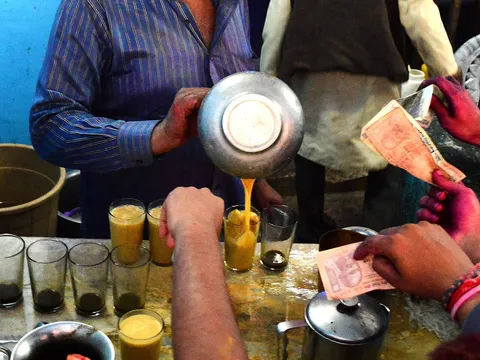 TraditionsBhang at HoliAt the spring festival of colours, north India drinks cannabis in milk. India had the world treaty worded so that it could go on doing so.
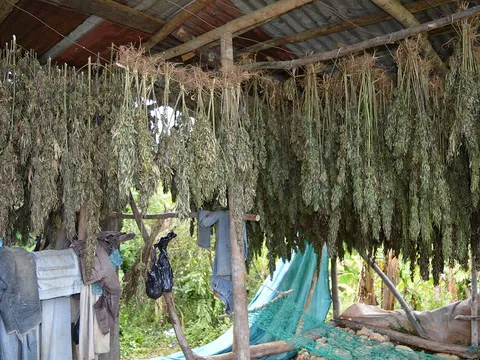 LanguageGanjaThe Hindi word for the flowering tops. Indian labourers carried it to the Caribbean, and it also became the usual word across South-East Asia.
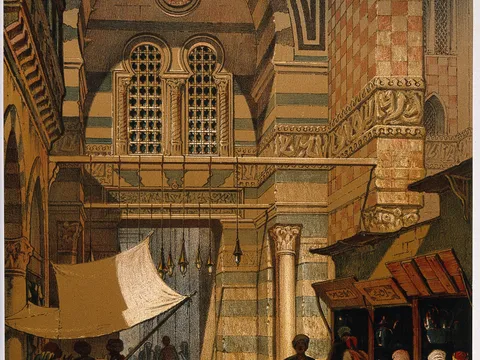 LanguageHashishArabic for dried grass. The word for cannabis resin from Morocco to Afghanistan.
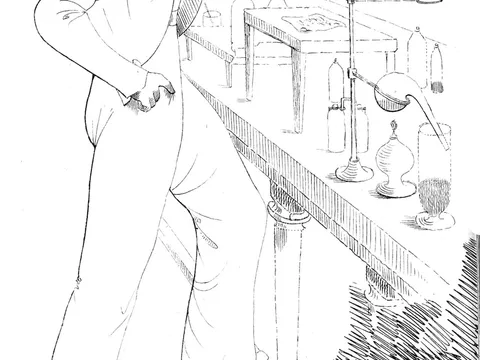 PeopleWilliam O'ShaughnessyAn Irish doctor in Calcutta who tested Indian hemp on animals, himself and his patients, and in 1839 brought cannabis into Western medicine as a remedy for pain, spasm and convulsions.
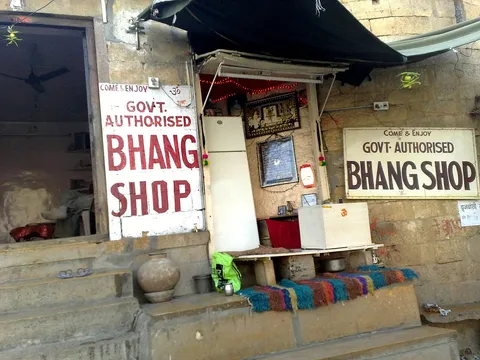 LanguageBhangThe leaves of the plant, ground to a paste and eaten or drunk. In India it is the one form of cannabis that the national law leaves alone.
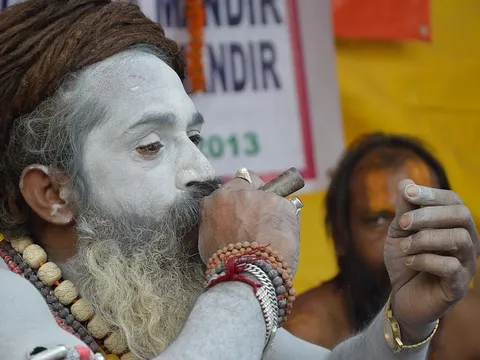 TraditionsSadhus and the chillumHindu ascetics devoted to Shiva smoke cannabis as part of their worship. At Nepal's greatest Shiva temple the police arrest visitors who smoke, but not the holy men.
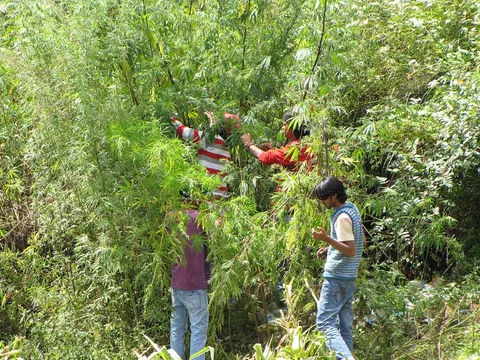 LanguageCharasResin rubbed by hand from the living plant, the hashish of the Himalaya. Indian law names it in its definition of cannabis.
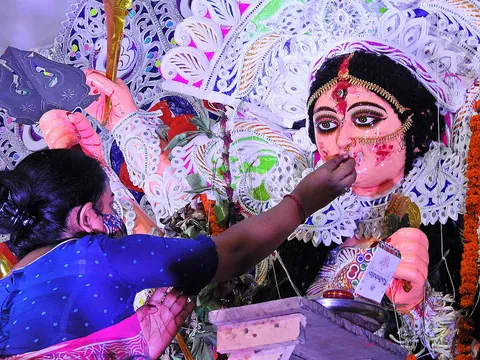 TraditionsBhang at BijoyaOn the last day of Durga Puja, Bengali Hindu households of the 1890s offered every visitor a cup of bhang with sweets after the embraces of Bijoya. A colonial excise officer described the custom to the Hemp Drugs Commission; whether it survives is not recorded.
Show all 14
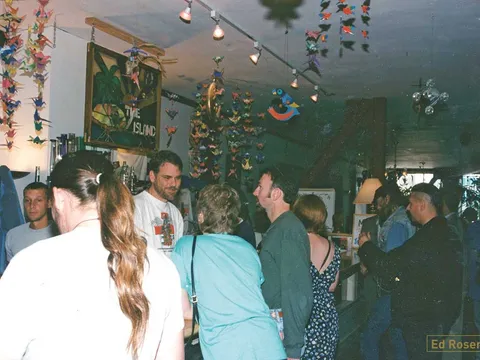 LanguageDispensaryAn old word for a place that hands out medicine, which in the United States became the name of the cannabis shop. The medical word was chosen because, for twenty years, medicine was the only legal ground cannabis could be sold on.
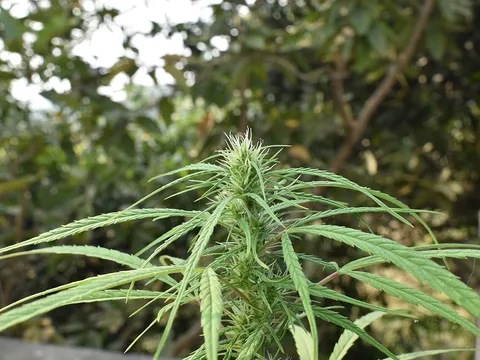 LanguageIndian hempThe name under which the British Empire, and then the world, first brought cannabis under control. It survives in the statute books of dozens of countries that have nothing to do with India.
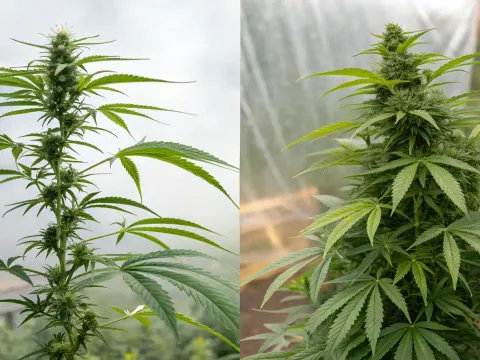 LanguageIndica and sativaTwo Latin names from eighteenth-century botany that became the vocabulary of the modern cannabis shop. Botanists now doubt they name different things at all.
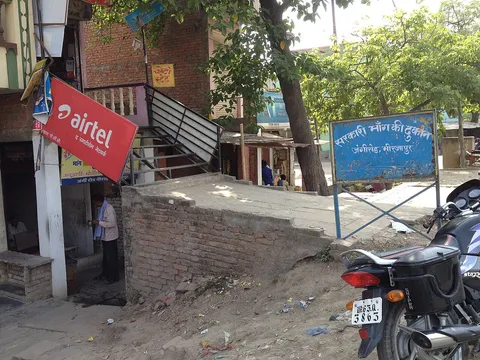 TraditionsLicensed bhang shopsGovernment-licensed shops that sell bhang, the cannabis leaf preparation, in parts of India, alongside a national ban on ganja and charas. In Uttar Pradesh they are allotted by e-lottery with the liquor shops and keep the same hours.
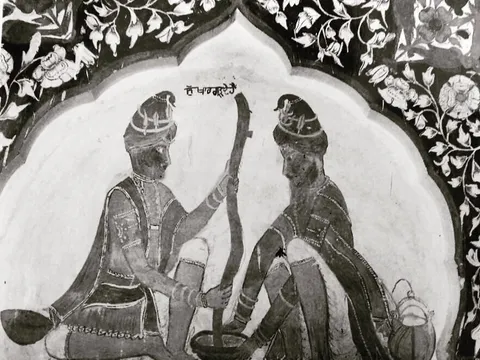 TraditionsShaheedi deghThe Nihang, a warrior order of Sikhs, drink a cannabis preparation at their festivals. The Sikh code of conduct forbids it.
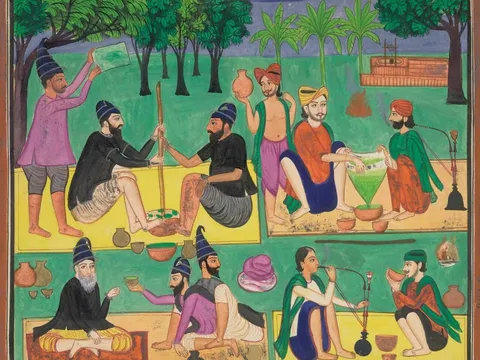 TraditionsThandai gatheringsPreparing bhang thandai could be a social occasion in its own right. A north Indian account describes relatives and friends grinding ingredients, exchanging news and observing caste boundaries.
Did you know? all cases →
1798 · India
In 1798 Bengal’s Board recommended taxing bhang, ganja and charas in India to restrain use and raise revenue. Its letter advised the Governor-General in Council against total prohibition.
The full story →1894 · India
After hearing nearly 1,200 witnesses, the Indian Hemp Drugs Commission concluded in 1894 that moderate use does practically no harm and that a ban would be unjustified. India taxed and licensed cannabis until 1985.
The full story →2022 · India
Police in Mathura, India, told a court that rats had eaten more than 500 kg of seized ganja: “being small in size, the rats have no fear of the police”. The judge ordered them to deal with the rats and to prove it.
The full story →India
In India the flowers and resin are banned, but bhang, made from cannabis leaves, is legal and sold in government-licensed shops in several states.
People · India
The doctor who brought cannabis into Western medicine, in Calcutta in 1839, was knighted not for that but for building India's telegraph.
Read the entry →
Datasets not part of the score
What other organisations publish about India, and where it stands among the countries each one covers. Each dataset has a page of its own, with a world map and every country's figure.
Use
UNODC · 2018
Cannabis use
2.83%of people aged 10–75
ages 10–75 · survey 2018 · 34,000,000 people · UNODC 2026
Source Survey ages and years vary, and some surveys include children. Rates are not age-standardised; do not compare countries directly.WHO, Our World in Data · 2020
Alcohol drunk per person
4.10litres of pure alcohol a year
1.97 · 20001.97 · 20012.11 · 20022.21 · 20032.29 · 20042.39 · 20052.60 · 20062.95 · 20073.53 · 20084.11 · 20094.62 · 20104.89 · 20115.02 · 20125.04 · 20135.02 · 20144.96 · 20154.87 · 20164.87 · 20174.92 · 20184.92 · 20194.10 · 202020002020 Higher than 47% of 187 countriesLowestHighestper person aged 15 or over · 2020 · 1.97 in 2000 · 4.62 in 2010
Law
UNODC · 2024
Cannabis seized
540,386kg in 2024
97,752 · 2015297,269 · 2016355,757 · 2017395,186 · 2018345,617 · 2019588,287 · 2020816,742 · 2021721,871 · 2022631,932 · 2023540,386 · 202420152024 Higher than 98% of 163 countriesLess seizedMore seized533,903 kg of herb · 6,483 kg of resin · 97,752 kg in 2015 · 588,287 kg in 2020
Society
Pew Research Center · 2025
Is using marijuana morally wrong?
81%call it immoral
Higher than 84% of 25 countriesFewer disapproveMore disapprove4% acceptable · 11% not a moral issue · 3,545 people asked
OpenAlex · 2025
Research on cannabis
0.2papers per million people
0.0 · 19600.0 · 19640.0 · 19700.0 · 19710.0 · 19720.0 · 19730.0 · 19740.0 · 19750.0 · 19760.0 · 19770.0 · 19780.0 · 19790.0 · 19800.0 · 19810.0 · 19820.0 · 19830.0 · 19840.0 · 19850.0 · 19860.0 · 19880.0 · 19890.0 · 19900.0 · 19910.0 · 19920.0 · 19930.0 · 19940.0 · 19950.0 · 19960.0 · 19970.0 · 19980.0 · 19990.0 · 20000.0 · 20010.0 · 20020.0 · 20030.0 · 20040.0 · 20050.0 · 20060.0 · 20070.0 · 20080.0 · 20090.0 · 20100.0 · 20110.0 · 20120.0 · 20130.0 · 20140.0 · 20150.0 · 20160.0 · 20170.1 · 20180.1 · 20190.1 · 20200.1 · 20210.1 · 20220.2 · 20230.2 · 20240.2 · 202519602025 Higher than 26% of 176 countriesLowestHighest278 papers in 2025 · 2 in 1970 · 6 in 1990 · 28 in 2010
Cato and Fraser Institutes · 2023
Human Freedom Index
6.26of 10
6.76 · 20006.65 · 20016.66 · 20026.73 · 20036.77 · 20046.82 · 20056.74 · 20066.74 · 20076.69 · 20086.67 · 20096.66 · 20106.72 · 20116.66 · 20126.68 · 20136.47 · 20146.48 · 20156.60 · 20166.57 · 20176.48 · 20186.35 · 20196.20 · 20206.22 · 20216.32 · 20226.26 · 202320002023 Higher than 34% of 164 countriesLess freeFreerrank #110 of 165 · personal freedom 6.02 · economic freedom 6.58
V-Dem, Our World in Data · 2025
Civil liberties
0.53of 1 in 2025
0.31 · 19000.31 · 19010.31 · 19020.31 · 19030.31 · 19040.31 · 19050.31 · 19060.31 · 19070.31 · 19080.31 · 19090.31 · 19100.31 · 19110.31 · 19120.31 · 19130.31 · 19140.31 · 19150.31 · 19160.31 · 19170.31 · 19180.31 · 19190.31 · 19200.31 · 19210.31 · 19220.31 · 19230.31 · 19240.31 · 19250.31 · 19260.31 · 19270.31 · 19280.31 · 19290.31 · 19300.31 · 19310.31 · 19320.31 · 19330.31 · 19340.33 · 19350.33 · 19360.33 · 19370.33 · 19380.33 · 19390.33 · 19400.33 · 19410.33 · 19420.33 · 19430.33 · 19440.35 · 19450.35 · 19460.40 · 19470.72 · 19480.72 · 19490.73 · 19500.73 · 19510.73 · 19520.73 · 19530.73 · 19540.73 · 19550.73 · 19560.73 · 19570.73 · 19580.73 · 19590.73 · 19600.73 · 19610.73 · 19620.73 · 19630.73 · 19640.73 · 19650.73 · 19660.73 · 19670.73 · 19680.73 · 19690.73 · 19700.72 · 19710.73 · 19720.73 · 19730.70 · 19740.56 · 19750.56 · 19760.66 · 19770.74 · 19780.74 · 19790.70 · 19800.68 · 19810.68 · 19820.68 · 19830.68 · 19840.72 · 19850.73 · 19860.73 · 19870.73 · 19880.72 · 19890.73 · 19900.75 · 19910.74 · 19920.75 · 19930.75 · 19940.75 · 19950.76 · 19960.76 · 19970.75 · 19980.75 · 19990.75 · 20000.75 · 20010.75 · 20020.74 · 20030.73 · 20040.73 · 20050.73 · 20060.73 · 20070.73 · 20080.73 · 20090.72 · 20100.73 · 20110.72 · 20120.73 · 20130.71 · 20140.66 · 20150.63 · 20160.61 · 20170.62 · 20180.56 · 20190.54 · 20200.59 · 20210.55 · 20220.53 · 20230.54 · 20240.53 · 202519002025 Higher than 33% of 175 countriesFewer libertiesMore liberties0.31 in 1925 · 0.73 in 1961 · 0.73 in 1990
Our World in Data, World Bank · 2025
Population
1,463,865,525people in 2025
280,714,154 · 1900295,496,971 · 1910300,639,878 · 1920330,163,509 · 1930373,766,276 · 1940346,278,818 · 1950435,990,342 · 1960545,864,271 · 1970687,354,029 · 1980864,972,221 · 19901,057,922,731 · 20001,243,481,565 · 20101,402,617,694 · 20201,463,865,525 · 202519002025 Higher than 99% of 196 countriesLowestHighest280,714,154 in 1900 · 346,278,818 in 1950 · 1,057,922,731 in 2000
CEPII
Former colonial rulers
Once ruled by United Kingdom
World Bank · 2025
Government effectiveness
63of 100
46 · 199643 · 199841 · 200043 · 200243 · 200348 · 200449 · 200550 · 200652 · 200754 · 200855 · 200955 · 201055 · 201154 · 201255 · 201355 · 201462 · 201562 · 201661 · 201764 · 201864 · 201962 · 202060 · 202161 · 202263 · 202363 · 202463 · 202519962025 Higher than 71% of 195 countriesLowestHighestestimate 0.50 on a scale of −2.5 to 2.5 · 2025 · 41 in 2000 · 62 in 2015
Transparency International · 2024
Corruption Perceptions Index
38of 100
36 · 201236 · 201338 · 201438 · 201540 · 201640 · 201741 · 201841 · 201940 · 202040 · 202140 · 202239 · 202338 · 202420122024 Higher than 46% of 178 countriesLowestHighest0 highly corrupt, 100 very clean · 2024 · 38 in 2015 · 40 in 2020
Pew Research Center · 2020
Most common religion
Hindus
the largest group · 2020
World Bank · 2025
Income per person
$10,039per person
2,140 · 19902,116 · 19912,185 · 19922,241 · 19932,342 · 19942,469 · 19952,603 · 19962,656 · 19972,766 · 19982,954 · 19993,010 · 20003,097 · 20013,157 · 20023,347 · 20033,551 · 20043,770 · 20054,011 · 20064,254 · 20074,322 · 20084,595 · 20094,914 · 20105,099 · 20115,304 · 20125,567 · 20135,905 · 20146,302 · 20156,741 · 20167,116 · 20177,493 · 20187,702 · 20197,187 · 20207,819 · 20218,347 · 20228,871 · 20239,416 · 202410,039 · 202519902025 Higher than 34% of 187 countriesLowestHighestat purchasing power parity, 2021 dollars · 2025 · $2,140 in 1990 · $4,914 in 2010
World Bank · 2025
Development indicators
70%use the internet
0% · 19900% · 19920% · 19930% · 19940% · 19950% · 19960.1% · 19970.1% · 19980.3% · 19990.5% · 20000.7% · 20011.5% · 20021.7% · 20032% · 20042.4% · 20052.8% · 20064% · 20074.4% · 20085.1% · 20097.5% · 201010.1% · 201111.1% · 201212.3% · 201313.5% · 201414.9% · 201516.5% · 201618.2% · 201720.1% · 201829.5% · 201943.4% · 202049.3% · 202155.9% · 202260.3% · 202364.9% · 202470% · 202519902025 Higher than 37% of 195 countriesLowestHighest35.7% live in towns · 7.4% aged 65+ · higher education 34.4% · 2025 · 0.5% in 2000 · 7.5% in 2010
GDELT · 2025
Cannabis in the news
0.0074%of global news: cannabis articles from here
0.0053% · 20170.0055% · 20180.005% · 20190.006% · 20200.0045% · 20210.0048% · 20220.0056% · 20230.0058% · 20240.0074% · 202520172025 Higher than 93% of 147 countriesLowestHighest2025 average, 348 days · 0.0055% in 2018 · 0.0045% in 2021
Plant and market
OpenStreetMap · 2026
Cannabis shops on the map
2shops mapped
Higher than 25% of 59 countriesFewer shopsMore shops0.0 per million people · 2026
GBIF · 2026
Records of the cannabis plant
519dated records
1 · 18116 · 18479 · 184910 · 185215 · 185616 · 185717 · 185819 · 185920 · 186322 · 186823 · 186924 · 187425 · 187826 · 187927 · 188028 · 188129 · 188430 · 188733 · 188834 · 188939 · 189042 · 189343 · 189549 · 190250 · 191252 · 191354 · 191458 · 192859 · 193062 · 193163 · 193267 · 193368 · 193670 · 194571 · 194972 · 195074 · 195375 · 195477 · 195583 · 195688 · 195790 · 195891 · 195994 · 196097 · 196198 · 196299 · 1964101 · 1967103 · 1978104 · 1979105 · 1982106 · 1992107 · 2005109 · 2006110 · 2011114 · 2013119 · 2015120 · 2016127 · 2017142 · 2018151 · 2019160 · 2020196 · 2021229 · 2022302 · 2023382 · 2024443 · 2025519 · 202618112026 Higher than 89% of 128 countriesLowestHighest91 more without a date · 76 in 2026 · 94 by 1960
ClinicalTrials.gov · 2026
Clinical trials of cannabis medicines
4studies so far
1 · 20121 · 20131 · 20141 · 20151 · 20161 · 20171 · 20182 · 20192 · 20203 · 20214 · 20224 · 20234 · 20244 · 20254 · 202620122026 Higher than 42% of 50 countriesLowestHighest0 actual starts in 2026 · as of 2026–10–26 · 2 by 2020
Enforcement 17 reports · the Cannabis Enforcement Tracker →
How the law above is applied: raids, seizures, fields destroyed, arrests and sentences, as recorded by the Cannabis Enforcement Tracker, our companion site.
- EradicationCaretaker arrested as police seize nine ganja plants in Kalmeshwar
Nagpur Rural Police raided a farm at Gangaji Dareli in Kalmeshwar on a tip-off and seized nine growing ganja plants weighing 1.358 kg.
- SeizureCrime Branch seizes 3.5 kg of hydro ganja in Dongri, arrests two
Mumbai Crime Branch's Anti-Narcotics Cell seized 3.563 kg of hydro ganja worth about Rs 1.24 crore near Umar Khadi Cross Lane in Dongri on 28 October 2026.
- Seizure673 kg of ganja found in plastic-granule truck in Gurugram
Gurugram Crime Branch stopped a Rajasthan-registered truck near Rajiv Chowk on the night of 25-26 October 2026 and found 673 kg of ganja under bags of plastic granules.
- ArrestTwo Delhi women held with 1.87 kg of Bangkok cannabis at Mumbai airport
Airport Customs at Mumbai's CSMIA arrested two Delhi women arriving on separate Bangkok flights on 26 October 2026 with 1.874 kg of cannabis in their luggage.
- ArrestDelhi police break courier-based ganja network, arrest three
West Delhi's anti-narcotics squad arrested three men aged 22-25 in Khyala on 25 October, seizing 26.46 kg of Odisha ganja moved by courier in saree, sound-box and RO-purifier cartons.
- SeizureGRP recovers 48.9 kg of ganja in two Ferozepur station seizures
Government Railway Police recovered 48.9 kg of ganja in two incidents at Ferozepur and Ferozepur Cantonment stations on 25 October 2026. Two men were arrested with 18.4 kg; another 30.5 kg lay abandoned in a train coach.
- EradicationPolice burn 2,000 cannabis plants near Kalimela, arrest grower
Kalimela police cut down and burnt more than 2,000 cannabis plants growing on two acres of forest land near Nagulur village in Malkangiri. A 30-year-old villager was arrested and produced in court.
- EradicationSix held as 199 acres of cannabis cleared across Kandhamal
A joint police, excise, revenue and forest drive destroyed about 199 acres of cannabis at six locations across Kandhamal district on 24 October 2026, using drones to find hidden plots.
History 61 of 61 checked against a source
Score and entries per decade
13 today, from 40 before its first recorded change
This country's score Entries that moved the score Context only
20264 entries0 score changes
Other law ✓
Jharkhand High Court quashes a ganja conviction because the drug was bhang
On 30 June 2026 the Jharkhand High Court set aside a 2009 conviction for possessing about 11 kg of what police called ganja, because the forensic report said the material was bhang. The court held that bhang is not ‘cannabis (hemp)’ under section 2(iii) of the NDPS Act, which names charas, ganja and their mixtures but not the leaves. It followed rulings from Karnataka, Punjab and Haryana, Bombay and Rajasthan; the judgment turned on the NDPS definition and did not rule on state excise law.
Debate ✓
India announces a fresh NDPS amendment without publishing a bill
On 26 June 2026 Home Minister Amit Shah said the Department of Revenue would amend the NDPS Act and Rules, and asked states to send suggestions. The announcement came with a ‘Vision Document on Drug Control (2026–2029)’ that promises exclusive NDPS courts, financial investigations and a campaign against 100 cartels. No amendment bill had been published or passed by 28 October 2026.
20251 entry0 score changes
20241 entry0 score changes
20222 entries0 score changes
Enforcement ✓
An Indian court asks police to prove rats ate 581 kg of seized ganja
Asked by a special NDPS court in Mathura, Uttar Pradesh, to produce marijuana seized by two police stations, police said rats had eaten more than 500 kg of it. The prosecutor told the court that "being small in size, the rats have no fear of the police". In an order of 18 November 2022 the court told the district's senior police superintendent to deal with the rats and to bring proof that they had eaten 581 kg, and issued directions for auctioning or disposing of drugs stored in police warehouses.
Other law ✓
Karnataka's High Court rules bhang is not prohibited
The court held that bhang does not fall under the Narcotic Drugs and Psychotropic Substances Act.
20211 entry0 score changes
20201 entry0 score changes
20172 entries0 score changes
Medical ✓
India issues its first cannabis research licence
The union government licensed the Council of Scientific and Industrial Research to grow cannabis for research. The same year Gujarat legalised bhang by taking it off its list of intoxicating drugs.
Easing ✓
Gujarat takes bhang off its list of intoxicating drugs
Gujarat, a state with alcohol prohibition, removed bhang from the intoxicating drugs covered by its Prohibition Act. The minister of state for home said bhang is consumed only as an offering of Lord Shiva, and that the government had decided to exempt it in view of public sentiment.
20151 entry0 score changes
20141 entry0 score changes
20111 entry0 score changes
20041 entry0 score changes
20013 entries1 score change
Other law ✓
India sets separate sentencing cutoffs for ganja and cannabis resin
The government specified 1 kg and 20 kg as the small- and commercial-quantity cutoffs for ganja, and 100 g and 1 kg for cannabis resin. Under the amended definitions, a small quantity is less than the specified small cutoff and a commercial quantity is greater than its cutoff. The notification supplied the figures used by the three sentencing bands introduced earlier in October.
Easing ✓ Article
India grades drug sentences by quantity
From 2 October 2001, unlawful cannabis possession and supply were punished in three quantity bands: up to six months or a fine or both for small quantities, up to ten years plus a fine for intermediate quantities, and ten to twenty years plus a fine for commercial quantities. The reform narrowed the strict bail test to commercial quantities and separately named serious offences; it also widened treatment-linked immunity. A notification on 19 October supplied the cannabis weight cutoffs.
1113+2 points
Other law ✓
India's president assents to quantity-based drug sentences
The President assented to quantity-based drug sentences on 9 May 2001. The law left commencement to a later notification, which appointed 2 October 2001.
19901 entry0 score changes
19851 entry1 score change
19781 entry0 score changes
19641 entry0 score changes
19611 entry0 score changes
19581 entry0 score changes
19551 entry0 score changes
19541 entry0 score changes
19491 entry0 score changes
19461 entry0 score changes
19394 entries0 score changes
Tightening ✓ Article
The United Provinces raise the duty on charas and cut hemp shops
In 1939 the United Provinces raised the duty on charas by 20 rupees a seer and cut the number of opium and hemp-drug shops by about a fifth. The province took over the management of all opium and hemp-drug shops in selected areas of Garhwal, Saharanpur, Muzaffarnagar, Bulandshahr, Cawnpore, Moradabad, Aligarh, Agra, Jhansi, Gorakhpur and Basti.
Tightening ✓ Article
Bihar bans ganja and bhang where prohibition was extended
In 1939 Bihar prohibited the transport and possession of ganja and bhang in the Hajipur subdivision and in parts of Ranchi, Hazaribagh and Manbhum, where a prohibition scheme was extended. The duty on a seer of ganja rose from 35 to 50 rupees, and on a seer of bhang from 3 to 4 rupees.
19301 entry0 score changes
19251 entry0 score changes
19211 entry0 score changes
19181 entry0 score changes
19131 entry0 score changes
19041 entry0 score changes
19011 entry0 score changes
18981 entry0 score changes
18961 entry0 score changes
18941 entry0 score changes
18931 entry0 score changes
18921 entry0 score changes
18911 entry0 score changes
18891 entry0 score changes
18841 entry0 score changes
18812 entries0 score changes
Tightening ✓
The Central Provinces restrict where ganja may be grown
A system of restricted cultivation comparable to Bengal's Ganja Mahal was introduced in the Central Provinces, the only province to follow Bengal before the Hemp Drugs Commission. Officials there had argued that rising liquor taxes were pushing drinkers towards ganja, which was largely untaxed, and that restriction was practicable because hemp was not grown there for fibre.
Tightening ✓
British India passes its first act restricting hemp drugs
Until then cannabis was grown for household use or gathered wild without restriction. Act XXII of 1881 restricted the use of the drugs; twelve years later the government appointed the Hemp Drugs Commission to examine the whole question.
18801 entry0 score changes
18781 entry0 score changes
18761 entry0 score changes
18751 entry0 score changes
18731 entry0 score changes
18721 entry0 score changes
18541 entry0 score changes
18391 entry0 score changes
17981 entry0 score changes
17931 entry0 score changes
16091 entry0 score changes
Sources hover a number in the text to see its source
- Cited
- 12
- Websites
- 12
- Last reviewed
- History checked
- 61/61
Most cited
- advocatekhoj.com1
- blog.ipleaders.in1
- boomlive.in1
- cbn.gov.in1
- cdnbbsr.s3waas.gov.in1
- deccanherald.com1
All 14 sources
- iPleaders — Is weed legal in India?archived
- BOOM — Cannabis and its legal status in Indiaarchived
- Narcotic Drugs and Psychotropic Substances Act, 1985, section 2 (text as reproduced by AdvocateKhoj)archived
- Maharashtra Law and Judiciary Department — Maharashtra Prohibition Act, text as on 21 May 2025Sections 2(23)(a),(c), 11, 14, 48 and 66(1)(b): bhang definition, state authorisations and first-use maximum; current text linked by the Law and Judiciary Departmentarchived
- Narcotics Control Bureau — NDPS Act, section 31A and 2014 amendment notesPrinted page 24, table and note 4 (death discretionary from 1 May 2014)archived
- Homegrown — A one-stop guide to marijuana laws in Indiaarchived
- Central Bureau of Narcotics — NDPS Act and Rules, updated 2025archived
- Indian Express — Himachal launches an industrial hemp policy (27 December 2025)THC below 0.3%; fibre and seed pilot.archived
- Deccan Herald — Drug seizures dipped in 2025 despite rise in cases and arrests, on the NCB annual report (26 June 2026)archived
- India Code — Motor Vehicles Act 1988, sections 20 and 185 (older consolidation; fines checked against current transport guidance)Sections 20(2), 185(b); older monetary penalties not usedarchived
- New Indian Express — Kerala first-time drug offenders may get a reform pass (23 May 2026)36,314 police NDPS cases and 12,568 excise cases in 2025.archived
- International Narcotics Control Board — Travellers carrying medicines containing controlled substances