Pakistan
10/100
#106 of 196 worldwide
#16 of 48 in Asia
Illegal, yet charas is widely used and largely tolerated in parts of the country. The cannabis regulator publishes licence categories and application requirements for medicinal cultivation, extraction, manufacturing and industrial hemp.
In short all countries →
- Can I carry it?NoIt is a crime
- Can I grow it?NoIt is a crime
- Can I buy it?NoThere is no legal source
- Can I use it in public?NoNot in public, and even at home the law does not protect it
- What if I'm caught?PrisonPersonal use can lead to prison or compulsory detention
A rough guide read from the scores and the rules below, not legal advice. The details and the exceptions are in each segment: select an answer to jump to it.
Cannabis in Pakistan not part of the score · all 19 datasets ↓
Who uses it
About 1 in 28
people aged 15–64 in Pakistan used cannabis in the past year: 5.5 million people.
- Past year
- 3.6%
- Asia median
- 2%
UNODC · survey 2012
Source Past-year cannabis use among people aged 15–64. People who used cannabis in the past year, from a 2012 survey, applied to today's population aged 15–64.Survey ages and years vary, and some surveys include children. Rates are not age-standardised; do not compare countries directly.
UNODC World Drug Report 2026, annex table 1.2. Population from the World Bank, aged 15–64. The whole dataset →
Use across Asia
8thhighest of 40 surveyed countries
- 🇺🇿 Uzbekistan4.2%
- 🇦🇫 Afghanistan3.8%
- 🇵🇰 Pakistan3.6%
- 🇦🇲 Armenia3.5%
- 🇦🇿 Azerbaijan3.5%
Past-year use, latest survey of each. Survey years and ages differ. On the map →
Cannabis in figures
- Police contact for drug use or possession39per 100,000 people · 2022
- Cannabis seized177,254kg in 2024 · 2024
- Cannabis shops on the map1shops mapped · 2026
- Hemp grown0ha in 2024 · 2024
- Research on cannabis0.4papers per million people · 2025
The dot: where it stands among the countries each dataset covers, lowest to highest. All datasets ↓
What they call it
- چرس[1]Urdu / Punjabi · [tʃə.ɾəs]hand-rubbed resin; the everyday word for hashishIn the atlas →
- بھنگ[2]Urdu / Punjabi · [bʱɑːŋɡ]cannabis leaves and the drink made from them; the law’s word for herbal cannabisIn the atlas →
- گانجا[3]Urdu / Punjabi · [ɡɑːn.dʒɑː]dried flowering tops; a law term and common nameIn the atlas →
- بنګ[4]Pashto · bangcannabis
- حشیش[5]Urdu · [ɦə.ʃiːʃ]resin; formal synonym of charasIn the atlas →
Score breakdown 10/100 · how the scores are made
Section 6 of the Control of Narcotic Substances Act forbids possessing any narcotic, and Section 9 sets the sentence by drug and weight.[6] In the consolidated text, up to 499 g of charas (hashish) carries ten months to five years in prison and a fine of up to 40,000 rupees, and 500 to 999 g five to nine years.[6] Up to 999 g of bhang, the herbal form, carries six months to three years and a fine of up to 10,000 rupees.[6] Hashish oil has its own higher scale, starting at fourteen months to seven years for up to 499 g.[6] Charas is nonetheless smoked widely and police often ignore it or take a bribe, so the law's severity and daily reality diverge sharply.[7] The table below is the federal table for Islamabad. Khyber Pakhtunkhwa (2019) and Sindh (2024) repealed the federal Act in their provinces; Punjab (2025) and Balochistan (2026) set their own tables, and KP’s lowest bands set only maximums.[8][9][10][11]
| Amount | What happens | Punishment | Fine |
| Bhang up to 999 g | CriminalPossession | 6 months – 3 years | Up to PKR 10,000 |
| Charas up to 499 g | CriminalPossession | 10 months – 5 years | Up to PKR 40,000 |
| Hashish oil up to 499 gHigher bands for all three drugs are on the sharing table | CriminalPossession | 14 months – 7 years | Up to PKR 40,000 |
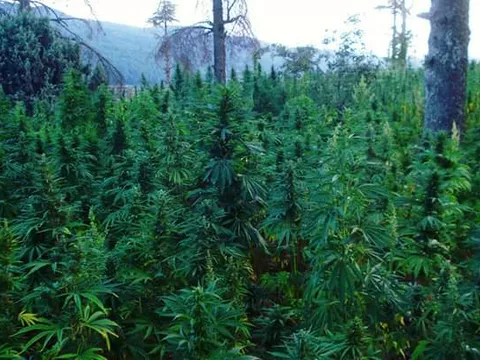
Section 4 forbids cultivating any cannabis plant, letting land for it, or gathering any part of the plant; under Section 5 as amended in 2022 the penalty is one to seven years in prison and a fine.[6] The federal government, or a province it authorises, may license cultivation for medical, scientific or industrial purposes only.[6] Cannabis nonetheless grows wild across the north and is farmed in the tribal districts.[12]
| Amount | What happens | Punishment | Fine |
| Unauthorised cultivationFine also imposed; a government licence is possible for medical, scientific or industrial purposes | CriminalCultivation | 1–7 years | — |
Minimum prison terms apply in the federal table and most provinces, but Khyber Pakhtunkhwa’s lowest bands set only maximums; enforcement is uneven and falls hardest on the poor.[7][8] The Anti-Narcotics Force reported 1,652 arrests in 1,678 cases in the twelve months to mid-2023, and 157.5 tonnes of drugs seized, of which 61.8 tonnes were hashish.[13] No national cannabis-specific arrest figures for 2024–2026 were found.
Supply is trafficking under Sections 6 to 8, and Section 9 applies the same weight table as possession. For bhang, the bands run from six months to three years for up to 999 g, to a minimum of fourteen years and possible life imprisonment from 20 kg. Charas starts at ten months to five years for up to 499 g and reaches a minimum of twenty years and possible life imprisonment from 10 kg. Hashish oil starts at fourteen months to seven years and reaches a minimum of twenty years and possible life from 5 kg.[6]
| Amount | What happens | Punishment | Fine |
| Bhang up to 999 g | CriminalTrafficking | 6 months – 3 years | Up to PKR 10,000 |
| Bhang 1,000–9,999 g | CriminalTrafficking | 3–7 years | PKR 10,000 – PKR 100,000 |
| Bhang 10,000–19,999 g | CriminalTrafficking | 7–14 years | PKR 100,000 – PKR 200,000 |
| Bhang 20,000 g or moreavailable | CriminalTrafficking | 14 years to life imprisonment | At least PKR 200,000 |
| Charas up to 499 g | CriminalTrafficking | 10 months – 5 years | Up to PKR 40,000 |
| Charas 500–999 g | CriminalTrafficking | 5–9 years | PKR 40,000 – PKR 80,000 |
| Charas 1,000–4,999 g | CriminalTrafficking | 9–14 years | PKR 80,000 – PKR 400,000 |
| Charas 5,000–9,999 g | CriminalTrafficking | 14–20 years | PKR 400,000 – PKR 800,000 |
| Charas 10,000 g or moreavailable | CriminalTrafficking | 20 years to life imprisonment | At least PKR 800,000 |
| Hashish oil up to 499 g | CriminalTrafficking | 14 months – 7 years | Up to PKR 40,000 |
| Hashish oil 500–999 g | CriminalTrafficking | 7–14 years | PKR 40,000 – PKR 80,000 |
| Hashish oil 1,000–4,999 g | CriminalTrafficking | 14–20 years | PKR 80,000 – PKR 400,000 |
| Hashish oil 5,000 g or moreavailable | CriminalTrafficking | 20 years to life imprisonment | At least PKR 400,000 |
The Act deals with users through registration and treatment: each province is to register addicts, who must carry a registration card, and the federal government pays for a first compulsory detoxification.[6] Holding the drug to use it is punished as possession.[6] Use is culturally embedded, particularly at Sufi shrines, and bhang drinks are consumed at festivals.[14]
No legal source for adults: Section 6 of the Control of Narcotic Substances Act forbids possessing any narcotic and Section 4 forbids cultivating any cannabis plant without a government licence.[6] The Cannabis Control and Regulatory Authority licenses medical and industrial production, but no patient or adult retail supply was found.[15]
Context not part of the score · every country, by topic →
Illegal on paper, widely used in practice: charas is smoked widely and police often ignore it, and use is culturally embedded at Sufi shrines and festivals.[7] Minimum prison terms apply to possession of any amount, but no legal adult-use source exists.[6] No price or purity data were found.
Applicants can seek licences for medicinal cultivation, extraction, pharmaceutical manufacturing and research through the Cannabis Control and Regulatory Authority.[15] The 2026 national policy anticipates prescription sales through licensed pharmaceutical and retail outlets, but no such outlet or patient supply had opened by October 2026.[16] Patient supply remains unverified.
No cannabis clubs in the modern sense are known, and the law leaves no room for them: growing and supplying cannabis are prohibited.[6] The collective use that does exist is religious and much older. Malangs, the wandering mendicants found at Sufi shrines such as Lal Shahbaz Qalandar in Sehwan, commonly smoke charas and drink bhang, which they regard as part of their devotion.[14] That is a devotional custom, not a members' association.
The Control of Narcotic Substances Act 1997 defines cannabis as the resin and the flowering or fruiting tops, "excluding the seed and leaves when not accompanied by the tops", so loose seed is not a narcotic drug.[17] Section 4 forbids cultivating any cannabis plant or gathering any portion of one, unless the government licenses it for medical, scientific or industrial purposes.[17]
Industrial hemp is a licensed category with a THC ceiling of 0.3%. The regulator issues A-1 cultivation licences in three size classes, from up to 50 acres to more than 250 acres, with police clearance, tax registration and site-security conditions.[16] The 2026 licensing rules add application and issuance fees, a five-year term and THC testing.[18] Recreational use remains illegal.[16] By September 2026 no cultivation licence had been verified as issued.[19]
The cannabis regulator publishes an application route for industrial-hemp cultivation, controlled and open-field medicinal cannabis cultivation, extraction, pharmaceutical manufacturing and research.[15] Applicants must meet tax, police-clearance, financial, technical and site-security requirements; foreign investors need a Pakistani joint-venture partner holding at least 51%.[15] Cultivation-only applicants may apply as individuals, while other activities have their own documentary requirements.[15] By September 2026 the regulator had 75 licence applications in vetting, and the 2026 policy aimed to bring about 50,000 acres of illicit cultivation under licence.[19]
The whole market is illegal, and hashish (charas) is the drug the authorities seize most. In 2024 Pakistan reported seizing 167.4 tonnes of cannabis resin and 9.9 tonnes of herbal cannabis, a sharp rise from 102.4 tonnes of resin in 2023.[20] The 2025 INCSR recorded 138.63 tonnes of hashish in the twelve months to June 2024, alongside 11.1 tonnes of heroin and 16.8 tonnes of opium, and estimated that cannabis had become the most popular drug.[21] No price or purity data were found.
There is no legal recreational supply for anyone. The narcotics act sets minimum prison terms for possession of any amount: at least ten months for up to 499 g of charas and at least six months for up to 999 g of bhang, each with a fine.[6] The law makes no exception for visitors.[6]
The Provincial Motor Vehicles Ordinance's section 100 prohibits driving or attempting to drive while drink or drugs prevent proper vehicle control.[22] The published version provides up to six months' imprisonment or a fine or both for a first offence, and up to two years for a repeat; section 18(2) provides at least six months' disqualification.[22] No numeric THC threshold is stated, and provincial amendments mean the fine figures are not a uniform nationwide tariff.[22]
The 2025 INCSR recorded about 93,440 drug-related arrests in the twelve months to June 2024, predominantly low-level dealers, and 8 million people who had used drugs in 2024.[21] The number of people imprisoned under the narcotics act rose from 19,636 in 2023 to 23,367 in 2024 and 25,168 in June 2026, when they made up 22.31% of Pakistan's prison population.[23] The figures cover all drugs and give no cannabis breakdown.
A narcotics conviction carries a criminal record.[7] The Act sets mandatory minimum prison terms for possession and trafficking, and the 2023 amendment removed death from the remaining federal drug-law rows while leaving life imprisonment as the maximum.[24]
Pakistan's cannabis culture centres on charas, the hand-rubbed resin, and hashish more broadly. The Hindu Kush gave its name to kush, and the old farmers' populations of the region are landraces; the botanical split between indica and sativa also drew on South Asian drug types.[12] At Sufi shrines, malangs smoke charas and drink bhang as part of their devotion.[14]
Taking cannabis into or out of Pakistan is a separate offence from possessing it, normally charged as smuggling or trafficking, with far heavier penalties. That holds almost everywhere, including between two places where cannabis is legal.
A prescription or medical card from another country is generally not recognised. Travellers who need a cannabis-based medicine should ask Pakistan's embassy before travelling.[25]
General guidance that applies to almost every country, not a check of Pakistan's customs rules.
Culture the atlas →
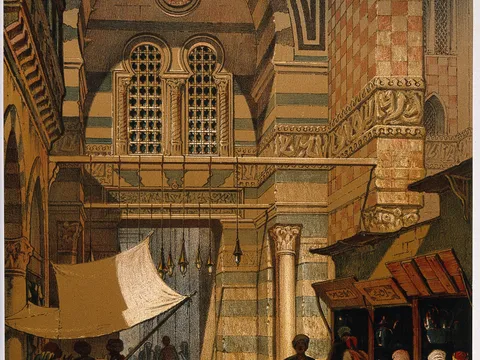 LanguageHashishArabic for dried grass. The word for cannabis resin from Morocco to Afghanistan.
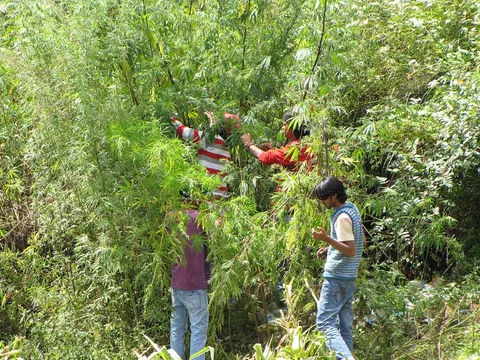 LanguageCharasResin rubbed by hand from the living plant, the hashish of the Himalaya. Indian law names it in its definition of cannabis.
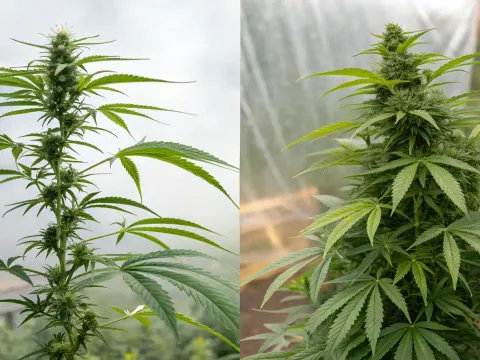 LanguageIndica and sativaTwo Latin names from eighteenth-century botany that became the vocabulary of the modern cannabis shop. Botanists now doubt they name different things at all.
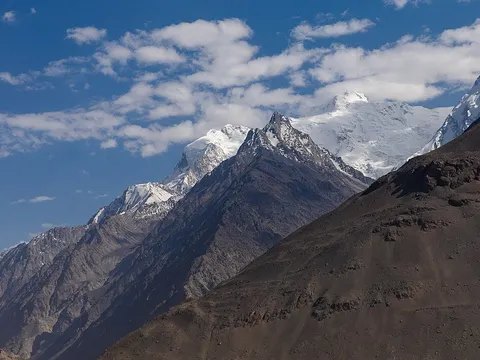 LanguageKushNamed after the Hindu Kush, the mountains whose hashish plants were carried to California in the 1970s. It became the most famous strain name in the world, and, in Sierra Leone, the name of something else entirely.
 LanguageLandraceA farmers' variety, kept by saving seed in the place where it grows rather than bred to a standard. The word came from German agronomy and, in cannabis, names the old local populations of the hashish and ganja regions, many of them lost to hybrids and eradication. Morocco now licenses its own, beldiya.
Datasets not part of the score
What other organisations publish about Pakistan, and where it stands among the countries each one covers. Each dataset has a page of its own, with a world map and every country's figure.
Use
UNODC · 2012
Cannabis use
3.6%of people aged 15–64
3.9% · 20003.6% · 201220002012 ages 15–64 · survey 2012 · 5,500,000 people · UNODC 2026
Source Survey ages and years vary, and some surveys include children. Rates are not age-standardised; do not compare countries directly.WHO, Our World in Data · 2020
Alcohol drunk per person
0.08litres of pure alcohol a year
0.03 · 20000.03 · 20010.03 · 20020.03 · 20030.04 · 20040.05 · 20050.06 · 20060.06 · 20070.06 · 20080.07 · 20090.08 · 20100.09 · 20110.08 · 20120.08 · 20130.09 · 20140.10 · 20150.10 · 20160.10 · 20170.10 · 20180.10 · 20190.08 · 202020002020 Higher than 5% of 187 countriesLowestHighestper person aged 15 or over · 2020 · 0.03 in 2000 · 0.08 in 2010
Law
UNODC · 2022
Police contact for drug use or possession
39per 100,000 people
Higher than 46% of 101 countriesFewerMore99,234 people in 2022 · all drugs together
UNODC · 2024
Cannabis seized
177,254kg in 2024
279,465 · 2015287,562 · 2016271,958 · 2017216,905 · 2018201,888 · 2019365,400 · 2020165,838 · 2021147,901 · 2022102,455 · 2023177,254 · 202420152024 Higher than 93% of 163 countriesLess seizedMore seized9,859 kg of herb · 167,395 kg of resin · 279,465 kg in 2015 · 365,400 kg in 2020
Society
OpenAlex · 2025
Research on cannabis
0.4papers per million people
0.0 · 19760.0 · 19860.0 · 19910.0 · 19930.0 · 19950.0 · 20000.0 · 20040.0 · 20050.0 · 20060.0 · 20070.0 · 20090.0 · 20100.0 · 20110.0 · 20120.0 · 20130.0 · 20140.1 · 20150.0 · 20160.1 · 20170.1 · 20180.1 · 20190.2 · 20200.2 · 20210.3 · 20220.3 · 20230.3 · 20240.4 · 202519762025 Higher than 37% of 176 countriesLowestHighest96 papers in 2025 · 3 in 2010
Cato and Fraser Institutes · 2023
Human Freedom Index
5.26of 10
5.44 · 20005.46 · 20015.60 · 20025.60 · 20035.56 · 20045.67 · 20055.61 · 20065.33 · 20075.30 · 20085.34 · 20095.37 · 20105.42 · 20115.40 · 20125.30 · 20135.34 · 20145.38 · 20155.42 · 20165.44 · 20175.42 · 20185.44 · 20195.49 · 20205.55 · 20215.40 · 20225.26 · 202320002023 Higher than 16% of 164 countriesLess freeFreerrank #137 of 165 · personal freedom 5.00 · economic freedom 5.62
V-Dem, Our World in Data · 2025
Civil liberties
0.47of 1 in 2025
0.31 · 19000.31 · 19010.31 · 19020.31 · 19030.31 · 19040.31 · 19050.31 · 19060.31 · 19070.31 · 19080.31 · 19090.31 · 19100.31 · 19110.31 · 19120.31 · 19130.31 · 19140.31 · 19150.31 · 19160.31 · 19170.31 · 19180.31 · 19190.31 · 19200.31 · 19210.31 · 19220.31 · 19230.31 · 19240.31 · 19250.31 · 19260.31 · 19270.31 · 19280.31 · 19290.31 · 19300.31 · 19310.31 · 19320.31 · 19330.31 · 19340.33 · 19350.33 · 19360.33 · 19370.33 · 19380.33 · 19390.33 · 19400.33 · 19410.33 · 19420.33 · 19430.33 · 19440.35 · 19450.35 · 19460.54 · 19470.54 · 19480.54 · 19490.55 · 19500.54 · 19510.53 · 19520.54 · 19530.53 · 19540.54 · 19550.53 · 19560.52 · 19570.44 · 19580.41 · 19590.38 · 19600.38 · 19610.39 · 19620.43 · 19630.43 · 19640.43 · 19650.44 · 19660.42 · 19670.43 · 19680.40 · 19690.44 · 19700.30 · 19710.42 · 19720.37 · 19730.37 · 19740.37 · 19750.37 · 19760.37 · 19770.27 · 19780.20 · 19790.20 · 19800.20 · 19810.21 · 19820.21 · 19830.21 · 19840.23 · 19850.23 · 19860.23 · 19870.27 · 19880.48 · 19890.49 · 19900.49 · 19910.49 · 19920.50 · 19930.50 · 19940.50 · 19950.50 · 19960.49 · 19970.51 · 19980.50 · 19990.51 · 20000.47 · 20010.47 · 20020.49 · 20030.50 · 20040.50 · 20050.49 · 20060.47 · 20070.50 · 20080.52 · 20090.54 · 20100.53 · 20110.54 · 20120.51 · 20130.52 · 20140.50 · 20150.48 · 20160.49 · 20170.46 · 20180.46 · 20190.49 · 20200.51 · 20210.45 · 20220.42 · 20230.46 · 20240.47 · 202519002025 Higher than 27% of 175 countriesFewer libertiesMore liberties0.31 in 1925 · 0.38 in 1961 · 0.49 in 1990
Our World in Data, World Bank · 2025
Population
255,219,554people in 2025
18,263,133 · 190019,230,643 · 191021,780,196 · 192026,064,359 · 193031,284,924 · 194035,849,256 · 195045,709,314 · 196060,166,721 · 197082,291,008 · 1980116,155,584 · 1990154,879,124 · 2000199,239,048 · 2010235,001,745 · 2020255,219,554 · 202519002025 Higher than 97% of 196 countriesLowestHighest18,263,133 in 1900 · 35,849,256 in 1950 · 154,879,124 in 2000
CEPII
Former colonial rulers
Once ruled by United Kingdom
World Bank · 2025
Government effectiveness
40of 100
39 · 199639 · 199839 · 200038 · 200236 · 200339 · 200439 · 200541 · 200641 · 200739 · 200839 · 200939 · 201038 · 201141 · 201241 · 201341 · 201442 · 201544 · 201646 · 201744 · 201844 · 201942 · 202044 · 202140 · 202240 · 202341 · 202440 · 202519962025 Higher than 26% of 195 countriesLowestHighestestimate -0.61 on a scale of −2.5 to 2.5 · 2025 · 39 in 2000 · 42 in 2015
Transparency International · 2024
Corruption Perceptions Index
27of 100
27 · 201228 · 201329 · 201430 · 201532 · 201632 · 201733 · 201832 · 201931 · 202028 · 202127 · 202229 · 202327 · 202420122024 Higher than 23% of 178 countriesLowestHighest0 highly corrupt, 100 very clean · 2024 · 30 in 2015 · 31 in 2020
Pew Research Center · 2020
Most common religion
Muslims
the largest group · 2020
World Bank · 2025
Income per person
$5,617per person
3,200 · 19903,252 · 19913,404 · 19923,369 · 19933,396 · 19943,462 · 19953,526 · 19963,463 · 19973,454 · 19983,484 · 19993,532 · 20003,560 · 20013,564 · 20023,669 · 20033,860 · 20044,042 · 20054,186 · 20064,258 · 20074,233 · 20084,270 · 20094,229 · 20104,246 · 20114,292 · 20124,407 · 20134,520 · 20144,645 · 20154,887 · 20165,032 · 20175,255 · 20185,296 · 20195,135 · 20205,367 · 20215,526 · 20225,419 · 20235,502 · 20245,617 · 202519902025 Higher than 23% of 187 countriesLowestHighestat purchasing power parity, 2021 dollars · 2025 · $3,200 in 1990 · $4,229 in 2010
World Bank · 2024
Development indicators
57.3%use the internet
0% · 19900% · 19950% · 19960% · 19970% · 19980.1% · 19991.3% · 20012.6% · 20025% · 20036.2% · 20046.3% · 20056.5% · 20066.8% · 20077% · 20087.5% · 20098% · 20108% · 20118.1% · 20129% · 201310% · 201411% · 201512.4% · 201613.8% · 201715.3% · 201817.1% · 201918.9% · 202057.3% · 202419902024 Higher than 28% of 195 countriesLowestHighest39.2% live in towns · 4.3% aged 65+ · life expectancy 67.8 · higher education 10.9% · 2024 · 8% in 2010
GDELT · 2025
Cannabis in the news
0.0012%of global news: cannabis articles from here
0.0005% · 20170.0006% · 20180.0008% · 20190.0006% · 20200.0005% · 20210.0008% · 20220.0008% · 20230.0009% · 20240.0012% · 202520172025 Higher than 82% of 147 countriesLowestHighest2025 average, 348 days · 0.0006% in 2018 · 0.0005% in 2021
Plant and market
OpenStreetMap · 2026
Cannabis shops on the map
1shops mapped
Higher than 0% of 59 countriesFewer shopsMore shops0.0 per million people · 2026
GBIF · 2026
Records of the cannabis plant
351dated records
1 · 19522 · 19533 · 19585 · 19617 · 19629 · 196511 · 196813 · 196914 · 197016 · 197117 · 197221 · 197453 · 1975114 · 1976212 · 1977235 · 1978249 · 1979250 · 1981252 · 1990253 · 1991254 · 1993256 · 1994258 · 1997260 · 2003263 · 2012275 · 2013279 · 2016290 · 2018291 · 2019297 · 2021301 · 2022310 · 2023344 · 2024348 · 2025351 · 202619522026 Higher than 86% of 128 countriesLowestHighest9 more without a date · 3 in 2026
FAO · 2024
Hemp grown
0ha in 2024
5,402 · 19915,132 · 19924,069 · 19933,946 · 19943,780 · 19953,385 · 19963,056 · 19972,774 · 19982,803 · 19993,085 · 20003,203 · 20012,446 · 20022,326 · 20031,673 · 20041,892 · 20051,780 · 20061,632 · 20071,635 · 20081,176 · 2009863 · 2010665 · 2011479 · 2012221 · 201387 · 201459 · 201517 · 20168 · 20170 · 20180 · 20190 · 20200 · 20210 · 20220 · 20230 · 202419912024 Higher than 0% of 39 countriesLowestHighest0 t of seed · 3,085 ha in 2000
ClinicalTrials.gov · 2026
Clinical trials of cannabis medicines
3studies so far
1 · 20191 · 20203 · 20213 · 20223 · 20233 · 20243 · 20253 · 202620192026 Higher than 28% of 50 countriesLowestHighest0 actual starts in 2026 · as of 2026–10–26 · 1 by 2020
Enforcement 2 reports · the Cannabis Enforcement Tracker →
How the law above is applied: raids, seizures, fields destroyed, arrests and sentences, as recorded by the Cannabis Enforcement Tracker, our companion site.
- EradicationAnother 331 acres of cannabis cleared in Killa Abdullah drive
Joint teams cleared 331 more acres of cannabis in Gulistan and Dobandi on 23 October 2026 under the Anti-Cannabis Campaign 2026, taking the district total to 992 acres.
- SeizurePakistan navy seizes 2,000 kg of hashish from two dhows in the Arabian Sea
The Pakistan Navy intercepted two dhows in the Arabian Sea and recovered about 2,000 kg of hashish and cannabis and 850 kg of Ice, a haul the military valued at about $96 million.
History 30 of 30 checked against a source
Score and entries per decade
10 today, from 100 before its first recorded change
This country's score Entries that moved the score Context only
20264 entries0 score changes
20252 entries0 score changes
Other law ✓
Punjab adopts its own narcotics act
Punjab published the Punjab Control of Narcotic Substances Act, 2025, passed on 28 July and assented on 5 August. Its cannabis table mirrors the federal figures at the lowest tiers.
Other law ✓
Khyber Pakhtunkhwa rewrites its narcotics penalties
The provincial assembly passed an amendment on 3 March 2025 that replaced the penalty table in the 2019 narcotics act and defined a 'recreational drug' to include bhang, siddhi and ganja. The governor assented on 20 March and the act was gazetted on 27 March. It also replaced references to methamphetamine with psychotropic substances and changed the wording on cultivation and possession licences. Cannabis stayed in the same prohibited table, with prison up to life at the top weight bands.
20243 entries0 score changes
Other law ✓
Sindh replaces the federal narcotics act with its own
Sindh published its Control of Narcotic Substances Act, 2024, with its own cannabis table and higher fines at the lowest tiers: up to 50,000 rupees for bhang up to 999 g and 60,000 rupees for charas up to 499 g.
Medical ✓
Pakistan creates a cannabis regulator but keeps recreational use illegal
Parliament passed the Cannabis Control and Regulatory Authority Act, 2024, assented on 24 September and gazetted on 26 September. It licenses cultivation, extraction, manufacturing and sale for medical and industrial use, but does not change the narcotics act's possession or consumption offences.
Debate ✓
Pakistan's Senate passes the cannabis regulator bill
The Senate passed the Cannabis Control and Regulatory Authority Bill, 2024, which the law minister said the National Assembly had already approved. It sets up an authority to regulate growing cannabis and extracting, refining, making and selling its derivatives for medicinal and industrial use. Several senators objected that the subject belongs to the provinces.
20231 entry0 score changes
20221 entry0 score changes
20201 entry0 score changes
20191 entry0 score changes
20131 entry0 score changes
20071 entry0 score changes
20011 entry0 score changes
19991 entry0 score changes
19971 entry0 score changes
19961 entry0 score changes
19952 entries0 score changes
Enforcement ✓
Pakistan reportedly flogs two men convicted of smuggling hashish
Two Irishmen reportedly received five lashes in Peshawar Central Jail after convictions for smuggling hashish. The UN torture rapporteur recorded the incident through Amnesty International's citation of Pakistani media. Parliament abolished non-hadd whipping the following April.
Death penalty ✓ Article
Pakistan prescribes death or life for more than a kilo of cannabis
The 1995 narcotics ordinance prescribed death or life imprisonment, plus a fine of at least one million rupees, for cannabis quantities above one kilogram. Its lowest band allowed up to two years, a fine, or both for up to ten grams; the middle band required three to seven years and a fine. The 1997 Act later widened the lowest band to 100 grams.
19911 entry0 score changes
19831 entry0 score changes
19791 entry1 score change
19651 entry0 score changes
19591 entry0 score changes
19491 entry0 score changes
19311 entry0 score changes
19251 entry0 score changes
19141 entry1 score change
Sources hover a number in the text to see its source
- Cited
- 25
- Websites
- 20
- Last reviewed
- History checked
- 30/30
Most cited
- en.wiktionary.org5
- ccra.gov.pk2
- caselaw.shc.gov.pk1
- citylaws.pk1
- dailytimes.com.pk1
- data.unodc.org1
All 25 sources
- Wiktionary — چرسHashish; hand-rubbed cannabis resin.archived
- Wiktionary — بھانگCannabis leaves and the drink made from them; بھنگ listed as an alternative form.archived
- Wiktionary — گانجاCannabis; dried flowering tops.archived
- Wiktionary — بنګPashto for cannabis.archived
- Wiktionary — حشیشHashish; cannabis resin.archived
- Pakistan — Control of Narcotic Substances Act, 1997, consolidated with amendments to Federal Act XXXVIII of 2023 (Sindh Judicial Academy, PDF)Sections 4–9 and the Section 9 table for bhang, charas and hashish oil.archived
- Sindh High Court — judgment applying the Control of Narcotic Substances (Amendment) Act 2022archived
- Khyber Pakhtunkhwa — Control of Narcotic Substances (Amendment) Act 2025New penalty table; recreational-drug definition; no minimum for the lowest bhang/charas bands.
- Sindh — Control of Narcotic Substances Act 2024Repeal of the federal Act in Sindh; provincial penalty table.archived
- Punjab — Control of Narcotic Substances Act 2025Provincial penalty table; savings clause.archived
- Balochistan — Control of Narcotic Substances Act 2026Provincial table; life imprisonment defined as 25 years.archived
- Wikipedia — Cannabis in Pakistanarchived
- Daily Times / APP — ANF arrests 1,652 drug smugglers (3 July 2023)archived
- Asghar, Jawad, Rehmani & Natalia — The Malang in Pakistan Today, Journal of the Research Society of Pakistan 57(2), 2020 (PDF)archived
- Pakistan Cannabis Control and Regulatory Authority — licence eligibility and scopeApplicant eligibility and licence codes A-1–A-3, B-2–B-3 and C-1; cultivation, extraction, manufacture and researcharchived
- Pakistan — National Cannabis Control and Regulatory Policy, 2025 (approved 20 January 2026)Recreational use illegal; industrial hemp THC below 0.3%; medicinal cannabis above 0.3%.archived
- Control of Narcotic Substances Act, 1997 (UNODC SHERLOC, PDF)Section 2(d) cannabis definition; Section 4 cultivation ban.archived
- Pakistan — Cannabis Control and Regulatory Authority (Licensing) Rules, 2026A-1 industrial hemp (THC at or below 0.3%), A-2/A-3 medicinal, B-1/B-2 processing and extraction, C-1/C-2 research and testing.archived
- The Nation — Senate committee told CCRA has 75 licence applications in vetting (18 September 2026)75 applications; vetting target 30 October; applications close 30 November; 50,000-acre policy target.archived
- UNODC Data Portal — Drug seizures, reported seizures in kilogram equivalents (World Drug Report 2026 data)Pakistan 2024: 167,395 kg cannabis resin and 9,859 kg herbal cannabis; 2023 resin 102,400 kg.archived
- US Department of State — 2025 International Narcotics Control Strategy Report, Volume 1Pakistan chapter, pp. 286–287: 138.63 t hashish, 11.1 t heroin, 16.8 t opium, 93,440 arrests, 8 million users.archived
- Pakistan Ministry of Law and Justice — Provincial Motor Vehicles Ordinance 1965 (Pakistan Code, PDF)Sections 18(2) and 100archived
- Justice Project Pakistan — Women, Poverty and the Failure of the CNSA (August 2026)CNSA prisoners: 19,636 in 2023; 23,367 in 2024; 25,168 in June 2026; 22.31% of prison population; 76.64% undertrial.archived
- National Assembly of Pakistan — Control of Narcotic Substances (Amendment) Act, 2023archived
- International Narcotics Control Board — Travellers carrying medicines containing controlled substances