6/100
#148 of 196 worldwide
#23 of 48 in Asia
Possession is punished with fines and lashes, and trafficking more than 5 kg of cannabis can carry death; 795 people were executed for drug offences in 2025. A 2017 amendment narrowed the capital threshold but did not stop the rise. Since October 2026 industrial hemp may be grown under permit, while medical cannabis still has no patient route.
In short all countries →
- Can I carry it?NoIt is a crime
- Can I grow it?NoIt is a crime
- Can I buy it?NoThere is no legal source
- Can I use it in public?NoNot in public, and even at home the law does not protect it
- What if I'm caught?Severe punishmentLong sentences or worse
A rough guide read from the scores and the rules below, not legal advice. The details and the exceptions are in each segment: select an answer to jump to it.
Cannabis in Iran not part of the score · all 18 datasets ↓
Who uses it
About 1 in 172
people aged 15–64 in Iran used cannabis in the past year: 370,000 people.
- Past year
- 0.6%
- Asia median
- 2%
UNODC · survey 2015
Source Past-year cannabis use among people aged 15–64. People who used cannabis in the past year, from a 2015 survey, applied to today's population aged 15–64.Survey ages and years vary, and some surveys include children. Rates are not age-standardised; do not compare countries directly.
UNODC World Drug Report 2026, annex table 1.2. Population from the World Bank, aged 15–64. The whole dataset →
Use across Asia
31sthighest of 40 surveyed countries
- 🇸🇬 Singapore0.8%
- 🇳🇵 Nepal0.7%
- 🇮🇷 Iran0.6%
- 🇸🇦 Saudi Arabia0.3%
- 🇹🇼 Taiwan0.3%
Past-year use, latest survey of each. Survey years and ages differ. On the map →
Cannabis in figures
- Cannabis seized42,898kg in 2024 · 2024
- Cannabis shops on the map2shops mapped · 2026
- Hemp grown198ha in 2024 · 2024
- Research on cannabis1.2papers per million people · 2025
- Clinical trials of cannabis medicines1studies so far · 2026
The dot: where it stands among the countries each dataset covers, lowest to highest. All datasets ↓
Score breakdown 6/100 · how the scores are made
Neighbours
Article 5 of the Anti-Narcotics Law grades keeping, hiding or carrying bhang, hashish and the other drugs on its lighter list by weight.[1] Up to 50 g brings a fine of up to 165 million rials and up to 50 lashes, with no prison; 50 to 500 g a fine of 100 to 300 million rials and 10 to 74 lashes; 500 g to 5 kg two to five years, a fine of 264 million to 1 billion rials and 40 to 74 lashes; and 5 to 20 kg five to ten years, a fine of 330 million to 1 billion rials and 50 to 74 lashes.[1] The older text adds confiscation on a second conviction at 5 kg or more and a capital penalty on a third, now subject to the 2017 conditions.[1][2] Above 20 kg the older law refers to Article 4 penalties and adds a per-kilogram fine; above 100 kg it formerly imposed life imprisonment.[1] The June 2024 cabinet decree raised these cash fines roughly fiftyfold; the figures here are the current amounts.[3] Since 2017, a former death sentence becomes first-degree prison up to thirty years without a qualifying condition, and former life becomes second-degree prison, fifteen to twenty-five years.[2][4] Article 45(A–C) covers weapons, leadership or financing, using children or mentally incompetent people, and specified prior convictions; its separate over-50-kg cannabis condition expressly concerns Article 4 offences.[2]
| Amount | What happens | Punishment | Fine |
| Up to 50 gFine and lashes; no prison | CriminalKeeping or carrying | —and 1–50 strokes of the cane | Up to IRR 165,000,000 |
| Over 50 g, up to 500 gNo prison on a first offence | CriminalKeeping or carrying | —and 10–74 strokes of the cane | IRR 100,000,000 – IRR 300,000,000 |
| Over 500 g, up to 5 kg | CriminalKeeping or carrying | 2–5 yearsand 40–74 strokes of the cane | IRR 264,000,000 – IRR 1,000,000,000 |
| Over 5 kg, up to 20 kgRepeat offences have additional sanctions, subject to Article 45 conditions | CriminalKeeping or carrying | 5–10 yearsand 50–74 strokes of the cane | IRR 330,000,000 – IRR 1,000,000,000 |
| Keeping/carrying over 20–100 kg, without an Article 45 qualifying conditionFirst-degree imprisonment replaces the former capital penalty; monetary penalty and confiscation also apply | CriminalKeeping or carrying | Up to 30 years | — |
| Keeping/carrying more than 100 kg, without an Article 45 qualifying conditionSecond-degree imprisonment replaces former life; monetary penalty and confiscation also apply | CriminalKeeping or carrying | 15–25 years | — |
| Keeping/carrying offence formerly carrying death or life, with Article 45(A–C) aggravationA qualifying circumstance must be proved; quantity alone is not stated as an Article 5 capital trigger | CriminalAggravated keeping or carrying | Death penalty | — |
Article 2 punishes growing poppy, coca or cannabis only when it is done to produce narcotics.[1] The crop is destroyed and the fine rises with each conviction: 330 to 825 million rials the first time, 330 million to 3.5 billion and 30 to 70 lashes the second, 330 million to 3.3 billion, 1 to 70 lashes and two to five years the third, and death the fourth.[1] A landowner or tenant who orders the crop gets the same punishment as the grower.[1] The 2017 amendment requires an aggravating factor before a death sentence.[5] Growing cannabis without intent to produce drugs is not a crime, and since October 2026 industrial hemp may be grown under permit.[6]
| Amount | What happens | Punishment | Fine |
| First cultivation offence | CriminalCultivation | — | IRR 330,000,000 – IRR 825,000,000 |
| Second cultivation offence (second offence) | CriminalCultivation | —and 30–70 strokes of the cane | IRR 330,000,000 – IRR 3,500,000,000 |
| Third cultivation offence (third offence) | CriminalCultivation | 2–5 yearsand 1–70 strokes of the cane | IRR 330,000,000 – IRR 3,300,000,000 |
| Fourth cultivation offence (4th offence) | CriminalCultivation | Death penalty | — |
The law is enforced most heavily at the borders and against traffickers. In the Iranian year 1403, which ended in March 2025, the anti-narcotics police reported 570,232 people arrested, including 375,438 addicts and 194,794 traffickers or distributors, and 372 tonnes of drugs seized; the figures cover all drugs and give no cannabis breakdown.[7] Fieldwork in Tehran found cannabis use itself rarely prosecuted, with police attention concentrated on heroin, methamphetamine and alcohol.[8] Drug executions rose from 503 in 2024 to 795 in 2025, 48.5% of all executions recorded that year.[5] The law still provides for flogging and death, so the score stays at the floor.[1]
Article 4 covers importing, exporting, producing, distributing, dealing in or selling bhang, hashish and the other drugs on its list.[1] Up to 50 g brings a fine of up to 200 million rials and up to 50 lashes; 50 to 500 g a fine of 200 to 500 million rials, 20 to 74 lashes and up to three years if the court thinks prison necessary; 500 g to 5 kg a fine of 500 million to 2 billion rials, 50 to 74 lashes and three to fifteen years.[1] The older text prescribed death above 5 kg, or life for a qualifying first offence involving no distribution and at most 20 kg.[1] Since 2017, death requires an Article 45 condition, including more than 50 kg for these Article 4 offences; without one, former death becomes prison up to thirty years and former life becomes fifteen to twenty-five years.[2][4] The law has no separate offence for giving cannabis away; distribution falls under the same Article 4 ladder.[1]
| Amount | What happens | Punishment | Fine |
| Up to 50 gFine and lashes; no prison | CriminalDistribution or sale | —and 1–50 strokes of the cane | Up to IRR 200,000,000 |
| Over 50 g, up to 500 gPrison only if the court considers it necessary | CriminalDistribution or sale | Up to 3 yearsand 20–74 strokes of the cane | IRR 200,000,000 – IRR 500,000,000 |
| Over 500 g, up to 5 kg | CriminalDistribution or sale | 3–15 yearsand 50–74 strokes of the cane | IRR 500,000,000 – IRR 2,000,000,000 |
| Distribution or sale over 5–50 kg, without Article 45 aggravationFirst-degree prison replaces former death; monetary penalty and confiscation also apply | CriminalDistribution or sale | Up to 30 years | — |
| Qualifying first Article 4 offence over 5–20 kg, no distribution or Article 45 aggravationSecond-degree prison replaces former life; monetary penalty and confiscation also apply | CriminalArticle 4 first-offence exception | 15–25 years | — |
| Article 4 offence formerly carrying death or life: over 50 kg OR another Article 45 conditionWeapons, leadership/financing, using children or specified prior convictions can qualify below the weight threshold | CriminalAggravated distribution or sale | Death penalty | — |
Using cannabis is a crime for anyone who is not an addict: Article 19 imposes 20 to 74 lashes and a fine of 50 to 230 million rials for the drugs on the Article 4 list, which includes bhang and hashish.[1] Addicts also commit an offence, but Article 15 protects them from prosecution while they are in treatment, and Article 16 provides compulsory treatment for one to three months, extendable by three months, rather than a fine.[1] In private, use is often overlooked; Ghiabi's fieldwork describes toleration in the circles he studied, including the village of Qalat near Shiraz, where cannabis is smoked in cafes.[8] A systematic review put past-year use at 1.3% among men and 0.2% among women, rising to 4.9% among young men in 2016–2020.[9]
| Amount | What happens | Punishment | Fine |
| Use by a non-addict | CriminalUse | —and 20–74 strokes of the cane | IRR 50,000,000 – IRR 230,000,000 |
There is no legal source of cannabis for adults or patients.[1] The Anti-Narcotics Law allows prohibited substances only exceptionally, for medical and industrial purposes with the permission of the Ministry of Health.[1] A 2021 systematic review found no licit or medical production of cannabis in Iran.[9] The October 2026 hemp directive allows industrial hemp with no more than 0.3% THC and leaves a licensed route for cannabis above that level for medicine under the poppy rules, but no medicine or patient programme has been approved.[6]
Context not part of the score · every country, by topic →
The older drug law prescribed death above 5 kg for Article 4 cannabis offences and for specified repeat possession offences.[1] Since 2017, a former death or life offence requires an Article 45 condition before death can be imposed: weapons, leadership or financing, use of children or mentally incompetent people, specified prior convictions, or more than 50 kg for Article 4 cannabis offences.[2] Without a qualifying condition, former death becomes prison up to thirty years and former life becomes second-degree imprisonment.[2] In practice the courts have moved the other way: 795 people were executed for drug offences in 2025, 48.5% of all executions, up from 503 in 2024 and an average of 26 a year in 2018–2020.[5] Only three of the 795 were announced by the authorities.[5] In October 2025 a parliamentary commission spokesperson proposed removing death from eight drug offences, but no text or timetable was published.[5] The threshold is contested: article 4 says more than 5 kg, the note to article 4 says more than 20 kg applies “under any circumstances”, and article 45 uses 50 kg. A 2019 judicial meeting in Golestan treated quantity alone as sufficient; no binding national ruling resolves the conflict.[1][2][10]
Adults have no legal way to buy cannabis.[1] Possession up to 50 g is punished with a fine and lashes rather than prison, but the amount, the lashes and the risk of a custodial sentence rise steeply with weight.[1] The market is illegal and easy to reach: Ghiabi's fieldwork found that the time needed to obtain hashish or cannabis anywhere in Tehran had fallen from fifteen minutes to seven, and that dealers advertised through Instagram stories and delivered to the door.[8] Herbal cannabis is sold as gol ('flower'), a product marketed as stronger and more modern than hashish, which took over from resin around 2000.[8] Dealers and users in Tehran put gol at about 50,000 tuman a gram at the time of the fieldwork, roughly 0.80 US dollars; the figure is dated and not a current price.[8] The state counts 2.8 to 4.4 million regular users of illicit drugs, with opiates still the main drug.[11]
There is no approved medical cannabis programme.[9] A 2021 systematic review found no licit or medical production of cannabis, and the law treats cannabis as a prohibited drug.[9] Researchers argued in 2024 that medical cannabis production and legalisation should be on the agenda, because the objections to recreational legalisation do not apply to medicine; the article is a proposal, not a change in the law.[12] The October 2026 hemp directive says cannabis above 0.3% THC for medicine would follow the rules for Iranian poppy, but no patient route or approved medicine has been announced.[6]
No cannabis clubs are known, and the law leaves no room for them: growing cannabis and supplying it to another person are both prohibited.[1] The most serious drug offences carry death.[5]
The Anti-Narcotics Law punishes growing cannabis only when it is done "for the purpose of producing narcotic drugs" (Article 2).[1] Article 3 punishes storing or carrying the seeds of the poppy and the flowering or fruiting tops of cannabis, and for cannabis requires proof of intent to produce narcotics; cannabis seed is not named.[1] The 1961 Single Convention leaves seeds out of its definition of cannabis.[13] Seeds are sold openly online, and growers buy them; clones are plants, so keeping or trading them falls under the cultivation offence.[8][1]
Hemp may be grown only under a permit, under a directive communicated in October 2026.[6] The rule allows farmers to grow certified seed with less than 0.3% THC and a CBD-dominant profile, with a licence from the provincial Jihad Agriculture organisation.[6] The legal basis is Article 28 of the 1961 Single Convention and Article 2 of the Anti-Narcotics Law, which makes cultivation a crime only when it is done to produce narcotics.[13][1] Cannabis above 0.3% THC for medicine falls under the rules for Iranian poppy.[6] In June 2026 the drug control headquarters said no permits had been issued for narcotic-plant cultivation; the October directive covers industrial hemp, not narcotic plants.[14][6]
The legal commercial route that has been announced is industrial hemp.[6] The October 2026 directive allows fibre, seed, oil and CBD production under permit, and leaves a licensed route for cannabis above 0.3% THC for medicine under the poppy rules.[6] There is no adult-use market and no approved medical product.[1][9] In June 2026 the drug control headquarters said no permits had been issued for narcotic-plant cultivation.[14]
The whole market is illegal and, by Ghiabi's fieldwork, easy to reach: officials said the time needed to obtain hashish or cannabis anywhere in Tehran had fallen from fifteen minutes to seven.[8] Hashish is mass-produced in Afghanistan and Pakistan and comes in along the opiate routes; cannabis is grown indoors and outdoors across Iran, though there are no precise figures on how much.[8][9] Dealers advertise through Instagram stories and deliver to the door.[8] The United States government estimates that about 9,000 tonnes of drugs transit Iran each year and that Iran seizes about 1,000 tonnes, mostly on the eastern borders; opiates make up 80% of seizures.[11]
There is no legal recreational supply for anyone.[1] A visitor who carries a small amount of cannabis or hashish, roughly under 50 g, faces a fine and up to 50 lashes rather than prison; the penalty rises steeply with quantity, to long imprisonment and death.[1] The law makes no exception for visitors.[1]
Driving after using cannabis is an offence when the police can show intoxication or incapacity from narcotics.[15] Article 10(b) of the 2011 Traffic Violations Law requires officers to use equipment to establish the condition; if it is proved, they stop the driver, issue a fine of 2 million rials, seize the licence for six months and refer the case to court.[15] The law sets no THC limit; the test is the driver's condition.[15]
In the Iranian year 1403 (March 2024–March 2025), the anti-narcotics police reported 570,232 people arrested: 375,438 addicts and 194,794 traffickers or distributors.[7] They also reported 372 tonnes of drugs seized.[7] The figures cover all drugs and give no breakdown for cannabis.[7] A separate US report estimates 2.8 to 4.4 million regular users and 1.3 to 1.6 million treatment seekers a year.[11]
A drug conviction is a criminal record, and flogging sentences are carried out.[1] The law also provides for confiscation of property in the most serious trafficking cases.[1] A government employee convicted under Articles 4 or 5 is dismissed for six months on a first offence, a year on a second, and permanently on a third.[1] A drug offence can also lead to the death penalty, which the authorities carry out.[5]
Cannabis has been part of Persian life for centuries: hashish was used by Sufi orders and prescribed by physicians, and jurists argued for centuries over whether it was forbidden.[16] In the twentieth century, bang and charas were the older names; from about 2000, herbal cannabis sold as gol ('flower') spread in Tehran's universities and arts circles, presented as cleaner and more modern than hashish.[8] Ghiabi's fieldwork describes a vocabulary that separates gol from hashish and the social identities attached to each.[8] The 2018 survey of senior Shia clerics found that six of the eight who replied treated cannabis as lawful only under conditions, and most favoured supervised medical use.[16]
Taking cannabis into or out of Iran is a separate offence from possessing it, normally charged as smuggling or trafficking, with far heavier penalties. That holds almost everywhere, including between two places where cannabis is legal.
In Iran the heaviest penalties, up to the death penalty, are aimed at trafficking, and bringing drugs across the border is treated as trafficking.
A prescription or medical card from another country is generally not recognised. Travellers who need a cannabis-based medicine should ask Iran's embassy before travelling.[17]
General guidance that applies to almost every country, not a check of Iran's customs rules.
Culture the atlas →
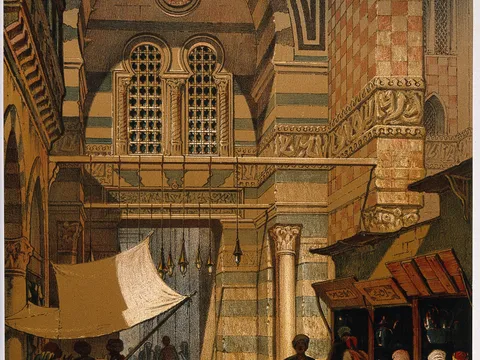 LanguageHashishArabic for dried grass. The word for cannabis resin from Morocco to Afghanistan.
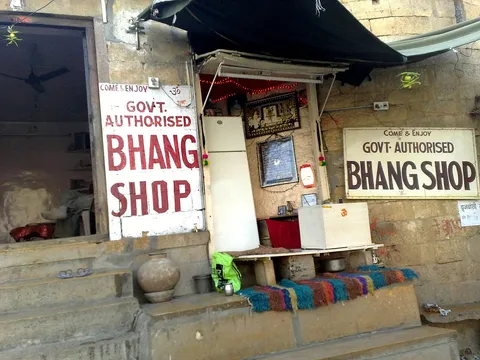 LanguageBhangThe leaves of the plant, ground to a paste and eaten or drunk. In India it is the one form of cannabis that the national law leaves alone.
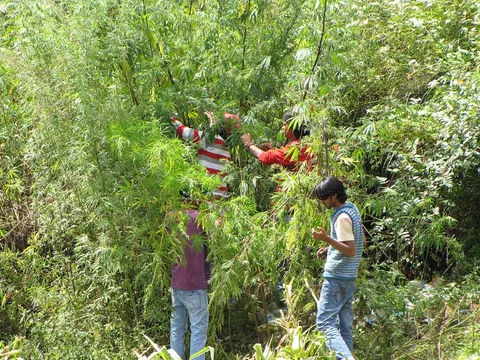 LanguageCharasResin rubbed by hand from the living plant, the hashish of the Himalaya. Indian law names it in its definition of cannabis.
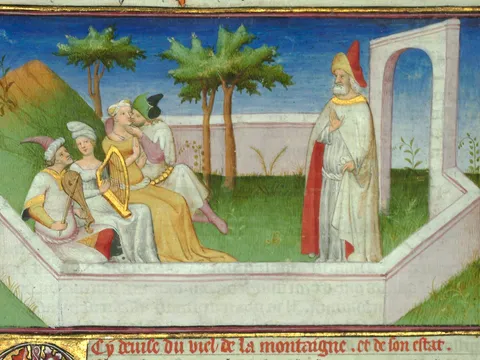 LanguageAssassinA medieval Arabic insult for the Nizari Ismailis of Syria, ḥashīshiyya, that became the European word for a hired killer. Medieval legends of drugged killers, repeated by Marco Polo and given scholarly authority in 1809, later helped make cannabis itself an “assassin of youth”.
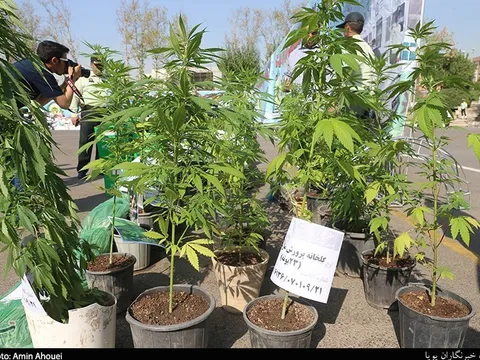 LanguageGol (گل)Persian for flower, and a name for herbal cannabis whose rise in urban Iran carried ideas about class, modernity and belonging.
Datasets not part of the score
What other organisations publish about Iran, and where it stands among the countries each one covers. Each dataset has a page of its own, with a world map and every country's figure.
Use
UNODC · 2015
Cannabis use
0.58%of people aged 15–64
0.17% · 20110.61% · 20130.58% · 201520112015 ages 15–64 · survey 2015 · 370,000 people · UNODC 2026
Source Survey ages and years vary, and some surveys include children. Rates are not age-standardised; do not compare countries directly.WHO, Our World in Data · 2020
Alcohol drunk per person
0.51litres of pure alcohol a year
0.02 · 20000.02 · 20010.03 · 20020.04 · 20030.06 · 20040.09 · 20050.12 · 20060.14 · 20070.16 · 20080.54 · 20091.12 · 20101.46 · 20111.41 · 20120.79 · 20130.42 · 20140.44 · 20150.82 · 20160.97 · 20170.70 · 20180.70 · 20190.51 · 202020002020 Higher than 13% of 187 countriesLowestHighestper person aged 15 or over · 2020 · 0.02 in 2000 · 1.12 in 2010
Law
UNODC · 2024
Cannabis seized
42,898kg in 2024
98,050 · 2015115,169 · 2016108,546 · 2017102,621 · 201873,928 · 2019107,886 · 2020124,299 · 202176,667 · 202293,875 · 202342,898 · 202420152024 Higher than 86% of 163 countriesLess seizedMore seized42,898 kg of resin · 98,050 kg in 2015 · 107,886 kg in 2020
Society
OpenAlex · 2025
Research on cannabis
1.2papers per million people
0.0 · 19970.0 · 20010.0 · 20020.1 · 20030.0 · 20040.1 · 20050.0 · 20060.2 · 20070.2 · 20080.2 · 20090.3 · 20100.4 · 20110.3 · 20120.3 · 20130.5 · 20140.6 · 20150.7 · 20160.6 · 20170.6 · 20180.6 · 20190.9 · 20201.0 · 20210.8 · 20220.9 · 20231.0 · 20241.2 · 202519972025 Higher than 53% of 176 countriesLowestHighest109 papers in 2025 · 32 in 2010
Cato and Fraser Institutes · 2023
Human Freedom Index
3.78of 10
4.92 · 20005.09 · 20015.01 · 20025.02 · 20035.05 · 20044.82 · 20054.82 · 20064.72 · 20074.64 · 20084.52 · 20094.41 · 20104.26 · 20114.00 · 20124.04 · 20134.10 · 20144.28 · 20154.33 · 20164.43 · 20174.08 · 20183.99 · 20193.88 · 20203.82 · 20213.81 · 20223.78 · 202320002023 Higher than 1% of 164 countriesLess freeFreerrank #164 of 165 · personal freedom 3.36 · economic freedom 4.37
V-Dem, Our World in Data · 2025
Civil liberties
0.25of 1 in 2025
0.12 · 19000.12 · 19010.12 · 19020.12 · 19030.12 · 19040.13 · 19050.18 · 19060.19 · 19070.19 · 19080.20 · 19090.21 · 19100.21 · 19110.21 · 19120.21 · 19130.21 · 19140.21 · 19150.21 · 19160.21 · 19170.21 · 19180.21 · 19190.21 · 19200.17 · 19210.17 · 19220.17 · 19230.17 · 19240.11 · 19250.12 · 19260.11 · 19270.11 · 19280.11 · 19290.12 · 19300.12 · 19310.12 · 19320.11 · 19330.10 · 19340.10 · 19350.10 · 19360.10 · 19370.10 · 19380.10 · 19390.10 · 19400.15 · 19410.31 · 19420.32 · 19430.32 · 19440.33 · 19450.32 · 19460.32 · 19470.33 · 19480.33 · 19490.44 · 19500.46 · 19510.46 · 19520.29 · 19530.19 · 19540.18 · 19550.18 · 19560.18 · 19570.18 · 19580.18 · 19590.18 · 19600.19 · 19610.21 · 19620.20 · 19630.19 · 19640.19 · 19650.19 · 19660.19 · 19670.19 · 19680.19 · 19690.20 · 19700.20 · 19710.20 · 19720.20 · 19730.20 · 19740.18 · 19750.17 · 19760.17 · 19770.18 · 19780.26 · 19790.16 · 19800.12 · 19810.11 · 19820.11 · 19830.12 · 19840.12 · 19850.12 · 19860.12 · 19870.12 · 19880.15 · 19890.18 · 19900.18 · 19910.18 · 19920.18 · 19930.19 · 19940.19 · 19950.20 · 19960.28 · 19970.31 · 19980.32 · 19990.38 · 20000.37 · 20010.37 · 20020.37 · 20030.35 · 20040.27 · 20050.25 · 20060.24 · 20070.24 · 20080.23 · 20090.19 · 20100.19 · 20110.19 · 20120.24 · 20130.24 · 20140.27 · 20150.27 · 20160.27 · 20170.26 · 20180.26 · 20190.24 · 20200.23 · 20210.18 · 20220.20 · 20230.25 · 20240.25 · 202519002025 Higher than 10% of 175 countriesFewer libertiesMore liberties0.11 in 1925 · 0.19 in 1961 · 0.18 in 1990
Our World in Data, World Bank · 2025
Population
92,417,681people in 2025
10,122,370 · 190010,967,798 · 19109,455,525 · 192012,691,310 · 193015,178,703 · 194016,510,553 · 195021,470,433 · 196029,145,099 · 197039,842,323 · 198058,380,098 · 199066,418,661 · 200077,420,851 · 201087,723,448 · 202092,417,681 · 202519002025 Higher than 91% of 196 countriesLowestHighest10,122,370 in 1900 · 16,510,553 in 1950 · 66,418,661 in 2000
CEPII
Former colonial rulers
Once ruled by
World Bank · 2025
Government effectiveness
35of 100
45 · 199639 · 199839 · 200036 · 200236 · 200337 · 200436 · 200536 · 200636 · 200736 · 200836 · 200939 · 201041 · 201141 · 201240 · 201346 · 201447 · 201547 · 201647 · 201746 · 201843 · 201937 · 202039 · 202137 · 202237 · 202337 · 202435 · 202519962025 Higher than 16% of 195 countriesLowestHighestestimate -0.86 on a scale of −2.5 to 2.5 · 2025 · 39 in 2000 · 47 in 2015
Transparency International · 2024
Corruption Perceptions Index
23of 100
28 · 201225 · 201327 · 201427 · 201529 · 201630 · 201728 · 201826 · 201925 · 202025 · 202125 · 202224 · 202323 · 202420122024 Higher than 15% of 178 countriesLowestHighest0 highly corrupt, 100 very clean · 2024 · 27 in 2015 · 25 in 2020
Pew Research Center · 2020
Most common religion
Muslims
the largest group · 2020
World Bank · 2025
Income per person
$16,834per person
9,656 · 199010,592 · 199110,727 · 199210,532 · 199310,333 · 199410,465 · 199511,010 · 199611,026 · 199711,102 · 199811,164 · 199911,643 · 200011,739 · 200112,583 · 200213,519 · 200313,807 · 200413,936 · 200514,321 · 200615,237 · 200715,091 · 200815,055 · 200915,730 · 201015,948 · 201115,159 · 201214,735 · 201315,263 · 201414,842 · 201515,920 · 201616,168 · 201715,365 · 201814,841 · 201915,382 · 202015,884 · 202116,378 · 202217,045 · 202317,484 · 202416,834 · 202519902025 Higher than 49% of 187 countriesLowestHighestat purchasing power parity, 2021 dollars · 2025 · $9,656 in 1990 · $15,730 in 2010
World Bank · 2024
Development indicators
85.3%use the internet
0% · 19900% · 19940% · 19950% · 19960% · 19970.1% · 19980.4% · 19990.9% · 20001.5% · 20014.6% · 20026.9% · 20037.5% · 20048.1% · 20058.8% · 20069.5% · 200712% · 200813.8% · 200915.9% · 201019% · 201122.7% · 201229.9% · 201339.4% · 201445.3% · 201553.2% · 201664% · 201770.2% · 201872.5% · 201975.6% · 202078.6% · 202181.7% · 202283.7% · 202385.3% · 202419902024 Higher than 59% of 195 countriesLowestHighest77% live in towns · 8.2% aged 65+ · life expectancy 77.9 · 2024 · 0.9% in 2000 · 15.9% in 2010
GDELT · 2025
Cannabis in the news
0.0001%of global news: cannabis articles from here
0.0001% · 20170.0001% · 20180.0001% · 20190.0001% · 20200.0001% · 20210.0001% · 20220.0001% · 20230.0001% · 20240.0001% · 202520172025 Higher than 33% of 147 countriesLowestHighest2025 average, 348 days · 0.0001% in 2018 · 0.0001% in 2021
Plant and market
OpenStreetMap · 2026
Cannabis shops on the map
2shops mapped
Higher than 25% of 59 countriesFewer shopsMore shops0.0 per million people · 2026
GBIF · 2026
Records of the cannabis plant
25dated records
2 · 19003 · 19494 · 19715 · 20176 · 20207 · 202110 · 202214 · 202325 · 202619002026 Higher than 62% of 128 countriesLowestHighest4 more without a date · 11 in 2026 · 2 by 1900
FAO · 2024
Hemp grown
198ha in 2024
119 · 1991211 · 1992242 · 199316 · 1994110 · 1995306 · 1996228 · 1997145 · 1998141 · 1999144 · 2000147 · 2001149 · 2002152 · 2003155 · 2004159 · 2005162 · 2006165 · 2007168 · 2008172 · 2009175 · 2010178 · 2011181 · 2012185 · 2013186 · 2014189 · 2015187 · 2016189 · 2017190 · 2018190 · 2019191 · 2020195 · 2021194 · 2022196 · 2023198 · 202419912024 Higher than 49% of 39 countriesLowestHighest204 t of seed · 144 ha in 2000
ClinicalTrials.gov · 2026
Clinical trials of cannabis medicines
1studies so far
1 · 20251 · 202620252026 Higher than 0% of 50 countriesLowestHighest0 actual starts in 2026 · as of 2026–10–26
Enforcement 1 report · the Cannabis Enforcement Tracker →
How the law above is applied: raids, seizures, fields destroyed, arrests and sentences, as recorded by the Cannabis Enforcement Tracker, our companion site.
- ArrestIran says drug arrests passed 500,000 in 1404
Iran's Drug Control Headquarters said more than 500,000 retailers, distributors and people connected to drug offences were arrested in the Iranian year 1404, which ended in March 2026.
History 22 of 22 checked against a source
Score and entries per decade
6 today, from 100 before its first recorded change
This country's score Entries that moved the score Context only
20263 entries0 score changes
Hemp ✓
Iran allows industrial hemp under permit
The Drug Control Headquarters communicated a directive allowing industrial hemp to be grown under supervision. Farmers may grow certified seed below 0.3% THC with a licence from the provincial Jihad Agriculture organisation. The directive rests on Article 28 of the Single Convention and Article 2 of the Anti-Narcotics Law, under which growing cannabis without intent to produce drugs is not a crime. Cannabis above 0.3% THC for medicine follows the rules for the opium poppy.
Debate ✓
Iran says drug-law amendment would cut capital offences from eight to two
The secretary of Iran's Drug Control Headquarters said on 30 June 2026 that an amendment to the anti-narcotics law, agreed with the judiciary and police, would reduce the number of capital drug offences from eight to two. Days earlier the same official said the change was still a proposal, that abolishing the death penalty was not on the agenda and that it would not apply until parliament passed it. No text was published with either account.
Enforcement ✓
Iran hangs two Afghan drug offenders in Shiraz
Mirveis Khalilzadi, 55, and Ebrahim Ahmadshahi, 40, two Afghan nationals, were hanged at Shiraz's Adel Abad prison on 21 June 2026 for drug-related offences. Iran Human Rights, which recorded the case, says drug executions have risen every year since 2021 and that 795 people were executed on drug charges in 2025, only 0.18% of them announced by the authorities. Neither execution was reported by domestic media or officials.
20252 entries0 score changes
Death penalty ✓
Iran's executions more than double, nearly half for drug offences
The rights group HRANA counted at least 1,922 executions in Iran between 1 January and 20 December 2025, 106% more than in 2024. Drug offences accounted for 46.10% of them. The report does not break the figure down by drug.
Debate ✓
Iran's parliament floats removing death from eight drug offences
The spokesperson of the Iranian parliament's judiciary and legal commission said a bill to amend the Anti-Narcotics Law would remove the death penalty from eight drug-related offences. No text, timetable or list of the provisions to be changed was published, so the scope of the proposal remained unclear.
20243 entries0 score changes
Enforcement ✓
Iran's reported hashish seizures fall by more than half in 2024
UNODC figures reported by Iran record 42,898 kg of cannabis resin seized in 2024, down from 93,875 kg in 2023 and less than half the 98,050 kg reported for 2015. Opium seizures fell from 445 tonnes to 261 tonnes over the same year, while methamphetamine seizures rose slightly to 38.5 tonnes. Iran reported no separate herbal cannabis figure for 2024; grass was grouped with other drugs.
Enforcement ✓
Iran executed 503 people for drug offences in 2024
Iran Human Rights and ECPM counted 503 executions on drug charges in 2024, up from 471 in 2023 and far above the average of roughly two dozen a year recorded in 2018–2020. The groups say only a small fraction of drug executions are announced by the authorities. The 2025 count later rose to 795, or 48.5% of all executions that year.
Other law ✓
Iran raises drug fines to catch up with inflation
The cabinet approved a decree on 19 June 2024 that multiplied the fines in the Anti-Narcotics Law, including the cannabis possession, supply and use penalties. The fine for possessing up to 50 g of cannabis rose from 3 million to 165 million rials, and the fine for supplying up to 50 g rose from 4 million to 200 million rials; the top fine for supplying 500 g to 5 kg rose to 2 billion rials. Prison terms and the death penalty were left unchanged.
20181 entry0 score changes
20172 entries0 score changes
Death penalty ✓
Iran raises the threshold for drug executions
Parliament amended the Anti-Narcotics Law in August 2017 so that trafficking in natural drugs such as cannabis and opium reaches the capital threshold at 50 kg, up from 5 kg; for heroin, cocaine and amphetamines it rose from 30 grams to 2 kilograms. The change applied retroactively. On 9 January 2018 the head of the judiciary ordered judges to halt executions and review the cases of some 5,000 people under sentence of death, most of whom would have their sentences commuted to 25 to 30 years. Death remained for gang leaders, those who use minors and those who carry arms.
Culture & science ✓ Article
Iran's drug chief names cannabis flower the second most used drug
A report dated July 3 attributed to the head of the Drug Control Headquarters the claim that gol, 'flower', was Iran's second most commonly consumed drug after opium. Herbal cannabis had gained visibility alongside older hashish traditions. The statement did not change its legal status; the cited study does not supply the underlying prevalence data.
20151 entry0 score changes
20011 entry0 score changes
19921 entry0 score changes
19881 entry1 score change
19721 entry0 score changes
19611 entry0 score changes
19591 entry1 score change
19491 entry0 score changes
19321 entry0 score changes
19261 entry0 score changes
15341 entry0 score changes
Sources hover a number in the text to see its source
- Cited
- 17
- Websites
- 14
- 1
- Last reviewed
- History checked
- 22/22
Most cited
- iranrights.org2
- pmc.ncbi.nlm.nih.gov2
- asbahi-lawyer.ir1
- ecpm.org1
- hamrahyaar.com1
- hamshahrionline.ir1
All 17 sources
- Iran — The Law for Combating Drugs (Anti-Narcotics Law), 1988, as amended on 8 November 1997 (English translation)Articles 1–7, 15–16 and 19; possession, supply, cultivation, use and employment consequences.archived
- Iran — final Article 45 amendment, approved October 2017 (Boroumand Center translation)Article 45 opening paragraph and A–D; first/second-degree substitution; D expressly covers Article 4 traditional-drug offencesarchived
- Iran — Cabinet decree 56261/ت62298هـ raising drug fines (19 June 2024)Approval and date; current amounts reproduced in legal databases.archived
- Iran — Islamic Penal Code, Books One and Two (IHRDC translation)Article 19: first-degree imprisonment over twenty-five years; second degree fifteen to twenty-five yearsarchived
- Iran Human Rights and ECPM — Annual Report on the Death Penalty in Iran 20252026 · 2025 at a glance, pp. 10–11; the 2017 amendment, pp. 37–38; the October 2025 bill, p. 39; drug executions, pp. 60–62.archived
- Hamshahri Online — Industrial hemp cultivation allowed in Iran: the details (21 Mehr 1405 / 13 October 2026)Directive on supervision of industrial hemp cultivation; certified seed below 0.3% THC and CBD-dominant; permit from the provincial Jihad Agriculture organisation; above 0.3% for medicine follows the poppy rules.archived
- IRNA — 372 tonnes of drugs seized last year; more than 570,000 defendants arrested (2 June 2025)Deputy head of the Drug Control Headquarters; 570,232 arrests, 375,438 addicts, 194,794 traffickers and distributors; 372 tonnes seized.archived
- “We Smoke Flowers”: On “Being High” in Postrevolutionary IranMaziyar Ghiabi · In Cannabis: Global Histories, edited by Lucas Richert, James H. Mills · MIT Press · 2021 · pp. 271–296, especially pp. 285–289 on gol, Qalat, prices and delivery. · ISBN 9780262045209
- Evidence for an increase in cannabis use in Iran – A systematic review and trend analysisYasna Rostam-Abadi, Jaleh Gholami, Masoumeh Amin-Esmaeili, Shahab Baheshmat, Marziyeh Hamzehzadeh, Hossein Rafiemanesh, Morteza Nasserbakht, Leila Ghalichi, Anousheh Safarcherati, Farhad Taremian, Ramin Mojtabai, Afarin Rahimi-Movaghar · In PLOS ONE · 2021 · 16(8):e0256563; prevalence figures in the abstract; 'no licit or medical production' in the introduction; cultivation data in the discussion.archived
- Asbahi — 2019 Golestan judicial meeting on article 45Non-binding meeting; quantity alone treated as sufficient for article 45.archived
- US Department of State — 2025 International Narcotics Control Strategy Report, Volume 1: Drug and Chemical Control2025 · Iran country report, pp. 233–234: transit and seizure estimates, 2.8–4.4 million regular users, 1.3–1.6 million treatment seekers.archived
- Considerations before the legalization of recreational and medical cannabis in IranAhmad Shamabadi, Shahin Akhondzadeh · In Asian Journal of Psychiatry · 2024 · Volume 101, 104237; argues that medical cannabis production and legalisation should be on the agenda.archived
- United Nations Treaty Collection — Single Convention on Narcotic Drugs, 1961: status of participantsIran signed on 30 March 1961 and ratified on 30 August 1972.archived
- Tasnim News Agency — No permits have been issued for cultivating narcotic plants (28 Khordad 1405 / 18 June 2026)Deputy for counter-narcotics at the Drug Control Headquarters; no permits for narcotic-plant cultivation; marijuana legalisation not on the agenda.archived
- Iran — Traffic Violations Law (قانون رسیدگی به تخلفات رانندگی), Article 10(b)Approved 1389 (2010–11); 2,000,000 rial fine, six-month licence seizure and referral to court for driving while intoxicated by narcotics or psychotropics.archived
- Islam and cannabis: Legalisation and religious debate in IranMaziyar Ghiabi, Maryam Maarefvand, Hamed Bahari, Hossein Alavi · In International Journal of Drug Policy · 2018 · Volume 56, pp. 1–7; the survey of senior clerics and the history of use.archived
- International Narcotics Control Board — Travellers carrying medicines containing controlled substances