Taiwan
2/100
#182 of 196 worldwide
#36 of 48 in Asia
Category 2 narcotic: up to three years for use; growing for personal use carries one to seven years since 2022, other cultivation at least five.
In short all countries →
- Can I carry it?NoIt is a crime
- Can I grow it?NoIt is a crime
- Can I buy it?LimitedNarrow prescription/import and special hospital authorisation routes exist; routine THC dispensing was not verified
- Can I use it in public?NoUse itself is a crime
- What if I'm caught?PrisonPossession can bring prison; more than 20 g of pure Category 2 narcotic carries six months to five years
A rough guide read from the scores and the rules below, not legal advice. The details and the exceptions are in each segment: select an answer to jump to it.
Cannabis in Taiwan not part of the score · all 8 datasets ↓
Who uses it
About 1 in 333
people aged 12–64 in Taiwan used cannabis in the past year.
- Past year
- 0.3%
- Asia median
- 2%
UNODC · survey 2005
Source Past-year cannabis use among people aged 12–64. People who used cannabis in the past year, from a 2005 survey.Survey ages and years vary, and some surveys include children. Rates are not age-standardised; do not compare countries directly.
UNODC World Drug Report 2026, annex table 1.2. The whole dataset →
Use across Asia
33rdhighest of 40 surveyed countries
- 🇮🇷 Iran0.6%
- 🇸🇦 Saudi Arabia0.3%
- 🇹🇼 Taiwan0.3%
- 🇻🇳 Vietnam0.3%
- 🇰🇷 South Korea0.3%
Past-year use, latest survey of each. Survey years and ages differ. On the map →
Cannabis in figures
- Research on cannabis1.4papers per million people · 2025
- Clinical trials of cannabis medicines3studies so far · 2026
The dot: where it stands among the countries each dataset covers, lowest to highest. All datasets ↓
Score breakdown 2/100 · how the scores are made
Similar scores in Asia
- 🇴🇲 Oman2
- 🇶🇦 Qatar2
- 🇹🇼 Taiwan2
- 🇹🇲 Turkmenistan2
- 🇦🇪 United Arab Emirates2
Cannabis is a Category 2 narcotic. Ordinary possession carries up to two years, detention or a fine up to NT$200,000. Above 20 g of pure Category 2 narcotic, the range is six months to five years, with an additional fine up to NT$700,000. Pure narcotic weight is not the gross weight of cannabis flower.[1]
| Amount | What happens | Punishment | Fine |
| Any amountOrdinary Category 2 possession; the separate pure-narcotic threshold below increases the sentence | CriminalPossession | Up to 2 years | Up to NT$200,000 |
| More than 20 g pure Category 2 narcoticPure narcotic weight, not 20 g of flower | CriminalPossession | 6 months – 5 years | Up to NT$700,000 |
Cultivating cannabis with intent to manufacture narcotics carries at least five years and an optional fine up to NT$5 million. Since 4 May 2022, minor personal-use cases carry one to seven years and an optional fine up to NT$1 million.[1][2] The lower band requires those circumstances; it is not a permitted plant allowance.[3] The ordinary fixed-term ceiling for the general tier is fifteen years, before any separately applicable enhancement.[4]
| Amount | What happens | Punishment | Fine |
| Any plantMinor personal-use cultivation under article 12(3); the circumstances, not a plant-count cap, determine eligibility | CriminalPersonal growing | 1–7 years | Up to NT$1,000,000 |
| Cultivation with intent to manufacture outside the minor personal-use tierFive-year minimum under article 12(2); ordinary fixed-term ceiling under Criminal Code article 33 | CriminalCultivation | 5–15 years | Up to NT$5,000,000 |
Enforcement remains strict. Prosecutors reported 2,493 kg of cannabis and 13,917 plants seized in 2024, with 1,305 people prosecuted for cannabis use; the 2025 annual report recorded 1,469.1 kg, and a single Taichung seizure in June 2026 reached 766 kg.[5][6][7] Border interceptions rose even as the annual total fell, so the series are not directly comparable.[8] Annual 4/20 rallies continue, but no reform has passed.[9]
Manufacturing, transporting or selling a Category 2 narcotic carries life imprisonment or at least ten years, with a fine up to NT$15 million.[1] Possession with intent to sell carries at least five years, and transferring or giving it to another person six months to five years.[1] Sale or transfer to a minor or pregnant woman can be increased by up to one half.[1] A public official who uses their position for the same conduct can face death or life.[1]
| Amount | What happens | Punishment | Fine |
| Manufacture, transport or sale (article 4)Life imprisonment is the maximum | CriminalTrafficking | At least 10 years | Up to NT$15,000,000 |
| Possession with intent to sell (article 5) | CriminalPossession for sale | At least 5 years | Up to NT$5,000,000 |
| Transfer or gift (article 8) | CriminalSupply | 6 months – 5 years | Up to NT$700,000 |
| Public official using office (article 15)Death or life imprisonment; the only capital cannabis route | CriminalOfficial trafficking | Death penalty | — |
Use of a Category 2 narcotic carries up to three years.[1] First-time users are normally sent to observation and rehabilitation for up to two months, then compulsory treatment for six to twelve months, with non-prosecution after completion; a repeat within three years is prosecuted.[1] The 2004 procedure set the earlier five-year rule.[6]
| Amount | What happens | Punishment | Fine |
| Use (article 10)First use normally leads to observation and treatment rather than prosecution | CriminalPersonal use | Up to 3 years | — |
A narrow patient route exists for one CBD medicine: Epidyolex was licensed on 19 January 2024 and reimbursed from 1 April 2024 for Dravet syndrome and tuberous sclerosis complex, with strict prescribing criteria.[10][11] Individual imports of CBD medicines are also possible with a prescription, and specified hospitals may apply for controlled cannabinoid preparations.[12] No general THC or flower supply was verified, so the access score stays at zero.[12]
Context not part of the score · every country, by topic →
Ordinary cannabis possession, use, cultivation, transfer and sale are not capital; the maximum for sale or transport is life imprisonment.[1] The only capital route is article 15(1): a public official who uses their position to manufacture, transport or sell a Category 2 narcotic may receive death or life.[1] No cannabis death sentence or execution was found.[1]
Holding, using and growing cannabis remain controlled offences; the lower personal-growing band still carries prison.[1] The court identifies very small crops for the grower’s own use as an example of a minor case, leaving the assessment to judges.[3] There is no adult-use retail permission in these provisions.[1]
A patient route exists for one CBD medicine. Epidyolex was licensed on 19 January 2024 and reimbursed from 1 April 2024 for Dravet syndrome from age two and tuberous sclerosis complex from age one, after at least three anti-epileptic drugs have failed.[10][11] Only paediatric or neurology specialists may prescribe it, with annual review.[11] Individual CBD imports and a special hospital route for controlled cannabinoid preparations remain available, but no general THC or flower dispensing was verified.[12]
No cannabis clubs are known, and the law leaves no room for them: growing cannabis and supplying it to another person are both prohibited.[1][13]
The Narcotics Hazard Prevention Act names cannabis seeds directly.[1] Possessing them carries up to one year in prison, possessing or transferring them with intent to sell up to two years, and transporting or selling them for cultivation up to two years.[1] (Articles 13 and 14). Growing the plant is a crime under Article 12, with one to seven years where the case is minor and for personal use.[1]
No hemp cultivation regime and no THC threshold for growers. Cannabis plants remain Category 2 narcotics even for fibre or seed.[1] CBD is regulated as a medicine, and the 2026 cosmetics guidance allows hemp-seed oil only where the finished product has no more than 10 ppm THC; that residue limit is not a permission to grow hemp.[14][1]
No lawful cannabis production. Cannabis plants remain Category 2 narcotics even for fibre or seed, and no industrial-hemp cultivation exception exists.[1] Article 12 makes cultivation with intent to manufacture an offence of at least five years, or one to seven years for minor personal use.[1]
Reported cannabis seizures reached 2.3 tonnes in 2023, against 240.5 kg in 2021, and the High Prosecutors' Office counted 2,493 kg and 13,917 plants in 2024.[15][5] The 2025 total fell to 1,469.1 kg, but Taipei Customs alone intercepted 1,602 kg of cannabis and derivatives that year.[6][8] A single Taichung case in June 2026 found 766.09 kg of dried flower, the largest in a decade.[7] No herb/resin split is published.[6]
Customs warns against importing cannabis flower, wax, gummies and vape oil, even from places where they are legal.[16] Transporting Category 2 narcotics under Article 4 carries life imprisonment or at least ten years, with a possible fine up to NT$15 million; Article 17 allows a reduction for a confessed, minor personal-use transport offence.[1] Ordinary possession separately carries up to two years, detention or NT$200,000; more than 20 g pure narcotic brings six months to five years and a possible additional fine up to NT$700,000. Flower weight alone does not establish that pure-drug threshold.[1]
The Road Traffic Management and Penalty Act punishes a driver found by a test to have taken drugs with the maximum statutory fine: NT$120,000 for a motorcycle and NT$150,000 for a car, with the vehicle impounded and the licence revoked.[17] Refusing the drug test costs NT$270,000 and the licence, and a person confirmed by police to have used drugs can lose the licence without driving.[17] The Criminal Code separately sets a urine THC-COOH threshold of 15 ng/mL and an impairment route, with fatal drug-driving carrying three to ten years.[18]
The High Prosecutors' Office reported 2,493 kg of cannabis and 13,917 plants seized in 2024, with 1,305 people prosecuted for cannabis use; the annual drug report gives a slightly lower 2,323.3 kg for the same year.[5][5] In 2025 the annual report recorded 1,469.1 kg, 48 drug labs and 13 cultivation sites, while a September sweep arrested 245 people.[6][19] The figures combine herbal cannabis and derivatives and do not give a resin-only series.[6]
A conviction is a criminal record; rehabilitation orders are recorded.[1] A foreigner convicted can also be deported and banned from re-entry.[16]
Article 18 permits possession of controlled drugs for medical, research or training purposes, and the Controlled Drugs Act licenses institutions.[1] No cannabis research programme, licence or clinical trial was found.[1]
Taking cannabis into or out of Taiwan is a separate offence from possessing it, normally charged as smuggling or trafficking, with far heavier penalties. That holds almost everywhere, including between two places where cannabis is legal.
A prescription or medical card from another country is generally not recognised. Travellers who need a cannabis-based medicine should ask Taiwan's embassy before travelling.[20]
General guidance that applies to almost every country, not a check of Taiwan's customs rules.
Culture the atlas →
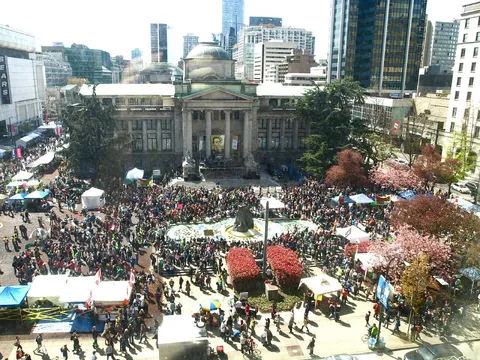 Language420A meeting time of five Californian schoolboys in 1971 that became the worldwide code for cannabis and the date of its yearly demonstrations.
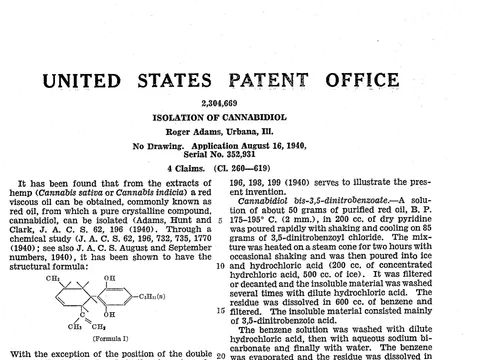 LanguageCBDCannabidiol, the cannabis compound that does not get people high. Studied since 1940, it became a word on shop shelves only after 2018, and the law still cannot agree whether it is a medicine, a food, a drug or none of these.
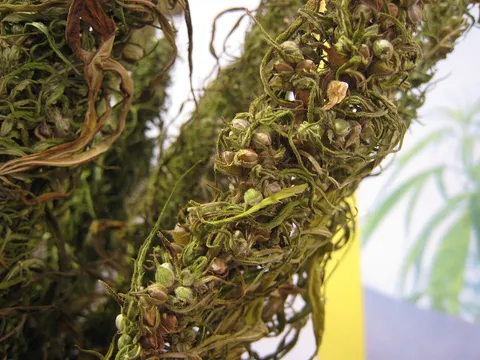 TraditionsHemp seed in Chinese medicineFor some 1,800 years Chinese physicians have prescribed the small brown fruits of the hemp plant, huomaren, as a gentle laxative. They have no intoxicating effect, and the law in China, Hong Kong and Taiwan has had to say so.
Did you know? all cases →
Medicine · Taiwan
In Taiwan hemp seed sold as medicine is legal and hemp seed that can sprout is a drug. A court in 2023 settled one case by asking whether the buyer's seeds had grown.
Read the entry →
Datasets not part of the score
What other organisations publish about Taiwan, and where it stands among the countries each one covers. Each dataset has a page of its own, with a world map and every country's figure.
Use
UNODC · 2005
Cannabis use
0.3%of people aged 12–64
ages 12–64 · survey 2005 · UNODC 2026
Source Survey ages and years vary, and some surveys include children. Rates are not age-standardised; do not compare countries directly.
Society
OpenAlex · 2025
Research on cannabis
1.4papers per million people
0.0 · 19720.0 · 19880.1 · 19910.0 · 19920.0 · 19960.0 · 19980.1 · 20000.2 · 20010.3 · 20020.3 · 20030.2 · 20040.2 · 20050.2 · 20060.5 · 20070.6 · 20080.4 · 20090.6 · 20100.6 · 20110.3 · 20120.5 · 20130.3 · 20140.6 · 20150.9 · 20160.6 · 20170.4 · 20180.7 · 20190.5 · 20201.1 · 20211.8 · 20220.6 · 20230.9 · 20241.4 · 202519722025 Higher than 56% of 176 countriesLowestHighest32 papers in 2025 · 14 in 2010
Cato and Fraser Institutes · 2023
Human Freedom Index
8.72of 10
8.21 · 20008.17 · 20018.23 · 20028.27 · 20038.34 · 20048.44 · 20058.45 · 20068.42 · 20078.40 · 20088.36 · 20098.46 · 20108.62 · 20118.65 · 20128.64 · 20138.67 · 20148.70 · 20158.71 · 20168.68 · 20178.70 · 20188.73 · 20198.49 · 20208.48 · 20218.67 · 20228.72 · 202320002023 Higher than 91% of 164 countriesLess freeFreerrank #14 of 165 · personal freedom 9.22 · economic freedom 8.03
V-Dem, Our World in Data · 2025
Civil liberties
0.93of 1 in 2025
0.15 · 19000.15 · 19010.15 · 19020.15 · 19030.15 · 19040.15 · 19050.15 · 19060.15 · 19070.15 · 19080.15 · 19090.15 · 19100.15 · 19110.15 · 19120.15 · 19130.15 · 19140.15 · 19150.22 · 19160.22 · 19170.22 · 19180.22 · 19190.23 · 19200.24 · 19210.24 · 19220.24 · 19230.24 · 19240.24 · 19250.24 · 19260.24 · 19270.24 · 19280.24 · 19290.20 · 19300.20 · 19310.20 · 19320.20 · 19330.19 · 19340.19 · 19350.19 · 19360.18 · 19370.17 · 19380.17 · 19390.17 · 19400.17 · 19410.17 · 19420.17 · 19430.17 · 19440.18 · 19450.23 · 19460.19 · 19470.19 · 19480.18 · 19490.18 · 19500.19 · 19510.21 · 19520.21 · 19530.21 · 19540.21 · 19550.21 · 19560.21 · 19570.21 · 19580.21 · 19590.24 · 19600.24 · 19610.25 · 19620.25 · 19630.26 · 19640.26 · 19650.26 · 19660.26 · 19670.26 · 19680.26 · 19690.28 · 19700.26 · 19710.26 · 19720.27 · 19730.29 · 19740.29 · 19750.31 · 19760.32 · 19770.29 · 19780.29 · 19790.33 · 19800.38 · 19810.40 · 19820.42 · 19830.45 · 19840.45 · 19850.48 · 19860.53 · 19870.65 · 19880.72 · 19890.76 · 19900.76 · 19910.79 · 19920.80 · 19930.81 · 19940.82 · 19950.83 · 19960.84 · 19970.84 · 19980.85 · 19990.93 · 20000.94 · 20010.94 · 20020.93 · 20030.93 · 20040.93 · 20050.93 · 20060.93 · 20070.93 · 20080.93 · 20090.94 · 20100.94 · 20110.94 · 20120.94 · 20130.94 · 20140.94 · 20150.94 · 20160.94 · 20170.94 · 20180.94 · 20190.93 · 20200.93 · 20210.94 · 20220.94 · 20230.93 · 20240.93 · 202519002025 Higher than 89% of 175 countriesFewer libertiesMore liberties0.24 in 1925 · 0.24 in 1961 · 0.76 in 1990
Our World in Data, World Bank · 2025
Population
23,300,000people in 2025
2,809,533 · 19003,228,010 · 19103,639,403 · 19204,490,164 · 19305,826,611 · 19407,596,535 · 195011,046,263 · 196014,815,755 · 197018,086,521 · 198020,594,907 · 199022,332,873 · 200023,224,049 · 201023,663,461 · 202023,300,000 · 202519002025 Higher than 69% of 196 countriesLowestHighest2,809,533 in 1900 · 7,596,535 in 1950 · 22,332,873 in 2000
CEPII
Former colonial rulers
Once ruled by Japan
Plant and market
GBIF · 2006
Records of the cannabis plant
9dated records
1 · 19103 · 19967 · 19979 · 200619102006 Higher than 45% of 128 countriesLowestHighest0 more without a date · 2 in 2006
ClinicalTrials.gov · 2026
Clinical trials of cannabis medicines
3studies so far
1 · 20112 · 20122 · 20132 · 20142 · 20152 · 20162 · 20172 · 20182 · 20192 · 20202 · 20212 · 20222 · 20232 · 20243 · 20253 · 202620112026 Higher than 28% of 50 countriesLowestHighest0 actual starts in 2026 · as of 2026–10–26 · 2 by 2020
Enforcement 3 reports · the Cannabis Enforcement Tracker →
How the law above is applied: raids, seizures, fields destroyed, arrests and sentences, as recorded by the Cannabis Enforcement Tracker, our companion site.
- SeizureTaiwan seizes 766 kg of cannabis in its largest bust in a decade
Coast guard and police officers stopped a truck in New Taipei's Rueifang district early on 3 June 2026 and found 1,309 packages holding 766.09 kg of dried cannabis flower, along with amphetamine and mixed drugs.
- SeizureTaiwan rounds up 245 people in a nationwide cannabis sweep
On 23 and 24 September 2025 prosecutors, police and military police searched 330 places in 20 jurisdictions and arrested 245 people for growing, using or possessing cannabis.
- SeizureTaiwan breaks its record for cannabis plants seized in one case
Prosecutors announced on 15 October 2024 that raids in Hsinchu in May had found 5,659 cannabis plants and 1,666 seeds across two indoor farms, with a street value estimated at more than NT$20 billion.
History 26 of 26 checked against a source
Score and entries per decade
2 today, from 100 before its first recorded change
This country's score Entries that moved the score Context only
20264 entries0 score changes
20251 entry0 score changes
20243 entries0 score changes
Medical ✓
Taiwan starts paying for a CBD epilepsy medicine
From 1 April 2024 the National Health Insurance scheme reimbursed Epidyolex for Dravet syndrome from age two and tuberous sclerosis complex from age one. Patients must have failed at least three anti-epileptic drugs; Dravet patients must also have tried stiripentol, and tuberous sclerosis patients must have been assessed for surgery or vagus nerve stimulation. Only paediatric or neurology specialists may prescribe it, with annual prior review, and treatment stops if seizures fall by less than half after a year.
Hemp ✓
Taiwan bans THC in cosmetics but keeps a hemp-seed residue limit
A 21 March 2024 amendment to the cosmetics prohibited-ingredients list made tetrahydrocannabinols a banned cosmetic ingredient. Hemp-seed oil may still be used if the finished product contains no more than 10 ppm THC, and CBD may not be added to cosmetics at all. The rule is a product-safety limit, not a permission to grow hemp or cannabis.
Medical ✓
Taiwan approves its first CBD medicine for two childhood epilepsies
The Food and Drug Administration licensed Epidyolex, a cannabidiol oral solution, on 19 January 2024 for Dravet syndrome from age two and tuberous sclerosis complex from age one. It is a prescription-only Category 2 controlled drug, imported by the FDA's own controlled-drugs plant, and is an add-on treatment when existing epilepsy drugs do not control seizures. The licence covered a medicine, not cannabis flower or general THC products.
20232 entries0 score changes
Debate ✓
Taiwan's justice ministry says cannabis advocacy can be incitement
In August 2023 the Ministry of Justice issued guidance saying that advocating cannabis decriminalisation could amount to inciting others to use cannabis, a criminal offence. It also said Taiwanese who used cannabis abroad could be prosecuted at home. Lawyers and activists called the guidance a free-speech violation; Zoe Lee responded by filing a lawsuit against Elon Musk for praising cannabis, to show how far the rule could reach.
Tightening ✓
Taiwan makes its largest cannabis-growing bust as the rally grows
Police in Taoyuan seized more than 4,000 plants, valued at 1.26 billion Taiwan dollars. Two years earlier a senior justice official had said Taiwan must declare war on marijuana, and the ministry said it firmly opposed decriminalisation. That April the Taipei rally drew thousands, watched by at least a hundred officers. Use carries up to three years in prison.
20221 entry0 score changes
20202 entries0 score changes
Medical ✓
Taiwan explains prescription imports of cannabinoid medicines
Responding to a medical-cannabis petition, the Health Ministry explained individual prescription imports of CBD medicines and a special hospital application route for controlled cannabinoid preparations for Dravet and Lennox–Gastaut syndromes. The explanation distinguished medicines from the controlled cannabis plant.
Easing ✓ Article
Taiwan's top court rejects the five-year minimum for growing cannabis
Taiwan’s constitutional justices required a sentencing option for minor cannabis-growing cases, including very small crops grown for personal use. The five-year minimum could still leave two and a half years after ordinary mitigation. Lawmakers received a year to amend the law; after that deadline, courts could reduce the statutory punishment by up to half in minor cases.
20191 entry0 score changes
20091 entry0 score changes
20041 entry0 score changes
19981 entry0 score changes
19921 entry0 score changes
19731 entry0 score changes
19611 entry0 score changes
19551 entry1 score change
19451 entry0 score changes
19301 entry0 score changes
19291 entry0 score changes
19011 entry0 score changes
18971 entry0 score changes
Sources hover a number in the text to see its source
- Cited
- 20
- Websites
- 15
- Last reviewed
- History checked
- 26/26
Most cited
- law.moj.gov.tw4
- antidrug.moj.gov.tw2
- taipeitimes.com2
- fda.gov.tw1
- incb.org1
- judicial.gov.tw1
All 23 sources
- Narcotics Hazard Prevention Act — Laws & Regulations Database of the Republic of China (Taiwan)Articles 2, 4(2), 11, 12 and 17(3): Category 2 classification, transport, possession and possible mitigationarchived
- Taiwan Ministry of Justice — Narcotics Hazard Prevention Act legislative history2022 entry: articles 12 and 36 promulgated and effective 4 May 2022archived
- Taiwan Judicial Yuan — Clarification of the minor-cultivation ruling, 6 April 2020archived
- Taiwan Criminal Code — article 33, ordinary fixed-term imprisonment ceilingarchived
- Taiwan High Prosecutors' Office — 2024 drug report (1 October 2025)2,493 kg and 13,917 plants in 2024; 1,305 use prosecutions.
- Taiwan — 2025 national drug report (25 February 2026)1,469.1 kg; 48 labs; 13 cultivation sites.
- Taipei Times — 766 kg cannabis seizure, largest in a decade (6 October 2026)766.09 kg dried flower; seven arrested.archived
- Taiwan Ministry of Finance — Customs intercepted 1,602 kg of cannabis in 2025 (22 January 2026)Border interceptions; 2025.archived
- New Bloom — Eighth Green Wave rally (25 April 2026)archived
- Taiwan FDA — Epidyolex (cannabidiol) oral solution licence 衛部罕藥輸字第000094號Licensed 19 January 2024; Dravet and tuberous sclerosis complex.archived
- Taiwan NHI — reimbursement for cannabidiol medicines (Epidyolex), effective 1 April 2024健保審字第1130051861號; prescribing criteria.archived
- Taiwan Ministry of Health and Welfare — Response to medical cannabis petition, 7 May 2020archived
- Taiwan News — amendment on growing marijuana for personal usearchived
- Taiwan Food and Drug Administration — Hemp-seed oil cosmetics and THC residues, 19 January 2026Finished cosmetics may contain hemp-seed oil with no more than 10 ppm THC residue; no cultivation authorisationarchived
- Taipei Times — 'Zombie vape' use increases 58-fold: prosecutors (28 October 2024)archived
- Taipei Customs — Do not import cannabis and related products (2024)Cannabis bud, wax, gummies and vape oil seized in passenger luggage and imports; use Article 4 for the exact transport tariffarchived
- Taiwan — Road Traffic Management and Penalty Act, Article 35 (Laws and Regulations Database, amended 28 May 2025)archived
- Taiwan Criminal Code, article 185-315 ng/mL urine THC-COOH; impairment route; fatal drug-driving.archived
- Newtalk — 245 arrested in nationwide cannabis sweep (1 October 2025)245 arrests in the 23–24 September sweep.archived
- International Narcotics Control Board — Travellers carrying medicines containing controlled substances