Türkiye
11/100
#99 of 196 worldwide
#13 of 48 in Asia
Possession carries two to five years, often converted to probation and treatment. Hemp is licensed in selected provinces; cannabinoid medicines have a tightly controlled individual import route.
In short all countries →
- Can I carry it?NoIt is a crime
- Can I grow it?NoIt is a crime
- Can I buy it?LimitedA special import route lists cannabinoid medicines on red prescription; routine domestic pharmacy stock has not been verified
- Can I use it in public?NoNot in public, and even at home the law does not protect it
- What if I'm caught?Fine or prisonUsually a fine; prison is possible
A rough guide read from the scores and the rules below, not legal advice. The details and the exceptions are in each segment: select an answer to jump to it.
Cannabis in Türkiye not part of the score · all 26 datasets ↓
Who uses it
About 1 in 90
people aged 15–64 in Türkiye used cannabis in the past year: 650,000 people.
- Past year
- 1.1%
- Asia median
- 2%
- Aged 15–16, 2003
- 3.3%
UNODC · survey 2018
Source Past-year cannabis use among people aged 15–64. People who used cannabis in the past year, from a 2018 survey, applied to today's population aged 15–64.Survey ages and years vary, and some surveys include children. Rates are not age-standardised; do not compare countries directly.
UNODC World Drug Report 2026, annex table 1.2. Population from the World Bank, aged 15–64. The whole dataset →
Use across Asia
26thhighest of 40 surveyed countries
- 🇮🇩 Indonesia1.4%
- 🇲🇾 Malaysia1.4%
- 🇹🇷 Türkiye1.1%
- 🇲🇲 Myanmar0.9%
- 🇱🇦 Laos0.9%
Past-year use, latest survey of each. Survey years and ages differ. On the map →
What they think of it
“Is using marijuana morally acceptable?”
82% say it is morally unacceptable
- Acceptable 2%
- Not a moral issue 15%
- Depends or no answer 0%
- Unacceptable 82%
The 3rd most disapproving of the 25 countries surveyed, where the median is 52%. On the map →
Source Pew Research Center, surveyed January to May 2025, 1,048 adults (topline, question 17g).Cannabis in figures
- Offences for cannabis use or possession98per 100,000 people · 2024
- Police contact for drug use or possession342per 100,000 people · 2024
- Cannabis seized61,461kg in 2024 · 2024
- THC in cannabis sold (Europe)6.78%THC in herb · 2024
- Cannabis in wastewater16.60mg of THC-COOH a day per 1,000 people · 2024
The dot: where it stands among the countries each dataset covers, lowest to highest. All datasets ↓
Score breakdown 11/100 · how the scores are made
Neighbours
- 🇦🇲 Armenia21
- 🇬🇪 Georgia16
- 🇬🇷 Greece14
- 🇦🇿 Azerbaijan14
- 🇹🇷 Türkiye11
- 🇧🇬 Bulgaria8
- 🇮🇷 Iran6
- 🇸🇾 Syria3
- 🇮🇶 Iraq2
Buying, receiving or possessing cannabis for personal use is a crime under Article 191 of the Penal Code, with two to five years in prison.[1] For a first offence, the prosecutor normally defers prosecution for five years and imposes at least a year of supervised probation, with treatment where needed; breach or reoffending brings the prison term.[1][2] The two-to-five-year range dates from the 2014 amendment; the earlier range was one to two years.[1]
| Amount | What happens | Punishment | Fine |
| Personal-use possession, purchase or receipt (Article 191)Two to five years since 2014; first offences normally deferred for five years with supervised probation and treatment | CriminalPossession | 2–5 years | — |
Article 23 of the 1933 narcotics law prohibits growing hemp without a permit for any purpose, and unlicensed plants are destroyed.[3] Sowing hemp to obtain cannabis carries four to twelve years in prison and a judicial fine of 500–10,000 days; a person who grows only the cannabis they need for their own use faces one to three years. Sowing without a permit where no drug purpose is shown brings a judicial fine of at least 50 days.[3]
| Amount | What happens | Punishment | Fine |
| Sowing hemp to obtain cannabisFour to twelve years and a judicial fine of 500–10,000 days | CriminalCultivation | 4–12 years | — |
| Growing only the cannabis needed for own useOne to three years | CriminalCultivation | 1–3 years | — |
Probation rather than prison for first-time users, but under a criminal framework with a two-to-five-year sentence hanging over them.[1] The 2025 drug report recorded 103,992 cannabis offences and 126,180 suspects in 2024, and 149,523 people in prison for drug offences.[4] Dealing is punished severely.[1]
Supplying drugs to others is punished under Article 188 with at least ten years and a judicial fine of 1,000–20,000 days; giving, transporting, storing or possessing for supply all fall within the offence.[1] Manufacture, import or export carries 20–30 years.[1] The law sets no gram threshold between use and supply, so the distinction is factual rather than a quantity line.[1]
| Amount | What happens | Punishment | Fine |
| Selling, giving, transporting or storing for supply (Article 188(3))Fifteen years if the recipient is a child | CriminalTrafficking | At least 10 years | — |
| Manufacture, import or export (Article 188(1))Plus a judicial fine of 2,000–20,000 days | CriminalTrafficking | 20–30 years | — |
| Aggravated supply (school or hospital within 200 m; three or more people)Article 188(4) increases the base sentence by one half | CriminalTrafficking | At least 15 years | — |
| Organised criminal groupArticle 188(5) doubles the base sentence | CriminalTrafficking | At least 20 years | — |
Use is covered by Article 191 on the same terms as possession, and probation involves regular drug tests.[1]
Adult-use supply is illegal. The only verified patient route is import: TİTCK’s overseas list includes cannabidiol oral solution and a THC/CBD oromucosal spray, supplied on a doctor’s prescription through the overseas-medicine process.[5][6] Domestic cannabis-derived products need product-specific authorisation under the January 2026 rules; a permission to market does not establish pharmacy stock.[7]
Context not part of the score · every country, by topic →
There is no legal recreational supply. Buying, receiving or possessing for personal use brings two to five years, but first offences normally get five years’ deferred prosecution with at least a year of supervised probation and treatment; breach or reoffending brings the prison term.[1][2] Supplying others brings at least ten years.[1]
Very limited. The special import list includes cannabidiol oral solution and a THC/CBD oromucosal spray on red prescription, through the 25 January 2016 import route.[5][8][6] The 2025 law and 31 January 2026 rules create a domestic licensing and pharmacy-only track for cannabis-derived medical, health and personal-care products, but no domestic medicine or routine pharmacy stock was verified; availability has not been verified.[7]
No cannabis clubs are known, and the law leaves no room for them: growing cannabis and giving or supplying it to another person are both crimes.[1][3]
Hemp may be grown for fibre, seed and stalk only with a permit from the local administrative authority, in 21 named provinces, applied for between 1 January and 1 April each year; growing for medicines and health products goes through state grain-board contracts.[9][3] Only licensed growers may plant, using certified seed; the rules treat vegetative propagation as cultivation and create no retail seed or clone trade.[9]
Hemp for fibre, seed and stalk needs a local permit in 21 named provinces, applied for between 1 January and 1 April each year; growing for medicines and health products goes through state grain-board contracts.[9] The 2026 product rules set a 0.3% THC ceiling for support and personal-care products, not a general field limit.[7]
Hemp may be grown under permit in 21 designated provinces for fibre, seed and stalk; flowers and leaves for medical, health and support products are grown under state grain-board contracts in secure facilities.[9][3] A 2024 regulation created a separate medical-cultivation route, replaced by the 2026 rules.[10][9]
The EU drugs agency’s statistical bulletin records 47,710 kg of herbal cannabis and 13,751 kg of cannabis resin seized in Türkiye in 2024, against 71,429 kg and 27,836 kg in 2023.[11] The 2025 drug report gives a cannabis total of 61,501 kg, made up of 39.8 tonnes of hashish and 21.6 tonnes of skunk.[4] Countries record seizures differently, so the figures are not comparable across borders.[11]
There is no legal recreational supply for anyone. Buying, receiving or possessing cannabis for personal use is a crime with two to five years in prison under Article 191, and a foreigner can also be deported with an entry ban of up to five years.[1][12]
The Highway Traffic Law forbids anyone who has taken narcotic or stimulant substances from driving, with no numerical level set; police use roadside test kits, and a driver who objects is taken for a blood, saliva or urine sample.[13] Under the paragraph as amended in February 2026, a driver found to have taken such a substance is fined 150,000 lira and the licence is cancelled; a new one requires a driving course and exams, which cannot begin until at least five years have passed.[13] The Penal Code applies as well.[1]
The EU drugs agency’s statistical bulletin records 103,992 cannabis-related drug law offences in Türkiye in 2024, against 87,268 in 2023; 83,744 of the 2024 total were for use or possession for use.[14] The 2025 drug report gives 126,180 cannabis suspects and 149,523 people in prison for drug offences, all drugs.[4] Countries count these differently, so the figures are not comparable across borders.[14]
A conviction creates a criminal record and can bring a judicial fine, confiscation and, for a foreigner, deportation with an entry ban of up to five years.[1][12] A year or more of supervision and testing applies where prosecution is deferred; completing probation ends the case without a conviction.[1]
Taking cannabis into or out of Türkiye is a separate offence from possessing it, normally charged as smuggling or trafficking, with far heavier penalties. That holds almost everywhere, including between two places where cannabis is legal.
A prescription or medical card from another country is generally not recognised. Travellers who need a cannabis-based medicine should ask Türkiye's embassy before travelling.[15]
General guidance that applies to almost every country, not a check of Türkiye's customs rules.
Culture the atlas →
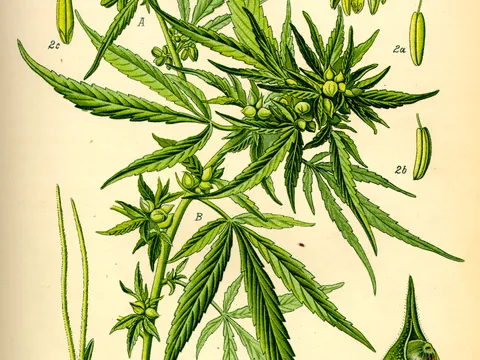 LanguageCannabisThe botanical name is a Scythian word that reached us through Greek and Latin. English "hemp" is the same word, borrowed much earlier and worn down by sound change.
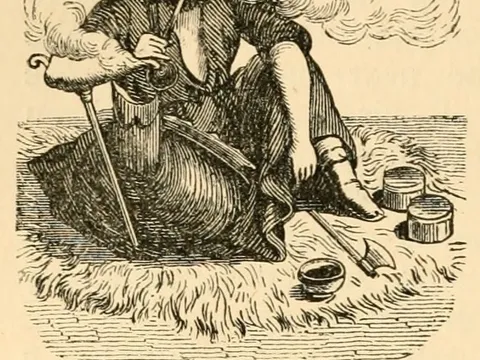 LanguageEsrarThe everyday Turkish word for cannabis means "secrets". A medieval dervish poet was already using it for the drug, and it named the hashish dens that Ottoman and Republican police spent a century trying to close.
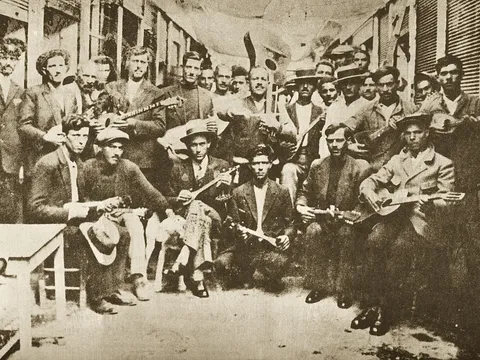 TraditionsRebetiko and the tekésThe Greek urban blues was born in hashish dens. Its songs about smoking were sung by refugees from Asia Minor, censored by a dictator and banned from the radio, and then sung again.
Did you know? all cases →
Words · Turkish
The everyday Turkish word for cannabis, esrar, is Arabic for ‘secrets’. A dervish poet who died about 1444 already wrote of eating it.
Read the entry →
Datasets not part of the score
What other organisations publish about Türkiye, and where it stands among the countries each one covers. Each dataset has a page of its own, with a world map and every country's figure.
Use
UNODC · 2018
Cannabis use
1.11%of people aged 15–64
1.9% · 20030.3% · 20111.11% · 20171.11% · 201820032018 ages 15–64 · survey 2018 · 650,000 people · UNODC 2026
Source Survey ages and years vary, and some surveys include children. Rates are not age-standardised; do not compare countries directly.UNODC · 2003
Cannabis use at 15 and 16
3.31%in the past year
Higher than 18% of 49 countriesLowestHighest4.3% ever · 2003 · ages 15–16
EUDA · 2024
Cannabis in wastewater
16.60mg of THC-COOH a day per 1,000 people
9.70 · 201934.50 · 202025.30 · 202122.90 · 202216.40 · 202316.60 · 202420192024 Higher than 6% of 33 countriesLowestHighestcities measured: 2 · 21,260,531 people served
WHO, Our World in Data · 2020
Alcohol drunk per person
1.69litres of pure alcohol a year
2.46 · 20002.46 · 20012.41 · 20022.34 · 20032.19 · 20042.06 · 20051.95 · 20061.99 · 20072.03 · 20082.10 · 20092.12 · 20102.14 · 20112.08 · 20122.03 · 20131.95 · 20141.90 · 20151.84 · 20161.84 · 20171.82 · 20181.82 · 20191.69 · 202020002020 Higher than 24% of 187 countriesLowestHighestper person aged 15 or over · 2020 · 2.46 in 2000 · 2.12 in 2010
EUDA · 2023
People entering treatment for cannabis
16.1%of people entering drug treatment came for cannabis
Higher than 24% of 29 countriesLowestHighest1,771 of 11,022 people · 2023
Law
EUDA · 2024
Offences for cannabis use or possession
98per 100,000 people
78 · 201060 · 201169 · 201266 · 201343 · 201431 · 201533 · 201647 · 201763 · 201868 · 201953 · 202061 · 202173 · 202279 · 202398 · 202420102024 Higher than 61% of 23 countriesFewerMore83,744 offences in 2024 · cannabis only · use or possession, not dealing · 66,952 in 2010 · 45,480 in 2020
UNODC · 2024
Police contact for drug use or possession
342per 100,000 people
195 · 2020204 · 2021282 · 2022280 · 2023342 · 202420202024 Higher than 92% of 101 countriesFewerMore293,370 people in 2024 · all drugs together
UNODC · 2024
Cannabis seized
61,461kg in 2024
53,671 · 2015146,901 · 2016175,808 · 201780,706 · 201890,474 · 201987,939 · 202064,116 · 202171,850 · 202299,265 · 202361,461 · 202420152024 Higher than 88% of 163 countriesLess seizedMore seized47,710 kg of herb · 13,751 kg of resin · 53,671 kg in 2015 · 87,939 kg in 2020
Society
Pew Research Center · 2025
Is using marijuana morally wrong?
82%call it immoral
Higher than 88% of 25 countriesFewer disapproveMore disapprove2% acceptable · 15% not a moral issue · 1,048 people asked
OpenAlex · 2025
Research on cannabis
1.2papers per million people
0.0 · 19810.0 · 19820.0 · 19870.0 · 19880.0 · 19900.0 · 19990.0 · 20000.0 · 20010.1 · 20020.1 · 20030.1 · 20040.0 · 20050.1 · 20060.0 · 20070.1 · 20080.2 · 20090.1 · 20100.2 · 20110.2 · 20120.1 · 20130.4 · 20140.7 · 20150.7 · 20160.7 · 20170.6 · 20180.7 · 20190.8 · 20201.1 · 20211.0 · 20220.9 · 20231.2 · 20241.2 · 202519812025 Higher than 52% of 176 countriesLowestHighest100 papers in 2025 · 1 in 1990 · 8 in 2010
Cato and Fraser Institutes · 2023
Human Freedom Index
5.10of 10
6.31 · 20006.26 · 20016.42 · 20026.40 · 20036.64 · 20046.66 · 20056.40 · 20066.46 · 20076.46 · 20086.95 · 20096.93 · 20106.91 · 20116.74 · 20126.76 · 20136.55 · 20146.35 · 20155.91 · 20165.46 · 20175.45 · 20185.41 · 20195.44 · 20205.30 · 20215.09 · 20225.10 · 202320002023 Higher than 13% of 164 countriesLess freeFreerrank #144 of 165 · personal freedom 4.87 · economic freedom 5.44
V-Dem, Our World in Data · 2025
Civil liberties
0.40of 1 in 2025
0.17 · 19000.17 · 19010.17 · 19020.17 · 19030.17 · 19040.17 · 19050.17 · 19060.17 · 19070.24 · 19080.37 · 19090.34 · 19100.30 · 19110.27 · 19120.20 · 19130.15 · 19140.14 · 19150.14 · 19160.14 · 19170.16 · 19180.21 · 19190.26 · 19200.26 · 19210.25 · 19220.25 · 19230.28 · 19240.25 · 19250.26 · 19260.26 · 19270.27 · 19280.27 · 19290.25 · 19300.27 · 19310.27 · 19320.27 · 19330.27 · 19340.27 · 19350.27 · 19360.27 · 19370.27 · 19380.27 · 19390.27 · 19400.26 · 19410.26 · 19420.27 · 19430.27 · 19440.28 · 19450.34 · 19460.35 · 19470.36 · 19480.36 · 19490.42 · 19500.46 · 19510.47 · 19520.49 · 19530.48 · 19540.46 · 19550.46 · 19560.46 · 19570.46 · 19580.46 · 19590.37 · 19600.41 · 19610.47 · 19620.51 · 19630.52 · 19640.52 · 19650.53 · 19660.53 · 19670.53 · 19680.53 · 19690.50 · 19700.44 · 19710.45 · 19720.48 · 19730.50 · 19740.50 · 19750.50 · 19760.49 · 19770.49 · 19780.49 · 19790.30 · 19800.24 · 19810.24 · 19820.30 · 19830.38 · 19840.38 · 19850.39 · 19860.41 · 19870.42 · 19880.42 · 19890.47 · 19900.46 · 19910.47 · 19920.47 · 19930.47 · 19940.47 · 19950.48 · 19960.49 · 19970.49 · 19980.51 · 19990.56 · 20000.57 · 20010.67 · 20020.70 · 20030.72 · 20040.71 · 20050.71 · 20060.70 · 20070.68 · 20080.68 · 20090.65 · 20100.65 · 20110.64 · 20120.54 · 20130.54 · 20140.51 · 20150.35 · 20160.33 · 20170.36 · 20180.37 · 20190.36 · 20200.36 · 20210.36 · 20220.39 · 20230.40 · 20240.40 · 202519002025 Higher than 22% of 175 countriesFewer libertiesMore liberties0.25 in 1925 · 0.41 in 1961 · 0.47 in 1990
Our World in Data, World Bank · 2025
Population
85,878,556people in 2025
13,972,684 · 190014,683,987 · 191013,800,950 · 192014,806,857 · 193017,561,075 · 194021,021,142 · 195028,329,895 · 196036,638,458 · 197045,408,818 · 198056,015,627 · 199065,425,957 · 200073,346,766 · 201086,091,691 · 202085,878,556 · 202519002025 Higher than 91% of 196 countriesLowestHighest13,972,684 in 1900 · 21,021,142 in 1950 · 65,425,957 in 2000
CEPII
Former colonial rulers
Once ruled by
World Bank · 2025
Government effectiveness
53of 100
53 · 199645 · 199846 · 200050 · 200249 · 200354 · 200453 · 200553 · 200655 · 200758 · 200859 · 200961 · 201062 · 201163 · 201261 · 201363 · 201460 · 201558 · 201660 · 201754 · 201857 · 201955 · 202054 · 202152 · 202251 · 202351 · 202453 · 202519962025 Higher than 50% of 195 countriesLowestHighestestimate 0.03 on a scale of −2.5 to 2.5 · 2025 · 46 in 2000 · 60 in 2015
Eurostat · 2026
Minimum wage
€654a month
214 · 1999202 · 2000224 · 2001175 · 2002176 · 2003239 · 2004266 · 2005333 · 2006302 · 2007354 · 2008310 · 2009338 · 2010385 · 2011363 · 2012416 · 2013362 · 2014424 · 2015519 · 2016479 · 2017446 · 2018422 · 2019440 · 2020393 · 2021328 · 2022501 · 2023613 · 2024708 · 2025654 · 202619992026 Higher than 16% of 31 countriesLowestHighestgross, full time · January 2026 · €266 in 2005 · €424 in 2015
Transparency International · 2024
Corruption Perceptions Index
34of 100
49 · 201250 · 201345 · 201442 · 201541 · 201640 · 201741 · 201839 · 201940 · 202038 · 202136 · 202234 · 202334 · 202420122024 Higher than 38% of 178 countriesLowestHighest0 highly corrupt, 100 very clean · 2024 · 42 in 2015 · 40 in 2020
Pew Research Center · 2020
Most common religion
Muslims
the largest group · 2020
World Bank · 2025
Income per person
$37,301per person
12,184 · 199012,058 · 199112,451 · 199213,174 · 199312,343 · 199413,099 · 199513,827 · 199614,631 · 199714,704 · 199814,066 · 199914,857 · 200013,872 · 200114,588 · 200215,256 · 200316,584 · 200417,903 · 200518,972 · 200619,909 · 200719,840 · 200818,612 · 200919,897 · 201021,760 · 201122,518 · 201224,117 · 201324,889 · 201425,985 · 201526,490 · 201628,195 · 201728,780 · 201828,741 · 201928,977 · 202032,106 · 202133,521 · 202235,069 · 202336,154 · 202437,301 · 202519902025 Higher than 73% of 187 countriesLowestHighestat purchasing power parity, 2021 dollars · 2025 · $12,184 in 1990 · $19,897 in 2010
Wikimedia · 2026.792
Views of the cannabis article on Wikipedia
93page views in 2026–10
11,290 · 201511,337 · 201510,786 · 201512,020 · 201513,944 · 201513,486 · 201513,601 · 201612,707 · 201613,650 · 201613,975 · 201614,234 · 201615,347 · 201614,352 · 201614,519 · 201614,631 · 201616,724 · 201615,622 · 201615,092 · 201615,461 · 201713,875 · 201716,743 · 201716,667 · 20173,253 · 20172,728 · 20172,459 · 20172,638 · 20172,310 · 20172,660 · 20172,639 · 20172,655 · 20172,653 · 20181,875 · 20182,177 · 20182,069 · 20182,591 · 20181,656 · 20181,311 · 20181,706 · 20181,993 · 20181,981 · 20182,249 · 20182,148 · 20183,657 · 20191,911 · 20191,996 · 20192,044 · 20192,042 · 20191,584 · 20191,735 · 20191,700 · 20191,518 · 20191,453 · 20191,518 · 20191,628 · 20194,079 · 20205,398 · 20205,545 · 20208,069 · 20208,323 · 20206,496 · 20206,283 · 20206,206 · 20206,444 · 20207,038 · 20207,036 · 20209,047 · 20208,846 · 20217,648 · 20219,147 · 20219,289 · 202110,672 · 202110,020 · 20219,701 · 20218,654 · 20218,320 · 20219,659 · 20219,367 · 202110,655 · 202111,005 · 20228,902 · 202210,189 · 202210,253 · 20229,854 · 20228,747 · 20229,042 · 202210,031 · 202211,195 · 202212,962 · 202211,374 · 20229,173 · 20229,551 · 20238,386 · 202311,311 · 202310,200 · 202311,011 · 202310,697 · 202311,364 · 202311,192 · 20239,975 · 202310,601 · 202310,828 · 202311,699 · 202312,498 · 202411,209 · 202412,711 · 202412,908 · 202412,393 · 20249,071 · 202410,437 · 202411,597 · 20249,903 · 20248,264 · 20246,940 · 20246,840 · 20246,706 · 20255,875 · 20256,181 · 20256,280 · 20256,743 · 20255,732 · 20256,071 · 20255,423 · 20254,988 · 20255,543 · 20255,203 · 20256,965 · 20255,486 · 20264,731 · 20263,533 · 20263,127 · 20262,696 · 20262,645 · 20262,710 · 20262,736 · 20262,429 · 202693 · 202620152026 Higher than 81% of 26 countriesLowestHighestEsrar · tr Wikipedia
World Bank · 2025
Development indicators
89.8%use the internet
0% · 19900% · 19930% · 19940.1% · 19950.2% · 19960.5% · 19970.7% · 19982.3% · 19993.8% · 20005.2% · 200111.4% · 200212.3% · 200314.6% · 200415.5% · 200518.2% · 200628.6% · 200734.4% · 200836.4% · 200939.8% · 201043.1% · 201145.1% · 201246.2% · 201351% · 201453.7% · 201558.3% · 201664.7% · 201771% · 201874% · 201977.7% · 202081.4% · 202183.4% · 202286% · 202387.3% · 202489.8% · 202519902025 Higher than 71% of 195 countriesLowestHighest89.5% live in towns · 10.6% aged 65+ · 2025 · 3.8% in 2000 · 39.8% in 2010
GDELT · 2025
Cannabis in the news
0.0095%of global news: cannabis articles from here
0.0489% · 20170.0161% · 20180.0178% · 20190.0214% · 20200.0132% · 20210.0138% · 20220.0134% · 20230.0104% · 20240.0095% · 202520172025 Higher than 96% of 147 countriesLowestHighest2025 average, 348 days · 0.0161% in 2018 · 0.0132% in 2021
Plant and market
EUDA · 2024
THC in cannabis sold (Europe)
6.78%THC in herb
0.35% · 20020.34% · 20030.41% · 20040.37% · 20052.94% · 20073.45% · 20084.72% · 20091.82% · 20101.72% · 20113.11% · 20123.81% · 20132.65% · 201525.88% · 20163.31% · 20173.31% · 20183.01% · 20203.01% · 20216.51% · 20227.19% · 20236.78% · 202420022024 Higher than 15% of 27 countriesLowestHighest10.45% in resin · 2024 · 1.82% in 2010 · 2.65% in 2015
GBIF · 2023
Records of the cannabis plant
14dated records
1 · 19663 · 19684 · 19706 · 19848 · 19949 · 199810 · 200211 · 200612 · 200914 · 202319662023 Higher than 50% of 128 countriesLowestHighest19 more without a date · 2 in 2023
FAO · 2024
Hemp grown
721ha in 2024
13,700 · 196113,000 · 196211,300 · 196310,000 · 196410,000 · 196510,000 · 19669,360 · 19679,600 · 19688,300 · 19698,400 · 19708,500 · 19718,000 · 19727,700 · 19738,000 · 19746,950 · 19758,000 · 19767,200 · 19778,000 · 19788,000 · 19799,400 · 19809,000 · 19817,400 · 19826,000 · 19836,875 · 19844,160 · 19853,550 · 19864,030 · 19873,400 · 19884,200 · 19892,500 · 19903,096 · 19913,370 · 19922,988 · 19932,500 · 19941,600 · 19952,450 · 19961,600 · 1997800 · 1998536 · 1999883 · 2000700 · 2001660 · 2002650 · 2003375 · 200465 · 200565 · 200656 · 200730 · 200866 · 200922 · 201016 · 20116 · 20121 · 20131 · 20142 · 20153 · 20162 · 20176 · 201848 · 201910 · 202032 · 2021194 · 2022392 · 2023721 · 202419612024 Higher than 62% of 39 countriesLowestHighest1 t of fibre · 556 t of seed · 13,700 ha in 1961 · 9,400 ha in 1980 · 883 ha in 2000
ClinicalTrials.gov · 2026
Clinical trials of cannabis medicines
6studies so far
1 · 20151 · 20162 · 20172 · 20182 · 20193 · 20203 · 20213 · 20223 · 20234 · 20245 · 20256 · 202620152026 Higher than 52% of 50 countriesLowestHighest1 actual starts in 2026 · as of 2026–10–26 · 3 by 2020
Enforcement 2 reports · the Cannabis Enforcement Tracker →
How the law above is applied: raids, seizures, fields destroyed, arrests and sentences, as recorded by the Cannabis Enforcement Tracker, our companion site.
- EradicationTürkiye destroys 48,579 cannabis plants in Diyarbakır
Jandarma teams raided 35 illegal cannabis plots in Yenişehir, Eğil and Sur with 230 personnel and drones, destroying 48,579 cannabis and skunk plants.
- EradicationTürkiye destroys 7.5 million cannabis plants in Diyarbakır
Governor-led teams raided cannabis fields in seven districts of Diyarbakır with 2,212 personnel, a helicopter and drones, destroying 7,543,818 cannabis and skunk plants.
History 36 of 36 checked against a source
Score and entries per decade
11 today, from 100 before its first recorded change
This country's score Entries that moved the score Context only
20264 entries0 score changes
Hemp ✓
Türkiye rewrites its hemp cultivation rules
A new regulation on growing and controlling hemp allows fibre, seed and stalk production in 21 provinces with a permit from the local administrative authority. Growing for medicines and health products is confined to the state alkaloid factory site, organised agricultural zones or secure indoor facilities approved by the health ministry, with applications to the state grain board.
Medical ✓
Türkiye sets product-by-product rules for cannabis pharmacy sales
Implementing rules require individual authorisation before cannabis-derived medicinal products can be marketed, with separate requirements for health, support and cosmetic products. The pharmacy-sale framework follows the 2025 enabling law; it does not itself show that a product has been dispensed.
Enforcement ✓
Türkiye says it seized 233 tonnes of drugs in 2025
Interior Minister Ali Yerlikaya said operations in 2025 seized 233 tonnes of drugs and 278 million pills, remanded 43,524 suspects in custody and dismantled 357 drug networks. The figures cover all drugs, not cannabis alone, and were announced without a cannabis breakdown.
20252 entries0 score changes
Enforcement ✓
Türkiye counts 104,000 cannabis cases in 2024
The 2025 Turkey Drug Report recorded 103,992 cannabis and skunk incidents in 2024, with 126,180 suspects and 61,501 kg seized. Cases rose 19.2% on 2023, while the seized weight fell 38.1% to 39.8 tonnes of hashish plus 21.6 tonnes of skunk. The report also counted 149,523 people in prison for drug offences, 38.9% of the prison population.
Medical ✓
Türkiye puts cannabis-derived products on a pharmacy-only licensing track
Law 7557 amended Article 23 of the narcotics law so that cannabis-derived medical, health, personal-care and support products need Health Ministry licensing or registration and may be sold only in pharmacies. The detailed product rules were left to a ministry regulation, published on 31 January 2026. The law did not set a THC limit; the 2026 regulation set a maximum of 0.3% for support and personal-care products.
20241 entry0 score changes
20231 entry0 score changes
20191 entry0 score changes
20171 entry0 score changes
20162 entries1 score change
Hemp ✓
Turkey licences hemp growing in 19 provinces
In October 2016 the food, agriculture and livestock ministry's Hemp Cultivation and Control Regulation took effect, allowing licensed hemp growing in 19 named provinces with ministry permission. Applicants had to declare no prior unlicensed growing or drug offences, apply between 1 January and 1 April, accept inspections at least monthly, and destroy side branches, leaves and flowers after harvest to stop hashish being made; unlicensed crops would be destroyed and reported to the courts.
Medical ✓
Türkiye adds a THC/CBD medicine to its overseas import list
On 25 January 2016 TİTCK added a THC/CBD oromucosal spray to the list of medicines that may be supplied from abroad on prescription. It was an import route, not a domestic marketing authorisation or a general medical-cannabis programme, and no routine pharmacy stock was verified.
1011+1 point
20141 entry0 score changes
20081 entry0 score changes
20061 entry1 score change
20051 entry1 score change
20011 entry0 score changes
19961 entry0 score changes
19911 entry0 score changes
19902 entries1 score change
Easing ✓ Article
Türkiye replaces drug death penalties with life imprisonment
Parliament replaced death with life imprisonment in the aggravated drug-offence clauses that included cannabis. It also rewrote the professional and other aggravating rules that had converted life sentences to death. The repeal took effect on 29 November; the separate personal-use prison term was reduced the following June.
79+2 points
Tightening ✓
Türkiye requires permits for hemp and bans unlicensed cultivation
Growing hemp for fibre, seed, stalk and similar purposes required agriculture-ministry permission, with production supervised in places designated by the ministry. Unlicensed cultivation for any purpose was prohibited, and officials could order the plants destroyed after an agricultural report, charging the costs to the grower. The amendment retained at least one year in prison for growing in breach of the drug-cultivation ban and took effect on publication on 30 May.
19821 entry0 score changes
19791 entry0 score changes
19671 entry0 score changes
19651 entry0 score changes
19531 entry1 score change
19461 entry0 score changes
19411 entry0 score changes
19331 entry1 score change
19261 entry0 score changes
19131 entry0 score changes
18861 entry0 score changes
18641 entry0 score changes
18631 entry0 score changes
18571 entry0 score changes
17251 entry0 score changes
Sources hover a number in the text to see its source
- Cited
- 15
- Websites
- 9
- Last reviewed
- History checked
- 36/36
Most cited
- mevzuat.gov.tr4
- euda.europa.eu2
- resmigazete.gov.tr2
- titck.gov.tr2
- cumhuriyet.com.tr1
- incb.org1
All 17 sources
- Türkiye — Turkish Criminal Code (Law 5237), consolidated textArticles 188 and 191; supply, manufacture, import, export and personal use.archived
- Mondaq — Drug possession and criminal penalties in Turkeyarchived
- Türkiye — Law No. 2313 on the Control of Narcotic Substances, consolidated text (Mevzuat Bilgi Sistemi)archived
- Türkiye — 2025 Turkey Drug Report (TUBİM)Pp. 33, 50–52 and 185; 2024 cannabis offences, suspects, seizures and prisoners.archived
- TİTCK — Overseas Active Substance List, 28 September 2026Rows YDN02BG1099 (cannabidiol oral solution) and YDN02BG1098 (THC/CBD mouth spray); red prescription. Listing does not establish stock.archived
- TİTCK — Overseas medicine supply and use guideImport route for controlled medicines on prescription.archived
- Türkiye — Regulation on Products Derived from Hemp, Official Gazette 33154, 31 January 2026Articles 5, 24 and pharmacy-sale provisions; product-specific authorisation, not evidence of dispensing.archived
- Cumhuriyet — Türkiye’de esrar yasallaştı: işte yayınlanan liste (13 February 2016)25 January 2016 overseas-list addition of THC/CBD oromucosal spray.archived
- Türkiye — Hemp Cultivation Regulation, Official Gazette 31 January 202621 provinces; permit window; certified seed; research permits.archived
- Türkiye — Medical Cannabis Cultivation Regulation, Official Gazette 13 September 2024State grain-board contracts and secure facilities; replaced in 2026.archived
- EUDA — Statistical Bulletin 2026, seizures of drugs: cannabis (quantity and number of seizures)archived
- Türkiye — Law 6458 on Foreigners and International ProtectionArticles 9 and 54; deportation and entry ban.archived
- Türkiye — Karayolları Trafik Kanunu No. 2918, Article 48 (Mevzuat, consolidated text)archived
- EUDA — Statistical Bulletin 2026, drug law offences: cannabis (totals and use-related)archived
- International Narcotics Control Board — Travellers carrying medicines containing controlled substances