Laos
12/100
#74 of 196 worldwide
#10 of 48 in Asia
Cannabis possession can lead to treatment or prison; licensed low-THC hemp medicines are permitted.
In short all countries →
- Can I carry it?NoIt is a crime
- Can I grow it?NoIt is a crime
- Can I buy it?NoThere is no legal source
- Can I use it in public?NoNot in public, and even at home the law does not protect it
- What if I'm caught?Fine or prisonUsually a fine; prison is possible
A rough guide read from the scores and the rules below, not legal advice. The details and the exceptions are in each segment: select an answer to jump to it.
Cannabis in Laos not part of the score · all 14 datasets ↓
Who uses it
About 1 in 114
people aged 15–64 in Laos used cannabis in the past year: 45,000 people.
- Past year
- 0.9%
- Asia median
- 2%
UNODC · survey 2008
Source Past-year cannabis use among people aged 15–64. People who used cannabis in the past year, from a 2008 survey, applied to today's population aged 15–64.Survey ages and years vary, and some surveys include children. Rates are not age-standardised; do not compare countries directly.
UNODC World Drug Report 2026, annex table 1.2. Population from the World Bank, aged 15–64. The whole dataset →
Use across Asia
28thhighest of 40 surveyed countries
- 🇹🇷 Türkiye1.1%
- 🇲🇲 Myanmar0.9%
- 🇱🇦 Laos0.9%
- 🇸🇬 Singapore0.8%
- 🇳🇵 Nepal0.7%
Past-year use, latest survey of each. Survey years and ages differ. On the map →
Cannabis in figures
The dot: where it stands among the countries each dataset covers, lowest to highest. All datasets ↓
Score breakdown 12/100 · how the scores are made
Neighbours
- 🇹🇭 Thailand27
- 🇱🇦 Laos12
- 🇰🇭 Cambodia10
- 🇨🇳 China10
- 🇲🇲 Myanmar4
- 🇻🇳 Vietnam3
Possessing under five grams of cannabis for consumption leads to treatment under the Penal Code.[1] Five to ten grams of dried cannabis for consumption carries six months to two years in prison and a fine of five to twenty million kip; five to ten grams of a drug-producing plant carries one to six months and the same fine.[1] The code has no personal-use band above ten grams; prosecutors must prove trading intent for the higher article 318 bands.[1]
| Amount | What happens | Punishment | Fine |
| Under 5 g for consumptionTreated as a victim and sent for treatment, not prison | ToleratedConsumption | — | — |
| 5 to 10 g dried for consumptionFive to twenty million kip | CriminalConsumption | 6 months – 2 years | LAK 5,000,000 – LAK 20,000,000 |
| 5 to 10 g of a drug-producing plant for consumption | CriminalConsumption | 1–6 months | LAK 5,000,000 – LAK 20,000,000 |
Ordinary cannabis cultivation is prohibited under the narcotics rules.[2] The Penal Code's cultivation bands begin at three kilograms of raw marijuana for trade: three to ten kilograms carries three months to one year and a 0.5–5 million kip fine, and more than ten kilograms carries one to three years and 5–20 million kip.[1] There is no band for under three kilograms, a statutory gap; it may be charged as possession or another offence.[1] Approved companies may grow low-THC hemp under the health ministry's licensing rules.[3]
| Amount | What happens | Punishment | Fine |
| 3 to 10 kg raw marijuana for trade | CriminalCultivation | 3 months – 1 year | LAK 500,000 – LAK 5,000,000 |
| More than 10 kg raw marijuana for trade | CriminalCultivation | 1–3 years | LAK 5,000,000 – LAK 20,000,000 |
| Under 3 kg raw marijuanaNo statutory band; may be charged as possession or another offence | CriminalCultivation | — | — |
The Penal Code provides treatment for the smallest personal quantities and prison for five to ten grams of dried cannabis.[1] A November 2024 government report recorded 5,168 suspects in 3,395 drug cases over eleven months, including 199 foreigners and 3,583 kg of marijuana.[4] A November 2025 report counted 21,003 cases, 31,289 suspects and 27,626 kg of cannabis seized from July 2021 to October 2025.[5] In October 2026 Bolikhamxay destroyed more than 3,000 kg of dried cannabis.[6] The case and arrest figures cover all drugs.[4]
Trading less than five kilograms of dried cannabis carries six months to three years in prison; five to ten kilograms carries three to seven years. Regular or organised trading, or more than ten kilograms, carries five to ten years.[1] THC, hashish and derivatives have separate weight bands from 0.3 g, reaching life imprisonment above 500 g.[1] Trading more than ten grams of marijuana seeds carries one to three years.[1]
| Amount | What happens | Punishment | Fine |
| Trading under 5 kg dried cannabis | CriminalTrading | 6 months – 3 years | LAK 1,000,000 – LAK 5,000,000 |
| Trading 5 to 10 kg | CriminalTrading | 3–7 years | LAK 5,000,000 – LAK 20,000,000 |
| Regular, organised, or over 10 kg | CriminalTrading | 5–10 years | LAK 20,000,000 – LAK 50,000,000 |
| Marijuana seeds over 10 g | CriminalSeed trading | 1–3 years | LAK 3,000,000 – LAK 10,000,000 |
| THC, hashish or derivatives 0.3 g to 50 g | CriminalTrading | 2–4 years | LAK 5,000,000 – LAK 9,000,000 |
| THC, hashish or derivatives 50 g to 100 g | CriminalTrading | 5–7 years | LAK 10,000,000 – LAK 29,000,000 |
| THC, hashish or derivatives 100 g to 200 g | CriminalTrading | 10–14 years | LAK 30,000,000 – LAK 59,000,000 |
| THC, hashish or derivatives 200 g to 500 g | CriminalTrading | 15–20 years | LAK 60,000,000 – LAK 99,000,000 |
| THC, hashish or derivatives over 500 gFine of 100–200 million kip | CriminalTrading | Life imprisonment | LAK 100,000,000 – LAK 200,000,000 |
Consumption or possession for consumption of under five grams of cannabis leads to treatment. Addiction recurring after certified treatment brings escalating sanctions: public criticism and a fine after the first treatment, then possible prison after later treatments.[1]
Context not part of the score · every country, by topic →
All recreational use is prohibited: under five grams for consumption leads to treatment, five to ten grams to prison, and trading even small amounts to prison terms that reach life for large extract quantities.[1]
Decision 3789/MOH permits prescribed dried hemp flower with a 1% THC ceiling, and medical products with a 0.2% ceiling and CBD at least four times the THC content; no operating patient route was verified.[7] The National Assembly’s 21 October 2026 prohibited-narcotics resolution again lists cannabis plants and products, with no published hemp carve-out, so the 2022 decision still has no clear statutory bridge.[8]
The criminal rules prohibit ordinary cannabis cultivation and trading; the hemp permission is for approved businesses.[2][3]
Approved hemp businesses must use registered seed varieties.[3] The Penal Code sets one to three years in prison for trading, distributing, transporting, possessing or moving more than ten grams of marijuana seeds across borders.[1]
Licensed hemp cultivation, processing and trade use registered seeds and qualified staff, with prescribed dried flower up to 1% THC; medicines have a 0.2% ceiling. Registered consumer products include supplements, cosmetics and CBD beverages.[3][7] The 21 October 2026 prohibited-narcotics resolution again lists cannabis plants and products with no published hemp carve-out, leaving the licensed route legally unresolved.[8]
Rules issued in December 2022 permit licensed hemp cultivation, processing and trade, with registered seeds and qualified technical staff; medical products are covered separately.[3][7]
UNODC records 3,274 kg of herbal cannabis seized in 2024, against 1,045 kg in 2023.[9] A couple arrested in Bolikhamxay in March 2024 had more than 800 kg of cannabis, and the province reported 1,022 kg of dried cannabis in the first half of 2026.[10][11] The government reported about 3.6 tonnes in 2024 and 27,626 kg from July 2021 to October 2025.[4][5] In October 2026 Bolikhamxay destroyed more than 3,000 kg of dried cannabis, and Vientiane destroyed 8.578 kg in its Anti-Drug Day burn.[6][12] The figures use different categories and periods and are not directly comparable.[9][5]
Possessing five to ten grams of dried cannabis for consumption carries six months to two years in prison. The Penal Code also penalises importing and exporting cannabis for trade.[1]
No cannabis-specific driving offence, THC blood or saliva limit, or medical-patient exception was located in the Penal Code or the sources reviewed.[1] The Road Traffic Law 2012 is the likely instrument for a general impairment offence, but its official text was not readable in this review, so the status is unknown rather than impairment or zero.[13]
Public Security Minister Vilay Lakhamphong reported 5,168 suspects in 3,395 drug cases over eleven months to parliament on 20 November 2024, including 199 foreigners; seizures included 3,583 kg of marijuana.[4] Calendar 2025 recorded 3,660 drug cases and 5,643 suspects, including 322 foreigners; no cannabis weight was published.[14] A November 2025 report counted 21,003 cases and 31,289 suspects from July 2021 to October 2025, with 27,626 kg of cannabis seized.[5] The arrest totals cover all drugs.[4]
After the first certified treatment, renewed addiction brings public criticism and a fine. After the second, the prison range is three months to one year; after the third, one to three years.[1]
Cannabis is known in Lao as ganja, and the country has a landrace heritage.[2] The Hmong of the northern mountains grew, spun and wove hemp for cloth, and the leaf appears in South-East Asian cooking.[7][2] The modern law treats ordinary cannabis as a narcotic while licensing low-THC hemp for registered products.[1][7]
Taking cannabis into or out of Laos is a separate offence from possessing it, normally charged as smuggling or trafficking, with far heavier penalties. That holds almost everywhere, including between two places where cannabis is legal.
A prescription or medical card from another country is generally not recognised. Travellers who need a cannabis-based medicine should ask Laos's embassy before travelling.[15]
General guidance that applies to almost every country, not a check of Laos's customs rules.
Culture the atlas →
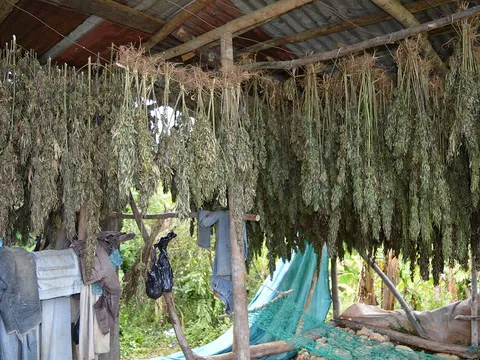 LanguageGanjaThe Hindi word for the flowering tops. Indian labourers carried it to the Caribbean, and it also became the usual word across South-East Asia.
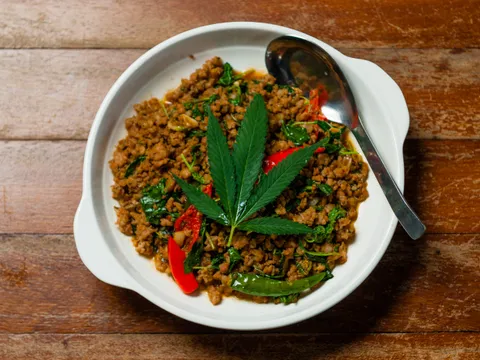 TraditionsCannabis in South-East Asian cookingIn Cambodia, Laos, Thailand and Vietnam the leaf was a seasoning and a household medicine long before it was a crime. The "happy" restaurants of the tourist towns are what is left in plain sight.
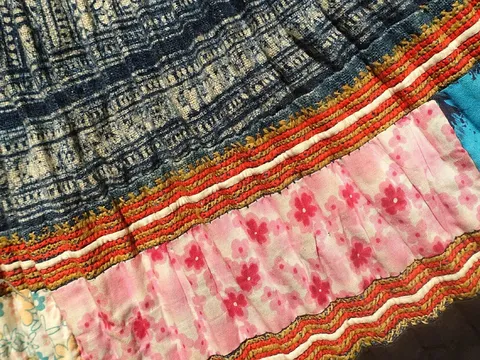 TraditionsHmong hemp clothHmong women grew, spun and wove hemp for the family's clothes and decorated it with batik. Drug laws are one reason few still do.
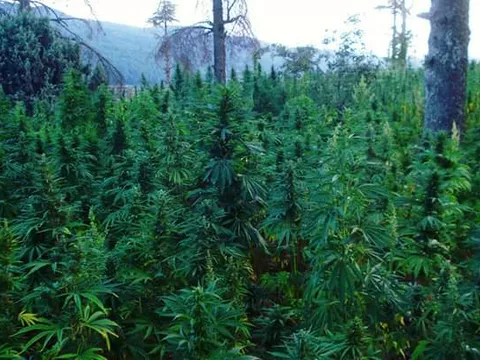 LanguageLandraceA farmers' variety, kept by saving seed in the place where it grows rather than bred to a standard. The word came from German agronomy and, in cannabis, names the old local populations of the hashish and ganja regions, many of them lost to hybrids and eradication. Morocco now licenses its own, beldiya.
Datasets not part of the score
What other organisations publish about Laos, and where it stands among the countries each one covers. Each dataset has a page of its own, with a world map and every country's figure.
Use
UNODC · 2008
Cannabis use
0.88%of people aged 15–64
ages 15–64 · survey 2008 · 45,000 people · UNODC 2026
Source Survey ages and years vary, and some surveys include children. Rates are not age-standardised; do not compare countries directly.WHO, Our World in Data · 2020
Alcohol drunk per person
10.82litres of pure alcohol a year
8.18 · 20008.18 · 20017.38 · 20027.57 · 20037.71 · 20047.82 · 20058.45 · 20069.04 · 20079.68 · 200810.06 · 200910.42 · 201010.70 · 201110.73 · 201210.82 · 201311.02 · 201411.31 · 201511.43 · 201611.36 · 201711.52 · 201811.52 · 201910.82 · 202020002020 Higher than 91% of 187 countriesLowestHighestper person aged 15 or over · 2020 · 8.18 in 2000 · 10.42 in 2010
Law
UNODC · 2024
Cannabis seized
3,274kg in 2024
3,258 · 2015463 · 20164,810 · 2017451 · 20182,577 · 20195,168 · 20205,847 · 202112,014 · 20221,045 · 20233,274 · 202420152024 Higher than 51% of 163 countriesLess seizedMore seized3,274 kg of herb · 3,258 kg in 2015 · 5,168 kg in 2020
Society
OpenAlex · 2023
Research on cannabis
0.1papers per million people
Higher than 18% of 176 countriesLowestHighest1 papers in 2023
Cato and Fraser Institutes · 2023
Human Freedom Index
5.09of 10
4.09 · 20004.00 · 20014.42 · 20024.30 · 20034.68 · 20044.69 · 20054.98 · 20064.98 · 20075.00 · 20085.05 · 20094.92 · 20104.96 · 20114.88 · 20124.68 · 20135.21 · 20145.15 · 20155.31 · 20165.46 · 20175.50 · 20185.58 · 20195.32 · 20205.34 · 20215.15 · 20225.09 · 202320002023 Higher than 12% of 164 countriesLess freeFreerrank #145 of 165 · personal freedom 4.68 · economic freedom 5.65
V-Dem, Our World in Data · 2025
Civil liberties
0.14of 1 in 2025
0.23 · 19000.23 · 19010.23 · 19020.23 · 19030.23 · 19040.23 · 19050.23 · 19060.23 · 19070.23 · 19080.23 · 19090.23 · 19100.23 · 19110.23 · 19120.23 · 19130.23 · 19140.23 · 19150.23 · 19160.23 · 19170.23 · 19180.23 · 19190.23 · 19200.23 · 19210.23 · 19220.23 · 19230.23 · 19240.23 · 19250.23 · 19260.22 · 19270.22 · 19280.22 · 19290.22 · 19300.22 · 19310.22 · 19320.22 · 19330.22 · 19340.22 · 19350.22 · 19360.22 · 19370.22 · 19380.21 · 19390.19 · 19400.19 · 19410.19 · 19420.19 · 19430.20 · 19440.25 · 19450.34 · 19460.36 · 19470.36 · 19480.36 · 19490.36 · 19500.36 · 19510.36 · 19520.39 · 19530.39 · 19540.41 · 19550.41 · 19560.41 · 19570.42 · 19580.40 · 19590.37 · 19600.34 · 19610.35 · 19620.35 · 19630.35 · 19640.35 · 19650.35 · 19660.35 · 19670.35 · 19680.35 · 19690.35 · 19700.35 · 19710.34 · 19720.34 · 19730.34 · 19740.11 · 19750.06 · 19760.06 · 19770.06 · 19780.06 · 19790.06 · 19800.06 · 19810.06 · 19820.06 · 19830.06 · 19840.06 · 19850.07 · 19860.08 · 19870.08 · 19880.08 · 19890.08 · 19900.08 · 19910.08 · 19920.08 · 19930.08 · 19940.08 · 19950.09 · 19960.09 · 19970.09 · 19980.09 · 19990.09 · 20000.09 · 20010.09 · 20020.10 · 20030.10 · 20040.10 · 20050.10 · 20060.10 · 20070.10 · 20080.10 · 20090.10 · 20100.10 · 20110.10 · 20120.12 · 20130.12 · 20140.12 · 20150.12 · 20160.13 · 20170.13 · 20180.15 · 20190.14 · 20200.13 · 20210.14 · 20220.15 · 20230.15 · 20240.14 · 202519002025 Higher than 3% of 175 countriesFewer libertiesMore liberties0.23 in 1925 · 0.34 in 1961 · 0.08 in 1990
Our World in Data, World Bank · 2025
Population
7,873,046people in 2025
1,378,713 · 19001,272,193 · 19101,046,704 · 1920876,948 · 1930957,965 · 19401,684,556 · 19502,121,517 · 19602,669,703 · 19703,292,575 · 19804,311,960 · 19905,431,213 · 20006,334,198 · 20107,346,534 · 20207,873,046 · 202519002025 Higher than 47% of 196 countriesLowestHighest1,378,713 in 1900 · 1,684,556 in 1950 · 5,431,213 in 2000
CEPII
Former colonial rulers
Once ruled by France
World Bank · 2025
Government effectiveness
40of 100
35 · 199635 · 199835 · 200027 · 200220 · 200332 · 200426 · 200533 · 200634 · 200735 · 200834 · 200935 · 201035 · 201135 · 201238 · 201346 · 201445 · 201546 · 201647 · 201739 · 201837 · 201936 · 202036 · 202137 · 202237 · 202339 · 202440 · 202519962025 Higher than 26% of 195 countriesLowestHighestestimate -0.59 on a scale of −2.5 to 2.5 · 2025 · 35 in 2000 · 45 in 2015
Transparency International · 2024
Corruption Perceptions Index
33of 100
21 · 201226 · 201325 · 201425 · 201530 · 201629 · 201729 · 201829 · 201929 · 202030 · 202131 · 202228 · 202333 · 202420122024 Higher than 34% of 178 countriesLowestHighest0 highly corrupt, 100 very clean · 2024 · 25 in 2015 · 29 in 2020
Pew Research Center · 2020
Most common religion
Buddhists
the largest group · 2020
World Bank · 2025
Income per person
$8,873per person
2,006 · 19902,034 · 19912,088 · 19922,152 · 19932,268 · 19942,368 · 19952,474 · 19962,589 · 19972,643 · 19982,787 · 19992,899 · 20003,016 · 20013,143 · 20023,283 · 20033,441 · 20043,631 · 20053,882 · 20064,112 · 20074,367 · 20084,625 · 20094,946 · 20105,267 · 20115,609 · 20125,974 · 20136,341 · 20146,704 · 20157,063 · 20167,432 · 20177,775 · 20188,075 · 20197,996 · 20208,080 · 20218,183 · 20228,372 · 20238,600 · 20248,873 · 202519902025 Higher than 33% of 187 countriesLowestHighestat purchasing power parity, 2021 dollars · 2025 · $2,006 in 1990 · $4,946 in 2010
World Bank · 2024
Development indicators
65.6%use the internet
0% · 19900% · 19980% · 19990.1% · 20000.2% · 20010.3% · 20020.3% · 20030.4% · 20040.9% · 20051.2% · 20061.6% · 20073.5% · 20086% · 20097% · 20109% · 201110.7% · 201212.5% · 201314.3% · 201418.2% · 201521.9% · 201625.5% · 201736.3% · 201847% · 201954% · 202062% · 202164.5% · 202264.4% · 202365.6% · 202419902024 Higher than 33% of 195 countriesLowestHighest39.6% live in towns · 4.7% aged 65+ · life expectancy 69.2 · 2024 · 0.1% in 2000 · 7% in 2010
Plant and market
GBIF · 2020
Records of the cannabis plant
9dated records
3 · 19204 · 19528 · 19739 · 202019202020 Higher than 45% of 128 countriesLowestHighest2 more without a date · 1 in 2020
Enforcement 4 reports · the Cannabis Enforcement Tracker →
How the law above is applied: raids, seizures, fields destroyed, arrests and sentences, as recorded by the Cannabis Enforcement Tracker, our companion site.
- EradicationLaos destroys more than three tonnes of dried cannabis
Bolikhamxay authorities destroyed more than 3,000 kg of dried cannabis on 14 October 2026, alongside 6.3 million methamphetamine pills and more than two tonnes of kratom leaves.
- SeizureLaos seizes 86 kg of cannabis at Wattay airport
Three Malaysians aged 25 to 29 were arrested at Wattay International Airport in Vientiane with 86 kg of cannabis in 103 packages, concealed in suitcases and bound for Germany.
- SeizureBolikhamxay police find more than 800 kg of cannabis
Lao media reported on 26 March 2024 that a couple had been arrested in Bolikhamxay with more than 800 kg of cannabis and nearly 300 amphetamine pills.
- SeizureThai cannabis drinks slip into Vientiane shops
Radio Free Asia reported in January 2024 that Thai drinks containing up to 0.2% THC were on sale in Vientiane markets, despite Laos's ban.
History 24 of 25 checked against a source
Entries per decade
Entries that moved the score Context only
20264 entries0 score changes
Other law ✓
Laos adopts a National Assembly resolution listing banned drugs
The National Assembly approved the list of prohibited narcotics, controlled drugs and precursor chemicals on 21 October 2026 with 97.51% support, after the government's July decree ran into procedural problems. The prohibited list includes cannabis plants and related products alongside 61 new synthetic substances. The resolution restates the existing ban and does not change cannabis penalties.
Other law ✓
Laos moves its narcotics list toward a National Assembly resolution
The Ministry of Public Security proposed elevating Decision 87/PM of 29 July 2026, which lists prohibited narcotics and controlled chemicals, to a National Assembly resolution. Cannabis was already prohibited and the proposal did not change its status. It was a procedural move to give the list stronger legal force.
20252 entries0 score changes
Enforcement ✓
Laos reports 27.6 tonnes of cannabis seized since 2021
A National Assembly report counted 21,003 drug cases, 31,289 suspects and 27,626 kg of cannabis seized from July 2021 to October 2025, alongside 69,261 kg of methamphetamine and 1,852 kg of heroin. The case and suspect totals cover all drugs; the cannabis figure is cumulative over four years, not a single year.
Medical ✓
A Lao company says it has a licence to grow cannabis for export
LTV Sole, a joint venture between Bro Asia Lao and the herbal medicine maker LTV, told Tobacco Asia in February 2025 that it received an operating licence in December 2023 to grow, process and export cannabis from a 900 square metre indoor site near Vientiane. The company said it was testing 13 strains and that all produce had to leave the country. No government licence or decree could be found, and the account has not been independently confirmed.
20241 entry0 score changes
20221 entry0 score changes
20211 entry0 score changes
20181 entry0 score changes
20131 entry0 score changes
20091 entry0 score changes
20071 entry0 score changes
20051 entry0 score changes
20041 entry0 score changes
19962 entries0 score changes
Enforcement ✓
Laos destroys 104.6 tonnes of cannabis under cultivation
Laos destroyed 104.6 metric tons of cannabis under cultivation in 1996 and seized 1.09 tonnes of processed marijuana in 35 cases, according to the US narcotics report for the following year. The eradication campaign was part of a wider opium-reduction programme.
Tightening ✓
Laos bans opium production and raises drug-trafficking penalties
In May 1996 the National Assembly approved changes to Article 135 of the Penal Law, banning opium production and raising the maximum drug-trafficking penalty from eight years to life. The report does not say whether cannabis penalties changed. The amendment was part of a wider anti-narcotics drive.
19891 entry0 score changes
19731 entry0 score changes
19711 entry0 score changes
19651 entry0 score changes
19501 entry0 score changes
19491 entry0 score changes
19381 entry0 score changes
Date not known1 entry1 score change
Sources hover a number in the text to see its source
- Cited
- 15
- Websites
- 8
- 1
- Last reviewed
- History checked
- 24/25
Most cited
- laotiantimes.com4
- kpl.gov.la3
- tilleke.com2
- data.unodc.org1
- incb.org1
- jetro.go.jp1
All 15 sources
- Laos — Penal Code adopted 17 May 2017, government-hosted English translationArticles 318, 320–321, pp. 92–95; article 425, p. 127archived
- Tilleke & Gibbins — Outlook for cannabis liberalization and CBD market authorization in Laos, 2021archived
- JETRO — Laos permits medical and commercial hemp activities, 9 February 2023Opening paragraph: 26 January commencement; registered seeds and business licencesarchived
- Lao News Agency — Nationwide efforts resolve over 3,300 drug cases in 11 months, 21 November 2024Minister Vilay Lakhamphong’s report to the National Assembly on 20 November 2024archived
- Laotian Times — Laos processes 21,003 drug cases, arrests 31,289 suspects since 2021 (14 November 2025)21,003 cases; 31,289 suspects; 27,626 kg cannabis, July 2021–October 2025.archived
- Laotian Times — Laos destroys tonnes of drugs as police warn of new substances (23 October 2026)Bolikhamxay: more than 3,000 kg dried cannabis destroyed on 14 October 2026.archived
- Tilleke & Gibbins — Laos approves hemp-related activities, 17 February 2023Hemp-related activities; prescription products; legal alignment and implementation questionsarchived
- Lao National Assembly — prohibited-narcotics list adopted 21 October 2026Resolution adopted with 97.51% support; cannabis plants and products in the prohibited list.archived
- UNODC Data Portal — Drug seizures, reported seizures in kilogram equivalents (World Drug Report data)archived
- VIR — Laos thwarts numerous major drug cases (26 March 2024)Bolikhamxay couple arrested with more than 800 kg of cannabis.archived
- Laotian Times — Bolikhamxay six-month drug crackdown (15 July 2026)1,022 kg dried cannabis; 111 cases; 162 suspects in January–June 2026.archived
- Lao News Agency — Vientiane destroys seized drugs ahead of National Anti-Drug Day (12 October 2026)3,894.263 kg total, including 8.578 kg dried cannabis.archived
- Laos — Road Traffic Law No. 23/NA, 12 December 2012General traffic and impairment rules; official text scanned and not read.
- Laotian Times — Drug crimes lead 2025 crime statistics (18 February 2026)3,660 drug cases; 5,643 suspects; 322 foreigners; no cannabis weight.archived
- International Narcotics Control Board — Travellers carrying medicines containing controlled substances