Cambodia
10/100
#103 of 196 worldwide
#15 of 48 in Asia
Cannabis is controlled under the 2012 drug law. Unlawful possession carries prison terms; the law retains limited discretion for customary consumption and cultivation and provides both voluntary and compulsory treatment procedures.
In short all countries →
- Can I carry it?NoIt is a crime
- Can I grow it?NoIt is a crime
- Can I buy it?NoThere is no legal source
- Can I use it in public?NoNot in public, and even at home the law does not protect it
- What if I'm caught?PrisonPossession carries two to five years in prison, and a campaign since 2017 has brought mass arrests and detention
A rough guide read from the scores and the rules below, not legal advice. The details and the exceptions are in each segment: select an answer to jump to it.
Cannabis in Cambodia not part of the score · all 15 datasets ↓
Who uses it
About 1 in 29
people aged 15–64 in Cambodia used cannabis in the past year: 400,000 people.
- Past year
- 3.5%
- Asia median
- 2%
UNODC · survey 2003
Source Past-year cannabis use among people aged 15–64. People who used cannabis in the past year, from a 2003 survey, applied to today's population aged 15–64.Survey ages and years vary, and some surveys include children. Rates are not age-standardised; do not compare countries directly.
UNODC World Drug Report 2026, annex table 1.2. Population from the World Bank, aged 15–64. The whole dataset →
Use across Asia
11thhighest of 40 surveyed countries
- 🇦🇲 Armenia3.5%
- 🇦🇿 Azerbaijan3.5%
- 🇰🇭 Cambodia3.5%
- 🇹🇯 Tajikistan3.4%
- 🇹🇭 Thailand3.3%
Past-year use, latest survey of each. Survey years and ages differ. On the map →
Cannabis in figures
- Cannabis seized142kg in 2024 · 2024
- Research on cannabis0.1papers per million people · 2025
- Cannabis in the news0%of global news: cannabis articles from here · 2025
The dot: where it stands among the countries each dataset covers, lowest to highest. All datasets ↓
What they call it
- ganja[1]Khmercannabis
Score breakdown 10/100 · how the scores are made
Article 40 punishes unlawful possession, concealment or storage of Table I drugs with two to five years and an optional 4–10 million riel fine for any amount.[2] Dry cannabis of 8 to under 20 kg brings five to ten years and 10–20 million riel; 20 to under 60 kg brings ten to twenty years and 20–40 million; 60 kg or more brings twenty to thirty years or life and 40–100 million.[2] Resin and oil have separate bands from 400 g or 200 ml to 1,600 g or 800 ml.[2] The published English text repeats the 20–60 kg band at the top tier; the 60 kg threshold is the intended reading and should be checked against the Khmer text.[2]
| Amount | What happens | Punishment | Fine |
| Any amount | CriminalPossession | 2–5 years | KHR 4,000,000 – KHR 10,000,000 |
| Dry cannabis 8 kg to under 20 kg | CriminalPossession | 5–10 years | KHR 10,000,000 – KHR 20,000,000 |
| Dry cannabis 20 kg to under 60 kg | CriminalPossession | 10–20 years | KHR 20,000,000 – KHR 40,000,000 |
| Dry cannabis 60 kg or moreTwenty to thirty years or life; English text repeats the 20–60 kg band | CriminalPossession | 20–30 years or life imprisonment | KHR 40,000,000 – KHR 100,000,000 |
| Resin 400 g to under 800 g, or oil 200 ml to under 400 ml | CriminalPossession | 5–10 years | KHR 10,000,000 – KHR 20,000,000 |
| Resin 800 g to under 1,600 g, or oil 400 ml to under 800 ml | CriminalPossession | 10–20 years | KHR 20,000,000 – KHR 40,000,000 |
| Resin 1,600 g or more, or oil 800 ml or moreTwenty to thirty years or life | CriminalPossession | 20–30 years | KHR 40,000,000 – KHR 100,000,000 |
Unlawful cultivation of narcotic plants in Tables I and II carries six months to two years in prison; growing for distribution, manufacture or trade carries two to five years.[2] Article 38 also lets prosecutors exonerate, and courts acquit or reprimand, limited personal growing in a non-addictive ancestral practice.[2] Drug-related activity otherwise requires permission or a licence from the competent authorities.[2]
| Amount | What happens | Punishment | Fine |
| Unlawful cultivation | CriminalCultivation | 6 months – 2 years | KHR 1,000,000 – KHR 4,000,000 |
| Growing for distribution, manufacture or trade | CriminalCultivation | 2–5 years | KHR 4,000,000 – KHR 10,000,000 |
Unlawful possession has a basic two-to-five-year prison penalty, and article 28 bars substituting alternative penalties under the Criminal Code.[2] In 2025 police recorded 10,743 drug cases and 27,884 suspects, up from 10,630 and 27,071 in 2024; dried cannabis seizures rose from 142 kg to 525 kg while total drug seizures fell from 14.9 to 5.9 tonnes.[3] In January–September 2026 they recorded 20,906 suspects and 389 kg of dried cannabis.[4] Amnesty International documents mass arrests and detention during the campaign begun in 2017.[5] The figures cover all drugs and do not establish a cannabis-only sentencing rate.[3]
Article 40 treats selling, buying for resale, exchanging and trading as trafficking; selling any amount carries two to five years and 4–10 million riel, with the same weight bands as possession.[2] Arranging another person's consumption carries two to five years and 4–10 million, with aggravated bands up to twenty to thirty years or life; facilitating consumption, such as providing a venue, carries one to five years and 2–10 million.[2] Transfer between people is treated as transport.[2]
| Amount | What happens | Punishment | Fine |
| Sale or trafficking, any amount | CriminalTrafficking | 2–5 years | KHR 4,000,000 – KHR 10,000,000 |
| Dry cannabis 8 kg to under 20 kg | CriminalTrafficking | 5–10 years | KHR 10,000,000 – KHR 20,000,000 |
| Dry cannabis 20 kg to under 60 kg | CriminalTrafficking | 10–20 years | KHR 20,000,000 – KHR 40,000,000 |
| Dry cannabis 60 kg or moreTwenty to thirty years or life | CriminalTrafficking | 20–30 years or life imprisonment | KHR 40,000,000 – KHR 100,000,000 |
| Arranging another person's consumption | CriminalArranging use | 2–5 years | KHR 4,000,000 – KHR 10,000,000 |
| Facilitating consumption or providing a venue | CriminalFacilitation | 1–5 years | KHR 2,000,000 – KHR 10,000,000 |
Article 45 criminalises consumption only after the person has already accepted compulsory treatment: one to six months and 100,000–1,000,000 riel, or six to twelve months and 100,000–2,000,000 riel for recidivism.[2] First-time use is not clearly criminal; article 105 lets prosecutors divert a medically certified dependent user to treatment, and limited non-addictive ancestral use is discretionary.[2]
| Amount | What happens | Punishment | Fine |
| Consumption after compulsory treatment | CriminalConsumption | 1–6 months | KHR 100,000 – KHR 1,000,000 |
| Recidivism | CriminalConsumption | 6–12 months | KHR 100,000 – KHR 2,000,000 |
Context not part of the score · every country, by topic →
No legal recreational supply exists, though 'happy pizza' restaurants and street sellers operate openly in some cities, tolerated rather than licensed. Unlawful possession carries two to five years in prison.[1][2]
No medical cannabis programme and no legal products; the licensing system permits clinical and research activity but no patient supply route exists.[2] In October 2026 the prime minister rejected medical-export cultivation and any law change.[6]
No cannabis clubs are known. The law criminalises unauthorised cultivation and transfer, and article 44 makes providing a place for drug use an offence carrying one to five years and 2–10 million riel.[2]
The 2012 law includes cannabis among narcotic plants and makes unauthorised cultivation an offence.[2] Table I lists cannabis, resin and oil but not seed; sowing is cultivation, so seeds remain a grey area and a cutting is a plant.[2] Licensed activity is limited to research, clinical, scientific or industrial purposes, and no public seed or cutting retail permission was verified.[2]
No legal hemp category or THC threshold. Cannabis is in Table I with no medical use; article 14's industrial licensing is theoretical and no hemp scheme or licence exists.[2] The prime minister rejected cannabis cultivation in October 2026.[6]
The 2012 law allows permissions for research, clinical, scientific or industrial purposes, but no cannabis production permission or operational scheme exists.[2] In October 2026 Hun Manet rejected foreign proposals to grow cannabis for medical export and ruled out amending the law.[6]
UNODC records 142 kg of herbal cannabis seized in 2024, against 45.2 kg in 2023.[7] The Anti-Drug Department reported 525 kg in 2025 and 389 kg in January–September 2026; the 2026 figures are cumulative — 9.4 kg by May, 12.7 kg by June, 105 kg by July, 282 kg by August and 389 kg by September.[3][8] A 65 kg condo seizure in June 2026 was larger than the entire January–June official total, so the series is not a complete count of all cannabis seizures.[9] Plants destroyed fell from 17,785 in 2024 to 12,212 in 2025.[3] The figures are not directly comparable.[7][3]
Unlawful possession of cannabis falls under the drug law’s basic two-to-five-year prison penalty.[2] The law gives visitors no separate recreational possession or supply permission, and foreigners are prosecuted: two Britons were sentenced to 14 and 10 years in February 2026, and five Britons were charged over 97 kg at Techo airport in September.[10] Courts can order deportation after sentence.[2]
Article 63 punishes driving a road, water or air vehicle under the influence of drugs with one month to one year and an optional 100,000–2,000,000 riel fine; injury disabling the victim for eight days or more brings one to two years and 2–4 million riel, and permanent disability or death two to five years and 4–10 million.[2] The 2015 Road Traffic Law adds six licence points for drug driving and punishes refusal to stop for a test with six days to one month and 100,000–800,000 riel.[11] There is no THC blood limit; the offence is impairment-based.[2]
Police counted 27,884 drug suspects in 2025, up from 27,071 in 2024, and 20,906 in January–September 2026; 889 of the January–July suspects were foreigners.[3][4][8] Dried cannabis seizures rose from 142 kg in 2024 to 525 kg in 2025, then 389 kg in January–September 2026.[3][8] The figures cover all drugs; no cannabis-only arrest count is published.[3]
State-centre treatment and rehabilitation can last six months to two years.[2] The law provides medical conditions, prosecutor or court decisions and appeal routes for compulsory treatment.[2] Amnesty International documented detention without proper safeguards during the anti-drug campaign.[12]
Cannabis is called ganja in Khmer usage, and the country has a landrace heritage; the leaf was a household seasoning and medicine, still visible in South-East Asian cooking.[1][2] 'Happy pizza' and open market sales persist in tourist areas, but the 2012 law and the 2017 campaign made open use risky.[1][12]
Article 12 lets the Minister of Health authorise individuals in a state organisation to cultivate, make, buy, use or store drugs for medical, scientific or police-science research, with a logbook and annual report.[2] No actual cannabis research programme was verified beyond that route.[2]
Taking cannabis into or out of Cambodia is a separate offence from possessing it, normally charged as smuggling or trafficking, with far heavier penalties. That holds almost everywhere, including between two places where cannabis is legal.
A prescription or medical card from another country is generally not recognised. Travellers who need a cannabis-based medicine should ask Cambodia's embassy before travelling.[13]
General guidance that applies to almost every country, not a check of Cambodia's customs rules.
Culture the atlas →
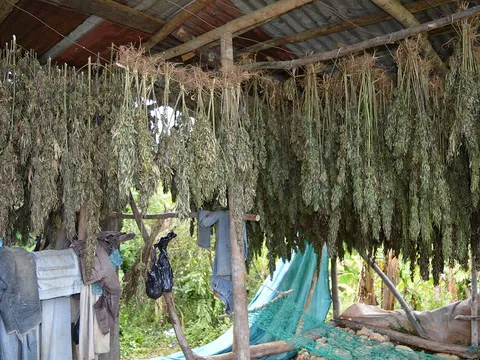 LanguageGanjaThe Hindi word for the flowering tops. Indian labourers carried it to the Caribbean, and it also became the usual word across South-East Asia.
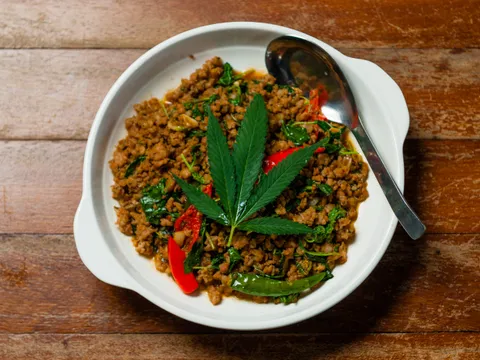 TraditionsCannabis in South-East Asian cookingIn Cambodia, Laos, Thailand and Vietnam the leaf was a seasoning and a household medicine long before it was a crime. The "happy" restaurants of the tourist towns are what is left in plain sight.
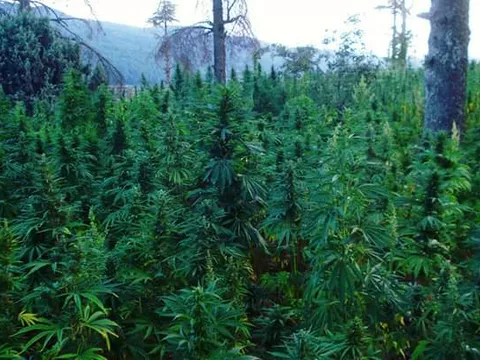 LanguageLandraceA farmers' variety, kept by saving seed in the place where it grows rather than bred to a standard. The word came from German agronomy and, in cannabis, names the old local populations of the hashish and ganja regions, many of them lost to hybrids and eradication. Morocco now licenses its own, beldiya.
Datasets not part of the score
What other organisations publish about Cambodia, and where it stands among the countries each one covers. Each dataset has a page of its own, with a world map and every country's figure.
Use
UNODC · 2003
Cannabis use
3.5%of people aged 15–64
ages 15–64 · survey 2003 · 400,000 people · UNODC 2026
Source Survey ages and years vary, and some surveys include children. Rates are not age-standardised; do not compare countries directly.WHO, Our World in Data · 2020
Alcohol drunk per person
6.67litres of pure alcohol a year
1.81 · 20001.81 · 20012.01 · 20022.25 · 20032.54 · 20042.81 · 20053.11 · 20063.28 · 20073.46 · 20084.03 · 20094.71 · 20105.40 · 20115.77 · 20126.13 · 20136.55 · 20147.06 · 20157.61 · 20168.13 · 20178.48 · 20188.48 · 20196.67 · 202020002020 Higher than 66% of 187 countriesLowestHighestper person aged 15 or over · 2020 · 1.81 in 2000 · 4.71 in 2010
Law
UNODC · 2024
Cannabis seized
142kg in 2024
1,512 · 201537 · 2016116 · 201774 · 2018103 · 2019292 · 2020135 · 202145 · 2023142 · 202420152024 Higher than 14% of 163 countriesLess seizedMore seized142 kg of herb · 1,512 kg in 2015 · 292 kg in 2020
Society
OpenAlex · 2025
Research on cannabis
0.1papers per million people
0.1 · 20210.1 · 20230.1 · 20240.1 · 202520212025 Higher than 10% of 176 countriesLowestHighest1 papers in 2025
Cato and Fraser Institutes · 2023
Human Freedom Index
6.13of 10
6.15 · 20006.21 · 20016.26 · 20026.13 · 20036.15 · 20046.18 · 20056.49 · 20066.34 · 20076.13 · 20086.22 · 20096.75 · 20106.69 · 20116.68 · 20126.60 · 20136.59 · 20146.62 · 20156.52 · 20166.36 · 20176.27 · 20186.28 · 20196.09 · 20206.05 · 20216.14 · 20226.13 · 202320002023 Higher than 31% of 164 countriesLess freeFreerrank #114 of 165 · personal freedom 5.66 · economic freedom 6.79
V-Dem, Our World in Data · 2025
Civil liberties
0.26of 1 in 2025
0.26 · 19000.26 · 19010.26 · 19020.26 · 19030.26 · 19040.26 · 19050.26 · 19060.26 · 19070.26 · 19080.26 · 19090.26 · 19100.26 · 19110.26 · 19120.26 · 19130.26 · 19140.26 · 19150.26 · 19160.26 · 19170.26 · 19180.26 · 19190.26 · 19200.26 · 19210.26 · 19220.26 · 19230.26 · 19240.26 · 19250.26 · 19260.26 · 19270.26 · 19280.26 · 19290.26 · 19300.26 · 19310.26 · 19320.26 · 19330.26 · 19340.26 · 19350.26 · 19360.26 · 19370.26 · 19380.26 · 19390.26 · 19400.26 · 19410.26 · 19420.26 · 19430.26 · 19440.26 · 19450.27 · 19460.27 · 19470.27 · 19480.27 · 19490.27 · 19500.27 · 19510.27 · 19520.28 · 19530.41 · 19540.42 · 19550.43 · 19560.43 · 19570.44 · 19580.44 · 19590.44 · 19600.44 · 19610.44 · 19620.45 · 19630.45 · 19640.45 · 19650.45 · 19660.45 · 19670.45 · 19680.45 · 19690.39 · 19700.36 · 19710.36 · 19720.36 · 19730.36 · 19740.01 · 19750.01 · 19760.01 · 19770.01 · 19780.03 · 19790.07 · 19800.07 · 19810.07 · 19820.07 · 19830.07 · 19840.07 · 19850.07 · 19860.07 · 19870.07 · 19880.07 · 19890.08 · 19900.08 · 19910.17 · 19920.33 · 19930.48 · 19940.49 · 19950.49 · 19960.45 · 19970.51 · 19980.51 · 19990.53 · 20000.54 · 20010.54 · 20020.53 · 20030.53 · 20040.51 · 20050.51 · 20060.51 · 20070.51 · 20080.51 · 20090.50 · 20100.50 · 20110.51 · 20120.47 · 20130.46 · 20140.46 · 20150.41 · 20160.35 · 20170.36 · 20180.38 · 20190.35 · 20200.33 · 20210.33 · 20220.28 · 20230.26 · 20240.26 · 202519002025 Higher than 11% of 175 countriesFewer libertiesMore liberties0.26 in 1925 · 0.44 in 1961 · 0.08 in 1990
Our World in Data, World Bank · 2025
Population
17,847,982people in 2025
2,839,483 · 19003,012,110 · 19102,895,102 · 19202,788,985 · 19303,061,261 · 19404,375,252 · 19505,449,964 · 19606,639,187 · 19705,199,874 · 19807,374,754 · 199012,462,343 · 200014,500,730 · 201016,725,484 · 202017,847,982 · 202519002025 Higher than 63% of 196 countriesLowestHighest2,839,483 in 1900 · 4,375,252 in 1950 · 12,462,343 in 2000
CEPII
Former colonial rulers
Once ruled by France
World Bank · 2025
Government effectiveness
44of 100
27 · 199627 · 199827 · 200026 · 200226 · 200328 · 200426 · 200527 · 200632 · 200737 · 200841 · 200940 · 201042 · 201142 · 201240 · 201345 · 201444 · 201545 · 201646 · 201745 · 201844 · 201942 · 202040 · 202142 · 202243 · 202344 · 202444 · 202519962025 Higher than 34% of 195 countriesLowestHighestestimate -0.40 on a scale of −2.5 to 2.5 · 2025 · 27 in 2000 · 44 in 2015
Transparency International · 2024
Corruption Perceptions Index
21of 100
22 · 201220 · 201321 · 201421 · 201521 · 201621 · 201720 · 201820 · 201921 · 202023 · 202124 · 202222 · 202321 · 202420122024 Higher than 10% of 178 countriesLowestHighest0 highly corrupt, 100 very clean · 2024 · 21 in 2015 · 21 in 2020
Pew Research Center · 2020
Most common religion
Buddhists
the largest group · 2020
World Bank · 2025
Income per person
$7,300per person
2,646 · 19902,731 · 19912,769 · 19922,715 · 19931,650 · 19941,673 · 19951,643 · 19961,595 · 19971,602 · 19981,775 · 19991,922 · 20002,032 · 20012,126 · 20022,310 · 20032,491 · 20042,782 · 20053,041 · 20063,308 · 20073,502 · 20083,588 · 20093,712 · 20103,922 · 20114,159 · 20124,419 · 20134,703 · 20144,969 · 20155,284 · 20165,632 · 20176,051 · 20186,449 · 20196,129 · 20206,226 · 20216,458 · 20226,695 · 20237,012 · 20247,300 · 202519902025 Higher than 27% of 187 countriesLowestHighestat purchasing power parity, 2021 dollars · 2025 · $2,646 in 1990 · $3,712 in 2010
World Bank · 2024
Development indicators
68.5%use the internet
0% · 19900% · 19970% · 19980% · 19990% · 20000.1% · 20010.2% · 20020.3% · 20030.3% · 20040.3% · 20050.5% · 20060.5% · 20070.5% · 20080.5% · 20091.3% · 20103.1% · 20114.9% · 20126% · 201314% · 20146.4% · 201532.4% · 201632.9% · 201765% · 201852.3% · 201956.4% · 202060.8% · 202165.5% · 202268.9% · 202368.5% · 202419902024 Higher than 36% of 195 countriesLowestHighest40.9% live in towns · 6.2% aged 65+ · life expectancy 70.8 · higher education 21.4% · 2024 · 0% in 2000 · 1.3% in 2010
GDELT · 2025
Cannabis in the news
0%of global news: cannabis articles from here
0% · 20170.0001% · 20180% · 20190% · 20200.0001% · 20210.0001% · 20220.0001% · 20230% · 20240% · 202520172025 Higher than 0% of 147 countriesLowestHighest2025 average, 348 days · 0.0001% in 2018 · 0.0001% in 2021
Plant and market
GBIF · 1973
Records of the cannabis plant
2dated records
1 · 19382 · 197319381973 Higher than 12% of 128 countriesLowestHighest0 more without a date · 1 in 1973
Enforcement 4 reports · the Cannabis Enforcement Tracker →
How the law above is applied: raids, seizures, fields destroyed, arrests and sentences, as recorded by the Cannabis Enforcement Tracker, our companion site.
- ProsecutionCambodia charges five Britons over 97 kg of cannabis and heroin at its new airport
Kandal Provincial Court charged five British men with possession, trafficking and transport under Article 40 after two stops at Techo International Airport.
- SeizureCambodia reports 16,498 drug suspects in seven months
An Anti-Drug Department report counted 16,498 drug suspects in January–July 2026, 10% more than the 14,977 a year earlier; 889 were foreigners.
- SentenceCambodia jails two Britons for a 19.9 kg cannabis export attempt
The Phnom Penh municipal court sentenced two British nationals to 14 and 10 years and a total 24 million riel fine for using, possessing, trafficking and transporting cannabis.
- ArrestCambodia reports nearly 15,000 drug arrests in seven months
A report by Cambodia's Anti-Drug Department counted 14,977 people arrested for drug offences between January and July 2025, 2.7% more than in the same period a year earlier; 537 of them were foreigners.
History 16 of 16 checked against a source
Score and entries per decade
10 today, from 100 before its first recorded change
This country's score Entries that moved the score Context only
20263 entries0 score changes
Debate ✓
Cambodia's prime minister rejects cannabis cultivation
Hun Manet said he had opposed cannabis cultivation since before becoming prime minister and would not allow it, citing the difficulty of controlling production and domestic use. He said foreign companies had proposed growing cannabis for medical export, but the government rejected them and he rejected amending the law.
Enforcement ✓
Cambodia reports 20,906 drug suspects and 389 kg of cannabis in nine months
The Anti-Drug Department counted 7,769 drug cases and 20,906 suspects in January–September 2026, with about half classified as users and half as traffickers, possessors or transporters. Seizures reached 3.08 tonnes of drugs and 389 kg of dried cannabis, up from 105 kg reported for January–July and 12.7 kg for January–June. The figures cover all drugs.
Enforcement ✓
Cambodia reports 10,743 drug cases in 2025
Cambodia's Anti-Drug Department reported 10,743 drug cases and 27,884 suspects in 2025, up from 10,630 and 27,071 in 2024. Total drug seizures fell from 14.909 to 5.897 tonnes, but dried cannabis seizures rose from 142 kg to 525 kg and plants destroyed fell from 17,785 to 12,212. The figures cover all drugs.
20251 entry0 score changes
20201 entry0 score changes
20171 entry0 score changes
20121 entry1 score change
20111 entry0 score changes
20052 entries0 score changes
International ✓
Cambodia joins two UN drug conventions on one day
Cambodia ratified the Single Convention on Narcotic Drugs of 1961 on 7 July 2005. The convention lists cannabis and cannabis resin among its controlled drugs and obliges its parties to limit their production, trade, possession and use to medical and scientific purposes. On the same day it acceded to the United Nations Convention against Illicit Traffic in Narcotic Drugs and Psychotropic Substances of 1988. Article 3 of the 1988 convention requires each party, subject to its constitutional principles, to make the possession, purchase and cultivation of drugs for personal consumption a criminal offence.
Other law ✓ Article
Cambodia rewrites prison and fine penalties for personal drug use
People storing, buying or growing drugs for themselves, or using them unlawfully, faced seven days to one month in prison under amended personal-use rules, with a possible additional fine of 25,000–100,000 riel. The original law had allowed six days to one month, a fine of 100,000–1,000,000 riel, or both. The amendments kept discretion for very small quantities used in non-addictive customary village practice and doubled the ordinary penalties for repeat offences or health professionals.
19971 entry0 score changes
19961 entry1 score change
19891 entry0 score changes
19751 entry0 score changes
19611 entry0 score changes
19511 entry0 score changes
Sources hover a number in the text to see its source
- Cited
- 13
- Websites
- 10
- Last reviewed
- History checked
- 16/16
Most cited
- khmertimeskh.com3
- amnesty.org2
- akp.gov.kh1
- cambodianess.com1
- cannigma.com1
- data.unodc.org1
All 16 sources
- The Cannigma — Cannabis laws in Cambodiaarchived
- Law on Drug Control, 2 January 2012 — English translationKingdom of Cambodia · National Authority for Combating Drugs · 2012 · Articles 10–14, 27–28, 38, 40, 45, 100–110 and 125; Table Iarchived
- AKP — Cambodia Cracks Down on 10,743 Drug Cases in 2025, Nearly 28,000 Suspects Arrested (6 March 2026)archived
- Cambodianess (Xinhua) — Cambodia reports jump in drug arrests, seizures in first 7 months of 2026 (2 August 2026)16,498 suspects; 2.51 tonnes; 105 kg dried cannabis; 889 foreigners.archived
- Amnesty International — Cambodia: Submission to the UN Committee on Economic, Social and Cultural Rights2023 · ASA 23/6356/2023, printed pages 4–5; all-drug prosecution and detention evidencearchived
- Khmer Times — PM says no to cannabis cultivation in Cambodia (8 October 2026)Hun Manet rejects medical-export cultivation and law change.
- UNODC Data Portal — Drug seizures, reported seizures in kilogram equivalents (World Drug Report data)archived
- Xinhua — Cambodia reports 20,906 drug suspects and 389 kg of cannabis in nine months (1 October 2026)January–September 2026: 7,769 cases, 20,906 suspects, 3.08 t total, 389 kg cannabis herb.archived
- Khmer Times — British national arrested with 65 kg of marijuana in Phnom Penh condo (June 2026)65 kg seizure, larger than the January–June official cannabis total.
- Khmer Times — Five Britons charged over Techo airport drug smuggling (September 2026)97.236 kg cannabis and heroin across two airport stops.
- Cambodia — Law on Road Traffic 2015 (English translation, PDF)Articles 43(E), 66 and 76.archived
- Substance abuses: The human cost of Cambodia’s anti-drug campaignAmnesty International · 2020 · ASA 23/2220/2020; executive summary, methodology, campaign background, detention and recommendationsarchived
- International Narcotics Control Board — Travellers carrying medicines containing controlled substances