Tajikistan
13/100
#72 of 196 worldwide
#9 of 48 in Asia
Small possession and growing are administrative; from about 100 g of dried cannabis, 20 g of hashish or five plants they become criminal, with up to twelve years for possession or cultivation and twenty for supply.
In short all countries →
- Can I carry it?NoEven a small amount can bring a fine or a charge
- Can I grow it?LimitedA few plants are treated far more leniently than dealing
- Can I buy it?NoThere is no legal source
- Can I use it in public?NoNot in public, and even at home the law does not protect it
- What if I'm caught?PrisonPersonal use can lead to prison or compulsory detention
A rough guide read from the scores and the rules below, not legal advice. The details and the exceptions are in each segment: select an answer to jump to it.
Cannabis in Tajikistan not part of the score · all 14 datasets ↓
Who uses it
About 1 in 29
people aged 15–64 (assumed) in Tajikistan used cannabis in the past year: about 220,000 people.
- Past year
- 3.4%
- Asia median
- 2%
UNODC · survey 1998
Source Past-year cannabis use among people aged 15–64 (assumed). People who used cannabis in the past year, from a 1998 survey, applied to today's population aged 15–64. The population is approximate: the survey ages cut through an age group, or were not recorded and ages 15–64 are used. An earlier figure: UNODC's 2026 table has none for this country.Survey ages and years vary, and some surveys include children. Rates are not age-standardised; do not compare countries directly.
An earlier UNODC figure, as collected in Wikipedia's list of annual cannabis use by country. Population from the World Bank, aged 15–64. The whole dataset →
Use across Asia
12thhighest of 40 surveyed countries
- 🇦🇿 Azerbaijan3.5%
- 🇰🇭 Cambodia3.5%
- 🇹🇯 Tajikistan3.4%
- 🇹🇭 Thailand3.3%
- 🇧🇩 Bangladesh3.1%
Past-year use, latest survey of each. Survey years and ages differ. On the map →
Cannabis in figures
- Police contact for drug use or possession0.7per 100,000 people · 2023
- Cannabis seized4,011kg in 2024 · 2024
The dot: where it stands among the countries each dataset covers, lowest to highest. All datasets ↓
Score breakdown 13/100 · how the scores are made
Neighbours
- 🇰🇬 Kyrgyzstan21
- 🇹🇯 Tajikistan13
- 🇺🇿 Uzbekistan11
- 🇨🇳 China10
- 🇦🇫 Afghanistan1
Below the Criminal Code's lowest band, possession is administrative: under 100 g of dried cannabis, 20 g of hashish or 10 g of resin brings a fine of 20–30 calculation units (1,560–2,340 somoni) and confiscation.[1] The criminal lowest band, 100–200 g of dried cannabis or 20–100 g of hashish, carries a fine of 100–500 units or up to two years; the next band two to five years; large amounts five to eight; and especially large amounts eight to twelve.[2] The gram bands come from the Justice Ministry's 2023 draft annex and need checking against the gazetted table.[3]
| Amount | What happens | Punishment | Fine |
| Below the criminal bandUnder 100 g dried cannabis, 20 g hashish or 10 g resin; confiscation also applies | AdministrativeSmall possession | — | TJS 1,560 – TJS 2,340 |
| Lowest criminal band100–200 g dried cannabis or 20–100 g hashish | CriminalPossession | Up to 2 years | TJS 7,800 – TJS 39,000 |
| Next band200 g–1 kg dried cannabis or 100–500 g hashish | CriminalPossession | 2–5 years | — |
| Large amount1–10 kg dried cannabis or 500 g–5 kg hashish | CriminalPossession | 5–8 years | — |
| Especially large amountOver 10 kg dried cannabis or 5 kg hashish | CriminalPossession | 8–12 years | — |
Growing one to four plants is administrative: a fine of 10–20 calculation units (780–1,560 somoni) with confiscation, or 5–10 units under the land rules.[1] From five plants, the Criminal Code applies: five to ten plants bring a fine of 200–500 units or up to two years; 10–50 plants two to five years; 50–500 plants five to eight; and over 500 plants eight to twelve.[2][3]
| Amount | What happens | Punishment | Fine |
| One to four plantsConfiscation also applies | AdministrativeSmall cultivation | — | TJS 780 – TJS 1,560 |
| Five to ten plants | CriminalCultivation | Up to 2 years | TJS 15,600 – TJS 39,000 |
| 10–50 plants | CriminalCultivation | 2–5 years | — |
| 50–500 plants | CriminalCultivation | 5–8 years | — |
| Over 500 plants | CriminalCultivation | 8–12 years | — |
Above the administrative band, the Criminal Code permits prison for personal possession even in its lowest quantity band.[2] A 2010 review involving officials and civil society criticised enforcement driven by arrest and conviction targets and called for greater focus on dealers and larger supply networks.[4]
The drug law defines supply to another person to include gifts, exchanges, debt payments and loans as well as sales.[5] The Criminal Code’s supply tiers run from up to five years in the lowest quantity band to five–eight, eight–twelve and twelve–twenty years in larger or aggravated cases.[2]
| Amount | What happens | Punishment | Fine |
| Lowest quantity bandUp to five years; supply includes gifts, exchanges, debt payments and loans | CriminalTrafficking | Up to 5 years | — |
| Larger or aggravated casesFive–eight, eight–twelve and twelve–twenty year tiers | CriminalTrafficking | 5–20 years | — |
The drug law prohibits use without a doctor’s prescription and provides for medical examination where there are sufficient grounds to suspect unlawful use. It requires registration of people diagnosed with dependence and people found to have used drugs unlawfully. The act of use itself has no separate criminal or administrative penalty; the prohibition is enforced through examination and registration. Voluntary treatment and compulsory treatment are governed separately.[5]
Context not part of the score · every country, by topic →
No cannabis offence carries death. Criminal Code article 59 lists only murder, rape, terrorism, genocide and biocide; the maximum for cannabis supply is twenty years and for possession or cultivation twelve.[2]
All recreational use is prohibited. Small possession is an administrative fine; above the lowest criminal band possession brings a fine or up to two years, supply at up to five years rising to twenty, and gifts count as supply.[1][2][5] A 2010 review criticised arrest-target-driven enforcement.[4]
No medical cannabis programme exists. Cannabis, resin, hashish, oil and THC-containing hemp are in the National List's section for substances "especially dangerous and not of interest for medical use"; no cannabis medicine is registered or prescribed.[6] The drug law's medical rules apply to controlled drugs generally, but the list excludes cannabis.[5]
Giving drugs to another person falls within the drug law’s definition of supply.[5] Organising or maintaining premises for drug consumption carries three to five years in prison, rising to five to ten in aggravated cases.[2]
The drug law defines cultivation as sowing and growing controlled plants and reserves scientific cultivation for licensed research institutions.[5] Growing one to four plants is an administrative fine; the Criminal Code's lowest plant-count band carries a fine or up to two years in prison.[2][1]
No hemp or CBD regime and no THC threshold. Any Cannabis plant containing a THC isomer is a Schedule 1 narcotic plant, and only licensed research institutions may grow drug-containing plants for scientific purposes.[6][5] Cannabis oil and concentrate are controlled, and no legal CBD market was found.[6]
Scientific cultivation of drug-containing plants is reserved for licensed research institutions. Manufacture and production of controlled drugs are subject to licensing and state quotas.[5] Unauthorised production is covered by the Criminal Code’s personal-use or supply offences, depending on intent.[2]
UNODC figures record 64 kg of herbal cannabis and 3,947 kg of resin in 2024, against 90 kg and 4,294 kg in 2023; resin dominates because hashish transits from Afghanistan.[7] The Drug Control Agency reported 5,280 kg of all drugs seized in 2025 and 2,963 kg in the first half of 2026, when cannabis-type substances were 1,740.9 kg.[8] The figures cover all drugs unless stated.[7]
Unlawful acquisition and possession can bring an administrative fine below the criminal band and prison above it, and supply carries separate prison penalties.[2][1] There is no visitor exemption.[5]
The Road Traffic Law prohibits driving while intoxicated by alcohol, narcotics, psychotropics or other intoxicants; a medical examination shows intoxication and there is no THC cutoff.[9] Administrative Code article 332 imposes 300 calculation units (23,400 somoni) or 15 days' arrest, plus a five-year licence ban.[1]
The Drug Control Agency recorded 1,167 drug crimes in 2024 and 1,003 in 2025, with 4,004 registered drug users at the start of 2026; the figures cover all drugs.[8] No cannabis-specific arrest count is published.[8]
The drug law requires registration after a finding of unlawful drug use and provides follow-up observation after treatment for dependence.[5] A 2010 review criticised discrimination in employment and family rights and weaknesses in patient confidentiality, recommending reforms to protect people who use drugs.[4]
Scientific cultivation of drug-containing plants is reserved for licensed research institutions under the drug law; no wider research programme was verified.[5]
Taking cannabis into or out of Tajikistan is a separate offence from possessing it, normally charged as smuggling or trafficking, with far heavier penalties. That holds almost everywhere, including between two places where cannabis is legal.
A prescription or medical card from another country is generally not recognised. Travellers who need a cannabis-based medicine should ask Tajikistan's embassy before travelling.[10]
General guidance that applies to almost every country, not a check of Tajikistan's customs rules.
Culture the atlas →
Datasets not part of the score
What other organisations publish about Tajikistan, and where it stands among the countries each one covers. Each dataset has a page of its own, with a world map and every country's figure.
Use
UNODC · 1998
Cannabis use
3.4%of people aged 15–64 (assumed)
survey 1998 · 220,000 people · earlier figure, not in UNODC 2026
Source Survey ages and years vary, and some surveys include children. Rates are not age-standardised; do not compare countries directly.WHO, Our World in Data · 2020
Alcohol drunk per person
0.74litres of pure alcohol a year
0.90 · 20000.90 · 20010.89 · 20020.86 · 20030.82 · 20040.76 · 20050.70 · 20060.64 · 20070.64 · 20080.65 · 20090.69 · 20100.72 · 20110.76 · 20120.80 · 20130.86 · 20140.89 · 20150.91 · 20160.89 · 20170.87 · 20180.87 · 20190.74 · 202020002020 Higher than 17% of 187 countriesLowestHighestper person aged 15 or over · 2020 · 0.90 in 2000 · 0.69 in 2010
Law
UNODC · 2023
Police contact for drug use or possession
0.7per 100,000 people
0.8 · 20200.7 · 20220.7 · 202320202023 Higher than 7% of 101 countriesFewerMore75 people in 2023 · all drugs together
UNODC · 2024
Cannabis seized
4,011kg in 2024
3,098 · 20152,726 · 20163,130 · 20171,310 · 201863 · 20191,316 · 20203,132 · 20213,753 · 20224,384 · 20234,011 · 202420152024 Higher than 53% of 163 countriesLess seizedMore seized64 kg of herb · 3,947 kg of resin · 3,098 kg in 2015 · 1,316 kg in 2020
Society
Cato and Fraser Institutes · 2023
Human Freedom Index
5.26of 10
4.17 · 20004.39 · 20014.89 · 20024.65 · 20034.54 · 20044.51 · 20054.94 · 20064.64 · 20074.66 · 20084.61 · 20095.28 · 20105.23 · 20115.27 · 20125.05 · 20135.37 · 20145.18 · 20155.13 · 20165.11 · 20175.19 · 20185.20 · 20195.27 · 20205.22 · 20215.19 · 20225.26 · 202320002023 Higher than 16% of 164 countriesLess freeFreerrank #137 of 165 · personal freedom 4.49 · economic freedom 6.33
V-Dem, Our World in Data · 2025
Civil liberties
0.17of 1 in 2025
0.28 · 19000.28 · 19010.28 · 19020.28 · 19030.28 · 19040.29 · 19050.31 · 19060.32 · 19070.32 · 19080.33 · 19090.34 · 19100.34 · 19110.34 · 19120.34 · 19130.32 · 19140.31 · 19150.30 · 19160.30 · 19170.07 · 19180.06 · 19190.06 · 19200.05 · 19210.06 · 19220.05 · 19230.04 · 19240.04 · 19250.03 · 19260.03 · 19270.03 · 19280.03 · 19290.02 · 19300.02 · 19310.02 · 19320.02 · 19330.02 · 19340.02 · 19350.01 · 19360.01 · 19370.01 · 19380.01 · 19390.01 · 19400.02 · 19410.02 · 19420.02 · 19430.02 · 19440.02 · 19450.02 · 19460.02 · 19470.02 · 19480.01 · 19490.01 · 19500.01 · 19510.01 · 19520.02 · 19530.12 · 19540.13 · 19550.13 · 19560.15 · 19570.15 · 19580.15 · 19590.15 · 19600.15 · 19610.15 · 19620.15 · 19630.15 · 19640.15 · 19650.15 · 19660.15 · 19670.15 · 19680.14 · 19690.15 · 19700.15 · 19710.15 · 19720.15 · 19730.15 · 19740.15 · 19750.15 · 19760.15 · 19770.15 · 19780.15 · 19790.15 · 19800.15 · 19810.15 · 19820.15 · 19830.15 · 19840.17 · 19850.25 · 19860.28 · 19870.29 · 19880.31 · 19890.42 · 19900.45 · 19910.29 · 19920.20 · 19930.19 · 19940.25 · 19950.25 · 19960.28 · 19970.36 · 19980.38 · 19990.41 · 20000.43 · 20010.41 · 20020.41 · 20030.41 · 20040.37 · 20050.37 · 20060.37 · 20070.37 · 20080.37 · 20090.34 · 20100.34 · 20110.32 · 20120.31 · 20130.30 · 20140.25 · 20150.19 · 20160.20 · 20170.21 · 20180.21 · 20190.21 · 20200.20 · 20210.15 · 20220.17 · 20230.17 · 20240.17 · 202519002025 Higher than 4% of 175 countriesFewer libertiesMore liberties0.04 in 1925 · 0.15 in 1961 · 0.42 in 1990
Our World in Data, World Bank · 2025
Population
10,786,734people in 2025
957,687 · 19001,046,782 · 19101,144,984 · 19201,254,501 · 19301,374,494 · 19401,528,311 · 19502,112,136 · 19602,936,784 · 19703,995,258 · 19805,398,773 · 19906,284,737 · 20007,652,144 · 20109,749,312 · 202010,786,734 · 202519002025 Higher than 54% of 196 countriesLowestHighest957,687 in 1900 · 1,528,311 in 1950 · 6,284,737 in 2000
CEPII
Former colonial rulers
Once ruled by Russian Federation
World Bank · 2025
Government effectiveness
38of 100
25 · 199624 · 199824 · 200023 · 200223 · 200328 · 200428 · 200526 · 200627 · 200728 · 200828 · 200931 · 201031 · 201132 · 201232 · 201336 · 201436 · 201535 · 201637 · 201737 · 201836 · 201935 · 202034 · 202135 · 202236 · 202338 · 202438 · 202519962025 Higher than 24% of 195 countriesLowestHighestestimate -0.69 on a scale of −2.5 to 2.5 · 2025 · 24 in 2000 · 36 in 2015
Transparency International · 2024
Corruption Perceptions Index
19of 100
22 · 201222 · 201323 · 201426 · 201525 · 201621 · 201725 · 201825 · 201925 · 202025 · 202124 · 202220 · 202319 · 202420122024 Higher than 9% of 178 countriesLowestHighest0 highly corrupt, 100 very clean · 2024 · 26 in 2015 · 25 in 2020
Pew Research Center · 2020
Most common religion
Muslims
the largest group · 2020
World Bank · 2025
Income per person
$5,062per person
4,173 · 19903,777 · 19912,630 · 19922,170 · 19931,678 · 19941,440 · 19951,176 · 19961,181 · 19971,237 · 19981,276 · 19991,365 · 20001,467 · 20011,595 · 20021,737 · 20031,878 · 20041,965 · 20052,063 · 20062,182 · 20072,308 · 20082,350 · 20092,449 · 20102,572 · 20112,700 · 20122,828 · 20132,943 · 20143,041 · 20153,170 · 20163,313 · 20173,480 · 20183,650 · 20193,725 · 20203,986 · 20214,214 · 20224,472 · 20234,756 · 20245,062 · 202519902025 Higher than 20% of 187 countriesLowestHighestat purchasing power parity, 2021 dollars · 2025 · $4,173 in 1990 · $2,449 in 2010
World Bank · 2024
Development indicators
55.8%use the internet
0% · 19900% · 19990% · 20000.1% · 20010.1% · 20020.1% · 20030.1% · 20040.3% · 20053.8% · 20067.2% · 20078.8% · 200810.1% · 200911.6% · 201013% · 201114.5% · 201216% · 201317.5% · 201419% · 201520.5% · 201622% · 201732.6% · 201822.7% · 201927.5% · 202036.7% · 202148.9% · 202254.4% · 202355.8% · 202419902024 Higher than 27% of 195 countriesLowestHighest26.2% live in towns · 3.9% aged 65+ · life expectancy 71.9 · higher education 35.6% · 2024 · 0% in 2000 · 11.6% in 2010
Plant and market
GBIF · 1969
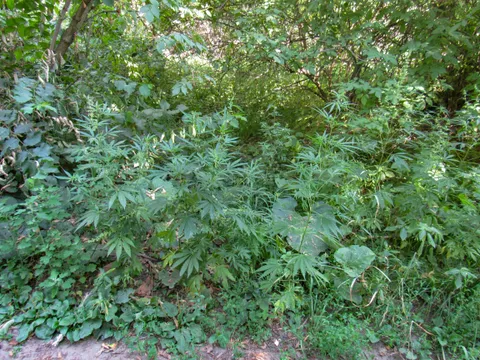
Records of the cannabis plant
5dated records
2 · 18813 · 19675 · 196918811969 Higher than 31% of 128 countriesLowestHighest0 more without a date · 2 in 1969
Enforcement 5 reports · the Cannabis Enforcement Tracker →
How the law above is applied: raids, seizures, fields destroyed, arrests and sentences, as recorded by the Cannabis Enforcement Tracker, our companion site.
- SeizureTajikistan reports 2.7 tonnes of drugs seized on the Afghan border
The head of Tajikistan's Drug Control Agency said about 2,742 kg of narcotics were seized along the border with Afghanistan in 2025, and the authorities said trafficking from Afghanistan had risen by nearly half over 2024.
- SeizureDushanbe police seize 16 kg of hashish and opium from a delivery group
Police stopped three men transporting 16 kg of hashish and opium into Dushanbe and opened a case under part 4 of Article 200, the especially-large supply offence.
- SeizureTajikistan's 2024 drug haul falls as synthetics take over
The Drug Control Agency reported that law enforcement seized about 4.3 tonnes of drugs in 2024, 901 kg less than in 2023.
- SeizureDushanbe police seize 50 kg of hashish from a transnational group
Police in Dushanbe's Shohmansur district arrested two men from Istravshan with 50 kg of hashish.
- EradicationSughd destroys 400,000 wild hemp plants and seizes 113 kg of hashish
Police in Sughd destroyed about 400,000 wild hemp plants in Khujand, Asht and Bobojon Gafurov districts during operation «Мак-2012».
History 21 of 21 checked against a source
Score and entries per decade
13 today, from 100 before its first recorded change
This country's score Entries that moved the score Context only
20263 entries0 score changes
Enforcement ✓
Cannabis still dominates Tajikistan's 2026 drug seizures
In the first half of 2026, Tajikistan seized 2,963 kg of drugs, 5% less than in the same period of 2025. Cannabis-type substances made up the largest share at 1,740.9 kg, down 14.4%, while opium fell 24% and psychotropic seizures rose 3.3 times to 526.3 kg. The synthetic total included 72.9 kg of methamphetamine, 5.2 kg of MDMA and 448.3 kg of pregabalin.
Other law ✓
Tajikistan revises permits for controlled-drug imports and exports
Tajikistan amended its drug law to require authorising documents under national legislation for controlled-drug and precursor imports and exports. It also revised precursor licensing and the police-law powers applied to Drug Control Agency staff. These amendments revised the licensing and enforcement statute adopted in 1999.
Enforcement ✓
Tajikistan records 5.3 tonnes of drug seizures and 1,003 drug crimes in 2025
The Drug Control Agency reported 5,280 kg of drugs seized in 2025, 21% more than in 2024, and 1,003 drug-related crimes, 164 fewer than the year before. It dismantled 44 groups involving 88 people and sent 132 cases against 180 people to court. As of 1 January 2026, 4,004 people were registered as drug-dependent.
20231 entry0 score changes
20212 entries0 score changes
Culture & science ✓
Tajikistan raids market stalls over cannabis-leaf clothes and a rap song
In July 2021 the Drug Control Agency checked markets in Dushanbe and Yavan and seized 239 sports outfits and 530 caps bearing cannabis-leaf images in Dushanbe, plus 21 outfits in Yavan. It opened administrative cases against two rappers for a song called «Каннабис и марихуана», citing the drug-propaganda article of the Administrative Code. The traders and singers faced fines of 10–20 calculation units.
Tightening ✓
Tajikistan extends drug offences to chemical analogues
A Criminal Code amendment extended drug offences to analogues of controlled drugs, according to the code’s amendment notes. The updated offences covered possession without intent to supply, supply and premises for consumption; analogue quantities were linked to the corresponding controlled substance’s bands. The separate quantity annex was replaced in 2023.
20131 entry0 score changes
20101 entry0 score changes
20092 entries1 score change
Enforcement ✓
Tajikistan's annual poppy-and-hemp campaign destroys half a million plants
The Drug Control Agency said the 2008 «Мак» operation destroyed more than 500,000 narcotic plants, mainly Indian hemp. In the 2009 campaign, officers destroyed 912 wild hemp bushes in Darvaz and 3,140 in Sughd in one day. The annual operation runs from May to November with police, defence, agriculture, customs and environmental agencies.
Easing ✓
Tajikistan's administrative code sets fines for small drug possession
The Administrative Code that took effect on 1 April 2009 set fines for acquiring, holding, transporting or sending a small quantity of drugs without intent to supply, where the act had no criminal elements. It also covered small-scale cultivation. The current text sets 20–30 calculation units with confiscation for small possession and 10–20 for cultivation; the Criminal Code applies above those bands.
313+10 points
20041 entry0 score changes
19992 entries0 score changes
Other law ✓ Article
Tajikistan adopts a drug law linking licensing, policing and treatment
Tajikistan adopted its general drug law under President Emomali Rakhmonov, with commencement to follow official publication. In the later consolidated text, licensed research institutions alone could grow drug-containing plants for scientific purposes, non-prescribed use was prohibited, and treatment and registration followed separate rules. The statute operated alongside the Criminal Code introduced in 1998 and was amended again in February 2026.
Enforcement ✓
Tajikistan creates a drug control agency under the president
On 1 June 1999 President Emomali Rahmon created the Drug Control Agency by decree No. 128, under a protocol signed with the UN drugs office in Vienna on 27 April 1999. The agency became the coordinating law-enforcement body for drug supply and border interdiction. It still reports the annual seizure and prosecution figures.
19981 entry0 score changes
19971 entry0 score changes
19961 entry0 score changes
19911 entry0 score changes
19871 entry0 score changes
19741 entry0 score changes
19611 entry0 score changes
19351 entry1 score change
Sources hover a number in the text to see its source
- Cited
- 10
- Websites
- 9
- Last reviewed
- History checked
- 21/21
Most cited
- akn.tj2
- andoz.tj1
- avesta.tj1
- data.unodc.org1
- incb.org1
- mmih.tj1
All 11 sources
- Tajikistan — Administrative Code, article 128 (small drug possession)Fine 20–30 calculation units plus confiscation; code adopted 2008 and in force 1 April 2009.archived
- Tajikistan — Criminal Code, consolidated through 17 December 2025, WIPO Lex2025 · Russian text, articles 200–205, pp. 98–104; annex reference and adoption/commencement instruments, pp. 201–202; quantity tables not reproduced in this PDFarchived
- Tajikistan Justice Ministry — draft quantity annex (2023)Draft gram and plant bands; gazetted table not verified.archived
- ROST — analysis of Tajikistan’s drug-policy legislation2010 · Cover dated Dushanbe 2010; working group, research scope, policing and health/privacy recommendations; published in OSF’s 2011 document collectionarchived
- Tajikistan Drug Control Agency — drug law consolidated through 20192020 · Published 9 April 2020; Law 873 of 10 December 1999, amended through 2019; definitions, articles 4, 8–10, 15–19 and commencement resolutionarchived
- Tajikistan — National List of narcotic substances, Resolution 121 of 27 February 2020Cannabis, resin, hashish and oil in the section 'especially dangerous and not of interest for medical use'.archived
- UNODC Data Portal — Drug seizures, reported seizures in kilogram equivalents (World Drug Report data)archived
- Avesta — Cannabis still dominates Tajikistan's 2026 drug seizures (13 July 2026)5,280 kg in 2025; 2,963 kg in H1 2026; 1,740.9 kg cannabis-type; 1,003 crimes; 4,004 users.archived
- Tajikistan — Road Traffic Law 1533 of 17 May 2018Article 13; intoxication by alcohol, narcotics or psychotropics.archived
- International Narcotics Control Board — Travellers carrying medicines containing controlled substances
Also consulted
- Tajikistan Justice Ministry — drug-law amendments of 16 February 20262026 · Law 2254; public Russian operative amendments to articles 6, 7 and 10; no separate commencement date supplied in the visible recordarchived