10/100
#108 of 196 worldwide
#17 of 48 in Asia
Use brings administrative detention and possible compulsory rehabilitation; trafficking can carry the death penalty. China is nonetheless a leading industrial hemp producer.
In short all countries →
- Can I carry it?NoSmall amounts bring an administrative offence with detention or a fine; larger amounts can be criminal
- Can I grow it?NoSmall-scale drug cultivation can bring administrative penalties; larger cultivation can be a crime
- Can I buy it?NoThere is no legal source
- Can I use it in public?NoUse can bring administrative detention and a fine, including use in private
- What if I'm caught?Administrative detentionSmall possession can bring 10–15 days of administrative detention and a fine; larger amounts can bring criminal charges
A rough guide read from the scores and the rules below, not legal advice. The details and the exceptions are in each segment: select an answer to jump to it.
Cannabis in China not part of the score · all 18 datasets ↓
Who uses it
About 1 in 2500
people aged 15–64 (assumed) in China used cannabis in the past year: about 390,000 people.
- Past year
- 0.0%
- Asia median
- 2%
UNODC · survey 2015
Source Past-year cannabis use among people aged 15–64 (assumed). People who used cannabis in the past year, from a 2015 survey, applied to today's population aged 15–64. The population is approximate: the survey ages cut through an age group, or were not recorded and ages 15–64 are used. An earlier figure: UNODC's 2026 table has none for this country.Survey ages and years vary, and some surveys include children. Rates are not age-standardised; do not compare countries directly.
An earlier UNODC figure, as collected in Wikipedia's list of annual cannabis use by country. Population from the World Bank, aged 15–64. The whole dataset →
Use across Asia
39thhighest of 40 surveyed countries
Past-year use, latest survey of each. Survey years and ages differ. On the map →
Cannabis in figures
- Police contact for drug use or possession0.0per 100,000 people · 2024
- Cannabis seized328kg in 2024 · 2024
- Hemp grown18,811ha in 2024 · 2024
- Research on cannabis0.3papers per million people · 2025
- Clinical trials of cannabis medicines8studies so far · 2026
The dot: where it stands among the countries each dataset covers, lowest to highest. All datasets ↓
Score breakdown 10/100 · how the scores are made
Neighbours · 9 of 15
- 🇱🇦 Laos12
- 🇳🇵 Nepal12
- 🇷🇺 Russia11
- 🇵🇰 Pakistan10
- 🇨🇳 China10
- 🇧🇹 Bhutan8
- 🇲🇳 Mongolia8
- 🇲🇲 Myanmar4
- 🇰🇵 North Korea3
Possessing a small amount is not a crime but an administrative offence.[1] Article 84 of the Public Security Administration Punishments Law, as revised from 1 January 2026, sets 10 to 15 days' detention, with a fine of up to 3,000 yuan possible, or up to 5 days or a fine of up to 1,000 yuan in lighter cases.[1] The crime of illegal possession begins at a "relatively large amount", which the Supreme People's Court's 2016 interpretation puts for cannabis at 30 kg of leaf, 2 kg of resin or 1 kg of oil.[2] A foreigner who breaks the law may be ordered to leave or repatriated, and the Ministry of Public Security may deport someone for a serious breach of the exit-and-entry law.[3]
| Amount | What happens | Punishment | Fine |
| Small possession, Article 84 (from 2026)Ten to fifteen days' detention plus a fine of up to 3,000 yuan; lighter cases five days or 1,000 yuan | AdministrativeSmall possession | — | Up to CN¥3,000 |
| 30–150 kg leaf, 2–10 kg resin or 1–5 kg oilUp to three years, detention or control plus a fine; serious cases three to seven years | CriminalIllegal possession | Up to 3 years | — |
| 150 kg or more leaf, 10 kg or more resin or 5 kg or more oilPlus a fine | CriminalIllegal possession | 7 years to life imprisonment | — |
Growing cannabis for drug use is prohibited and the plants are uprooted.[1] A small number of plants is an administrative offence under Article 83: 10 to 15 days' detention, with a fine of up to 5,000 yuan possible, or up to 5 days or 1,000 yuan in lighter cases, and no penalty for a grower who uproots the plants before they mature.[1] It becomes a crime under Article 351 of the Criminal Law at 5,000 plants.[2] Only state-designated enterprises may cultivate cannabis for industrial or medical purposes.[4]
| Amount | What happens | Punishment | Fine |
| Small growing, Article 83Ten to fifteen days' detention plus up to 5,000 yuan; lighter cases five days or 1,000 yuan; no penalty if uprooted before maturing | AdministrativeCultivation | — | Up to CN¥5,000 |
| 5,000–30,000 plants, Article 351Up to five years, detention or control plus a fine | CriminalCultivation | Up to 5 years | — |
| 30,000 or more plants, Article 351Five years or more plus a fine or confiscation | CriminalCultivation | At least 5 years | — |
Supplying, transporting, manufacturing or smuggling any amount is a crime under Article 347.[6] Ordinary small-quantity cases carry up to three years, custody or non-custodial supervision, plus a fine; serious small-quantity cases carry three to seven years.[6] The next tier starts at 30 kg of leaf, 2 kg of resin or 1 kg of oil and carries at least seven years plus a fine.[6][2] At 150 kg of leaf, 10 kg of resin or 5 kg of oil, the sentence is fifteen years, life or death with confiscation; that tier also applies to ringleaders, armed support, serious violent resistance or organised international trafficking.[6][2]
| Amount | What happens | Punishment | Fine |
| Small quantity without serious circumstancesCustody or non-custodial supervision also possible; plus a fine | CriminalTrafficking | Up to 3 years | — |
| Small quantity with serious circumstancesPlus a fine | CriminalTrafficking | 3–7 years | — |
| 30–<150 kg leaf, 2–<10 kg resin or 1–<5 kg oil; no capital aggravationPlus a fine | CriminalTrafficking | At least 7 years | — |
| At least 150 kg leaf, 10 kg resin or 5 kg oil, OR Article 347 capital aggravationAlternatively a fixed fifteen-year sentence; confiscation of property | CriminalAggravated trafficking | Death, life imprisonment or 15 years | — |
Using a drug is an administrative offence under the same Article 84 as small possession: 10 to 15 days' detention and a possible fine of up to 3,000 yuan.[1] Since 2026 a user can also be ordered, for six months to a year, not to enter entertainment venues or contact people involved in drug offences.[1] Use is proved by urine or hair test, and police conduct testing sweeps in bars.[5] Users are registered in a national database and can be sent to compulsory rehabilitation for up to two years.[7]
There is no legal medical cannabis supply. No medical cannabis product and no THC product is approved; CBD is not permitted in food or medicines, was banned from cosmetics, and in 2024 was placed under precursor-chemical controls.[4] Cannabis seed is listed in the Pharmacopoeia as a traditional medicine, but that is not a patient supply route.[4]
Context not part of the score · every country, by topic →
Trafficking in a "large amount" falls in the tier of the Criminal Law that carries fifteen years, life imprisonment or death.[5] For cannabis the Supreme People's Court's 2016 interpretation puts that amount at 150 kg of leaf, 10 kg of resin or 5 kg of oil.[2] The death penalty is available for the most serious trafficking cases, not for possession or use, and it is discretionary: the court may impose fifteen years or life instead.[5][2] No death sentence or execution for plant cannabis was verified in 2024–2026; the recent capital cannabinoid case concerned a synthetic substance.[8]
All recreational use is prohibited.[1] Small possession and use bring administrative detention and fines, larger amounts are crimes from 30 kg of leaf, and trafficking any amount can bring life or death.[2] Citizens are warned that use abroad can be punished on return.[5]
No medical cannabis of any kind and no THC products.[4] CBD is not permitted in food or medicines, was banned from cosmetics, and in 2024 was placed under precursor-chemical controls.[4] Cannabis seed appears in the Pharmacopoeia as a traditional medicine, but no cannabis-based medicine or patient programme was found.[4]
No cannabis clubs are known, and the law leaves no room for them: growing cannabis and supplying it to another person are both prohibited, and the law provides for the death penalty for the most serious drug offences.[5]
The Narcotics Control Law forbids illicitly growing cannabis plants and makes it illegal to trade in, transport, carry or possess seeds or seedlings of drug plants that have not been inactivated.[4] State-designated enterprises may cultivate medicinal narcotic plants; licensed industrial-hemp growers are a separate exception.[4] Cannabis seed itself is listed in the Chinese Pharmacopoeia as a traditional medicine.[4]
Industrial hemp is defined under provincial rules as cannabis with less than 0.3% THC.[4] Cultivation and processing require a licence and are concentrated in Yunnan and Heilongjiang; other provinces, including Gansu, grow it without a clear provincial regulation.[4] The national recommended standard for raw hemp, GB/T 16984-2023, took effect on 1 March 2024.[4] Hemp seed is listed as both food and medicine and is used for oil, tea and porridge.[4]
China is one of the world's largest industrial-hemp producers.[4] Hemp is defined under provincial rules as cannabis with less than 0.3% THC and may be cultivated and processed only under licence, in practice mainly in Yunnan and Heilongjiang.[4] There is no medical or adult-use production; cannabis for medicine remains a state-controlled drug plant.[4]
Figures reported by the government to the UN drugs office record 328 kg of herbal cannabis seized in 2024, against 421 kg in 2023.[9] The series is volatile and incomplete, and China publishes no cannabis-only seizure total.[10] In 2025 the authorities reported 15,000 existing cannabis users and 3,000 cannabis users punished, both down on 2024.[10] Major cases include 735 kg seized in the South China Sea in April 2026 and 70.83 kg in transit at Beijing airport in June 2025.[11][12]
There is no legal recreational supply for anyone.[1] Possessing a small amount is an administrative offence under Article 84, in force from 1 January 2026: 10 to 15 days' detention, with a fine of up to 3,000 yuan that may be added, or up to 5 days' detention or a fine of up to 1,000 yuan in a lighter case.[1] A foreigner who violates the law may be ordered to leave within a time limit, and may be repatriated, which bars return for one to five years.[3] Where a breach of the exit-and-entry law is serious but not a crime, the Ministry of Public Security may deport the person, which bars return for ten years.[3]
The Road Traffic Safety Law prohibits driving after taking any state-controlled narcotic or psychotropic drug.[13] A mandatory national standard, GB 45248-2025, took effect on 1 September 2025 and sets concentration cutoffs for eleven drugs including delta-9 THC; the predecessor standard used 2 ng/mL in blood and 1 ng/mL in saliva.[14] The exact 2025 cutoff table could not be read, so the numeric limit remains unverified.[14]
China publishes aggregate drug statistics, not a cannabis arrest count. The 2025 drug report recorded 27,000 drug cases and 41,000 suspects, down 27.6% and 33% on 2024, and 134,000 users handled; it separately counted 15,000 existing cannabis users and 3,000 punished.[10] The figures cover all drugs.[10]
Registration as a drug user brings years of monitoring and random testing, and affects employment and travel.[7] The Narcotics Control Law has police register drug users and sets community rehabilitation at three years; a user who comes forward to register or seeks treatment is not punished for the use.[7] Since 1 January 2026 records of public-security penalties, drug use included, are sealed: they stay on file but may not be given out except to state organs handling a case or bodies entitled to check under national rules.[15]
Hemp runs through Chinese material and medical culture. Ma is the Chinese word for hemp, and hemp seed in Chinese medicine is listed in the Pharmacopoeia.[4] Hmong hemp cloth records the fibre tradition of the upland south, while hemp in the Taoist censer and the Scythian vapour bath show ritual and medical uses that long predate the modern drug law.[16] The cannabis in the graves of Xinjiang finds preserved plant material in ancient burials, and the CBD entry follows the compound from laboratory to China's 2024 precursor controls.[4]
Taking cannabis into or out of China is a separate offence from possessing it, normally charged as smuggling or trafficking, with far heavier penalties. That holds almost everywhere, including between two places where cannabis is legal.
In China the heaviest penalties, up to the death penalty, are aimed at trafficking, and bringing drugs across the border is treated as trafficking.
A prescription or medical card from another country is generally not recognised. Travellers who need a cannabis-based medicine should ask China's embassy before travelling.[17]
General guidance that applies to almost every country, not a check of China's customs rules.
Culture the atlas →
 TraditionsThe Scythian vapour bathThe oldest description of people using cannabis for pleasure, by Herodotus about 440 BCE. Archaeology has since found the tents and the braziers.
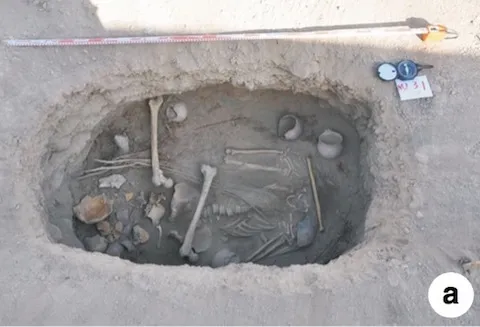 TraditionsCannabis in the graves of XinjiangThree cemeteries in western China, 2,800 to 2,400 years old, hold cannabis laid beside the dead, spread over them or burnt at the graveside. They are some of the oldest physical evidence of the plant used for more than fibre and food.
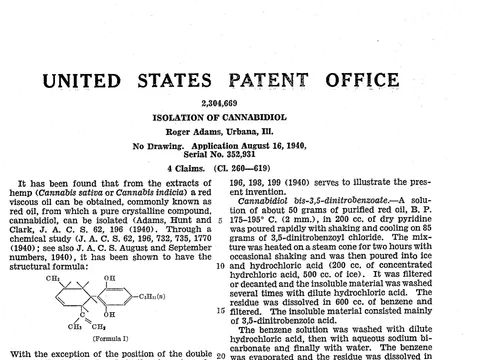 LanguageCBDCannabidiol, the cannabis compound that does not get people high. Studied since 1940, it became a word on shop shelves only after 2018, and the law still cannot agree whether it is a medicine, a food, a drug or none of these.
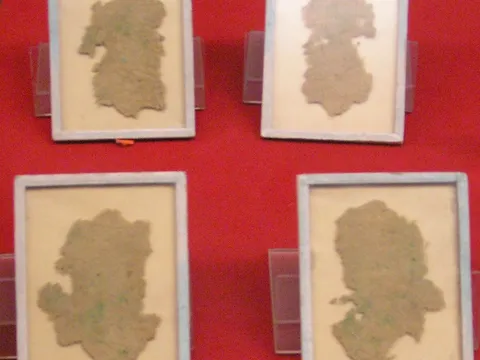 TraditionsHemp and the beginnings of paperThe oldest paper yet found, from Han-dynasty China, was made largely of hemp fibre and first used for wrapping. Cai Lun's famous recipe of 105 CE improved an older craft and named hemp waste among its materials.
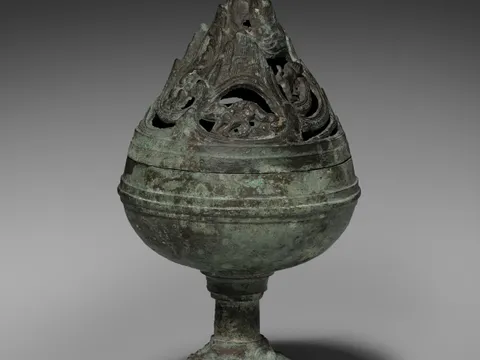 TraditionsHemp in the Taoist censerEarly Daoist and medical texts associate cannabis with incense, visions and spirits. A Han mountain censer illustrates the sacred landscape of incense, without proving what was burnt in it.
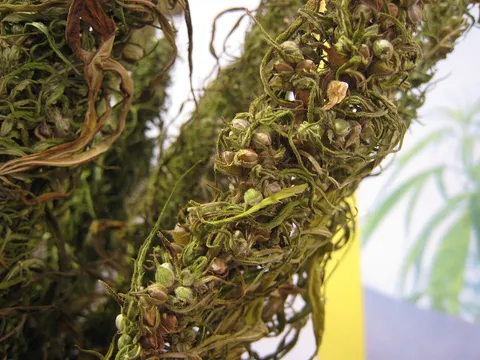 TraditionsHemp seed in Chinese medicineFor some 1,800 years Chinese physicians have prescribed the small brown fruits of the hemp plant, huomaren, as a gentle laxative. They have no intoxicating effect, and the law in China, Hong Kong and Taiwan has had to say so.
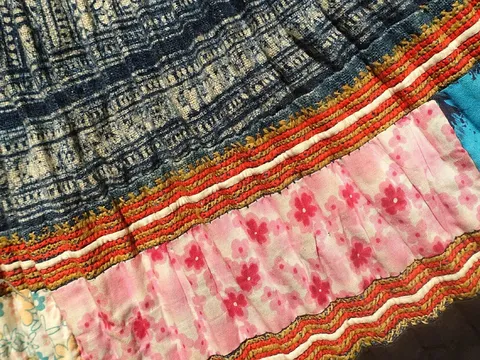 TraditionsHmong hemp clothHmong women grew, spun and wove hemp for the family's clothes and decorated it with batik. Drug laws are one reason few still do.
 LanguageMaThe Chinese character for hemp, among the oldest recorded names for the plant. It also carries the sense of numbness.
Did you know? all cases →
1934 · China
Until 1934 hashish was exported legally from Xinjiang in China to British India, under a tariff.
The full story →Archaeology · China
In a grave in Turpan, western China, about 2,500 years old, a man was buried under a shroud of thirteen cannabis plants. Far to the west, in the Pamirs, mourners burnt it in wooden braziers.
Read the entry →
Datasets not part of the score
What other organisations publish about China, and where it stands among the countries each one covers. Each dataset has a page of its own, with a world map and every country's figure.
Use
UNODC · 2015
Cannabis use
0.04%of people aged 15–64 (assumed)
survey 2015 · 390,000 people · earlier figure, not in UNODC 2026
Source Survey ages and years vary, and some surveys include children. Rates are not age-standardised; do not compare countries directly.WHO, Our World in Data · 2020
Alcohol drunk per person
4.58litres of pure alcohol a year
3.62 · 20003.62 · 20013.38 · 20023.25 · 20033.26 · 20043.46 · 20053.83 · 20064.23 · 20074.71 · 20085.26 · 20095.90 · 20106.50 · 20116.92 · 20127.16 · 20137.29 · 20147.35 · 20157.18 · 20166.53 · 20175.73 · 20185.73 · 20194.58 · 202020002020 Higher than 52% of 187 countriesLowestHighestper person aged 15 or over · 2020 · 3.62 in 2000 · 5.90 in 2010
Law
UNODC · 2024
Police contact for drug use or possession
0.0per 100,000 people
1.0 · 20210.1 · 202212 · 20230.0 · 202420212024 Higher than 2% of 101 countriesFewerMore640 people in 2024 · all drugs together
UNODC · 2024
Cannabis seized
328kg in 2024
8,728 · 20155,833 · 20164,935 · 20173,498 · 20182,560 · 2019409 · 2020855 · 2021495 · 2022421 · 2023328 · 202420152024 Higher than 20% of 163 countriesLess seizedMore seized328 kg of herb · 0 kg of resin · 8,728 kg in 2015 · 409 kg in 2020
Society
OpenAlex · 2025
Research on cannabis
0.3papers per million people
0.0 · 19700.0 · 19970.0 · 19980.0 · 20000.0 · 20010.0 · 20020.0 · 20030.0 · 20040.0 · 20050.0 · 20060.0 · 20070.0 · 20080.0 · 20090.0 · 20100.0 · 20110.0 · 20120.0 · 20130.1 · 20140.1 · 20150.1 · 20160.1 · 20170.1 · 20180.1 · 20190.1 · 20200.1 · 20210.2 · 20220.2 · 20230.2 · 20240.3 · 202519702025 Higher than 31% of 176 countriesLowestHighest355 papers in 2025 · 1 in 1970 · 67 in 2010
Cato and Fraser Institutes · 2023
Human Freedom Index
4.93of 10
5.41 · 20005.44 · 20015.44 · 20025.47 · 20035.39 · 20045.31 · 20055.36 · 20065.38 · 20075.36 · 20085.34 · 20095.32 · 20105.23 · 20115.27 · 20125.23 · 20135.22 · 20145.17 · 20155.16 · 20165.32 · 20175.23 · 20185.18 · 20195.15 · 20205.12 · 20214.94 · 20224.93 · 202320002023 Higher than 10% of 164 countriesLess freeFreerrank #149 of 165 · personal freedom 4.08 · economic freedom 6.13
V-Dem, Our World in Data · 2025
Civil liberties
0.18of 1 in 2025
0.13 · 19000.13 · 19010.13 · 19020.13 · 19030.13 · 19040.14 · 19050.14 · 19060.14 · 19070.14 · 19080.14 · 19090.14 · 19100.14 · 19110.24 · 19120.32 · 19130.32 · 19140.32 · 19150.32 · 19160.32 · 19170.32 · 19180.32 · 19190.32 · 19200.32 · 19210.32 · 19220.32 · 19230.32 · 19240.32 · 19250.32 · 19260.27 · 19270.26 · 19280.26 · 19290.26 · 19300.26 · 19310.26 · 19320.26 · 19330.26 · 19340.26 · 19350.26 · 19360.26 · 19370.27 · 19380.27 · 19390.27 · 19400.27 · 19410.27 · 19420.27 · 19430.27 · 19440.27 · 19450.26 · 19460.25 · 19470.25 · 19480.14 · 19490.08 · 19500.08 · 19510.08 · 19520.08 · 19530.08 · 19540.09 · 19550.08 · 19560.06 · 19570.06 · 19580.06 · 19590.07 · 19600.07 · 19610.07 · 19620.07 · 19630.07 · 19640.07 · 19650.04 · 19660.04 · 19670.04 · 19680.04 · 19690.04 · 19700.04 · 19710.04 · 19720.05 · 19730.05 · 19740.05 · 19750.05 · 19760.06 · 19770.12 · 19780.23 · 19790.25 · 19800.26 · 19810.26 · 19820.26 · 19830.26 · 19840.26 · 19850.26 · 19860.27 · 19870.27 · 19880.23 · 19890.22 · 19900.22 · 19910.24 · 19920.25 · 19930.25 · 19940.26 · 19950.26 · 19960.26 · 19970.26 · 19980.26 · 19990.27 · 20000.27 · 20010.28 · 20020.29 · 20030.29 · 20040.29 · 20050.29 · 20060.29 · 20070.29 · 20080.28 · 20090.28 · 20100.28 · 20110.28 · 20120.26 · 20130.24 · 20140.26 · 20150.25 · 20160.24 · 20170.22 · 20180.21 · 20190.19 · 20200.19 · 20210.17 · 20220.17 · 20230.17 · 20240.18 · 202519002025 Higher than 6% of 175 countriesFewer libertiesMore liberties0.32 in 1925 · 0.07 in 1961 · 0.22 in 1990
Our World in Data, World Bank · 2025
Population
1,406,585,000people in 2025
395,929,430 · 1900419,058,430 · 1910463,330,522 · 1920482,831,090 · 1930511,303,712 · 1940544,044,355 · 1950654,802,068 · 1960823,308,964 · 1970983,163,540 · 19801,153,582,725 · 19901,269,581,174 · 20001,351,561,505 · 20101,426,106,093 · 20201,406,585,000 · 202519002025 Higher than 99% of 196 countriesLowestHighest395,929,430 in 1900 · 544,044,355 in 1950 · 1,269,581,174 in 2000
CEPII
Former colonial rulers
Once ruled by
World Bank · 2025
Government effectiveness
65of 100
47 · 199642 · 199841 · 200041 · 200241 · 200344 · 200442 · 200544 · 200646 · 200750 · 200850 · 200951 · 201051 · 201150 · 201250 · 201361 · 201462 · 201562 · 201663 · 201762 · 201864 · 201965 · 202064 · 202161 · 202265 · 202367 · 202465 · 202519962025 Higher than 73% of 195 countriesLowestHighestestimate 0.62 on a scale of −2.5 to 2.5 · 2025 · 41 in 2000 · 62 in 2015
Transparency International · 2024
Corruption Perceptions Index
43of 100
39 · 201240 · 201336 · 201437 · 201540 · 201641 · 201739 · 201841 · 201942 · 202045 · 202145 · 202242 · 202343 · 202420122024 Higher than 57% of 178 countriesLowestHighest0 highly corrupt, 100 very clean · 2024 · 37 in 2015 · 42 in 2020
Pew Research Center · 2020
Most common religion
Religiously Unaffiliated
the largest group · 2020
World Bank · 2025
Income per person
$25,067per person
1,667 · 19901,798 · 19912,030 · 19922,287 · 19932,557 · 19942,808 · 19953,056 · 19963,306 · 19973,534 · 19983,774 · 19994,066 · 20004,372 · 20014,744 · 20025,192 · 20035,684 · 20046,298 · 20057,057 · 20068,014 · 20078,744 · 20089,519 · 200910,476 · 201011,405 · 201112,218 · 201213,081 · 201313,969 · 201414,857 · 201515,773 · 201616,758 · 201717,807 · 201818,821 · 201919,215 · 202020,843 · 202121,499 · 202222,687 · 202323,841 · 202425,067 · 202519902025 Higher than 63% of 187 countriesLowestHighestat purchasing power parity, 2021 dollars · 2025 · $1,667 in 1990 · $10,476 in 2010
World Bank · 2025
Development indicators
91.6%use the internet
0% · 19900% · 19930% · 19940% · 19950% · 19960% · 19970.2% · 19980.7% · 19991.8% · 20002.6% · 20014.6% · 20026.2% · 20037.3% · 20048.5% · 200510.5% · 200616% · 200722.6% · 200828.9% · 200934.3% · 201038.3% · 201142.3% · 201245.8% · 201347.9% · 201450.3% · 201553.2% · 201654.3% · 201765.4% · 201864.1% · 201970.1% · 202073.1% · 202175.6% · 202290.6% · 202392% · 202491.6% · 202519902025 Higher than 76% of 195 countriesLowestHighest66.3% live in towns · 14.9% aged 65+ · 2025 · 1.8% in 2000 · 34.3% in 2010
GDELT · 2025
Cannabis in the news
0.0037%of global news: cannabis articles from here
0.004% · 20170.0057% · 20180.0144% · 20190.0059% · 20200.006% · 20210.0057% · 20220.0054% · 20230.0061% · 20240.0037% · 202520172025 Higher than 89% of 147 countriesLowestHighest2025 average, 348 days · 0.0057% in 2018 · 0.006% in 2021
Plant and market
GBIF · 2026
Records of the cannabis plant
1,818dated records
1 · 18652 · 18763 · 18784 · 18875 · 18897 · 189111 · 189313 · 189915 · 190516 · 190617 · 190718 · 190819 · 191021 · 191226 · 191428 · 191830 · 191932 · 192034 · 192135 · 192336 · 192437 · 192541 · 192645 · 192760 · 192870 · 1929108 · 1930120 · 1931129 · 1932137 · 1933143 · 1934167 · 1935189 · 1936204 · 1937208 · 1938219 · 1939234 · 1940238 · 1941240 · 1942245 · 1943246 · 1945250 · 1946251 · 1947256 · 1948257 · 1949264 · 1950302 · 1951319 · 1952350 · 1953355 · 1954367 · 1955440 · 1956558 · 1957806 · 1958999 · 19591,031 · 19601,047 · 19611,054 · 19621,087 · 19631,114 · 19641,137 · 19651,138 · 19691,149 · 19701,158 · 19711,176 · 19721,199 · 19731,223 · 19741,229 · 19751,246 · 19761,259 · 19771,288 · 19781,289 · 19791,297 · 19801,308 · 19811,312 · 19821,319 · 19831,323 · 19841,329 · 19851,339 · 19861,344 · 19871,346 · 19881,360 · 19891,366 · 19901,368 · 19911,370 · 19921,377 · 19931,378 · 19941,381 · 19951,397 · 19961,402 · 19971,406 · 19981,410 · 19991,415 · 20001,416 · 20011,418 · 20021,426 · 20031,429 · 20041,434 · 20051,442 · 20061,443 · 20071,449 · 20081,455 · 20101,457 · 20111,459 · 20131,469 · 20141,484 · 20151,489 · 20161,511 · 20171,515 · 20181,520 · 20191,530 · 20201,543 · 20211,568 · 20221,619 · 20231,678 · 20241,744 · 20251,818 · 202618652026 Higher than 97% of 128 countriesLowestHighest138 more without a date · 74 in 2026 · 1,031 by 1960 · 1,415 by 2000
FAO · 2024
Hemp grown
18,811ha in 2024
90,000 · 1961100,000 · 1962120,000 · 1963130,000 · 1964140,000 · 1965153,000 · 1966155,000 · 1967157,000 · 1968157,000 · 1969160,000 · 1970163,000 · 1971165,000 · 1972167,000 · 1973165,000 · 1974164,000 · 1975162,000 · 1976160,000 · 1977159,700 · 1978155,000 · 1979120,000 · 198095,000 · 198166,000 · 198240,690 · 198343,000 · 198446,000 · 198563,000 · 198653,000 · 198753,000 · 198824,000 · 198921,000 · 199018,200 · 199118,300 · 199219,500 · 199317,000 · 199416,010 · 199514,970 · 199614,630 · 199712,160 · 19989,040 · 199912,850 · 200012,310 · 200114,890 · 20029,920 · 200319,920 · 200410,830 · 200519,170 · 200617,820 · 200711,780 · 20085,920 · 20095,110 · 20105,710 · 20115,280 · 20126,500 · 20137,700 · 20145,830 · 201513,670 · 201621,900 · 201718,560 · 201818,043 · 201919,501 · 202018,701 · 202118,749 · 202218,984 · 202318,811 · 202419612024 Higher than 92% of 39 countriesLowestHighest106,345 t of fibre · 90,000 ha in 1961 · 120,000 ha in 1980 · 12,850 ha in 2000
ClinicalTrials.gov · 2026
Clinical trials of cannabis medicines
8studies so far
3 · 20204 · 20216 · 20227 · 20237 · 20248 · 20258 · 202620202026 Higher than 66% of 50 countriesLowestHighest0 actual starts in 2026 · as of 2026–10–26 · 3 by 2020
Enforcement 3 reports · the Cannabis Enforcement Tracker →
How the law above is applied: raids, seizures, fields destroyed, arrests and sentences, as recorded by the Cannabis Enforcement Tracker, our companion site.
- SeizureChina's cannabis user numbers fall again in 2025
The 2025 drug situation report recorded 27,000 drug crime cases, 41,000 suspects and 33.5 tonnes of drugs seized, with 134,000 users handled.
- SeizureGuangdong police seize 735 kg of cannabis at sea
On 26 April 2026 a joint police and coast guard operation intercepted a freighter in the South China Sea and seized 735 kg of cannabis, arresting five people.
- Seizure70 kg of cannabis found in transit luggage at Beijing airport
In June 2025 customs officers at Beijing Capital International Airport found 70.83 kg of cannabis in four suitcases belonging to two foreign passengers who were transiting to a third country.
History 31 of 31 checked against a source
Score and entries per decade
10 today, from 100 before its first recorded change
This country's score Entries that moved the score Context only
20261 entry0 score changes
20254 entries0 score changes
Tightening ✓
China raises fines and adds venue bans for drug use
The revised Public Security Administration Punishments Law, passed on 27 June 2025 and in force from 1 January 2026, raised the fine for drug use and small possession from 2,000 to 3,000 yuan and for small cultivation or seed offences from 3,000 to 5,000 yuan. It also lets police bar users for six months to a year from entertainment venues and from contact with people involved in drug offences. Records of public-security penalties are sealed under the same law.
Enforcement ✓
China reports falling cannabis use and 26.7 tonnes of drugs seized in 2024
The 2024 drug situation report recorded 37,000 drug crime cases, 62,000 suspects and 26.7 tonnes of drugs seized, with 193,000 users handled. It said cannabis and ketamine use both fell, without giving a cannabis total, and reported 2.26 tonnes of heroin, ketamine and cannabis taken from the Gulf of Thailand smuggling route. The report gives no cannabis-specific seizure figure.
20242 entries0 score changes
Tightening ✓
China puts cannabidiol under its precursor-chemical rules
Six government departments issued an announcement on 2 August 2024, published on 8 August and effective on 1 September, adding cannabidiol and six other substances to the precursor-chemical rules. Production, operation, purchase, transport and import or export of CBD now require precursor-chemical reporting, and preclinical medical CBD research is brought under the narcotic-drug regulations.
Hemp ✓
China's raw-hemp quality standard takes effect
A national recommended standard for raw hemp, GB/T 16984-2023, took effect on 1 March 2024. It sets quality grades, testing methods, packaging, marking, transport and storage for hemp fibre. It applies to the licensed industrial-hemp trade and does not create a route for adults to grow or buy cannabis.
20231 entry0 score changes
20213 entries0 score changes
Culture & science ✓ Article
Genome research proposes an East Asian origin for cannabis domestication
Ren and colleagues analyze a worldwide panel of cannabis genomes and infer an early East Asian domestication history, followed by specialization into fibre and drug crops. Their model estimates an early divergence around 12,000 years before present, with a broad confidence interval. This is a genomic inference from modern samples, not a directly dated 12,000-year-old cultivated plant; later archaeobotanical research calls for testing the chronology against material evidence.
Tightening ✓
China controls synthetic cannabinoids as a whole class
The National Narcotics Control Commission announced on 11 May 2021 that synthetic cannabinoids would be placed under national control by a generic definition covering the whole class, together with 18 other substances listed one by one. The control took effect on 1 July.
Tightening ✓
China bans cannabis ingredients in cosmetics
New catalogues of prohibited cosmetic ingredients listed cannabis sativa fruit, seed oil and leaf extract, and prohibited cannabidiol in cosmetics, the main legal outlet for Chinese- made CBD.
20191 entry0 score changes
20171 entry0 score changes
20162 entries0 score changes
Culture & science ✓
A shroud of thirteen cannabis plants is described from a grave in Turpan
Researchers reported a man of about 35 buried at the Jiayi cemetery in the Turpan basin, 2,800 to 2,400 years ago, with thirteen nearly whole cannabis plants laid diagonally across his body. The plants seem to have been grown locally and cut in late summer; the authors suggested ritual or medicinal use.
Other law ✓
China's top court fixes the cannabis quantities that make a crime
The Supreme People's Court adopted an interpretation, in force from 11 April 2016, fixing the quantities that the Criminal Law leaves undefined. For cannabis, 30 kilograms of leaf, 2 kilograms of resin or 1 kilogram of oil is a 'relatively large amount', where illegal possession becomes a crime, and 150 kilograms, 10 kilograms and 5 kilograms a 'large amount', the tier that for trafficking carries fifteen years, life or death. Growing becomes a crime at 5,000 plants. Below these lines possession, use and small plots are dealt with by the police as administrative offences.
20101 entry0 score changes
20082 entries0 score changes
Culture & science ✓
Cannabis from a 2,700-year-old grave at Yanghai is shown to have been psychoactive
A study in the Journal of Experimental Botany analysed 789 g of plant matter from a leather basket and a wooden bowl in tomb M90 of the Yanghai cemetery near Turpan, the grave of a man of about 45. Its breakdown products and a THC-synthase gene showed that the plant had been a drug type. The authors suggested medicinal, psychoactive or divinatory use; how it was taken is unknown.
Other law ✓
China's Narcotics Control Law takes effect
The law, adopted on 29 December 2007, replaced the 1990 decision. It lists cannabis among the drugs, has police register drug users, and sets community rehabilitation at three years and compulsory isolated rehabilitation at two, which can be extended by one more. A user who comes forward to register or seeks treatment is not punished for the use.
20061 entry0 score changes
19981 entry0 score changes
19971 entry0 score changes
19901 entry1 score change
19891 entry0 score changes
19871 entry0 score changes
19852 entries1 score change
International ✓
China joins the Single Convention on Narcotic Drugs
China acceded to the Single Convention on Narcotic Drugs of 1961 as amended by the 1972 Protocol on 23 August 1985. The convention lists cannabis and cannabis resin among its controlled drugs and obliges its parties to limit their production, trade, possession and use to medical and scientific purposes.
Ban ✓ Article
China classes cannabis as a narcotic
On joining the UN drug conventions, China listed marijuana as a dangerous narcotic. Hemp for fibre and seed had been grown across the country for thousands of years and still is.
10016−84 points
19791 entry0 score changes
19631 entry0 score changes
19501 entry0 score changes
19421 entry0 score changes
19341 entry0 score changes
Sources hover a number in the text to see its source
- Cited
- 17
- Websites
- 15
- Last reviewed
- History checked
- 31/31
Most cited
- news.qq.com2
- zh.wikisource.org2
- cms.law1
- court.gov.cn1
- data.unodc.org1
- en.nia.gov.cn1
All 18 sources
- China — Public Security Administration Punishments Law as revised on 27 June 2025, in force 1 January 2026, Articles 83 and 84 (State Administration for Market Regulation)archived
- Supreme People's Court — Interpretation on the application of law in drug crime cases, Fa Shi [2016] No. 8, in force 11 April 2016archived
- National Immigration Administration — Exit and Entry Administration Law, English textArticle 62: repatriation may bar return for one to five years. Article 81: serious non-criminal breach may bring deportation and a ten-year bar.archived
- CMS — Cannabis law and legislation in China (expert guide, updated 23 July 2026)Industrial hemp below 0.3%; Yunnan and Heilongjiang; seed in the Pharmacopoeia; CBD precursor controls.archived
- LegalClarity — China's Public Security Punishments Law: cannabis penaltiesarchived
- China — Criminal Law, Articles 347–348 (Supreme People’s Procuratorate, English)Article 347 paragraphs 2–4; ordinary, relatively large and large/aggravated traffickingarchived
- Narcotics Control Law of the People's Republic of China (Wikisource)archived
- China Anti-Drug Network — Changzhou synthetic cannabinoid death sentence (18 July 2025)43.8 kg ADBB; death sentence, November 2024.archived
- UNODC Data Portal — Drug seizures, reported seizures in kilogram equivalents (World Drug Report data)archived
- China — 2025 drug situation report (China Anti-Drug Network, 16 June 2026)27,000 cases; 41,000 suspects; 134,000 users; 15,000 existing cannabis users; 3,000 punished.archived
- Guangzhou Daily — 735 kg cannabis seized in the South China Sea (22 June 2026)735 kg; five arrested.archived
- Guancha — Beijing airport transit cannabis case (16 August 2026)70.83 kg; two foreign passengers sentenced.archived
- China — Road Traffic Safety Law (2021 amendment), Article 22 (Wikisource)archived
- China — GB 45248-2025, mandatory drug-driving threshold standard (in force 1 September 2025)Eleven drugs including delta-9 THC; exact table not readable in the open preview.archived
- Yicai (Xinhua) — legislative commission answers questions on sealing public-security violation records (24 December 2025)archived
- Wikipedia — Cannabis in Chinaarchived
- International Narcotics Control Board — Travellers carrying medicines containing controlled substances
Also consulted
- Beijing Municipal Public Security — 2026 public-security penalty guidanceItem 113 restates Article 84: 10–15 days, fine up to 3,000 yuan; lighter case up to 5 days or 1,000 yuan.archived