Mongolia
8/100
#144 of 196 worldwide
#21 of 48 in Asia
Unauthorised acquisition or storage without a selling purpose can bring one to five years of travel restriction or imprisonment. Sale-related conduct carries two to eight years; organised criminal groups face twelve to twenty years or life.
In short all countries →
- Can I carry it?NoIt is a crime
- Can I grow it?NoIt is a crime
- Can I buy it?NoThere is no legal source
- Can I use it in public?NoNot in public, and even at home the law does not protect it
- What if I'm caught?Fine or prisonUsually a fine; prison is possible
A rough guide read from the scores and the rules below, not legal advice. The details and the exceptions are in each segment: select an answer to jump to it.
Cannabis in Mongolia not part of the score · all 15 datasets ↓
Who uses it
Perhaps 1 in 50
people aged 15–64 (assumed) in Mongolia used cannabis in the past year: about 45,000 people.
- Past year
- 2.0%
- Asia median
- 2%
This site’s estimate: there is no national survey.
Source Past-year cannabis use among people aged 15–64 (assumed). This site's figure: there is no national survey, so the median rate of surveyed countries in Asia is applied to people aged 15–64.Survey ages and years vary, and some surveys include children. Rates are not age-standardised; do not compare countries directly.
A median computed on this site from surveyed countries in Asia, using UNODC World Drug Report 2026 figures. Population from the World Bank, aged 15–64. The whole dataset →
Cannabis in figures
- Cannabis seized117kg in 2024 · 2024
- Research on cannabis0.3papers per million people · 2025
- Cannabis in the news0%of global news: cannabis articles from here · 2025
The dot: where it stands among the countries each dataset covers, lowest to highest. All datasets ↓
Score breakdown 8/100 · how the scores are made
Article 20.7(1), as amended in 2020, punishes unlawful preparation, storage, giving to another person or acquisition of prohibited narcotic drugs without a selling purpose with one to five years of travel restriction or imprisonment. It supplies no small-quantity exemption. A separate administrative penalty for consumption alone was not verified.[1]
| Amount | What happens | Punishment | Fine |
| Unlawful preparation, storage, giving or acquisition without selling purpose (Article 20.7(1))Travel restriction or imprisonment; no small-quantity exemption | CriminalIllegal use | 1–5 years | — |
Article 20.10 punishes unauthorised growing of plants supplying narcotic raw materials with one to five years of travel restriction or imprisonment; five to twelve years for an organised criminal group. The provision establishes no personal home-growing allowance.[1]
| Amount | What happens | Punishment | Fine |
| Unauthorised growing of narcotic-raw-material plants (Article 20.10)Travel restriction or imprisonment; no personal home-growing allowance | CriminalCultivation | 1–5 years | — |
| Growing by an organised criminal group | CriminalCultivation | 5–12 years | — |
Article 20.7(1) allows travel restriction instead of imprisonment for conduct without a selling purpose; the statute alone does not establish how often courts choose that alternative.[1] Police recorded 405 drug crimes and 228 suspects in 2024, and 551 crimes and 417 suspects in 2025, with most cases in Ulaanbaatar.[2][3] A nightclub campaign in July 2025 tested 1,043 people positive for an illicit drug.[4]
Giving drugs to another person without a selling purpose falls within Article 20.7(1), carrying one to five years of travel restriction or imprisonment. Article 20.7(2) provides two to eight years for sale-related conduct; persistent or cross-border conduct carries five to twelve years, and an organised criminal group twelve to twenty years or life imprisonment. Article 20.8 separately punishes providing premises for drug use with a fine, one to five years of travel restriction, or imprisonment in the ordinary case.[1]
| Amount | What happens | Punishment | Fine |
| Giving to another person without selling purpose (Article 20.7(1))Travel restriction or imprisonment | CriminalGiving | 1–5 years | — |
| Sale-related conduct (Article 20.7(2)) | CriminalSale | 2–8 years | — |
| Persistent or cross-border conduct | CriminalSale | 5–12 years | — |
| Organised criminal group | CriminalSale | 12–20 years or life imprisonment | — |
| Providing premises for drug use (Article 20.8)Fine and/or travel restriction or imprisonment in the ordinary case | CriminalProviding premises | 1–5 years | MNT 5,400,000 – MNT 27,000,000 |
Article 8 of the narcotics control law prohibits use outside authorised purposes.[5] Criminal Code Article 20.7 lists acts including preparation, storage, giving and acquisition; its title mentions illegal use, but the operative list does not make consumption itself a separate crime.[1] The Law on Infringement punishes public intoxication with a MNT 100,000 fine or compulsory training and 7–30 days' detention; a person found with drugs can also face Article 20.7(1).[6]
Context not part of the score · every country, by topic →
There is no legal way to get cannabis. Unlawful preparation, storage, giving or acquisition without a selling purpose brings one to five years of travel restriction or imprisonment, with no small-quantity exemption.[1]
No cannabis-based medicine is registered and no patient programme was found. The 2002 law allows licensed medical and academic institutions to use controlled drugs for treatment, analysis or research, so a medical route exists on paper but no cannabis product has been approved.[5]
No cannabis clubs are known, and the law leaves no room for them: growing cannabis and supplying it to another person are both prohibited.[1]
The 2002 narcotics control law counts planting, collecting and harvesting plants with narcotic effect as manufacture, which needs a licence from the pharmaceuticals authority and is otherwise prohibited.[5] It defines narcotic drugs by reference to the 1961 convention and does not mention seeds.[5] A revised narcotics law submitted to parliament in March 2026 would expressly include seeds in the definition of a narcotic plant; it was still pending on 28 October 2026.[7]
No legal hemp category or THC ceiling. The 2002 law counts planting, harvesting and cultivating plants with narcotic effect as manufacture, and prohibits production outside licensed medical or research purposes; no hemp licensing route was found.[5] Hemp was traditionally grown for rope and cloth, but the modern law makes no fibre exception.[8][5]
The 2002 law provides licences for the manufacture and sale of narcotic drugs and raw materials for medical and research use, but no cannabis production licence or product was found.[5]
Figures reported by the government to the UN drugs office record 117 kg of herbal cannabis seized in 2024, against 122 kg in 2023; no 2025 kilogram figure has been published.[9] In September 2024 police stopped two men in Ulaanbaatar with about 17 kg of cannabis plants.[10] No cannabis-specific arrest series is published; the national figures cover all drugs.[2] The UN publishes kilogram equivalents, and countries count seizures differently, so the figures are not directly comparable.[9]
No lawful recreational supply route was established. Article 20.7(1) criminalises unauthorised preparation, storage, giving or acquisition of prohibited narcotic drugs without a selling purpose.[1]
The Law on Infringement punishes driving while intoxicated with a one-year licence suspension and a MNT 400,000 fine, or 7–30 days’ detention; the consolidated text states that sanction expressly for refusing the test, and the drug-specific first-offence line is not clearly stated.[6] The Criminal Code adds heavier penalties where drug driving causes serious harm or death, up to two to eight years for two or more deaths or death while intoxicated.[1] There is no THC blood limit.[6]
Police recorded 405 drug crimes and 228 suspects in 2024, up 13 per cent on 2023.[2] In 2025 they recorded 551 crimes and 417 arrests, up 21.6 per cent.[3] A July 2025 nightclub campaign tested 1,043 people positive for an illicit drug.[4] The figures cover all drugs, not cannabis alone.[2]
A criminal case brings a record and social stigma.[11]
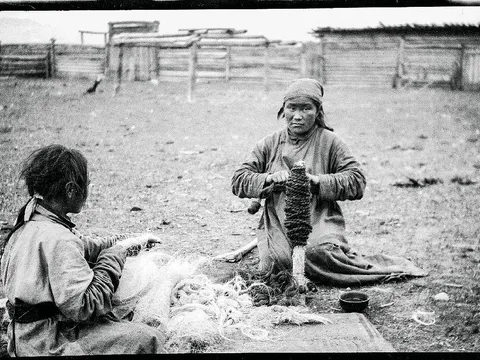
Cannabis is called ols, the same word as rope or cordage, reflecting the plant's traditional use for fibre.[8] Hemp was grown for rope and cloth and the plant grows wild, but the modern law treats it as a narcotic with no hemp exception.[5][8] There is no public cannabis culture; enforcement focuses on users and small seizures.[2]
Taking cannabis into or out of Mongolia is a separate offence from possessing it, normally charged as smuggling or trafficking, with far heavier penalties. That holds almost everywhere, including between two places where cannabis is legal.
A prescription or medical card from another country is generally not recognised. Travellers who need a cannabis-based medicine should ask Mongolia's embassy before travelling.[12]
General guidance that applies to almost every country, not a check of Mongolia's customs rules.
Culture the atlas →
Datasets not part of the score
What other organisations publish about Mongolia, and where it stands among the countries each one covers. Each dataset has a page of its own, with a world map and every country's figure.
Use
UNODC
Cannabis use
2%of people aged 15–64 (assumed)
45,000 people · computed here: the median of surveyed countries in the region, or the figure of the country a territory is part of
Source Survey ages and years vary, and some surveys include children. Rates are not age-standardised; do not compare countries directly.WHO, Our World in Data · 2020
Alcohol drunk per person
7.68litres of pure alcohol a year
2.83 · 20002.83 · 20012.64 · 20022.44 · 20033.43 · 20044.51 · 20057.07 · 20068.30 · 20078.96 · 20088.50 · 20097.76 · 20108.07 · 20119.62 · 201210.66 · 201310.93 · 20149.66 · 20158.65 · 20168.45 · 20177.93 · 20187.93 · 20197.68 · 202020002020 Higher than 72% of 187 countriesLowestHighestper person aged 15 or over · 2020 · 2.83 in 2000 · 7.76 in 2010
Law
UNODC · 2024
Cannabis seized
117kg in 2024
11 · 201631 · 2018107 · 2022122 · 2023117 · 202420162024 Higher than 13% of 163 countriesLess seizedMore seized117 kg of herb · 0 kg of resin
Society
OpenAlex · 2025
Research on cannabis
0.3papers per million people
0.3 · 20180.3 · 20240.3 · 202520182025 Higher than 32% of 176 countriesLowestHighest1 papers in 2025
Cato and Fraser Institutes · 2023
Human Freedom Index
7.61of 10
7.29 · 20007.34 · 20017.61 · 20027.57 · 20037.46 · 20047.42 · 20057.60 · 20067.60 · 20077.47 · 20087.70 · 20097.71 · 20107.70 · 20117.70 · 20127.76 · 20137.73 · 20147.78 · 20157.75 · 20167.90 · 20177.95 · 20187.89 · 20197.42 · 20207.34 · 20217.58 · 20227.61 · 202320002023 Higher than 67% of 164 countriesLess freeFreerrank #55 of 165 · personal freedom 8.17 · economic freedom 6.83
V-Dem, Our World in Data · 2025
Civil liberties
0.80of 1 in 2025
0.13 · 19110.13 · 19120.13 · 19130.13 · 19140.13 · 19150.13 · 19160.13 · 19170.13 · 19180.13 · 19190.13 · 19200.11 · 19210.09 · 19220.10 · 19230.08 · 19240.07 · 19250.07 · 19260.07 · 19270.07 · 19280.06 · 19290.06 · 19300.06 · 19310.06 · 19320.06 · 19330.06 · 19340.06 · 19350.04 · 19360.03 · 19370.03 · 19380.03 · 19390.08 · 19400.08 · 19410.08 · 19420.08 · 19430.08 · 19440.08 · 19450.11 · 19460.11 · 19470.11 · 19480.11 · 19490.11 · 19500.11 · 19510.11 · 19520.11 · 19530.12 · 19540.12 · 19550.12 · 19560.12 · 19570.12 · 19580.12 · 19590.14 · 19600.16 · 19610.16 · 19620.16 · 19630.16 · 19640.16 · 19650.16 · 19660.16 · 19670.16 · 19680.16 · 19690.16 · 19700.16 · 19710.16 · 19720.16 · 19730.16 · 19740.16 · 19750.16 · 19760.16 · 19770.16 · 19780.16 · 19790.16 · 19800.16 · 19810.16 · 19820.16 · 19830.16 · 19840.16 · 19850.16 · 19860.16 · 19870.16 · 19880.16 · 19890.49 · 19900.63 · 19910.86 · 19920.90 · 19930.90 · 19940.90 · 19950.90 · 19960.91 · 19970.88 · 19980.92 · 19990.91 · 20000.91 · 20010.91 · 20020.91 · 20030.91 · 20040.91 · 20050.91 · 20060.91 · 20070.89 · 20080.91 · 20090.91 · 20100.91 · 20110.91 · 20120.90 · 20130.89 · 20140.89 · 20150.89 · 20160.89 · 20170.90 · 20180.90 · 20190.86 · 20200.85 · 20210.84 · 20220.82 · 20230.75 · 20240.80 · 202519112025 Higher than 57% of 175 countriesFewer libertiesMore liberties0.07 in 1925 · 0.16 in 1961 · 0.49 in 1990
Our World in Data, World Bank · 2025
Population
3,568,978people in 2025
696,737 · 1900719,186 · 1910732,268 · 1920745,432 · 1930758,832 · 1940781,691 · 1950977,602 · 19601,295,275 · 19701,701,341 · 19802,164,578 · 19902,455,182 · 20002,701,739 · 20103,290,786 · 20203,568,978 · 202519002025 Higher than 33% of 196 countriesLowestHighest696,737 in 1900 · 781,691 in 1950 · 2,455,182 in 2000
CEPII
Former colonial rulers
Once ruled by China
World Bank · 2025
Government effectiveness
48of 100
40 · 199640 · 199840 · 200043 · 200243 · 200344 · 200442 · 200542 · 200640 · 200746 · 200843 · 200945 · 201044 · 201144 · 201245 · 201348 · 201447 · 201547 · 201645 · 201749 · 201848 · 201947 · 202047 · 202147 · 202247 · 202347 · 202448 · 202519962025 Higher than 39% of 195 countriesLowestHighestestimate -0.21 on a scale of −2.5 to 2.5 · 2025 · 40 in 2000 · 47 in 2015
Transparency International · 2024
Corruption Perceptions Index
33of 100
36 · 201238 · 201339 · 201439 · 201538 · 201636 · 201737 · 201835 · 201935 · 202035 · 202133 · 202233 · 202333 · 202420122024 Higher than 34% of 178 countriesLowestHighest0 highly corrupt, 100 very clean · 2024 · 39 in 2015 · 35 in 2020
Pew Research Center · 2020
Most common religion
Buddhists
the largest group · 2020
World Bank · 2025
Income per person
$17,773per person
6,638 · 19905,874 · 19915,324 · 19925,162 · 19935,214 · 19945,458 · 19955,494 · 19965,628 · 19975,736 · 19985,829 · 19995,818 · 20005,917 · 20016,118 · 20026,464 · 20037,071 · 20047,500 · 20058,044 · 20068,750 · 20079,380 · 20089,096 · 20099,507 · 201010,960 · 201112,079 · 201213,210 · 201313,943 · 201413,975 · 201513,898 · 201614,402 · 201715,230 · 201815,791 · 201914,801 · 202014,792 · 202115,310 · 202216,223 · 202316,843 · 202417,773 · 202519902025 Higher than 52% of 187 countriesLowestHighestat purchasing power parity, 2021 dollars · 2025 · $6,638 in 1990 · $9,507 in 2010
World Bank · 2024
Development indicators
85.1%use the internet
0% · 19900% · 19950% · 19960.1% · 19970.1% · 19980.5% · 19991.3% · 20001.7% · 20012% · 20029% · 20059% · 20069% · 20079.8% · 200810% · 200910.2% · 201012.5% · 201116.4% · 201217.7% · 201319.9% · 201422.5% · 201522.3% · 201623.7% · 201747.1% · 201851.1% · 201962.5% · 202081.6% · 202181.1% · 202283.7% · 202385.1% · 202419902024 Higher than 58% of 195 countriesLowestHighest71% live in towns · 5.1% aged 65+ · life expectancy 72.4 · higher education 69% · 2024 · 1.3% in 2000 · 10.2% in 2010
GDELT · 2025
Cannabis in the news
0%of global news: cannabis articles from here
0% · 20170% · 20180% · 20190% · 20200% · 20210% · 20220% · 20230% · 20240% · 202520172025 Higher than 0% of 147 countriesLowestHighest2025 average, 348 days · 0% in 2018 · 0% in 2021
Plant and market
GBIF · 2026
Records of the cannabis plant
81dated records
1 · 19243 · 19274 · 19745 · 19757 · 198012 · 198515 · 198716 · 198917 · 199018 · 199119 · 200722 · 201832 · 202142 · 202257 · 202364 · 202471 · 202581 · 202619242026 Higher than 74% of 128 countriesLowestHighest0 more without a date · 10 in 2026
Enforcement 7 reports · the Cannabis Enforcement Tracker →
How the law above is applied: raids, seizures, fields destroyed, arrests and sentences, as recorded by the Cannabis Enforcement Tracker, our companion site.
- SeizurePolice find cannabis plants in a car in Töv province
Police in Töv province stopped a group of people aged 20 to 28 with Kibantin tablets and cannabis-type plants in their car.
- ProsecutionMongolia sends more drug cases to court in 2026
By September 2026 prosecutors had charged 398 people under the Criminal Code's drug articles and sent 184 cases involving 270 people to court, 33 per cent more than a year earlier.
- SeizureMongolia's anti-drug police report 143 crimes in early 2026
In the first quarter of 2026 the police anti-drug department recorded 143 drug crimes involving 210 suspects, and 45 more crimes involving 54 suspects in joint operations with intelligence and customs.
- SeizureMongolia's drug crimes rise 21.6 per cent in 2025
The State General Prosecutor's Office recorded 551 drug-related crimes in 2025, 21.6 per cent more than in 2024, and police arrested 417 people. More than 40.7 per cent of those arrested were aged 25 to 35.
- RaidMongolian police raid nightclubs and test 1,043 people positive
Police raided nightclubs and bars in Ulaanbaatar from 25 to 27 July 2025 and tested 1,043 people positive for an illicit drug. The campaign followed a rise in drug crime and calls for tougher enforcement.
- SeizureA nightclub assault puts drug enforcement in the spotlight
A fight outside an Ulaanbaatar nightclub on 18 July 2025 left a man badly injured; three suspects were arrested and a fourth, the chief executive of Gobi Cashmere, left the country.
- SeizurePolice seize 17 kg of cannabis plants in Ulaanbaatar
Police stopped two men aged 32 and 33 in Ulaanbaatar’s Songinokhairkhan district on 12 September 2024 with about 17 kg of cannabis plants.
History 13 of 14 checked against a source
Entries per decade
Entries that moved the score Context only
20261 entry0 score changes
20253 entries0 score changes
Debate ✓
A Mongolian MP drafts prison terms for drug users
MP O. Amgalanbaatar announced a draft of an updated Law on Narcotic Drugs and Psychotropic Substances under which drug users would be charged under criminal law, not only the law on misdemeanours, with five years in prison for a first offence and eight for a repeat one. He sent it to the government for comment, planning to submit it to parliament afterwards.
Other law ✓
Mongolia orders a revised narcotics law and wild-plant eradication
Government Resolution No. 29 ordered a revised narcotics law by August 2025, a study by the anti-drug agency, treatment standards and eradication of wild narcotic plants. The cabinet acted after a rise in drug crime and a draft bill to prison users. The resolution was a policy instruction, not a change in the criminal law.
Enforcement ✓
Mongolia records 405 drug crimes in 2024
Mongolia's prosecutor's office counted 405 drug-related crimes in 2024, 13 per cent more than in 2023, with 228 people implicated. Most of those accused were young adults: 69.4 per cent were aged 18 to 30, 86 per cent were men and 63.6 per cent were unemployed. The figures cover all controlled drugs, not cannabis alone, and the police attributed the rise to weak knowledge of the law and the search for easy money.
20241 entry0 score changes
20201 entry0 score changes
20171 entry0 score changes
20151 entry0 score changes
20031 entry0 score changes
20021 entry0 score changes
19991 entry0 score changes
19911 entry0 score changes
19861 entry0 score changes
Date not known1 entry1 score change
Sources hover a number in the text to see its source
- Cited
- 12
- Websites
- 9
- Last reviewed
- History checked
- 13/14
Most cited
- legalinfo.mn3
- english.news.cn2
- d.parliament.mn1
- data.unodc.org1
- forgottenprisoner.org1
- incb.org1
All 14 sources
- Mongolia — Criminal Code, Mongolian consolidated text, Articles 20.7–20.10, including 2020 amendmentsarchived
- Xinhua — Mongolia reports 405 drug-related crimes in 2024 (27 January 2025)405 crimes, 228 suspects, 198 indictments; 87.2% in Ulaanbaatar.archived
- Xinhua — Mongolia reports 551 drug-related crimes in 2025 (5 February 2026)551 crimes and 417 arrests; up 21.6%.archived
- The Diplomat — Mongolia's new challenge: illegal drugs (29 July 2025)July 2025 nightclub raids; 1,043 positive tests.archived
- Law on Control of Circulation of Narcotic Drugs and Psychotropic Substances, 2002, unofficial English translation (legalinfo.mn)archived
- Mongolia — Law on Infringement 2017Articles 5.1.3, 14.7.5 and 3.4.3.archived
- Mongolia — revised narcotics law submitted to parliament, 18 March 2026Draft article 3.1.2 includes seeds in the narcotic-plant definition; still pending on 28 October 2026.archived
- Монгол хэлний их тайлбар толь — ОЛС (Mongolian Great Explanatory Dictionary)Олс: hemp, rope and cordage.archived
- UNODC Data Portal — Drug seizures, reported seizures in kilogram equivalents (World Drug Report data)archived
- Forgotten Prisoner — Mongolia: two men stopped with 17 kg of cannabis plants (13 September 2024)Two men, about 17 kg of cannabis plants.archived
- VICE — Portraits of young Mongolians arrested for smoking weedarchived
- International Narcotics Control Board — Travellers carrying medicines containing controlled substances