Japan
2/100
#175 of 196 worldwide
#32 of 48 in Asia
Possession carries up to seven years, and since December 2024 use itself is a crime. The same reform allowed cannabis-derived medicines, though none has been approved yet; CBD is legal only within strict THC limits, and CBN was banned in June 2026.
In short all countries →
- Can I carry it?NoIt is a crime
- Can I grow it?NoIt is a crime
- Can I buy it?NoThere is no legal source
- Can I use it in public?NoUse itself is a crime
- What if I'm caught?PrisonPersonal use can lead to prison or compulsory detention
A rough guide read from the scores and the rules below, not legal advice. The details and the exceptions are in each segment: select an answer to jump to it.
Cannabis in Japan not part of the score · all 20 datasets ↓
Who uses it
About 1 in 435
people aged 15–64 in Japan used cannabis in the past year: 170,000 people.
- Past year
- 0.2%
- Asia median
- 2%
UNODC · survey 2023
Source Past-year cannabis use among people aged 15–64. People who used cannabis in the past year, from a 2023 survey, applied to today's population aged 15–64.Survey ages and years vary, and some surveys include children. Rates are not age-standardised; do not compare countries directly.
UNODC World Drug Report 2026, annex table 1.2. Population from the World Bank, aged 15–64. The whole dataset →
Use across Asia
36thhighest of 40 surveyed countries
- 🇻🇳 Vietnam0.3%
- 🇰🇷 South Korea0.3%
- 🇯🇵 Japan0.2%
- 🇴🇲 Oman0.1%
- 🇶🇦 Qatar0.1%
Past-year use, latest survey of each. Survey years and ages differ. On the map →
What they think of it
“Is using marijuana morally acceptable?”
70% say it is morally unacceptable
- Acceptable 7%
- Not a moral issue 23%
- Depends or no answer 0%
- Unacceptable 70%
The 7th most disapproving of the 25 countries surveyed, where the median is 52%. On the map →
Source Pew Research Center, surveyed January to May 2025, 1,006 adults (topline, question 17g).Cannabis in figures
- Cannabis seized464kg in 2024 · 2024
- Cannabis shops on the map1shops mapped · 2026
- Hemp grown1ha in 2024 · 2024
- Research on cannabis0.7papers per million people · 2025
- Clinical trials of cannabis medicines2studies so far · 2026
The dot: where it stands among the countries each dataset covers, lowest to highest. All datasets ↓
What they call it
- 大麻[1][2]Japanese · taima'hemp'; the standard word for cannabis in law and newsIn the atlas →
- マリファナ[3]Japanese · marifana'marijuana'; loanword for dried cannabis
- 草[4]Japanese · kusa'grass'; online slang
- 野菜[4]Japanese · yasai'vegetable'; code word in online sales
- リキッド[4]Japanese · rikkiddo'liquid'; slang for vape liquid or cartridges
Score breakdown 2/100 · how the scores are made
Possessing any amount of cannabis is a crime, with up to seven years in prison.[5] The 2024 reform moved cannabis from the Cannabis Act into the narcotics law and raised the maximum from five to seven years.[6] Possession for profit carries one to ten years and a fine of up to 3 million yen.[5] First offenders with small amounts often receive a suspended sentence, but arrest, weeks of detention and public naming are routine.[6]
| Amount | What happens | Punishment | Fine |
| Possession of any amountRaised from five years in December 2024; first small-amount offenders often receive a suspended sentence | CriminalPossession | Up to 7 years | — |
| Possession for profitPrison, or prison and a fine | CriminalPossession for profit | 1–10 years | Up to JP¥3,000,000 |
Growing cannabis without a licence carries not less than one year and not more than ten years in prison.[2] Growing for profit carries the same range, with a fine of up to 5 million yen.[2] Since March 2025 a Type 1 grower must use seed from plants with no more than 0.3% delta-9 THC; using stronger seed carries up to seven years, or not less than one year and not more than ten years and a 3 million yen fine for profit.[2][7] The law also licenses growers producing pharmaceutical raw material and research cannabis, both with health-ministry licences.[2] Knowingly providing land, equipment or seed for unlicensed growing carries up to five years.[2]
| Amount | What happens | Punishment | Fine |
| Unauthorised cultivation | CriminalCultivation | 1–10 years | — |
| Cultivation for profitPrison, or prison and a fine; no maximum prison term | CriminalCultivation for profit | At least 1 year | Up to JP¥5,000,000 |
| Growing with seed above 0.3% THC (Type 1) | CriminalSeed-rule violation | Up to 7 years | — |
| Growing with seed above 0.3% THC for profitPrison, or prison and a fine | CriminalSeed-rule violation for profit | 1–10 years | Up to JP¥3,000,000 |
| Providing land, equipment or seed for unlicensed growing | CriminalFacilitating cultivation | Up to 5 years | — |
Police investigated a record 6,832 people for cannabis offences in 2025, 754 more than the year before.[8][9] More than 70% were under 30, including 3,633 in their twenties; 1,373 were under 20, the most since 1990.[9][10] About 700 were pursued under the new offence of use itself.[9] Sentences are often suspended, but arrest, detention and public naming are punishment in themselves.[6]
Passing cannabis to another person is a crime whether or not money changes hands, with up to seven years in prison.[5] Transfer for profit carries one to ten years and a fine of up to 3 million yen.[5] Importing, exporting or manufacturing cannabis carries one to ten years; for profit, at least one year and a fine of up to 5 million yen.[5][11]
| Amount | What happens | Punishment | Fine |
| Transfer, with or without payment | CriminalTransfer | Up to 7 years | — |
| Transfer for profitPrison, or prison and a fine | CriminalTransfer for profit | 1–10 years | Up to JP¥3,000,000 |
| Import, export or manufacture | CriminalImport, export or manufacture | 1–10 years | — |
| Import, export or manufacture for profitPrison, or prison and a fine; no maximum prison term | CriminalImport, export or manufacture for profit | At least 1 year | Up to JP¥5,000,000 |
Using cannabis is a crime with up to seven years in prison, whether or not any is found on the person.[5] Until December 2024 Japan punished possession but not use; the amendment closed that gap.[6] In the first year about 700 people were investigated under the new offence.[9] Use for profit carries one to ten years and a fine of up to 3 million yen.[5]
| Amount | What happens | Punishment | Fine |
| Use | CriminalUse | Up to 7 years | — |
| Use for profitPrison, or prison and a fine | CriminalUse for profit | 1–10 years | Up to JP¥3,000,000 |
There is no legal source of THC cannabis for adults.[5][6] The law now allows cannabis-derived medicines, but no cannabis medicine has been approved in Japan.[12][13] CBD products are legal only if residual THC stays within strict limits: 10 ppm in oils and powders, 0.1 ppm in aqueous products and 1 ppm in other products.[14] CBN, another cannabinoid sold in some CBD products, was banned from 1 June 2026, with a narrow exception for patients who have no alternative treatment.[15]
Context not part of the score · every country, by topic →
Adults have no legal way to buy cannabis for fun.[5] Possession and use carry up to seven years, and transfer does too, even without payment.[5] Police investigated a record 6,832 people in 2025; more than 40% of those under 30 said they had bought through apps such as X and Telegram.[9] Police seized 315 kg of concentrates in 2025, more than three times the 2024 figure.[9] CBD is the legal alternative, but only within the residue limits.[14]
Japan allows cannabis-derived medicines in law, but no cannabis medicine has been approved.[12] The 2024 reform created the approval route, and in June 2024 the health ministry gave orphan designation to Jazz's cannabidiol for Dravet syndrome, Lennox-Gastaut syndrome and tuberous sclerosis complex.[16] The Japanese Phase 3 trial then missed its primary endpoint in August 2024, and Jazz and Nippon Zoki agreed in April 2026 to prepare a future introduction.[13][17] Medical use means a licensed pharmaceutical, not herbal cannabis, and CBD products are legal only within the THC residue limits.[14] CBN was banned from June 2026, except for patients with no alternative.[15]
No cannabis clubs are known, and the law leaves no room for them: growing and supplying cannabis are both crimes.[2][6]
The Act defines cannabis as the plant excluding its seed and mature stalk, so an adult can buy and hold hemp seed without committing a cannabis offence.[2] Sowing it without a licence is cultivation, and a seller who knowingly provides seed for unlicensed growing can be jailed for up to five years.[2] Licensed growers must treat seed so it cannot germinate before passing it on, except to another licensed grower; untreated germinable seed needs the health minister's permission to import.[2] Clones are plants, so keeping or trading them without a licence is illegal.[2]
Hemp may be grown only under licence, and since March 2025 the legal line for Type 1 growers is seed from plants with no more than 0.3% delta-9 THC.[2][7] The plant's seeds and mature stalks are outside the definition of cannabis, which is why hemp seed can be sold for food; but a licensed grower must treat seed so it cannot germinate before passing it on, except to another grower.[2] Production is tiny: 35 growers on 9 hectares in 2019, about 90% of it in Tochigi, down from more than 25,000 farms before the 1948 law.[18][19] Tottori prefecture banned hemp growing in 2016 after arrests at a licensed firm.[20] CBD products are legal only within residual-THC limits of 10 ppm in oils and powders, 0.1 ppm in aqueous products and 1 ppm in other products; CBN was banned from June 2026.[14][15]
Commercial production is confined to licensed hemp and pharmaceutical raw material; there is no adult-use market.[2] Type 1 licences from prefectural governors cover raw material for manufactured products, Type 2 licences from the health ministry cover pharmaceutical ingredients, and a separate licence covers research.[2][7] The pharmaceutical route is still nascent: no cannabis medicine has been approved, and Jazz's April 2026 deal with Nippon Zoki is preparation for a future launch.[17] Hemp fibre and food production is small: 35 growers on 9 hectares in 2019, about 90% in Tochigi.[18]
Police and customs count seizures separately. The government reported 452 kg of herbal cannabis seized in 2024, down from 850 kg in 2023, and 11.8 kg of resin, up from 1 kg.[21] Customs seized a record 1,531 kg in 2025, 3.5 times the 2024 figure, after a 1.046-tonne container from Vietnam was found in June.[22][23] The United States supplied 43% of detected cannabis cases, Thailand 27% and Vietnam 8%.[22] UN figures are kilogram equivalents reported by governments and are not comparable across borders.[21]
No visitor can buy cannabis legally in Japan.[5] Bringing it in is an import offence carrying one to ten years, and possession carries up to seven.[11] The health ministry warns that cannabis cookies, chocolate and vape cartridges bought legally abroad are still illegal in Japan.[11] A foreigner convicted of a cannabis offence is deported and barred from re-entry for five years, or ten after a previous deportation.[24]
The Road Traffic Act forbids driving when normal driving may not be possible because of drugs, illness, overwork or another reason.[25] The law sets no THC level; the test is the driver's condition.[25] Where the condition comes from cannabis, narcotics, opium or stimulants, the penalty is up to five years in prison or a fine of up to 1 million yen.[25]
Police investigated a record 6,832 people for cannabis offences in 2025, 754 more than 2024.[8][9] More than 70% were under 30, including 3,633 in their twenties.[9][10] Of the 1,373 under-20 cases, 173 were for use, and the under-20 total was the highest since 1990.[10] About 700 people were investigated under the new use offence, and police seized 315 kg of concentrates, more than three times the 2024 amount.[9]
An arrest typically costs a person their job or university place.[6] Foreigners are deported after a cannabis conviction, and the immigration law bars them from landing again for five years, or ten if they have been deported before.[24] A cannabis penalty in any country is also a ground for refusing entry.[24]
Hemp sits deep in Japanese life: the character *ma* names the plant and carries the sense of numbness, and the word *taima* is still the everyday name for cannabis.[26] In Shinto, hemp fibre stands for purity: priests wave an ōnusa hung with hemp, shrine ropes were once made of it, and the Ise shrine's talisman began as a hemp wand.[19] Hemp seed has been one of the seven spices in shichimi since the shops of Edo mixed it in the seventeenth century.[19][27] Modern protest is small but persistent: Marijuana March Tokyo has been held yearly since 2001.[28] The 1948 law and the 2024 use ban did not erase these customs, but they pushed most hemp production and public ritual onto a narrow licensed footing.[2][29]
Cannabis research needs a health-ministry licence to grow the plant, and the law sets a separate research-grower category.[2] Japanese authors published 87 cannabis papers in 2025, up from 59 in 2024, and two cannabis trials were registered in the country as of October 2026.[30][31] The most visible recent work is clinical: Jazz ran a 62-patient Phase 3 trial in Japanese children with severe epilepsies, and Japanese clinicians documented the HHCH gummy poisonings that led to the 2023 ban.[13][32] In May 2025 a national Hemp Cannabinoid Consortium was set up to promote domestic research on cannabis-derived medicines.[33]
Taking cannabis into or out of Japan is a separate offence from possessing it, normally charged as smuggling or trafficking, with far heavier penalties. That holds almost everywhere, including between two places where cannabis is legal.
A prescription or medical card from another country is generally not recognised. Travellers who need a cannabis-based medicine should ask Japan's embassy before travelling.[34]
General guidance that applies to almost every country, not a check of Japan's customs rules.
Culture the atlas →
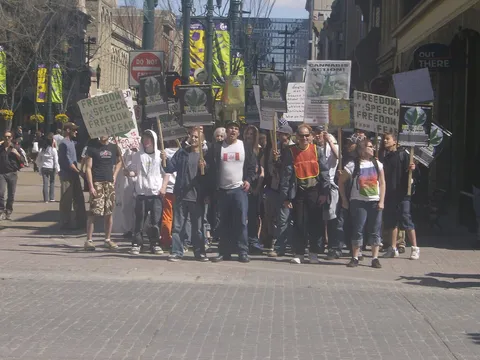 TraditionsThe Global Marijuana MarchOn the first Saturday of May, people in hundreds of cities march for legal cannabis. Brazil's supreme court had to rule that doing so is free speech.
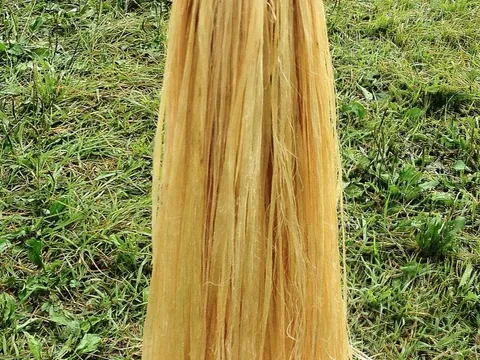 TraditionsHemp in ShintoIn Japan hemp fibre stands for purity. Priests purify with it, while the plant itself is under one of the strictest laws in the world.
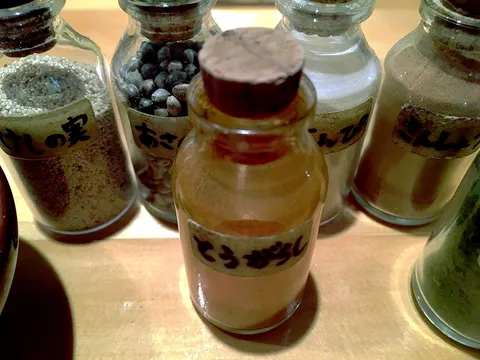 TraditionsHemp seed in shichimiJapan's everyday seven-spice blend has contained hemp seed since the shops of Edo first mixed it in the seventeenth century. The law that bans cannabis leaves the seed out, provided it can no longer sprout, so the export versions made for other countries often leave it out instead.
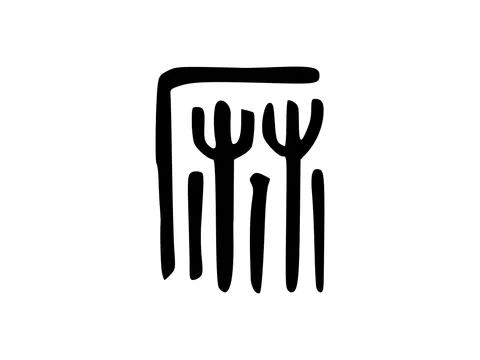 LanguageMaThe Chinese character for hemp, among the oldest recorded names for the plant. It also carries the sense of numbness.
Did you know? all cases →
1948 · Japan
Japan's 1948 ban on cannabis did not punish using it, which shielded hemp farmers who might breathe in their crop. The country had about 25,000 hemp farms in 1950 and 37 in 2016.
The full story →1980 · Japan
Japan held Paul McCartney for ten days in 1980 over 219 grams found in his luggage at Tokyo airport, then deported him without charge.
The full story →Japan
Until December 2024, Japan punished possessing cannabis but not using it. The law now makes use itself a crime, with up to seven years in prison for possession.
Religion · Japan
Shinto priests in Japan purify with hemp fibre, the symbol of purity, while the plant itself is under one of the strictest drug laws in the world.
Read the entry →Traditions · Japan
In Japan, where possessing cannabis can bring years in prison, a shaker of shichimi with hemp seed in it stands on restaurant tables. The law leaves out the seed, as long as it has been treated so it cannot sprout.
Read the entry →
Datasets not part of the score
What other organisations publish about Japan, and where it stands among the countries each one covers. Each dataset has a page of its own, with a world map and every country's figure.
Use
UNODC · 2023
Cannabis use
0.23%of people aged 15–64
0.3% · 20110.03% · 20170.1% · 20190.14% · 20210.23% · 202320112023 ages 15–64 · survey 2023 · 170,000 people · UNODC 2026
Source Survey ages and years vary, and some surveys include children. Rates are not age-standardised; do not compare countries directly.WHO, Our World in Data · 2020
Alcohol drunk per person
6.38litres of pure alcohol a year
7.66 · 20007.66 · 20017.32 · 20027.27 · 20037.33 · 20047.41 · 20057.31 · 20067.06 · 20076.84 · 20086.77 · 20096.77 · 20106.77 · 20116.80 · 20126.77 · 20136.76 · 20146.72 · 20156.75 · 20166.72 · 20176.68 · 20186.68 · 20196.38 · 202020002020 Higher than 63% of 187 countriesLowestHighestper person aged 15 or over · 2020 · 7.66 in 2000 · 6.77 in 2010
Law
UNODC · 2024
Cannabis seized
464kg in 2024
108 · 2015161 · 2016292 · 2017340 · 2018445 · 2019303 · 20203 · 2021336 · 2022851 · 2023464 · 202420152024 Higher than 25% of 163 countriesLess seizedMore seized452 kg of herb · 12 kg of resin · 108 kg in 2015 · 303 kg in 2020
Society
Pew Research Center · 2025
Is using marijuana morally wrong?
70%call it immoral
Higher than 72% of 25 countriesFewer disapproveMore disapprove7% acceptable · 23% not a moral issue · 1,006 people asked
OpenAlex · 2025
Research on cannabis
0.7papers per million people
0.0 · 19600.0 · 19660.0 · 19690.0 · 19700.0 · 19710.0 · 19720.0 · 19730.0 · 19750.0 · 19770.0 · 19780.0 · 19800.0 · 19820.0 · 19830.0 · 19840.0 · 19850.0 · 19860.0 · 19870.0 · 19880.0 · 19890.0 · 19900.0 · 19910.0 · 19920.0 · 19930.0 · 19940.1 · 19950.2 · 19960.1 · 19970.2 · 19980.1 · 19990.2 · 20000.2 · 20010.2 · 20020.2 · 20030.2 · 20040.4 · 20050.3 · 20060.6 · 20070.4 · 20080.3 · 20090.7 · 20100.5 · 20110.5 · 20120.4 · 20130.4 · 20140.4 · 20150.5 · 20160.5 · 20170.4 · 20180.4 · 20190.6 · 20200.4 · 20210.6 · 20220.5 · 20230.5 · 20240.7 · 202519602025 Higher than 44% of 176 countriesLowestHighest87 papers in 2025 · 1 in 1970 · 5 in 1990 · 81 in 2010
Cato and Fraser Institutes · 2023
Human Freedom Index
8.60of 10
8.80 · 20008.73 · 20018.69 · 20028.76 · 20038.75 · 20048.74 · 20058.69 · 20068.63 · 20078.60 · 20088.65 · 20098.68 · 20108.66 · 20118.67 · 20128.69 · 20138.69 · 20148.73 · 20158.73 · 20168.76 · 20178.79 · 20188.78 · 20198.40 · 20208.38 · 20218.70 · 20228.60 · 202320002023 Higher than 88% of 164 countriesLess freeFreerrank #19 of 165 · personal freedom 9.16 · economic freedom 7.83
V-Dem, Our World in Data · 2025
Civil liberties
0.93of 1 in 2025
0.57 · 19000.58 · 19010.58 · 19020.58 · 19030.57 · 19040.57 · 19050.58 · 19060.58 · 19070.58 · 19080.57 · 19090.56 · 19100.58 · 19110.58 · 19120.58 · 19130.58 · 19140.58 · 19150.58 · 19160.58 · 19170.58 · 19180.58 · 19190.59 · 19200.58 · 19210.58 · 19220.58 · 19230.58 · 19240.58 · 19250.56 · 19260.56 · 19270.56 · 19280.56 · 19290.55 · 19300.55 · 19310.53 · 19320.52 · 19330.51 · 19340.51 · 19350.50 · 19360.47 · 19370.47 · 19380.47 · 19390.45 · 19400.44 · 19410.42 · 19420.42 · 19430.42 · 19440.44 · 19450.78 · 19460.80 · 19470.81 · 19480.81 · 19490.81 · 19500.81 · 19510.81 · 19520.91 · 19530.91 · 19540.92 · 19550.92 · 19560.92 · 19570.92 · 19580.92 · 19590.92 · 19600.92 · 19610.92 · 19620.92 · 19630.93 · 19640.93 · 19650.93 · 19660.93 · 19670.93 · 19680.93 · 19690.93 · 19700.93 · 19710.94 · 19720.94 · 19730.94 · 19740.94 · 19750.94 · 19760.94 · 19770.94 · 19780.94 · 19790.94 · 19800.94 · 19810.94 · 19820.94 · 19830.94 · 19840.94 · 19850.94 · 19860.94 · 19870.94 · 19880.94 · 19890.94 · 19900.94 · 19910.94 · 19920.94 · 19930.94 · 19940.94 · 19950.94 · 19960.94 · 19970.94 · 19980.94 · 19990.94 · 20000.94 · 20010.94 · 20020.94 · 20030.94 · 20040.94 · 20050.94 · 20060.94 · 20070.94 · 20080.94 · 20090.94 · 20100.94 · 20110.94 · 20120.93 · 20130.93 · 20140.93 · 20150.93 · 20160.93 · 20170.94 · 20180.93 · 20190.91 · 20200.91 · 20210.92 · 20220.93 · 20230.93 · 20240.93 · 202519002025 Higher than 89% of 175 countriesFewer libertiesMore liberties0.58 in 1925 · 0.92 in 1961 · 0.94 in 1990
Our World in Data, World Bank · 2025
Population
123,366,734people in 2025
44,416,502 · 190049,880,362 · 191056,328,237 · 192064,665,549 · 193073,591,941 · 194086,443,278 · 195096,399,755 · 1960106,712,370 · 1970118,358,761 · 1980123,399,767 · 1990127,027,794 · 2000128,185,273 · 2010126,304,533 · 2020123,366,734 · 202519002025 Higher than 94% of 196 countriesLowestHighest44,416,502 in 1900 · 86,443,278 in 1950 · 127,027,794 in 2000
CEPII
Former colonial rulers
Once ruled by
World Bank · 2025
Government effectiveness
94of 100
76 · 199677 · 199881 · 200079 · 200279 · 200379 · 200481 · 200582 · 200679 · 200780 · 200880 · 200980 · 201080 · 201180 · 201282 · 201388 · 201487 · 201589 · 201687 · 201790 · 201890 · 201991 · 202088 · 202194 · 202294 · 202395 · 202494 · 202519962025 Higher than 99% of 195 countriesLowestHighestestimate 2.04 on a scale of −2.5 to 2.5 · 2025 · 81 in 2000 · 87 in 2015
Transparency International · 2024
Corruption Perceptions Index
71of 100
74 · 201274 · 201376 · 201475 · 201572 · 201673 · 201773 · 201873 · 201974 · 202073 · 202173 · 202273 · 202371 · 202420122024 Higher than 89% of 178 countriesLowestHighest0 highly corrupt, 100 very clean · 2024 · 75 in 2015 · 74 in 2020
Pew Research Center · 2020
Most common religion
Religiously Unaffiliated
the largest group · 2020
World Bank · 2025
Income per person
$48,283per person
36,138 · 199037,226 · 199137,403 · 199237,089 · 199337,353 · 199438,138 · 199539,222 · 199639,662 · 199738,853 · 199838,647 · 199939,732 · 200039,749 · 200139,690 · 200240,152 · 200340,987 · 200441,740 · 200542,359 · 200643,042 · 200742,519 · 200840,000 · 200941,647 · 201041,641 · 201142,395 · 201243,304 · 201343,754 · 201444,589 · 201544,927 · 201645,693 · 201746,133 · 201846,055 · 201944,213 · 202045,999 · 202146,819 · 202247,387 · 202347,480 · 202448,283 · 202519902025 Higher than 81% of 187 countriesLowestHighestat purchasing power parity, 2021 dollars · 2025 · $36,138 in 1990 · $41,647 in 2010
Wikimedia · 2026.792
Views of the cannabis article on Wikipedia
333page views in 2026–10
41,431 · 201537,907 · 201542,313 · 201543,783 · 201584,379 · 201533,969 · 201531,489 · 201674,323 · 201637,924 · 201648,473 · 201639,639 · 201641,141 · 201663,356 · 201640,121 · 201631,390 · 2016203,434 · 201689,754 · 201643,684 · 201639,183 · 201728,709 · 201722,145 · 201725,952 · 201745,716 · 201738,215 · 201724,236 · 201727,767 · 201722,040 · 201731,240 · 201724,771 · 201725,266 · 201730,022 · 201823,164 · 201820,520 · 201824,347 · 201830,178 · 201842,740 · 201830,966 · 201828,731 · 201838,195 · 201876,619 · 201838,025 · 201838,089 · 201840,316 · 201931,086 · 201976,692 · 201941,462 · 2019169,536 · 201957,411 · 201947,399 · 201935,970 · 201934,558 · 201934,051 · 201993,957 · 201948,262 · 201948,263 · 202032,329 · 202027,230 · 202027,150 · 202041,996 · 202034,226 · 202038,631 · 202034,687 · 2020168,930 · 202043,439 · 202031,005 · 202035,582 · 202035,657 · 202125,468 · 202126,673 · 202135,537 · 202141,339 · 202132,249 · 202130,734 · 202125,035 · 202130,017 · 202127,588 · 202124,441 · 202121,862 · 202122,271 · 202222,524 · 202222,037 · 202221,914 · 202224,663 · 202228,361 · 202223,279 · 202222,421 · 202222,122 · 202227,047 · 202222,410 · 202221,012 · 202220,506 · 202319,693 · 202320,970 · 202322,242 · 202328,941 · 202339,649 · 202327,408 · 202339,680 · 202327,212 · 202319,681 · 202322,446 · 202317,108 · 202313,977 · 202412,434 · 202412,215 · 202415,056 · 202416,516 · 202412,995 · 202414,071 · 202412,444 · 202412,753 · 202415,241 · 202413,026 · 202414,292 · 202412,843 · 202513,263 · 202511,533 · 202514,421 · 202516,029 · 202513,802 · 202512,843 · 202511,566 · 202521,828 · 202511,250 · 202511,848 · 202511,659 · 202510,812 · 202611,130 · 20269,407 · 20268,576 · 202613,248 · 20268,879 · 20269,685 · 20269,358 · 202611,359 · 2026333 · 202620152026 Higher than 96% of 26 countriesLowestHighest大麻 · ja Wikipedia
World Bank · 2024
Development indicators
85.5%use the internet
0% · 19900% · 19910.1% · 19920.4% · 19930.8% · 19941.6% · 19954.4% · 19969.2% · 199713.4% · 199821.4% · 199930% · 200038.5% · 200146.6% · 200248.4% · 200362.4% · 200466.9% · 200568.7% · 200674.3% · 200775.4% · 200878% · 200978.2% · 201079.1% · 201179.5% · 201288.2% · 201389.1% · 201491.1% · 201593.2% · 201691.7% · 201788.7% · 201892.7% · 201990.2% · 202082.9% · 202184.9% · 202285% · 202385.5% · 202419902024 Higher than 60% of 195 countriesLowestHighest92.2% live in towns · 29.8% aged 65+ · life expectancy 84 · 2024 · 30% in 2000 · 78.2% in 2010
GDELT · 2025
Cannabis in the news
0.0007%of global news: cannabis articles from here
0.0007% · 20170.0009% · 20180.001% · 20190.0008% · 20200.0005% · 20210.0005% · 20220.0013% · 20230.0006% · 20240.0007% · 202520172025 Higher than 70% of 147 countriesLowestHighest2025 average, 348 days · 0.0009% in 2018 · 0.0005% in 2021
Plant and market
OpenStreetMap · 2026
Cannabis shops on the map
1shops mapped
Higher than 0% of 59 countriesFewer shopsMore shops0.0 per million people · 2026
GBIF · 2026
Records of the cannabis plant
21dated records
1 · 18612 · 18623 · 18674 · 18917 · 19018 · 19059 · 190610 · 191111 · 192112 · 192215 · 192316 · 193017 · 193518 · 194219 · 195820 · 197521 · 202618612026 Higher than 58% of 128 countriesLowestHighest30 more without a date · 1 in 2026
FAO · 2024
Hemp grown
1ha in 2024
2,330 · 19611,870 · 19621,240 · 19631,110 · 19641,000 · 19651,000 · 1966950 · 1967950 · 1968950 · 1969900 · 1970900 · 1971720 · 1972720 · 1973720 · 1974540 · 1975540 · 1976540 · 1977360 · 1978360 · 1979180 · 1980180 · 198190 · 198290 · 198341 · 198429 · 198528 · 198631 · 198735 · 198835 · 198935 · 19900 · 19910 · 19920 · 19930 · 19940 · 19950 · 19960 · 19970 · 19981 · 19991 · 20001 · 20011 · 20021 · 20031 · 20041 · 20051 · 20061 · 20071 · 20081 · 20091 · 20101 · 20111 · 20121 · 20131 · 20141 · 20151 · 20161 · 20171 · 20181 · 20191 · 20201 · 20211 · 20221 · 20231 · 202419612024 Higher than 26% of 39 countriesLowestHighest1 t of fibre · 2,330 ha in 1961 · 180 ha in 1980 · 1 ha in 2000
ClinicalTrials.gov · 2026
Clinical trials of cannabis medicines
2studies so far
1 · 20172 · 20182 · 20192 · 20202 · 20212 · 20222 · 20232 · 20242 · 20252 · 202620172026 Higher than 14% of 50 countriesLowestHighest0 actual starts in 2026 · as of 2026–10–26 · 2 by 2020
Enforcement 2 reports · the Cannabis Enforcement Tracker →
How the law above is applied: raids, seizures, fields destroyed, arrests and sentences, as recorded by the Cannabis Enforcement Tracker, our companion site.
- SeizureJapan records its highest number of cannabis investigations
Police investigated a record 6,832 people for cannabis offences in 2025, 754 more than the year before, the National Police Agency said on 2 April 2026.[@1] About 700 were pursued under the new offence of use, and 1,373…
- SeizureJapan seizes a record tonne of cannabis hidden in a container
Narcotics agents said on 13 August 2025 that they had seized 1.046 tonnes of dried cannabis, worth about 5.2 billion yen on the street, from a shipping container that had left Vietnam in May and arrived in Japan in…
History 27 of 27 checked against a source
Score and entries per decade
2 today, from 100 before its first recorded change
This country's score Entries that moved the score Context only
20263 entries0 score changes
Hemp ✓
Japan bans CBN products, with a narrow exception for patients
From 1 June 2026 Japan banned the manufacture, import, sale, possession and use of products containing CBN, a cannabinoid that had been sold in CBD oils and other products. The health ministry said CBN was likely to have psychoactive effects and could pose a health risk when used. Patients with a hard-to-treat illness and no alternative treatment can apply for a confirmation certificate that lets them keep using CBN products.
Medical ✓
Jazz and Nippon Zoki prepare a Japanese launch for cannabidiol
Jazz Pharmaceuticals and Nippon Zoki Pharmaceutical said on 21 April 2026 that they had agreed to support the future introduction in Japan of Jazz's cannabidiol epilepsy drug, sold abroad as Epidiolex and Epidyolex. The agreement covered a product not yet launched in Japan, where the 2024 reform had opened a route for approved cannabis-derived medicines.
Enforcement ✓
Japan's customs seize a record 1.5 tonnes of cannabis in 2025
Japan's customs found 1,531 kg of cannabis in 2025, about 3.5 times the 2024 amount and the largest annual cannabis seizure on record. Herbal cannabis accounted for 1,213 kg, including a single one-tonne shipment found by Tokyo Customs in June; THC products added 318 kg. The United States was the origin of 43% of detected cannabis cases, Thailand 27% and Vietnam 8%.
20252 entries0 score changes
Medical ✓
Japan sets up a consortium to push cannabis-derived medicine research
A Japanese consortium was launched to promote domestic research and development of cannabis-derived medicines, a field that had opened to approved products after the December 2024 reform. The launch was reported on 14 May 2025, when domestic research in the field was still described as being in its infancy.
Hemp ✓
Japan opens new cannabis growing licences and sets a 0.3% seed limit
From 1 March 2025 Japan split cannabis cultivation into new licence categories: Type 1 growers licensed by prefectural governors to produce raw material, Type 2 growers licensed by the health ministry to produce pharmaceutical ingredients, and research growers. Type 1 growers must use seed from plants with no more than 0.3% delta-9 THC, and must stop growing if their crop goes above the limit. The rules also require treatment of seed before it is passed on and permission to import untreated germinable seed. The changes completed the 2024 reform, which had already renamed the Cannabis Control Act and made use a crime.
20244 entries1 score change
Tightening ✓ Article
Japan makes cannabis use a crime
Japan used to punish possession but not use. Amendments in force from 12 December moved cannabis under the narcotics law, made use itself an offence and raised the maximum for possession from five to seven years in prison. The same reform allowed cannabis-derived medicines.
32−1 point
Hemp ✓
Japan sets THC residue limits for CBD products
From 12 December 2024 CBD products could stay legal only if their residual delta-9 THC stayed below 10 ppm in oils and powders, 0.1 ppm in aqueous products and 1 ppm in other products. Anything at or above those limits counted as a narcotic, so selling, possessing or using it became a narcotics offence. The limits came in with the same reform that criminalised cannabis use and opened the route for cannabis-derived medicines.
20232 entries0 score changes
Medical ✓ Article
Japan passes a law to allow cannabis medicines and punish use
The House of Councillors passed amendments that open the way for cannabis-derived medicines while making non-medical consumption a crime. The changes took effect a year later.
Tightening ✓
Japan bans HHCH after cannabis-like gummies send people to hospital
Japan banned the sale, possession and use of products containing HHCH, a synthetic cannabinoid sold in gummies, cookies and vape liquids, from 2 December 2023. The health ministry acted after people in Tokyo and Osaka were taken to hospital after eating HHCH gummies, and inspectors ordered 43 shops to stop selling the products. The ban covered HHCH itself, while the ministry said it would prepare a wider rule for similar compounds.
20211 entry0 score changes
20161 entry0 score changes
20082 entries0 score changes
Debate ✓
Japan adopts a third five-year drug strategy with a focus on young cannabis users
Japan's third five-year drug strategy combined prevention education, treatment and rehabilitation, action against trafficking networks and border controls. It identified rising cannabis arrests and the predominance of younger people among cannabis and synthetic-drug cases as concerns, and called for stronger school and university prevention work. The strategy set policy priorities without itself creating a new cannabis offence.
Enforcement ✓
Four sumo wrestlers are expelled over cannabis
A cannabis scandal in professional sumo ended with the expulsion of four wrestlers. Cases involving athletes and entertainers followed: a rugby player suspended in 2009, and actors and singers given suspended sentences in 2017, 2019 and 2020.
20031 entry0 score changes
19921 entry0 score changes
19851 entry0 score changes
19821 entry0 score changes
19801 entry0 score changes
19731 entry0 score changes
19681 entry0 score changes
19641 entry0 score changes
19521 entry0 score changes
19501 entry0 score changes
19481 entry1 score change
19471 entry0 score changes
Sources hover a number in the text to see its source
- Cited
- 34
- Websites
- 24
- 1
- Last reviewed
- History checked
- 27/27
Most cited
- mhlw.go.jp4
- laws.e-gov.go.jp3
- pj.jiho.jp3
- english.kyodonews.net2
- ja.wiktionary.org2
- apps.fas.usda.gov1
All 37 sources
- Wiktionary — 大麻 (Japanese)Cannabis; hemp.archived
- Act on the Regulation of Cannabis Plant Cultivation (Act No. 124 of 1948, formerly the Cannabis Control Act), current text on e-GovArticles 2, 5, 12-3, 13, 18, 19, 24, 24-2, 24-4 and 24-6; renamed 12 December 2024, cultivation provisions in force 1 March 2025.archived
- Wiktionary — マリファナ (Japanese)Marijuana.archived
- Japan Cabinet Office — Cannabis page, section 5 on online slang (updated 30 July 2025)Slang terms kusa, yasai and rikkiddo.
- Narcotics and Psychotropics Control Act (Act No. 14 of 1953), current text on e-GovArticles 27, 65, 66 and 66-2; use and possession, import and manufacture, and profit aggravations.archived
- GrowerIQ — Japan's cannabis law reform: criminalizing use while opening the door to medicinearchived
- Japan Ministry of Health, Labour and Welfare — Part of the Act amending the Cannabis Control Act and the Narcotics and Psychotropics Control Act comes into force on 1 March 2025Type 1 and Type 2 grower licences, research licences, 0.3% delta-9 THC seed rule, and the 12 December 2024 residue limits.archived
- Kyodo News — Japan sees record cannabis-related police probes in 20252 April 2026; 6,832 people investigated, up 754 from 2024.archived
- Mugglehead — Cannabis-related police investigations hit record high in Japan last year8 April 2026, on National Police Agency figures: 1,373 under 20, about 700 use cases, 315 kg of concentrates.archived
- The Mainichi — Cannabis investigations hit record high in Japan in 202526 February 2026; 1,373 under-20 cases, 173 of them for use, and more than 70% of all cases under 30.archived
- Japan Ministry of Health, Labour and Welfare — About the penalties for drug offenses in JapanPage 1: cannabis possession/transfer up to 7 years, import/export/manufacturing 1–10 years, use up to 7 years, cultivation 1–10 years; warning about cannabis products bought abroad.archived
- DIA Global Forum — Cannabis-derived drugs in Japan: new legislation and outlookarchived
- Jazz Pharmaceuticals — Provides update on cannabidiol oral solution Phase 3 trial in Japan in treatment-resistant epilepsies22 August 2024; 62 Japanese patients aged 1–18; primary endpoint not met.archived
- Japan Ministry of Health, Labour and Welfare — Interpretation and examples of products under the Cabinet Order designating narcotics, cannabis and psychotropicsResidual delta-9 THC limits: 10 ppm in oils and powders, 0.1 ppm in aqueous products, 1 ppm in other products.archived
- Japan Ministry of Health, Labour and Welfare — Designation of CBN as a designated drugCBN banned from 1 June 2026; patient confirmation certificate for people with no alternative treatment.archived
- Pharma Japan — Japan grants orphan tag to cannabidiol, 6 more APIs10 June 2024; orphan designation granted on 6 June 2024 for Dravet syndrome, Lennox-Gastaut syndrome and tuberous sclerosis complex.archived
- Pharma Japan — Jazz, Nippon Zoki ink deal to bring cannabis-derived epilepsy drug to Japan22 April 2026; agreement announced 21 April 2026 for the future introduction of GWP42003-P (cannabidiol).archived
- USDA Foreign Agricultural Service — The Japanese market for hemp fiber35 growers and 9 hectares in 2019; about 90% of production in Tochigi.archived
- Stripes Japan — Weed in Japan: history of hemp in the Land of the Rising Sun25,000 farms before 1948; 1947 photograph of Emperor Hirohito visiting Tochigi hemp farms; shrine ropes, Ise talisman and shichimi.archived
- Ganjapreneur — Japanese prefecture ends hemp growing program after cannabis arrestsDecember 2016; Tottori assembly bans hemp production after arrests at a licensed firm.archived
- UNODC Data Portal — Drug seizures, reported seizures in kilogram equivalents (World Drug Report data)archived
- The Japan Times — Japan's customs seized second-highest amount of illegal drugs in 202518 February 2026; cannabis seizures 1,531 kg in 2025, 3.5 times 2024; US 43%, Thailand 27%, Vietnam 8% of cases.archived
- Kyodo News — Record 1 ton of cannabis, worth $35 mil., seized in Japan13 August 2025; 1.046 tonnes, worth about ¥5.2 billion, in a container from Vietnam.archived
- Japan — Immigration Control and Refugee Recognition Act (Act No. 319 of 1951), English translationArticle 5(1)(v) bars landing after a cannabis penalty; Article 24(iv)(h) grounds deportation; Article 5(1)(ix) sets five- and ten-year re-entry bans.archived
- Japan — Road Traffic Act (Act No. 105 of 1960), Articles 66 and 117-2 (e-Gov)archived
- The Origin and Use of Cannabis in Eastern Asia: Their Linguistic-Cultural ImplicationsHui-Lin Li · In Cannabis and Culture, edited by Vera Rubin · Mouton · 1975 · pp. 51–62 · ISBN 90-279-7669-4
- Wikipedia (Japanese) — 七味唐辛子 (Shichimi tōgarashi)archived
- Wikipedia — Global Marijuana Marcharchived
- Deutsche Welle — Japan hemp business wants to distance itself from image of narcotics26 January 2021; 37,300 farmers and 5,000 hectares in 1952; 7.6 hectares in 2015; 30 growers in 2017.archived
- OpenAlex — works mentioning cannabis or cannabinoids, by author country (datasets/openalex-cannabis-papers.csv)archived
- ClinicalTrials.gov — registered studies with a cannabis or cannabinoid intervention, as of 26 October 2026 (datasets/clinicaltrials-cannabis.csv)archived
- JMA Journal — Challenges in regulating synthetic new psychoactive substances: lessons from Japan's generic scheduling against hexahydrocannabihexolNatsuki Yokoyama, Tatsuki Ikejiri, Hayase Hakariya · 2025; 8(1):270–272; HHCH regulated from 2 December 2023.archived
- Pharma Japan — Japan consortium to promote domestic R&D of cannabis-derived meds14 May 2025; Hemp Cannabinoid Consortium set up to promote domestic research.archived
- International Narcotics Control Board — Travellers carrying medicines containing controlled substances
Also consulted
- The Japan Times — Japan to ban cannabis ingredient CBN from June31 May 2026; ban from 1 June; penalties up to five years.archived
- The Asahi Shimbun — Health ministry eyes all-out ban on HHCH-like substances2 December 2023; HHCH sale, possession and use banned after gummy poisonings.archived
- Euromonitor — Key trends for cannabis in Japan: law amendments and the new CBD marketarchived