Thailand
27/100
#20 of 196 worldwide
#1 of 48 in Asia
Flower has been a controlled herb since November 2022 and since June 2025 requires a prescription, which narrowed the dispensary boom to medical supply. From 2026 licences are limited to qualifying medical, pharmacy, herbal and cultivation premises with trained staff. Recreational use is officially no longer permitted.
In short all countries →
- Can I carry it?NoEven a small amount can bring a fine or a charge
- Can I grow it?LimitedA few plants are treated far more leniently than dealing
- Can I buy it?LimitedFrom licensed outlets, with a prescription from the practitioner on site
- Can I use it in public?NoNot in public, and even at home the law does not protect it
- What if I'm caught?A light penaltyFor a small amount, usually a fine, a referral to treatment or nothing at all; prison is rare
A rough guide read from the scores and the rules below, not legal advice. The details and the exceptions are in each segment: select an answer to jump to it.
Cannabis in Thailand not part of the score · all 19 datasets ↓
Who uses it
About 1 in 31
people aged 12–65 in Thailand used cannabis in the past year: about 1.7 million people.
- Past year
- 3.3%
- Asia median
- 2%
UNODC · survey 2024
Source Past-year cannabis use among people aged 12–65. People who used cannabis in the past year, from a 2024 survey, applied to today's population aged 12–65. The population is approximate: the survey ages cut through an age group, or were not recorded and ages 15–64 are used.Survey ages and years vary, and some surveys include children. Rates are not age-standardised; do not compare countries directly.
UNODC World Drug Report 2026, annex table 1.2. Population from the World Bank, aged 12–65. The whole dataset →
Use across Asia
13thhighest of 40 surveyed countries
- 🇰🇭 Cambodia3.5%
- 🇹🇯 Tajikistan3.4%
- 🇹🇭 Thailand3.3%
- 🇧🇩 Bangladesh3.1%
- 🇰🇼 Kuwait3.1%
Past-year use, latest survey of each. Survey years and ages differ. On the map →
Cannabis in figures
- Police contact for drug use or possession322per 100,000 people · 2021
- Cannabis seized56kg in 2023 · 2023
- Cannabis shops on the map222shops mapped · 2026
- Research on cannabis2.6papers per million people · 2025
- Clinical trials of cannabis medicines6studies so far · 2026
The dot: where it stands among the countries each dataset covers, lowest to highest. All datasets ↓
Score breakdown 27/100 · how the scores are made
Since 26 June 2025 cannabis flower has been a "controlled herb", and lawful possession requires a PT 33 prescription from a Thai-licensed practitioner naming the product and quantity, for no more than 30 days.[1][2] Unauthorised possession is not a clear standalone criminal offence: the 1999 Act's penalty covers unlicensed sale, processing, export or research, not simple possession, and the 2025 notice regulates sale rather than possession.[1][3] The flower can be seized and the seller prosecuted. Extracts with more than 0.2% THC remain narcotics, with up to two years and a 40,000 baht fine for personal possession.[1]
| Amount | What happens | Punishment | Fine |
| Prescribed flowerPT 33 prescription, maximum 30 days; no criminal record | LegalControlled herb | — | — |
| Flower without a prescriptionNo clear standalone possession offence; seizure and seller prosecution | ToleratedControlled herb | — | — |
| Extract over 0.2% THC for personal use | CriminalNarcotic | Up to 2 years | Up to THB 40,000 |
Households may grow cannabis without a permit, in any number of plants, under the DTAM's 2026 guidance, but the harvested flower is a controlled herb and cannot be sold without a licence.[3] Commercial cultivation, processing and sale require a section 46 licence and certified standards; unlicensed sale or processing carries up to one year and a 20,000 baht fine.[1]
| Amount | What happens | Punishment | Fine |
| Registered household growingPlookganja registration; flower controlled after harvest | LegalRegistered growing | — | — |
| Commercial cultivation without a licence | CriminalUnlicensed cultivation | Up to 1 year | Up to THB 20,000 |
Supplying flower to someone without a prescription is an offence under the controlled-herb rules, whether or not money changes hands.[1]
| Amount | What happens | Punishment | Fine |
| Sale without a prescription or licence | CriminalUnlicensed sale | Up to 1 year | Up to THB 20,000 |
| Export or import without permissionCustoms law can add up to ten years or a 500,000 baht fine | CriminalSmuggling | Up to 1 year | Up to THB 20,000 |
| Extract over 0.2% THC without a licence | CriminalNarcotic | Up to 5 years | Up to THB 500,000 |
Smoking in public is an offence carrying up to one month and a 2,000 baht fine, according to the DTAM's 2026 guidance.[3] Smoking inside a licensed cannabis shop is prohibited by the 2025 notice and can bring licence sanctions of up to one year and 20,000 baht.[3] Use is officially limited to medical purposes, in private.[2]
| Amount | What happens | Punishment | Fine |
| Public smokingUp to one month and a 2,000 baht fine under DTAM's 2026 guidance | AdministrativePublic smoking | Up to 1 month | Up to THB 2,000 |
Shops still exist, but from 1 May 2026 licences are limited to qualifying hospitals, pharmacies, herbal-product businesses, extract licensees, folk healers and cultivation sites selling to a licensee, with at least one DTAM-trained staff member on duty.[4] Of 18,433 outlets at the end of 2025, 8,636 licences expired, 1,339 were renewed and 7,297 closed, leaving 11,136.[5] The cabinet approved a draft Cannabis Control Act on 22 September 2026; it had not passed by late October.[6][7]
Context not part of the score · every country, by topic →
Recreational use is officially no longer permitted: since June 2025 flower is a controlled herb available only on prescription for medical use in private. Smoking in public brings a fine of up to 25,000 baht, and supplying flower without a prescription is an offence whether or not money changes hands.[1][2]
The medical route is the whole legal system now: doctors, Thai traditional medicine practitioners and other licensed professionals can prescribe, often on site at the dispensary.[2] Foreign prescriptions are not recognised.[2] Flower is sold on prescription; extracts with more than 0.2% THC remain narcotics, THC edibles are tightly limited, and CBD products under the threshold are sold without prescription.[1]
No cannabis clubs are known; Thailand's cannabis trade runs through licensed shops, which are businesses and not members' clubs.[1] Supplying flower to someone without a prescription is an offence whether or not money changes hands, which leaves no room for a club sharing its own harvest.[1]
Plants, seeds and unprocessed parts other than the flower sit outside the narcotics list, so domestic possession and trade are not narcotics offences; only the flower is a controlled herb.[8] Importing whole plants, cuttings and unprocessed parts is prohibited, while seed imports follow Department of Agriculture and quarantine rules.[8] Domestic clone sale is not specifically addressed.[8]
Hemp is defined as Cannabis sativa subsp. sativa with no more than 1.0% THC in its leaves and inflorescence.[1] Hemp extracts above 0.2% THC remain Category 5 narcotics, while CBD products below that line may be sold as registered food, cosmetics or herbal products.[1] Commercial processing and extraction need licences.[1]
Licences for cultivation, processing, export and sale are available, but they are limited to medical, pharmacy, herbal and cultivation operators rather than an adult-use market.[4] Extracts above 0.2% THC remain Category 5 narcotics, with licensees restricted to Thai juristic persons, government agencies and the Thai Red Cross and old licences running to 31 December 2026.[9]
The best-documented illegal trade is export.[10] In March 2025 police at Chiang Mai airport seized more than 100 kg of cannabis flower in four days from foreign couriers bound mostly for London, and could charge almost none of them because carrying cannabis within Thailand was not an offence; the regional commander said smugglers had moved from Phuket to Bangkok to Chiang Mai as checks tightened.[10] Since then sale has been narrowed to medical channels: rules in force in 2026 allow only registered health facilities, pharmacies and herbal shops to hold licences, and require a prescription of at most 30 days.[11] No figure for unlicensed sales since the change was found.[11]
Tourists are held to the same rule as residents: since June 2025 cannabis flower may be bought, held or used only with a prescription from a licensed Thai medical professional, for at most 30 days' supply, and foreign prescriptions are not accepted.[12][3] The tourism authority tells visitors to buy only through authorised channels and warns that unlicensed shops aimed at tourists may be operating illegally.[13] Taking cannabis out of the country without permission from the authorities is against Thai law, the health minister said in May 2025, as cases of tourists caught smuggling it out rose.[14] A deportation regulation in force since 28 August 2026 allows foreigners to be deported without a criminal conviction for conduct judged contrary to public order or good morals, and introduces the possibility of re-entry bans.[15]
The Land Traffic Act punishes driving while impaired by alcohol or another intoxicant, including cannabis, with up to one year and a 5,000 to 20,000 baht fine, plus licence suspension.[16] All intoxicants, including cannabis and extracts, fall under the same provision; there is no separate narcotics-driving offence in the traffic law.[16] There is no per-se THC limit, and police lack an approved testing protocol, so enforcement turns on observed impairment.[16]
The Royal Thai Police reported 203,637 people arrested for drug offences between 1 October 2025 and 31 May 2026, over 20 per cent more than a year earlier, and 16,419 drug networks broken up.[17] The seizures it listed were of methamphetamine tablets, crystal methamphetamine, ecstasy and ketamine; cannabis, removed from the narcotics list in 2022, does not appear in the report.[17]
No criminal record follows from lawful medical use, and thousands of earlier cannabis prisoners were released in 2022.[1] Driving under the influence is an offence, and the legal position has changed several times in three years, leaving users exposed to sudden rule changes.[11]
Cannabis in Thailand is known as ganja, and the 2022–2025 dispensary boom created a new dispensary culture that the 2025 medical rules then narrowed.[1] Thai landrace varieties and the Hmong hemp cloth tradition long predate the modern market.[1] Cannabis also entered South-East Asian cooking and, in the reform years, the political identity of Anutin Charnvirakul.[2]
Taking cannabis into or out of Thailand is a separate offence from possessing it, normally charged as smuggling or trafficking, with far heavier penalties. That holds almost everywhere, including between two places where cannabis is legal.
A prescription or medical card from another country is generally not recognised. Travellers who need a cannabis-based medicine should ask Thailand's embassy before travelling.[18]
General guidance that applies to almost every country, not a check of Thailand's customs rules.
Culture the atlas →
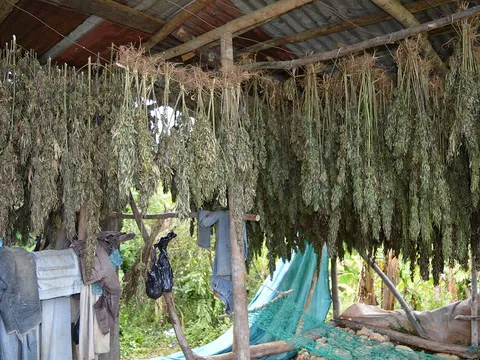 LanguageGanjaThe Hindi word for the flowering tops. Indian labourers carried it to the Caribbean, and it also became the usual word across South-East Asia.
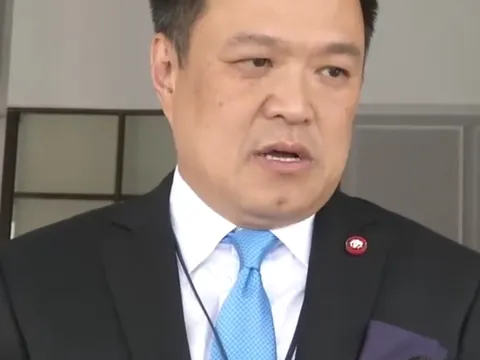 PeopleAnutin CharnvirakulThe Thai health minister who took cannabis off the narcotics list in 2022 and promised a million free plants to households, making Thailand the first Asian country to decriminalise. Three years later, as prime minister, he led the government that moved to tighten it again.
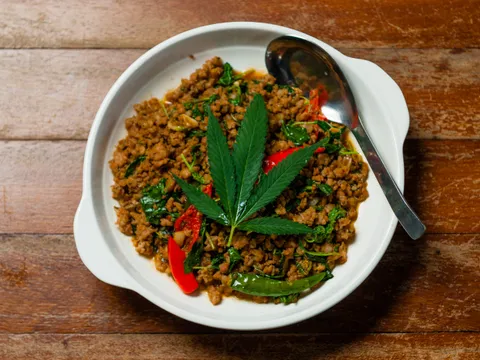 TraditionsCannabis in South-East Asian cookingIn Cambodia, Laos, Thailand and Vietnam the leaf was a seasoning and a household medicine long before it was a crime. The "happy" restaurants of the tourist towns are what is left in plain sight.
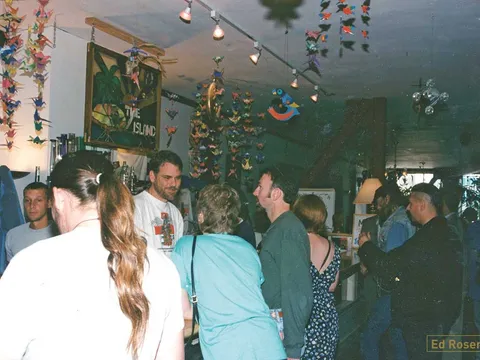 LanguageDispensaryAn old word for a place that hands out medicine, which in the United States became the name of the cannabis shop. The medical word was chosen because, for twenty years, medicine was the only legal ground cannabis could be sold on.
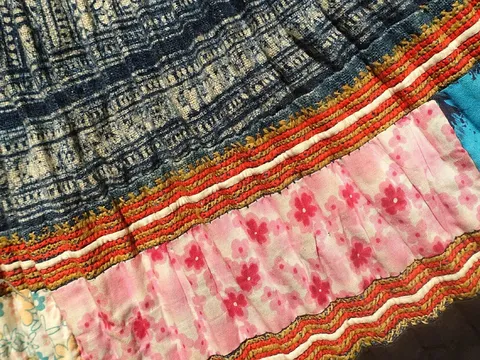 TraditionsHmong hemp clothHmong women grew, spun and wove hemp for the family's clothes and decorated it with batik. Drug laws are one reason few still do.
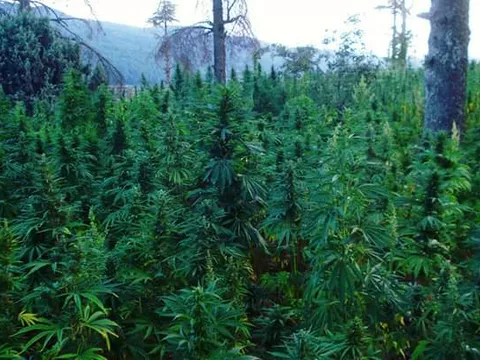 LanguageLandraceA farmers' variety, kept by saving seed in the place where it grows rather than bred to a standard. The word came from German agronomy and, in cannabis, names the old local populations of the hashish and ganja regions, many of them lost to hybrids and eradication. Morocco now licenses its own, beldiya.
Did you know? all cases →
2022–2025 · Thailand
Thailand went from thousands of open dispensaries to prescription-only in three years. Since June 2025 cannabis flower officially requires a prescription.
The full story →People · Thailand
In May 2022 Thailand’s health minister, Anutin Charnvirakul, announced on Facebook that the government would give away a million cannabis plants to households.
Read the entry →
Datasets not part of the score
What other organisations publish about Thailand, and where it stands among the countries each one covers. Each dataset has a page of its own, with a world map and every country's figure.
Use
UNODC · 2024
Cannabis use
3.25%of people aged 12–65
1.2% · 20071.33% · 20193.25% · 202420072024 ages 12–65 · survey 2024 · 1,700,000 people · UNODC 2026
Source Survey ages and years vary, and some surveys include children. Rates are not age-standardised; do not compare countries directly.WHO, Our World in Data · 2020
Alcohol drunk per person
7.99litres of pure alcohol a year
8.61 · 20008.61 · 20018.92 · 20029.07 · 20039.28 · 20049.36 · 20059.34 · 20068.66 · 20077.98 · 20087.41 · 20097.57 · 20107.87 · 20118.08 · 20128.16 · 20138.10 · 20148.16 · 20158.28 · 20167.95 · 20177.85 · 20187.85 · 20197.99 · 202020002020 Higher than 74% of 187 countriesLowestHighestper person aged 15 or over · 2020 · 8.61 in 2000 · 7.57 in 2010
Law
UNODC · 2021
Police contact for drug use or possession
322per 100,000 people
Higher than 90% of 101 countriesFewerMore230,584 people in 2021 · all drugs together
UNODC · 2023
Cannabis seized
56kg in 2023
24,560 · 20153,186 · 201639,486 · 201739,997 · 201826,903 · 201941,627 · 202069,712 · 20215,200 · 202256 · 202320152023 Higher than 8% of 163 countriesLess seizedMore seized56 kg of herb · 24,560 kg in 2015 · 41,627 kg in 2020
Society
OpenAlex · 2025
Research on cannabis
2.6papers per million people
0.0 · 19810.0 · 19940.0 · 19950.0 · 20000.0 · 20020.0 · 20030.0 · 20060.0 · 20070.0 · 20080.1 · 20090.0 · 20100.1 · 20110.1 · 20120.1 · 20130.0 · 20140.1 · 20150.1 · 20160.2 · 20170.3 · 20180.3 · 20190.6 · 20201.0 · 20211.5 · 20222.0 · 20232.9 · 20242.6 · 202519812025 Higher than 72% of 176 countriesLowestHighest189 papers in 2025 · 2 in 2010
Cato and Fraser Institutes · 2023
Human Freedom Index
6.79of 10
7.40 · 20007.39 · 20017.37 · 20027.36 · 20037.34 · 20047.17 · 20056.90 · 20066.88 · 20077.00 · 20086.94 · 20096.90 · 20107.01 · 20116.96 · 20126.73 · 20136.33 · 20146.39 · 20156.39 · 20166.42 · 20176.49 · 20186.78 · 20196.67 · 20206.67 · 20216.69 · 20226.79 · 202320002023 Higher than 46% of 164 countriesLess freeFreerrank #90 of 165 · personal freedom 6.57 · economic freedom 7.10
V-Dem, Our World in Data · 2025
Civil liberties
0.48of 1 in 2025
0.20 · 19000.20 · 19010.20 · 19020.20 · 19030.20 · 19040.25 · 19050.25 · 19060.25 · 19070.27 · 19080.27 · 19090.27 · 19100.28 · 19110.28 · 19120.28 · 19130.28 · 19140.28 · 19150.28 · 19160.28 · 19170.28 · 19180.28 · 19190.28 · 19200.28 · 19210.28 · 19220.28 · 19230.28 · 19240.28 · 19250.28 · 19260.28 · 19270.28 · 19280.28 · 19290.28 · 19300.28 · 19310.26 · 19320.26 · 19330.29 · 19340.29 · 19350.29 · 19360.29 · 19370.29 · 19380.29 · 19390.28 · 19400.28 · 19410.28 · 19420.28 · 19430.28 · 19440.30 · 19450.32 · 19460.32 · 19470.30 · 19480.30 · 19490.30 · 19500.30 · 19510.28 · 19520.28 · 19530.28 · 19540.31 · 19550.31 · 19560.31 · 19570.27 · 19580.26 · 19590.27 · 19600.27 · 19610.27 · 19620.27 · 19630.28 · 19640.28 · 19650.28 · 19660.28 · 19670.30 · 19680.31 · 19690.34 · 19700.34 · 19710.32 · 19720.34 · 19730.41 · 19740.41 · 19750.33 · 19760.31 · 19770.31 · 19780.31 · 19790.52 · 19800.56 · 19810.56 · 19820.58 · 19830.58 · 19840.58 · 19850.58 · 19860.58 · 19870.59 · 19880.59 · 19890.61 · 19900.53 · 19910.51 · 19920.71 · 19930.71 · 19940.71 · 19950.71 · 19960.73 · 19970.75 · 19980.75 · 19990.75 · 20000.73 · 20010.70 · 20020.70 · 20030.65 · 20040.65 · 20050.57 · 20060.56 · 20070.61 · 20080.60 · 20090.58 · 20100.66 · 20110.66 · 20120.62 · 20130.39 · 20140.36 · 20150.35 · 20160.34 · 20170.34 · 20180.45 · 20190.40 · 20200.40 · 20210.41 · 20220.48 · 20230.50 · 20240.48 · 202519002025 Higher than 28% of 175 countriesFewer libertiesMore liberties0.28 in 1925 · 0.27 in 1961 · 0.61 in 1990
Our World in Data, World Bank · 2025
Population
71,619,863people in 2025
7,411,725 · 19008,430,298 · 19109,983,580 · 192012,563,733 · 193015,767,871 · 194020,428,401 · 195026,851,751 · 196035,954,411 · 197045,650,031 · 198054,738,329 · 199063,007,815 · 200068,579,443 · 201071,641,484 · 202071,619,863 · 202519002025 Higher than 90% of 196 countriesLowestHighest7,411,725 in 1900 · 20,428,401 in 1950 · 63,007,815 in 2000
CEPII
Former colonial rulers
Once ruled by
World Bank · 2025
Government effectiveness
58of 100
60 · 199654 · 199857 · 200053 · 200254 · 200354 · 200456 · 200554 · 200654 · 200757 · 200859 · 200957 · 201056 · 201158 · 201257 · 201355 · 201453 · 201554 · 201655 · 201755 · 201856 · 201954 · 202055 · 202157 · 202258 · 202357 · 202458 · 202519962025 Higher than 63% of 195 countriesLowestHighestestimate 0.26 on a scale of −2.5 to 2.5 · 2025 · 57 in 2000 · 53 in 2015
Transparency International · 2024
Corruption Perceptions Index
34of 100
37 · 201235 · 201338 · 201438 · 201535 · 201637 · 201736 · 201836 · 201936 · 202035 · 202136 · 202235 · 202334 · 202420122024 Higher than 38% of 178 countriesLowestHighest0 highly corrupt, 100 very clean · 2024 · 38 in 2015 · 36 in 2020
Pew Research Center · 2020
Most common religion
Buddhists
the largest group · 2020
World Bank · 2025
Income per person
$22,432per person
8,703 · 19909,295 · 19919,888 · 199210,540 · 199311,216 · 199411,955 · 199512,458 · 199611,954 · 199710,898 · 199811,255 · 199911,624 · 200011,903 · 200112,514 · 200213,289 · 200313,999 · 200414,460 · 200515,053 · 200615,744 · 200715,894 · 200815,668 · 200916,732 · 201016,768 · 201117,872 · 201218,244 · 201318,327 · 201418,814 · 201519,373 · 201620,097 · 201720,882 · 201821,280 · 201919,950 · 202020,237 · 202120,768 · 202221,245 · 202321,882 · 202422,432 · 202519902025 Higher than 60% of 187 countriesLowestHighestat purchasing power parity, 2021 dollars · 2025 · $8,703 in 1990 · $16,732 in 2010
Wikimedia · 2026.792
Views of the cannabis article on Wikipedia
1page views in 2026–10
1,992 · 20151,803 · 20151,121 · 2015379 · 2015574 · 2015932 · 2015989 · 2016825 · 2016423 · 2016306 · 2016547 · 2016734 · 2016424 · 2016349 · 2016558 · 2016398 · 2016510 · 2016413 · 2016461 · 2017499 · 2017466 · 2017321 · 2017383 · 2017332 · 2017337 · 2017305 · 2017243 · 2017214 · 2017483 · 2017400 · 2017532 · 2018503 · 2018490 · 2018517 · 2018552 · 2018555 · 20183,959 · 20181,021 · 20181,538 · 20181,410 · 20186,120 · 20184,034 · 20187,131 · 20196,391 · 20196,895 · 20196,740 · 20196,048 · 201910,087 · 20198,357 · 20198,925 · 20198,089 · 20193,563 · 20195,710 · 20196,725 · 20198,208 · 20207,416 · 20204,775 · 20203,747 · 20202,751 · 20202,355 · 20203,539 · 20204,770 · 20205,364 · 20204,040 · 20202,482 · 20205,214 · 20209,496 · 202111,809 · 202112,102 · 20215,819 · 20214,641 · 20213,805 · 20211,804 · 2021940 · 20211,085 · 20211,039 · 20212,787 · 20214,052 · 20214,898 · 20224,337 · 20222,985 · 20221,939 · 20222,691 · 202213,238 · 20227,501 · 20226,723 · 20224,912 · 20222,615 · 20223,983 · 20221,866 · 20223,944 · 20234,098 · 20232,418 · 20231,453 · 20231,610 · 20232,706 · 20232,065 · 20231,686 · 2023810 · 2023517 · 2023727 · 2023660 · 2023812 · 2024749 · 2024463 · 2024284 · 2024364 · 2024541 · 2024499 · 2024518 · 2024382 · 2024190 · 2024296 · 2024444 · 2024786 · 2025624 · 2025424 · 2025272 · 2025278 · 2025414 · 2025371 · 2025324 · 2025367 · 2025323 · 2025182 · 2025155 · 2025152 · 2026166 · 2026103 · 202651 · 202640 · 202648 · 202641 · 202657 · 202669 · 20261 · 202620152026 Higher than 0% of 26 countriesLowestHighestกัญชา (ยา) · th Wikipedia
World Bank · 2024
Development indicators
90.9%use the internet
0% · 19900% · 19910% · 19920% · 19930% · 19940.1% · 19950.1% · 19960.4% · 19971.1% · 19982.4% · 19993.7% · 20005.6% · 20017.5% · 20029.3% · 200310.7% · 200415% · 200517.2% · 200620% · 200718.2% · 200820.1% · 200922.4% · 201023.7% · 201126.5% · 201228.9% · 201334.9% · 201439.3% · 201547.5% · 201652.9% · 201756.8% · 201866.7% · 201977.8% · 202085.3% · 202188% · 202289.5% · 202390.9% · 202419902024 Higher than 74% of 195 countriesLowestHighest61.9% live in towns · 15.4% aged 65+ · life expectancy 76.6 · higher education 45% · 2024 · 3.7% in 2000 · 22.4% in 2010
GDELT · 2025
Cannabis in the news
0.0007%of global news: cannabis articles from here
0.0007% · 20170.0011% · 20180.0023% · 20190.0008% · 20200.0016% · 20210.0041% · 20220.0019% · 20230.0014% · 20240.0007% · 202520172025 Higher than 70% of 147 countriesLowestHighest2025 average, 348 days · 0.0011% in 2018 · 0.0016% in 2021
Plant and market
OpenStreetMap · 2026
Cannabis shops on the map
222shops mapped
Higher than 92% of 59 countriesFewer shopsMore shops3.1 per million people · 2026
GBIF · 2026
Records of the cannabis plant
198dated records
2 · 19333 · 19594 · 19665 · 19676 · 19688 · 197710 · 198811 · 199113 · 199747 · 202053 · 202159 · 2022145 · 2023192 · 2024196 · 2025198 · 202619332026 Higher than 80% of 128 countriesLowestHighest1 more without a date · 2 in 2026
ClinicalTrials.gov · 2026
Clinical trials of cannabis medicines
6studies so far
1 · 20191 · 20201 · 20212 · 20223 · 20234 · 20246 · 20256 · 202620192026 Higher than 52% of 50 countriesLowestHighest0 actual starts in 2026 · as of 2026–10–26 · 1 by 2020
Enforcement 6 reports · the Cannabis Enforcement Tracker →
How the law above is applied: raids, seizures, fields destroyed, arrests and sentences, as recorded by the Cannabis Enforcement Tracker, our companion site.
- RaidImmigration police seize five tonnes of cannabis in a Bangkok house
Immigration police raided a rented three-storey house in Bang Khen after neighbours complained about the smell and found more than five tonnes of cannabis flowers.
- SeizurePolice seize five tonnes of cannabis in Bangkok
Immigration police raided a rented house in Bang Khen district, Bangkok, on 19 October 2026 and found five tonnes of cannabis buds.
- SeizureThai police warn couriers after 4.5 tonnes seized abroad
Thai police warned travellers after 4.5 tonnes of cannabis said to have come from Thailand were seized in Hong Kong, Indonesia and Poland: 23 kg in Hong Kong, 3.37 tonnes in Indonesia and 1.2 tonnes hidden in construction bricks in Poland.
- SeizureThailand counts 7,297 cannabis shops closed
Public Health Ministry data to 28 December 2025 showed 18,433 cannabis shops had been operating, but 8,636 licences expired during 2025 and only 1,339 were renewed. Another 7,297 shops closed, leaving 11,136 in business.
- SeizureThailand warns tourists against taking cannabis out of the country
As cases of travellers smuggling cannabis rose, the health minister, Somsak Thepsutin, said it was against Thai law to take cannabis out of the country without permission from the authorities, and that shops would soon…
- SeizureBritain and Thailand join forces against cannabis couriers
A UK-led operation with Thai customs began in July 2024 to stop cannabis carried or posted from Thailand to Britain.
History 25 of 25 checked against a source
Score and entries per decade
27 today, from 100 before its first recorded change
This country's score Entries that moved the score Context only
Tightening ✓
Thailand lets foreigners be deported without a conviction
An Office of the Prime Minister regulation on deportation took effect, allowing foreigners to be deported for conduct considered contrary to public order, good morals or the wellbeing of the public, without a criminal conviction, and introducing the possibility of re-entry bans. The regulation is not specific to drugs.
Enforcement ✓
Thailand suspends 84 cannabis licences in a year of inspections
Public Health Minister Pattana Promphat reported that since October 2025 inspectors had visited 1,326 cannabis shops, carried out 83 seizures and opened legal proceedings against 40 people or businesses. Authorities had suspended 84 licences and seized more than 109 million baht of product, and 39 appeals were under review. The figures covered enforcement under the existing controlled-herb rules, before the draft Cannabis Control Act became law.
20251 entry1 score change
20242 entries0 score changes
Debate ✓
Thailand's prime minister promises to re-list cannabis
Prime Minister Srettha Thavisin said cannabis would be back on the narcotics list by the end of 2024 and asked the health ministry to allow only medical and health use. The deadline passed without a re-listing. Health Minister Somsak Thepsutin instead signed prescription-only controls in June 2025.
Tightening ✓
Thailand sets a 30-gram threshold for high-THC extracts, not flower
A February 2024 health ministry notification set 30,000 mg or 30 ml as the quantity separating personal use from dealing for Category 5 THC extracts above 0.2%. Cannabis flower was not a narcotic at the time, so the 30-gram figure did not apply to it; secondary accounts that applied it to flower were wrong.
20222 entries1 score change
Legalisation ✓
Thailand's cannabis dispensaries spread after delisting
After cannabis flower was removed from the narcotics list on 9 June 2022, dispensaries spread quickly across Bangkok and the tourist provinces. The government had announced in May that it would give away a million plants to households, and the first legal shops followed the delisting.
Legalisation ✓ Article
Thailand removes cannabis from its narcotics list
Thailand became the first Asian country to decriminalise. Possessing and growing the plant stopped being offences, home growers only had to register through an app, and thousands of dispensaries opened within months. A controlled-herb notice followed in November 2022, but no comprehensive Cannabis Act did.
764+57 points
20211 entry0 score changes
20191 entry1 score change
20022 entries0 score changes
Other law ✓
Thailand revises cannabis penalties and separates smaller supply offences
Narcotics Act No. 5 of 2002 revised category 5 penalties. Basic cannabis possession retained a five-year prison ceiling, but a fine up to 100,000 baht could now be imposed instead of, or alongside, imprisonment. New Section 76/1 set sale or possession for sale below ten kilograms at two to ten years, a 40,000–200,000-baht fine, or both; ten kilograms or more attracted two to fifteen years and a 200,000–1,500,000-baht fine. Previously, sale and possession for sale carried two to fifteen years and a 20,000–150,000-baht fine. The amendment mixed reduced imprisonment exposure for smaller supply offences with higher fines. Its weight bands did not create a lawful possession allowance.
International ✓
Thailand joins the 1988 UN convention against drug trafficking
Thailand acceded to the United Nations Convention against Illicit Traffic in Narcotic Drugs and Psychotropic Substances of 1988 on 3 May 2002. Article 3 of the convention requires each party, subject to its constitutional principles, to make the possession, purchase and cultivation of drugs for personal consumption a criminal offence.
19911 entry0 score changes
19871 entry0 score changes
19791 entry1 score change
19751 entry0 score changes
19611 entry0 score changes
19591 entry0 score changes
19471 entry0 score changes
19351 entry1 score change
Sources hover a number in the text to see its source
- Cited
- 18
- Websites
- 15
- Last reviewed
- History checked
- 25/25
Most cited
- khaosodenglish.com2
- nationthailand.com2
- tilleke.com2
- euronews.com1
- incb.org1
- med-cannabis.dtam.moph.go.th1
All 18 sources
- Tilleke & Gibbins — Thailand's cannabis reset: dispensaries to clinicsarchived
- The Thaiger — Cannabis in Thailand 2026: the new medical-only rulesarchived
- Thailand DTAM — medical cannabis questions and answers (2026)Home growing without a permit; public smoking 1 month/2,000 baht; foreign prescriptions invalid.archived
- Thailand — Ministerial Regulation (No. 2) B.E. 2569 on cannabis premises, 30 April 2026Qualifying applicant status; dedicated storage; DTAM-trained staff; odour controls.archived
- Straits Times — Over 7,000 cannabis shops in Thailand close (2026)18,433 outlets; 8,636 expired; 1,339 renewed; 7,297 closed; 11,136 remain.archived
- The Nation — Thailand cannabis draft law targets medical use and shop controls (July 2026)archived
- The Edge Malaysia (Bloomberg) — Thai Cabinet approves bill to tighten cannabis controls (September 2026)archived
- Tilleke & Gibbins — Cannabis and Hemp Business Guide: Thailand (2025, PDF)archived
- The Nation — Thailand's 2026 cannabis extract regulation (26 March 2026)Four permitted purposes; Thai juristic persons, government and Red Cross; old licences to 31 December 2026.archived
- Khaosod English — 100 kg of cannabis seized at Chiang Mai airport as smugglers walk free (5 March 2025)archived
- Khaosod English — Thailand tightens controls on medical cannabis sales (16 May 2026)archived
- Thailand government / Tourism Authority — cannabis flower notice for tourists (27 June 2025)archived
- Thailand Business News — Thailand enforces strict regulations on cannabis flower: key advisory for tourists (28 June 2025)archived
- Euronews (with AP) — Thailand vows tighter controls of cannabis as smuggling cases among tourists soar (21 May 2025)archived
- Newland Chase — Thailand's new deportation regulation introduces formal procedures (2026)archived
- Thailand — Land Traffic Act B.E. 2522, sections 43, 43 bis and 160 trisSections 43(2), 43 bis and 160 tris.archived
- Pattaya Mail — Thailand unleashes massive anti-drug offensive with record seizures and arrests (27 June 2026)archived
- International Narcotics Control Board — Travellers carrying medicines containing controlled substances