Bangladesh
3/100
#161 of 196 worldwide
#26 of 48 in Asia
Herbal cannabis carries six months to five years for up to 5 kg and up to ten years above 15 kg. A separate digital offence in the amendment dated 16 July 2026 can be punished with any term of imprisonment or death.
In short all countries →
- Can I carry it?NoIt is a crime
- Can I grow it?NoIt is a crime
- Can I buy it?NoThere is no legal source
- Can I use it in public?NoNot in public, and even at home the law does not protect it
- What if I'm caught?PrisonPersonal use can lead to prison or compulsory detention
A rough guide read from the scores and the rules below, not legal advice. The details and the exceptions are in each segment: select an answer to jump to it.
Cannabis in Bangladesh not part of the score · all 15 datasets ↓
Who uses it
About 1 in 32
people aged 7+ in Bangladesh used cannabis in the past year: about 4.7 million people.
- Past year
- 3.1%
- Asia median
- 2%
UNODC · survey 2018
Source Past-year cannabis use among people aged 7+. People who used cannabis in the past year, from a 2018 survey, applied to today's population aged 7+. The population is approximate: the survey ages cut through an age group, or were not recorded and ages 15–64 are used.Survey ages and years vary, and some surveys include children. Rates are not age-standardised; do not compare countries directly.
UNODC World Drug Report 2026, annex table 1.2. Population from the World Bank, aged 7+. The whole dataset →
Use across Asia
14thhighest of 40 surveyed countries
- 🇹🇯 Tajikistan3.4%
- 🇹🇭 Thailand3.3%
- 🇧🇩 Bangladesh3.1%
- 🇰🇼 Kuwait3.1%
- 🇮🇳 India2.8%
Past-year use, latest survey of each. Survey years and ages differ. On the map →
Cannabis in figures
- Cannabis seized114,345kg in 2024 · 2024
- Research on cannabis0.1papers per million people · 2025
- Cannabis in the news0.0027%of global news: cannabis articles from here · 2025
The dot: where it stands among the countries each dataset covers, lowest to highest. All datasets ↓
What they call it
- গাঁজা[1][2]Bengali · ganjaherbal cannabis; the law’s usual word for the plant and prepared drugIn the atlas →
- ভাং[1][3]Bengali · bhangcannabis leaves or preparation; also the festival drinkIn the atlas →
- চরস[4]Bengali · charashand-rubbed cannabis resinIn the atlas →
- সিদ্ধি[5]Bengali · siddhia cannabis preparation, more common in rural areas
- হাশিশ[6]Bengali · hashishcannabis resinIn the atlas →
- কুশ[7]Bengali · kushhigh-potency cannabis; recent slangIn the atlas →
Score breakdown 3/100 · how the scores are made
The Narcotics Control Act 2018 classes raw cannabis (ganja) as a Class B narcotic and hashish as Class A.[8] As reported when parliament passed it, for herbal cannabis (ganja or bhang) the act sets six months to five years in prison for up to 5 kg, five to seven years for 5 to 15 kg and seven to ten years above 15 kg, with a fine in each case.[8] Hashish, as a Class A drug, falls under heavier tiers, which for that class can reach life imprisonment or death above set quantities.[9] An earlier version of this profile said death was possible for more than two kilograms of cannabis; no source read supports that for herbal cannabis.[8]
| Amount | What happens | Punishment | Fine |
| Herbal cannabis up to 5 kgFine also imposed | CriminalPossession | 6 months – 5 years | — |
| Herbal cannabis 5 to 15 kgPlus a fine | CriminalPossession | 5–7 years | — |
| Herbal cannabis above 15 kgPlus a fine | CriminalPossession | 7–10 years | — |
| Hashish, resin or THC up to 10 gClass A drug; fine also imposed | CriminalClass A possession | 1–5 years | — |
| Hashish, resin or THC over 10 g up to 50 g | CriminalClass A possession | 5–10 years | — |
| Hashish, resin or THC over 50 gDeath or plus a fine | CriminalClass A possession | Death or life imprisonment | — |
Growing cannabis is a crime under the Narcotics Control Act 2018: one to five years in prison for up to 50 plants, five to seven years for up to 500, and seven to ten years above that.[1] Bangladesh had a legal, state-licensed ganja trade until 1989.[10]
| Amount | What happens | Punishment | Fine |
| Up to 50 plants | CriminalCultivation | 1–5 years | — |
| Up to 500 plants | CriminalCultivation | 5–7 years | — |
| Above 500 plants | CriminalCultivation | 7–10 years | — |
The quantity offences for herbal cannabis are the prison terms in the possession section.[8] Section 36A, inserted by the amendment dated 16 July 2026, is a separate offence: using a website, social media, an app, another digital medium, or a digital payment, e-wallet, virtual asset or cryptocurrency to buy, sell, supply, offer, advertise, broker or communicate about a narcotic.[12] Recovery of the drug is not required.[12] The sentence is any term of imprisonment or death, and a fine of up to 2 million taka.[12] An international or organised case under the next subsection is any term of imprisonment, a fine of up to 5 million taka, or both, and that subsection does not itself state the death penalty.[12]
| Amount | What happens | Punishment | Fine |
| Hashish, resin or THC supply up to 10 g | CriminalClass A supply | 1–5 years | — |
| Hashish, resin or THC supply over 10 g up to 50 g | CriminalClass A supply | 5–10 years | — |
| Hashish, resin or THC supply over 50 gDeath or plus a fine | CriminalClass A supply | Death or life imprisonment | — |
| Digital buying or selling, Section 36AAny term of imprisonment or death, plus up to 2 million taka; recovery not required | CriminalDigital dealing | Death penalty | Up to BDT 2,000,000 |
Consumption carries three months to two years; the law does not say what quantity establishes the charge.[9]
| Amount | What happens | Punishment | Fine |
| Consumption | CriminalConsumption | 3 months – 2 years | — |
Context not part of the score · every country, by topic →
The 2018 act provides for death or life imprisonment for the largest quantities of Class A drugs: 25 g or more of heroin or cocaine, and 200 g or more of yaba when produced or transported.[8] Herbal cannabis is Class B and its top tier is seven to ten years.[8] Hashish is classed with the Class A drugs in the sources previously read, so a death sentence for a cannabis product is possible in law, but no quantity for it was found.[8] Separately, section 36A of the amendment dated 16 July 2026 punishes specified digital buying, selling, supply and advertising of a narcotic with any term of imprisonment or death, and a fine of up to 2 million taka.[12] It states no cannabis quantity and no class limit, and is not the penalty for ordinary possession.[12]
All recreational use is prohibited. Herbal cannabis brings six months to ten years by weight, consumption three months to two years, and digital buying or selling can bring death; a licensed ganja trade ended in 1989.[8][9][1][12][10]
No approved cannabis medicine or patient programme was found. The 2018 Act controls the plant and its preparations; section 9(3) would allow licensed medical production, but no product or patient route was verified.[1][9] Medical status stays none.
No cannabis clubs are known, and the law leaves no room for them: growing cannabis and supplying it to another person are both prohibited, and the law provides for the death penalty for the most serious drug offences.[1]
The Narcotics Control Act 2018 defines cultivation as sowing seed, planting or raising seedlings, or grafting any plant that can be a source of a drug, and section 9 bans it along with sale and possession.[1] Its penalty schedule names germinable opium poppy seed but, for cannabis, only the plant and drugs made from its branches, leaves and flowers.[1]
No industrial-hemp, low-THC or CBD exception was found. The Narcotics Control Act 2018 controls the cannabis plant and the drugs made from its branches, leaves and flowers, and section 36A covers digital sale of THC and CBD products.[1][12] No hemp licensing scheme was found.[1]
Section 9(3) allows licensed cultivation, production and supply for approved medicine, industry, treatment, scientific research or a Director-General-approved lawful activity, but no cannabis licence or operating production was found.[1] A state-licensed ganja trade existed until 1989.[1]
Bangladesh's narcotics department says the country does not produce drugs but lies on a trafficking route, and that cannabis is smuggled in mostly from India, across the western and northern borders.[13] A July 2026 report counted at least 105 border points in 18 districts used for narcotics of all kinds.[13] Authorities seized 96,358 kg of cannabis in 2025, down from 114,345 kg in 2024.[13] The department also reports shortages of staff, equipment and vehicles, and drug cases that stay pending for years.[13]
There is no legal recreational supply for anyone.[1] Under the Narcotics Control Act 2018 for herbal cannabis (ganja or bhang) the act sets six months to five years in prison for up to 5 kg, five to seven years for 5 to 15 kg and seven to ten years above 15 kg; consuming a drug carries three months to two years.[8] Using a website, app or digital payment to buy or sell a narcotic is a separate offence that can be punished with any term of imprisonment or death.[12]
Road Transport Act section 49(1), first part (a), prohibits a driver from driving after drinking alcohol or consuming intoxicants.[14] This is a consumption-based rule; section 49(1) does not establish a numerical THC allowance or a laboratory detectable-THC standard.[14] Section 92(1) provides up to three months' imprisonment, up to Tk10,000, or both, plus deduction of one driver point for violating that first part.[14] Section 12 gives the licensing authority powers to suspend, withdraw or cancel licences on specified grounds, including habitual drunkenness and contravening the law or licence conditions.[14] No fixed cannabis-specific ban duration or medical-use exception was established in the provisions reviewed.[14]
Police headquarters reported 20,439 narcotics arrests and 14,157 drug cases in a 72-day operation from 1 May to 12 July 2026, with 5,336 packets of cannabis seized alongside yaba, heroin, phensedyl and liquor.[15] The figures cover all drugs and do not separate cannabis arrests.[15] A 2018 anti-drug drive was accompanied by hundreds of alleged extrajudicial killings.[9]
A conviction is a criminal record. The 2018 anti-drug drive was accompanied by hundreds of alleged extrajudicial killings, and the narcotics department says cases stay pending for years.[9] The sources read did not establish a separate rehabilitation or treatment pathway for cannabis users.[1]
Bangladesh’s cannabis culture is bound up with ganja, the herbal preparation, and with the autumn Bijoya festival, where bhang was traditionally consumed.[10][9] A state-licensed ganja trade existed until 1989, and the plant remains part of rural and festival life despite prohibition.[10][9]
Taking cannabis into or out of Bangladesh is a separate offence from possessing it, normally charged as smuggling or trafficking, with far heavier penalties. That holds almost everywhere, including between two places where cannabis is legal.
In Bangladesh the heaviest penalties, up to the death penalty, are aimed at trafficking, and bringing drugs across the border is treated as trafficking.
A prescription or medical card from another country is generally not recognised. Travellers who need a cannabis-based medicine should ask Bangladesh's embassy before travelling.[16]
General guidance that applies to almost every country, not a check of Bangladesh's customs rules.
Culture the atlas →
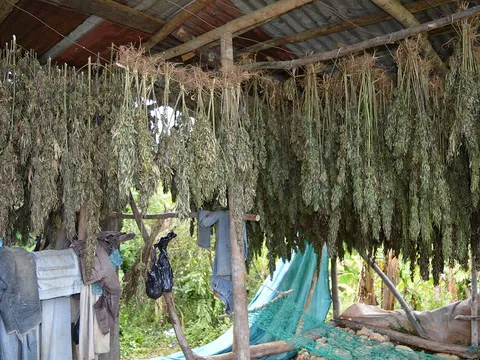 LanguageGanjaThe Hindi word for the flowering tops. Indian labourers carried it to the Caribbean, and it also became the usual word across South-East Asia.
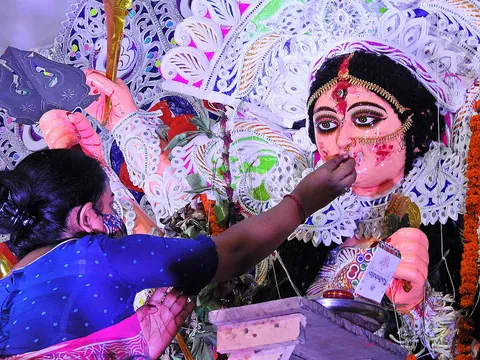 TraditionsBhang at BijoyaOn the last day of Durga Puja, Bengali Hindu households of the 1890s offered every visitor a cup of bhang with sweets after the embraces of Bijoya. A colonial excise officer described the custom to the Hemp Drugs Commission; whether it survives is not recorded.
Did you know? all cases →
1989 · Bangladesh
Bangladesh had government-approved ganja shops until 1989, a leftover of colonial excise law.
The full story →
Datasets not part of the score
What other organisations publish about Bangladesh, and where it stands among the countries each one covers. Each dataset has a page of its own, with a world map and every country's figure.
Use
UNODC · 2018
Cannabis use
3.1%of people aged 7+
3.3% · 20043.1% · 201820042018 ages 7+ · survey 2018 · 4,700,000 people · UNODC 2026
Source Survey ages and years vary, and some surveys include children. Rates are not age-standardised; do not compare countries directly.WHO, Our World in Data · 2020
Alcohol drunk per person
0.09litres of pure alcohol a year
0.00 · 20000.00 · 20010.00 · 20020.00 · 20030.00 · 20040.00 · 20050.00 · 20060.00 · 20070.00 · 20080.00 · 20090.00 · 20100.00 · 20110.01 · 20120.01 · 20130.01 · 20140.01 · 20150.01 · 20160.01 · 20170.01 · 20180.01 · 20190.09 · 202020002020 Higher than 5% of 187 countriesLowestHighestper person aged 15 or over · 2020 · 0.00 in 2000 · 0.00 in 2010
Law
UNODC · 2024
Cannabis seized
114,345kg in 2024
41,720 · 201547,139 · 201669,990 · 201760,295 · 201832,658 · 201950,079 · 202086,696 · 2021104,308 · 2022112,166 · 2023114,345 · 202420152024 Higher than 91% of 163 countriesLess seizedMore seized114,345 kg of herb · 41,720 kg in 2015 · 50,079 kg in 2020
Society
OpenAlex · 2025
Research on cannabis
0.1papers per million people
0.0 · 20000.0 · 20030.0 · 20090.0 · 20100.0 · 20110.0 · 20120.0 · 20130.0 · 20140.0 · 20150.0 · 20160.0 · 20170.1 · 20180.1 · 20190.1 · 20200.1 · 20210.1 · 20220.1 · 20230.1 · 20240.1 · 202520002025 Higher than 16% of 176 countriesLowestHighest19 papers in 2025 · 1 in 2010
Cato and Fraser Institutes · 2023
Human Freedom Index
5.44of 10
6.31 · 20006.21 · 20015.99 · 20025.98 · 20035.98 · 20046.04 · 20056.14 · 20065.99 · 20076.04 · 20086.09 · 20095.90 · 20106.07 · 20115.90 · 20125.66 · 20135.73 · 20145.59 · 20155.54 · 20165.54 · 20175.55 · 20185.49 · 20195.43 · 20205.41 · 20215.45 · 20225.44 · 202320002023 Higher than 20% of 164 countriesLess freeFreerrank #129 of 165 · personal freedom 5.16 · economic freedom 5.83
V-Dem, Our World in Data · 2025
Civil liberties
0.63of 1 in 2025
0.31 · 19000.31 · 19010.31 · 19020.31 · 19030.31 · 19040.31 · 19050.31 · 19060.31 · 19070.31 · 19080.31 · 19090.31 · 19100.31 · 19110.31 · 19120.31 · 19130.31 · 19140.31 · 19150.31 · 19160.31 · 19170.31 · 19180.31 · 19190.31 · 19200.31 · 19210.31 · 19220.31 · 19230.31 · 19240.31 · 19250.31 · 19260.31 · 19270.31 · 19280.31 · 19290.31 · 19300.31 · 19310.31 · 19320.31 · 19330.31 · 19340.33 · 19350.33 · 19360.33 · 19370.33 · 19380.33 · 19390.33 · 19400.33 · 19410.33 · 19420.33 · 19430.33 · 19440.35 · 19450.35 · 19460.54 · 19470.54 · 19480.54 · 19490.55 · 19500.54 · 19510.53 · 19520.54 · 19530.53 · 19540.54 · 19550.53 · 19560.52 · 19570.44 · 19580.41 · 19590.38 · 19600.38 · 19610.39 · 19620.43 · 19630.43 · 19640.43 · 19650.44 · 19660.42 · 19670.43 · 19680.40 · 19690.44 · 19700.42 · 19710.60 · 19720.57 · 19730.55 · 19740.41 · 19750.45 · 19760.53 · 19770.55 · 19780.57 · 19790.57 · 19800.57 · 19810.53 · 19820.50 · 19830.50 · 19840.50 · 19850.51 · 19860.51 · 19870.51 · 19880.51 · 19890.51 · 19900.65 · 19910.66 · 19920.65 · 19930.65 · 19940.65 · 19950.65 · 19960.66 · 19970.66 · 19980.66 · 19990.66 · 20000.65 · 20010.62 · 20020.63 · 20030.58 · 20040.58 · 20050.57 · 20060.54 · 20070.55 · 20080.52 · 20090.52 · 20100.51 · 20110.50 · 20120.47 · 20130.47 · 20140.46 · 20150.46 · 20160.44 · 20170.42 · 20180.39 · 20190.39 · 20200.40 · 20210.42 · 20220.42 · 20230.56 · 20240.63 · 202519002025 Higher than 38% of 175 countriesFewer libertiesMore liberties0.31 in 1925 · 0.38 in 1961 · 0.51 in 1990
Our World in Data, World Bank · 2025
Population
175,686,899people in 2025
26,849,595 · 190027,913,022 · 191028,623,503 · 192030,077,163 · 193036,071,677 · 194041,206,857 · 195051,828,663 · 196069,058,898 · 197088,016,435 · 1980111,633,722 · 1990134,544,303 · 2000152,201,978 · 2010166,298,024 · 2020175,686,899 · 202519002025 Higher than 96% of 196 countriesLowestHighest26,849,595 in 1900 · 41,206,857 in 1950 · 134,544,303 in 2000
CEPII
Former colonial rulers
Once ruled by United Kingdom
World Bank · 2025
Government effectiveness
43of 100
34 · 199639 · 199835 · 200035 · 200231 · 200335 · 200435 · 200534 · 200635 · 200738 · 200838 · 200939 · 201038 · 201139 · 201239 · 201341 · 201441 · 201543 · 201643 · 201742 · 201843 · 201941 · 202044 · 202143 · 202243 · 202341 · 202443 · 202519962025 Higher than 32% of 195 countriesLowestHighestestimate -0.45 on a scale of −2.5 to 2.5 · 2025 · 35 in 2000 · 41 in 2015
Transparency International · 2024
Corruption Perceptions Index
23of 100
26 · 201227 · 201325 · 201425 · 201526 · 201628 · 201726 · 201826 · 201926 · 202026 · 202125 · 202224 · 202323 · 202420122024 Higher than 15% of 178 countriesLowestHighest0 highly corrupt, 100 very clean · 2024 · 25 in 2015 · 26 in 2020
Pew Research Center · 2020
Most common religion
Muslims
the largest group · 2020
World Bank · 2025
Income per person
$8,677per person
2,070 · 19902,101 · 19912,174 · 19922,235 · 19932,279 · 19942,352 · 19952,414 · 19962,476 · 19972,555 · 19982,624 · 19992,713 · 20002,804 · 20012,866 · 20022,959 · 20033,072 · 20043,232 · 20053,407 · 20063,609 · 20073,788 · 20083,942 · 20094,125 · 20104,352 · 20114,592 · 20124,823 · 20135,069 · 20145,353 · 20155,683 · 20166,006 · 20176,393 · 20186,838 · 20197,015 · 20207,441 · 20217,888 · 20228,242 · 20238,487 · 20248,677 · 202519902025 Higher than 32% of 187 countriesLowestHighestat purchasing power parity, 2021 dollars · 2025 · $2,070 in 1990 · $4,125 in 2010
World Bank · 2024
Development indicators
53.4%use the internet
0% · 19900% · 19970% · 19980% · 19990.1% · 20000.1% · 20010.1% · 20020.2% · 20030.2% · 20040.2% · 20051% · 20061.8% · 20072.5% · 20083.1% · 20093.7% · 20104.5% · 20115% · 20126.6% · 20139.1% · 201412.4% · 201516.9% · 201621.5% · 201725.6% · 201830.4% · 201936.1% · 202038.9% · 202141.6% · 202244.5% · 202353.4% · 202419902024 Higher than 26% of 195 countriesLowestHighest32.7% live in towns · 6.5% aged 65+ · life expectancy 74.9 · higher education 23.7% · 2024 · 0.1% in 2000 · 3.7% in 2010
GDELT · 2025
Cannabis in the news
0.0027%of global news: cannabis articles from here
0.0007% · 20170.0015% · 20180.0012% · 20190.0015% · 20200.0024% · 20210.0036% · 20220.0026% · 20230.0016% · 20240.0027% · 202520172025 Higher than 88% of 147 countriesLowestHighest2025 average, 348 days · 0.0015% in 2018 · 0.0024% in 2021
Plant and market
GBIF · 2026
Records of the cannabis plant
6dated records
1 · 19672 · 20213 · 20224 · 20235 · 20256 · 202619672026 Higher than 37% of 128 countriesLowestHighest0 more without a date · 1 in 2026
Enforcement 4 reports · the Cannabis Enforcement Tracker →
How the law above is applied: raids, seizures, fields destroyed, arrests and sentences, as recorded by the Cannabis Enforcement Tracker, our companion site.
- SeizureBangladesh files its first case under the new digital drugs offence
The Department of Narcotics Control filed a case against Daraz's managing director, a supplier and two or three unidentified people over THC-infused CBD oil it said had been sold on the e-commerce platform.
- SeizureBangladesh counts 105 border points used by traffickers
A report in July 2026 counted at least 105 border points in 18 districts used to bring in narcotics of all kinds. Authorities seized 96,358 kg of cannabis in 2025, down from 114,345 kg in 2024.
- ProsecutionBangladesh arrests 20,439 on drug charges in a 72-day sweep
Police headquarters said 20,439 people were arrested on narcotics charges during a nationwide operation from 1 May to 12 July 2026, part of nearly 117,000 arrests for all offences.
- SeizureInvestigation counts 1.2 million drug cases and a revolving door
Netra News reported that law enforcement agencies filed about 1.2 million narcotics cases between 2009 and July 2025, naming more than 1.5 million accused.
History 25 of 25 checked against a source
Score and entries per decade
3 today, from 100 before its first recorded change
This country's score Entries that moved the score Context only
20261 entry0 score changes
20251 entry0 score changes
20182 entries1 score change
Tightening ✓
Bangladesh's anti-drug campaign leaves hundreds dead
Amnesty International counted 466 people allegedly killed by the security forces in 2018 in an anti-drugs campaign, three times the number of the year before and the highest in decades. The police described the deaths as gunfights. Witnesses told Amnesty they had been brought to the scene afterwards and asked to sign false statements, and that victims had been held for days or weeks before their bodies were found.
Tightening ✓ Article
Bangladesh's new narcotics act sets up to ten years for cannabis and death for harder drugs
Parliament passed the Narcotics Control Bill in October 2018, replacing the act of 1990. It introduced death or life imprisonment for the largest quantities of Class A drugs: 25 grams or more of heroin or cocaine, and 200 grams or more of yaba. Herbal cannabis is Class B: six months to five years for up to 5 kilograms, five to seven years for 5 to 15 kilograms and seven to ten above that, and for plants one to five years for up to fifty. Hashish is classed with the Class A drugs. Consuming a drug carries three months to two years. An earlier version of this entry said death was possible for two kilograms of cannabis, which the report of the act does not support for herbal cannabis.
53−2 points
20021 entry0 score changes
20001 entry0 score changes
19902 entries0 score changes
International ✓
Bangladesh joins the 1988 UN convention against drug trafficking
Bangladesh ratified the United Nations Convention against Illicit Traffic in Narcotic Drugs and Psychotropic Substances of 1988 on 11 October 1990. Article 3 of the convention requires each party, subject to its constitutional principles, to make the possession, purchase and cultivation of drugs for personal consumption a criminal offence.
Death penalty ✓ Article
Bangladesh sets prison terms for ganja and death for cannabis resin
From 2 January 1990, ganja or any herbal cannabis drew six months to three years in prison up to 5 kilograms, and three to fifteen years above that. A cannabis plant of any species drew six months to three years for up to 25 plants, and three to fifteen years above that. Cannabis resin, in the same band as opium, drew two to ten years up to 2 kilograms and death or life imprisonment above that, and tetrahydrocannabinol drew death or life above 10 grams. The act, dated 1 February 1990, also banned cultivating, trading, keeping and using a narcotic other than alcohol, and it repealed the excise and dangerous-drugs laws carried over from colonial rule.
19891 entry1 score change
19871 entry0 score changes
19801 entry0 score changes
19751 entry0 score changes
19741 entry0 score changes
19651 entry0 score changes
19501 entry0 score changes
19471 entry0 score changes
19311 entry0 score changes
19221 entry0 score changes
19171 entry0 score changes
19061 entry0 score changes
18931 entry0 score changes
18781 entry0 score changes
18762 entries1 score change
Culture & science ✓
Bengal's ganja harvesters bow to the crop before trampling it
In the Ganja Mahal the "ganja-doctor" (poddar) arrived in late November to find and snap the male plants, since only unfertilised females made potent ganja. Flowering heads were trampled under mats for four days into flat ganja, or rolled into round ganja, with broken fragments sold as stronger chir ganja. Workers bowed to the ganja before placing their feet on it, timed weddings to the months after the drug was sold and the rent paid, and scheduled cutting and sowing by Hindu and Muslim lucky days.
Tightening ✓ Article
Bengal puts its ganja growers and stores under licence
Bengal brought growers, stores and exports of ganja under licence, tightening the control that had begun with licences for sellers in 1793. Growing was concentrated around Naogaon, in today's northern Bangladesh, where the crop later passed through government warehouses to licensed shops. That licensed trade lasted until independent Bangladesh banned growing in 1987 and sales in 1989.
9632−64 points
17931 entry1 score change
Sources hover a number in the text to see its source
- Cited
- 16
- Websites
- 9
- Last reviewed
- History checked
- 25/25
Most cited
- bn.wiktionary.org5
- bdlaws.minlaw.gov.bd3
- en.prothomalo.com2
- asianews.network1
- en.wikipedia.org1
- incb.org1
All 17 sources
- মাদকদ্রব্য নিয়ন্ত্রণ আইন, ২০১৮ — Narcotics Control Act 2018 (Laws of Bangladesh)archived
- Wiktionary — গাঁজা (Bengali)Ganja; cannabis.archived
- Wiktionary — ভাং (Bengali)Bhang; cannabis preparation.archived
- Wiktionary — চরস (Bengali)Charas; cannabis resin.archived
- Wiktionary — সিদ্ধি (Bengali)Siddhi; cannabis preparation.archived
- Wiktionary — হাশিশ (Bengali)Hashish; cannabis resin.archived
- Prothom Alo — Online cannabis sales around private universities (18 October 2026)Kush seeds and online sales; about 250 students in one group.archived
- Prothom Alo — কোন মাদকের জন্য কী সাজা (what sentence for which drug), on the Narcotics Control Bill as passed, 28 October 2018archived
- Netra News — Cops, camera, cannabis (2026)archived
- Wikipedia — Cannabis in Bangladesharchived
- The Daily Star — first section 36A case, over THC and CBD products on Daraz (17 August 2026)archived
- Bangladesh Ministry of Law — Narcotics Control (Amendment) Act 2026, section 36AAct No. 101 of 2026, dated 16 July 2026. Section 17 inserts section 36A. Subsection (2) is any term of imprisonment or death, and a fine of up to 2 million taka. Subsection (3), for an international or organised case, does not itself state death.archived
- The Daily Star via Asia News Network — Bangladesh's narco trail: traffickers tap 105 border points across 18 districts (28 July 2026)archived
- Bangladesh Ministry of Law — Road Transport Act 2018, current official Bengali textSections 12, 49(1) first part (a), and 92(1)archived
- Prothom Alo — 20,439 narcotics arrests in 72 days (13 July 2026)20,439 arrests; 14,157 cases; 5,336 cannabis packets; 1 May–12 July 2026.archived
- International Narcotics Control Board — Travellers carrying medicines containing controlled substances