Morocco
13/100
#71 of 196 worldwide
#3 of 54 in Africa
Law 13-21 (2021) licenses cultivation for medical, cosmetic and industrial use in the Rif provinces. Recreational kif remains illegal but is widely tolerated; thousands of growers were pardoned in 2024.
In short all countries →
- Can I carry it?NoIt is a crime
- Can I grow it?NoIt is a crime
- Can I buy it?LimitedRegistered cannabis medicines on prescription; no flower or recreational supply
- Can I use it in public?NoNot in public, and even at home the law does not protect it
- What if I'm caught?Fine or prisonUsually a fine; prison is possible
A rough guide read from the scores and the rules below, not legal advice. The details and the exceptions are in each segment: select an answer to jump to it.
Cannabis in Morocco not part of the score · all 16 datasets ↓
Who uses it
About 1 in 10
people aged 15–64 in Morocco used cannabis in the past year: 2.7 million people.
- Past year
- 10.5%
- Africa median
- 3.1%
- Aged 15–16, 2009
- 6.2%
UNODC · survey 2017
Source Past-year cannabis use among people aged 15–64. People who used cannabis in the past year, from a 2017 survey, applied to today's population aged 15–64.Survey ages and years vary, and some surveys include children. Rates are not age-standardised; do not compare countries directly.
UNODC World Drug Report 2026, annex table 1.2. Population from the World Bank, aged 15–64. The whole dataset →
Use across Africa
4thhighest of 28 surveyed countries
- 🇿🇦 South Africa11.2%
- 🇳🇬 Nigeria10.8%
- 🇲🇦 Morocco10.5%
- 🇿🇲 Zambia9.5%
- 🇲🇬 Madagascar9.1%
Past-year use, latest survey of each. Survey years and ages differ. On the map →
Cannabis in figures
- Cannabis seized457,479kg in 2024 · 2024
- Research on cannabis2.3papers per million people · 2025
- Cannabis in the news0.0004%of global news: cannabis articles from here · 2025
The dot: where it stands among the countries each dataset covers, lowest to highest. All datasets ↓
What they call it
- kif[1]Moroccan Arabiccannabis, traditionally smoked in a sebsi pipeIn the atlas →
Score breakdown 13/100 · how the scores are made
Unauthorised holding is prohibited separately from use. Article 2 of the 1974 law punishes illicit possession, import, production, transport and export with five to ten years and a 5,000–50,000 dirham fine, with no quantity threshold.[2] Article 1 preserves a separate two-to-five-year route for breaches of the 1922 poisons law, so small cases can be charged under either article.[2] Article 8's lower two-month-to-one-year term concerns illicit use, with a 500–5,000 dirham fine or either penalty alone; it is not a universal ceiling for possession.[2] Traditional kif use is widely tolerated in the north, with uneven enforcement.[3][4]
| Amount | What happens | Punishment | Fine |
| Illicit possession (Article 2)No quantity threshold | CriminalPossession | 5–10 years | MAD 5,000 – MAD 50,000 |
| Use (Article 8)Prison, fine, or either alone | CriminalPersonal use | 2 months – 1 year | MAD 500 – MAD 5,000 |
| Breach through the 1922 poisons law (Article 1)Overlapping charging route for small amounts; no published data on its use | CriminalPossession | 2–5 years | MAD 5,000 – MAD 50,000 |
Growing without a licence is punished under Article 2 of the 1974 law through Article 50 of Law 13-21, with five to ten years and a 5,000–50,000 dirham fine and no plant-count threshold.[2][5] Licensed farmers may grow only in the provinces and areas fixed by decree, as cooperative members who deliver the whole harvest to licensed processors.[5][6] A licensed grower who goes outside the permitted area or quota faces three months to two years and a 5,000–100,000 dirham fine.[5]
| Amount | What happens | Punishment | Fine |
| Unlicensed cultivation or productionNo plant-count threshold | CriminalCultivation | 5–10 years | MAD 5,000 – MAD 50,000 |
| Licensed grower outside the area or quota | CriminalLicence breach | 3 months – 2 years | MAD 5,000 – MAD 100,000 |
Users can be jailed, though often are not; traffickers face long sentences. The 2024 pardon was limited to growers.[4][7] The statutory personal-use offence has a 500–5,000 dirham fine, while illicit holding has a separate five-to-ten-year penalty; charging practice must not be inferred from the use offence alone.[2] The 2025 police report counted 106,117 drug cases and 134,126 arrests, figures that cover all drugs.[8]
Article 3 punishes facilitating another person's use, whether paid or free, with two to ten years and a 5,000–500,000 dirham fine; the minimum rises to five years where the user is 21 or younger.[2] Article 2 separately punishes illicit holding and transport with five to ten years.[2] The 2021 law routes unlicensed supply back to the 1974 penalties.[5]
| Amount | What happens | Punishment | Fine |
| Facilitating use, paid or freeMinimum five years where the user is 21 or younger | CriminalSupply | 2–10 years | MAD 5,000 – MAD 500,000 |
Article 8 punishes illicit use with two months to one year in prison and 500–5,000 dirhams, or either penalty alone.[2] Under its conditions, accepting medically supervised detoxification can avoid prosecution.[2] Use is tolerated in practice in much of the Rif.[4]
| Amount | What happens | Punishment | Fine |
| UsePrison, fine, or either alone; detoxification can avoid prosecution | CriminalPersonal use | 2 months – 1 year | MAD 500 – MAD 5,000 |
Context not part of the score · every country, by topic →
There is no legal recreational market. Traditional kif smoking is widely tolerated in the northern growing regions, with uneven enforcement, while users elsewhere can be jailed though often are not.[3][4] The 2021 law opened a legal route only for authorised Rif growers selling their whole crop to licensed processors — not for users.[5][9] The 2024 pardon covered growers, not users.
Cannabis-based medicines can be registered and sold through pharmacies; by October 2026 four epilepsy medicines had market authorisation, three from Sothema and one from Pharma 5, and five medical societies had approved CBD prescribing protocols.[10] The regulator said more than 140 cannabis products were registered, but doctors still needed convincing to prescribe.[10] Reimbursement, dispensing volumes and patient numbers were not verified.[10]
No cannabis clubs are known, and the law leaves no room for them: unlicensed growing and supplying cannabis to another person are both prohibited.[5][2]
Under Law 13-21 importing or exporting cannabis seeds and plants needs an authorisation from the regulator ANRAC, and licence holders may bring in only seed the agency has approved.[5] Certified lots must carry the variety's certification number and THC level.[5] The first imported seed arrived in April 2023 and went to cooperatives in Al Hoceima and Chefchaouen.[11]
Industrial and food cannabis is licensed under Law 13-21 at or below 1% THC; above 1% only medical and pharmaceutical use is allowed.[5][12] There is no open hemp regime: every crop needs an ANRAC authorisation in the same three provinces.[5][6] By March 2026, 109 CBD products — 50 supplements and 59 cosmetics — had been authorised and were sold at more than 600 points.[10] No separate fibre or textile licensing was verified.[5]
Law 13-21 licenses cultivation, processing, export and sale for medical, pharmaceutical and industrial purposes in Al Hoceima, Chefchaouen and Taounate.[5][6] In 2025 the agency reported 5,318 farmers holding 5,492 cultivation permits, 3,141 hectares actually farmed by 4,776 farmers, and 19,576 quintals of dried cannabis; 141 products were registered and seven export markets opened.[13] A royal pardon in 2024 cleared thousands of growers with past convictions or warrants.[7] In 2026 the agency revoked 1,490 licences, nearly 1,300 of them from growers.[14]
Morocco is the world's biggest producer of cannabis resin according to the United Nations, and the illegal trade still dwarfs the legal one.[15] The interior ministry put illegal cultivation at 20,627 hectares in 2025, down 85% from 134,000 in 2003, while the legal area was 3,141 hectares; the figure is a government estimate.[16] The ministry reported 344 tonnes of resin and 112 tonnes of raw cannabis seized in 2024, and the police reported about 170.8 tonnes of resin and derivatives in 2025.[16][8] Official estimates of trafficking revenue fell from about 540 million dollars in the early 2000s to almost 350 million in 2020.[15]
There is no legal recreational supply for anyone. Recreational possession and use are illegal under the 1974 law, punishable by up to a year in prison and a fine; the licensed growing allowed since 2021 is for medical and industrial use only.[2][5] A foreigner can also face a residence ban and expulsion.[2]
The government's July 2024 consolidation of Road Code 52-05, article 183, prohibits driving under the influence of narcotics or certain medicines after which driving is forbidden.[17] It provides six months to one year in prison and MAD5,000–10,000, or either punishment, plus a court-ordered licence suspension of six months to one year; repetition within five years doubles both.[17] Article 99 provides a six-point deduction, and articles 213–214 distinguish screening from later medical and biological checks.[17] No numeric THC cutoff or medical-cannabis exemption was verified.[17]
The national police's report for 2025 counts 106,117 drug cases and 134,126 people arrested in them, 378 of them foreign nationals; the figures cover all drugs.[8] Police seized about 170.8 tonnes of cannabis resin and its derivatives, against 1.731 tonnes of cocaine and about 6 kg of heroin.[8] Controlled deliveries run with Spain accounted for 55.471 tonnes of resin and 38 arrests.[8] No cannabis-specific prosecution or conviction counts were published.[8]
A drug conviction is a criminal record; the pardon removed that burden for many Rif farmers.[7] Foreigners can also face a residence ban of five to ten years and administrative expulsion.[2]
The Rif's kif economy is also its culture: cannabis ranks with the region's chief cash crops, smoked as a work stimulant that violates no religious sanction.[1] The sebsi pipe and the word kif belong to Berber men of middle age and older — an establishment habit, not rebellion — with no ritual or Sufi blessing attached; the 1959 growers' confrontation with the government is part of the same story, see the 1959 confrontation.[1]
Taking cannabis into or out of Morocco is a separate offence from possessing it, normally charged as smuggling or trafficking, with far heavier penalties. That holds almost everywhere, including between two places where cannabis is legal.
A prescription or medical card from another country is generally not recognised. Travellers who need a cannabis-based medicine should ask Morocco's embassy before travelling.[18]
General guidance that applies to almost every country, not a check of Morocco's customs rules.
Culture the atlas →
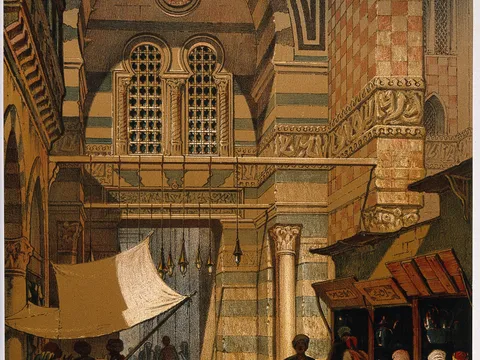 LanguageHashishArabic for dried grass. The word for cannabis resin from Morocco to Afghanistan.
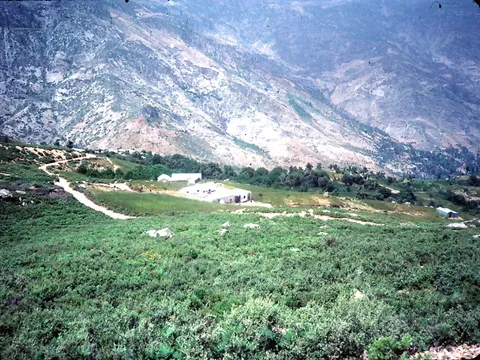 LanguageKifFrom the Arabic for pleasure. In Morocco it means chopped cannabis mixed with tobacco, smoked in a long thin pipe.
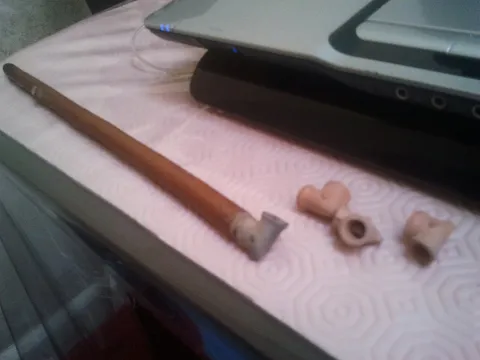 TraditionsKif and the sebsiMorocco's long thin pipe holds a pinch of kif at a time. It belongs to a way of smoking that is older than the hashish trade.
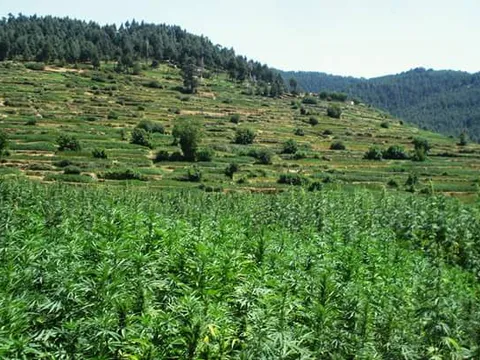 TraditionsHashish in the RifHow the mountain farmers of Morocco's Rif turned from growing kif for the pipe to sieving resin for Europe from the 1960s, and then swapped their local plant for imported hybrids. The craft is younger than its reputation.
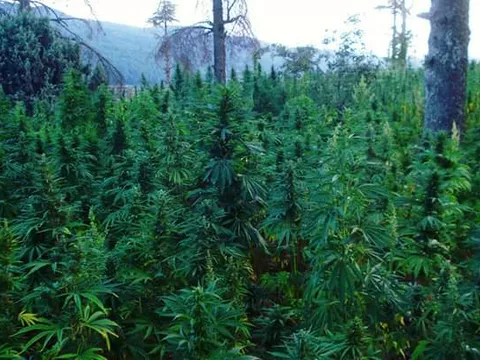 LanguageLandraceA farmers' variety, kept by saving seed in the place where it grows rather than bred to a standard. The word came from German agronomy and, in cannabis, names the old local populations of the hashish and ganja regions, many of them lost to hybrids and eradication. Morocco now licenses its own, beldiya.
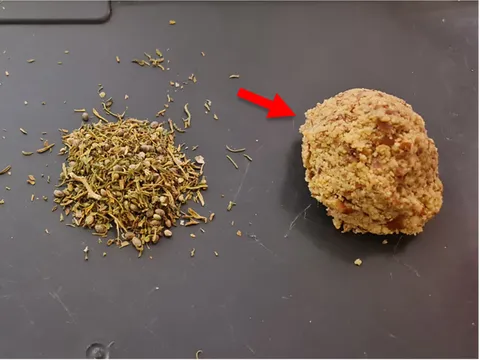 TraditionsMaâjounA Moroccan confection of cannabis resin, almonds, nuts, honey and spices, eaten in small pieces with tea. Its name and form recall the medicinal pastes of medieval Arabic pharmacy, but its social life runs from private delicacy to street narcotic.
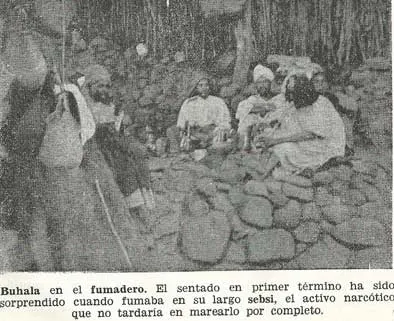 TraditionsThe Heddawa BrotherhoodFollowers of the Moroccan holy man Sidi Heddi made kif part of a life of devotion, wandering and voluntary poverty. Their history connects religious dissent with the rise of cannabis cultivation in the Rif.
Did you know? all cases →
2024 · Morocco
Morocco's sultan licensed tribes of the Rif to grow kif in 1890. In 2024 its king pardoned 4,831 people convicted, prosecuted or wanted over growing it.
The full story →Words · Landrace
In Morocco’s Rif the old local cannabis was largely replaced by hybrids from the early 2000s and renamed beldiya, ‘local’. Since 2024 the legal programme has licensed it again: a landrace brought back as a crop.
Read the entry →
Datasets not part of the score
What other organisations publish about Morocco, and where it stands among the countries each one covers. Each dataset has a page of its own, with a world map and every country's figure.
Use
UNODC · 2017
Cannabis use
10.47%of people aged 15–64
4.22% · 20043.94% · 200510.47% · 201720042017 ages 15–64 · survey 2017 · 2,700,000 people · UNODC 2026
Source Survey ages and years vary, and some surveys include children. Rates are not age-standardised; do not compare countries directly.UNODC · 2009
Cannabis use at 15 and 16
6.2%in the past year
Higher than 35% of 49 countriesLowestHighest9.2% ever · 4.1% in the past month · 2009 · ages 15–16
WHO, Our World in Data · 2020
Alcohol drunk per person
0.50litres of pure alcohol a year
0.46 · 20000.46 · 20010.47 · 20020.48 · 20030.48 · 20040.48 · 20050.49 · 20060.50 · 20070.52 · 20080.51 · 20090.50 · 20100.48 · 20110.47 · 20120.46 · 20130.43 · 20140.41 · 20150.41 · 20160.44 · 20170.49 · 20180.49 · 20190.50 · 202020002020 Higher than 12% of 187 countriesLowestHighestper person aged 15 or over · 2020 · 0.46 in 2000 · 0.50 in 2010
Law
UNODC · 2024
Cannabis seized
457,479kg in 2024
548,582 · 2015532,899 · 2016400,426 · 2017333,526 · 2018616,805 · 2019707,470 · 2020839,701 · 2021510,939 · 2022484,357 · 2023457,479 · 202420152024 Higher than 97% of 163 countriesLess seizedMore seized112,629 kg of herb · 344,850 kg of resin · 548,582 kg in 2015 · 707,470 kg in 2020
Society
OpenAlex · 2025
Research on cannabis
2.3papers per million people
0.0 · 19980.0 · 20000.0 · 20010.0 · 20020.0 · 20040.0 · 20050.0 · 20060.0 · 20070.1 · 20080.1 · 20090.1 · 20100.1 · 20110.1 · 20120.1 · 20130.3 · 20140.2 · 20150.1 · 20160.3 · 20170.3 · 20180.2 · 20190.4 · 20200.9 · 20211.1 · 20221.5 · 20231.9 · 20242.3 · 202519982025 Higher than 67% of 176 countriesLowestHighest87 papers in 2025 · 5 in 2010
Cato and Fraser Institutes · 2023
Human Freedom Index
5.44of 10
5.76 · 20005.79 · 20015.76 · 20025.70 · 20035.76 · 20045.86 · 20055.87 · 20065.87 · 20075.90 · 20085.93 · 20095.95 · 20105.84 · 20115.83 · 20125.82 · 20135.82 · 20145.86 · 20155.69 · 20165.62 · 20175.63 · 20185.58 · 20195.48 · 20205.45 · 20215.48 · 20225.44 · 202320002023 Higher than 20% of 164 countriesLess freeFreerrank #129 of 165 · personal freedom 4.76 · economic freedom 6.38
V-Dem, Our World in Data · 2025
Civil liberties
0.65of 1 in 2025
0.11 · 19000.12 · 19010.12 · 19020.12 · 19030.12 · 19040.12 · 19050.13 · 19060.12 · 19070.12 · 19080.12 · 19090.13 · 19100.17 · 19110.22 · 19120.23 · 19130.22 · 19140.22 · 19150.22 · 19160.22 · 19170.22 · 19180.23 · 19190.23 · 19200.23 · 19210.23 · 19220.23 · 19230.23 · 19240.23 · 19250.23 · 19260.23 · 19270.23 · 19280.23 · 19290.22 · 19300.23 · 19310.23 · 19320.23 · 19330.23 · 19340.23 · 19350.23 · 19360.23 · 19370.23 · 19380.23 · 19390.23 · 19400.23 · 19410.23 · 19420.23 · 19430.24 · 19440.24 · 19450.24 · 19460.24 · 19470.24 · 19480.24 · 19490.24 · 19500.24 · 19510.24 · 19520.24 · 19530.24 · 19540.23 · 19550.27 · 19560.33 · 19570.34 · 19580.34 · 19590.34 · 19600.36 · 19610.36 · 19620.33 · 19630.31 · 19640.29 · 19650.29 · 19660.29 · 19670.29 · 19680.29 · 19690.30 · 19700.30 · 19710.30 · 19720.29 · 19730.29 · 19740.30 · 19750.33 · 19760.33 · 19770.33 · 19780.33 · 19790.33 · 19800.34 · 19810.34 · 19820.34 · 19830.34 · 19840.34 · 19850.34 · 19860.34 · 19870.34 · 19880.34 · 19890.36 · 19900.38 · 19910.40 · 19920.43 · 19930.42 · 19940.42 · 19950.42 · 19960.44 · 19970.45 · 19980.45 · 19990.60 · 20000.60 · 20010.60 · 20020.60 · 20030.60 · 20040.60 · 20050.60 · 20060.60 · 20070.60 · 20080.60 · 20090.61 · 20100.62 · 20110.62 · 20120.62 · 20130.62 · 20140.62 · 20150.62 · 20160.62 · 20170.64 · 20180.64 · 20190.63 · 20200.64 · 20210.64 · 20220.65 · 20230.65 · 20240.65 · 202519002025 Higher than 39% of 175 countriesFewer libertiesMore liberties0.23 in 1925 · 0.36 in 1961 · 0.36 in 1990
Our World in Data, World Bank · 2025
Population
38,430,770people in 2025
4,681,030 · 19005,437,479 · 19105,772,593 · 19206,447,923 · 19307,641,938 · 19408,935,456 · 195011,624,932 · 196015,129,453 · 197019,459,942 · 198024,375,558 · 199028,423,439 · 200032,467,009 · 201036,584,208 · 202038,430,770 · 202519002025 Higher than 79% of 196 countriesLowestHighest4,681,030 in 1900 · 8,935,456 in 1950 · 28,423,439 in 2000
CEPII
Former colonial rulers
Once ruled by France
World Bank · 2025
Government effectiveness
56of 100
52 · 199651 · 199851 · 200047 · 200247 · 200344 · 200442 · 200545 · 200646 · 200747 · 200847 · 200951 · 201051 · 201150 · 201250 · 201348 · 201449 · 201550 · 201648 · 201747 · 201850 · 201952 · 202052 · 202151 · 202253 · 202356 · 202456 · 202519962025 Higher than 56% of 195 countriesLowestHighestestimate 0.18 on a scale of −2.5 to 2.5 · 2025 · 51 in 2000 · 49 in 2015
Transparency International · 2024
Corruption Perceptions Index
37of 100
37 · 201237 · 201339 · 201436 · 201537 · 201640 · 201743 · 201841 · 201940 · 202039 · 202138 · 202238 · 202337 · 202420122024 Higher than 43% of 178 countriesLowestHighest0 highly corrupt, 100 very clean · 2024 · 36 in 2015 · 40 in 2020
Pew Research Center · 2020
Most common religion
Muslims
the largest group · 2020
World Bank · 2025
Income per person
$9,495per person
4,419 · 19904,656 · 19914,483 · 19924,380 · 19934,771 · 19944,444 · 19954,916 · 19964,766 · 19975,034 · 19985,044 · 19995,100 · 20005,418 · 20015,544 · 20025,810 · 20035,996 · 20046,103 · 20056,489 · 20066,621 · 20076,902 · 20087,064 · 20097,211 · 20107,504 · 20117,629 · 20127,839 · 20137,952 · 20148,199 · 20158,142 · 20168,450 · 20178,612 · 20188,768 · 20198,055 · 20208,623 · 20218,690 · 20228,915 · 20239,163 · 20249,495 · 202519902025 Higher than 33% of 187 countriesLowestHighestat purchasing power parity, 2021 dollars · 2025 · $4,419 in 1990 · $7,211 in 2010
World Bank · 2024
Development indicators
91.2%use the internet
0% · 19900% · 19950% · 19960% · 19970.1% · 19980.2% · 19990.7% · 20001.4% · 20012.4% · 20023.4% · 200311.6% · 200415.1% · 200519.8% · 200621.5% · 200733.1% · 200841.3% · 200952% · 201046.1% · 201155.4% · 201256% · 201356.8% · 201457.1% · 201558.3% · 201661.8% · 201764.8% · 201884.1% · 201984.1% · 202088.1% · 202189.9% · 202291% · 202391.2% · 202419902024 Higher than 75% of 195 countriesLowestHighest62.8% live in towns · 8.1% aged 65+ · life expectancy 75.5 · higher education 48.2% · 2024 · 0.7% in 2000 · 52% in 2010
GDELT · 2025
Cannabis in the news
0.0004%of global news: cannabis articles from here
0.0004% · 20170.0003% · 20180.0004% · 20190.0002% · 20200.0005% · 20210.0003% · 20220.0004% · 20230.0005% · 20240.0004% · 202520172025 Higher than 59% of 147 countriesLowestHighest2025 average, 348 days · 0.0003% in 2018 · 0.0005% in 2021
Plant and market
GBIF · 2026
Records of the cannabis plant
27dated records
1 · 18713 · 18754 · 19125 · 19706 · 19787 · 19878 · 20089 · 201610 · 201915 · 202118 · 202320 · 202421 · 202527 · 202618712026 Higher than 63% of 128 countriesLowestHighest5 more without a date · 6 in 2026
Enforcement 6 reports · the Cannabis Enforcement Tracker →
How the law above is applied: raids, seizures, fields destroyed, arrests and sentences, as recorded by the Cannabis Enforcement Tracker, our companion site.
- SeizureMorocco revokes 1,490 cannabis licences during the 2026 harvest
The cannabis regulator withdrew nearly 1,300 licences from growers and 190 from other operators for breaking licensing rules. The operator licences covered seed imports, processing, marketing, exports and transport.
- Seizure3.5 tonnes of hashish seized in farm crates at Tanger Med
Police and customs seized 3,565 kg of cannabis resin hidden in crates of farm produce inside a Moroccan-registered truck at Tanger Med on 11 October.
- Raid4.1 tonnes of hashish and smuggling boats seized at Fez farm
Fez judicial police with the DGST raided a rural farm on 10 October, seizing 4.1 tonnes of hashish in a truck plus four inflatable boats and engines.
- SeizureMorocco seizes nearly 12 tonnes of cannabis near Essaouira
Police stopped three commercial vehicles with forged plates in the countryside outside Essaouira and found 11,755 kilograms of cannabis.
- SeizureMorocco's elite police seize 16 tonnes of hashish on the Atlantic coast
The Central Bureau of Judicial Investigations broke up a network that was using beaches near Casablanca to load hashish onto inflatable boats.
- SeizureMorocco says its illegal cannabis fields have shrunk by 85 percent
The interior ministry's 2025 performance report put illegal cannabis cultivation at 20,627 hectares, down from about 134,000 hectares in 2003.
History 40 of 41 checked against a source
Score and entries per decade
13 today, from 57 before its first recorded change
This country's score Entries that moved the score Context only
20263 entries0 score changes
Medical ✓
Morocco shows its first locally made cannabis medicine abroad
Pharma 5 presented an epilepsy medicine made from Moroccan legally grown cannabis at the CPHI pharmaceutical exhibition in Milan, held from 6 to 8 October. The company called it Morocco's first locally produced cannabis-based medicine. Sothema had already obtained marketing authorisation for three other cannabis-based epilepsy medicines, and five Moroccan medical societies had approved protocols for prescribing CBD. The products sit under the 2021 cannabis law and the pharmaceutical code (Law 17-04).
Medical ✓
Morocco says its medical cannabis is ready, but doctors still hesitate
At the first scientific day on therapeutic cannabis in Casablanca, the head of the cannabis agency said more than 140 cannabis-based products had been made by Moroccan industry and registered with the medicines agency. He described the legal framework and the product range as ready. The agency's own account of the event said the remaining task was to persuade doctors to prescribe the medicines. The event followed a March agreement between the medicines agency and the cannabis regulator on registration procedures.
Other law ✓
Morocco's legal cannabis harvest hits a record 19,576 quintals
The cannabis regulator said the 2025 crop reached 19,576 quintals of dried cannabis, up from 18,810 quintals in 2024. The harvest came from 3,141 hectares and 4,776 farmers, with 5,765 permits active and 141 products registered for sale. Five processing plants were running with capacity for 560 tonnes, and Moroccan products had reached seven export markets. The regulator also reported 7,526 inspections, 111 licences withdrawn and 1,308 farm licences removed.
Other law ✓
Morocco exports legally grown cannabis for the first time
In the second quarter of 2024 Morocco sent 100 kilograms of cannabis resin with less than 1% THC to Switzerland, the first export of cannabis grown legally on Moroccan soil. The resin sold for €1,400–1,800 a kilogram. About 200 operators were active and the licensed area had risen from under 300 hectares in 2023 to roughly 3,000 hectares. The volume was symbolic, but the government and investors presented it as the start of a European medical and industrial trade.
Hemp ✓
Authorised CBD products reach Moroccan pharmacies
From 1 June 2024 authorised CBD products went on sale in Moroccan pharmacies. The cooperative Bio Cannat had registered about ten food-supplement and cosmetic products and expected around thirty more, all made with cannabis containing no THC. The launch put authorised cannabis-derived goods on pharmacy shelves, separate from the illegal market. The products were sold as supplements and cosmetics, not as a recreational supply.
20232 entries0 score changes
Other law ✓
Morocco brings in its first legal cannabis harvest
The first licensed crop, grown on less than 300 hectares in the three Rif provinces, produced 296 tonnes of dried cannabis in 2023. All the seed had been imported from Europe, and heatwaves of 47–49°C cut germination and yields; the regulator estimated a 20% loss. Farmers in the scheme were paid about 75 dirhams a kilogram for legal green cannabis, against 10–20 dirhams on the illegal market. The harvest was small next to the country's illicit output.
Other law ✓
Morocco receives its first legal cannabis seed
The first shipment of imported seed for the legal programme landed at Casablanca airport, with a larger one due days later. The seed came from countries including Switzerland, Uruguay, Hungary, Bulgaria, Italy and the United States, was enough for about a hundred hectares, and went to cooperatives in Al Hoceima and Chefchaouen.
20222 entries0 score changes
Medical ✓
Morocco sets up its cannabis regulator
The National Agency for the Regulation of Cannabis-related Activities was created by Law 13-21 and given statutes by decree 2-21-642 of 31 August 2021; it became operational in 2022. It licenses legal growing for medical, cosmetic and industrial use, began taking applications in January 2023, and legal exports to Europe started in 2024.
Other law ✓
Morocco writes the rules for its legal cannabis sector
A decree of 18 March 2022 limited licensed cannabis growing to Al Hoceima, Chefchaouen and Taounate and set out how farmers, cooperatives and processors would apply. A joint order of 12 May 2022 fixed the THC ceiling at 1%: above that, cannabis could be grown only for medical and pharmaceutical use, while industrial products had to stay at or below the line. The decree created an advisory committee to screen applications and required licence holders to report stock movements to the agency. The rules turned the 2021 framework law into an operating system, but left recreational cannabis outside it.
20211 entry1 score change
20201 entry0 score changes
20141 entry0 score changes
20131 entry0 score changes
20051 entry0 score changes
20031 entry0 score changes
20021 entry0 score changes
19921 entry0 score changes
19871 entry0 score changes
19741 entry0 score changes
19621 entry0 score changes
19611 entry0 score changes
19601 entry0 score changes
19591 entry0 score changes
19563 entries1 score change
International ✓
Morocco joins the 1925 Opium Convention
Morocco deposited its succession to the International Opium Convention of 1925, as amended by the Protocol of 1946, on 7 November 1956. The convention, signed at Geneva, was the first treaty to put Indian hemp under international control.
Ban ✓ Article
Independent Morocco bans kif
Under the protectorates kif had been sold legally through a state tobacco and kif monopoly. France ended this in its zone in 1954, while the Spanish zone still licensed growing. When Morocco became independent in 1956 and joined the existing drug conventions, the ban was extended to both former zones. After putting down an uprising in the Rif, provoked partly by the ban on growing, King Mohammed V condoned cultivation in the five historical villages around Ketama, where it has gone on since.
5712−45 points
Culture & science ✓
France reports to the United Nations on kif in Morocco
A study sent by the French delegation described the situation two years after the dahir of 24 April 1954 had banned all dealings in cannabis in the French zone, where kif had until then been sold by the Tobacco Monopoly. Even medical use was now prohibited, with an exception only for science by permission of the health minister. Seizures reached 30,723 kg in 1955. Almost all smuggled kif came from the Spanish zone, mainly the Ketama region of the Rif, while hemp for fibre was still grown legally on about 143 hectares.
19542 entries0 score changes
Other law ✓
The Spanish zone of Morocco keeps kif licensed, with a five-kilogram limit
In the year the French protectorate prohibited all cultivation, a dahir in the Spanish zone still authorised growing, production and distribution under licence of the monopoly. It set a possession threshold of five kilograms, above which administrative sanctions applied, and allowed cultivation in municipalities it did not name, with the permission of local authorities and the monopoly.
Ban ✓
The French protectorate bans all kif cultivation
France ended the licensed growing it had allowed for the kif and tobacco monopoly and prohibited all cultivation in its zone. In the Spanish zone a dahir of the same year still authorised it.
19491 entry0 score changes
19351 entry0 score changes
19321 entry0 score changes
19231 entry0 score changes
19221 entry0 score changes
19171 entry0 score changes
19141 entry0 score changes
18961 entry1 score change
18901 entry0 score changes
18881 entry1 score change
Date not known1 entry1 score change
Sources hover a number in the text to see its source
- Cited
- 18
- Websites
- 12
- 1
- Last reviewed
- History checked
- 40/41
Most cited
- anrac.gov.ma4
- en.hespress.com2
- fr.hespress.com2
- al-monitor.com1
- atalayar.com1
- cdn.sanity.io1
All 18 sources
- The Economic Significance of Cannabis sativa in the Moroccan RifRoger Joseph · In Cannabis and Culture, edited by Vera Rubin · Mouton · 1975 · pp. 185–193 · ISBN 9789027976699
- Morocco — Dahir 1-73-282 of 21 May 1974 on narcotic drugs, republished by the UNAnnex, articles 1–3, 8 and 12–13: possession five to ten years; use two months to one year; facilitation two to ten years.archived
- International Drug Policy Consortium and West Africa Commission on Drugs — Drug laws in West Africa, annex of country profiles (includes Morocco), November 2017 (PDF)Morocco profile: enforcement and tolerance.archived
- CMS Expert Guide — Cannabis law and legislation in Morocco1974 penalties; 2021 licensing framework.archived
- Morocco — Law 13-21 of 14 July 2021 on the legal uses of cannabis (ANRAC)Articles 1–8, 10, 12–13, 17, 19–20, 27, 31 and 50–55.archived
- ANRAC — Implementing decrees (Decree 2-22-159 of 18 March 2022 and related texts)Provinces, advisory committee and stock reporting.archived
- Atalayar — Morocco issues more than 3,000 authorisations for the legal use of cannabis (21 August 2024)3,000+ authorisations; 2024 royal pardon.archived
- Hespress (MAP) — DGSN en 2025: baisse de la criminalité violente et forte mobilisation contre la drogue (17 December 2025)106,117 cases; 134,126 arrests; about 170.8 t resin and derivatives; 55.471 t with Spain.archived
- MAP — Questions and answers on Law 13-21 on the legal uses of cannabisRecreational use excluded; licensed medical, cosmetic and industrial uses.
- ANRAC — Cannabis médical: le Maroc a les produits, reste à convaincre les médecins (8 June 2026)Four authorised medicines; 140+ registered products; prescribing protocols.archived
- Hespress — Usage licite du cannabis: le Maroc reçoit ses premières graines (28 April 2023)First imported seed; Al Hoceima and Chefchaouen cooperatives.archived
- Morocco — Joint order 1297-22 of 12 May 2022 on THC limits1% THC ceiling; above 1% only medical or pharmaceutical use.archived
- Morocco World News — Morocco's legal cannabis production reaches 19,576 quintals in 2025 (22 April 2026)5,318 farmers; 5,492 cultivation permits; 3,141 ha; 141 products; seven export markets.archived
- Hespress — Morocco revokes 1,490 cannabis licences over regulatory violations (15 October 2026)1,490 licences revoked in 2026, nearly 1,300 from growers.archived
- AFP via Al-Monitor — In Morocco, cannabis growers come 'out of the shadows' (27 July 2024)World's biggest resin producer; revenue estimates; 2024 pardon context.archived
- Hespress — Morocco cuts illegal cannabis cultivation by 85 percent, interior ministry reports (3 November 2025)20,627 ha illegal in 2025; 344 t resin and 112 t raw cannabis seized in 2024.archived
- Morocco General Secretariat of Government — Road Code 52-05, Arabic consolidation dated 10 July 2024Articles 99, 183 and 213–215.archived
- International Narcotics Control Board — Travellers carrying medicines containing controlled substances