Nigeria
3/100
#166 of 196 worldwide
#47 of 54 in Africa
Cannabis possession carries long mandatory prison terms. Cultivation carries life under the NDLEA Act; the older Indian Hemp Act prescribes at least 21 years after its amendments. An October 2026 replacement bill remains before the Senate.
In short all countries →
- Can I carry it?NoIt is a crime
- Can I grow it?NoIt is a crime
- Can I buy it?NoThere is no legal source
- Can I use it in public?NoNot in public, and even at home the law does not protect it
- What if I'm caught?PrisonPersonal use can lead to prison or compulsory detention
A rough guide read from the scores and the rules below, not legal advice. The details and the exceptions are in each segment: select an answer to jump to it.
Cannabis in Nigeria not part of the score · all 16 datasets ↓
Who uses it
About 1 in 9
people aged 15–64 in Nigeria used cannabis in the past year: 14 million people.
- Past year
- 10.8%
- Africa median
- 3.1%
UNODC · survey 2017
Source Past-year cannabis use among people aged 15–64. People who used cannabis in the past year, from a 2017 survey, applied to today's population aged 15–64.Survey ages and years vary, and some surveys include children. Rates are not age-standardised; do not compare countries directly.
UNODC World Drug Report 2026, annex table 1.2. Population from the World Bank, aged 15–64. The whole dataset →
Use across Africa
3rdhighest of 28 surveyed countries
- 🇬🇭 Ghana21.5%
- 🇿🇦 South Africa11.2%
- 🇳🇬 Nigeria10.8%
- 🇲🇦 Morocco10.5%
- 🇿🇲 Zambia9.5%
Past-year use, latest survey of each. Survey years and ages differ. On the map →
What they think of it
“Is using marijuana morally acceptable?”
83% say it is morally unacceptable
- Acceptable 2%
- Not a moral issue 13%
- Depends or no answer 2%
- Unacceptable 83%
The 2nd most disapproving of the 25 countries surveyed, where the median is 52%. On the map →
Source Pew Research Center, surveyed January to May 2025, 1,037 adults (topline, question 17g).Cannabis in figures
- Cannabis seized358,276kg in 2024 · 2024
- Research on cannabis0.4papers per million people · 2025
- Cannabis in the news0.0021%of global news: cannabis articles from here · 2025
The dot: where it stands among the countries each dataset covers, lowest to highest. All datasets ↓
Score breakdown 3/100 · how the scores are made
Under the NDLEA Act, possession of cannabis ('Indian hemp') without lawful authority carries a prison term of not less than fifteen and not more than twenty-five years.[2][3] In practice many small cases end in much shorter sentences through plea deals or lesser charges — but the statutory minimum is among the highest anywhere.[2][3]
| Amount | What happens | Punishment | Fine |
| Possession without lawful authoritySmall cases often end shorter through plea deals or lesser charges | CriminalImprisonment | 15–25 years | — |
The NDLEA Act punishes production, planting or growing with life imprisonment.[4] Under the older Indian Hemp Act, the 1975 amendment removed the cultivation death sentence and the 1984 amendment set imprisonment of at least 21 years.[5][6] A bill sent to the Senate in October 2026 proposes to replace both Acts and remains pending.[7]
| Amount | What happens | Punishment | Fine |
| Production, planting or growing (NDLEA Act) | CriminalLife imprisonment | Life imprisonment possible | — |
| Planting or cultivating (Indian Hemp Act)The 1975 amendment removed the capital sentence for cultivation; the 1984 amendment set the 21-year minimum | CriminalAt least 21 years' imprisonment | — | — |
None: the NDLEA Act punishes possession, growing and dealing alike, with no lawful channel for adults.[4]
Context not part of the score · every country, by topic →
The Indian Hemp Act’s death penalty for cultivation was removed on 24 October 1975. The 1984 amendment replaced the prison term with at least 21 years.[5][6] The online 2004 compilation still prints the older death alternative, but the gazetted amendments replace it; repeal of an amending law does not by itself revive the earlier penalty.[1][5][6][10] The October 2026 bill to replace the Indian Hemp Act and NDLEA Act remains a proposal before the Senate.[7]
There is no legal recreational market — nothing is lawfully produced or sold. Possession without lawful authority carries fifteen to twenty-five years on paper, but small cases commonly end in much shorter sentences through plea deals or lesser charges.[2][3] Use remains widespread: Nigeria has one of the largest cannabis-using populations in the world.[8][2]
No medical cannabis programme exists: the NDLEA Act punishes possession, growing and dealing alike with no lawful channel, and bills to license medical cannabis have not passed.[4][2]
No cannabis clubs are known, and the law leaves no room for them: growing cannabis and supplying it to another person are both prohibited.[2][8]
The Indian Hemp Act defines Indian hemp as "any plant or part of a plant of the genus cannabis", with no exception for seed, and makes it an offence knowingly to plant or cultivate any cannabis plant, as well as to import, sell or possess Indian hemp.[1]
Nigerian law makes no industrial-hemp or low-THC distinction: the Indian Hemp Act covers any plant of the genus cannabis, and the drug agency opposes licensing bills for medical or industrial cannabis.[1][2] Bills to license medical and industrial cannabis have been introduced in the National Assembly without passing.[2][11]
None. Bills to license medical and industrial cannabis have been introduced in the National Assembly without passing; the drug agency opposes them.[2][11] When the governor of Ondo State, where much cannabis is grown, was reported to have urged the federal government to take medical cultivation seriously after a visit to Thailand with the agency's head, the agency denied it and said the trip had been about moving farmers away from drug crops.[2]
The whole market is illegal and largely home-grown.[12] A 2019 UN survey documented 8,900 hectares of cannabis across six southern states; cultivation is concentrated in Ekiti, Ondo, Ogun, Oyo and Osun in the South-West and Delta and Edo in the South-South, while use is rising among young people in northern states such as Kano, Kaduna and Borno.[12] The drug agency NDLEA destroyed 847 hectares of plantations in 2013 and more than 4,500 in 2014, and has destroyed many farms since 2021, yet growing continues.[12] In 2023 the agency set up an alternative development unit to move cannabis farmers to food crops and livestock.[12]
There is no legal recreational supply for anyone.[4] The penalties are fifteen to twenty-five years for possession or use under the drug agency's Act, and at least four years with no option of a fine for smoking or possessing Indian hemp under the older Act.[4][1]
Section 22 of the Federal Road Safety Commission Act prohibits driving on a highway under the influence of intoxicating drugs, including inability to maintain proper control of the vehicle.[13] It provides a fine of 5,000 naira, up to two years in prison, or both on conviction.[13] The separate 0.5 g/l value in the section concerns alcohol, not THC.[13] FRSC's published notice-of-offence schedule lists drug/alcohol driving as five points and a 5,000-naira payment; that payment schedule does not replace the court's imprisonment power.[14] A THC concentration limit and a fixed licence-ban duration were not established in the sources reviewed.[13][14]
The drug agency NDLEA reports its figures for all drugs together.[15] Its chairman said that between January 2021 and March 2025 it arrested 62,595 suspects, 68 of them described as drug barons, secured 11,628 convictions and seized about 10.3 million kg of drugs.[15] In the first ten months of 2025 it reported more than 16,304 arrests, about 3,000 convictions and 4.5 million kg seized.[16] Cannabis is counted separately only by land: 1,331 hectares of cannabis farms destroyed in the four-year period and 612 hectares from January to October 2025.[15][16]
A conviction is a criminal record; the agency also pushes drug testing for students, politicians and couples before marriage.[2]
In court the plant is Indian hemp: the colonial name written into the 1966 decree is still the statutory term, and the drug agency uses it for every seizure.[1][2] Nigerian doctors were among Africa's first to study it as medicine rather than crime — Tolani Asuni's 1964 work traced its arrival to the Second World War (see the wartime-introduction findings), and Thomas Adeoye Lambo made addiction a psychiatric question at Aro shortly before the soldiers made cultivation a capital crime.[17][18] The harshest turn is traced in the 1984 death-penalty decree.
Nigerian doctors produced some of Africa’s earliest cannabis psychiatry. Tolani Asuni’s 1964 study argued the plant reached Nigeria during and after the Second World War and described its user base — see the wartime-introduction findings.[17]
Taking cannabis into or out of Nigeria is a separate offence from possessing it, normally charged as smuggling or trafficking, with far heavier penalties. That holds almost everywhere, including between two places where cannabis is legal.
A prescription or medical card from another country is generally not recognised. Travellers who need a cannabis-based medicine should ask Nigeria's embassy before travelling.[19]
General guidance that applies to almost every country, not a check of Nigeria's customs rules.
Culture the atlas →
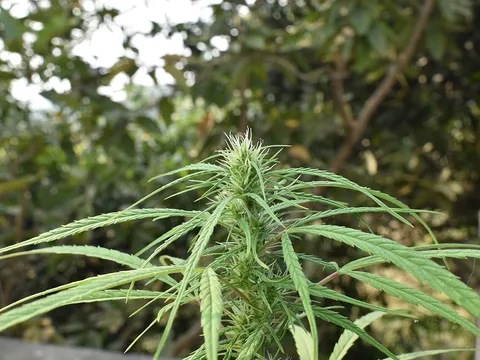 LanguageIndian hempThe name under which the British Empire, and then the world, first brought cannabis under control. It survives in the statute books of dozens of countries that have nothing to do with India.
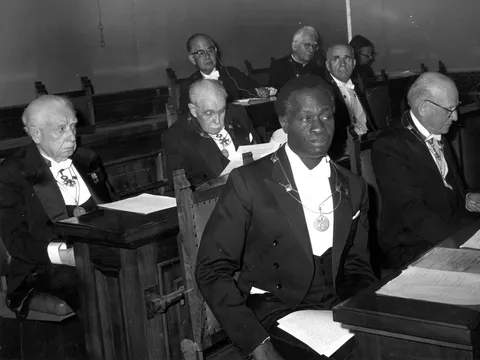 PeopleThomas Adeoye LamboThe Nigerian psychiatrist who made cannabis use a question of medicine and social change, shortly before military rulers made cultivation a capital crime.
Did you know? all cases →
1966 · Nigeria
Nigeria's 1966 Indian Hemp Decree set death or 21 years for growing cannabis and at least ten years for possessing it. The death penalty was dropped in 1975.
The full story →
Datasets not part of the score
What other organisations publish about Nigeria, and where it stands among the countries each one covers. Each dataset has a page of its own, with a world map and every country's figure.
Use
UNODC · 2017
Cannabis use
10.76%of people aged 15–64
14.3% · 200810.76% · 201720082017 ages 15–64 · survey 2017 · 14,000,000 people · UNODC 2026
Source Survey ages and years vary, and some surveys include children. Rates are not age-standardised; do not compare countries directly.WHO, Our World in Data · 2020
Alcohol drunk per person
3.78litres of pure alcohol a year
7.93 · 20007.93 · 20017.90 · 20027.92 · 20037.94 · 20047.91 · 20057.85 · 20067.75 · 20077.63 · 20086.19 · 20095.06 · 20103.98 · 20114.28 · 20124.33 · 20134.39 · 20144.39 · 20154.35 · 20164.29 · 20174.21 · 20184.21 · 20193.78 · 202020002020 Higher than 45% of 187 countriesLowestHighestper person aged 15 or over · 2020 · 7.93 in 2000 · 5.06 in 2010
Law
UNODC · 2024
Cannabis seized
358,276kg in 2024
871,480 · 2015187,374 · 2016191,084 · 2017272,052 · 2018602,654 · 2019124,473 · 2020469,246 · 2021691,885 · 2022572,643 · 2023358,276 · 202420152024 Higher than 95% of 163 countriesLess seizedMore seized358,276 kg of herb · 871,480 kg in 2015 · 124,473 kg in 2020
Society
Pew Research Center · 2025
Is using marijuana morally wrong?
83%call it immoral
Higher than 92% of 25 countriesFewer disapproveMore disapprove2% acceptable · 13% not a moral issue · 1,037 people asked
OpenAlex · 2025
Research on cannabis
0.4papers per million people
0.0 · 19800.0 · 19810.0 · 19820.0 · 19830.0 · 19840.0 · 19870.0 · 19890.0 · 19900.0 · 19910.0 · 19920.0 · 19930.0 · 19940.0 · 19950.0 · 19960.0 · 19970.0 · 19980.0 · 19990.0 · 20000.0 · 20010.0 · 20030.0 · 20040.0 · 20050.0 · 20060.0 · 20070.0 · 20080.0 · 20090.0 · 20100.0 · 20110.0 · 20120.0 · 20130.1 · 20140.1 · 20150.1 · 20160.1 · 20170.1 · 20180.1 · 20190.2 · 20200.2 · 20210.3 · 20220.3 · 20230.3 · 20240.4 · 202519802025 Higher than 41% of 176 countriesLowestHighest106 papers in 2025 · 1 in 1990 · 7 in 2010
Cato and Fraser Institutes · 2023
Human Freedom Index
5.69of 10
5.65 · 20005.65 · 20015.90 · 20025.92 · 20036.07 · 20046.23 · 20056.32 · 20066.20 · 20076.24 · 20085.98 · 20096.04 · 20106.04 · 20115.95 · 20126.10 · 20136.01 · 20146.00 · 20155.83 · 20165.96 · 20175.98 · 20186.12 · 20195.86 · 20205.89 · 20215.68 · 20225.69 · 202320002023 Higher than 25% of 164 countriesLess freeFreerrank #123 of 165 · personal freedom 5.54 · economic freedom 5.89
V-Dem, Our World in Data · 2025
Civil liberties
0.67of 1 in 2025
0.42 · 19140.42 · 19150.42 · 19160.42 · 19170.42 · 19180.41 · 19190.41 · 19200.41 · 19210.44 · 19220.44 · 19230.45 · 19240.45 · 19250.45 · 19260.45 · 19270.45 · 19280.45 · 19290.45 · 19300.45 · 19310.45 · 19320.45 · 19330.45 · 19340.45 · 19350.45 · 19360.45 · 19370.45 · 19380.45 · 19390.45 · 19400.45 · 19410.45 · 19420.45 · 19430.45 · 19440.45 · 19450.46 · 19460.46 · 19470.46 · 19480.46 · 19490.46 · 19500.46 · 19510.46 · 19520.46 · 19530.46 · 19540.47 · 19550.47 · 19560.47 · 19570.47 · 19580.47 · 19590.55 · 19600.56 · 19610.56 · 19620.56 · 19630.55 · 19640.55 · 19650.55 · 19660.47 · 19670.47 · 19680.47 · 19690.48 · 19700.48 · 19710.50 · 19720.50 · 19730.50 · 19740.50 · 19750.50 · 19760.51 · 19770.52 · 19780.60 · 19790.60 · 19800.64 · 19810.64 · 19820.62 · 19830.46 · 19840.47 · 19850.48 · 19860.48 · 19870.48 · 19880.49 · 19890.49 · 19900.50 · 19910.50 · 19920.49 · 19930.48 · 19940.45 · 19950.45 · 19960.46 · 19970.51 · 19980.64 · 19990.64 · 20000.64 · 20010.64 · 20020.64 · 20030.64 · 20040.64 · 20050.64 · 20060.64 · 20070.64 · 20080.64 · 20090.64 · 20100.64 · 20110.64 · 20120.65 · 20130.65 · 20140.64 · 20150.65 · 20160.64 · 20170.65 · 20180.63 · 20190.65 · 20200.65 · 20210.65 · 20220.67 · 20230.68 · 20240.67 · 202519142025 Higher than 42% of 175 countriesFewer libertiesMore liberties0.45 in 1925 · 0.56 in 1961 · 0.49 in 1990
Our World in Data, World Bank · 2025
Population
237,527,782people in 2025
18,664,170 · 190020,655,981 · 191022,927,580 · 192026,735,105 · 193031,085,546 · 194037,283,019 · 195045,053,787 · 196055,893,836 · 197073,764,641 · 198097,120,926 · 1990126,382,490 · 2000166,642,888 · 2010213,996,185 · 2020237,527,782 · 202519002025 Higher than 97% of 196 countriesLowestHighest18,664,170 in 1900 · 37,283,019 in 1950 · 126,382,490 in 2000
CEPII
Former colonial rulers
Once ruled by United Kingdom
World Bank · 2025
Government effectiveness
34of 100
27 · 199624 · 199827 · 200021 · 200224 · 200330 · 200430 · 200531 · 200632 · 200733 · 200831 · 200930 · 201031 · 201134 · 201234 · 201332 · 201436 · 201536 · 201637 · 201737 · 201835 · 201934 · 202033 · 202133 · 202236 · 202333 · 202434 · 202519962025 Higher than 14% of 195 countriesLowestHighestestimate -0.91 on a scale of −2.5 to 2.5 · 2025 · 27 in 2000 · 36 in 2015
Transparency International · 2024
Corruption Perceptions Index
26of 100
27 · 201225 · 201327 · 201426 · 201528 · 201627 · 201727 · 201826 · 201925 · 202024 · 202124 · 202225 · 202326 · 202420122024 Higher than 20% of 178 countriesLowestHighest0 highly corrupt, 100 very clean · 2024 · 26 in 2015 · 25 in 2020
Pew Research Center · 2020
Most common religion
Muslims
the largest group · 2020
World Bank · 2025
Income per person
$8,145per person
5,424 · 19905,301 · 19915,403 · 19925,155 · 19934,929 · 19944,798 · 19954,870 · 19964,884 · 19974,881 · 19984,782 · 19994,889 · 20005,040 · 20015,655 · 20025,905 · 20036,275 · 20046,497 · 20056,703 · 20066,949 · 20077,216 · 20087,581 · 20097,963 · 20108,154 · 20118,266 · 20128,581 · 20138,885 · 20148,892 · 20158,535 · 20168,397 · 20178,363 · 20188,362 · 20197,664 · 20207,588 · 20217,752 · 20227,843 · 20237,994 · 20248,145 · 202519902025 Higher than 31% of 187 countriesLowestHighestat purchasing power parity, 2021 dollars · 2025 · $5,424 in 1990 · $7,963 in 2010
World Bank · 2024
Development indicators
41.2%use the internet
0% · 19900% · 19960% · 19970% · 19980% · 19990.1% · 20000.1% · 20010.3% · 20020.6% · 20031.3% · 20043.5% · 20055.5% · 20066.8% · 20078% · 20089.3% · 200911.5% · 201013.8% · 201116.1% · 201219.1% · 201321% · 201422.5% · 201524.1% · 201625.9% · 201727.7% · 201829.7% · 201931.9% · 202035.5% · 202139.1% · 202240.1% · 202341.2% · 202419902024 Higher than 21% of 195 countriesLowestHighest63% live in towns · 3% aged 65+ · life expectancy 54.6 · 2024 · 0.1% in 2000 · 11.5% in 2010
GDELT · 2025
Cannabis in the news
0.0021%of global news: cannabis articles from here
0.0012% · 20170.0013% · 20180.0015% · 20190.0014% · 20200.0021% · 20210.0024% · 20220.0027% · 20230.0026% · 20240.0021% · 202520172025 Higher than 86% of 147 countriesLowestHighest2025 average, 348 days · 0.0013% in 2018 · 0.0021% in 2021
Plant and market
GBIF · 2024
Records of the cannabis plant
8dated records
1 · 19542 · 20035 · 20126 · 20137 · 20218 · 202419542024 Higher than 41% of 128 countriesLowestHighest0 more without a date · 1 in 2024
Enforcement 10 reports · the Cannabis Enforcement Tracker →
How the law above is applied: raids, seizures, fields destroyed, arrests and sentences, as recorded by the Cannabis Enforcement Tracker, our companion site.
- ArrestMan held with 95 blocks of cannabis at Taraba checkpoint
NDLEA officers arrested 39-year-old Raiyanu Misa at the Lankaviri checkpoint in Yorro, Taraba State, on 23 October 2026 with 95 blocks of compressed cannabis weighing 60.175 kg.
- ArrestPolice hand NDLEA suspect with 112 blocks of cannabis in Taraba
Police in Bali, Taraba State, handed a suspect arrested at Dakka village to the NDLEA on 23 October 2026 with 112 blocks of compressed cannabis weighing 81.49 kg.
- ArrestMan held with 159 blocks of cannabis in Kano's Gerawa area
NDLEA operatives arrested 30-year-old Murtala Lawan in the Gerawa area of Kano State on 22 October 2026, recovering 159 blocks of cannabis weighing 97.2 kg.
- ArrestLast Card held with 379 kg of cannabis in Bauchi sacks
NDLEA operatives arrested 45-year-old Jamilu Mustapha, known as Last Card, at Nasaru Town in Ningi, Bauchi State, on 21 October 2026, seizing 379 kg of cannabis packed in seven large sacks.
- ArrestUS-based grandmother held with 9.45 kg of loud at Lagos airport
The NDLEA arrested 62-year-old Nigerian-American Anetor Gloria Ubong at Lagos airport on 21 October 2026 with 9.45 kg of high-grade cannabis in her luggage off a United Airlines flight from Houston.
- Seizure583 kg of abandoned cannabis recovered from Ondo farm
NDLEA operatives raided a farm at Board-Ala in Akure South, Ondo State, on 20 October 2026 on intelligence and recovered 56 bags of abandoned cannabis weighing 583 kg. No arrests were reported.
- EradicationTwo Edo cannabis farms destroyed, 547 kg seized and burnt
The NDLEA destroyed two cannabis farms in Ugbada Forest, Uzebba, on 18 October 2026, burning 450 kg of processed cannabis and keeping 97 kg as exhibits. A 42-year-old woman was arrested nearby with 35 kg.
- EradicationNDLEA destroys 7,500 kg of skunk on three-hectare Ondo farm
Acting on intelligence, Ondo NDLEA raided a cannabis farm in the Okemoro Isinbode camp forest on 17 October, destroying 7,500 kg of skunk on three hectares and arresting five named suspects.
History 23 of 23 checked against a source
Score and entries per decade
3 today, from 100 before its first recorded change
This country's score Entries that moved the score Context only
20261 entry0 score changes
20251 entry0 score changes
20241 entry0 score changes
20191 entry0 score changes
20171 entry0 score changes
20141 entry0 score changes
19991 entry0 score changes
19941 entry0 score changes
19892 entries0 score changes
International ✓
Nigeria joins the 1988 UN convention against drug trafficking
Nigeria ratified the United Nations Convention against Illicit Traffic in Narcotic Drugs and Psychotropic Substances of 1988 on 1 November 1989. Article 3 of the convention requires each party, subject to its constitutional principles, to make the possession, purchase and cultivation of drugs for personal consumption a criminal offence.
Tightening ✓
Nigeria creates its drug enforcement agency with sentences up to life
The National Drug Law Enforcement Agency Decree set up the agency that still enforces Nigeria's drug law and, with the Indian Hemp Decree of 1966 and the Special Tribunal decrees of 1984 and 1986, forms its legal base. As summarised in a 2017 regional review, the law makes no distinction between possession and use, both punished with 15 to 25 years in prison, while producing, planting or growing, selling, buying or otherwise dealing all carry life imprisonment. The decree was amended in 1990 and 1992 and became an Act in the 2004 revision of the laws.
19841 entry0 score changes
19831 entry0 score changes
19751 entry0 score changes
19691 entry0 score changes
19661 entry1 score change
19652 entries0 score changes
Enforcement ✓
Nigeria supplies its own cannabis and feeds regional trafficking
By 1965 Nigeria was growing cannabis for local consumption and for illicit traffic with neighbouring countries and in international trade, according to Telia and colleagues as reported by du Toit. Use at the time was concentrated among men — young migrant workers, political enforcers and secret societies with criminal aims such as Odozi Obodo and the Leopard society — in contrast to East Africa, where men and women both used the herb.
Debate ✓ Article
A Nigerian psychiatrist describes cannabis use as a medical problem
Thomas Adeoye Lambo, one of the first psychiatrists to treat cannabis-using patients in West Africa, published a study of addiction in the leading West African medical journal and in the UN's drug research bulletin. It helped establish cannabis use as a medical question in the region. The Indian Hemp Decree imposed by the military government the following year shared very little with his view.
19641 entry0 score changes
19621 entry0 score changes
19531 entry0 score changes
19351 entry0 score changes
19271 entry1 score change
18611 entry0 score changes
Sources hover a number in the text to see its source
- Cited
- 19
- Websites
- 14
- 2
- Last reviewed
- History checked
- 23/23
Most cited
- allafrica.com2
- frsc.gov.ng2
- lawsofnigeria.placng.org2
- archive.gazettes.africa1
- cdn.sanity.io1
- digitallibrary.un.org1
All 19 sources
- Indian Hemp Act (1966 No. 19, 1984 No. 27) — Laws of the Federation of Nigeria (PLAC)Section 1 definition; section 2(1) prints a death alternative superseded by the 1975 and 1984 gazetted amendmentsarchived
- Wikipedia — Cannabis in Nigeriaarchived
- NigeriaLII — Ibrahim v Federal Republic of Nigeria (Court of Appeal, 2016)archived
- International Drug Policy Consortium and West Africa Commission on Drugs — Drug laws in West Africa, annex of country profiles, November 2017 (PDF)archived
- Nigeria — Indian Hemp (Amendment) Decree 34 of 1975, government text communicated to the UNE/NL.1980/91, p. 1, section 1(a)–(b); effective 24 October 1975. Operative text says not less than ten years; explanatory note wrongly says not exceeding.archived
- Nigeria — Indian Hemp (Amendment) Decree 27 of 1984, Official Gazette 5520 September 1984, pp. A553–A554; sections 1(a), 2 and 3. Made 14 September 1984; deemed effective 31 December 1983.archived
- NALTF — Senate receives executive bills to overhaul the drug enforcement frameworkNDLEA Bill, 2026, would repeal the NDLEA Act and the Indian Hemp Act; referred for legislative processingarchived
- allAfrica — Nigeria: court jails man for selling cannabis in Lagos hotel (2025)
- Peoples Gazette — report on a 16-year sentence for cannabis dealing at the Federal High Court, Ibadan, 25 July 2025archived
- Nigeria — Interpretation ActSections 4(1), 6(1)(a): amended enactments; repeal does not revive a provision no longer in forcearchived
- Sub-Saharan Africa, Cannabis, and Contemporary Drug PolicyNeil Carrier · In Cannabis: Global Histories, edited by Lucas Richert, James H. Mills · MIT Press · 2021 · pp. 329–330 · ISBN 9780262366137
- News Agency of Nigeria — NGO demands urgent action on drug cultivation, use (15 April 2025)archived
- Federal Road Safety Commission — Establishment Act 2007, section 22 (PDF)Section 22; Second Schedule, item 12archived
- Federal Road Safety Corps — official notice of offences and penaltiesItem 12, driving under alcohol or drug influencearchived
- The Guardian Nigeria (NAN) — NDLEA arrests 62,595 drug suspects, convicts 11,628 (6 May 2025)archived
- Vanguard via AllAfrica — Over 16,304 arrested, 4.5m kg of drugs seized in 10 months, Marwa (19 November 2025)archived
- Socio-psychiatric problems of cannabis in NigeriaTolani Asuni · In Bulletin on Narcotics · 1964 · vol. 16, pp. 17–28
- Medical and Social Problems of Drug Addiction in West Africa (With Special Emphasis on Psychiatric Aspects)Thomas Adeoye Lambo · In West African Medical Journal · 1965 · 14(6), pp. 236–254archived
- International Narcotics Control Board — Travellers carrying medicines containing controlled substances