Madagascar
9/100
#128 of 196 worldwide
#29 of 54 in Africa
Small personal quantities of cannabis bring two to six months, a fine, or both; rongony is nonetheless grown on a large scale. Cannabis is in Table I, with no medical, hemp or research route.
In short all countries →
- Can I carry it?NoIt is a crime
- Can I grow it?NoIt is a crime
- Can I buy it?NoNo legal source; cannabis is in Table I with no medical or research route
- Can I use it in public?NoNot in public, and even at home the law does not protect it
- What if I'm caught?PrisonPersonal use can lead to prison or compulsory detention
A rough guide read from the scores and the rules below, not legal advice. The details and the exceptions are in each segment: select an answer to jump to it.
Cannabis in Madagascar not part of the score · all 15 datasets ↓
Who uses it
About 1 in 11
people aged 15–64 in Madagascar used cannabis in the past year: 1.7 million people.
- Past year
- 9.1%
- Africa median
- 3.1%
UNODC · survey 2004
Source Past-year cannabis use among people aged 15–64. People who used cannabis in the past year, from a 2004 survey, applied to today's population aged 15–64.Survey ages and years vary, and some surveys include children. Rates are not age-standardised; do not compare countries directly.
UNODC World Drug Report 2026, annex table 1.2. Population from the World Bank, aged 15–64. The whole dataset →
Use across Africa
6thhighest of 28 surveyed countries
- 🇲🇦 Morocco10.5%
- 🇿🇲 Zambia9.5%
- 🇲🇬 Madagascar9.1%
- 🇲🇱 Mali7.8%
- 🇱🇷 Liberia7.5%
Past-year use, latest survey of each. Survey years and ages differ. On the map →
Cannabis in figures
- Cannabis seized12,354kg in 2024 · 2024
- Research on cannabis0.0papers per million people · 2023
- Cannabis in the news0%of global news: cannabis articles from here · 2025
The dot: where it stands among the countries each dataset covers, lowest to highest. All datasets ↓
What they call it
- rongony[1]Malagasycannabis, the plant and the drugIn the atlas →
Score breakdown 9/100 · how the scores are made
Article 141 of Law 97-039 sets two to six months in prison, a fine of FMG 10,000 to 250,000, or both, for a small personal quantity of cannabis derivatives other than oil.[1] Cannabis oil falls under a three-month to one-year range with the same fine.[1] The law does not define a small quantity in grams, so the court decides.[1] Possession outside that rule can be prosecuted under the general offences, which provide forced labour, a fine, or both.[1]
| Amount | What happens | Punishment | Fine |
| Small personal quantity, non-oil derivativesLaw states FMG 10,000–250,000 (5 FMG = 1 ariary); prison, fine, or both | CriminalPersonal use | 2–6 months | MGA 2,000 – MGA 50,000 |
| Small personal quantity, cannabis oilLaw states FMG 10,000–250,000; prison, fine, or both | CriminalPersonal use | 3 months – 1 year | MGA 2,000 – MGA 50,000 |
| Possession or use outside the small-quantity ruleArticles 9 and 97; forced labour, a fine, or both. The duration of forced labour is set by the Penal Code and was not verified. | CriminalForced labour | — | MGA 2,000 – MGA 200,000 |
Cultivation is banned and landowners must destroy cannabis plants.[1] Producing high-risk drugs carries forced labour, a fine of FMG 50,000 to 5,000,000, or both, under Article 95; growing a small quantity for personal use instead falls under Article 141.[1] Aggravated cases, including organised gangs, can replace fixed-term forced labour with life forced labour.[1] Rongony is grown on a large scale in the north and south.[2]
| Amount | What happens | Punishment | Fine |
| Cultivation or production (Article 95)Law states FMG 50,000–5,000,000; forced labour, a fine, or both. Duration not verified. | CriminalForced labour | — | MGA 10,000 – MGA 1,000,000 |
| Small personal growing (Article 141) | CriminalPersonal use | 2–6 months | MGA 2,000 – MGA 50,000 |
| Aggravated cultivation or trafficking (Article 108)Organised gang, violence, minors, officials, schools or hospitals, death or grave harm | CriminalLife forced labour | — | — |
Fines are an alternative, not a floor: forced labour can be replaced by a fine alone, and the maximum personal-use fine is 50,000 ariary, so the law on paper is harsher than its practice in small cases.[1] The gendarmerie reports large seizures but publishes no national arrest or seizure series.[3] Officers describe armed traffickers in remote growing areas and very thin policing.[2]
Trafficking carries forced labour, a fine of FMG 10,000 to 1,000,000, or both, under Article 97; international traffic carries the same with a higher fine range under Article 96.[1] Offering or giving a drug for another person's consumption carries one to five years and a fine, while facilitating use carries five to ten years.[1] Aggravated cases can bring life forced labour.[1]
| Amount | What happens | Punishment | Fine |
| Trafficking (Article 97)Forced labour, a fine, or both. Duration not verified. | CriminalForced labour | — | MGA 2,000 – MGA 200,000 |
| International traffic (Article 96) | CriminalForced labour | — | MGA 10,000 – MGA 1,000,000 |
| Giving or offering for another's use (Article 99) | CriminalGiving or offering | 1–5 years | MGA 2,000 – MGA 200,000 |
| Facilitating use (Article 98) | CriminalFacilitating use | 5–10 years | MGA 2,000 – MGA 200,000 |
| Aggravated offence (Article 108)Life forced labour replaces the fixed term in aggravated cases | CriminalLife forced labour | — | — |
Use outside a medical prescription is banned.[1] There is no separate consumption penalty: a user can be prosecuted under the general drug offences or, if holding a small quantity, under Article 141.[1] The medical-prescription exception cannot be used for cannabis because Table I lists it as having no medical interest.[4]
No legal source. Cannabis and cannabis resin are in Table I, which the 2013 order describes as having no medical interest, and licensing under the 1997 law applies only to Tables II and III.[1][4] No patient, pharmacy or research route was found.[4]
Context not part of the score · every country, by topic →
There is no legal recreational market. Rongony is grown on a large scale in the north and south and sold in a large domestic market that is hard to police in remote growing regions.[2] Holding a small personal quantity can end in a fine instead of prison, but use and supply remain crimes.[1] The 1997 law still governs cannabis.
No patient programme exists. The law bans use outside medical prescription, but cannabis is in Table I, expressly listed as having no medical interest, and no route for patients to obtain it was found.[1][4]
No cannabis clubs are known, and the law leaves no room for them: growing cannabis and supplying it to another person are both prohibited.[1][2]
Cannabis seeds and cuttings are part of a Table I plant. Article 9 bans acquiring or possessing Table I plants and substances, and no seed or clone trade is licensed.[1][4]
No hemp or CBD exemption and no THC threshold. Article 8 bans cultivation of the cannabis plant without distinguishing industrial varieties, and the 2013 order lists the plant and its parts in Table I.[1][4] No research or industrial licence was found.[4]
No licensed production. Cannabis is in Table I, and the 1997 law's licensing regime applies only to Tables II and III; producing a high-risk drug is punished with forced labour, a fine, or both.[1][4]
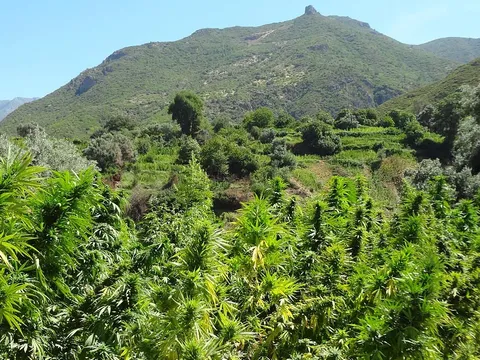
Cannabis, called rongony, is grown on a large scale for the home market and for neighbouring islands.[2] A 2021 study estimated that the commune of Antsahabe alone produces at least 200 tonnes a year, and surveys in mid-2020 found a gram costing about three US cents, the lowest price in the Indian Ocean islands.[2] A farmer was paid about 20,000 ariary for a kilogram, while a dealer selling to consumers earned 100,000 to 150,000.[2] The gendarmerie seized close to 53 tonnes in 2020.[2]
There is no legal recreational supply for anyone. Small personal quantities of non-oil cannabis derivatives can bring two to six months in prison, a fine, or both; cannabis oil has a three-month to one-year range with the same alternatives.[1]
Article 141 requires drivers to submit to drug screening, and refusal is punished on the personal-use scale; penalties double where the offence causes involuntary homicide or injury.[1] No blood or saliva THC limit and no published order setting the tests was found, and the road code was not verified.[1]
No national arrest or seizure total for 2024–2026 was published.[3] Reported cases include 600,000 plants on 10 hectares at Tsaratanàna in 2024 with no arrests, 1,440 kg seized around Antsohihy over six months in 2025 with 10 arrests, and 35 kg with 13 arrests at Ambohimanarina in March 2026.[3][5]
Conviction brings mandatory confiscation of seized plants and substances, equipment used for the offence and its proceeds; drugs found on an illicit user are seized and confiscated even without prosecution.[1]
Cannabis has been grown and used long enough to carry its own Malagasy name, rongony: the 1997 law still repeals the 1960 ordinance on the consumption of *chanvre indien dit rongony*.[1] It was already prohibited under the Merina kingdom in 1787.[6]
Taking cannabis into or out of Madagascar is a separate offence from possessing it, normally charged as smuggling or trafficking, with far heavier penalties. That holds almost everywhere, including between two places where cannabis is legal.
A prescription or medical card from another country is generally not recognised. Travellers who need a cannabis-based medicine should ask Madagascar's embassy before travelling.[7]
General guidance that applies to almost every country, not a check of Madagascar's customs rules.
Culture the atlas →
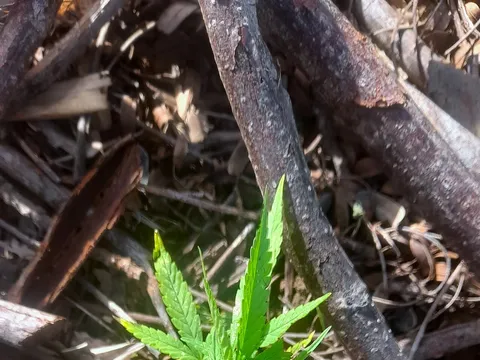 LanguageRongonyThe Malagasy name for cannabis, the fibre plant and the drug alike: a textile word that became a colonial offence and is still the everyday name on Madagascar.
 LanguageZamalThe Creole word for cannabis on Réunion. It seems to come from Madagascar, though modern Malagasy does not use it; on the island it names a plant, a temper and a book of poems.
Did you know? all cases →
Merina kingdom · Madagascar
In Madagascar, King Andrianampoinimerina prohibited cannabis smoking in central Imerina while allowing cultivation for cloth and rope. Historical accounts describe death as a penalty; the exact year of the royal ban is unresolved.
The full story →
Datasets not part of the score
What other organisations publish about Madagascar, and where it stands among the countries each one covers. Each dataset has a page of its own, with a world map and every country's figure.
Use
UNODC · 2004
Cannabis use
9.1%of people aged 15–64
ages 15–64 · survey 2004 · 1,700,000 people · UNODC 2026
Source Survey ages and years vary, and some surveys include children. Rates are not age-standardised; do not compare countries directly.WHO, Our World in Data · 2020
Alcohol drunk per person
0.99litres of pure alcohol a year
1.46 · 20001.46 · 20011.25 · 20021.07 · 20031.00 · 20040.94 · 20050.91 · 20060.88 · 20070.99 · 20081.04 · 20091.06 · 20100.96 · 20110.93 · 20120.97 · 20131.01 · 20141.01 · 20151.00 · 20161.02 · 20171.02 · 20181.02 · 20190.99 · 202020002020 Higher than 18% of 187 countriesLowestHighestper person aged 15 or over · 2020 · 1.46 in 2000 · 1.06 in 2010
Law
UNODC · 2024
Cannabis seized
12,354kg in 2024
7,742 · 20153 · 201610,352 · 2017780 · 201881,789 · 202126,938 · 202214,421 · 202312,354 · 202420152024 Higher than 74% of 163 countriesLess seizedMore seized12,351 kg of herb · 4 kg of resin · 7,742 kg in 2015
Society
OpenAlex · 2023
Research on cannabis
0.0papers per million people
0.0 · 20200.0 · 20220.0 · 202320202023 Higher than 2% of 176 countriesLowestHighest1 papers in 2023
Cato and Fraser Institutes · 2023
Human Freedom Index
6.80of 10
6.87 · 20007.11 · 20016.77 · 20027.05 · 20036.87 · 20046.84 · 20056.95 · 20067.12 · 20077.20 · 20086.44 · 20096.48 · 20106.20 · 20116.08 · 20126.30 · 20136.63 · 20146.72 · 20156.82 · 20166.74 · 20176.83 · 20186.83 · 20196.39 · 20206.43 · 20216.70 · 20226.80 · 202320002023 Higher than 46% of 164 countriesLess freeFreerrank #88 of 165 · personal freedom 7.36 · economic freedom 6.02
V-Dem, Our World in Data · 2025
Civil liberties
0.65of 1 in 2025
0.16 · 19000.16 · 19010.16 · 19020.16 · 19030.16 · 19040.16 · 19050.19 · 19060.19 · 19070.19 · 19080.19 · 19090.19 · 19100.19 · 19110.19 · 19120.19 · 19130.19 · 19140.19 · 19150.19 · 19160.19 · 19170.19 · 19180.19 · 19190.19 · 19200.16 · 19210.16 · 19220.16 · 19230.16 · 19240.16 · 19250.16 · 19260.16 · 19270.16 · 19280.16 · 19290.16 · 19300.16 · 19310.16 · 19320.16 · 19330.16 · 19340.16 · 19350.17 · 19360.18 · 19370.18 · 19380.17 · 19390.15 · 19400.15 · 19410.15 · 19420.15 · 19430.15 · 19440.15 · 19450.18 · 19460.14 · 19470.16 · 19480.17 · 19490.19 · 19500.19 · 19510.19 · 19520.19 · 19530.19 · 19540.19 · 19550.20 · 19560.24 · 19570.24 · 19580.30 · 19590.41 · 19600.44 · 19610.44 · 19620.44 · 19630.44 · 19640.44 · 19650.44 · 19660.44 · 19670.44 · 19680.44 · 19690.45 · 19700.45 · 19710.41 · 19720.47 · 19730.46 · 19740.37 · 19750.39 · 19760.39 · 19770.39 · 19780.39 · 19790.39 · 19800.39 · 19810.39 · 19820.40 · 19830.40 · 19840.41 · 19850.43 · 19860.44 · 19870.45 · 19880.46 · 19890.49 · 19900.46 · 19910.68 · 19920.69 · 19930.73 · 19940.74 · 19950.73 · 19960.70 · 19970.70 · 19980.69 · 19990.70 · 20000.69 · 20010.60 · 20020.71 · 20030.74 · 20040.74 · 20050.74 · 20060.74 · 20070.74 · 20080.56 · 20090.57 · 20100.57 · 20110.56 · 20120.65 · 20130.75 · 20140.76 · 20150.76 · 20160.76 · 20170.77 · 20180.73 · 20190.73 · 20200.73 · 20210.73 · 20220.70 · 20230.69 · 20240.65 · 202519002025 Higher than 40% of 175 countriesFewer libertiesMore liberties0.16 in 1925 · 0.44 in 1961 · 0.49 in 1990
Our World in Data, World Bank · 2025
Population
32,740,678people in 2025
2,678,373 · 19002,543,231 · 19102,495,724 · 19202,865,906 · 19303,303,271 · 19403,956,077 · 19505,111,033 · 19606,672,004 · 19709,006,039 · 198012,055,649 · 199016,516,336 · 200022,183,343 · 201028,953,560 · 202032,740,678 · 202519002025 Higher than 75% of 196 countriesLowestHighest2,678,373 in 1900 · 3,956,077 in 1950 · 16,516,336 in 2000
CEPII
Former colonial rulers
Once ruled by France
World Bank · 2025
Government effectiveness
34of 100
31 · 199631 · 199831 · 200040 · 200235 · 200340 · 200442 · 200541 · 200643 · 200744 · 200844 · 200939 · 201038 · 201134 · 201233 · 201332 · 201432 · 201536 · 201636 · 201735 · 201836 · 201935 · 202034 · 202134 · 202233 · 202335 · 202434 · 202519962025 Higher than 14% of 195 countriesLowestHighestestimate -0.87 on a scale of −2.5 to 2.5 · 2025 · 31 in 2000 · 32 in 2015
Transparency International · 2024
Corruption Perceptions Index
26of 100
32 · 201228 · 201328 · 201428 · 201526 · 201624 · 201725 · 201824 · 201925 · 202026 · 202126 · 202225 · 202326 · 202420122024 Higher than 20% of 178 countriesLowestHighest0 highly corrupt, 100 very clean · 2024 · 28 in 2015 · 25 in 2020
Pew Research Center · 2020
Most common religion
Christians
the largest group · 2020
World Bank · 2025
Income per person
$1,668per person
1,968 · 19901,790 · 19911,757 · 19921,740 · 19931,686 · 19941,661 · 19951,643 · 19961,649 · 19971,659 · 19981,681 · 19991,701 · 20001,749 · 20011,486 · 20021,585 · 20031,620 · 20041,648 · 20051,687 · 20061,732 · 20071,794 · 20081,673 · 20091,635 · 20101,615 · 20111,618 · 20121,611 · 20131,620 · 20141,628 · 20151,649 · 20161,670 · 20171,679 · 20181,708 · 20191,546 · 20201,577 · 20211,602 · 20221,630 · 20231,659 · 20241,668 · 202519902025 Higher than 3% of 187 countriesLowestHighestat purchasing power parity, 2021 dollars · 2025 · $1,968 in 1990 · $1,635 in 2010
World Bank · 2024
Development indicators
18.7%use the internet
0% · 19900% · 19960% · 19970.1% · 19980.2% · 19990.2% · 20000.2% · 20010.3% · 20020.4% · 20030.5% · 20040.6% · 20050.6% · 20060.6% · 20071.6% · 20081.6% · 20091.7% · 20101.9% · 20112.3% · 20123% · 20133.7% · 20144.2% · 20154.7% · 20166.4% · 20177.7% · 20189.4% · 201911.4% · 202013.7% · 202117.8% · 202218.2% · 202318.7% · 202419902024 Higher than 7% of 195 countriesLowestHighest32.4% live in towns · 3.4% aged 65+ · life expectancy 63.8 · 2024 · 0.2% in 2000 · 1.7% in 2010
GDELT · 2025
Cannabis in the news
0%of global news: cannabis articles from here
0% · 20170% · 20180.0001% · 20190.0001% · 20200% · 20210% · 20220.0001% · 20230% · 20240% · 202520172025 Higher than 0% of 147 countriesLowestHighest2025 average, 348 days · 0% in 2018 · 0% in 2021
Plant and market
GBIF · 2007
Records of the cannabis plant
5dated records
1 · 19352 · 19895 · 200719352007 Higher than 31% of 128 countriesLowestHighest2 more without a date · 3 in 2007
Enforcement 6 reports · the Cannabis Enforcement Tracker →
How the law above is applied: raids, seizures, fields destroyed, arrests and sentences, as recorded by the Cannabis Enforcement Tracker, our companion site.
- ArrestPolice arrest ten students over suspected cannabis
Police raided a youth gathering point at Ambatondrazaka and arrested ten students aged 14 to 20, eight girls and two boys, after finding a bag of suspected cannabis.
- ArrestPolice arrest nineteen men consuming cannabis at Namontana
Police arrested 19 men for consuming cannabis at Namontana, Antananarivo, and seized 142 sachets.
- ArrestPolice seize 35 kg and arrest thirteen at Ambohimanarina
A raid on a house used as a depot and consumption lounge at Ambohimanarina, Antananarivo, found 35.054 kg of cannabis and led to 13 arrests: four wholesalers and nine dealers or buyers. All were jailed at Antanimora.
- SeizureAntsohihy gendarmes report 1,440 kg seized over six months
The Sofia gendarmerie reported 1,440 kg of cannabis in 114 sacks seized around Antsohihy over six months, with 10 arrests. The stock was burned on 8 December, and another 400 kg was seized the same afternoon.
- SeizureGendarmes seize 350 kg at Ihosy after traffickers flee
Gendarmes and soldiers seized 350.06 kg of cannabis in 25 sacks at Sahambano forest, Ihosy, after traffickers opened fire and fled. Local police seized another 52 kg. No arrests were reported.
- EradicationMalagasy gendarmes uproot ten hectares of cannabis in a protected area
In an operation from 4 to 15 July in the protected zone of Mount Tsaratanàna, in Ambanja district, twenty gendarmes and four agents of Madagascar National Parks uprooted about 600,000 cannabis plants on ten hectares and burned 950 kg of dried cannabis.
History 12 of 12 checked against a source
Score and entries per decade
9 today, from 100 before its first recorded change
This country's score Entries that moved the score Context only
20201 entry0 score changes
20132 entries0 score changes
Other law ✓
Madagascar lists cannabis in Table I with no medical interest
Health order 14571/2013 put cannabis and cannabis resin in Table I, described as high-risk and without medical interest, repeated the ban on cultivating the plant and banned all dealings in Table I and II plants. The list remains the operative schedule under the 1997 law and explains why no medical, hemp or research route exists.
Other law ✓
Madagascar organises a gendarmerie anti-drug office
Gendarmerie order 350/2013 organised the Office chargé de la Lutte contre les Stupéfiants, the unit behind the cannabis seizures reported in later years.
20031 entry0 score changes
19971 entry1 score change
19911 entry0 score changes
19741 entry0 score changes
19601 entry1 score change
19581 entry1 score change
19151 entry1 score change
17871 entry0 score changes
16611 entry0 score changes
Sources hover a number in the text to see its source
- Cited
- 7
- Websites
- 6
- Last reviewed
- History checked
- 12/12
Most cited
- lexpress.mg2
- cnlegis.gov.mg1
- horizon.documentation.ird.fr1
- incb.org1
- pic.commerce.mg1
- riskbulletins.globalinitiative.net1
All 8 sources
- Madagascar — Law 97-039 of 4 November 1997 on narcotics, psychotropics and precursorsArticles 1–2, 6, 8–9, 11, 95–99, 108, 140–141 and 148.archived
- Global Initiative Against Transnational Organized Crime — Risk Bulletin 18, Madagascar's large-scale cannabis market (2021)archived
- L'Express de Madagascar — Antsohihy: plus d'une tonne de marijuana saisie (11 December 2025)1,440 kg in 114 sacks over six months; 10 arrests; 400 kg more the same day.archived
- Madagascar — Arrêté 14571/2013 of 5 July 2013 listing narcotic plants and substancesArticles 4, 7 and 8; cannabis and cannabis resin in Table I, 'dépourvues d'intérêt en médecine'.archived
- L'Express de Madagascar — Trafic: grossistes et dealers de cannabis arrêtés (6 March 2026)35.054 kg; 13 arrests at Ambohimanarina.archived
- La conception malgache du monde, du surnaturel et de l’homme en Imerina, tome 1Louis Molet · L’Harmattan · 1979 · p. 214, Le chanvre; citing Tantara, p. 674archived
- International Narcotics Control Board — Travellers carrying medicines containing controlled substances