Liberia
9/100
#127 of 196 worldwide
#28 of 54 in Africa
Cannabis use carries four months to one year on a first offence under the 2023 law. Possession and growing for personal use are separate felonies; trafficking is non-bailable.
In short all countries →
- Can I carry it?NoIt is a crime
- Can I grow it?NoIt is a crime
- Can I buy it?NoThere is no legal source
- Can I use it in public?NoNot in public, and even at home the law does not protect it
- What if I'm caught?PrisonPersonal use can lead to prison or compulsory detention
A rough guide read from the scores and the rules below, not legal advice. The details and the exceptions are in each segment: select an answer to jump to it.
Cannabis in Liberia not part of the score · all 14 datasets ↓
Who uses it
About 1 in 13
people aged 15–64 in Liberia used cannabis in the past year: 250,000 people.
- Past year
- 7.5%
- Africa median
- 3.1%
UNODC · survey 2017
Source Past-year cannabis use among people aged 15–64. People who used cannabis in the past year, from a 2017 survey, applied to today's population aged 15–64.Survey ages and years vary, and some surveys include children. Rates are not age-standardised; do not compare countries directly.
UNODC World Drug Report 2026, annex table 1.2. Population from the World Bank, aged 15–64. The whole dataset →
Use across Africa
8thhighest of 28 surveyed countries
- 🇲🇬 Madagascar9.1%
- 🇲🇱 Mali7.8%
- 🇱🇷 Liberia7.5%
- 🇿🇼 Zimbabwe6.9%
- 🇸🇱 Sierra Leone6.5%
Past-year use, latest survey of each. Survey years and ages differ. On the map →
Cannabis in figures
- Cannabis seized2,581kg in 2024 · 2024
- Research on cannabis0.2papers per million people · 2020
- Cannabis in the news0.0001%of global news: cannabis articles from here · 2025
The dot: where it stands among the countries each dataset covers, lowest to highest. All datasets ↓
What they call it
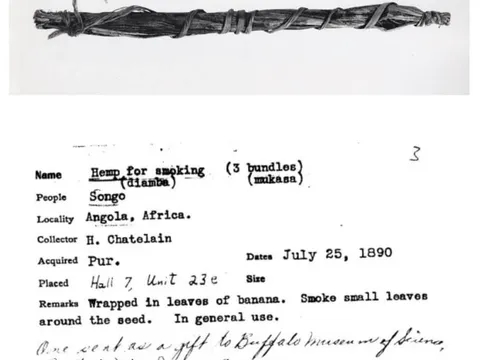
- Diamba[1]English (Liberia)cannabis; farmed and smoked by Congo-origin recaptives since the 19th century
Score breakdown 9/100 · how the scores are made
Section 14.89 makes unlicensed possession or purchase an offence. For Schedule I cannabis it distinguishes first-degree felony possession for trafficking from second-degree felony possession otherwise, a split introduced by the 2023 overhaul.[2] Second-degree cases require cash bail worth twice the bond. The penalty paragraph gives 10–20 years or the Penal Law’s sentencing rules; those rules ordinarily cap a second-degree felony at five years, leaving the interaction of the two clauses unresolved.[2][3]
| Amount | What happens | Punishment | Fine |
| Possession other than for traffickingSecond-degree felony; Penal Law cap five years, but the Act also states 10–20 years — interaction unresolved | CriminalPossession | Up to 5 years | — |
| Possession for traffickingFirst-degree felony, non-bailable; 10–20 years | CriminalPossession for trafficking | 10–20 years | — |
Section 14.90 distinguishes growing Schedule I cannabis for trafficking, a non-bailable first-degree felony, from growing otherwise, a second-degree felony with cash bail worth twice the bond.[2] Its penalty clause gives 10–20 years or sentencing under Penal Law sections 50.5–50.6. No personal plant allowance is specified.[2][3]
| Amount | What happens | Punishment | Fine |
| Growing other than for traffickingSecond-degree felony; Penal Law cap five years, but the Act also states 10–20 years — interaction unresolved | CriminalCultivation | Up to 5 years | — |
| Growing for traffickingFirst-degree felony, non-bailable; 10–20 years | CriminalCultivation for trafficking | 10–20 years | — |
The enacted 2023 law requires cash bail for cannabis-use cases and denies bail for first-degree trafficking offences, after senators clashed over the bail ban the year before.[2] First-time Schedule I use carries four months to one year; repeat use is a second-degree felony carrying one to five years or more under the stated sentencing references.[2]
Section 14.91(a) makes unauthorised use of Schedule I drugs a first-degree misdemeanor with four months to one year, escalating on second apprehension to a second-degree felony with one to five years or more under the sentencing references.[2] Cash bail is required. Cannabis, resin, extracts and tinctures are listed in Schedule I. The express rehabilitation alternative appears in the separate paragraph for Schedules II–IV.[2]
Context not part of the score · every country, by topic →
There is no legal way to get cannabis. First-time unauthorised use of Schedule I drugs carries four months to one year, and a second apprehension escalates to a second-degree felony with one to five years; cash bail is required in both cases.[2] Schedule I covers cannabis, resin, extracts and tinctures, and the 2023 overhaul kept all of them outside any licence.[2]
No medical cannabis. Schedule I lists cannabis, resin, extracts and tinctures, and unauthorised use is an offence; the express rehabilitation alternative sits in the separate paragraph for Schedules II–IV, not for cannabis.[2]
No cannabis clubs are known, and the law leaves no room for them: growing cannabis and supplying it to another person are both prohibited.[2]
Section 14.82 expressly includes cannabis seeds and all parts of the plant in its definition of cannabis, covering viable seeds and cuttings. It excludes sterilised seeds that cannot germinate, mature stalks and fibre, and seed oil or cake.[2] Unlicensed possession, supply and cultivation are offences under sections 14.85, 14.89 and 14.90.[2]
No hemp regime was found: no THC threshold, licence, or cultivation permit was located, and the 2023 Act kept cannabis in Schedule I without a medical or industrial pathway.[2] The definition carve-out for sterilised seed, mature stalks and fibre, and seed oil or cake takes those materials outside cannabis rather than licensing a hemp crop.[2]
No licensed cannabis production was found. What is grown is unlicensed: the 2023 Act sets no personal plant allowance and treats even non-trafficking growing as a second-degree felony.[2]
Figures reported by the government to the UN drugs office record 2,581 kg of herbal cannabis seized in 2024, against 596 kg in 2023.[5] The UN publishes them as kilogram equivalents, and countries count seizures differently, so the figures are not comparable across borders.[5] The LDEA later reported seizing 1,419.34 kg of illicit drugs worth over US$20.8 million between July 2025 and June 2026; its itemised breakdown for the same period listed 2,353.396 kg of marijuana alongside cocaine, heroin, kush and pills.[6]
There is no legal recreational supply for visitors. Under section 14.100, a non-Liberian convicted of any crime in the drug-law subchapter must be deported immediately after serving the sentence or sanction, including convictions for use.[2]
The government-published Vehicle and Traffic Law section 10.90 prohibits operating a motor vehicle when alcohol or a narcotic drug impairs driving ability, and covers non-narcotic drugs causing dizziness or inability to drive safely.[7] It also has a separate habitual-narcotic-user prohibition, so not every limb requires proof of impairment on that occasion, and lawful entitlement to use a drug is expressly no defence.[7] The published statute lists a $1,000 fine ceiling or one year’s imprisonment; current currency treatment, amendments and tariffs were not certified.[7] Section 2.61 requires licence revocation on a section 10.90 conviction; under section 2.69 a new application may be made after one year from surrender, subject to investigation and licensing conditions.[7] The implied specimen-consent and refusal-hearing provisions concern alcohol and were not treated as cannabis-testing powers; current drug-specific testing rules and a THC cutoff remain unverified.[7]
Between September and October 2025 the LDEA arrested 178 suspected traffickers and dealers across all 15 counties, seizing narcotics valued at over L$40 million, with the suspects forwarded to court.[8] For July 2025 to June 2026 the agency reported 1,831 suspected drug offenders arrested nationwide and, for January to June 2026, convictions of eight traffickers with prison sentences of one to ten years.[6] Both counts cover all drugs, and no account of routine user-level arrests was found.
Section 14.100 requires immediate deportation of a non-Liberian convicted of an offence under the drug law after serving the sentence or sanction.[2] Section 14.101 requires drug clearance for admission, enrolment or employment in public institutions and directs private institutions to introduce such measures; failure to comply can justify refusal.[2]
Congo-origin Liberians farmed and smoked diamba in calabash water pipes, a habit Swiss naturalist Johann Büttikofer reported in 1890 as brought from their old home.[1] The word lives on in the atlas entry diamba, and the episode is traced in the 1890 account.[1]
Taking cannabis into or out of Liberia is a separate offence from possessing it, normally charged as smuggling or trafficking, with far heavier penalties. That holds almost everywhere, including between two places where cannabis is legal.
A prescription or medical card from another country is generally not recognised. Travellers who need a cannabis-based medicine should ask Liberia's embassy before travelling.[9]
General guidance that applies to almost every country, not a check of Liberia's customs rules.
Culture the atlas →
Datasets not part of the score
What other organisations publish about Liberia, and where it stands among the countries each one covers. Each dataset has a page of its own, with a world map and every country's figure.
Use
UNODC · 2017
Cannabis use
7.52%of people aged 15–64
3.18% · 20087.52% · 201720082017 ages 15–64 · survey 2017 · 250,000 people · UNODC 2026
Source Survey ages and years vary, and some surveys include children. Rates are not age-standardised; do not compare countries directly.WHO, Our World in Data · 2020
Alcohol drunk per person
2.86litres of pure alcohol a year
4.50 · 20004.50 · 20014.42 · 20024.38 · 20034.36 · 20044.32 · 20054.27 · 20064.18 · 20074.09 · 20083.97 · 20093.90 · 20103.78 · 20113.71 · 20123.59 · 20133.63 · 20143.63 · 20153.68 · 20163.68 · 20173.64 · 20183.64 · 20192.86 · 202020002020 Higher than 35% of 187 countriesLowestHighestper person aged 15 or over · 2020 · 4.50 in 2000 · 3.90 in 2010
Law
UNODC · 2024
Cannabis seized
2,581kg in 2024
18,800 · 20158,900 · 20167,430 · 20193,000 · 20202,226 · 20211,051 · 2022596 · 20232,581 · 202420152024 Higher than 50% of 163 countriesLess seizedMore seized2,581 kg of herb · 18,800 kg in 2015 · 3,000 kg in 2020
Society
OpenAlex · 2020
Research on cannabis
0.2papers per million people
0.2 · 20110.2 · 202020112020 Higher than 23% of 176 countriesLowestHighest1 papers in 2020
Cato and Fraser Institutes · 2023
Human Freedom Index
6.57of 10
4.74 · 20004.65 · 20014.45 · 20024.95 · 20035.96 · 20046.23 · 20056.41 · 20066.41 · 20076.33 · 20086.56 · 20096.61 · 20106.52 · 20116.59 · 20126.55 · 20136.73 · 20146.68 · 20156.69 · 20166.63 · 20176.47 · 20186.47 · 20196.42 · 20206.45 · 20216.59 · 20226.57 · 202320002023 Higher than 40% of 164 countriesLess freeFreerrank #99 of 165 · personal freedom 6.89 · economic freedom 6.12
V-Dem, Our World in Data · 2025
Civil liberties
0.84of 1 in 2025
0.46 · 19000.46 · 19010.46 · 19020.46 · 19030.46 · 19040.46 · 19050.46 · 19060.46 · 19070.46 · 19080.46 · 19090.45 · 19100.45 · 19110.45 · 19120.45 · 19130.45 · 19140.45 · 19150.45 · 19160.45 · 19170.45 · 19180.45 · 19190.45 · 19200.46 · 19210.46 · 19220.46 · 19230.46 · 19240.46 · 19250.46 · 19260.46 · 19270.47 · 19280.47 · 19290.47 · 19300.46 · 19310.47 · 19320.47 · 19330.47 · 19340.47 · 19350.47 · 19360.47 · 19370.47 · 19380.47 · 19390.47 · 19400.47 · 19410.47 · 19420.47 · 19430.38 · 19440.34 · 19450.34 · 19460.34 · 19470.34 · 19480.34 · 19490.32 · 19500.30 · 19510.30 · 19520.30 · 19530.30 · 19540.28 · 19550.28 · 19560.28 · 19570.28 · 19580.28 · 19590.27 · 19600.27 · 19610.28 · 19620.27 · 19630.28 · 19640.28 · 19650.28 · 19660.28 · 19670.28 · 19680.28 · 19690.28 · 19700.33 · 19710.42 · 19720.42 · 19730.42 · 19740.42 · 19750.42 · 19760.42 · 19770.42 · 19780.41 · 19790.28 · 19800.24 · 19810.24 · 19820.24 · 19830.26 · 19840.27 · 19850.30 · 19860.30 · 19870.30 · 19880.29 · 19890.34 · 19900.50 · 19910.52 · 19920.52 · 19930.52 · 19940.51 · 19950.47 · 19960.33 · 19970.33 · 19980.33 · 19990.33 · 20000.33 · 20010.31 · 20020.34 · 20030.77 · 20040.82 · 20050.87 · 20060.87 · 20070.87 · 20080.87 · 20090.87 · 20100.87 · 20110.86 · 20120.84 · 20130.84 · 20140.84 · 20150.83 · 20160.86 · 20170.84 · 20180.83 · 20190.84 · 20200.84 · 20210.84 · 20220.84 · 20230.84 · 20240.84 · 202519002025 Higher than 65% of 175 countriesFewer libertiesMore liberties0.46 in 1925 · 0.27 in 1961 · 0.34 in 1990
Our World in Data, World Bank · 2025
Population
5,731,206people in 2025
490,243 · 1900533,090 · 1910575,156 · 1920663,604 · 1930764,876 · 1940918,912 · 19501,139,519 · 19601,466,677 · 19701,929,260 · 19802,223,667 · 19902,928,117 · 20004,058,897 · 20105,149,470 · 20205,731,206 · 202519002025 Higher than 41% of 196 countriesLowestHighest490,243 in 1900 · 918,912 in 1950 · 2,928,117 in 2000
CEPII
Former colonial rulers
Once ruled by France
World Bank · 2025
Government effectiveness
28of 100
10 · 19969 · 19989 · 200017 · 200217 · 200317 · 200417 · 200525 · 200625 · 200726 · 200829 · 200931 · 201031 · 201134 · 201229 · 201329 · 201428 · 201530 · 201630 · 201729 · 201828 · 201925 · 202026 · 202126 · 202227 · 202329 · 202428 · 202519962025 Higher than 10% of 195 countriesLowestHighestestimate -1.17 on a scale of −2.5 to 2.5 · 2025 · 9 in 2000 · 28 in 2015
Transparency International · 2024
Corruption Perceptions Index
27of 100
41 · 201238 · 201337 · 201437 · 201537 · 201631 · 201732 · 201828 · 201928 · 202029 · 202126 · 202225 · 202327 · 202420122024 Higher than 23% of 178 countriesLowestHighest0 highly corrupt, 100 very clean · 2024 · 37 in 2015 · 28 in 2020
Pew Research Center · 2020
Most common religion
Christians
the largest group · 2020
World Bank · 2025
Income per person
$1,693per person
1,866 · 19901,819 · 19911,115 · 1992719 · 1993564 · 1994535 · 1995583 · 19961,112 · 19971,308 · 19981,507 · 19991,868 · 20001,867 · 20011,888 · 20021,308 · 20031,327 · 20041,336 · 20051,365 · 20061,422 · 20071,463 · 20081,493 · 20091,539 · 20101,601 · 20111,669 · 20121,775 · 20131,750 · 20141,714 · 20151,653 · 20161,661 · 20171,648 · 20181,576 · 20191,497 · 20201,539 · 20211,579 · 20221,617 · 20231,646 · 20241,693 · 202519902025 Higher than 4% of 187 countriesLowestHighestat purchasing power parity, 2021 dollars · 2025 · $1,866 in 1990 · $1,539 in 2010
World Bank · 2024
Development indicators
32.2%use the internet
0% · 19900% · 19970% · 19980% · 19990% · 20000% · 20010% · 20020% · 20030% · 20040.6% · 20050.5% · 20060.6% · 20070.5% · 20082% · 20092.3% · 20102.5% · 20112.6% · 20123.2% · 20135.4% · 201410% · 201515.7% · 201616.3% · 201717.3% · 201819.9% · 201922.9% · 202026.4% · 202130.4% · 202231.2% · 202332.2% · 202419902024 Higher than 14% of 195 countriesLowestHighest55.5% live in towns · 3.3% aged 65+ · life expectancy 62.3 · 2024 · 0% in 2000 · 2.3% in 2010
GDELT · 2025
Cannabis in the news
0.0001%of global news: cannabis articles from here
0% · 20170% · 20180% · 20190% · 20200% · 20210% · 20220.0001% · 20230.0001% · 20240.0001% · 202520172025 Higher than 33% of 147 countriesLowestHighest2025 average, 348 days · 0% in 2018 · 0% in 2021
Enforcement 1 report · the Cannabis Enforcement Tracker →
How the law above is applied: raids, seizures, fields destroyed, arrests and sentences, as recorded by the Cannabis Enforcement Tracker, our companion site.
- SentenceLiberia’s drug cases mostly end with on-the-spot fines, assessors report
A regional evaluation reported that most investigated drug-possession and trafficking cases ended with on-the-spot fines, and that only one drug conviction had been recorded in 2010.
History 8 of 9 checked against a source
Entries per decade
Entries that moved the score Context only
Sources hover a number in the text to see its source
- Cited
- 9
- Websites
- 8
- 1
- Last reviewed
- History checked
- 8/9
Most cited
- analystliberiaonline.com1
- bwcimplementation.org1
- data.unodc.org1
- idpc.net1
- incb.org1
- liblaw.org1
All 11 sources
- The African Roots of MarijuanaChris S. Duvall · Duke University Press · 2019 · ch. 7, printed p. 147 (Congo recaptives in Liberia, diamba farming, calabash water pipes) · ISBN 9781478004530
- Liberia — Controlled Drugs and Substances Act 2023, Ministry of Foreign Affairs printingApproved 12 July 2023; printed 19 July. Sections 14.82, 14.85, 14.89–14.91, 14.93, 14.100–14.102; Schedule I item 22. Body read using OCR and relevant scans inspected.archived
- Liberia — Penal Law, general sentencing provisionsSections 50.5–50.7, ordinary and extended felony terms and misdemeanors.archived
- IDPC — Liberia: legislative committee reports to Senate on Controlled Drug and Substance Act (amended)archived
- UNODC Data Portal — Drug seizures, reported seizures in kilogram equivalents (World Drug Report data)archived
- The New Dawn — LDEA seizes over US$20 million worth of drugs in one year (29 June 2026)archived
- Liberia Road Safety Secretariat — Vehicle and Traffic Law, Title 38 (published PDF)Sections 10.90–10.94 and 2.61, 2.69; printed pages 12–15 and 75–77. Published statutory baseline; current amendments/tariffs not certified.archived
- Analyst Liberia — LDEA seizes over L$40 million worth of narcotics, 178 suspects forwarded to court (12 November 2025)archived
- International Narcotics Control Board — Travellers carrying medicines containing controlled substances