Sierra Leone
2/100
#180 of 196 worldwide
#52 of 54 in Africa
Cannabis possession and use remain crimes. The Pharmacy Board has rules for licensed medical cultivation and processing for export; patient access through local pharmacies has not been established.
In short all countries →
- Can I carry it?NoIt is a crime
- Can I grow it?NoIt is a crime
- Can I buy it?NoNo patient or adult-use purchase route verified
- Can I use it in public?NoUse itself is a crime
- What if I'm caught?PrisonPersonal use can lead to prison or compulsory detention
A rough guide read from the scores and the rules below, not legal advice. The details and the exceptions are in each segment: select an answer to jump to it.
Cannabis in Sierra Leone not part of the score · all 15 datasets ↓
Who uses it
About 1 in 15
people aged 15–64 in Sierra Leone used cannabis in the past year: 340,000 people.
- Past year
- 6.5%
- Africa median
- 3.1%
UNODC · survey 2017
Source Past-year cannabis use among people aged 15–64. People who used cannabis in the past year, from a 2017 survey, applied to today's population aged 15–64.Survey ages and years vary, and some surveys include children. Rates are not age-standardised; do not compare countries directly.
UNODC World Drug Report 2026, annex table 1.2. Population from the World Bank, aged 15–64. The whole dataset →
Use across Africa
10thhighest of 28 surveyed countries
- 🇱🇷 Liberia7.5%
- 🇿🇼 Zimbabwe6.9%
- 🇸🇱 Sierra Leone6.5%
- 🇹🇳 Tunisia5.3%
- 🇪🇬 Egypt3.9%
Past-year use, latest survey of each. Survey years and ages differ. On the map →
Cannabis in figures
- Cannabis seized1,631kg in 2024 · 2024
- Research on cannabis0.2papers per million people · 2025
- Cannabis in the news0%of global news: cannabis articles from here · 2025
The dot: where it stands among the countries each dataset covers, lowest to highest. All datasets ↓
Score breakdown 2/100 · how the scores are made
Cannabis possession has been prosecuted under the 2008 drug law, including a 2023 case in which two defendants were refused bail.[2] The Act sets at least five years for unlawful drug possession but lets courts impose a shorter term or a fine when that penalty would be harsh or unconscionable.[4]
| Amount | What happens | Punishment | Fine |
| Unlawful drug possessionAt least five years; courts may impose a shorter term or a fine where that would be harsh or unconscionable | CriminalPossession | At least 5 years | — |
Personal growers face criminal restrictions: growing a narcotic-producing plant requires the Pharmacy Board's written consent, and the pharmacy law sets at least fifteen years for cannabis offences.[5] The Board has separate rules for licensed medical cultivation and processing for export.[6]
| Amount | What happens | Punishment | Fine |
| Cannabis offences (Pharmacy and Drugs Act)At least fifteen years for cannabis offences; Board written consent required | CriminalCultivation | At least 15 years | — |
| Licensed medical cultivation and processing for exportPharmacy Board guideline PBSL/GL/022; export only, no local patient supply verified | LegalLicensed medical production | — | — |
Context not part of the score · every country, by topic →
There is no legal recreational supply: possession can bring at least five years (courts may reduce it where harsh or unconscionable), and unlicensed cultivation at least fifteen years.[4][5] The only licensed cannabis activity is medical cultivation and processing for export under Pharmacy Board guidelines; nothing is lawfully sold locally.[6] A 2023 case refused bail to two men accused of cannabis and kush possession.[2]
The Pharmacy Board's guidelines permit licensed medical cultivation and processing for export, drawing on the written-consent power in the 2001 pharmacy law.[6][5] The guidelines give an effective date of 17 May 2024.[6] They describe production licensing and quality controls; a local patient access programme has not been verified.[6]
Personal cultivation and supplying cannabis are criminally restricted under the pharmacy law.[5] The medical production guidelines provide applications for licensed companies, manufacturers and approved health organisations.[6]
Cannabis is defined to include seeds and leaves in the 2008 Act.[4] Licensed medical growers must use traceable planting material labelled by species, variety, chemical type and origin; the guidelines require female cuttings for production.[6] The reviewed guidelines do not specify a public seed or cutting retail channel.[6]
No industrial-hemp exception was verified: the pharmacy law restricts narcotic-producing plants to Board consent with no low-THC distinction, the 2008 Act lists dangerous drugs without a hemp carve-out, and licensed activity is medical cultivation for export.[5][4][6]
Licensed companies, manufacturers and approved health organisations may apply to cultivate, harvest and process medical cannabis.[6] Applicants need suitable staff and secure premises; the Board inspects compliance and can revoke licences for security failures.[6]
Figures reported by the government to the UN drugs office record 1,632 kg of herbal cannabis seized in 2024, against 22,778 kg in 2023.[7] The UN publishes them as kilogram equivalents, and countries count seizures differently, so the figures are not comparable across borders.[7] At home the trade centres on kush: the 2025 task force seized 198 kg of kush alongside 300 kg of cannabis, and police report wraps counted by the hundred in Freetown raids.[8]
The 2008 drug law permits courts to order deportation or cancellation of a visa after a drug conviction.[4] Its possession and use offences apply without a visitor exemption.[4]
Road Traffic Act section 102 prohibits driving or attempting to drive on a road while alcohol or drugs make proper control of the vehicle impossible.[9] The published 2007 Act grades imprisonment by harm: up to six months for no or minor bodily injury to another person, one to two years for aggravated bodily injury, and three to five years where death occurs.[9] The court may also order compensation. Current fines and later penalty amendments were not certified; the original monetary figures should not be read as current new-leone amounts.[9] Section 107(3) requires police to consult a medical practitioner and follow that advice on drug-impairment questions arising under its detention provisions.[9] Sections 104–106 describe alcohol-oriented breath/specimen procedures and hospital safeguards, not a verified cannabis concentration limit.[9] Current drug toxicology, refusal rules and offence-specific licence-point assignments remain follow-ups.
Enforcement runs on kush: an evaluation of the 2024–2025 national response counted 891 kush-related arrests and 189.7 kg seized, including 47 high-level traffickers.[10] In January 2026 the organised-crime unit reported 52 convictions, most in the Western Area.[8] President Bio responded in November 2025 with a special drug court and a joint police-army security unit.[11]
A conviction is a criminal record.[3] Sentences run heavy for small amounts: a youth got 25 years for possessing 30.5 grams of kush, and a dealer 10 years.[3][12]
Two coast-wide words meet in Sierra Leone: diamba, the Bantu word carried up the coast, and kush, now the street name of the drug devastating youth.[1][2] Sierra Leonean seamen once carried diamba along West African sea routes — in 1938 one was arrested with it in New York (see the 1938 seamen entry).[1] The colonial state banned the plant in 1926 (see the 1926 ordinance), and the 2008 drug law took effect on a president-set date after a cocaine plane forced its urgency (see the 2008 commencement).
Taking cannabis into or out of Sierra Leone is a separate offence from possessing it, normally charged as smuggling or trafficking, with far heavier penalties. That holds almost everywhere, including between two places where cannabis is legal.
A prescription or medical card from another country is generally not recognised. Travellers who need a cannabis-based medicine should ask Sierra Leone's embassy before travelling.[13]
General guidance that applies to almost every country, not a check of Sierra Leone's customs rules.
Culture the atlas →
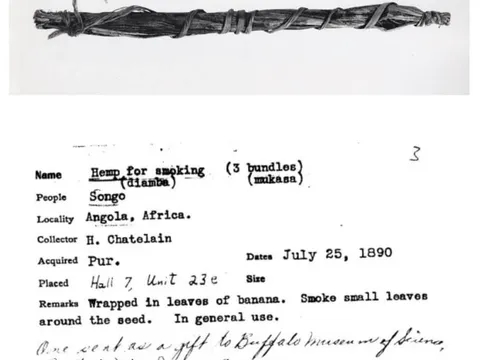 LanguageDiambaA Central African word for cannabis that turns up on three coasts of the Atlantic, wherever enslaved and freed Central Africans were taken.
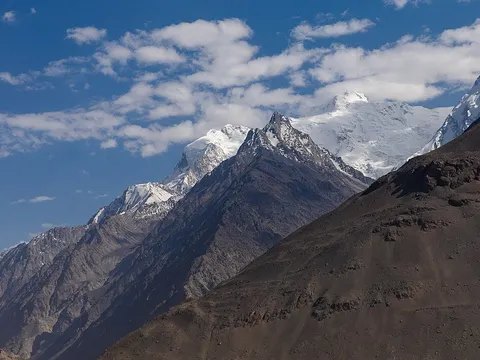 LanguageKushNamed after the Hindu Kush, the mountains whose hashish plants were carried to California in the 1970s. It became the most famous strain name in the world, and, in Sierra Leone, the name of something else entirely.
Did you know? all cases →
1851 · Sierra Leone
In 1851 a botanical journal reported that cannabis had long been used in the interior of Sierra Leone, and claimed its seeds had come to the colony with “Congoes captured by one of our cruisers”.
The full story →
Datasets not part of the score
What other organisations publish about Sierra Leone, and where it stands among the countries each one covers. Each dataset has a page of its own, with a world map and every country's figure.
Use
UNODC · 2017
Cannabis use
6.48%of people aged 15–64
5.42% · 20106.48% · 201720102017 ages 15–64 · survey 2017 · 340,000 people · UNODC 2026
Source Survey ages and years vary, and some surveys include children. Rates are not age-standardised; do not compare countries directly.WHO, Our World in Data · 2020
Alcohol drunk per person
0.29litres of pure alcohol a year
0.22 · 20000.22 · 20010.24 · 20020.26 · 20030.24 · 20040.22 · 20050.22 · 20060.25 · 20070.28 · 20080.29 · 20090.31 · 20100.35 · 20110.41 · 20120.41 · 20130.38 · 20140.31 · 20150.27 · 20160.25 · 20170.26 · 20180.26 · 20190.29 · 202020002020 Higher than 10% of 187 countriesLowestHighestper person aged 15 or over · 2020 · 0.22 in 2000 · 0.31 in 2010
Law
UNODC · 2024
Cannabis seized
1,631kg in 2024
2,000 · 20211,000 · 202222,778 · 20231,631 · 202420212024 Higher than 44% of 163 countriesLess seizedMore seized1,631 kg of herb
Society
OpenAlex · 2025
Research on cannabis
0.2papers per million people
0.1 · 19960.1 · 20230.6 · 20240.2 · 202519962025 Higher than 29% of 176 countriesLowestHighest2 papers in 2025
Cato and Fraser Institutes · 2023
Human Freedom Index
6.34of 10
5.41 · 20005.51 · 20015.97 · 20026.12 · 20036.04 · 20046.22 · 20056.36 · 20066.51 · 20076.49 · 20086.69 · 20096.71 · 20106.62 · 20116.57 · 20126.63 · 20136.63 · 20146.50 · 20156.55 · 20166.38 · 20176.45 · 20186.55 · 20196.48 · 20206.48 · 20216.45 · 20226.34 · 202320002023 Higher than 35% of 164 countriesLess freeFreerrank #107 of 165 · personal freedom 6.88 · economic freedom 5.60
V-Dem, Our World in Data · 2025
Civil liberties
0.79of 1 in 2025
0.29 · 19000.29 · 19010.29 · 19020.29 · 19030.29 · 19040.29 · 19050.29 · 19060.29 · 19070.29 · 19080.29 · 19090.29 · 19100.29 · 19110.29 · 19120.29 · 19130.29 · 19140.29 · 19150.29 · 19160.29 · 19170.29 · 19180.29 · 19190.29 · 19200.29 · 19210.29 · 19220.29 · 19230.29 · 19240.29 · 19250.29 · 19260.29 · 19270.29 · 19280.29 · 19290.29 · 19300.29 · 19310.29 · 19320.29 · 19330.29 · 19340.29 · 19350.29 · 19360.29 · 19370.29 · 19380.29 · 19390.29 · 19400.29 · 19410.29 · 19420.29 · 19430.29 · 19440.29 · 19450.29 · 19460.29 · 19470.30 · 19480.30 · 19490.31 · 19500.34 · 19510.37 · 19520.38 · 19530.39 · 19540.39 · 19550.39 · 19560.39 · 19570.39 · 19580.39 · 19590.46 · 19600.49 · 19610.54 · 19620.54 · 19630.52 · 19640.49 · 19650.49 · 19660.47 · 19670.39 · 19680.39 · 19690.39 · 19700.40 · 19710.36 · 19720.35 · 19730.35 · 19740.35 · 19750.35 · 19760.35 · 19770.33 · 19780.32 · 19790.32 · 19800.30 · 19810.30 · 19820.30 · 19830.30 · 19840.30 · 19850.32 · 19860.32 · 19870.32 · 19880.32 · 19890.31 · 19900.23 · 19910.23 · 19920.24 · 19930.26 · 19940.27 · 19950.37 · 19960.37 · 19970.38 · 19980.43 · 19990.47 · 20000.47 · 20010.77 · 20020.81 · 20030.81 · 20040.80 · 20050.80 · 20060.80 · 20070.80 · 20080.80 · 20090.82 · 20100.82 · 20110.82 · 20120.81 · 20130.81 · 20140.81 · 20150.81 · 20160.81 · 20170.82 · 20180.79 · 20190.81 · 20200.84 · 20210.81 · 20220.81 · 20230.82 · 20240.79 · 202519002025 Higher than 54% of 175 countriesFewer libertiesMore liberties0.29 in 1925 · 0.49 in 1961 · 0.31 in 1990
Our World in Data, World Bank · 2025
Population
8,819,794people in 2025
1,095,929 · 19001,179,670 · 19101,263,887 · 19201,458,247 · 19301,680,790 · 19401,999,628 · 19502,268,361 · 19602,712,287 · 19703,272,097 · 19804,196,834 · 19904,423,615 · 20006,222,715 · 20107,912,557 · 20208,819,794 · 202519002025 Higher than 48% of 196 countriesLowestHighest1,095,929 in 1900 · 1,999,628 in 1950 · 4,423,615 in 2000
CEPII
Former colonial rulers
Once ruled by United Kingdom
World Bank · 2025
Government effectiveness
33of 100
18 · 19969 · 19989 · 20009 · 20029 · 200324 · 200425 · 200527 · 200629 · 200729 · 200828 · 200929 · 201029 · 201131 · 201230 · 201331 · 201430 · 201532 · 201632 · 201733 · 201832 · 201933 · 202032 · 202133 · 202232 · 202332 · 202433 · 202519962025 Higher than 13% of 195 countriesLowestHighestestimate -0.93 on a scale of −2.5 to 2.5 · 2025 · 9 in 2000 · 30 in 2015
Transparency International · 2024
Corruption Perceptions Index
33of 100
31 · 201230 · 201331 · 201429 · 201530 · 201630 · 201730 · 201833 · 201933 · 202034 · 202134 · 202235 · 202333 · 202420122024 Higher than 34% of 178 countriesLowestHighest0 highly corrupt, 100 very clean · 2024 · 29 in 2015 · 33 in 2020
Pew Research Center · 2020
Most common religion
Muslims
the largest group · 2020
World Bank · 2025
Income per person
$3,176per person
2,704 · 19902,735 · 19912,257 · 19922,294 · 19932,240 · 19942,058 · 19952,084 · 19961,937 · 19971,952 · 19981,903 · 19991,982 · 20001,749 · 20012,089 · 20022,196 · 20032,261 · 20042,297 · 20052,343 · 20062,378 · 20072,405 · 20082,377 · 20092,460 · 20102,591 · 20112,793 · 20123,125 · 20132,813 · 20142,628 · 20152,732 · 20162,753 · 20172,767 · 20182,853 · 20192,753 · 20202,849 · 20212,935 · 20223,035 · 20233,099 · 20243,176 · 202519902025 Higher than 11% of 187 countriesLowestHighestat purchasing power parity, 2021 dollars · 2025 · $2,704 in 1990 · $2,460 in 2010
World Bank · 2024
Development indicators
25.1%use the internet
0% · 19900% · 19930% · 19940% · 19950% · 19960% · 19970% · 19980% · 19990.1% · 20000.2% · 20010.2% · 20020.2% · 20030.2% · 20040.2% · 20050.2% · 20060.2% · 20070.2% · 20080.3% · 20090.6% · 20100.9% · 20112.5% · 20124% · 20136.1% · 20146.3% · 20157.7% · 20169.3% · 201714.4% · 201815.7% · 201917.1% · 202018.7% · 202121.5% · 202223.7% · 202325.1% · 202419902024 Higher than 11% of 195 countriesLowestHighest45.4% live in towns · 3.2% aged 65+ · life expectancy 62 · 2024 · 0.1% in 2000 · 0.6% in 2010
GDELT · 2025
Cannabis in the news
0%of global news: cannabis articles from here
0% · 20170.0001% · 20180% · 20190% · 20200% · 20210% · 20220.0001% · 20230% · 20240% · 202520172025 Higher than 0% of 147 countriesLowestHighest2025 average, 348 days · 0.0001% in 2018 · 0% in 2021
Plant and market
GBIF · 1965
Records of the cannabis plant
2dated records
Higher than 12% of 128 countriesLowestHighest0 more without a date · 2 in 1965
History 11 of 11 checked against a source
Score and entries per decade
2 today, from 100 before its first recorded change
This country's score Entries that moved the score Context only
20242 entries0 score changes
Medical ✓ Article
Sierra Leone sets licensing rules for medical cannabis growers
Licensed companies, manufacturers and approved health organisations could apply to grow and process cannabis under Pharmacy Board guidelines focused on medical production for export. The rules required suitable staff, secure sites, traceable planting material and inspections, using permission powers already contained in the 2001 pharmacy law. The document gives 17 May 2024 as its effective date and focuses on cultivation, harvesting and processing for medicinal products.
Debate ✓ Article
Sierra Leone declares a national emergency over drug abuse
President Julius Maada Bio declared a national emergency on drug and substance abuse, focusing on the synthetic drug sold as kush. He promised treatment centres in every district and a task force combining prevention, recovery support, community work and stronger enforcement against suppliers. Preliminary testing published in June detected synthetic cannabinoids and nitazenes, a group of synthetic opioids, in kush samples from Freetown; it challenged earlier rumours about the drug's ingredients.
20231 entry0 score changes
20082 entries0 score changes
Other law ✓ Article
Sierra Leone lets its president set the start of the new drug law
Sierra Leone amended its new drug law so that it would take effect on a date fixed by the president through a published legal order. The original Act had left its commencement date blank, despite creating an enforcement agency and powers to destroy cannabis crops. The amendment followed the law's urgent passage after a cocaine-laden plane landed in the country in July.
Tightening ✓ Article
Sierra Leone gives drug officers powers to destroy cannabis crops
Drug officers gained powers to enter land without a warrant and destroy unlawfully cultivated or wild cannabis, after collecting evidence and when urgent action was needed to prevent harvesting, concealment or danger. The new law created a national enforcement agency and repealed the colonial Dangerous Drugs Act, while preserving existing regulations and proceedings. Parliament rushed it through after a cocaine-laden aircraft landed in the country, exposing weaknesses in drug enforcement.
20011 entry1 score change
19941 entry0 score changes
19381 entry0 score changes
19331 entry0 score changes
19261 entry1 score change
18511 entry0 score changes
Sources hover a number in the text to see its source
- Cited
- 13
- Websites
- 10
- 1
- Last reviewed
- History checked
- 11/11
Most cited
- premiermedia-sl.com2
- sierra-leone.org2
- data.unodc.org1
- incb.org1
- judiciary.gov.sl1
- ons.gov.sl1
All 14 sources
- The African Roots of MarijuanaChris S. Duvall · Duke University Press · 2019 · ISBN 9781478004530
- Judiciary of Sierra Leone — Unlawful possession of kush: Magistrate Mark Ngegba remands 10 (31 August 2023)Two defendants accused of possession of kush and cannabis under section 8(a); bail refusedarchived
- Premier Media — Youth sentenced to 25 years for possessing 30.5 grams of kusharchived
- National Drugs Control Act, 2008, No. 10Government of Sierra Leone · 2008 · Sections 8, 12(1)–(4), 43 and 92archived
- The Pharmacy and Drugs Act, 2001, No. 12Government of Sierra Leone · 2001 · Commencement 13 December 2001; §§ 29, 48–50, 59(3), 65–66; printed pp. 26–27, 30–31 and 34archived
- Guideline for the Cultivation and Processing of Medical Cannabis, PBSL/GL/022, Version 02Pharmacy Board of Sierra Leone · 2024 · Issue date 15 May 2024; effective 17 May 2024; pp. 4–8, 12–13 and 22–25archived
- UNODC Data Portal — Drug seizures, reported seizures in kilogram equivalents (World Drug Report data)archived
- Government of Sierra Leone — Transnational Organized Crime Unit (TOCU) report (24 June 2026, PDF)archived
- Sierra Leone Gazette — Road Traffic Act 5 of 2007 (original Act reproduced by Sierra-Leone.org)Sections 100 and 102–108, printed pages 62–66 (PDF pages 34–36); current fine/penalty consolidation not certified.archived
- Research Square preprint — From Emergency Declaration to District-Level Delivery: a mixed-methods evaluation of Sierra Leone's national KUSH response (2024–2025)archived
- The Sierra Leone Telegraph — President Bio announces five new measures to tackle Sierra Leone's Kush crisis (3 November 2025)archived
- Premier Media — 'Kush' dealer sentenced to 10 yearsarchived
- International Narcotics Control Board — Travellers carrying medicines containing controlled substances