3/100
#163 of 196 worldwide
#45 of 54 in Africa
Hashish and bango are widely used, but the law is harsh: prison for possession, and large-scale trafficking can carry the death penalty.
In short all countries →
- Can I carry it?NoIt is a crime
- Can I grow it?NoIt is a crime
- Can I buy it?NoThere is no legal source
- Can I use it in public?NoNot in public, and even at home the law does not protect it
- What if I'm caught?PrisonPersonal use can lead to prison or compulsory detention
A rough guide read from the scores and the rules below, not legal advice. The details and the exceptions are in each segment: select an answer to jump to it.
Cannabis in Egypt not part of the score · all 18 datasets ↓
Who uses it
About 1 in 26
people aged 15–64 in Egypt used cannabis in the past year: 2.9 million people.
- Past year
- 3.9%
- Africa median
- 3.1%
- Aged 15–16, 2013
- 1.4%
UNODC · survey 2019
Source Past-year cannabis use among people aged 15–64. People who used cannabis in the past year, from a 2019 survey, applied to today's population aged 15–64.Survey ages and years vary, and some surveys include children. Rates are not age-standardised; do not compare countries directly.
UNODC World Drug Report 2026, annex table 1.2. Population from the World Bank, aged 15–64. The whole dataset →
Use across Africa
12thhighest of 28 surveyed countries
- 🇸🇱 Sierra Leone6.5%
- 🇹🇳 Tunisia5.3%
- 🇪🇬 Egypt3.9%
- 🇳🇦 Namibia3.9%
- 🇨🇮 Côte d'Ivoire3.2%
Past-year use, latest survey of each. Survey years and ages differ. On the map →
Cannabis in figures
- Police contact for drug use or possession62per 100,000 people · 2021
- Cannabis seized163,793kg in 2024 · 2024
- Research on cannabis0.4papers per million people · 2025
- Clinical trials of cannabis medicines6studies so far · 2026
- Cannabis in the news0.0006%of global news: cannabis articles from here · 2025
The dot: where it stands among the countries each dataset covers, lowest to highest. All datasets ↓
Score breakdown 3/100 · how the scores are made
Anti-Narcotics Law 182 of 1960, as amended, covers cannabis in every form — hashish, the local herbal 'bango', and extracts.[1] Possession for personal use carries a minimum of one year in prison plus a fine; a newspaper summary of the law gives one to three years at the judge's discretion.[1][2] Courts may send dependent users to treatment instead — a 1960 provision letting habitual users enter a sanatorium voluntarily, in place of the sentence.[1] The 1960 law is traced in the 1960 entry.
| Amount | What happens | Punishment | Fine |
| Possession for personal usePlus a fine; sanatorium treatment possible for dependent users | CriminalPossession | 1–3 years | — |
Cultivation is punished with life imprisonment, or death where trafficking intent is established.[1] Growing bans date to an 1884 prohibition.
| Amount | What happens | Punishment | Fine |
| Unlawful cultivationLife imprisonment; death where trafficking intent is established | CriminalUnlicensed cultivation | Death or life imprisonment | — |
Severe law, uneven enforcement: widespread use is tolerated in some settings while others are jailed, and high-profile arrests at the airport over small amounts are common.[3] The hashish in Egypt account traces both the custom and the six-century campaign against it.
Supply is trafficking. Under the narcotics law as amended in 1989,(/history/egypt-law-122-1989/) holding, buying or selling a drug with intent to trade carries death or life at hard labour and a fine of 100,000 to 500,000 pounds (Article 34), and importing carries death (Article 33).[4][1] Even offering a drug to another person without payment brings life at hard labour and a fine of 50,000 to 200,000 pounds (Article 35).[4]
| Amount | What happens | Punishment | Fine |
| Importing for supply (article 33)Death or life at hard labour; 100,000–500,000 pounds | CriminalTrafficking | Death penalty | EGP 100,000 – EGP 500,000 |
| Dealing with intent to trade (article 34)Death or life at hard labour; 100,000–500,000 pounds | CriminalTrafficking | Death penalty | EGP 100,000 – EGP 500,000 |
| Offering without payment (article 35)Life at hard labour; 50,000–200,000 pounds | CriminalTrafficking | — | EGP 50,000 – EGP 200,000 |
Context not part of the score · every country, by topic →
Cultivation is punished with life imprisonment, or death where an intent to traffic is established. Importing for supply carries life imprisonment or the death penalty.[1][3]
There is no legal recreational supply. Hashish in every form is covered by the 1960 narcotics law as amended, but enforcement is uneven: widespread use is tolerated in some settings while others are jailed, and high-profile airport arrests over small amounts are common.[1][3]
No medical cannabis programme operates: use is a crime punished through possession, and the 1960 law's only medical route is sanatorium treatment for dependent users, not patient supply.[1]
No cannabis clubs are known, and the law leaves no room for them: growing cannabis and supplying it to another person are both prohibited, and the law provides for the death penalty for the most serious drug offences.[1]
Law 182 of 1960 bans growing the plants on its Table V and says no one may import, possess, buy, sell or hand over those plants at any stage of growth "or their seeds", apart from plant parts exempted in a separate table. The copy read did not reproduce the tables, so the entry assumes cannabis is on Table V, as the rest of this profile describes.[1]
No hemp exception operates: Law 182 bans growing the Table V plants and bars handing over those plants or their seeds at any stage of growth.[1]
No licensed production operates: cultivation is punished with life imprisonment, or death where trafficking intent is established.[1]
Figures reported by the government to the UN drugs office record 39,411 kg of herbal cannabis seized in 2024, against 239,528 kg in 2023, and 124,382 kg of cannabis resin seized in 2024, against 191,046 kg in 2023. The UN publishes them as kilogram equivalents, and countries count seizures differently, so the figures are not comparable across borders.[5]
There is no legal recreational supply for anyone. Under the narcotics law a person caught with a drug for their own use faces one to three years in prison and a fine.[2][1] Bringing narcotics into or out of the country falls under Article 33, which allows the death sentence and a fine of 100,000 to 500,000 pounds, and dealing inside the country under Article 34, with life imprisonment or death.[4][1]
Amendments to the traffic law published in November 2014 made driving under the influence punishable by at least one year in prison.[6] If the driver injures someone the minimum is two years and a fine of 10,000 pounds; if someone is killed or permanently disabled, three to seven years and 20,000 pounds, with the licence revoked.[6] The report of the amendments does not distinguish drugs from alcohol.[6]
High-profile cases make the news rather than statistics: an actress was released on bail in 2022 over suspected drug use, and airport arrests over small amounts are reported as routine.[3]
A conviction brings a criminal record and, beyond the prison terms and fines above, the severest trafficking sentences in the region's law.[1]
Hashish use was associated with the Sufis, and after Napoleon's 1798 invasion the Emperor banned his soldiers from smoking or drinking cannabis extracts in 1800 — perhaps the first penal cannabis law.[7] Egypt then banned and re-banned it for a century: cultivation, use and import first forbidden in 1868, taxed in 1874, confiscated in 1877,(/history/egypt-destruction-order-1877/) criminal to grow in 1884,(/history/egypt-cultivation-ban-1884/) yet hashish stayed cheap, homegrown or smuggled from Greece, and the laws largely ineffectual.[7] The bans are traced in hashish in Egypt and the 1868 ban. A 1971 UN study of 850 imprisoned users and 839 controls documented the café pattern: heavy users took coffee alongside, and most stuck to smoking.[8]
Egypt has studied hashish since 1957 under the National Center for Social and Criminological Research. Its programme produced the 850-taker prison study: smoking prevalent in 89.4 percent, use social in 82.5 percent, first-time motives led by conformity and euphoria — see the traditional-patterns findings.[9]
Taking cannabis into or out of Egypt is a separate offence from possessing it, normally charged as smuggling or trafficking, with far heavier penalties. That holds almost everywhere, including between two places where cannabis is legal.
In Egypt the heaviest penalties, up to the death penalty, are aimed at trafficking, and bringing drugs across the border is treated as trafficking.
A prescription or medical card from another country is generally not recognised. Travellers who need a cannabis-based medicine should ask Egypt's embassy before travelling.[10]
General guidance that applies to almost every country, not a check of Egypt's customs rules.
Culture the atlas →
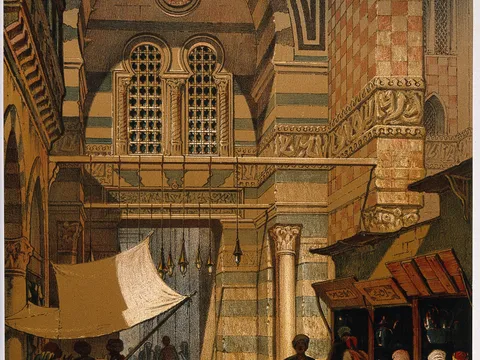 LanguageHashishArabic for dried grass. The word for cannabis resin from Morocco to Afghanistan.
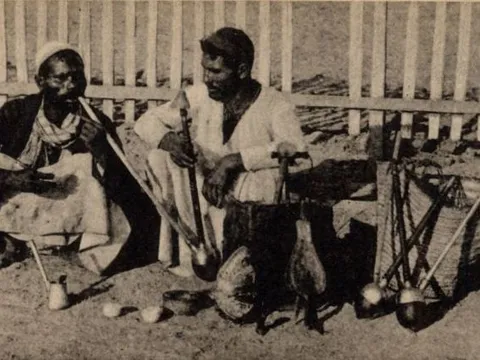 TraditionsHashish in EgyptSufi mystics are said to have brought hashish to Egypt in the twelfth century. Rulers have been trying to stop Egyptians using it ever since.
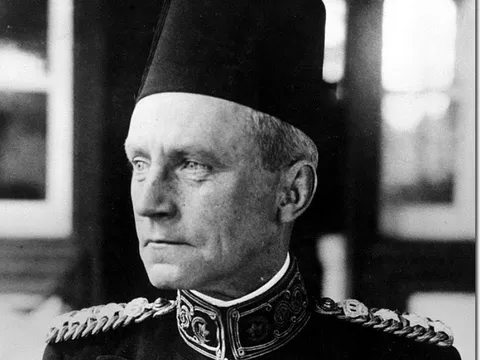 PeopleRussell PashaThe British commandant of the Cairo police who led Egypt's war on heroin between the world wars, and told the League of Nations, against the American line, that hashish was a minor vice and its smokers no danger to anyone.
Did you know? all cases →
1800 · Egypt
In October 1800 the French army occupying Egypt banned hashish, alarmed by its use among its own troops.
The full story →1874 · Egypt
Egypt forbade importing cannabis in 1868. Six years later it put a tax on those same imports.
The full story →1939 · Egypt
Smugglers taking hashish into Egypt forced tin cylinders of it down the throats of camels sold for slaughter, and cut them out on the far side of the border. About 30,000 camels a year came through the border post, so the authorities brought in mine detectors and X-ray machines.
The full story →People · Egypt
When Harry Anslinger told the League of Nations in 1938 that marihuana led to murder and rape, Egypt's own drug police chief answered that the hashish addict was a tiresome individual, not a dangerous criminal.
Read the entry →
Datasets not part of the score
What other organisations publish about Egypt, and where it stands among the countries each one covers. Each dataset has a page of its own, with a world map and every country's figure.
Use
UNODC · 2019
Cannabis use
3.9%of people aged 15–64
6.24% · 20065.31% · 20163.9% · 201920062019 ages 15–64 · survey 2019 · 2,900,000 people · UNODC 2026
Source Survey ages and years vary, and some surveys include children. Rates are not age-standardised; do not compare countries directly.UNODC · 2013
Cannabis use at 15 and 16
1.4%in the past year
Higher than 2% of 49 countriesLowestHighest2013 · ages 15–16
WHO, Our World in Data · 2020
Alcohol drunk per person
0.13litres of pure alcohol a year
0.14 · 20000.14 · 20010.14 · 20020.14 · 20030.15 · 20040.16 · 20050.17 · 20060.20 · 20070.20 · 20080.21 · 20090.20 · 20100.20 · 20110.19 · 20120.19 · 20130.19 · 20140.18 · 20150.16 · 20160.15 · 20170.15 · 20180.15 · 20190.13 · 202020002020 Higher than 6% of 187 countriesLowestHighestper person aged 15 or over · 2020 · 0.14 in 2000 · 0.20 in 2010
Law
UNODC · 2021
Police contact for drug use or possession
62per 100,000 people
52 · 202062 · 202120202021 Higher than 55% of 101 countriesFewerMore73,423 people in 2021 · all drugs together
UNODC · 2024
Cannabis seized
163,793kg in 2024
393,590 · 2015230,085 · 2016272,804 · 201798,025 · 2019531,749 · 2020494,677 · 2021418,190 · 2022430,574 · 2023163,793 · 202420152024 Higher than 93% of 163 countriesLess seizedMore seized39,411 kg of herb · 124,382 kg of resin · 393,590 kg in 2015 · 531,749 kg in 2020
Society
OpenAlex · 2025
Research on cannabis
0.4papers per million people
0.0 · 19750.0 · 19760.0 · 19810.0 · 19820.0 · 19830.0 · 19970.0 · 20000.0 · 20010.0 · 20020.0 · 20030.0 · 20040.0 · 20050.0 · 20060.0 · 20070.0 · 20080.1 · 20090.1 · 20100.1 · 20110.1 · 20120.1 · 20130.2 · 20140.2 · 20150.3 · 20160.3 · 20170.3 · 20180.3 · 20190.3 · 20200.5 · 20210.6 · 20220.4 · 20230.4 · 20240.4 · 202519752025 Higher than 36% of 176 countriesLowestHighest44 papers in 2025 · 6 in 2010
Cato and Fraser Institutes · 2023
Human Freedom Index
4.08of 10
5.38 · 20005.36 · 20015.18 · 20024.98 · 20035.10 · 20045.26 · 20055.28 · 20065.37 · 20075.25 · 20085.14 · 20095.12 · 20105.08 · 20115.15 · 20124.56 · 20134.29 · 20143.96 · 20153.96 · 20163.87 · 20174.17 · 20184.21 · 20194.14 · 20204.18 · 20214.22 · 20224.08 · 202320002023 Higher than 3% of 164 countriesLess freeFreerrank #160 of 165 · personal freedom 3.37 · economic freedom 5.08
V-Dem, Our World in Data · 2025
Civil liberties
0.23of 1 in 2025
0.40 · 19000.41 · 19010.41 · 19020.41 · 19030.41 · 19040.41 · 19050.41 · 19060.41 · 19070.41 · 19080.41 · 19090.41 · 19100.41 · 19110.41 · 19120.40 · 19130.40 · 19140.40 · 19150.40 · 19160.40 · 19170.39 · 19180.39 · 19190.39 · 19200.39 · 19210.39 · 19220.39 · 19230.39 · 19240.41 · 19250.41 · 19260.41 · 19270.41 · 19280.41 · 19290.41 · 19300.41 · 19310.41 · 19320.41 · 19330.41 · 19340.41 · 19350.41 · 19360.41 · 19370.41 · 19380.41 · 19390.41 · 19400.41 · 19410.41 · 19420.41 · 19430.41 · 19440.41 · 19450.41 · 19460.41 · 19470.41 · 19480.41 · 19490.42 · 19500.42 · 19510.42 · 19520.35 · 19530.29 · 19540.28 · 19550.28 · 19560.28 · 19570.28 · 19580.28 · 19590.26 · 19600.26 · 19610.26 · 19620.26 · 19630.26 · 19640.26 · 19650.26 · 19660.26 · 19670.26 · 19680.26 · 19690.28 · 19700.30 · 19710.31 · 19720.32 · 19730.32 · 19740.32 · 19750.32 · 19760.31 · 19770.30 · 19780.29 · 19790.29 · 19800.33 · 19810.33 · 19820.32 · 19830.32 · 19840.32 · 19850.32 · 19860.32 · 19870.32 · 19880.32 · 19890.32 · 19900.32 · 19910.32 · 19920.33 · 19930.33 · 19940.33 · 19950.33 · 19960.32 · 19970.31 · 19980.31 · 19990.31 · 20000.31 · 20010.31 · 20020.31 · 20030.31 · 20040.31 · 20050.31 · 20060.31 · 20070.31 · 20080.31 · 20090.31 · 20100.39 · 20110.42 · 20120.21 · 20130.17 · 20140.17 · 20150.17 · 20160.17 · 20170.17 · 20180.19 · 20190.21 · 20200.21 · 20210.23 · 20220.23 · 20230.24 · 20240.23 · 202519002025 Higher than 10% of 175 countriesFewer libertiesMore liberties0.41 in 1925 · 0.26 in 1961 · 0.32 in 1990
Our World in Data, World Bank · 2025
Population
118,365,995people in 2025
9,940,289 · 190011,361,079 · 191012,731,391 · 192014,249,967 · 193016,423,191 · 194021,148,168 · 195026,896,480 · 196034,623,990 · 197043,950,413 · 198058,396,625 · 199073,083,287 · 200089,196,073 · 2010109,315,118 · 2020118,365,995 · 202519002025 Higher than 93% of 196 countriesLowestHighest9,940,289 in 1900 · 21,148,168 in 1950 · 73,083,287 in 2000
CEPII
Former colonial rulers
Once ruled by United Kingdom; Turkey
World Bank · 2025
Government effectiveness
50of 100
53 · 199648 · 199848 · 200037 · 200239 · 200340 · 200439 · 200540 · 200640 · 200742 · 200846 · 200943 · 201044 · 201144 · 201238 · 201340 · 201442 · 201544 · 201644 · 201744 · 201849 · 201948 · 202048 · 202149 · 202251 · 202349 · 202450 · 202519962025 Higher than 44% of 195 countriesLowestHighestestimate -0.11 on a scale of −2.5 to 2.5 · 2025 · 48 in 2000 · 42 in 2015
Transparency International · 2024
Corruption Perceptions Index
30of 100
32 · 201232 · 201337 · 201436 · 201534 · 201632 · 201735 · 201835 · 201933 · 202033 · 202130 · 202235 · 202330 · 202420122024 Higher than 27% of 178 countriesLowestHighest0 highly corrupt, 100 very clean · 2024 · 36 in 2015 · 33 in 2020
Pew Research Center · 2020
Most common religion
Muslims
the largest group · 2020
World Bank · 2025
Income per person
$17,265per person
8,007 · 19907,877 · 19918,035 · 19928,079 · 19938,221 · 19948,424 · 19958,662 · 19968,951 · 19979,245 · 19989,589 · 19999,982 · 200010,117 · 200110,144 · 200210,250 · 200310,452 · 200410,701 · 200511,212 · 200611,782 · 200712,392 · 200812,728 · 200913,129 · 201013,082 · 201113,077 · 201213,058 · 201313,136 · 201413,426 · 201513,727 · 201614,018 · 201714,488 · 201815,027 · 201915,309 · 202015,579 · 202116,360 · 202216,691 · 202316,798 · 202417,265 · 202519902025 Higher than 51% of 187 countriesLowestHighestat purchasing power parity, 2021 dollars · 2025 · $8,007 in 1990 · $13,129 in 2010
World Bank · 2024
Development indicators
74.6%use the internet
0% · 19900% · 19930% · 19940% · 19950.1% · 19960.1% · 19970.1% · 19980.3% · 19990.6% · 20000.8% · 20012.7% · 20024% · 200311.9% · 200412.8% · 200513.7% · 200616% · 200718% · 200820% · 200921.6% · 201025.6% · 201126.4% · 201229.4% · 201333.9% · 201437.8% · 201541.2% · 201645% · 201746.9% · 201857.3% · 201971.9% · 202072.1% · 202172.2% · 202274% · 202374.6% · 202419902024 Higher than 42% of 195 countriesLowestHighest42.8% live in towns · 5.1% aged 65+ · life expectancy 71.8 · higher education 37.6% · 2024 · 0.6% in 2000 · 21.6% in 2010
GDELT · 2025
Cannabis in the news
0.0006%of global news: cannabis articles from here
0.0014% · 20170.0009% · 20180.0004% · 20190.0005% · 20200.0007% · 20210.0008% · 20220.0008% · 20230.0008% · 20240.0006% · 202520172025 Higher than 67% of 147 countriesLowestHighest2025 average, 348 days · 0.0009% in 2018 · 0.0007% in 2021
Plant and market
GBIF · 1980
Records of the cannabis plant
7dated records
2 · 18773 · 18856 · 19347 · 198018771980 Higher than 39% of 128 countriesLowestHighest3 more without a date · 1 in 1980
ClinicalTrials.gov · 2026
Clinical trials of cannabis medicines
6studies so far
1 · 20183 · 20193 · 20204 · 20214 · 20226 · 20236 · 20246 · 20256 · 202620182026 Higher than 52% of 50 countriesLowestHighest0 actual starts in 2026 · as of 2026–10–26 · 3 by 2020
Enforcement 1 report · the Cannabis Enforcement Tracker →
How the law above is applied: raids, seizures, fields destroyed, arrests and sentences, as recorded by the Cannabis Enforcement Tracker, our companion site.
- RaidEgypt's police raid a desert drug farm in Ismailia
The Interior Ministry announced the seizure of 27.5 tonnes of narcotics at a desert farm in Ismailia: 21 tonnes of fully grown plants and 6.5 tonnes in hidden storage, valued at about 1.6 billion Egyptian pounds.
History 30 of 30 checked against a source
Score and entries per decade
3 today, from 100 before its first recorded change
This country's score Entries that moved the score Context only
19941 entry0 score changes
19911 entry0 score changes
19891 entry0 score changes
19741 entry0 score changes
19711 entry0 score changes
19661 entry0 score changes
19601 entry1 score change
19521 entry0 score changes
19481 entry0 score changes
19401 entry0 score changes
19391 entry0 score changes
19301 entry0 score changes
19251 entry0 score changes
19241 entry0 score changes
19142 entries0 score changes
Enforcement ✓
A British subject's Cairo hashish café ends in a Maltese prison
Alex Tanti, a British subject who ran a café in Cairo where hashish was smoked, had twice blocked Egyptian attempts to close it, declaring that the place was his and that as a British subject he opposed the order. The Egyptian authorities finally reported him to the British, and the Consular Court sentenced him to a year's hard labour for living off prostitution and three months for the drugs offence. He was sent to serve the sentence in the prison on Malta.
Debate ✓
Kitchener argues that Egypt's hashish ban cannot work
In a report to the foreign secretary, the British consul-general Lord Kitchener, repeating Lord Cromer's earlier observations, wrote that hashish was used in Egypt very generally as a domestic medicine and that its general use rendered prohibition impossible. Absolute prohibition, he argued, needed a large measure of general support, which did not exist.
18951 entry0 score changes
18921 entry0 score changes
18851 entry0 score changes
18843 entries0 score changes
Ban ✓ Article
An Egyptian cultivation prohibition is conventionally dated to 1884
Later summaries place a cultivation prohibition in 1884, but the Indian Hemp Drugs Commission’s 1894 account already describes cultivation as prohibited in March 1879. It identifies March 1884 with a different measure: export sale of confiscated hashish to fund enforcement rewards. The original instrument behind the separate 1884 cultivation claim has not been established; this retained record is unresolved, not a verified first cultivation ban.
International ✓ Article
Egypt’s convention with Greece reserves hashish controls and search powers
The commerce and customs convention signed on 3 March specified operation from 20 March 1884. Article V excluded hashish and other named goods from its trade protections, reserved Egyptian control on equal terms for Greek and local subjects, and allowed immediate warehouse or dwelling searches with consular notification that could not delay the search. Britain separately accepted application of the customs rules on 3 March. This concerns foreign commerce and enforcement in Egypt, not a new general Greek cannabis ban.
Enforcement ✓ Article
Egypt allows confiscated hashish to be sold for export to fund enforcement
The Indian Hemp Drugs Commission reports that from March 1884 Egyptian Customs could sell confiscated hashish for delivery abroad instead of destroying it, with proceeds shared among informers and officers involved in seizures. The account quotes customs director Caillard on the lack of a reward fund and smugglers’ ability to pay for silence or complicity. This disposal policy did not reopen lawful domestic retail sales; the original Egyptian instrument remains uninspected.
18791 entry1 score change
18771 entry0 score changes
18741 entry0 score changes
18681 entry0 score changes
18001 entry0 score changes
13781 entry0 score changes
13241 entry0 score changes
12441 entry0 score changes
Sources hover a number in the text to see its source
- Cited
- 10
- Websites
- 8
- 1
- Last reviewed
- History checked
- 30/30
Most cited
- egyptianstreets.com2
- data.unodc.org1
- elwatannews.com1
- incb.org1
- parlmany.com1
- sherloc.unodc.org1
All 10 sources
- UNODC SHERLOC — Egypt, Law No. 182 of 1960 on narcotics (PDF, French)archived
- Al-Watan (Tarek Abbas) — penalties under the narcotics law from use to smuggling and trafficking, 3 May 2019archived
- Egyptian Streets — Actress Menna Shalaby released on bail over suspected drug use (2022)archived
- Parlmany — report on the penalties of the narcotics law as amended by Law 122 of 1989, 4 September 2024archived
- UNODC Data Portal — Drug seizures, reported seizures in kilogram equivalents (World Drug Report data)archived
- Egyptian Streets — Egypt introduces new harsher penalties for traffic violations (24 November 2014)archived
- Transnational Institute — The Rise and Decline of Cannabis Prohibition, chapter 1Sufi association; Napoleon's 1800 soldier ban; 1868 first Egyptian ban; 1874 tax; 1877 confiscation; 1884 cultivation crime; ineffectual enforcement; read via pdftotextarchived
- M. I. Soueif — The use of cannabis in Egypt: A behavioural study, Bulletin on Narcotics 23(4), 17–28 (1971)850 hashish takers and 839 controls, male prisoners; coffee use; smoking preferencearchived
- Traditional Patterns of Hashish Use in EgyptAhmad M. Khalifa · In Cannabis and Culture, edited by Vera Rubin · Mouton · 1975 · pp. 195–205 · ISBN 9789027976699
- International Narcotics Control Board — Travellers carrying medicines containing controlled substances