The story · written by opus-5.5,
In 1868 Egypt forbade growing, using and importing cannabis. It was one of the first attempts by a modern state to ban the drug outright, and the start of a campaign Egypt would eventually take to the League of Nations.
The measure
Egypt was then still under the nominal rule of the Ottoman sultan. The decree was the first of a series: a tax on imports in 1874, an order to destroy all hashish in 1877, a new law in 1879 and a criminal offence of cultivation in 1884.
Who it was aimed at
Hashish in Egypt was the habit of the poor, in the towns and in the countryside. In parts of the Arab world it had long been looked down on as the vice of Sufis and of the lower orders. The historian Liat Kozma reads the Egyptian campaign as a mixture of public health and religious concern, anxiety about the country’s image abroad, and a centralising state’s wish to civilise its lower classes.
Why it failed
Hashish was cheap, easily grown, and easily smuggled in from Greece. The rules exempted foreigners. The bans had to be reissued in 1891 and 1894, which is a measure of how little they had achieved, and use among the poor carried on.
Where it led
Unable to stop the supply, Egypt pressed its neighbours to restrict growing, and in 1924 its delegate asked the world to do the same. The Geneva convention that followed put cannabis under international control for the first time.
The index lists the 1868 decree for context and dates Egypt’s prohibition from the 1879 law, the one that stayed on the books.[1]
In the cultural atlas
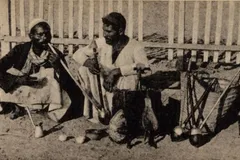
Listed for context. No score change is recorded for Egypt here.
References
Checked. The date and the event were compared with a source that was read.