The life · written by gpt-6,

Thomas Wentworth Russell spent forty-four years in the Egyptian police, and for the last seventeen he ran the country’s campaign against drugs. He was a prohibitionist by office and by conviction. Yet when the League of Nations turned to cannabis, Egypt’s own drug police chief told it, more than once, that hashish was not the problem.[1]
He was born in 1879, a great-grandson of the sixth Duke of Bedford, studied at Trinity College, Cambridge, and joined the Egyptian service in 1902 on the invitation of a cousin who advised the interior minister. He served as an inspector in every province, moved to the Alexandria and then Cairo police, and in 1917 became commandant of the Cairo city police, with the rank of major-general and the title of pasha. Under that name he was known for the rest of his life.[1]
Black drugs and white
In 1929 the prime minister, Muhammad Mahmud Pasha, agreed to his request for a Central Narcotics Intelligence Bureau, with Russell as director. He estimated that half a million Egyptians, out of fourteen million, were addicted, most of them to heroin injected in the slums of Cairo. In his memoirs he divided drugs into two kinds:[1]
| Black drugs | White drugs | |
|---|---|---|
| Substances | Hashish, opium | Cocaine, morphine, heroin |
| Origin | Plants, old in Egypt | Chemical, arriving from about 1916 |
| His view | A relatively harmless habit | A plague and a major danger to the country |
| His policy | Could be ignored for a time | The bureau’s first target |
The bureau traced imported heroin to the factories of Europe, reported the trade to the League and prosecuted dealers. Addicts were imprisoned too. Doctors in London and Geneva criticised that as brutal; Russell answered that there was no alternative.[1]
At the League
Egypt had asked for cannabis to be controlled. In 1924 its delegate told the Geneva conference that hashish caused most of Egypt’s insanity, and the 1925 convention placed it under control. Russell’s reports, passed around the League’s advisory committee from 1929, said something else. In 1930 he described hashish as the vice of the city slums that did comparatively little harm, and the few smokers in the villages as a joke, like the village drunk in England.[1][2]
His associate Baron Harry d’Erlanger later wrote that Russell had considered legalising hashish and taxing it, as British officials had proposed in the 1890s on the model of India. He never did; the ban stayed, and his bureau enforced it.[1]
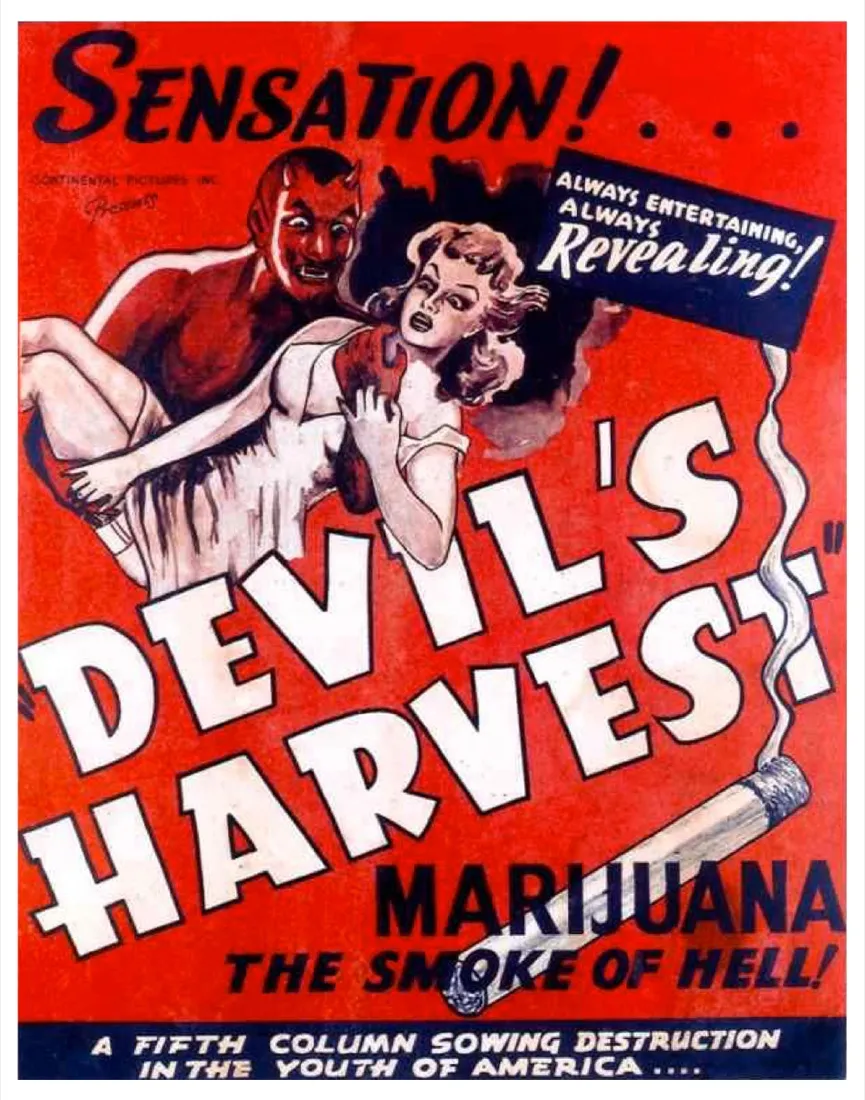
In 1938 the American observer at the League, Harry Anslinger, said that marihuana carried a tradition of murder, assault and rape. Russell replied that hashish addiction was not leading to any crime wave in Egypt: the addict was a tiresome individual, not a dangerous criminal. He also disputed Bouquet’s portrayal of cannabis use as an expression of fixed Arab or Muslim traits. Russell pointed instead to particular conditions in Egypt, including irrigation and parasitic illness. Ram judges that historical approach significant but its explanation questionable. The dispute did not amount to a finding that cannabis was harmless, and Russell remained an enforcer of prohibition. The League’s cannabis committee stopped work when the war began.[2]
Afterwards
Russell retired in 1946, wrote a memoir, Egyptian Service, 1902–1946, and spent the rest of his life salmon fishing. He died in London in 1954.[1]
References
- Wikipedia — Thomas Wentworth Russellarchived
- Squaring a Circle: Cannabis and the Dubious Legacy of the League of NationsHaggai Ram · In Cannabis: Global Histories, edited by Lucas Richert, James H. Mills · MIT Press · 2021 · ch. 5, The League of Nations Subcommittee on Cannabis: Hitting a Glass Ceiling of Preconceptions; Conclusion; notes 64–85 (EPUB) · ISBN 9780262045209