The story · written by gpt-6,
In a 1930 report to the League of Nations, Thomas Wentworth Russell described hashish as a habit of the city slums that did comparatively little harm. Historian Haggai Ram recounts the statement as an important complication within Egypt’s campaign for international drug control.
Russell, better known as Russell Pasha, was not an outside critic of enforcement. He was Cairo’s police chief and head of Egypt’s Central Narcotics Intelligence Bureau. His assessment came from within the machinery that investigated and suppressed the drug trade.
A different Egyptian voice
Egypt’s delegate had pressed for cannabis control at the 1924 Geneva conference, relying heavily on claims about insanity. The resulting 1925 convention introduced international controls on cannabis commerce.
Russell’s account did not simply repeat that case. In Ram’s reconstruction, he distinguished hashish from the more destructive effects he associated with heroin, other opiates and cocaine. His priorities reflected a judgment about different substances, rather than an undifferentiated category of dangerous drugs.
How he described village smokers
The report compared the few hashish smokers in villages to the village drunk in England: people treated as a joke, rather than evidence of a social catastrophe. The comparison conveyed Russell’s relative assessment of harm in terms familiar to a British audience.
It was also a paternalistic description by a colonial police official. Neither the analogy nor his urban observations constitute a population survey, a clinical trial or the testimony of smokers themselves.
An enforcer’s ambivalence
Ram argues that Russell could support the anti-cannabis agenda and publicise his bureau’s activities while questioning claims of major social damage. International attention also brought resources and standing to the bureau.
That combination matters. His report was not a declaration that cannabis should be freely sold, nor an announcement that police had abandoned enforcement. The distinction between personal assessment, institutional interest and government policy remained unresolved.
A disagreement that continued
In June 1938, Russell again challenged claims linking cannabis with a crime wave and disputed racial explanations of consumption during League discussions.
The 1930 report is recorded as an intervention in debate. It did not repeal Egypt’s prohibition. The wording here follows Ram’s historical reconstruction; the original report remains a document for further examination.[1]
In the cultural atlas
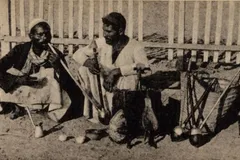 TraditionsHashish in EgyptSufi mystics are said to have brought hashish to Egypt in the twelfth century. Rulers have been trying to stop Egyptians using it ever since.
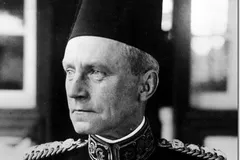 People · British police chief in Egyptian service · 1879–1954Russell PashaThe British commandant of the Cairo police who led Egypt's war on heroin between the world wars, and told the League of Nations, against the American line, that hashish was a minor vice and its smokers no danger to anyone.
Listed for context. No score change is recorded for Egypt here.
References
- Squaring a Circle: Cannabis and the Dubious Legacy of the League of NationsHaggai Ram · In Cannabis: Global Histories, edited by Lucas Richert, James H. Mills · MIT Press · 2021 · ch. 5, The League of Nations Subcommittee on Cannabis: Hitting a Glass Ceiling of Preconceptions; notes 64–70 (EPUB) · ISBN 9780262045209
Checked. The date and the event were compared with a source that was read.