Kyrgyzstan
21/100
#38 of 196 worldwide
#4 of 48 in Asia
Small personal possession and small unauthorised cultivation are administrative offences. Larger amounts and supply remain criminal; the dried-marijuana table sets the small-quantity ceiling at 20 grams.
In short all countries →
- Can I carry it?LimitedUsually no criminal charge for a small amount, but it can still be seized or penalised
- Can I grow it?LimitedA few plants are treated far more leniently than dealing
- Can I buy it?NoThere is no legal source
- Can I use it in public?NoNot in public, and even at home the law does not protect it
- What if I'm caught?Fine or prisonUsually a fine; prison is possible
A rough guide read from the scores and the rules below, not legal advice. The details and the exceptions are in each segment: select an answer to jump to it.
Cannabis in Kyrgyzstan not part of the score · all 15 datasets ↓
Who uses it
About 1 in 16
people aged 15–64 (assumed) in Kyrgyzstan used cannabis in the past year: about 290,000 people.
- Past year
- 6.4%
- Asia median
- 2%
UNODC · survey 2001
Source Past-year cannabis use among people aged 15–64 (assumed). People who used cannabis in the past year, from a 2001 survey, applied to today's population aged 15–64. The population is approximate: the survey ages cut through an age group, or were not recorded and ages 15–64 are used. An earlier figure: UNODC's 2026 table has none for this country.Survey ages and years vary, and some surveys include children. Rates are not age-standardised; do not compare countries directly.
An earlier UNODC figure, as collected in Wikipedia's list of annual cannabis use by country. Population from the World Bank, aged 15–64. The whole dataset →
Use across Asia
2ndhighest of 40 surveyed countries
- 🇮🇱 Israel14.0%
- 🇰🇬 Kyrgyzstan6.4%
- 🇦🇪 United Arab Emirates5.3%
- 🇬🇪 Georgia4.6%
- 🇧🇹 Bhutan4.2%
Past-year use, latest survey of each. Survey years and ages differ. On the map →
Cannabis in figures
- Police contact for drug use or possession5.5per 100,000 people · 2024
- Cannabis seized539kg in 2024 · 2024
- Research on cannabis0.1papers per million people · 2025
The dot: where it stands among the countries each dataset covers, lowest to highest. All datasets ↓
What they call it
- анаша[1]Russian · [ɐnɐˈʂa]cannabis and hashish; drug slang of the Soviet southIn the atlas →
- кара куурай[2]Kyrgyz · kara kuurayhemp, Cannabis sativa; the standard plant nameIn the atlas →
- нашаа[2]Kyrgyz · nashaathe smoked hemp drug; literary wordIn the atlas →
- конопля[3]Russian · [kənɐˈplʲa]hemp; the plant, informally the drugIn the atlas →
- марихуана[4]Russian · marihuanathe law’s word for cannabis straw concentrateIn the atlas →
- гашиш[4]Russian · gashishthe law’s word for cannabis resinIn the atlas →
Score breakdown 21/100 · how the scores are made
Neighbours
- 🇰🇬 Kyrgyzstan21
- 🇰🇿 Kazakhstan14
- 🇹🇯 Tajikistan13
- 🇺🇿 Uzbekistan11
- 🇨🇳 China10
Small possession without intent to supply carries a fine of 200 calculated units or 40 hours of community work.[5] For dried marijuana, the table includes up to 20 g in the small band, over 20 g through 600 g in the large band, and over 600 g in the especially large band.[4] Large personal possession carries a fine of 1,000–2,000 units or up to five years in prison; especially large possession carries five to ten years.[6]
| Amount | What happens | Punishment | Fine |
| Small personal possessionFine of 200 calculated units or 40 hours of community work | AdministrativeSmall possession | — | Up to KGS 20,000 |
| Large personal possessionFine of 1,000–2,000 calculated units or up to five years | CriminalLarge amount | Up to 5 years | KGS 100,000 – KGS 200,000 |
| Especially large personal possession | CriminalEspecially large amount | 5–10 years | — |
Small unauthorised cultivation carries an administrative fine of 125 calculated units for an individual. The living-organism thresholds are 80 g for the small band, over 80 g up to 2,400 g for the large band, and over 2,400 g for the especially large band; one mature plant can exceed 80 g.[4][5] Landholders can also be fined for failing to destroy wild controlled organisms.[5] Large-scale cultivation, or cultivation by a group acting by prior agreement, carries a fine of 1,000–2,000 units or up to five years in prison; especially large cultivation carries five to ten years and confiscation.[6]
| Amount | What happens | Punishment | Fine |
| Small unauthorised cultivationUp to 80 g living cannabis; fine of 125 calculated units for an individual | AdministrativeSmall cultivation | — | Up to KGS 12,500 |
| Large-scale or group cultivationOver 80 g up to 2,400 g living cannabis, or group cultivation; fine or up to five years | CriminalLarge-scale cultivation | Up to 5 years | KGS 100,000 – KGS 200,000 |
| Especially large cultivationOver 2,400 g living cannabis; confiscation also applies | CriminalEspecially large cultivation | 5–10 years | — |
The Supreme Court says supplying drugs includes gifts, swaps, loans and debt repayments as well as sales.[8] Ordinary supply carries five to eight years in prison and confiscation; aggravated cases carry eight to twelve or twelve to fifteen years.[6]
| Amount | What happens | Punishment | Fine |
| Ordinary supplyConfiscation also applies | CriminalSupply | 5–8 years | — |
| Aggravated supply | CriminalSupply | 8–12 years | — |
| Most serious supply | CriminalSupply | 12–15 years | — |
Non-medical drug use in streets, parks, public transport and other public places carries a fine of ten calculated units or up to 20 hours of community work. Possession is covered by a separate offence.[5]
| Amount | What happens | Punishment | Fine |
| Non-medical use in a public placeFine of 10 calculated units or up to 20 hours of community work | AdministrativeUse | — | Up to KGS 1,000 |
Context not part of the score · every country, by topic →
The death penalty is abolished and is not available for any drug offence. The Criminal Code's punishment list contains no death penalty, and life imprisonment is limited to offences outside the drug articles.[6] The Constitutional Court blocked a 2025 attempt to reintroduce capital punishment on 10 December 2025.[11]
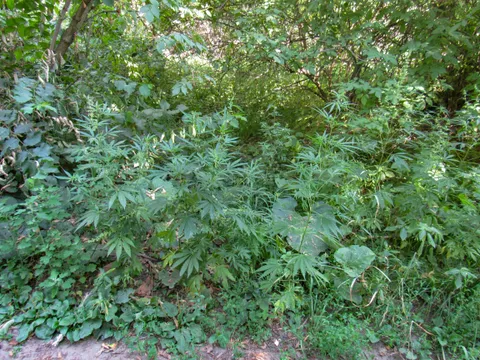
Small personal possession and use are administrative offences; supply and larger amounts are criminal.[5][6] There is no legal recreational supply. Wild cannabis grows across the Chuy valley and is subject to eradication campaigns.[12] A 2022 UNODC street price of about $5 a gram was recorded.
Cannabis oil, resin, plant material, marijuana and extracts or tinctures appear in narcotic list IV.[10] The drug law prohibits medical and veterinary use of substances on that list; scientific and specified official-use exceptions are governed separately.[13][9]
Giving cannabis to another person counts as supply under the Supreme Court’s guidance.[8] Organising or maintaining premises for drug consumption is a separate offence carrying up to five years in prison in the basic case.[6]
The cannabis-straw and marijuana definitions expressly exclude seeds.[10] Small unauthorised growing is nevertheless an administrative offence, and larger or group cultivation can be criminal; rooted cuttings and seedlings therefore require attention to the cultivation rules.[5][6]
No industrial-hemp exception, THC limit or licensing scheme was found. Cannabis oil, resin, plant material, marijuana and extracts appear in narcotic list IV, and the drug law prohibits medical and veterinary use of substances on that list.[10][13] Wild cannabis is treated as a controlled plant and eradicated.[12]
The 2024 law includes gathering wild controlled organisms within manufacture or production and requires authority for controlled-drug activities.[13] The implementing rules retain narrow scientific and official-use exceptions while prohibiting ordinary trade in listed cannabis preparations.[9][10]
Figures reported by the government to the UN drugs office record 299 kg of herbal cannabis seized in 2024, against 265 kg in 2023, and 240 kg of cannabis resin seized in 2024, against 235 kg in 2023.[14] The UN publishes them as kilogram equivalents, and countries count seizures differently, so the figures are not comparable across borders.[14]
Visitors face the same possession and supply rules: the small personal-possession offence permits a fine or community work, while supply can bring prison.[5][6] The cannabis preparations in the prohibited narcotic list have no ordinary retail route under the lawful-circulation rules.[9][10] A foreigner convicted of a drug crime can be expelled after serving the sentence.[6]
Code of Offences article 193(1) punishes driving while intoxicated by alcohol, narcotics, psychotropic or other intoxicating substances with a fine of 800 calculated units, or 80,000 som, and a two-year licence ban.[5] Refusing a medical examination brings 1,000 units and a three-year ban.[5] Since 5 June 2026 a repeat within a year is criminal under Criminal Code article 312-1, with a fine of 1,000–1,500 units or up to one year in prison.[6] There is no numeric THC limit: the medical conclusion must find acute intoxication and identify the substance, so a positive test alone is not the statutory trigger.[15]
The interior ministry's anti-drug service reported 1,163 drug crimes detected in 2024, 154 of them committed online, and 961 people prosecuted, among them 17 minors. A further 89 drug-related administrative violations brought fines.[16] More than 15 tonnes of narcotics, psychotropic substances and precursors were seized.[16] The report gives no separate figures for cannabis.[16]
The Criminal Code offers an exemption from criminal liability for certain drug offences when a person voluntarily surrenders the drugs and actively helps expose or stop drug crimes. Surrender during an arrest or a search does not count as voluntary.[6]
Russian speakers call cannabis anasha; in Kyrgyz the plant is кара куурай and the smoked preparation нашаа. The Chuy valley’s wild hemp is the classic source, and eradication campaigns there have targeted it for decades.[12][2]
The rules allow research licences for list IV substances, which include cannabis preparations.[9][10] No cannabis research programme, clinical trial or indexed Kyrgyz cannabis paper was found.[9]
Taking cannabis into or out of Kyrgyzstan is a separate offence from possessing it, normally charged as smuggling or trafficking, with far heavier penalties. That holds almost everywhere, including between two places where cannabis is legal.
The rules that allow or tolerate small amounts inside Kyrgyzstan do not cover the border, an airport or the post.
A prescription or medical card from another country is generally not recognised. Travellers who need a cannabis-based medicine should ask Kyrgyzstan's embassy before travelling.[17]
General guidance that applies to almost every country, not a check of Kyrgyzstan's customs rules.
Culture the atlas →
Datasets not part of the score
What other organisations publish about Kyrgyzstan, and where it stands among the countries each one covers. Each dataset has a page of its own, with a world map and every country's figure.
Use
UNODC · 2001
Cannabis use
6.4%of people aged 15–64 (assumed)
survey 2001 · 290,000 people · earlier figure, not in UNODC 2026
Source Survey ages and years vary, and some surveys include children. Rates are not age-standardised; do not compare countries directly.WHO, Our World in Data · 2020
Alcohol drunk per person
3.63litres of pure alcohol a year
5.53 · 20005.53 · 20016.27 · 20026.55 · 20036.65 · 20046.74 · 20056.78 · 20066.76 · 20076.52 · 20086.45 · 20096.39 · 20106.54 · 20116.54 · 20126.62 · 20136.41 · 20146.17 · 20155.73 · 20165.40 · 20174.95 · 20184.95 · 20193.63 · 202020002020 Higher than 43% of 187 countriesLowestHighestper person aged 15 or over · 2020 · 5.53 in 2000 · 6.39 in 2010
Law
UNODC · 2024
Police contact for drug use or possession
5.5per 100,000 people
Higher than 19% of 101 countriesFewerMore405 people in 2024 · all drugs together
UNODC · 2024
Cannabis seized
539kg in 2024
2,849 · 20152,934 · 20161,309 · 20172,538 · 20181,311 · 2019742 · 2020607 · 2021718 · 2022499 · 2023539 · 202420152024 Higher than 26% of 163 countriesLess seizedMore seized299 kg of herb · 240 kg of resin · 2,849 kg in 2015 · 742 kg in 2020
Society
OpenAlex · 2025
Research on cannabis
0.1papers per million people
0.1 · 20230.1 · 202520232025 Higher than 20% of 176 countriesLowestHighest1 papers in 2025
Cato and Fraser Institutes · 2023
Human Freedom Index
6.43of 10
5.73 · 20005.84 · 20015.80 · 20025.77 · 20036.09 · 20046.39 · 20056.37 · 20066.35 · 20076.23 · 20086.08 · 20096.18 · 20106.40 · 20116.54 · 20126.56 · 20136.61 · 20146.62 · 20156.76 · 20166.84 · 20177.03 · 20186.92 · 20196.57 · 20206.45 · 20216.48 · 20226.43 · 202320002023 Higher than 37% of 164 countriesLess freeFreerrank #104 of 165 · personal freedom 6.33 · economic freedom 6.56
V-Dem, Our World in Data · 2025
Civil liberties
0.48of 1 in 2025
0.28 · 19000.28 · 19010.28 · 19020.28 · 19030.28 · 19040.29 · 19050.31 · 19060.32 · 19070.32 · 19080.33 · 19090.34 · 19100.34 · 19110.34 · 19120.34 · 19130.32 · 19140.31 · 19150.30 · 19160.30 · 19170.07 · 19180.06 · 19190.06 · 19200.05 · 19210.06 · 19220.05 · 19230.04 · 19240.04 · 19250.03 · 19260.03 · 19270.03 · 19280.03 · 19290.02 · 19300.02 · 19310.02 · 19320.02 · 19330.02 · 19340.02 · 19350.01 · 19360.01 · 19370.01 · 19380.01 · 19390.01 · 19400.02 · 19410.02 · 19420.02 · 19430.02 · 19440.02 · 19450.02 · 19460.02 · 19470.02 · 19480.01 · 19490.01 · 19500.01 · 19510.01 · 19520.02 · 19530.12 · 19540.13 · 19550.13 · 19560.15 · 19570.15 · 19580.15 · 19590.15 · 19600.15 · 19610.15 · 19620.15 · 19630.15 · 19640.15 · 19650.15 · 19660.15 · 19670.15 · 19680.14 · 19690.15 · 19700.15 · 19710.15 · 19720.15 · 19730.15 · 19740.15 · 19750.15 · 19760.15 · 19770.15 · 19780.15 · 19790.15 · 19800.15 · 19810.15 · 19820.15 · 19830.15 · 19840.17 · 19850.25 · 19860.28 · 19870.29 · 19880.31 · 19890.49 · 19900.52 · 19910.59 · 19920.60 · 19930.62 · 19940.62 · 19950.60 · 19960.59 · 19970.62 · 19980.61 · 19990.60 · 20000.59 · 20010.59 · 20020.58 · 20030.58 · 20040.61 · 20050.61 · 20060.59 · 20070.57 · 20080.56 · 20090.62 · 20100.71 · 20110.69 · 20120.69 · 20130.68 · 20140.66 · 20150.66 · 20160.67 · 20170.75 · 20180.70 · 20190.65 · 20200.66 · 20210.62 · 20220.56 · 20230.55 · 20240.48 · 202519002025 Higher than 28% of 175 countriesFewer libertiesMore liberties0.04 in 1925 · 0.15 in 1961 · 0.49 in 1990
Our World in Data, World Bank · 2025
Population
7,343,064people in 2025
1,100,576 · 19001,205,653 · 19101,320,825 · 19201,447,162 · 19301,585,583 · 19401,751,141 · 19502,215,517 · 19603,025,143 · 19703,729,372 · 19804,459,545 · 19905,025,150 · 20005,491,763 · 20106,664,143 · 20207,343,064 · 202519002025 Higher than 46% of 196 countriesLowestHighest1,100,576 in 1900 · 1,751,141 in 1950 · 5,025,150 in 2000
CEPII
Former colonial rulers
Once ruled by Russian Federation
World Bank · 2025
Government effectiveness
35of 100
46 · 199646 · 199845 · 200038 · 200238 · 200340 · 200437 · 200533 · 200636 · 200734 · 200833 · 200937 · 201036 · 201136 · 201236 · 201337 · 201437 · 201536 · 201640 · 201743 · 201841 · 201941 · 202034 · 202130 · 202232 · 202334 · 202435 · 202519962025 Higher than 16% of 195 countriesLowestHighestestimate -0.85 on a scale of −2.5 to 2.5 · 2025 · 45 in 2000 · 37 in 2015
Transparency International · 2024
Corruption Perceptions Index
25of 100
24 · 201224 · 201327 · 201428 · 201528 · 201629 · 201729 · 201830 · 201931 · 202027 · 202127 · 202226 · 202325 · 202420122024 Higher than 18% of 178 countriesLowestHighest0 highly corrupt, 100 very clean · 2024 · 28 in 2015 · 31 in 2020
Pew Research Center · 2020
Most common religion
Muslims
the largest group · 2020
World Bank · 2025
Income per person
$7,878per person
6,096 · 19905,520 · 19914,702 · 19923,974 · 19933,177 · 19942,975 · 19953,139 · 19963,400 · 19973,419 · 19983,492 · 19993,638 · 20003,796 · 20013,761 · 20023,983 · 20034,212 · 20044,157 · 20054,240 · 20064,559 · 20074,895 · 20084,970 · 20094,876 · 20105,093 · 20114,993 · 20125,419 · 20135,514 · 20145,600 · 20155,715 · 20165,861 · 20175,952 · 20186,088 · 20195,538 · 20205,736 · 20216,140 · 20226,576 · 20237,211 · 20247,878 · 202519902025 Higher than 29% of 187 countriesLowestHighestat purchasing power parity, 2021 dollars · 2025 · $6,096 in 1990 · $4,876 in 2010
World Bank · 2024
Development indicators
92%use the internet
0% · 19900.1% · 19980.2% · 19991% · 20003% · 20013% · 20023.9% · 20035.1% · 200410.5% · 200512.3% · 200614% · 200715.7% · 200816% · 200916.3% · 201017.5% · 201119.8% · 201223% · 201328.3% · 201430.2% · 201540.5% · 201650.8% · 201762.8% · 201864.1% · 201972% · 202077.1% · 202184.2% · 202291% · 202392% · 202419902024 Higher than 77% of 195 countriesLowestHighest34.7% live in towns · 5.7% aged 65+ · life expectancy 72.4 · higher education 53.2% · 2024 · 1% in 2000 · 16.3% in 2010
Plant and market
GBIF · 2026
Records of the cannabis plant
95dated records
1 · 19302 · 19503 · 19564 · 19605 · 19696 · 20157 · 201710 · 201811 · 201912 · 202016 · 202120 · 202233 · 202340 · 202489 · 202595 · 202619302026 Higher than 75% of 128 countriesLowestHighest3 more without a date · 6 in 2026 · 4 by 1960
Enforcement 4 reports · the Cannabis Enforcement Tracker →
How the law above is applied: raids, seizures, fields destroyed, arrests and sentences, as recorded by the Cannabis Enforcement Tracker, our companion site.
- SeizureKyrgyz security services seize cannabis and mephedrone worth 15 million som
The State Committee for National Security and the customs service reported on 23 October 2026 that they had detained four Kyrgyz citizens accused of moving and selling drugs from Southeast Asia.
- ArrestKyrgyzstan reports three arrests over cannabis teas and oils
Police reported detaining three suspects after investigating cannabis products prepared for a festival in Tuura-Suu and searching homes and a shop.[@1] The Interior Ministry said laboratory tests found marijuana in two…
- SeizureBishkek police find 27 kg of marijuana packed for sale
After a man handed hashish to police in Bishkek on 3 September 2024, investigators traced a house in Bash-Kara-Suu, Alamedin district, where they detained a 37-year-old man and woman.
- SeizureKyrgyzstan burns 85 tonnes of wild cannabis
In July 2024 the drug-control service mapped 627 hectares of wild cannabis and sent 90 brigades to cut and burn it.
History 29 of 29 checked against a source
Score and entries per decade
21 today, from 100 before its first recorded change
This country's score Entries that moved the score Context only
20263 entries0 score changes
Other law ✓
Kyrgyzstan brings HHC and new synthetic drugs under control
The Cabinet's Resolution No. 551 added hexahydrocannabinol (HHC) to the psychotropic substances under special control, with thresholds of 0.2 g, 0.2–6 g and over 6 g. The same amendment added six nitazenes and 14 designer-drug analogues to the controlled lists. It took effect 15 days after publication on 18 August 2026.
Tightening ✓
Kyrgyzstan makes repeat drug-driving a crime
A road-safety law signed on 5 June 2026 made a second impaired-driving offence within a year criminal, punishable by a fine of 100,000–150,000 som or up to one year in prison, with a licence ban. First offences carry an 80,000 som fine and a two-year ban; refusing a medical test carries 100,000 som and a three-year ban.
Debate ✓
Kyrgyzstan's parliament asks the farm ministry to study industrial hemp
At a parliamentary session on 26 February 2026, MP Dastan Bekeshev proposed growing technical cannabis for bags, clothes and military uniforms. Deputy agriculture minister Zhanybek Kerimaliev said the ministry was considering it but that laws would have to change, the police would have to be involved and the Academy of Sciences would have to test the crop. No bill or licence scheme was adopted at the session.
20254 entries0 score changes
Other law ✓
Kyrgyzstan adopts new drug lists, quantity rules and licensing controls
The cabinet adopted replacement controlled-drug lists, quantity criteria and rules for lawful handling of controlled substances. The rules prohibit ordinary medical use and retail trade in the banned narcotic list while retaining narrow research and official-use exceptions. Cannabis oil, resin, plant material, marijuana and extracts appear in that prohibited list in the later consolidated text.
Tightening ✓
Kyrgyzstan extends drug offences to living organisms and strong substances
A law published on 18 March 2025 rewrote several drug provisions to cover living organisms that contain controlled substances and strong substances. It changed the cultivation offence into an 'illegal circulation of living organisms' offence, extended smuggling rules to living organisms, widened drug-promotion offences to strong substances, and added a separate offence for strong substances. The law's title says it targets drug trafficking among children and young people, and it took effect 100 days after publication.
20243 entries0 score changes
Debate ✓
A Kyrgyz MP proposes legalising marijuana, then industrial hemp
At a session of the Jogorku Kenesh, MP Dastan Bekeshev proposed revising drug policy and legalising light natural substances such as marijuana, arguing that banning and destroying natural drugs only drives up their price and pushes young people to cheaper and more harmful synthetic ones. In February 2026, as parliament prepared to review a draft law allowing medicinal herbs to be grown on arable land, he proposed also allowing industrial hemp under stricter state supervision. The agriculture ministry's list of medicinal crops did not include it.
Other law ✓
Kyrgyzstan replaces its drug-control law and extends it to living organisms
A replacement drug-control law took effect on 12 September 2024, six months after publication, replacing the 1998 law. It expressly covered listed living organisms containing controlled substances and defined gathering wild organisms as manufacture or production. President Sadyr Japarov signed the law, which also banned medical and veterinary use of substances in its prohibited lists; implementing rules followed in 2025.
Debate ✓
An MP proposes using wild cannabis for medicine
At a parliamentary session on 14 April 2024, MP Dinara Ashimova proposed not destroying wild cannabis but using it to make medicines and oils, citing Poland and Ukraine and asking the health minister to consider the idea. No bill followed and medical cannabis remained prohibited.
20232 entries0 score changes
Debate ✓
A Kyrgyz MP calls for decriminalising 'light drugs'
On 20 December 2023 MP Dastan Bekeshev asked the interior ministry to decriminalise the use of light drugs, saying police pressured young people to pay $100–200 or face a criminal record. Deputy interior minister Nurbek Abdiev replied that use itself is not a criminal offence but that fines remain and that society was not ready for the change. No bill followed.
Debate ✓
An MP asks Kyrgyzstan to stop burning wild cannabis and make medicine
At a parliamentary session on 2 November 2023, MP Dinara Ashimova proposed using the country's wild cannabis to make medicines and oils instead of burning it. She cited Poland and Ukraine, saying that sowing different varieties together makes the plant lose its psychoactive properties, and asked the health minister to consider a project. No bill followed and medical cannabis stayed prohibited.
20211 entry1 score change
20201 entry0 score changes
20191 entry1 score change
20181 entry0 score changes
20141 entry0 score changes
20071 entry0 score changes
20011 entry0 score changes
19971 entry0 score changes
19941 entry0 score changes
19901 entry0 score changes
19821 entry0 score changes
19741 entry0 score changes
19651 entry0 score changes
19611 entry0 score changes
19571 entry0 score changes
19441 entry0 score changes
19351 entry1 score change
Sources hover a number in the text to see its source
- Cited
- 17
- Websites
- 10
- Last reviewed
- History checked
- 29/29
Most cited
- aqlex.ai5
- zakon.kg3
- en.wiktionary.org2
- 24.kg1
- data.unodc.org1
- el-sozduk.kg1
All 18 sources
- Wiktionary — анаша (Russian)Cannabis; hashish.archived
- El-Sozduk — Kyrgyz–English dictionary, кара куурай and нашааHemp; smoked cannabis preparation.archived
- Wiktionary — конопля (Russian)Hemp; Cannabis.archived
- Kyrgyzstan — quantity criteria, annex 3 to Resolution 1522026 · Edition of 14 August 2026; narcotics rows 52–56; small/large/especially-large column headings and inclusive endpointsarchived
- Kyrgyzstan — Code of Offences, consolidated through 9 October 20262026 · Ministry of Justice text reproduced by Zakon.kg; articles 96–97 and 127; 2025 amendment notes and future-commencement warning checkedarchived
- Kyrgyzstan — Criminal Code, consolidated through 24 July 20262026 · Ministry of Justice text reproduced by Zakon.kg; articles 282–283, 287–288 and 290; amendment notes checkedarchived
- Kaktus.media — cannabis products sold as teas and oils; three suspects detained2026 · 20 July, quoting the Interior Ministry; samples for a Tuura-Suu festival, searches and investigationarchived
- Kyrgyzstan Supreme Court — Plenum resolution on drug cases, 7 November 20252025 · Resolution 31, paragraphs 5–9, 16–17, 24, 36–40; original Russian ruling reproduced on the Kyrgyz-language catalogue pagearchived
- Kyrgyzstan — lawful controlled-drug circulation rules, annex 1 to Resolution 1522025 · Paragraphs 3, 10 and 111–114: prohibited substances, research exceptions and retail restrictionsarchived
- Kyrgyzstan — controlled-drug list, annex 2 to Resolution 1522026 · Edition of 14 August 2026; narcotic lists I and IV: cannabis oil, resin, straw, marijuana and extracts/tinctures; seed exclusions in definitionsarchived
- Kloop / UN News — Kyrgyzstan's Constitutional Court blocks return of the death penalty (10 December 2025)Constitutional Court ruling against reintroducing capital punishment.archived
- UNODC — Eradication of wild cannabis in Kyrgyzstanarchived
- Kyrgyzstan — Law 69 of 6 March 2024 on controlled drugs2024 · Articles 2, 7, 16–17, 21 and 35; publication 12 March 2024, commencement six months laterarchived
- UNODC Data Portal — Drug seizures, reported seizures in kilogram equivalents (World Drug Report data)archived
- Kyrgyzstan — Regulation on medical examination for intoxication, Government Resolution No. 50 of 12 February 2015Articles 18 and 20: 'sober' or 'acute intoxication'; laboratory identification of the substance required.archived
- 24.kg — Более 15 тонн наркотиков изъяли в КР в 2024 году: в СБНОН подвели итоги (15 January 2025)archived
- International Narcotics Control Board — Travellers carrying medicines containing controlled substances