Botswana
12/100
#73 of 196 worldwide
#4 of 54 in Africa
Possession of 60 g or less remains an offence, but a December 2025 amendment excludes prison and caps the fine at P10,000. Licensed medical and industrial cannabis is permitted, though no patient-dispensing route was verified.
In short all countries →
- Can I carry it?NoIt is a crime
- Can I grow it?NoIt is a crime
- Can I buy it?LimitedA medical prescription route is contemplated, but no dispensing route was verified
- Can I use it in public?NoNot in public, and even at home the law does not protect it
- What if I'm caught?Fine or prisonUsually a fine; prison is possible
A rough guide read from the scores and the rules below, not legal advice. The details and the exceptions are in each segment: select an answer to jump to it.
Cannabis in Botswana not part of the score · all 14 datasets ↓
Who uses it
Perhaps 1 in 33
people aged 15–64 (assumed) in Botswana used cannabis in the past year: about 50,000 people.
- Past year
- 3.1%
- Africa median
- 3.1%
This site’s estimate: there is no national survey.
Source Past-year cannabis use among people aged 15–64 (assumed). This site's figure: there is no national survey, so the median rate of surveyed countries in Africa is applied to people aged 15–64.Survey ages and years vary, and some surveys include children. Rates are not age-standardised; do not compare countries directly.
A median computed on this site from surveyed countries in Africa, using UNODC World Drug Report 2026 figures. Population from the World Bank, aged 15–64. The whole dataset →
Cannabis in figures
- Cannabis seized1,268kg in 2024 · 2024
- Research on cannabis0.8papers per million people · 2025
- Cannabis in the news0%of global news: cannabis articles from here · 2025
The dot: where it stands among the countries each dataset covers, lowest to highest. All datasets ↓
Score breakdown 12/100 · how the scores are made
Cannabis (dagga, motokwane) is illegal to possess. Since 22 December 2025, 60 g or less is a low-level offence carrying a fine of up to P10,000, a 21-day notice and prescribed rehabilitation, and the offender "shall not be imprisoned".[1][2][3] More than 60 g but less than 1 kg carries up to P20,000, three years, or both; more than 1 kg carries up to P500,000, ten years, or both.[2] Exactly 1 kg falls between the two tiers because the amendment says "less than" and "more than".[2] Cannabis preparations carry a separate maximum of P20,000, three years, or both.[2]
| Amount | What happens | Punishment | Fine |
| Up to 60 gNo imprisonment; 21-day notice and prescribed rehabilitation | CriminalLow-level possession | — | Up to BWP 10,000 |
| Over 60 g, up to 1 kg | CriminalPossession | Up to 3 years | Up to BWP 20,000 |
| Over 1 kg | CriminalPossession | Up to 10 years | Up to BWP 500,000 |
| Cannabis preparations | CriminalPossession | Up to 3 years | Up to BWP 20,000 |
Unlawful cultivation carries up to P500,000, twenty years, or both, and cannabis found on cultivated land is evidence that the owner or occupier knew of it.[1] Producing or dealing in cannabis can instead be charged under the dealing provision, which carries fifteen to twenty years without the option of a fine and up to P1,000,000, or under the Cannabis Act's licensing offences, which carry up to P1,000,000 and fifteen years.[1][4] The overlap leaves prosecutors a wide choice of penalty.[1][4]
| Amount | What happens | Punishment | Fine |
| Unlawful cultivationCannabis on cultivated land is proof of cultivation with the owner's or occupier's knowledge | CriminalCultivation | Up to 20 years | Up to BWP 500,000 |
| Producing or dealingNo option of a fine for the prison term | CriminalDealing | 15–20 years | Up to BWP 1,000,000 |
| Unlicensed cultivation under the Cannabis Act | CriminalLicensing offence | Up to 15 years | Up to BWP 1,000,000 |
The 60 g tier removes imprisonment, but prison remains available above it, and cultivation and trafficking carry long terms.[2][1] Small cases reported in 2025–2026 ranged from about 300 g to a 500 kg farm, and the 2024 seizure total was 1,268 kg of herbal cannabis.[5][6] No national arrest total for 2024–2026 was published.[7]
Trafficking — sale, supply, transport, import, export and manufacture — carries up to P500,000, twenty-five years, or both.[1] Dealing is charged separately, with fifteen to twenty years without the option of a fine and up to P1,000,000, and unlawful supply carries up to P500,000 and twenty years.[1] Giving cannabis to another person is not exempt.[1]
| Amount | What happens | Punishment | Fine |
| Trafficking | CriminalTrafficking | Up to 25 years | Up to BWP 500,000 |
| DealingNo option of a fine for the prison term | CriminalDealing | 15–20 years | Up to BWP 1,000,000 |
| Unlawful supply or procurement | CriminalSupply | Up to 20 years | Up to BWP 500,000 |
Use is an offence under section 4 of the 2018 Act.[1] The penalty provisions are written around possession quantities, so the sanction for use alone is unclear; possession of 60 g or less brings the low-level fine and rehabilitation route.[2] Licensed use is confined to the medical and research framework, not recreation.[4]
The Cannabis Act 2025 permits licensed medical production, and section 48(3) contemplates a prescription, including for an under-18 patient through a pharmacist or health professional with parental consent.[4] Section 55's list of people authorised to possess cannabis names health professionals, veterinary surgeons, nurses and laboratory heads, not patients, and no dispensing route was verified.[4] The route is therefore narrow and not yet operational.[4]
Context not part of the score · every country, by topic →
Recreational use, purchase and growing remain illegal.[1] Since 22 December 2025, possessing 60 g or less is a low-level offence with a fine of up to P10,000, no imprisonment and prescribed rehabilitation; larger amounts and supply remain serious crimes.[2] There is no legal recreational seller or club.[1] The 2025 amendment removed prison for 60 g or less.
Licensed production for medical and scientific use is permitted, and section 48(3) contemplates prescriptions.[4][8] The Act does not clearly authorise patients to possess cannabis: section 55 lists health professionals and laboratory heads, not patients.[4] No pharmacy or dispensary route was verified.[4]
No cannabis clubs are known, and the law leaves no room for them: unlicensed growing and supplying cannabis to another person are both prohibited.[1][4]
The Cannabis Act 2025 defines cultivation to include "planting, sowing, scattering the seeds" and gives the National Cannabis Control Authority power to license cultivation and propagation.[4] Its definition of cannabis covers all parts of the plant, while the item on flowering tops leaves out seeds and leaves not accompanied by the tops.[4] Seed and clone trade is therefore lawful only within the licensed framework.[4]
Industrial cannabis is licensed under the Cannabis Act 2025 for non-drug commercial use.[4] The 2026 regulations set a 0.7% THC limit, with three-year cultivation and five-year manufacturing licences.[9] The first medical and industrial licence was announced in March 2026, and government earmarked Dibete Farm for a commercial hemp rollout after trials.[10][9]
The Cannabis Act 2025 licenses cultivation, manufacture, transport, import and export for medicinal, scientific, research and industrial purposes.[4] The 2026 regulations set a 0.7% THC limit for industrial cannabis and provide three-year cultivation and five-year manufacturing licences.[9] The first licence, for medical cannabis and industrial hemp, was announced on 30 March 2026.[10]
The government reported 1,268 kg of herbal cannabis seized in 2024, against 1,325 kg in 2023.[6] A 2025 national risk assessment put marijuana's estimated value at P48.8 million of a P54 million illicit drug market, based on proceeds from confiscated drugs rather than annual turnover.[7]
There is no legal recreational supply. The 60 g low-level tier applies to anyone in possession, but it does not authorise purchase, cultivation, sale or importation, and no visitor exemption was verified.[2][4]
Road Traffic Act section 46(2) prohibits driving or attempting to drive while unfit through drugs.[11] Section 46(4) provides P5,000–10,000, two–five years in prison, or both; being in charge without driving is a separate offence.[11] Section 48 permits drug-analysis evidence from specimens taken within three hours and gives refusal evidential consequences.[11] The published section 53 contains overlapping licence provisions, and no numerical THC cutoff or roadside cannabis-testing practice was verified.[11][12]
No national arrest total for 2024–2026 was published.[7] Reported cases include a 500 kg farm at Gantsi in April 2026, a 5 kg arrest at a Gabane roadblock in November 2025 and about 300 g in 52 sachets at Metsimotlhabe in December 2025.[5] The 2024 seizure total was 1,268 kg of herbal cannabis.[6]
A conviction is a criminal record. The low-level possession tier instead provides a notice, a fine of up to P10,000 and prescribed rehabilitation, with alternatives to imprisonment if the fine is not paid.[2]
Cannabis is known as dagga and motokwane in the 2018 Act.[1] Dagga still dominates the drug trade: the 2025 risk assessment put marijuana at P48.8 million of a P54 million illicit market.[7] The 2025 Cannabis Act licenses medical and industrial cannabis but not recreational use, as that Act records.[4]
Taking cannabis into or out of Botswana is a separate offence from possessing it, normally charged as smuggling or trafficking, with far heavier penalties. That holds almost everywhere, including between two places where cannabis is legal.
A prescription or medical card from another country is generally not recognised. Travellers who need a cannabis-based medicine should ask Botswana's embassy before travelling.[13]
General guidance that applies to almost every country, not a check of Botswana's customs rules.
Culture the atlas →
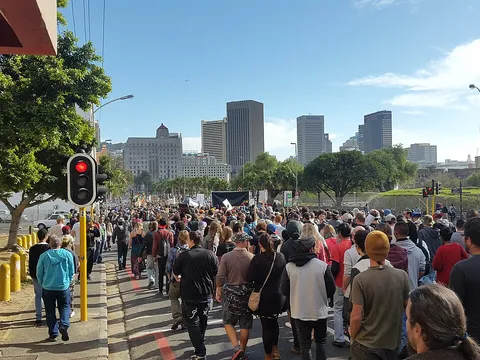 LanguageDaggaThe southern African word, from Khoekhoe. First written down by the Dutch at the Cape in 1658, later a word of contempt, now reclaimed.
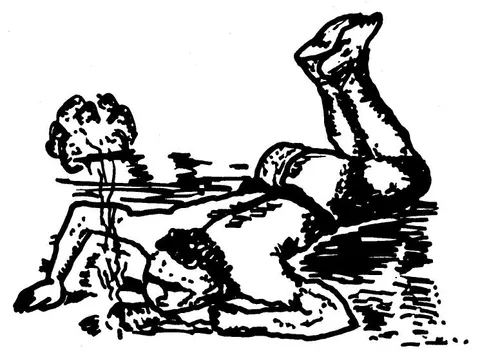 TraditionsThe earth pipeAcross southern and central Africa people smoked cannabis through a pipe made of nothing but soil, moulded on the surface or dug into the ground, often drawn on lying flat. Under prohibition, it left little durable evidence for police to find.
Did you know? all cases →
Botswana
Under Botswana’s 2025 Cannabis Act, a landowner who finds cannabis growing wild on their land must report it within seven days — or face up to five years in prison.
Datasets not part of the score
What other organisations publish about Botswana, and where it stands among the countries each one covers. Each dataset has a page of its own, with a world map and every country's figure.
Use
UNODC
Cannabis use
3.07%of people aged 15–64 (assumed)
50,000 people · computed here: the median of surveyed countries in the region, or the figure of the country a territory is part of
Source Survey ages and years vary, and some surveys include children. Rates are not age-standardised; do not compare countries directly.WHO, Our World in Data · 2020
Alcohol drunk per person
7.27litres of pure alcohol a year
6.94 · 20006.94 · 20017.04 · 20027.00 · 20036.97 · 20047.44 · 20057.91 · 20068.25 · 20077.62 · 20087.46 · 20097.47 · 20107.86 · 20117.58 · 20127.15 · 20137.01 · 20147.08 · 20157.32 · 20167.61 · 20178.16 · 20188.16 · 20197.27 · 202020002020 Higher than 69% of 187 countriesLowestHighestper person aged 15 or over · 2020 · 6.94 in 2000 · 7.47 in 2010
Law
UNODC · 2024
Cannabis seized
1,268kg in 2024
494 · 2021787 · 20221,325 · 20231,268 · 202420212024 Higher than 42% of 163 countriesLess seizedMore seized1,268 kg of herb
Society
OpenAlex · 2025
Research on cannabis
0.8papers per million people
0.4 · 19960.4 · 20130.4 · 20140.4 · 20151.2 · 20180.4 · 20190.4 · 20202.3 · 20210.4 · 20220.8 · 20231.6 · 20240.8 · 202519962025 Higher than 46% of 176 countriesLowestHighest2 papers in 2025
Cato and Fraser Institutes · 2023
Human Freedom Index
7.47of 10
7.10 · 20007.06 · 20017.11 · 20027.07 · 20037.21 · 20047.26 · 20057.40 · 20067.43 · 20077.29 · 20087.20 · 20097.27 · 20107.32 · 20117.32 · 20127.35 · 20137.24 · 20147.28 · 20157.36 · 20167.29 · 20177.32 · 20187.55 · 20197.30 · 20207.26 · 20217.45 · 20227.47 · 202320002023 Higher than 63% of 164 countriesLess freeFreerrank #62 of 165 · personal freedom 7.86 · economic freedom 6.92
V-Dem, Our World in Data · 2025
Civil liberties
0.84of 1 in 2025
0.32 · 19000.32 · 19010.32 · 19020.32 · 19030.32 · 19040.32 · 19050.32 · 19060.32 · 19070.32 · 19080.32 · 19090.32 · 19100.32 · 19110.32 · 19120.32 · 19130.32 · 19140.32 · 19150.32 · 19160.32 · 19170.32 · 19180.32 · 19190.32 · 19200.32 · 19210.32 · 19220.32 · 19230.32 · 19240.32 · 19250.32 · 19260.32 · 19270.32 · 19280.32 · 19290.32 · 19300.32 · 19310.32 · 19320.32 · 19330.33 · 19340.33 · 19350.33 · 19360.33 · 19370.33 · 19380.33 · 19390.33 · 19400.33 · 19410.33 · 19420.33 · 19430.33 · 19440.34 · 19450.35 · 19460.35 · 19470.35 · 19480.34 · 19490.34 · 19500.34 · 19510.34 · 19520.34 · 19530.34 · 19540.34 · 19550.34 · 19560.34 · 19570.34 · 19580.35 · 19590.39 · 19600.41 · 19610.44 · 19620.45 · 19630.45 · 19640.45 · 19650.82 · 19660.83 · 19670.83 · 19680.83 · 19690.83 · 19700.83 · 19710.83 · 19720.83 · 19730.83 · 19740.84 · 19750.84 · 19760.84 · 19770.84 · 19780.84 · 19790.84 · 19800.87 · 19810.87 · 19820.87 · 19830.87 · 19840.87 · 19850.87 · 19860.87 · 19870.87 · 19880.87 · 19890.87 · 19900.87 · 19910.87 · 19920.87 · 19930.87 · 19940.87 · 19950.87 · 19960.87 · 19970.88 · 19980.89 · 19990.89 · 20000.89 · 20010.89 · 20020.89 · 20030.89 · 20040.89 · 20050.89 · 20060.89 · 20070.88 · 20080.88 · 20090.88 · 20100.88 · 20110.87 · 20120.86 · 20130.87 · 20140.88 · 20150.87 · 20160.87 · 20170.87 · 20180.88 · 20190.88 · 20200.84 · 20210.82 · 20220.82 · 20230.84 · 20240.84 · 202519002025 Higher than 66% of 175 countriesFewer libertiesMore liberties0.32 in 1925 · 0.41 in 1961 · 0.87 in 1990
Our World in Data, World Bank · 2025
Population
2,562,122people in 2025
165,725 · 1900194,195 · 1910227,317 · 1920278,852 · 1930340,490 · 1940413,708 · 1950516,174 · 1960590,338 · 1970937,493 · 19801,305,699 · 19901,677,384 · 20002,033,110 · 20102,365,895 · 20202,562,122 · 202519002025 Higher than 28% of 196 countriesLowestHighest165,725 in 1900 · 413,708 in 1950 · 1,677,384 in 2000
CEPII
Former colonial rulers
Once ruled by United Kingdom
World Bank · 2025
Government effectiveness
61of 100
56 · 199656 · 199856 · 200061 · 200265 · 200362 · 200464 · 200560 · 200663 · 200765 · 200866 · 200965 · 201065 · 201165 · 201265 · 201365 · 201466 · 201565 · 201663 · 201761 · 201863 · 201960 · 202061 · 202162 · 202264 · 202363 · 202461 · 202519962025 Higher than 68% of 195 countriesLowestHighestestimate 0.43 on a scale of −2.5 to 2.5 · 2025 · 56 in 2000 · 66 in 2015
Transparency International · 2024
Corruption Perceptions Index
57of 100
65 · 201264 · 201363 · 201463 · 201560 · 201661 · 201761 · 201861 · 201960 · 202055 · 202160 · 202259 · 202357 · 202420122024 Higher than 75% of 178 countriesLowestHighest0 highly corrupt, 100 very clean · 2024 · 63 in 2015 · 60 in 2020
Pew Research Center · 2020
Most common religion
Christians
the largest group · 2020
World Bank · 2025
Income per person
$17,687per person
10,521 · 199011,002 · 199111,009 · 199210,903 · 199310,990 · 199411,458 · 199511,833 · 199612,526 · 199712,306 · 199813,207 · 199913,186 · 200012,950 · 200113,480 · 200213,857 · 200313,985 · 200414,362 · 200515,276 · 200615,850 · 200716,040 · 200813,490 · 200914,545 · 201015,237 · 201114,958 · 201216,369 · 201317,052 · 201415,995 · 201516,906 · 201617,353 · 201717,825 · 201818,106 · 201916,289 · 202017,961 · 202118,647 · 202218,932 · 202318,108 · 202417,687 · 202519902025 Higher than 51% of 187 countriesLowestHighestat purchasing power parity, 2021 dollars · 2025 · $10,521 in 1990 · $14,545 in 2010
World Bank · 2024
Development indicators
57.5%use the internet
0% · 19900% · 19910.1% · 19950.2% · 19960.3% · 19970.6% · 19981.1% · 19992.9% · 20003.4% · 20013.4% · 20023.3% · 20033.3% · 20043.3% · 20054.3% · 20065.3% · 20076.2% · 20086.2% · 20096% · 20109% · 201116% · 201230% · 201336.7% · 201438.9% · 201541.2% · 201643.6% · 201746.1% · 201848.8% · 201951.7% · 202054.7% · 202157.9% · 202257.5% · 202419902024 Higher than 28% of 195 countriesLowestHighest67.5% live in towns · 4% aged 65+ · life expectancy 69.3 · higher education 21.4% · 2024 · 2.9% in 2000 · 6% in 2010
GDELT · 2025
Cannabis in the news
0%of global news: cannabis articles from here
0% · 20170% · 20180% · 20190% · 20200% · 20210% · 20220% · 20230% · 20240% · 202520172025 Higher than 0% of 147 countriesLowestHighest2025 average, 348 days · 0% in 2018 · 0% in 2021
Enforcement 1 report · the Cannabis Enforcement Tracker →
How the law above is applied: raids, seizures, fields destroyed, arrests and sentences, as recorded by the Cannabis Enforcement Tracker, our companion site.
- ProsecutionPolice charge a Zimbabwean man over a 500 kg cannabis farm
Clifford Nkomo, 51, was arrested at a farm in Gantsi and charged with unlawful possession and unlawful cultivation after police reported about 500 kg of cannabis worth P250,000, plus about 1 kg in sachets.
History 17 of 17 checked against a source
Score and entries per decade
12 today, from 100 before its first recorded change
This country's score Entries that moved the score Context only
20263 entries0 score changes
Hemp ✓
Botswana earmarks Dibete Farm for commercial hemp
The government designated Dibete Farm for the first phase of commercial hemp production after trials by the National Agricultural Research and Development Institute with Hemp Innovations Botswana. The first cannabis licence, for medical cannabis and industrial hemp, had been announced in March 2026.
Debate ✓ Article
Botswana plans to ban driving under the influence of drugs
The assistant minister of transport, Keoagile Atamelang, announced proposed Road Traffic Act amendments at a consultative meeting in Kgomokasitwa, describing existing provisions as targeting drunk drivers while leaving drug impairment largely unaddressed. That is the announcement's characterisation, not an accurate statement that drug driving was lawful: published section 46(2) already prohibits driving while unfit through drugs, with penalties under section 46(4). No commencement date or enacted replacement was established by this report.
Hemp ✓ Article
Botswana publishes rules for industrial cannabis with a 0.7% THC limit
Regulations published in January allow licensed farming, processing, transport, research and trade in what the government calls industrial cannabis, with a THC limit of 0.7 per cent. Cultivation licences run for three years and manufacturing licences for five. Applicants must supply site maps, security clearance, crop plans, THC testing protocols and proof of financial capacity, which some politicians called elitist. Marijuana and CBD remain illegal. In February the second licence went to a company linked to a Swedish hemp firm, and the finance minister said trials would begin at the agricultural university.
20253 entries1 score change
Easing ✓ Article
Botswana excludes imprisonment for possession of 60 grams or less
Act 26 of 2025 commenced on 22 December. It adds a low-level cannabis possession offence covering 60 grams or less, with a fine up to P10,000 or prescribed alternatives and an explicit prohibition on imprisonment. Notices require payment within 21 days and mandatory rehabilitation as prescribed; nonpayment leads to alternatives to imprisonment. Larger quantities and cannabis preparations remain subject to separate criminal penalties. Possession is still an offence, and the amendment does not legalise recreational supply.
Medical ✓ Article
Botswana's Cannabis Act takes effect, legalising cannabis under licence
The Cannabis Act allows cannabis for medical, scientific, research and industrial purposes within a licensing system. It received assent on 17 October 2025 but took effect in two stages: the regulator and its board on 12 December (Parts I–V, S.I. 157/2025), and the licences, supply to patients and lawful possession on 22 December (Parts VI–XIII, S.I. 162/2025). Regulations followed in 2026. Recreational use stayed illegal.
1112+1 point
Debate ✓
Regional drug commission calls for decriminalisation in Gaborone
The Eastern and Southern Africa Commission on Drugs, chaired by Kgalema Motlanthe, met in Gaborone and called for the decriminalisation of drug use and a focus on high-level traffickers. The meeting produced a policy recommendation, not a change in law.
20222 entries0 score changes
Other law ✓ Article
Botswana's Court of Appeal overturns the ruling that restored a cannabis exemption
On 21 January 2022 the Gaborone High Court had restored Fresh Standard's exemption to cultivate cannabis and industrial hemp. The state appealed, arguing that the company had brought its review outside the four-month period, and the Court of Appeal, in a judgment delivered by Judge President Tebogo Tau and reported on 8 November, set the High Court ruling aside with costs.
Other law ✓
High Court restores Fresh Standard's cannabis exemption
The Gaborone High Court reviewed the ministry's 2019 withdrawal of Fresh Standard's Plant Protection Act exemption and set it aside, declaring the exemption valid. The Court of Appeal overturned that ruling in November 2022 because the review had been brought late.
20182 entries0 score changes
Other law ✓
Botswana grants, then withdraws, its first exemption to grow cannabis and hemp
In August 2018 a company, Fresh Standard, proposed to the agriculture minister to grow and process cannabis and hemp for medical and industrial use, and the ministry's permanent secretary approved an exemption under the Plant Protection Act. After the company acquired land and planted, police narcotics officers removed the crop, and in May 2019 the ministry revoked the exemption by letter.
Other law ✓
Botswana replaces its drug law with the Illicit Traffic Act
Parliament passed the Illicit Traffic in Narcotic Drugs and Psychotropic Substances Act on 19 June 2018 and it commenced on 29 June. It created the current offences of use and possession (section 4), trafficking (section 5), cultivation (section 6) and unlawful supply (section 11). Cannabis stayed prohibited and some penalties rose, but no segment band moved.
20071 entry0 score changes
19961 entry0 score changes
19921 entry0 score changes
19841 entry0 score changes
19551 entry0 score changes
19481 entry0 score changes
19221 entry1 score change
Sources hover a number in the text to see its source
- Cited
- 13
- Websites
- 8
- Last reviewed
- History checked
- 17/17
Most cited
- e-laws.botswanalaws.com6
- dailynews.gov.bw1
- data.unodc.org1
- hemptoday.net1
- incb.org1
- mmegi.bw1
All 13 sources
- Botswana — Illicit Traffic in Narcotic Drugs and Psychotropic Substances Act 2018 (Act 15 of 2018, Cap. 08:12)Sections 2, 4, 5, 6 and 11.archived
- Botswana — Illicit Traffic in Narcotic Drugs and Psychotropic Substances (Amendment) Act 26 of 2025Section 4, inserted subsections 4(1A) and 4(2A)–(2E); substituted quantity tiers.archived
- Botswana Attorney General's Chambers — Act 26 of 2025 commencement recordCommencement on 22 December 2025 through S.I. 163/2025.archived
- Botswana — Cannabis Act 2025 (Act 20 of 2025)Sections 2, 3, 48, 55, 64 and 65.archived
- NewZimbabwe — Zimbabwean man arrested in Botswana over large-scale cannabis farm (17 April 2026)About 500 kg at Gantsi; charged with unlawful possession and cultivation.archived
- UNODC Data Portal — Drug seizures, reported seizures in kilogram equivalentsBotswana: 1,268 kg herbal cannabis in 2024; 1,325 kg in 2023.archived
- Mmegi — Dagga dominates Botswana's drug trade (17 April 2026)2025 national risk assessment: P48.8 million marijuana estimate.archived
- Botswana Attorney General's Chambers — Act 20 of 2025 (Cannabis Act) commencement recordParts I–V from 12 December 2025 (S.I. 157/2025); Parts VI–XIII from 22 December 2025 (S.I. 162/2025).archived
- HempToday — Botswana government says it will support hemp after issuing strict regulations (27 February 2026)0.7% THC limit; three-year cultivation and five-year manufacturing licences.archived
- Sunday Standard — Controversy erupts over Botswana's first licensed cannabis producer (30 March 2026)First medical cannabis and industrial hemp licence.archived
- Botswana Attorney General's Chambers — Road Traffic Act, Chapter 69:01, published consolidationSections 46–48 and 53.archived
- Botswana Daily News — proposed Road Traffic Act amendments (25 February 2026)archived
- International Narcotics Control Board — Travellers carrying medicines containing controlled substances