The story · written by gpt-6.1-sol,
On 29 May 1798, Bengal’s Board advised the Governor-General in Council against altogether prohibiting the intoxicants it had examined. The recommendation favoured restricting use and raising revenue through suitable taxes. It is an early statement of colonial regulatory policy, rather than evidence of a British parliamentary cannabis-tax act passed that day.
The document behind the date
The Indian Hemp Drugs Commission reproduced the conclusion in paragraph 556 of its 1894 report. It identified Board letter No. 22 and supplied its date. The inquiry considered several intoxicants, including ganja, bhang and charas, alongside substances such as opium, tobacco and toddy.
The original 1798 letter has not been independently inspected here. The account rests on its reproduction by the later official commission, with the distinction between the two documents retained in the citation.
Why the Board opposed total prohibition
The reproduced reasoning considered the practical difficulty of permitting original substances while prohibiting preparations made from them. It also recognized uses in medicine or otherwise and did not recommend altogether prohibiting sales of the substances examined.
These are the Board’s historical arguments. The account does not establish that all preparations were harmless, that every form of use was officially approved, or that no prohibition could ever be introduced elsewhere. A recommendation concerning the substances under examination has a particular institutional and geographical setting.
Taxation as a proposed instrument
The Board proposed considering taxes suited to restraining use and improving revenue. That identifies both a regulatory objective and a fiscal one.
The passage does not, by itself, enact a tariff, identify a particular rate or establish the day on which collectors began receiving a new tax. Turning the recommendation into a completed tax statute would collapse an important distinction between advice and implementation.
Correcting the older account
This page previously described a British parliamentary tax on bhang, ganja and charas in 1798. The inspected passage supports a Bengal Board recommendation to the Governor-General in Council. The title, date and description now follow that evidence, while the original page identifier is preserved.
The event is recorded as debate and policy context for India. It does not establish the first taxation of cannabis, a single arrangement across the subcontinent, or an uninterrupted regulatory regime lasting into modern times. Specific tax enactments and territorial rules still require their own sources and dates.[1]
In the cultural atlas
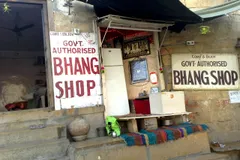
Listed for context. No score change is recorded for India here.
References
- Report of the Indian Hemp Drugs Commission, 1893–94, Vol. IIndian Hemp Drugs Commission · Government Central Printing Office, Simla · 1894 · Chapter XIV, paragraph 556; reproduces Bengal Board letter No. 22 of 29 May 1798 and Finance Department Resolution No. 3773 of 17 December 1873archived
Checked. The date and the event were compared with a source that was read.