The story
William Brooke O’Shaughnessy’s 1839 paper gave British medicine its most systematic early account of Indian cannabis preparations. Written in Calcutta, it joined reports from Indian practice to experiments on animals and hospital patients.
Testing instead of repeating hearsay
O’Shaughnessy was an assistant surgeon in the Indian Medical Service and later a professor at Calcutta’s medical college. His paper, “On the Preparations of the Indian Hemp or Gunjah (Cannabis Indica)”, appeared in the Transactions of the Medical and Physical Society of Bengal.
He first observed cannabis’s effects across several animal species, then administered preparations to people. Historian James H. Mills presents this as an unusually comprehensive British scientific assessment for colonial India, while also cautioning that O’Shaughnessy’s professional ambitions may have contributed to his enthusiasm.
The method combined descriptions of the plant and earlier medical writing with O’Shaughnessy’s own experiments. He also compared cannabis’s adverse effects with those associated with alcohol, opium and tobacco rather than treating the drug in isolation.
What the cases claimed
The clinical reports covered severe rheumatism, rabies symptoms, cholera, tetanus, infantile convulsions and delirium tremens. O’Shaughnessy described sedative and pain-relieving effects in rheumatism. Cannabis did not cure the rabies case, but he reported relief from hydrophobia. In cholera cases he observed reduced vomiting and diarrhoea and induced rest.
He was most confident about cannabis as an anticonvulsant. His tetanus cases included recoveries, and he reported using the drug in an infant suffering convulsions. The paper was not a modern controlled trial: it was a collection of experiments and clinical observations, and Mills advises caution when reading its conclusions.
From paper to dispensatory
The work circulated beyond the original journal. O’Shaughnessy’s Bengal Dispensatory of 1842 devoted twenty-five pages to cannabis. His 1844 Bengal Pharmacopoeia described indications and dosing and supplied a formula for a tincture prepared from ganja tops and rectified spirit.
These later manuals turned the journal cases into material that doctors could consult as a dispensatory entry, including a preparation method rather than clinical anecdotes alone.
The journal paper and the two later manuals made O’Shaughnessy a central figure in the nineteenth-century medical history of cannabis.
The index records the 1839 paper as context. It moved no score for India because it documented and promoted medical use rather than changing the law governing possession, cultivation or access.[1]
In the cultural atlas
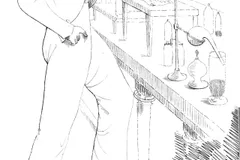 People · Irish physician in India · 1809–1889William O'ShaughnessyAn Irish doctor in Calcutta who tested Indian hemp on animals, himself and his patients, and in 1839 brought cannabis into Western medicine as a remedy for pain, spasm and convulsions.
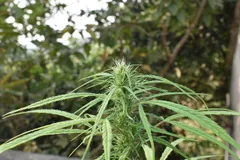 Language · English, from botanical LatinIndian hempThe name under which the British Empire, and then the world, first brought cannabis under control. It survives in the statute books of dozens of countries that have nothing to do with India.
Listed for context. No score change is recorded for India here.
References
- Cannabis Britannica: Empire, Trade, and Prohibition, 1800–1928James H. Mills · Oxford University Press · 2003 · pp. 38–46 · ISBN 0-19-924938-5
- Taming the Orient: France and the First Global Movement to Medicalize Cannabis, ca. 1800–1850David A. Guba Jr. · In Cannabis: Global Histories, edited by Lucas Richert, James H. Mills · MIT Press · 2021 · pp. 8 · ISBN 9780262366137
Checked. The date and the event were compared with a source that was read.