Fiji
13/100
#69 of 196 worldwide
#5 of 14 in Oceania
Cannabis possession remains criminalised, with court guidelines favouring non-custodial sentences for up to 100 g. A separate hemp exemption was approved in 2022. A drug-law rewrite signed in October 2026 provides for commencement by ministerial notice.
In short all countries →
- Can I carry it?NoIt is a crime
- Can I grow it?NoIt is a crime
- Can I buy it?NoThere is no legal source
- Can I use it in public?NoNot in public, and even at home the law does not protect it
- What if I'm caught?Guideline sentencesFor up to 100 g, guidelines favour non-custodial sentences; short or suspended custody remains possible in the worst cases
A rough guide read from the scores and the rules below, not legal advice. The details and the exceptions are in each segment: select an answer to jump to it.
Cannabis in Fiji not part of the score · all 13 datasets ↓
Who uses it
About 1 in 20
people aged 15–64 in Fiji used cannabis in the past year: 32,000 people.
- Past year
- 5.1%
- Oceania median
- 11.5%
UNODC · survey 2004
Source Past-year cannabis use among people aged 15–64. People who used cannabis in the past year, from a 2004 survey, applied to today's population aged 15–64.Survey ages and years vary, and some surveys include children. Rates are not age-standardised; do not compare countries directly.
UNODC World Drug Report 2026, annex table 1.2. Population from the World Bank, aged 15–64. The whole dataset →
Use across Oceania
6thhighest of 7 surveyed countries
- 🇳🇿 New Zealand14.1%
- 🇦🇺 Australia11.5%
- 🇲🇭 Marshall Islands5.5%
- 🇫🇯 Fiji5.1%
- 🇻🇺 Vanuatu0.1%
Past-year use, latest survey of each. Survey years and ages differ. On the map →
Cannabis in figures
- Research on cannabis1.1papers per million people · 2023
- Cannabis in the news0.0001%of global news: cannabis articles from here · 2025
The dot: where it stands among the countries each dataset covers, lowest to highest. All datasets ↓
What they call it
- Indian hemp[1]Englishcannabis
Score breakdown 13/100 · how the scores are made
Similar scores in Oceania
- 🇫🇲 Micronesia18
- 🇵🇼 Palau17
- 🇫🇯 Fiji13
- 🇲🇭 Marshall Islands11
- 🇸🇧 Solomon Islands11
The 2004 drug law makes unauthorised possession an offence carrying a maximum FJ$1 million fine, life imprisonment, or both.[1] The 2012 Sulua court guidelines favour fines, community service, counselling or discharge with a warning for up to 100 g, reserving suspended or short prison terms for the worst cases. Higher weight bands run from one to three years, three to seven years and seven to fourteen years.[2] The law signed on 2 October 2026, awaiting verified commencement, sets a separate personal-use offence for cannabis plant material, with a maximum FJ$500 fine or three months in prison, or both, and restricts custody to prior-conviction or exceptional cases; at 28 g a rebuttable presumption of supply begins.[3] Commencement requires a ministerial Gazette notice; no notice activating this personal-use tier was verified through 27 October 2026.[3]
| Amount | What happens | Punishment | Fine |
| Unauthorised possession under the 2004 ActStatutory maximum: life imprisonment, a fine, or both; court guidelines favour non-custodial outcomes for up to 100 g | CriminalPossession | — | Up to FJD 1,000,000 |
Unauthorised cannabis cultivation is an offence.[1] The 2023 Seru guidelines combine plant count with the grower’s role: fewer than ten plants for personal use and a lesser role fall in a non-custodial to suspended-sentence range.[2] Leading-role cultivation of 100 or more plants has an eighteen-year starting point and a sixteen-to-twenty-year range, before the remaining sentencing adjustments.[2]
| Amount | What happens | Punishment | Fine |
| Fewer than ten plants, personal use, lesser roleNon-custodial to suspended-sentence range under the 2023 Seru guidelines | CriminalCultivation | — | — |
| Leading role, 100 or more plantsEighteen-year starting point with a sixteen-to-twenty-year range, before remaining sentencing adjustments | CriminalCultivation | 16–20 years | — |
| Unauthorised cultivation under the 2004 Act (statutory maximum)Maximum FJ$1 million fine, life imprisonment, or both | CriminalCultivation | — | Up to FJD 1,000,000 |
The Sulua guidelines favour outcomes outside prison for possession of up to 100 g, with custody available in the worst cases. Cultivation sentences can be lengthy: in May 2024 the appeal court applied the newer guidelines to two growers and reduced their prison terms from nineteen and eighteen years to fifteen and fourteen.[4]
The 2004 law defines supply to include giving cannabis to another person. The same statutory maximum applies to possession and supply, and Sulua’s weight-based guidelines were applied across the listed drug offences.[1][2] The 2026 law signed in October separates personal use from supply, with commencement to be set by ministerial notice.[3]
| Amount | What happens | Punishment | Fine |
| Supply under the 2004 Act (statutory maximum)Maximum FJ$1 million fine, life imprisonment, or both; weight-based guidelines applied across the listed drug offences | CriminalSupply | — | Up to FJD 1,000,000 |
Recreational possession, cultivation and supply are criminal offences. Lawfully prescribed or supplied treatment and authorised professional activity are covered by statutory exceptions.[1]
Context not part of the score · every country, by topic →
Recreational possession, cultivation and supply are criminal offences with no legal market.[1] The October 2026 law creates a separate personal-use offence for cannabis plant material — at most a FJ$500 fine or three months in prison — with diversion into support programmes, but it commences only by ministerial Gazette notice.[3]
Fiji has been developing a medicinal cannabis industry proposal. Separately, section 11 of the 2004 drug law exempts lawfully prescribed or supplied treatment and permits health-authority licensing of drug imports, exports or manufacture.[1][5]
Unauthorised cannabis cultivation and supply, including giving it to another person, are prohibited under the drug law.[1]
Schedule 1 of the Illicit Drugs Control Act lists cannabis seed by name as an illicit drug, alongside the plant, its fruit, resin and oil, and the Act bans importing, cultivating, selling, supplying and possessing them. Since the 2022 amendment hemp with no more than 1% THC is excluded, but a person who claims a plant is hemp must prove it.[1][6]
Hemp and plant parts derived from it at no more than 1% THC are excluded from the schedule’s references to the cannabis plant; a person claiming the exemption in a prosecution bears the burden of proving it.[6]
Cabinet approved a policy to develop a medicinal cannabis industry in February 2024, with company approval dependent on the industry being established by law.[7] The separate 2022 amendment concerns a low-THC hemp exemption.[6] The October 2026 drug-law rewrite requires ministerial Gazette notices to commence.[3]
Fiji recorded 2,446 drug cases from May 2024 to May 2025, of which 2,098, or 85.7 per cent, were marijuana; 50 involved juveniles and 1,506 were aged 18–35.[8] Operation Sasamaki, launched on 1 March 2025, destroyed 18.2 tonnes of marijuana across nine phases, valued at FJ$241 million, and arrested 1,239 people, mostly for possession and cultivation.[9] Kadavu is the best-known growing area, with more than 10,000 plants uprooted in 2023, while methamphetamine and cocaine transshipment has surged.[10] No reliable per-gram retail price was found.[9]
Recreational cannabis possession and supply are criminal offences.[1] For possession up to 100 g, sentencing guidelines favour fines, community service, counselling or a warning, with short or suspended custody reserved for the worst cases.[2] Section 11 of the 2004 law separately exempts people entering, leaving or transiting Fiji with up to one month of an illicit drug lawfully prescribed or supplied for treatment of themselves or someone in their care.[1]
Land Transport Act section 102 makes driving or being in charge while drug influence prevents proper vehicle control an offence.[11] Police can forbid driving, take the keys and immobilise or remove the vehicle until the person can control it, with a right to request review by a more senior officer in the circumstances specified by the Act.[11] The government's published statutory penalty schedule lists a maximum FJ$5,000 fine or five years' imprisonment or both, plus five years' disqualification, subject to the court's statutory powers concerning disqualification.[11] These are court penalties, not a roadside ticket tariff.[11] Section 103's numerical concentration offence concerns alcohol; no quantified THC threshold appears in section 102.[11] The Trade Portal's February 2025 upload reproduces a text incorporating 1999 and 2000 amendments; later changes to the penalty schedule remain a verification target.[11]
Fiji recorded 6,659 drug cases between 2019 and 2023, and marijuana accounted for 94 per cent of them, with methamphetamine and cocaine making up the rest, according to figures reported by the Pacific Islands News Association.[12]
Cannabis offences can lead to conviction, fines and imprisonment. The guidelines for possession of up to 100 g also allow counselling, community service or discharge with a strong warning.[1][2]
Cannabis in Fiji is known as Indian hemp, the colonial name used in the 1938 Dangerous Drugs Ordinance.[1] It is grown locally, especially on Kadavu, and traditional use includes boiling leaves in coconut oil as a skin treatment.[10] The modern law treats it as an illicit drug, with no cultural exemption.[1]
Taking cannabis into or out of Fiji is a separate offence from possessing it, normally charged as smuggling or trafficking, with far heavier penalties. That holds almost everywhere, including between two places where cannabis is legal.
A prescription or medical card from another country is generally not recognised. Travellers who need a cannabis-based medicine should ask Fiji's embassy before travelling.[13]
General guidance that applies to almost every country, not a check of Fiji's customs rules.
Culture the atlas →
Did you know? all cases →
Fiji
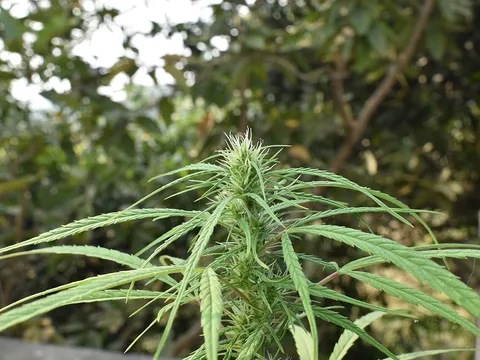
Fiji's sentencing guidelines favour fines, community service, counselling or a warning for up to 100 g of cannabis, reserving short or suspended prison terms for the worst cases.
Datasets not part of the score
What other organisations publish about Fiji, and where it stands among the countries each one covers. Each dataset has a page of its own, with a world map and every country's figure.
Use
UNODC · 2004
Cannabis use
5.08%of people aged 15–64
ages 15–64 · survey 2004 · 32,000 people · UNODC 2026
Source Survey ages and years vary, and some surveys include children. Rates are not age-standardised; do not compare countries directly.WHO, Our World in Data · 2020
Alcohol drunk per person
3.58litres of pure alcohol a year
2.41 · 20002.41 · 20012.37 · 20022.45 · 20032.53 · 20042.67 · 20052.84 · 20062.98 · 20073.05 · 20082.87 · 20092.85 · 20102.81 · 20112.95 · 20122.98 · 20133.03 · 20143.06 · 20153.05 · 20163.18 · 20173.45 · 20183.45 · 20193.58 · 202020002020 Higher than 41% of 187 countriesLowestHighestper person aged 15 or over · 2020 · 2.41 in 2000 · 2.85 in 2010
Society
OpenAlex · 2023
Research on cannabis
1.1papers per million people
Higher than 51% of 176 countriesLowestHighest1 papers in 2023
Cato and Fraser Institutes · 2023
Human Freedom Index
7.45of 10
6.78 · 20006.87 · 20017.00 · 20026.96 · 20037.17 · 20047.26 · 20056.78 · 20066.59 · 20076.55 · 20086.39 · 20096.36 · 20106.49 · 20116.51 · 20126.58 · 20136.80 · 20146.99 · 20156.99 · 20167.17 · 20177.25 · 20187.16 · 20196.93 · 20206.95 · 20217.16 · 20227.45 · 202320002023 Higher than 62% of 164 countriesLess freeFreerrank #63 of 165 · personal freedom 8.43 · economic freedom 6.08
V-Dem, Our World in Data · 2025
Civil liberties
0.77of 1 in 2025
0.63 · 19000.63 · 19010.63 · 19020.63 · 19030.63 · 19040.63 · 19050.63 · 19060.63 · 19070.63 · 19080.63 · 19090.63 · 19100.63 · 19110.63 · 19120.63 · 19130.63 · 19140.63 · 19150.63 · 19160.63 · 19170.63 · 19180.63 · 19190.63 · 19200.63 · 19210.63 · 19220.63 · 19230.63 · 19240.63 · 19250.63 · 19260.63 · 19270.63 · 19280.63 · 19290.63 · 19300.63 · 19310.63 · 19320.63 · 19330.63 · 19340.63 · 19350.63 · 19360.63 · 19370.63 · 19380.63 · 19390.63 · 19400.63 · 19410.63 · 19420.63 · 19430.63 · 19440.63 · 19450.63 · 19460.63 · 19470.63 · 19480.63 · 19490.63 · 19500.63 · 19510.63 · 19520.64 · 19530.64 · 19540.64 · 19550.64 · 19560.64 · 19570.64 · 19580.64 · 19590.65 · 19600.66 · 19610.66 · 19620.66 · 19630.66 · 19640.66 · 19650.66 · 19660.66 · 19670.66 · 19680.66 · 19690.81 · 19700.82 · 19710.82 · 19720.82 · 19730.82 · 19740.82 · 19750.82 · 19760.82 · 19770.82 · 19780.82 · 19790.82 · 19800.82 · 19810.82 · 19820.82 · 19830.82 · 19840.82 · 19850.82 · 19860.70 · 19870.72 · 19880.72 · 19890.74 · 19900.75 · 19910.75 · 19920.76 · 19930.76 · 19940.77 · 19950.77 · 19960.80 · 19970.80 · 19980.80 · 19990.71 · 20000.76 · 20010.77 · 20020.77 · 20030.77 · 20040.77 · 20050.67 · 20060.57 · 20070.56 · 20080.56 · 20090.58 · 20100.58 · 20110.60 · 20120.62 · 20130.67 · 20140.72 · 20150.71 · 20160.73 · 20170.72 · 20180.70 · 20190.69 · 20200.68 · 20210.68 · 20220.77 · 20230.77 · 20240.77 · 202519002025 Higher than 52% of 175 countriesFewer libertiesMore liberties0.63 in 1925 · 0.66 in 1961 · 0.74 in 1990
Our World in Data, World Bank · 2025
Population
933,154people in 2025
126,498 · 1900147,045 · 1910167,453 · 1920210,278 · 1930272,546 · 1940309,525 · 1950404,901 · 1960531,198 · 1970641,985 · 1980773,325 · 1990840,913 · 2000910,427 · 2010914,971 · 2020933,154 · 202519002025 Higher than 18% of 196 countriesLowestHighest126,498 in 1900 · 309,525 in 1950 · 840,913 in 2000
CEPII
Former colonial rulers
Once ruled by United Kingdom
World Bank · 2025
Government effectiveness
63of 100
57 · 199656 · 199856 · 200056 · 200256 · 200349 · 200456 · 200556 · 200646 · 200740 · 200838 · 200941 · 201041 · 201141 · 201241 · 201356 · 201456 · 201556 · 201655 · 201761 · 201870 · 201964 · 202065 · 202162 · 202262 · 202363 · 202463 · 202519962025 Higher than 71% of 195 countriesLowestHighestestimate 0.53 on a scale of −2.5 to 2.5 · 2025 · 56 in 2000 · 56 in 2015
Transparency International · 2024
Corruption Perceptions Index
55of 100
55 · 202153 · 202252 · 202355 · 202420212024 Higher than 72% of 178 countriesLowestHighest0 highly corrupt, 100 very clean · 2024
Pew Research Center · 2020
Most common religion
Christians
the largest group · 2020
World Bank · 2025
Income per person
$13,961per person
7,821 · 19907,548 · 19917,950 · 19928,068 · 19938,432 · 19948,600 · 19958,956 · 19968,669 · 19978,674 · 19989,329 · 19999,071 · 20009,158 · 20019,358 · 20029,361 · 20039,767 · 20049,746 · 20059,837 · 20069,672 · 20079,712 · 20089,537 · 20099,784 · 201010,021 · 201110,141 · 201210,604 · 201311,183 · 201411,674 · 201511,952 · 201612,597 · 201713,100 · 201813,056 · 201910,812 · 202010,322 · 202112,118 · 202213,195 · 202313,592 · 202413,961 · 202519902025 Higher than 43% of 187 countriesLowestHighestat purchasing power parity, 2021 dollars · 2025 · $7,821 in 1990 · $9,784 in 2010
World Bank · 2024
Development indicators
74.7%use the internet
0% · 19900% · 19930% · 19940% · 19950.1% · 19960.2% · 19970.6% · 19980.9% · 19991.5% · 20001.9% · 20016.2% · 20026.7% · 20037.4% · 20048.5% · 20059.6% · 200610.9% · 200713% · 200817% · 200920% · 201028% · 201133.7% · 201235.2% · 201337.4% · 201442.5% · 201549.4% · 201653.6% · 201758.2% · 201863.2% · 201968.6% · 202070.6% · 202172.6% · 202274.1% · 202374.7% · 202419902024 Higher than 43% of 195 countriesLowestHighest59.1% live in towns · 6.5% aged 65+ · life expectancy 67.5 · higher education 75% · 2024 · 1.5% in 2000 · 20% in 2010
GDELT · 2025
Cannabis in the news
0.0001%of global news: cannabis articles from here
0.0002% · 20170.0002% · 20180.0002% · 20190.0002% · 20200.0001% · 20210.0001% · 20220.0002% · 20230.0002% · 20240.0001% · 202520172025 Higher than 33% of 147 countriesLowestHighest2025 average, 348 days · 0.0002% in 2018 · 0.0001% in 2021
Enforcement 2 reports · the Cannabis Enforcement Tracker →
How the law above is applied: raids, seizures, fields destroyed, arrests and sentences, as recorded by the Cannabis Enforcement Tracker, our companion site.
- EradicationFiji destroys 18.2 tonnes of marijuana in Operation Sasamaki
Police reported that nine phases of Operation Sasamaki, launched on 1 March 2025, destroyed 18.2 tonnes of marijuana with an estimated street value of FJ$241 million and arrested 1,239 people, mostly for possession and cultivation.
- SentenceFiji’s appeal court cuts two cannabis growers’ prison terms by four years
Waisake Kaloulia’s nineteen-year cannabis cultivation sentence was reduced to fifteen years, and Kaminieli Naqeleca’s eighteen years to fourteen.
History 18 of 18 checked against a source
Score and entries per decade
13 today, from 100 before its first recorded change
This country's score Entries that moved the score Context only
20262 entries0 score changes
Other law ✓ Article
Fiji signs a drug rewrite separating personal use from supply
Fiji signed a new drug law with a separate personal-use offence and diversion into support programmes. For cannabis plant material it sets a maximum FJ$500 fine or three months in prison, or both, with custody restricted to prior-conviction or exceptional cases; at 28 g a rebuttable presumption of supply begins. The law also creates a Counter Narcotics Bureau and replaces the older drug Acts, with commencement dependent on a ministerial Gazette notice.
Other law ✓
Fiji says three quarters of consultation respondents back medicinal cannabis
The finance minister told Parliament that 75 per cent of 513 consultation participants across 17 sessions supported the medicinal-cannabis proposal. A taskforce was set up in August 2023, a policy framework was approved in February 2024, and Cabinet approved drafting in December 2024, but no bill had been introduced by July 2026.
20241 entry0 score changes
20232 entries0 score changes
Other law ✓
Fiji sets up a medicinal-cannabis taskforce
Cabinet established a multi-agency Nutraceutical and Medicinal Cannabis Taskforce in August 2023. Nationwide consultations followed in October and November 2023, and Cabinet approved a policy framework in February 2024. The taskforce did not itself create a licensing regime.
Other law ✓ Article
Fiji’s appeal court sentences growers by plant count and their role
Cannabis growers would be sentenced according to the number of plants and whether they led the operation, managed it or played a lesser role. The Court of Appeal set a non-custodial to suspended-sentence range for lesser-role cultivation of fewer than ten plants for personal use, and a sixteen-to-twenty-year range for leaders growing at least 100 plants. The new guidelines addressed conflicting approaches based on plant weight; Jone Seru’s own nine-year sentence for growing twenty plants stood.
20221 entry0 score changes
20121 entry0 score changes
20041 entry0 score changes
19931 entry0 score changes
19901 entry0 score changes
19731 entry0 score changes
19711 entry0 score changes
19631 entry0 score changes
19551 entry0 score changes
19451 entry0 score changes
19381 entry1 score change
19261 entry0 score changes
19051 entry1 score change
Sources hover a number in the text to see its source
- Cited
- 13
- Websites
- 10
- Last reviewed
- History checked
- 18/18
Most cited
- fijisun.com.fj2
- judiciary.gov.fj2
- parliament.gov.fj2
- fiji.gov.fj1
- fijitimes.com.fj1
- fijitradeportal.gov.fj1
All 14 sources
- Fiji Ministry of Health — Illicit Drugs Control Act 2004Assent 7 July 2004; sections 1–5, 11–22, 39; Schedule 1archived
- Fiji Court of Appeal — Jone Seru v State (25 May 2023)Paragraphs 1–29, 33–56, especially paragraph 19 reproducing Sulua and paragraphs 35–39 setting cultivation guidelinesarchived
- Parliament of Fiji — Counter Narcotics Act 2026Assent 2 October 2026; sections 1, 6, 73–79, 193–199, 254–255; Schedules 2–4. Commencement requires ministerial Gazette notice.archived
- Fiji Court of Appeal — Waisake Kaloulia and Kaminieli Naqeleca v State (30 May 2024)Paragraphs 3–10, 65–86 and final ordersarchived
- Fiji Sun — Medicinal Cannabis Bill Next Year (8 December 2024)archived
- Parliament of Fiji — Illicit Drugs Control (Budget Amendment) Act 2022Both pages; assent and passage 29 July 2022; sections 1–3archived
- Fiji Government — Cabinet decisions, 6 February 2024Medicinal cannabis industry policy: Medical Kiwi would require an appropriate licence once the industry is established by lawarchived
- Fijivillage — Fiji records 2,446 drug cases from May 2024 to 2025, majority involve marijuana (30 June 2025)2,098 marijuana; 343 meth; 5 cocaine; 50 juveniles.archived
- Fiji Sun — $241m marijuana seized in nine-month police crackdown (26 February 2026)18.2 tonnes destroyed; 1,239 arrests; nine phases.archived
- Fiji Times — 4.9 tonnes of marijuana seized in March (17 April 2025)Operation Sasamaki; 3.5 tonnes from Kadavu; 96 charged.archived
- Fiji Government Trade Portal — Land Transport Act 1998, with 1999 and 2000 amendments (PDF)Sections 59, 102–103, 114; Schedule, section 102(1)archived
- PINA — Coups, corruption and lack of good governance: the origins of Fiji's meth crisis (29 November 2024)archived
- International Narcotics Control Board — Travellers carrying medicines containing controlled substances
Also consulted
- Parliament of Fiji — Budget address, 15 July 2022Industrial Hemp Export Industry passage: proposed laboratory testing, conditional imports, FNU trials and seed distributionarchived