Australia
22/100
In the ACT an adult is outside the local small-possession and one-or-two-plant offences, within the limits ACT Policing states. Elsewhere, infringement notices, expiation fees, cautions and diversion are used for small amounts, and charges remain available. Medical cannabis is available on prescription. Presence-based drug-driving laws are strict.
In short all countries →
- Can I carry it?Depends on jurisdictionACT adults have a local small-possession exemption; elsewhere charges remain possible, and Commonwealth law also applies
- Can I grow it?LimitedA few plants are treated far more leniently than dealing
- Can I buy it?LimitedOn prescription, without great difficulty
- Can I use it in public?NoNot in public, and even at home the law does not protect it
- What if I'm caught?Fine or prisonUsually a fine; prison is possible
Choose a state or territory for its local rules ↑
A rough guide read from the scores and the rules below, not legal advice. The details and the exceptions are in each segment: select an answer to jump to it.
Cannabis in Australia not part of the score · all 22 datasets ↓
Who uses it
About 1 in 9
people aged 14+ in Australia used cannabis in the past year: about 2.7 million people.
- Past year
- 11.5%
- Oceania median
- 11.5%
UNODC · survey 2022/23
Source Past-year cannabis use among people aged 14+. People who used cannabis in the past year, from a 2022/23 survey, applied to today's population aged 14+. The population is approximate: the survey ages cut through an age group, or were not recorded and ages 15–64 are used.Survey ages and years vary, and some surveys include children. Rates are not age-standardised; do not compare countries directly.
UNODC World Drug Report 2026, annex table 1.2. Population from the World Bank, aged 14+. The whole dataset →
Use across Oceania
4thhighest of 7 surveyed countries
- 🇵🇼 Palau24.2%
- 🇳🇿 New Zealand14.1%
- 🇦🇺 Australia11.5%
- 🇲🇭 Marshall Islands5.5%
- 🇫🇯 Fiji5.1%
Past-year use, latest survey of each. Survey years and ages differ. On the map →
What they think of it
“Is using marijuana morally acceptable?”
24% say it is morally unacceptable
- Acceptable 31%
- Not a moral issue 45%
- Depends or no answer 0%
- Unacceptable 24%
The 3rd least disapproving of the 25 countries surveyed, where the median is 52%. On the map →
Source Pew Research Center, surveyed January to May 2025, 1,829 adults (topline, question 17g).Cannabis in figures
- Police contact for drug use or possession343per 100,000 people · 2024
- Cannabis seized5,367kg in 2024 · 2024
- Cannabis shops on the map2shops mapped · 2026
- Cannabis in wastewater133.80mg of THC-COOH a day per 1,000 people · 2024
- Hemp grown1,200ha in 2024 · 2024
The dot: where it stands among the countries each dataset covers, lowest to highest. All datasets ↓
By state or territory 8 scored · national estimate 22
Each Australian state and territory has its own drug law. Medicinal cannabis is regulated federally and is available on prescription.
Since 31 January 2020 an adult in the ACT is outside the local offence for a small quantity and for one or two plants.
An adult may be given an infringement notice for less than 50 g of cannabis plant material, or for not more than two cannabis plants. The prescribed amount is 2 penalty units.
Small amounts are an expiation notice: $250 for less than 25 g of cannabis and $400 for 25 g to 100 g. One non-hydroponic plant is $400.
An eligible person must be offered diversion for not more than 50 g of cannabis, at most three times. Possession remains an offence.
Police may caution an eligible adult for up to 30 g of dried cannabis, at most twice. Possession remains an offence, with up to 20 penalty units or two years.
Police may caution for up to 50 g, up to three times in ten years; otherwise it is a criminal offence.
A small quantity on a first offence usually draws a caution if the person agrees to counselling. Up to 50 g is a fine; more than 50 g and under 250 g can bring a year.
Police may issue one Cannabis Intervention Requirement to an adult found with not more than 10 g. Possession remains a criminal offence.
National estimate 22/100 · how the scores are made
One estimate for Australia as a whole: federal law and what holds in most states and territories. It is not an average of the states and territories, which run from 19–39.
Similar scores in Oceania
- 🇦🇺 Australia22
- 🇳🇿 New Zealand20
- 🇫🇲 Micronesia18
- 🇵🇼 Palau17
- 🇫🇯 Fiji13
It depends on the state. ACT Policing states that an adult may possess up to 50 g of dried cannabis or 150 g of fresh cannabis, and that the January 2020 rules still apply.[1] The amending Act's remaining provisions commenced on 31 January 2020.[2] The Drugs of Dependence Act makes possession of not more than a small quantity an offence, and then disapplies that offence for a person 18 or older who possesses the cannabis in the ACT. Harvested cannabis that is not stored out of children's reach can bring 50 penalty units, two years, or both.[3] In Western Australia police may issue one Cannabis Intervention Requirement to an adult for not more than 10 g; possession remains a criminal offence.[4] In South Australia a simple cannabis offence covers up to 100 g of cannabis, with an expiation fee of $250 under 25 g and $400 from 25 g to 100 g.[5] In the Northern Territory an adult may be given an infringement notice for cannabis plant material of less than the 50 g traffickable quantity, and only if the quantity does not exceed the 50 g listed for that notice. The prescribed amount is 2 penalty units. The same notice is available when that quantity is possessed in a public place.[6] Queensland must offer an eligible person diversion for not more than 50 g, and diversion does not decriminalise possession.[7] New South Wales police may caution an adult for not more than 30 g of dried cannabis, at most twice. Living plants are outside that scheme.[8] Victoria Legal Aid describes a small quantity on a first offence as usually drawing a caution if the person agrees to counselling.[9] In Tasmania, possessing or using a controlled plant is an offence of 50 penalty units or two years.[10] ACT Policing states that Commonwealth law is applicable across Australia, including in the ACT, and that police may use it.[1] The 2020 Territory reform is traced in the ACT legalisation.
| Amount | What happens | Punishment | Fine |
| ACT adult exemption (50 g dried or 150 g fresh)18 and over, in the ACT; no sharing or sale; Commonwealth law still applies | LegalPersonal use | — | — |
| Simple cannabis offence (South Australia, expiation)From $250 under 25 g to $400 for 25–100 g | AdministrativePersonal use | — | Up to A$400 |
| Cannabis Intervention Requirement (Western Australia)One-off requirement for use or up to 10 g; the offence stays criminal | AdministrativePersonal use | — | — |
| Criminal possession elsewhereCharges remain available in every state; amounts and tariffs vary | CriminalPossession | — | — |
In the ACT, section 162 does not apply to a person 18 or older who cultivates one or two plants in the ACT, and artificial cultivation is outside that exception. More than four plants at premises, growing other than where the person lives, or growing where the public can lawfully go, are separate offences. The away-from-home and public-access offences can bring 50 penalty units, two years, or both.[3] ACT Policing states the household maximum as four plants and says hydroponic or artificial cultivation, and growing where the public can access the plants, are offences.[1] In South Australia one non-hydroponic plant is an expiation fee of $400.[5] In the Northern Territory, cultivating fewer than a traffickable quantity of a prohibited plant carries 200 penalty units or two years. Schedule 2 states the traffickable quantity of a cannabis plant as not less than five and not more than 19 plants. An adult may be given an infringement notice, at 2 penalty units, when the number of cannabis plants does not exceed two.[6] In New South Wales, cultivating a cannabis plant is an offence. A cannabis plant cultivated by any means is a prohibited plant.[11] In Western Australia a Cannabis Intervention Requirement does not cover cannabis plants.[4]
| Amount | What happens | Punishment | Fine |
| ACT home grow (one or two plants, household maximum four)18 and over, at home, no public access, no artificial cultivation; plants and harvest for the grower only | LegalPersonal use | — | — |
| One non-hydroponic plant (South Australia, expiation) | AdministrativePersonal use | — | Up to A$400 |
| General cultivation (Northern Territory example)Under traffickable quantity: 200 penalty units or two years; five or more plants is traffickable | CriminalUnlicensed cultivation | Up to 2 years | — |
| Commonwealth commercial cultivation250 kg or 1,000 plants; up to life under Criminal Code section 303.4 | CriminalUnlicensed cultivation | Up to 25 years or life imprisonment | — |
In the ACT, growing other than where the person lives, or where the public can lawfully go, and failing to store harvested cannabis out of children's reach, can each bring 50 penalty units, two years, or both.[3] ACT Policing states that selling, sharing or giving cannabis is an offence, and that Commonwealth law applies in the ACT and may be used.[1] South Australia deals with a simple cannabis offence by an expiation notice.[5] In the Northern Territory a police officer may give an adult an infringement notice, and paying the prescribed amount within 28 days expiates the offence. The notice is not required, and a prosecution remains available if none is given.[6]
Even in the ACT it is an offence to give or sell cannabis to another person; plants and harvest are for the grower only.[12][13]
| Amount | What happens | Punishment | Fine |
| Commonwealth trafficking, any quantityCriminal Code section 302.4; state and territory ladders differ | CriminalTrafficking | Up to 10 years | — |
| Commonwealth trafficking, marketable quantity25 kg cannabis; section 302.3 | CriminalTrafficking | Up to 25 years | — |
| Commonwealth trafficking, commercial quantity125 kg cannabis; up to life under section 302.2 | CriminalTrafficking | Up to 25 years or life imprisonment | — |
In the ACT, smoking cannabis in a public place, or exposing a child to the smoke or vapour, is an offence of 30 penalty units. For this offence, smoke includes vapour and an activated personal vaporiser.[3] ACT Policing states that smoking or using cannabis in public, and exposing a child to cannabis smoke, are offences.[1] In South Australia, smoking or consuming cannabis in private is an expiation fee of $250, and use in a public place is outside that notice.[5] In the Northern Territory an infringement notice is available for less than 50 g of cannabis plant material possessed in a public place. If that public-place offence is prosecuted, the maximum for this Schedule 2 drug is 200 penalty units or two years.[6]
In the ACT, selling, sharing or giving cannabis is an offence.[1]
Context not part of the score · every country, by topic →
Adult use is partly decriminalised, not legal: the ACT exempts possession and home growing, other states and territories answer small amounts with expiation fees, cautions or diversion, and no jurisdiction has lawful sales.[1][12] A federal Greens bill to legalise and regulate recreational cannabis was voted down 13–24 in the Senate in November 2024.[14] The federal vote is traced in the Senate rejection.
Among the easiest medical systems to use: any registered doctor can apply through the special-access scheme, while an authorised prescriber needs separate TGA approval before prescribing to a class of patients; there is no fixed list of conditions.[15] A wide range of prescription flower, oils, vapes and edibles moves through the medical channel, almost all 'unapproved' products under special-access rules, with nothing for general sale.[15] Not subsidised, and regulators have been tightening telehealth prescribing.[15]
No cannabis clubs operate legally anywhere in Australia. When the Australian Capital Territory was debating its home-grow law in 2019, the head of the National Drug Research Institute proposed allowing not-for-profit clubs that would grow for adult members, for the large majority of users who would not grow their own; the bill's wording, which made it a crime to cultivate more than a few plants, made the model unworkable, and the law as passed lets a person grow only for themselves.[16][12] Giving cannabis to another person remains an offence even there.[13]
Even in the Australian Capital Territory, where adults may grow two plants, selling or supplying cannabis seeds is illegal and there is no legal way to obtain them; a small quantity of seed may fall inside the adult possession exemption, but the trade is banned.[17] The only lawful cannabis is what a resident grows.[17] Commonwealth law is unchanged, and elsewhere in Australia growing is an offence or a fine.[17]
Hemp is a state-licensed crop, not a Commonwealth one: growers hold state licences for cultivation and processing, with crops capped at about 1% THC — Queensland, Western Australia and South Australia each run their own licensing Acts and approved-seed rules.[18]
Federal licences cover cultivation and manufacture of medicinal cannabis and exports; hemp is licensed by the states.[15] No adult-use production.
Figures reported by the government to the UN drugs office record 5,312 kg of herbal cannabis seized in 2024, against 6,372 kg in 2023, and 55.2 kg of cannabis resin seized in 2024, against 53.9 kg in 2023.[19] The UN publishes them as kilogram equivalents, and countries count seizures differently, so the figures are not comparable across borders.[19]
In the ACT, selling, sharing or giving cannabis is an offence, so a visitor has no lawful adult-use purchase there.[1] No jurisdiction has legal adult-use sales, and no reciprocal route for a foreign medical prescription was found; a visitor would need an Australian prescriber and the TGA pathway.[15]
Road law belongs to the states, and the general model is a presence offence: detected THC can be enough without proof of impairment.[20] Victoria removed automatic licence bans for eligible unimpaired medicinal-cannabis drivers in March 2025.[20] NSW Act 33 of 2026 received assent on 23 September, but commencement of its patient scheme was not established in this review; the government expected rollout in late 2026 or early 2027.[21][22] Its announced scheme requires a prescription, registration and education, excludes learner, provisional and commercial drivers, and retains a 24-hour ban after a positive roadside test.[21] Laboratory THC below 50 ng/ml would bring no further action; the first two detections at or above that level within two years would bring warnings, and the third a $722 fine and a minimum three-month suspension.[21] Impaired driving and mixed-drug offences remain punishable.[20] Queensland Act 23/2026 received assent on 21 September, with new presence-offence fine provisions commencing on 1 December 2026.[23][24] Its further testing and suspension amendments still awaited proclamation in the reviewed legislative history.[24] Tasmania is the exception: a patient whose medicinal cannabis was prescribed and dispensed there may drive if unimpaired.[25]
The national Illicit Drug Data Report counted 66,285 cannabis arrests in Australia in 2020-21, 14% fewer than the year before.[26] Nine in ten were consumer arrests, for possession or use, and one in ten were provider arrests, for supply.[26] The Illicit Drug Data Report series had not published a newer national edition than 2020–21 when this profile was reviewed.[26]
Victoria removed automatic licence bans for eligible unimpaired medicinal-cannabis drivers in March 2025.[20] NSW Act 33 of 2026 received assent on 23 September 2026, but commencement of its patient scheme was not established in this review.[21][22] The announced scheme requires a prescription, registration and education, excludes learner, provisional and commercial drivers, and retains a 24-hour ban after a positive roadside test.[21] Queensland Act 23 of 2026 received assent on 21 September 2026, with new presence-offence fine provisions commencing on 1 December 2026.[23][24]
A foil-wrapped deal is a tinny in New Zealand and a foilie in Australia, sold from ordinary-looking tinny houses to anyone with cash — a trade researchers found drew younger and more Maori buyers without spreading harder drugs, deflating a 2000s panic that the houses pushed methamphetamine.[27] Its vocabulary is traced in tinny. Nimbin in New South Wales calls itself the cannabis capital: its MardiGrass protest-carnival has run every May since 1993 — the sixteenth was in 2008 — vowing to repeat until prohibition ends.[28] Its story is traced in Nimbin MardiGrass and the federal 2023 bill and 2024 rejection.
Taking cannabis into or out of Australia is a separate offence from possessing it, normally charged as smuggling or trafficking, with far heavier penalties. That holds almost everywhere, including between two places where cannabis is legal.
The rules that allow or tolerate small amounts inside Australia do not cover the border, an airport or the post.
A prescription or medical card from another country is generally not recognised. Travellers who need a cannabis-based medicine should ask Australia's embassy before travelling.[29]
General guidance that applies to almost every country, not a check of Australia's customs rules.
Culture the atlas →
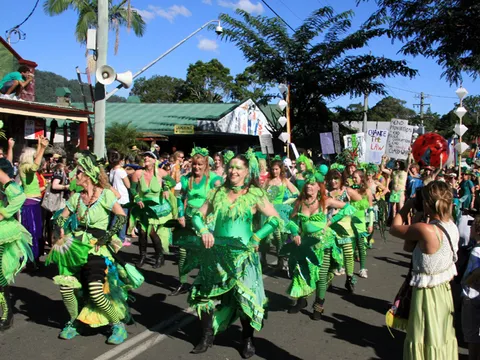 TraditionsNimbin MardiGrassEvery May since 1993, a small town in the hills of New South Wales holds a festival and protest for cannabis law reform. It began as a protest against police raids.
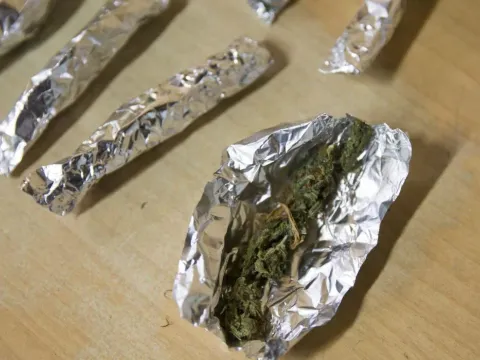 LanguageTinnyNew Zealand slang for a small deal of cannabis wrapped in tinfoil, and for the "tinny house", an ordinary-looking home where it is sold to anyone with cash.
Did you know? all cases →
Festival · Australia
Australia's Nimbin MardiGrass has its own Hemp Olympix. Events include the Bong Throw and Yell, joint rolling and a Growers Ironperson obstacle course involving sacks of fertiliser and buckets of water.
Read the entry →
Datasets not part of the score
What other organisations publish about Australia, and where it stands among the countries each one covers. Each dataset has a page of its own, with a world map and every country's figure.
Use
UNODC · 2023
Cannabis use
11.5%of people aged 14+
10.6% · 200710.3% · 201010.2% · 201310.4% · 201611.6% · 201911.5% · 202320072023 ages 14+ · survey 2022/23 · 2,700,000 people · UNODC 2026
Source Survey ages and years vary, and some surveys include children. Rates are not age-standardised; do not compare countries directly.EUDA · 2024
Cannabis in wastewater
133.80mg of THC-COOH a day per 1,000 people
247.70 · 2023133.80 · 202420232024 Higher than 79% of 33 countriesLowestHighestcities measured: 1 · 14,166,000 people served
WHO, Our World in Data · 2020
Alcohol drunk per person
10.29litres of pure alcohol a year
10.55 · 200010.55 · 200110.48 · 200210.57 · 200310.72 · 200410.82 · 200511.05 · 200611.19 · 200711.28 · 200811.26 · 200911.10 · 201010.90 · 201110.72 · 201210.58 · 201310.46 · 201410.39 · 201510.25 · 201610.19 · 201710.09 · 201810.09 · 201910.29 · 202020002020 Higher than 87% of 187 countriesLowestHighestper person aged 15 or over · 2020 · 10.55 in 2000 · 11.10 in 2010
Law
UNODC · 2024
Police contact for drug use or possession
343per 100,000 people
414 · 2020266 · 2021209 · 2022169 · 2023343 · 202420202024 Higher than 94% of 101 countriesFewerMore94,842 people in 2024 · all drugs together
UNODC · 2024
Cannabis seized
5,367kg in 2024
5,010 · 201511,181 · 201619,204 · 20174,163 · 20183,746 · 201912,566 · 20207,188 · 20213,781 · 20226,426 · 20235,367 · 202420152024 Higher than 58% of 163 countriesLess seizedMore seized5,312 kg of herb · 55 kg of resin · 5,010 kg in 2015 · 12,566 kg in 2020
Society
Pew Research Center · 2025
Is using marijuana morally wrong?
24%call it immoral
Higher than 8% of 25 countriesFewer disapproveMore disapprove31% acceptable · 45% not a moral issue · 1,829 people asked
OpenAlex · 2025
Research on cannabis
12papers per million people
0.1 · 19690.1 · 19710.1 · 19720.2 · 19730.2 · 19740.1 · 19750.1 · 19760.1 · 19770.1 · 19780.0 · 19790.2 · 19800.1 · 19810.1 · 19830.1 · 19840.1 · 19850.1 · 19860.1 · 19870.2 · 19880.1 · 19890.3 · 19900.2 · 19910.3 · 19920.3 · 19930.6 · 19940.4 · 19950.7 · 19960.5 · 19971.2 · 19980.7 · 19991.3 · 20001.7 · 20012.7 · 20021.9 · 20032.4 · 20043.0 · 20053.8 · 20063.2 · 20073.9 · 20084.6 · 20095.2 · 20105.5 · 20115.6 · 20126.1 · 20136.9 · 20146.6 · 20156.5 · 20167.9 · 20178.1 · 20188.8 · 201910 · 202012 · 202112 · 202212 · 202310 · 202412 · 202519692025 Higher than 95% of 176 countriesLowestHighest339 papers in 2025 · 8 in 1990 · 144 in 2010
Cato and Fraser Institutes · 2023
Human Freedom Index
8.79of 10
9.02 · 20008.99 · 20018.98 · 20029.01 · 20038.97 · 20048.97 · 20058.98 · 20068.99 · 20078.90 · 20088.97 · 20098.94 · 20108.96 · 20118.98 · 20128.96 · 20138.96 · 20148.96 · 20158.98 · 20168.97 · 20178.98 · 20188.86 · 20198.53 · 20208.49 · 20218.78 · 20228.79 · 202320002023 Higher than 94% of 164 countriesLess freeFreerrank #10 of 165 · personal freedom 9.33 · economic freedom 8.03
V-Dem, Our World in Data · 2025
Civil liberties
0.91of 1 in 2025
0.83 · 19000.83 · 19010.84 · 19020.84 · 19030.84 · 19040.84 · 19050.84 · 19060.84 · 19070.84 · 19080.84 · 19090.84 · 19100.84 · 19110.84 · 19120.84 · 19130.83 · 19140.82 · 19150.81 · 19160.81 · 19170.82 · 19180.84 · 19190.84 · 19200.84 · 19210.84 · 19220.84 · 19230.84 · 19240.84 · 19250.84 · 19260.84 · 19270.84 · 19280.84 · 19290.84 · 19300.84 · 19310.84 · 19320.84 · 19330.84 · 19340.84 · 19350.84 · 19360.84 · 19370.84 · 19380.83 · 19390.80 · 19400.80 · 19410.81 · 19420.81 · 19430.81 · 19440.81 · 19450.87 · 19460.87 · 19470.87 · 19480.87 · 19490.91 · 19500.91 · 19510.91 · 19520.92 · 19530.92 · 19540.92 · 19550.92 · 19560.92 · 19570.92 · 19580.92 · 19590.92 · 19600.92 · 19610.92 · 19620.92 · 19630.92 · 19640.92 · 19650.92 · 19660.93 · 19670.94 · 19680.94 · 19690.95 · 19700.95 · 19710.95 · 19720.95 · 19730.95 · 19740.95 · 19750.95 · 19760.95 · 19770.95 · 19780.95 · 19790.95 · 19800.95 · 19810.95 · 19820.95 · 19830.95 · 19840.95 · 19850.95 · 19860.95 · 19870.95 · 19880.95 · 19890.95 · 19900.95 · 19910.95 · 19920.95 · 19930.95 · 19940.95 · 19950.95 · 19960.95 · 19970.95 · 19980.95 · 19990.95 · 20000.95 · 20010.95 · 20020.95 · 20030.95 · 20040.95 · 20050.95 · 20060.95 · 20070.95 · 20080.95 · 20090.95 · 20100.95 · 20110.95 · 20120.94 · 20130.94 · 20140.94 · 20150.94 · 20160.93 · 20170.93 · 20180.92 · 20190.91 · 20200.90 · 20210.92 · 20220.92 · 20230.92 · 20240.91 · 202519002025 Higher than 82% of 175 countriesFewer libertiesMore liberties0.84 in 1925 · 0.92 in 1961 · 0.95 in 1990
Our World in Data, World Bank · 2025
Population
27,614,411people in 2025
3,693,331 · 19004,329,018 · 19105,274,343 · 19206,332,771 · 19306,967,916 · 19408,176,751 · 195010,280,815 · 196012,599,414 · 197014,721,345 · 198017,126,304 · 199019,132,472 · 200022,141,583 · 201025,743,787 · 202027,614,411 · 202519002025 Higher than 72% of 196 countriesLowestHighest3,693,331 in 1900 · 8,176,751 in 1950 · 19,132,472 in 2000
CEPII
Former colonial rulers
Once ruled by United Kingdom
World Bank · 2025
Government effectiveness
88of 100
85 · 199686 · 199888 · 200090 · 200291 · 200388 · 200488 · 200587 · 200687 · 200789 · 200887 · 200988 · 201088 · 201188 · 201287 · 201389 · 201487 · 201586 · 201686 · 201787 · 201886 · 201984 · 202086 · 202187 · 202288 · 202387 · 202488 · 202519962025 Higher than 93% of 195 countriesLowestHighestestimate 1.75 on a scale of −2.5 to 2.5 · 2025 · 88 in 2000 · 87 in 2015
Transparency International · 2024
Corruption Perceptions Index
77of 100
85 · 201281 · 201380 · 201479 · 201579 · 201677 · 201777 · 201877 · 201977 · 202073 · 202175 · 202275 · 202377 · 202420122024 Higher than 93% of 178 countriesLowestHighest0 highly corrupt, 100 very clean · 2024 · 79 in 2015 · 77 in 2020
Pew Research Center · 2020
Most common religion
Christians
the largest group · 2020
World Bank · 2025
Income per person
$60,194per person
36,268 · 199035,671 · 199135,426 · 199236,533 · 199337,623 · 199438,653 · 199539,663 · 199640,774 · 199742,257 · 199843,899 · 199945,099 · 200045,428 · 200146,688 · 200247,581 · 200349,061 · 200449,997 · 200550,694 · 200651,663 · 200752,473 · 200852,408 · 200952,739 · 201053,257 · 201154,404 · 201254,895 · 201355,489 · 201455,880 · 201556,530 · 201656,882 · 201757,648 · 201858,049 · 201957,260 · 202058,327 · 202160,029 · 202260,685 · 202360,310 · 202460,194 · 202519902025 Higher than 88% of 187 countriesLowestHighestat purchasing power parity, 2021 dollars · 2025 · $36,268 in 1990 · $52,739 in 2010
World Bank · 2024
Development indicators
96.1%use the internet
0.6% · 19901.1% · 19911.8% · 19922% · 19932.2% · 19942.8% · 19953.3% · 199616.4% · 199730.8% · 199840.8% · 199946.8% · 200052.7% · 200163% · 200566% · 200669.5% · 200771.7% · 200874.2% · 200976% · 201079.5% · 201179% · 201283.5% · 201384% · 201484.6% · 201586.5% · 201686.5% · 201790% · 201893.6% · 201994.7% · 202097% · 202196.1% · 202296.1% · 202396.1% · 202419902024 Higher than 90% of 195 countriesLowestHighest87.6% live in towns · 17.7% aged 65+ · life expectancy 83.1 · higher education 108.4% · 2024 · 46.8% in 2000 · 76% in 2010
Wikidata · 2020
Parties for legal cannabis
Legalise Cannabis Western Australia Party
founded 2020
GDELT · 2025
Cannabis in the news
0.009%of global news: cannabis articles from here
0.0212% · 20170.0122% · 20180.0095% · 20190.0101% · 20200.0058% · 20210.002% · 20220.0099% · 20230.0122% · 20240.009% · 202520172025 Higher than 95% of 147 countriesLowestHighest2025 average, 348 days · 0.0122% in 2018 · 0.0058% in 2021
Plant and market
OpenStreetMap · 2026
Cannabis shops on the map
2shops mapped
Higher than 25% of 59 countriesFewer shopsMore shops0.1 per million people · 2026
GBIF · 2026
Records of the cannabis plant
169dated records
1 · 18762 · 18994 · 19016 · 19128 · 19189 · 192310 · 193311 · 193712 · 193813 · 193914 · 194015 · 194117 · 195119 · 195720 · 196223 · 196324 · 196425 · 196526 · 196627 · 196829 · 196931 · 197036 · 197137 · 197244 · 197347 · 197449 · 197550 · 197653 · 197754 · 197857 · 197958 · 198059 · 198161 · 198264 · 198366 · 198472 · 198577 · 198681 · 198782 · 198992 · 199094 · 1991101 · 1992106 · 1993111 · 1994113 · 1995117 · 1996123 · 1998125 · 1999127 · 2000134 · 2001138 · 2004139 · 2005140 · 2006141 · 2007142 · 2008143 · 2011147 · 2012148 · 2013151 · 2015156 · 2016158 · 2017160 · 2019161 · 2021162 · 2022163 · 2023166 · 2024168 · 2025169 · 202618762026 Higher than 78% of 128 countriesLowestHighest9 more without a date · 1 in 2026 · 127 by 2000
FAO · 2024
Hemp grown
1,200ha in 2024
1,200 · 20221,200 · 20231,200 · 202420222024 Higher than 72% of 39 countriesLowestHighest12,600 t of fibre · 3,600 t of seed
ClinicalTrials.gov · 2026
Clinical trials of cannabis medicines
39studies so far
1 · 20112 · 20122 · 20132 · 20143 · 20154 · 20165 · 20179 · 201812 · 201914 · 202021 · 202125 · 202230 · 202335 · 202439 · 202539 · 202620112026 Higher than 86% of 50 countriesLowestHighest0 actual starts in 2026 · as of 2026–10–26 · 14 by 2020
Enforcement 2 reports · the Cannabis Enforcement Tracker →
How the law above is applied: raids, seizures, fields destroyed, arrests and sentences, as recorded by the Cannabis Enforcement Tracker, our companion site.
- RaidNine arrested as police raid cannabis grow houses across Canberra
Police searched 15 properties across the Australian Capital Territory and seized 1,586 cannabis plants, about 70 kg of dried cannabis, cash and six vehicles.
- SentenceA man is jailed for taking 25 kg of cannabis on a domestic flight
A 56-year-old South Australian man was sentenced to three years in prison on 25 March 2026 for trying to take 25 kg of cannabis on a domestic flight from Adelaide to New South Wales.
History 29 of 29 checked against a source
Score and entries per decade
22 today, from 100 before its first recorded change
This country's score Entries that moved the score Context only
20264 entries0 score changes
New South Wales Easing ✓
NSW assents to a registered-patient cannabis-driving reform
Act 33 of 2026 received assent after passing Parliament on 17 September. The announced scheme would require a prescription, registration and education, and would be limited to unrestricted non-commercial drivers. A positive roadside test would still bring a 24-hour driving ban; laboratory THC below 50 ng/ml would bring no further action, while the first two detections at or above that threshold within two years would bring warnings. Implementation was expected in late 2026 or early 2027, and commencement was not established in this review.
Queensland Tightening ✓
Queensland assents to driving-penalty changes scheduled for December
Act 23/2026 received assent on 21 September. Part 10 Division 3 commences on 1 December 2026 and adds a 7.5-penalty-unit minimum for the relevant-drug presence offence when the court chooses a fine-only sentence, subject to section 78E exceptions. It also creates a combined drug-presence/alcohol-limit offence. Other testing and immediate-suspension amendments in Division 4 still awaited proclamation in the reviewed legislative history; assent alone did not activate the whole package.
20252 entries0 score changes
Debate ✓
A NSW inquiry recommends ending jail for small cannabis possession
The NSW upper house inquiry into cannabis regulation reported on 20 June 2025, recommending that the government replace the two-year jail term for small possession with a fine, decriminalise personal use and possession, and consider a staged move to a regulated legal market. Six of the seven committee members backed the recommendations, including Labor, Liberal and crossbench MLCs; one Liberal member dissented. The premier, Chris Minns, said the government had no mandate to legalise, and the attorney general said it was considering the report.
Easing ✓
Victoria stops automatically suspending medicinal-cannabis drivers
From 1 March 2025, a Victorian driver who tested positive for THC could argue in court that a prescribed medicinal cannabis product had not impaired them, and a magistrate could decide not to cancel the licence. Driving with THC remained an offence, and impaired driving stayed a separate charge. The change covered patients with a valid prescription and left Victoria's closed-road trial running.
20242 entries0 score changes
Debate ✓
Australia's Senate votes down a bill to legalise cannabis
The Senate rejected the Greens' Legalising Cannabis Bill by 24 votes to 13, with Labor and the Coalition against. A Senate committee had recommended rejection on 31 May. The bill would have legalised the production, sale and use of cannabis by adults nationwide.
Queensland Other law ✓
Queensland requires a diversion offer for an eligible minor drugs offence
From 3 May 2024 an eligible person must be offered diversion for a minor drugs offence, including possession of not more than 50 grams of cannabis. There are three lifetime opportunities: a warning, then two assessment appointments. An offer is spent even if the person declines it. A cannabis diversion offered before that date counts as the first assessment. Diversion does not decriminalise possession.
20231 entry0 score changes
20201 entry0 score changes
20171 entry0 score changes
20161 entry1 score change
20111 entry0 score changes
20041 entry0 score changes
20011 entry0 score changes
20001 entry0 score changes
19961 entry0 score changes
19922 entries0 score changes
International ✓
Australia joins the 1988 UN convention against drug trafficking
Australia ratified the United Nations Convention against Illicit Traffic in Narcotic Drugs and Psychotropic Substances of 1988 on 16 November 1992. Article 3 of the convention requires each party, subject to its constitutional principles, to make the possession, purchase and cultivation of drugs for personal consumption a criminal offence.
Australian Capital Territory Easing ✓
The Australian Capital Territory introduces fines for simple offences
The Drugs of Dependence (Amendment) Act created simple cannabis offences that can be dealt with by paying a fine, following South Australia's expiation scheme.
19871 entry1 score change
19791 entry0 score changes
19721 entry0 score changes
19671 entry0 score changes
19591 entry0 score changes
19471 entry0 score changes
19351 entry0 score changes
19271 entry0 score changes
19261 entry1 score change
18991 entry0 score changes
Sources hover a number in the text to see its source
- Cited
- 29
- Websites
- 24
- Last reviewed
- History checked
- 29/29
Most cited
- canberratimes.com.au3
- legislation.act.gov.au2
- legislation.qld.gov.au2
- theconversation.com2
- adf.org.au1
- business.qld.gov.au1
All 29 sources
- ACT Policing — Drugs and the lawJanuary 2020 cannabis rules, stated as unchanged by the October 2023 reformsarchived
- Drugs of Dependence (Personal Cannabis Use) Amendment Act 2019 (ACT)Notified 10 October 2019; the remainder commenced 31 January 2020archived
- Drugs of Dependence Act 1989 (ACT)Republication 42, effective 16 November 2025; sections 162, 171AA, 171AAA, 171AAB, 171AAC and 171ABarchived
- WA Mental Health Commission — Cannabis Intervention RequirementOne adult notice for use or not more than 10 g; plants are outside the noticearchived
- Controlled Substances (Controlled Drugs, Precursors and Plants) Regulations 2014 (SA)Schedule 5 item 6 and regulation 15; version 27 June 2024
- Misuse of Drugs Act 1990 (NT)As in force 1 July 2026; sections 6B, 7B, 7D and 20, and Schedules 2 and 3archived
- Queensland Police Service — Police drug diversion programarchived
- NSW Police — Cannabis Cautioning Scheme Guidelines for Police, version 5.0 (May 2025)archived
- Victoria Legal Aid — Drug possessionarchived
- Misuse of Drugs Act 2001 (Tasmania), section 25archived
- Drug Misuse and Trafficking Act 1985 (NSW)Section 23(1); a cannabis plant cultivated by any means is a prohibited plantarchived
- The Conversation — ACT cannabis laws come into effect, but they may not be what you hoped forarchived
- The Canberra Times — ACT cannabis laws come into effectarchived
- StratCann — Australian Senate rejects cannabis legalization bill (27 Nov 2024)13–24 vote against the Legalising Cannabis Bill 2023 at second readingarchived
- Therapeutic Goods Administration — Medicinal cannabis hubarchived
- The Canberra Times — Should Canberra allow dope growing clubs to be set up? (26 March 2019)archived
- Alcohol and Drug Foundation — Cannabis in the ACT (January 2020, updated November 2023)archived
- Business Queensland — Growing industrial cannabis or hemp in QueenslandLicensed grower/researcher licences; no more than 1% THC; medicinal extraction under industrial licence prohibited
- UNODC Data Portal — Drug seizures, reported seizures in kilogram equivalents (World Drug Report data)archived
- AAP via The Canberra Times — State sets agenda on medicinal cannabis drivers (18 September 2026)archived
- NSW Government — Medicinal cannabis driving reforms pass Parliament (18 September 2026)Eligibility, 24-hour ban, laboratory threshold, warnings, $722 penalty and planned rollout.archived
- NSW Parliament — Road Transport Legislation Amendment (Medical Cannabis and Driving Offences) Bill 2026, bill progressPassed 17 September; assented 23 September 2026, Act 33/2026.
- Queensland Government — Transport and Other Legislation Amendment Act 2026, final ActSection 2; Part 10 Divisions 3–4; new section 78E and amended section 79(2AA).archived
- Queensland Legislation — Act 23/2026, assent and commencement historyAssented 21 September 2026; Division 3 starts 1 December, Division 4 not yet proclaimed.archived
- The Conversation — Can I drive when taking medicinal cannabis? Is it safe? (29 March 2026)Tasmania's prescribed-and-dispensed medicinal-cannabis driving exception; other states' presence rules.archived
- NCETA, Flinders University — How many cannabis-related arrests are there each year in Australia? (citing the Illicit Drug Data Report 2020-21)archived
- NZ Drug Foundation — Mythbusters: P and tinny houses (1 Feb 2007)2003 Turner release; 2005 monitoring study; no lacing or free-sample cases foundarchived
- Nimbin MardiGrass — 2008 programme (XVI)Sixteenth edition in 2008; HEMP Embassy reform rally, Hemp Olympix, volunteer-runarchived
- International Narcotics Control Board — Travellers carrying medicines containing controlled substances