Brazil
23/100
#32 of 196 worldwide
#5 of 12 in South America
In 2024 the Supreme Court decriminalised possession of up to 40 g or six female plants, now an administrative matter. Medical products are sold in pharmacies; policing remains uneven.
In short all countries →
- Can I carry it?LimitedUsually no criminal charge for a small amount, but it can still be seized or penalised
- Can I grow it?LimitedA few plants are treated far more leniently than dealing
- Can I buy it?LimitedOn prescription only
- Can I use it in public?NoNot in public, and even at home the law does not protect it
- What if I'm caught?Fine or prisonUsually a fine; prison is possible
A rough guide read from the scores and the rules below, not legal advice. The details and the exceptions are in each segment: select an answer to jump to it.
Cannabis in Brazil not part of the score · all 19 datasets ↓
Who uses it
About 1 in 17
people aged 14+ in Brazil used cannabis in the past year: about 10 million people.
- Past year
- 6.0%
- South America median
- 3%
- Aged 15–16, 2019
- 4.7%
UNODC · survey 2023
Source Past-year cannabis use among people aged 14+. People who used cannabis in the past year, from a 2023 survey, applied to today's population aged 14+. The population is approximate: the survey ages cut through an age group, or were not recorded and ages 15–64 are used.Survey ages and years vary, and some surveys include children. Rates are not age-standardised; do not compare countries directly.
UNODC World Drug Report 2026, annex table 1.2. Population from the World Bank, aged 14+. The whole dataset →
Use across South America
4thhighest of 12 surveyed countries
- 🇨🇱 Chile10.6%
- 🇦🇷 Argentina10.3%
- 🇧🇷 Brazil6.0%
- 🇬🇾 Guyana4.6%
- 🇸🇷 Suriname3.4%
Past-year use, latest survey of each. Survey years and ages differ. On the map →
What they think of it
“Is using marijuana morally acceptable?”
63% say it is morally unacceptable
- Acceptable 17%
- Not a moral issue 18%
- Depends or no answer 2%
- Unacceptable 63%
The 8th most disapproving of the 25 countries surveyed, where the median is 52%. On the map →
Source Pew Research Center, surveyed January to May 2025, 1,053 adults (topline, question 17g).Cannabis in figures
- Cannabis seized362,660kg in 2024 · 2024
- Cannabis shops on the map1shops mapped · 2026
- Cannabis in wastewater20.90mg of THC-COOH a day per 1,000 people · 2024
- Research on cannabis2.2papers per million people · 2025
- Clinical trials of cannabis medicines17studies so far · 2026
The dot: where it stands among the countries each dataset covers, lowest to highest. All datasets ↓
What they call it
- Maconha[1]Brazilian Portuguesethe drug from dried hemp leaves, branches and flowers; from Kimbundu makañaIn the atlas →
- Diamba[2]Brazilian Portuguesecannabis; the Kimbundu word carried with slaveryIn the atlas →
- Baseado[3]Brazilian Portugueseinformal: a hashish or marijuana cigarette
- Erva[1]Brazilian Portugueseliterally grass; listed among maconha's synonyms
Score breakdown 23/100 · how the scores are made
Neighbours · 9 of 11
- 🇺🇾 Uruguay52
- 🇨🇴 Colombia39
- 🇦🇷 Argentina26
- 🇧🇷 Brazil23
- 🇵🇪 Peru21
- 🇵🇾 Paraguay18
- 🇬🇾 Guyana17
- 🇫🇷 France14
- 🇻🇪 Venezuela10
In June 2024 the Supreme Court ruled that possessing cannabis for personal use is not a crime, and set a presumption: up to 40 g counts as personal use.[4][5] It is still prohibited — the cannabis is seized and the person receives an administrative measure such as a warning or a mandatory educational course.[5] Police can still treat someone under 40 g as a dealer if there is other evidence, such as scales or packaging.[6] The ruling is traced in the 2024 decision.
| Amount | What happens | Punishment | Fine |
| Personal use up to 40 g (Supreme Court 2024)Administrative — seizure, warning or educational course; dealer indicia override | AdministrativePersonal use | — | — |
| Possession as trafficking (Law 11.343 article 33)Gifts can qualify as trafficking | CriminalTrafficking | 5–15 years | — |
The same ruling presumes that up to six female plants are for personal use, so growing them is an administrative infraction rather than a crime. It is not a right to grow: plants are seized.[5] Some patients hold individual court orders allowing them to cultivate.[6]
| Amount | What happens | Punishment | Fine |
| Up to six female plants for personal use (Supreme Court 2024)Administrative infraction; plants seized; not a right to grow | AdministrativePersonal use | — | — |
| Unauthorised growing as trafficking (Law 11.343 article 33) | CriminalUnlicensed cultivation | 5–15 years | — |
| Patient growing under court orderIndividual or collective habeas corpus; 40 associations authorised in 2024 | LegalMedical growing | — | — |
Offering a drug occasionally, without aiming at profit, to someone the person knows, so that the two of them use it together, is a separate crime: detention of six months to one year and a fine of 700 to 1,500 day-fines.[7] Other unauthorised supply, including a gift that does not meet those conditions, can be trafficking even when no money changes hands, with five to fifteen years.[7]
Context not part of the score · every country, by topic →
Adult use is decriminalised but not legal: up to 40 g or six female plants draws administrative measures, and there are no lawful sales.[4][5] The path ran through the courts — the Planet Hemp jailing in 1997, the unanimous 2011 ruling that marching for legalisation is free expression, and the 2024 possession ruling.
Doctors can prescribe registered or imported cannabis products — prescription oils and extracts, mostly CBD-dominant, with no legal flower for general sale; costs are high, and patient associations and court-authorised home growers fill part of the gap.[8][6]
Brazil's clubs are patient associations rather than recreational ones. No law licenses them to grow; they rely on court orders, usually preventive habeas corpus, obtained one association at a time.[9] A 2024 industry yearbook counted 259 cannabis associations and three federations, serving about 147,000 patients, roughly a fifth of the country's medical cannabis patients.[9] Only 40 held an individual or collective court authorisation to cultivate: 23 in the Southeast, 11 in the Northeast, 4 in the South, 2 in the Centre- West and none in the North.[9] The rest work without that protection.[9]
Law 11.343 does not name seeds. It treats sowing or growing plants for a small amount for personal use like possession, with a warning, community service or an educational course instead of prison (Article 28), and punishes growing without authorisation, or supplying raw material for drugs, as trafficking (Article 33).[7]
No hemp exception operates: growing cannabis outside the medical and research rules is prohibited, and those rules are the only lawful route for low-THC plants.[8]
In February 2026 the health regulator published rules allowing companies to cultivate low-THC cannabis (0.3% or less) for medical, pharmaceutical and research purposes under special authorisation, after a 2024 high-court order.[8] The cultivation rules took effect on 4 August 2026, and patient associations may grow for their members in a supervised trial scheme.[8] No adult-use production.[8]
Recreational cannabis is supplied entirely by the illegal trade, and marijuana is by far the largest drug by weight that police seize.[10] The federal public-security data system recorded 816 tonnes of marijuana seized nationwide between January and August 2024, out of 893 tonnes of all drugs, an average of 3.3 tonnes a day and about the same as a year earlier.[10] Three states account for most of it: Paraná with 320 tonnes, Mato Grosso do Sul with 300 and São Paulo with 75.[10]
There is no legal recreational supply for anyone, so a visitor has no lawful way to buy cannabis.[8] Whatever legal supply exists is medical, for patients with a prescription or registration.[6] The sources behind this profile describe no separate rule for visitors.[8]
The Traffic Code has two levels.[11] Driving under the influence of alcohol or any other psychoactive substance that causes dependence is a very serious administrative infraction: a fine multiplied by ten and a 12-month suspension of the licence, and refusing a test brings the same.[11] It becomes a crime, with six months to three years' detention, only when the driver's psychomotor capacity is altered.[11] For alcohol the code sets a figure that proves this; for other substances it sets none, so proof rests on signs of impairment, a toxicology test, a clinical exam or witnesses.[11]
No count of cannabis arrests was found, but the drug law is a main driver of the world's third-largest prison population, which has grown sharply over twenty years as people caught with small amounts were treated as traffickers.[12] The Supreme Court's 2024 ruling that under 40 g of cannabis is presumed personal use could change that: since 2014, 70 to 80% of cannabis seizures have been below that threshold.[12] Judges may still classify someone as a trafficker on other circumstances, and studies cited by analysts find that people from racially discriminated groups are more likely to be treated as traffickers by police.[12]
Administrative measures do not create a criminal record. The ruling opened the way to review past convictions for small amounts.[4]
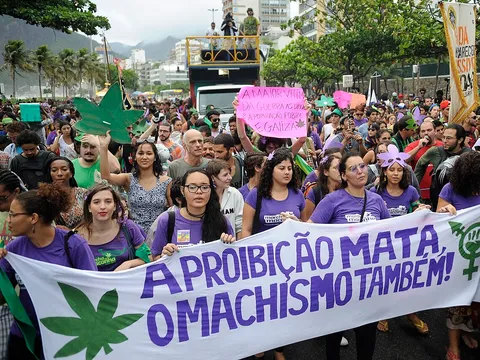
Brazil's cannabis vocabulary is Central African — maconha and diamba are attributed to Angola's Kimbundu, carried with slavery — and their stories are traced in maconha and diamba.[13] The street form is prensado, brick weed pressed for bulk transport: bricked Paraguayan cannabis expanded to Chile, Argentina and Uruguay and dominates Brazilian seizures, a supply chain described in brick weed.[14] Protest takes the streets as the Marcha da Maconha, protected since the Supreme Court ruled unanimously on 15 June 2011 that article 287 must be read with free expression and assembly — history traced in the march and the 2011 ruling.[15] Faith met the law in Acre, where one Santo Daime branch took cannabis as a second sacrament, Santa Maria, renaming every word so it would never be "a drug" — until the 1983 raid and official renunciation, a story told in Santa Maria in Santo Daime.[16][17] And in rural Maranhão, Saturday diamba circles passed a shared pipe with verses that prohibitionist doctors cited in 1918 to demand a ban, described in the circles with his essay.[18]
Taking cannabis into or out of Brazil is a separate offence from possessing it, normally charged as smuggling or trafficking, with far heavier penalties. That holds almost everywhere, including between two places where cannabis is legal.
The rules that allow or tolerate small amounts inside Brazil do not cover the border, an airport or the post.
A prescription or medical card from another country is generally not recognised. Travellers who need a cannabis-based medicine should ask Brazil's embassy before travelling.[19]
General guidance that applies to almost every country, not a check of Brazil's customs rules.
Culture the atlas →
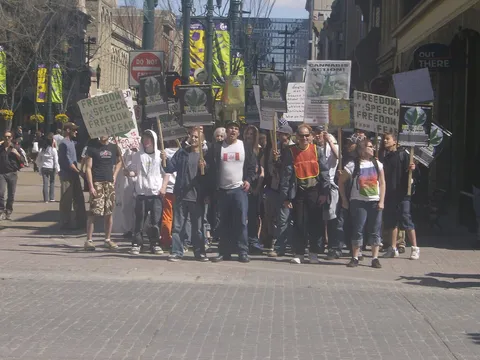 TraditionsThe Global Marijuana MarchOn the first Saturday of May, people in hundreds of cities march for legal cannabis. Brazil's supreme court had to rule that doing so is free speech.
 LanguageMaconhaBrazil's word for cannabis, from Kimbundu, a language of Angola. It crossed the Atlantic with enslaved people, like the plant itself.
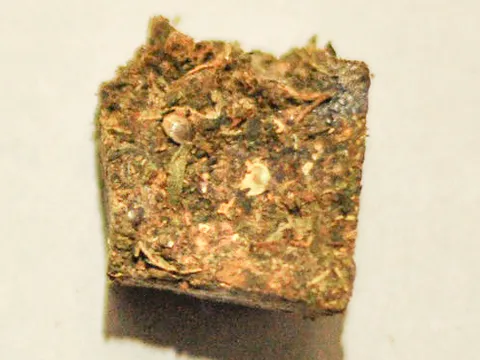 TraditionsBrick weedCannabis plant material compressed into blocks for bulk transport and sale. Known as prensado in Brazil and marihuana prensada in Spanish, it carries the history of illicit supply chains as well as a reputation for low quality.
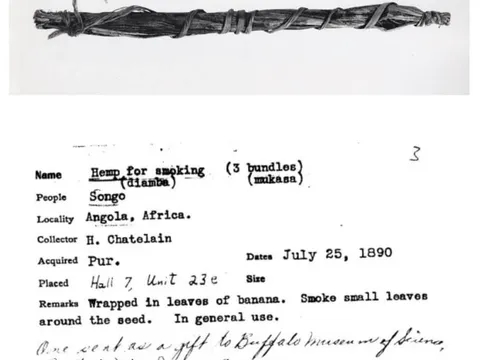 LanguageDiambaA Central African word for cannabis that turns up on three coasts of the Atlantic, wherever enslaved and freed Central Africans were taken.
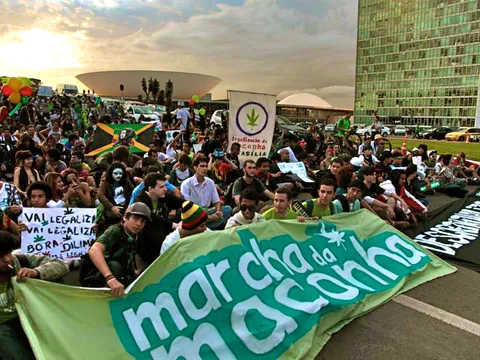 TraditionsMarcha da MaconhaBrazil's yearly marches for legal cannabis. Courts banned them as advocacy of a crime until the Supreme Court ruled in 2011 that marching for a change in the law is free speech.
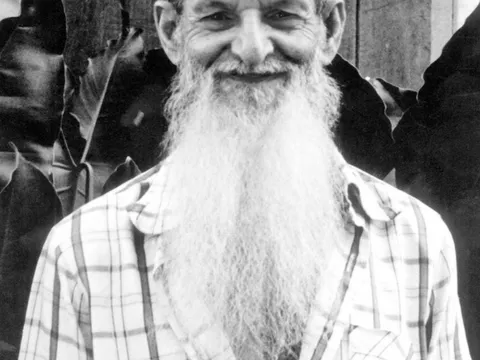 TraditionsSanta Maria in Santo DaimeIn the 1970s one branch of the Brazilian ayahuasca religion Santo Daime took up cannabis as a second sacred plant and named it after the Virgin Mary. The state came to accept the church's tea; the herb stayed a crime, and the church declared it would no longer allow it in its ceremonies.
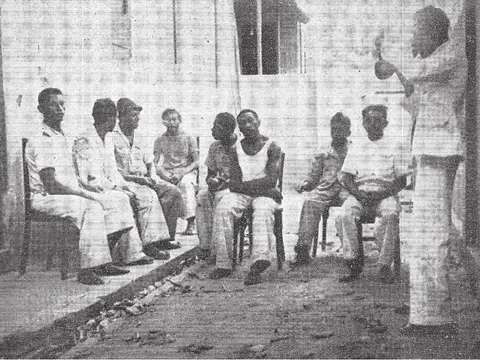 TraditionsThe diamba circlesIn rural Maranhão in northern Brazil, smokers met on Saturdays at an elder's house, passed a pipe of diamba round a circle and sang call-and-response verses between puffs. Doctors who wrote about these "clubs" used them to argue for a ban.
Did you know? all cases →
1830 · Brazil
Rio de Janeiro's council banned cannabis in 1830. A seller paid a fine of 20 milreis; a slave or anyone else caught using it faced up to three days in prison. Brazil's other councils followed.
The full story →Religion · Brazil
One branch of Brazil's ayahuasca church, Santo Daime, took up cannabis in the 1970s and named it Santa Maria, after the Virgin. Its users called themselves marianos.
Read the entry →Customs · Brazil
In Maranhão, Brazil, diamba smokers met on Saturdays at an elder's house and sang between puffs, answering each verse with “Dizô! Dizô!”. A doctor's 1918 account of their circle was quoted for decades in the case for a ban.
Read the entry →
Datasets not part of the score
What other organisations publish about Brazil, and where it stands among the countries each one covers. Each dataset has a page of its own, with a world map and every country's figure.
Use
UNODC · 2023
Cannabis use
6%of people aged 14+
2.6% · 20052.81% · 20126% · 202320052023 ages 14+ · survey 2023 · 10,000,000 people · UNODC 2026
Source Survey ages and years vary, and some surveys include children. Rates are not age-standardised; do not compare countries directly.UNODC · 2019
Cannabis use at 15 and 16
4.7%in the past year
6.29% · 20054.7% · 201920052019 Higher than 22% of 49 countriesLowestHighest2019 · ages 15–16, school survey
EUDA · 2024
Cannabis in wastewater
20.90mg of THC-COOH a day per 1,000 people
Higher than 9% of 33 countriesLowestHighestcities measured: 13 · 23,968,523 people served
WHO, Our World in Data · 2020
Alcohol drunk per person
7.70litres of pure alcohol a year
8.71 · 20008.71 · 20018.57 · 20028.41 · 20038.32 · 20048.28 · 20058.32 · 20068.36 · 20078.45 · 20088.56 · 20098.63 · 20108.69 · 20118.57 · 20128.50 · 20138.34 · 20148.20 · 20158.00 · 20167.79 · 20177.67 · 20187.67 · 20197.70 · 202020002020 Higher than 72% of 187 countriesLowestHighestper person aged 15 or over · 2020 · 8.71 in 2000 · 8.63 in 2010
Law
UNODC · 2024
Cannabis seized
362,660kg in 2024
271,360 · 2015234,473 · 2016350,861 · 2017271,931 · 2018265,991 · 2019544,993 · 2020415,867 · 2021414,874 · 2022412,115 · 2023362,660 · 202420152024 Higher than 96% of 163 countriesLess seizedMore seized361,600 kg of herb · 1,060 kg of resin · 271,360 kg in 2015 · 544,993 kg in 2020
Society
Pew Research Center · 2025
Is using marijuana morally wrong?
63%call it immoral
Higher than 68% of 25 countriesFewer disapproveMore disapprove17% acceptable · 18% not a moral issue · 1,053 people asked
OpenAlex · 2025
Research on cannabis
2.2papers per million people
0.0 · 19610.0 · 19650.0 · 19660.0 · 19680.0 · 19690.0 · 19700.0 · 19710.0 · 19730.0 · 19740.0 · 19750.0 · 19760.0 · 19780.0 · 19790.0 · 19820.0 · 19830.0 · 19850.0 · 19880.0 · 19890.0 · 19910.0 · 19920.0 · 19930.0 · 19940.0 · 19950.0 · 19970.0 · 19980.0 · 19990.0 · 20000.0 · 20010.0 · 20020.1 · 20030.1 · 20040.1 · 20050.2 · 20060.1 · 20070.2 · 20080.2 · 20090.3 · 20100.3 · 20110.3 · 20120.5 · 20130.5 · 20140.4 · 20150.5 · 20160.7 · 20170.7 · 20180.8 · 20191.0 · 20201.2 · 20211.3 · 20221.7 · 20231.9 · 20242.2 · 202519612025 Higher than 66% of 176 countriesLowestHighest471 papers in 2025 · 2 in 1970 · 66 in 2010
Cato and Fraser Institutes · 2023
Human Freedom Index
7.40of 10
7.23 · 20007.19 · 20017.41 · 20027.39 · 20037.49 · 20047.59 · 20057.51 · 20067.55 · 20077.55 · 20087.56 · 20097.63 · 20107.52 · 20117.44 · 20127.34 · 20137.26 · 20147.20 · 20157.22 · 20167.39 · 20177.35 · 20187.25 · 20196.86 · 20206.86 · 20217.18 · 20227.40 · 202320002023 Higher than 60% of 164 countriesLess freeFreerrank #66 of 165 · personal freedom 8.00 · economic freedom 6.57
V-Dem, Our World in Data · 2025
Civil liberties
0.87of 1 in 2025
0.43 · 19000.42 · 19010.42 · 19020.42 · 19030.42 · 19040.43 · 19050.43 · 19060.43 · 19070.43 · 19080.43 · 19090.43 · 19100.43 · 19110.43 · 19120.43 · 19130.43 · 19140.43 · 19150.43 · 19160.43 · 19170.43 · 19180.43 · 19190.43 · 19200.43 · 19210.43 · 19220.43 · 19230.43 · 19240.43 · 19250.43 · 19260.43 · 19270.43 · 19280.43 · 19290.41 · 19300.39 · 19310.39 · 19320.39 · 19330.39 · 19340.38 · 19350.38 · 19360.26 · 19370.25 · 19380.26 · 19390.26 · 19400.26 · 19410.26 · 19420.26 · 19430.26 · 19440.36 · 19450.56 · 19460.56 · 19470.56 · 19480.57 · 19490.57 · 19500.57 · 19510.57 · 19520.57 · 19530.57 · 19540.60 · 19550.60 · 19560.60 · 19570.60 · 19580.60 · 19590.60 · 19600.60 · 19610.60 · 19620.60 · 19630.33 · 19640.23 · 19650.22 · 19660.22 · 19670.22 · 19680.20 · 19690.21 · 19700.21 · 19710.21 · 19720.21 · 19730.21 · 19740.21 · 19750.23 · 19760.23 · 19770.24 · 19780.34 · 19790.39 · 19800.39 · 19810.39 · 19820.39 · 19830.40 · 19840.55 · 19850.70 · 19860.73 · 19870.80 · 19880.81 · 19890.82 · 19900.82 · 19910.82 · 19920.82 · 19930.82 · 19940.82 · 19950.82 · 19960.82 · 19970.82 · 19980.82 · 19990.82 · 20000.82 · 20010.83 · 20020.83 · 20030.83 · 20040.86 · 20050.86 · 20060.86 · 20070.86 · 20080.86 · 20090.86 · 20100.86 · 20110.86 · 20120.86 · 20130.86 · 20140.86 · 20150.84 · 20160.82 · 20170.79 · 20180.69 · 20190.68 · 20200.67 · 20210.67 · 20220.85 · 20230.85 · 20240.87 · 202519002025 Higher than 70% of 175 countriesFewer libertiesMore liberties0.43 in 1925 · 0.60 in 1961 · 0.82 in 1990
Our World in Data, World Bank · 2025
Population
212,812,405people in 2025
18,058,538 · 190022,361,184 · 191027,593,186 · 192033,813,213 · 193041,568,218 · 194053,408,551 · 195072,388,124 · 196095,375,656 · 1970121,207,451 · 1980149,143,223 · 1990174,018,278 · 2000193,701,931 · 2010208,660,845 · 2020212,812,405 · 202519002025 Higher than 96% of 196 countriesLowestHighest18,058,538 in 1900 · 53,408,551 in 1950 · 174,018,278 in 2000
CEPII
Former colonial rulers
Once ruled by Portugal
World Bank · 2025
Government effectiveness
52of 100
51 · 199647 · 199848 · 200050 · 200249 · 200348 · 200446 · 200545 · 200645 · 200755 · 200856 · 200956 · 201056 · 201156 · 201258 · 201355 · 201453 · 201553 · 201651 · 201749 · 201854 · 201952 · 202052 · 202148 · 202247 · 202349 · 202452 · 202519962025 Higher than 48% of 195 countriesLowestHighestestimate -0.04 on a scale of −2.5 to 2.5 · 2025 · 48 in 2000 · 53 in 2015
Transparency International · 2024
Corruption Perceptions Index
34of 100
43 · 201242 · 201343 · 201438 · 201540 · 201637 · 201735 · 201835 · 201938 · 202038 · 202138 · 202236 · 202334 · 202420122024 Higher than 38% of 178 countriesLowestHighest0 highly corrupt, 100 very clean · 2024 · 38 in 2015 · 38 in 2020
Pew Research Center · 2020
Most common religion
Christians
the largest group · 2020
World Bank · 2025
Income per person
$20,025per person
12,633 · 199012,547 · 199112,272 · 199212,669 · 199313,203 · 199413,550 · 199513,642 · 199613,897 · 199713,738 · 199813,602 · 199914,005 · 200014,016 · 200114,266 · 200214,259 · 200314,911 · 200415,221 · 200515,657 · 200616,441 · 200717,113 · 200816,939 · 200918,062 · 201018,628 · 201118,832 · 201219,242 · 201319,183 · 201418,357 · 201517,621 · 201617,724 · 201717,918 · 201818,019 · 201917,328 · 202018,076 · 202118,554 · 202219,080 · 202319,652 · 202420,025 · 202519902025 Higher than 57% of 187 countriesLowestHighestat purchasing power parity, 2021 dollars · 2025 · $12,633 in 1990 · $18,062 in 2010
World Bank · 2024
Development indicators
84.5%use the internet
0% · 19900% · 19910% · 19920% · 19930% · 19940.1% · 19950.5% · 19960.8% · 19971.5% · 19982% · 19992.9% · 20004.5% · 20019.1% · 200213.2% · 200319.1% · 200421% · 200528.2% · 200630.9% · 200733.8% · 200839.2% · 200940.6% · 201045.7% · 201148.6% · 201251% · 201354.6% · 201458.3% · 201560.9% · 201667.5% · 201770.4% · 201873.9% · 201981.3% · 202080.7% · 202180.5% · 202284.2% · 202384.5% · 202419902024 Higher than 58% of 195 countriesLowestHighest87.9% live in towns · 11% aged 65+ · life expectancy 76 · higher education 69.7% · 2024 · 2.9% in 2000 · 40.6% in 2010
Plant and market
OpenStreetMap · 2026
Cannabis shops on the map
1shops mapped
Higher than 0% of 59 countriesFewer shopsMore shops0.0 per million people · 2026
GBIF · 2026
Records of the cannabis plant
177dated records
1 · 18193 · 18654 · 19185 · 19279 · 193311 · 193613 · 193714 · 193816 · 193917 · 194319 · 194420 · 194723 · 195124 · 195926 · 196134 · 196336 · 196538 · 196848 · 197057 · 197163 · 197476 · 197777 · 198180 · 198281 · 198382 · 198483 · 198687 · 198788 · 199293 · 199395 · 199496 · 199798 · 2000100 · 2001102 · 2002104 · 2004105 · 2006110 · 2007112 · 2008117 · 2009118 · 2011122 · 2012123 · 2013127 · 2014128 · 2015131 · 2017132 · 2019134 · 2020137 · 2021149 · 2022165 · 2023167 · 2024175 · 2025177 · 202618192026 Higher than 79% of 128 countriesLowestHighest30 more without a date · 2 in 2026 · 98 by 2000
ClinicalTrials.gov · 2026
Clinical trials of cannabis medicines
17studies so far
1 · 20171 · 20182 · 20194 · 20205 · 20217 · 20229 · 202311 · 202415 · 202517 · 202620172026 Higher than 76% of 50 countriesLowestHighest2 actual starts in 2026 · as of 2026–10–26 · 4 by 2020
Enforcement 1 report · the Cannabis Enforcement Tracker →
How the law above is applied: raids, seizures, fields destroyed, arrests and sentences, as recorded by the Cannabis Enforcement Tracker, our companion site.
- SeizurePolice seize 1,050 kg of marijuana hidden in boxes on the SP-280
A joint Federal Police and highway police operation stopped a vehicle on the SP-280 in Itatinga, São Paulo state, and found 1,088 blocks of marijuana weighing 1,050.2 kg hidden in cardboard boxes.
History 52 of 52 checked against a source
Score and entries per decade
23 today, from 100 before its first recorded change
This country's score Entries that moved the score Context only
20261 entry0 score changes
20241 entry1 score change
20222 entries0 score changes
Medical ✓
Anvisa lets a university grow cannabis for research
The health regulator Anvisa unanimously authorised the Brain Institute of the Federal University of Rio Grande do Norte to import, store and germinate cannabis seeds and to grow and process the plants for research on treatments for drug-resistant epilepsy in animal models. Ribeiro, a former director of the institute, calls it the first Brazilian institution to research the plant legally without workarounds.
Medical ✓
Brazil's Superior Court of Justice allows medical home growing
The sixth panel of the Superior Court of Justice unanimously authorised three people to grow cannabis at home for therapeutic purposes. The decision became guidance for courts across the country and led to a large increase in court orders for domestic cultivation, though only for those able to go to court.
20201 entry0 score changes
20192 entries1 score change
Medical ✓ Article
Brazil allows cannabis products in pharmacies
The health regulator approved rules for selling cannabis-based products in pharmacies on prescription. Growing the plant in Brazil stayed prohibited, so everything was imported.
1415+1 point
Medical ✓
Brazil's medical cannabis associations form a national federation
Dozens of patients' associations, which had grown up to supply cannabis oil in the absence of regulated access, formed the National Federation for Therapeutic Cannabis (FACT). By then, according to the Rede Reforma lawyers' collective, more than 140,000 patients were supplied by associations or by individuals with court orders.
20181 entry0 score changes
20171 entry0 score changes
20161 entry0 score changes
20151 entry0 score changes
20113 entries0 score changes
Debate ✓
Brazil's Supreme Court says the drug law cannot ban debate on legalisation
Five months after its ruling on the marches, the court read the 2006 drug law's offence of inducing or instigating someone to use drugs so that it cannot be used against public demonstrations and debates on decriminalisation or legalisation. Justice Ayres Britto wrote that criminalising drug use is one thing and debating that criminalisation another, and that such gatherings are protected as long as they are peaceful. The vote was unanimous, on a case brought by the Prosecutor General.
Debate ✓
Brazil's Supreme Court protects marches for legalisation
The Federal Supreme Court unanimously recognised the right to march for the legalisation of marijuana, so that demonstrators and speakers could no longer be treated as advocating drug use. Ribeiro writes that after the ruling the experiences of patients and their families could be heard openly, and the stories of children with epilepsy treated with cannabis began to reach newspapers and television.
Culture & science ✓ Article
Quebrando o Tabu brings the drug-policy debate to Brazilian cinemas
The documentary directed by Fernando Grostein Andrade opened in Brazilian cinemas. Featuring former president Fernando Henrique Cardoso, it argued for reconsidering punitive drug policies. Historian Jean Marcel Carvalho França places it within a changing public presentation of cannabis users and reform advocates. Its release was a cultural intervention, not a change in drug law.
20101 entry0 score changes
20081 entry0 score changes
20062 entries1 score change
Easing ✓ Article
Brazil ends prison for users
A new drug law kept possession for personal use a crime but removed prison as a penalty, replacing it with a warning, community service or an educational course. Penalties for dealing went up.
914+5 points
Easing ✓
Brazil's Supreme Court rejects the blanket ban on prison-regime progression
By six votes to five in HC 82,959, the Supreme Federal Court held unconstitutional the provision requiring an entire sentence under the Heinous Crimes Law to be served in a closed regime. That provision also covered drug trafficking. The case itself concerned a sexual offence; the court's report discussed its relevance to cannabis suppliers. Progression required assessment by the execution judge rather than automatic release, and the ruling arose from review in an individual case.
19971 entry0 score changes
19951 entry0 score changes
19911 entry0 score changes
19901 entry0 score changes
19881 entry0 score changes
19871 entry0 score changes
19861 entry0 score changes
19831 entry0 score changes
19801 entry0 score changes
19791 entry0 score changes
19762 entries1 score change
Easing ✓ Article
Brazil separates users from traffickers again
Law 6.368 ended the 1968 rule that punished users like dealers. Possession for personal use carried six months to two years in prison; trafficking carried three to fifteen.
79+2 points
Enforcement ✓ Article
Gilberto Gil is arrested for cannabis in Florianópolis
Police detained the singer and his drummer in a Florianópolis hotel during the Doces Bárbaros tour and found about thirty cannabis cigarettes among Gil's belongings. Nine days later he was sentenced to a year of reclusion, converted into treatment in a psychiatric clinic, and a fine of fifty minimum wages. Rita Lee received a similar sentence in August, converted into house arrest. The cases drew criticism from artists and showed a growing public tolerance: the city's mayor guessed that most residents disapproved of the arrest.
19731 entry0 score changes
19711 entry0 score changes
19681 entry1 score change
19642 entries0 score changes
Tightening ✓
Brazil's new military government hardens the drug article
Early in the military dictatorship President Castello Branco signed Law 4.451, which reinforced and hardened the penalties of the 1940 Penal Code for narcotics. It was the first of three tightenings under the dictatorship: a decree-law of 1968 put the user on the same footing as the trafficker, and Law 5.726 of 1971 confirmed it.
International ✓
Brazil joins the Single Convention on Narcotic Drugs
Brazil ratified the Single Convention on Narcotic Drugs of 1961 on 18 June 1964. The convention lists cannabis and cannabis resin among its controlled drugs and obliges its parties to limit their production, trade, possession and use to medical and scientific purposes.
19591 entry0 score changes
19551 entry0 score changes
19531 entry0 score changes
19461 entry0 score changes
19411 entry0 score changes
19401 entry0 score changes
19381 entry0 score changes
19321 entry1 score change
19251 entry0 score changes
19242 entries0 score changes
Enforcement ✓
Police raid a septuagenarian's cannabis garden in Alagoas
Acting on a tip-off, officials in Igreja Nova, in the interior of Alagoas, went with the mayor to the house of a man in his seventies who said he had smoked diamba since boyhood, and seized a small plantation in his garden and dried cannabis in bags. França cites the case to show how common small backyard plots were before national prohibition.
Debate ✓
Psychiatrists warn that diamba could become an elegant vice
In Vícios sociais elegantes, the psychiatrists Pedro Pernambuco Filho and Adauto Botelho wrote that diamba was still a vice of the poor, but that it tended to join the fashionable vices of the well-off. They called the situation in some northern states alarming and demanded immediate intervention by the authorities.
19211 entry0 score changes
19181 entry0 score changes
19151 entry0 score changes
18861 entry0 score changes
18701 entry0 score changes
18301 entry0 score changes
Sources hover a number in the text to see its source
- Cited
- 19
- Websites
- 15
- 1
- Last reviewed
- History checked
- 52/52
Most cited
- dicionario.priberam.org2
- planalto.gov.br2
- sechat.com.br2
- chacruna.net1
- conectas.org1
- globalfreedomofexpression.columbia.edu1
All 19 sources
- Michaelis — maconha (drug from hemp leaves/branches/flowers; Kimbundu makaña; synonyms)archived
- Priberam — diamba (Cannabis sativa; drug from dried leaves and flowers)archived
- Priberam — baseado (Brazil informal: hashish or marijuana cigarette)ICEFLU adopted sacramental Santa Maria in the 1970s; pressured, officially declared no further sacramental use; read via pdftotextarchived
- Conectas — Brazilian Supreme Court decriminalizes possession of marijuana for personal usearchived
- Sechat — STF establishes 40 g or 6 female plants for personal usearchived
- Global Voices — What changes will arise from the Supreme Court's ruling on personal marijuana usearchived
- Lei nº 11.343, de 23 de agosto de 2006 (Planalto)Article 33, caput and §3archived
- GrowerIQ — Brazil's ANVISA publishes five new cannabis resolutions (2026)archived
- Sechat — 40 patient associations have habeas corpus for cannabis cultivation in Brazil (figures from the Kaya Mind Brazilian Yearbook of Medicinal Cannabis 2024)archived
- Agência Estadual de Notícias do Paraná — Com 326 toneladas, Paraná lidera apreensão de drogas no Brasil em 2024 (26 September 2024), with federal Sinesp dataarchived
- Brazil — Código de Trânsito Brasileiro (Lei 9.503/1997), Articles 165, 165-A and 306archived
- Global Initiative against Transnational Organized Crime — Will Brazil's latest ruling on cannabis use ease the country's mass incarceration crisis? (17 September 2024)archived
- The African Roots of MarijuanaChris S. Duvall · Duke University Press · 2019 · Common names maconha and diamba attributed to Angola's Kimbundu; African heritage via transatlantic slavery; read in the local PDF · ISBN 9781478004530
- Guillermo Garat — Paraguay, The cannabis breadbasket of the Southern Cone, TNI Drug Policy Briefing 46 (2016)Bricked Paraguayan cannabis expanded to Chile, Argentina, Uruguay; principal object of seizures in all four countries; read via pdftotextarchived
- Columbia Global Freedom of Expression — Prosecutor General v. President of the Republic (ADPF 187)15 June 2011 unanimous opinion (Celso de Mello); art 287 read with expression and assembly; peaceful legalisation marches not crimesarchived
- Edward MacRae — The Religious Uses of Licit and Illicit Psychoactive Substances in a Branch of the Santo Daime Religion (Chacruna, 2022)Santa Maria naming; marianos; never "a drug"archived
- Beatriz Labate and Kevin Feeney — O processo de regulamentação da ayahuasca no Brasil e na esfera internacional (Periferia, 2011)archived
- Jorge Emanuel Luz de Souza — Sonhos da diamba (EDUFBA/CETAD-UFBA, 2015)Clube de diambistas label; condemnatory medicine from Iglésias 1918; read via pdftotextarchived
- International Narcotics Control Board — Travellers carrying medicines containing controlled substances