Uruguay
52/100
#2 of 196 worldwide
#1 of 12 in South America
First country to legalise (2013). Registered residents choose between growing six plants, joining a club, or buying up to 40 g a month in pharmacies at state-set prices.
In short all countries →
- Can I carry it?YesLegal up to a limit
- Can I grow it?YesA few plants at home are legal
- Can I buy it?LimitedOnly registered citizens and residents, at pharmacies or clubs; tourists are excluded
- Can I use it in public?YesWherever smoking is allowed
- What if I'm caught?NothingIf you stay within the limits
A rough guide read from the scores and the rules below, not legal advice. The details and the exceptions are in each segment: select an answer to jump to it.
Cannabis in Uruguay not part of the score · all 16 datasets ↓
Who uses it
About 1 in 8
people aged 15–64 in Uruguay used cannabis in the past year: 270,000 people.
- Past year
- 12.3%
- South America median
- 3%
UNODC · survey 2024
Source Past-year cannabis use among people aged 15–64. People who used cannabis in the past year, from a 2024 survey, applied to today's population aged 15–64.Survey ages and years vary, and some surveys include children. Rates are not age-standardised; do not compare countries directly.
UNODC World Drug Report 2026, annex table 1.2. Population from the World Bank, aged 15–64. The whole dataset →
Use across South America
1sthighest of 12 surveyed countries
- 🇺🇾 Uruguay12.3%
- 🇨🇱 Chile10.6%
- 🇦🇷 Argentina10.3%
- 🇧🇷 Brazil6.0%
- 🇬🇾 Guyana4.6%
Past-year use, latest survey of each. Survey years and ages differ. On the map →
Cannabis in figures
- Police contact for drug use or possession3.8per 100,000 people · 2024
- Cannabis seized625kg in 2024 · 2024
- Cannabis shops on the map1shops mapped · 2026
- Research on cannabis4.1papers per million people · 2025
- Cannabis in the news0.0004%of global news: cannabis articles from here · 2025
The dot: where it stands among the countries each dataset covers, lowest to highest. All datasets ↓
Score breakdown 52/100 · how the scores are made
The drug law exempts a person who carries or keeps a quantity meant for their own use.[4] The judge decides that question, and the law treats up to 40 g of marijuana as a personal amount.[4][5] That exemption stands whether or not the cannabis came from a pharmacy, a club or a registered home grow.[6] A harvest from up to six plants at home, or a club's harvest, is covered when it was grown as the law allows.[6] The regulating decree authorises possession for personal use on the same 40 g measure.[6] Possession that a judge finds is not for personal use carries two to twelve years.[5]
| Amount | What happens | Punishment | Fine |
| Up to 40 gPresumed to be for personal use, wherever it came from | Legal | — | — |
| Over 40 gA larger amount can still be judged personal | CriminalDelito, if a judge finds it is not for personal use | 2–12 years | — |
Registered residents may grow up to six flowering plants per household with an annual harvest of at most 480 g.[7] Registration with the state regulator IRCCA is mandatory, and choosing home growing excludes you from pharmacies and clubs.[8] Unregistered growing is an offence, with twenty months to ten years in prison, though a judge weighs whether it was for personal use.[5]
| Amount | What happens | Punishment | Fine |
| Up to 6 plantsRegistered home growers, up to 480 g a year | Legal | — | — |
| Over 6 plantsA judge weighs whether it was for personal use. Growing without registration is also an offence | CriminalDelito | 20 months – 10 years | — |
Sharing or giving cannabis that was obtained legally, from a pharmacy, a registered club or a registered home grow, is not penalised.[9] The 2026 national evaluation counts that sharing as legal access: 20.9% of people who had used cannabis in the past year most often got it that way.[9] Buying cannabis for someone else, and sharing cannabis from an unregistered grow or from a dealer, sit outside that rule.[9] Sale without a licence remains a criminal offence.[9]
Context not part of the score · every country, by topic →
Uruguay is the only country where the state runs the whole market. A resident who wants cannabis legally signs up with the regulator IRCCA for one of three routes: buying in a pharmacy, joining a club, or growing at home.[7][11] In a pharmacy, a fingerprint check allows up to 10 g a week at a price the state sets.[7] Only a few state-chosen flower varieties are on sale, launched at very low strength and since raised to about 20% THC, and there are no edibles, concentrates or vapes.[10][8] Banks, fearing trouble with the United States, refused to serve the legal trade, so pharmacies cannot take cards; only 40 were selling cannabis in December 2024, too few to cover the country.[12] In 2024 about 46% of people who used cannabis were registered for a legal route; many others get it from friends or unregistered growers.[9]
Medical cannabis is legal and a 2019 law aimed to widen access,[8] but few registered products exist, they are expensive, and most patients rely on the adult-use channels or home-made preparations instead.[10]
Membership clubs are one of three legal routes, alongside pharmacies and home growing, and a resident may register for only one.[11] A club is a non-profit association of at most 45 members growing up to 99 flowering plants.[11] At the end of 2025 there were 557 clubs, in every department.[11] By March 2026 some 575 clubs had about 20,200 members; with under a quarter of registered users they say they supply more than half of the legal cannabis, about 4.75 tonnes against 4.25 tonnes sold by pharmacies.[13] The clubs are pressing to be allowed to serve tourists.[13]
Seeds and cuttings move only inside the regulated system.[14] The regulator IRCCA alone imports them, for licensed producers, registered home growers and membership clubs.[14] Licensed producers may produce and dispense them, and home growers and clubs may produce seeds or cuttings only for their own crop, after registering with the national seed institute.[14]
Cannabis with no more than 1% THC counts as non-psychoactive hemp, licensed by the agriculture ministry rather than the cannabis regulator.[15] In 2024, 31 companies were authorised to grow it, on about 100 hectares in the open and almost 23,000 m² under cover, half of the outdoor area in Canelones.[15] Low-THC flowers are Uruguay's most valuable cannabis export, sold mainly to Switzerland and Czechia, and low-THC seed its largest by weight, sent mostly to Argentina.[15]
Cannabis for pharmacies is grown by a handful of companies chosen by state tender, on state-controlled land, with the state setting price and genetics.[7][10] Membership clubs (15–45 members, up to 99 plants) are the only other producers of recreational cannabis.[7] A separate medical and industrial sector, promoted by the state agency Uruguay XXI and open to foreign investors, employs about 700 people. In 2025 it produced 28.2 tonnes of medical cannabis, mostly non-psychoactive, and exported 45 tonnes of cannabis products worth about US$2.6 million: high-THC flower mainly to Germany and Portugal, medicines mainly to Brazil.[15]
Eleven years after legalisation, the government's second evaluation of the law found that 46% of current users were registered for one of the legal routes.[12] Classic trafficking of pressed cannabis, the main source in 2014, supplied only 6.7% of users in 2024.[12] What remains is mostly a grey market of about 30%: cannabis from unregistered home growers and informal swaps, which the report calls distinct from traditional trafficking and less criminal, and one of the main unsolved problems.[12] Pharmacies had 74,583 registered buyers at the end of 2024, but only 20 to 40% of them bought in any month, and the report says supply and distribution problems keep the legal market at about half its potential.[12]
The legal market is closed to visitors.[14] To buy in a pharmacy, join a club or register as a home grower, a person must be an adult with Uruguayan citizenship, natural or legal, or with proven permanent residence, and must be entered in the register with a Uruguayan identity card and proof of address; each person may use only one of the three routes.[14] A tourist has no legal source.[14]
The regulating decree treats a driver's capacity as impaired whenever THC is detected in the body; it sets no numerical threshold.[14] Traffic police, municipal inspectors and the coast guard may test, with devices chosen by the cannabis institute, and a driver who tests positive may ask for a confirming test at their own cost.[14] The licence is withheld and the penalties of the road traffic law apply.[14] The government's 2026 evaluation notes that roadside testing has so far been unsystematic and experimental, with regular monitoring planned from 2026.[12]
Uruguay publishes prosecutions for all drug offences together, not for cannabis alone.[12] People charged with drug offences numbered 1,187 in 2013, the year the law passed, fell to 935 in 2018, and then rose to 2,085 in 2024, the highest in the series; throughout they were between 9 and 14% of everyone charged with any crime.[12] The government's evaluation says the law reduced police and court action over minor cannabis conduct.[12]
Three state registries hold the identity of every legal buyer, grower and club member.[7][8] Driving has a zero-tolerance THC rule, and employers may test for use at work.[7] No criminal record arises from personal use.[7]
Uruguay legalised cannabis against the opinion of most Uruguayans. The idea entered public debate with the first Global Marijuana March in Montevideo in 2005, and was carried through by President José Mujica, a former guerrilla, in 2013.[12][16] At the end of 2013, 66% opposed the law, and in 2014 60%.[12] Ten years later opinion had shifted: in 2024 28% were neutral, and among those with a view, supporters slightly outnumbered opponents; people who use cannabis back it overwhelmingly.[12] The cannabis club, borrowed from Spain, became part of the law itself.[7]
Uruguay has no old cannabis tradition of its own; its genetics are new.[15] Licensed growers have been breeding national varieties, and the seed institute INASE had more than 40 Uruguayan cultivars on its register in 2025, up from 11 a year earlier.[15] About 88% are psychoactive, bred by at least ten companies, licensed producers and membership clubs.[15] Seeds and cuttings may only move inside the regulated system.[14]
The cannabis regulator had granted 14 research licences by 2026, eight to private companies and six to public institutions such as the University of the Republic and the Clemente Estable Institute; they work on new varieties, extraction and medical extracts.[15] In February 2025 the national research agency, the university, the drugs board and IRCCA set up a cannabis research fund.[15] The law itself is studied closely: the government's second evaluation, in 2026, measured who uses the legal routes, what remains of the black market and how opinion has changed.[12]
Taking cannabis into or out of Uruguay is a separate offence from possessing it, normally charged as smuggling or trafficking, with far heavier penalties. That holds almost everywhere, including between two places where cannabis is legal.
The rules that allow or tolerate small amounts inside Uruguay do not cover the border, an airport or the post.
A prescription or medical card from another country is generally not recognised. Travellers who need a cannabis-based medicine should ask Uruguay's embassy before travelling.[17]
General guidance that applies to almost every country, not a check of Uruguay's customs rules.
A registered user, by fingerprint
Legal cannabis in Uruguay comes with registration. Every buyer, home grower and club member is on a state register, a person may use only one route, and pharmacies check a fingerprint before selling.[7][11] The registers are what let the state set prices, limit amounts and keep the market for residents, but they also mean that most people who use cannabis prefer not to sign up: in 2024 only about 46% were registered.[9]
The clubs overtook the pharmacies
The pharmacy route was meant to be the heart of the system, but it never grew enough: banks would not serve it and only a few dozen pharmacies took part.[12] By March 2026 about 575 clubs with some 20,200 members said they supplied more than half of all legal cannabis, about 4.75 tonnes against 4.25 tonnes sold in pharmacies, and they were pressing to be allowed to serve tourists.[13]
Culture the atlas →
 TraditionsCannabis social clubsIn Spain, users found a gap in the law and grew their cannabis together in members-only associations. Uruguay later wrote the model into law.
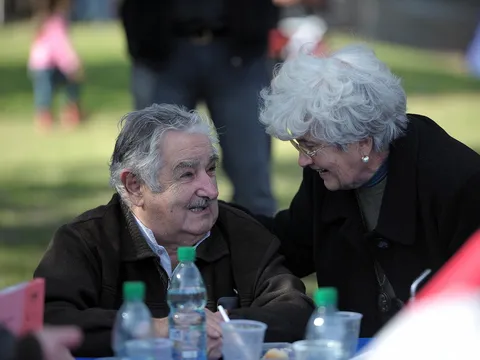 PeopleJosé MujicaThe former guerrilla who, as president of Uruguay, made it in 2013 the first country to legalise and regulate the whole cannabis market, against the opinion of most Uruguayans and of the UN drug board.
Did you know? all cases →
1937 · Uruguay
Uruguay made hashish a state monopoly sold only by pharmacies in 1937. Eighty years later its pharmacies started selling cannabis again — this time without a prescription.
The full story →Uruguay
Uruguay was the first country to legalise, in 2013, under José Mujica. Buyers register with the state and are verified by fingerprint at the pharmacy; tourists are not allowed to buy.
People · Uruguay
When the head of the UN drug board said Uruguay's cannabis law showed a ‘pirate attitude’, its president, José Mujica, told him to stop lying and come and see for himself.
Read the entry →
Datasets not part of the score
What other organisations publish about Uruguay, and where it stands among the countries each one covers. Each dataset has a page of its own, with a world map and every country's figure.
Use
UNODC · 2024
Cannabis use
12.3%of people aged 15–64
5.6% · 20068.3% · 20119.3% · 201414.6% · 201812.3% · 202420062024 ages 15–64 · survey 2024 · 270,000 people · UNODC 2026
Source Survey ages and years vary, and some surveys include children. Rates are not age-standardised; do not compare countries directly.WHO, Our World in Data · 2020
Alcohol drunk per person
5.61litres of pure alcohol a year
6.97 · 20006.97 · 20016.39 · 20026.04 · 20036.07 · 20046.40 · 20056.50 · 20066.44 · 20076.44 · 20086.35 · 20096.31 · 20105.91 · 20115.74 · 20125.74 · 20136.00 · 20146.02 · 20155.86 · 20165.53 · 20175.45 · 20185.45 · 20195.61 · 202020002020 Higher than 57% of 187 countriesLowestHighestper person aged 15 or over · 2020 · 6.97 in 2000 · 6.31 in 2010
Law
UNODC · 2024
Police contact for drug use or possession
3.8per 100,000 people
6.6 · 20200.0 · 202131 · 20224.8 · 20233.8 · 202420202024 Higher than 16% of 101 countriesFewerMore127 people in 2024 · all drugs together
UNODC · 2024
Cannabis seized
625kg in 2024
2,650 · 20154,373 · 20161,912 · 20172,489 · 20182,055 · 20192,068 · 20202,148 · 2021586 · 2022976 · 2023625 · 202420152024 Higher than 29% of 163 countriesLess seizedMore seized625 kg of herb · 0 kg of resin · 2,650 kg in 2015 · 2,068 kg in 2020
Society
OpenAlex · 2025
Research on cannabis
4.1papers per million people
0.3 · 19780.3 · 20030.6 · 20081.2 · 20101.5 · 20131.2 · 20140.3 · 20153.5 · 20163.8 · 20174.1 · 20183.5 · 20195.6 · 20203.0 · 20213.2 · 20228.0 · 20233.0 · 20244.1 · 202519782025 Higher than 80% of 176 countriesLowestHighest14 papers in 2025 · 4 in 2010
Cato and Fraser Institutes · 2023
Human Freedom Index
8.18of 10
8.27 · 20008.25 · 20018.23 · 20028.14 · 20038.27 · 20048.44 · 20058.39 · 20068.42 · 20078.43 · 20088.42 · 20098.51 · 20108.51 · 20118.47 · 20128.38 · 20138.32 · 20148.28 · 20158.29 · 20168.42 · 20178.38 · 20188.40 · 20198.02 · 20208.03 · 20218.23 · 20228.18 · 202320002023 Higher than 79% of 164 countriesLess freeFreerrank #33 of 165 · personal freedom 8.91 · economic freedom 7.16
V-Dem, Our World in Data · 2025
Civil liberties
0.93of 1 in 2025
0.84 · 19000.84 · 19010.84 · 19020.84 · 19030.83 · 19040.86 · 19050.86 · 19060.87 · 19070.87 · 19080.87 · 19090.86 · 19100.87 · 19110.87 · 19120.86 · 19130.86 · 19140.87 · 19150.87 · 19160.87 · 19170.88 · 19180.88 · 19190.88 · 19200.88 · 19210.89 · 19220.89 · 19230.89 · 19240.89 · 19250.89 · 19260.89 · 19270.89 · 19280.89 · 19290.89 · 19300.87 · 19310.83 · 19320.67 · 19330.66 · 19340.66 · 19350.66 · 19360.66 · 19370.68 · 19380.82 · 19390.82 · 19400.82 · 19410.85 · 19420.89 · 19430.89 · 19440.89 · 19450.91 · 19460.91 · 19470.91 · 19480.91 · 19490.91 · 19500.90 · 19510.90 · 19520.90 · 19530.90 · 19540.90 · 19550.91 · 19560.91 · 19570.91 · 19580.91 · 19590.91 · 19600.91 · 19610.91 · 19620.90 · 19630.90 · 19640.90 · 19650.90 · 19660.90 · 19670.75 · 19680.74 · 19690.62 · 19700.56 · 19710.49 · 19720.33 · 19730.28 · 19740.28 · 19750.27 · 19760.27 · 19770.27 · 19780.27 · 19790.30 · 19800.30 · 19810.30 · 19820.30 · 19830.35 · 19840.80 · 19850.93 · 19860.94 · 19870.94 · 19880.94 · 19890.94 · 19900.94 · 19910.94 · 19920.94 · 19930.93 · 19940.93 · 19950.95 · 19960.95 · 19970.95 · 19980.95 · 19990.95 · 20000.95 · 20010.95 · 20020.95 · 20030.95 · 20040.96 · 20050.96 · 20060.96 · 20070.96 · 20080.96 · 20090.96 · 20100.96 · 20110.96 · 20120.94 · 20130.94 · 20140.94 · 20150.94 · 20160.95 · 20170.95 · 20180.95 · 20190.95 · 20200.94 · 20210.93 · 20220.93 · 20230.93 · 20240.93 · 202519002025 Higher than 91% of 175 countriesFewer libertiesMore liberties0.89 in 1925 · 0.91 in 1961 · 0.94 in 1990
Our World in Data, World Bank · 2025
Population
3,384,688people in 2025
919,712 · 19001,101,649 · 19101,392,464 · 19201,732,125 · 19301,993,585 · 19402,234,414 · 19502,529,964 · 19602,790,811 · 19702,951,956 · 19803,104,404 · 19903,266,212 · 20003,318,581 · 20103,398,966 · 20203,384,688 · 202519002025 Higher than 32% of 196 countriesLowestHighest919,712 in 1900 · 2,234,414 in 1950 · 3,266,212 in 2000
CEPII
Former colonial rulers
Once ruled by Spain
World Bank · 2025
Government effectiveness
70of 100
66 · 199660 · 199860 · 200062 · 200262 · 200358 · 200463 · 200563 · 200664 · 200768 · 200869 · 200969 · 201068 · 201166 · 201266 · 201370 · 201469 · 201568 · 201666 · 201767 · 201870 · 201970 · 202071 · 202172 · 202270 · 202370 · 202470 · 202519962025 Higher than 79% of 195 countriesLowestHighestestimate 0.86 on a scale of −2.5 to 2.5 · 2025 · 60 in 2000 · 69 in 2015
Transparency International · 2024
Corruption Perceptions Index
76of 100
72 · 201273 · 201373 · 201474 · 201571 · 201670 · 201770 · 201871 · 201971 · 202073 · 202174 · 202273 · 202376 · 202420122024 Higher than 92% of 178 countriesLowestHighest0 highly corrupt, 100 very clean · 2024 · 74 in 2015 · 71 in 2020
Pew Research Center · 2020
Most common religion
Religiously Unaffiliated
the largest group · 2020
World Bank · 2025
Income per person
$32,742per person
14,061 · 199014,475 · 199115,536 · 199215,865 · 199316,932 · 199416,600 · 199517,434 · 199618,824 · 199719,578 · 199819,193 · 199918,752 · 200017,987 · 200116,573 · 200216,694 · 200317,519 · 200418,811 · 200519,560 · 200620,804 · 200722,249 · 200823,138 · 200924,880 · 201026,099 · 201126,953 · 201228,119 · 201328,935 · 201428,942 · 201529,333 · 201629,762 · 201729,758 · 201830,011 · 201927,788 · 202029,432 · 202130,840 · 202231,101 · 202332,149 · 202432,742 · 202519902025 Higher than 70% of 187 countriesLowestHighestat purchasing power parity, 2021 dollars · 2025 · $14,061 in 1990 · $24,880 in 2010
World Bank · 2024
Development indicators
92%use the internet
0% · 19900.1% · 19940.3% · 19951.9% · 19963.4% · 19977% · 199810% · 199910.5% · 200011.1% · 200111.4% · 200215.9% · 200317.1% · 200420.1% · 200529.4% · 200634% · 200739.3% · 200841.8% · 200946.4% · 201051.4% · 201154.5% · 201257.7% · 201361.5% · 201464.6% · 201566.4% · 201670.3% · 201780.7% · 201883.4% · 201985.5% · 202087.6% · 202189.9% · 202290.9% · 202392% · 202419902024 Higher than 77% of 195 countriesLowestHighest95.6% live in towns · 16% aged 65+ · life expectancy 78.3 · 2024 · 10.5% in 2000 · 46.4% in 2010
GDELT · 2025
Cannabis in the news
0.0004%of global news: cannabis articles from here
0.0012% · 20170.0009% · 20180.0009% · 20190.0007% · 20200.0006% · 20210.0005% · 20220.0004% · 20230.0004% · 20240.0004% · 202520172025 Higher than 59% of 147 countriesLowestHighest2025 average, 348 days · 0.0009% in 2018 · 0.0006% in 2021
Plant and market
OpenStreetMap · 2026
Cannabis shops on the map
1shops mapped
Higher than 0% of 59 countriesFewer shopsMore shops0.3 per million people · 2026
History 18 of 18 checked against a source
Score and entries per decade
52 today, from 100 before its first recorded change
This country's score Entries that moved the score Context only
20261 entry0 score changes
20171 entry1 score change
20143 entries0 score changes
Other law ✓
Uruguay starts registering cannabis clubs
The regulator announced it would register membership clubs of 15 to 45 members growing up to 99 plants. A club must first be a civil association, keep all activity on its own premises and stand at least 150 metres from schools and rehabilitation centres.
Other law ✓
Uruguay opens its register of home growers
The regulator IRCCA began registering households growing up to six flowering plants, the first part of the 2013 law to operate. A year later 2,743 growers were registered.
Other law ✓
Uruguay publishes the rules for its cannabis law
The regulations set a weekly limit of 10 g in pharmacies and made the three routes exclusive: a person may register for the pharmacy, a club or home growing, but not more than one. Surplus harvests are to be handed to the regulator.
20133 entries1 score change
Legalisation ✓ Article
Uruguay becomes the first country to legalise
President Mujica signed Law 19.172, passed by the Senate on 10 December by 16 votes to 13, which put the whole chain under state control. Registered residents choose one of three routes: growing six plants at home, joining a club, or buying up to 40 g a month in pharmacies. Possession for personal use had not been a crime since 1974.
3249+17 points
International ✓
The UN drug control board says Uruguay broke the treaty
The day after the Senate vote, the International Narcotics Control Board said the law contravened the 1961 Single Convention. Its president, Raymond Yans, said it would encourage early experimentation. President Mujica answered that he should stop lying, and Uruguay argued that its human rights obligations take precedence over drug control.
Debate ✓
Uruguay's lower house passes the cannabis bill with no vote to spare
The Chamber of Deputies approved the regulation bill with 50 votes, the minimum it needed. Every deputy of the governing Broad Front voted for it and every other deputy against. The Senate followed on 10 December by 16 votes to 13.
20121 entry0 score changes
20101 entry0 score changes
20001 entry0 score changes
19981 entry0 score changes
19951 entry0 score changes
19881 entry0 score changes
19871 entry0 score changes
19751 entry0 score changes
19741 entry1 score change
19371 entry1 score change
Sources hover a number in the text to see its source
- Cited
- 17
- Websites
- 9
- Last reviewed
- History checked
- 18/18
Most cited
- impo.com.uy5
- en.wiktionary.org3
- gub.uy2
- ircca.gub.uy2
- brookings.edu1
- en.wikipedia.org1
All 17 sources
- Wiktionary — faso (Lunfardo slang: a marijuana cigarette)archived
- Wiktionary — porro (a marijuana cigarette)archived
- Wiktionary — yerba (grass; slang: marijuana)archived
- Ley N° 19.172, artículo 7 — texto original (IMPO)Replaces article 31 of Decree-Law 14.294archived
- Decreto-Ley N° 14.294, articles 30 and 31, as amended (IMPO)Art. 30: unauthorised production, 20 months to 10 years for cannabis; art. 31: possession not for personal use, 2 to 12 years; 40 g presumed personalarchived
- Decreto N° 120/014, artículo 39 (IMPO)archived
- Ley N° 19.172 — Regulación y control del cannabis (IMPO)archived
- IRCCA — Instituto de Regulación y Control del Cannabisarchived
- Secretaría Nacional de Drogas / Observatorio Uruguayo de Drogas — Regulación del mercado de cannabis en Uruguay: segunda evaluación de la Ley 19.172 (March 2026, PDF)Table 13 and footnote; pages 84–85archived
- Wikipedia — Cannabis in Uruguayarchived
- IRCCA — Resumen de datos del cannabis de uso adulto (al 31/12/2025)archived
- Secretaría Nacional de Drogas / IRCCA — Regulación del mercado de cannabis en Uruguay: segunda evaluación de la ley 19.172 (April 2026, PDF)archived
- Infobae — Marihuana legal en Uruguay: clubes canábicos venden más que las farmacias y presionan para habilitar el acceso a turistas (24 March 2026)archived
- Decreto N° 120/014, capítulo octavo: semillas y esquejes de cannabis (IMPO)archived
- Uruguay XXI — Sector Cannabis 2026 (PDF)Footnote 21, page 39archived
- Brookings / WOLA — Walsh and Ramsey, Uruguay's Drug Policy: Major Innovations, Major Challenges (2015)archived
- International Narcotics Control Board — Travellers carrying medicines containing controlled substances