Canada
53/100
National estimate · provinces and territories 40–54
#1 of 196 worldwide
#1 of 23 in North America
Fully legal since October 2018: 30 g in public, four plants per household in most provinces, gifting between adults, and licensed retail and delivery across the country.
In short all countries →
- Can I carry it?YesLegal up to a limit
- Can I grow it?LimitedUp to four plants per household under federal law; Quebec bans personal growing and other provinces add conditions
- Can I buy it?YesIn licensed shops
- Can I use it in public?LimitedIn some places, with many restrictions
- What if I'm caught?NothingIf you stay within the limits
Choose a province or territory for its local rules ↑
A rough guide read from the scores and the rules below, not legal advice. The details and the exceptions are in each segment: select an answer to jump to it.
Cannabis in Canada not part of the score · all 25 datasets ↓
Who uses it
About 1 in 3
people aged 15+ in Canada used cannabis in the past year: 11 million people.
- Past year
- 32.4%
- North America median
- 6.9%
- Aged 15–16, 2018
- 21.6%
UNODC · survey 2023
Source Past-year cannabis use among people aged 15+. People who used cannabis in the past year, from a 2023 survey, applied to today's population aged 15+.Survey ages and years vary, and some surveys include children. Rates are not age-standardised; do not compare countries directly.
UNODC World Drug Report 2026, annex table 1.2. Population from the World Bank, aged 15+. The whole dataset →
Use across North America
1sthighest of 22 surveyed countries
- 🇨🇦 Canada32.4%
- 🇺🇸 United States26.4%
- 🇯🇲 Jamaica19.2%
- 🇰🇳 Saint Kitts and Nevis11.7%
- 🇩🇲 Dominica10.8%
Past-year use, latest survey of each. Survey years and ages differ. On the map →
What they think of it
“Is using marijuana morally acceptable?”
19% say it is morally unacceptable
- Acceptable 37%
- Not a moral issue 42%
- Depends or no answer 1%
- Unacceptable 19%
The least disapproving of the 25 countries surveyed, where the median is 52%. On the map →
Source Pew Research Center, surveyed January to May 2025, 1,024 adults (topline, question 17g).Cannabis in figures
- Police contact for drug use or possession26per 100,000 people · 2024
- Cannabis seized26,860kg in 2024 · 2024
- Cannabis shops on the map1,589shops mapped · 2026
- Cannabis in wastewater577.30mg of THC-COOH a day per 1,000 people · 2024
- Hemp grown14,500ha in 2024 · 2024
The dot: where it stands among the countries each dataset covers, lowest to highest. All datasets ↓
What they call it
- cannabis[1]English and Frenchthe word of the 2018 Cannabis ActIn the atlas →
- weed[2]Englishinformal
- pot[3][4]English and Canadian Frenchinformal; 'du pot' in QuebecIn the atlas →
- herbe[5]French'grass'; familiarIn the atlas →
- marihuana[6]Englishthe law's spelling until 2018In the atlas →
By province or territory 13 scored · national estimate 53
The federal Cannabis Act applies everywhere in Canada. Provinces and territories set the minimum age, where you may consume, how shops work, and whether you may grow at home.
Minimum age 18, the lowest Health Canada lists. Private licensed shops, in person and online. Use is allowed at a single-family home and where the municipality allows it.
Age 19. Government shops and private licensed shops. Adults may generally smoke or vape where tobacco smoking is allowed, with further bans in parks, near schools and in vehicles.
Age 19. Private licensed shops and a government online store. Smoking and vaping are allowed in many outdoor public places, and not in enclosed public places.
Age 19. Sold only through the Nova Scotia Liquor Corporation. Combustible cannabis in public follows the Smoke-free Places Act, and a municipality may restrict it further.
Age 19. Approved vendors, including private shops, and online sales. A community may vote to restrict or prohibit cannabis.
Age 19. Private shops. Since 1 May 2025 up to four plants may be grown indoors, locked or out of a young person's reach. Smoking and vaping in public are prohibited.
Age 19. Cannabis NB shops, approved private retailers and farmgate outlets. Adults may consume at a private dwelling, on its land, or at an occupied campsite.
Age 19. Government and private licensed shops. Adults may consume in a private dwelling or the yard attached to it.
Age 19. A person may possess up to 150 g of dried cannabis, and 30 g in public. Private licensed shops and online sales. Smoking cannabis is prohibited in publicly funded housing, including staff housing.
Age 19. Government-run shops only. Up to four plants, with a locked outdoor enclosure and written landlord permission for a tenant.
Age 19. Private licensed shops, in person and online. Consuming cannabis in a public place is prohibited.
Age 19. Private shops supplied by the territorial corporation. Adults may consume at a private residence and its adjoining property, or at a registered campsite.
Age 21. Home cultivation is prohibited. A private residence is limited to 150 g of dried cannabis. Smoking and vaping are prohibited in places open to the public. Retail sales are only through the SQDC.
National estimate 53/100 · how the scores are made
One estimate for Canada as a whole: federal law and what holds in most provinces and territories. It is not an average of the provinces and territories, which run from 40–54.
Adults (18+, 19 or 21 in most provinces) may carry up to 30 g of dried cannabis in public, or its equivalent in other forms (for example 150 g of fresh cannabis or 7.5 g of concentrate).[7] Federal law sets no cap at home, though some provinces add one, and Nunavut provides that a person shall not possess more than 150 g of dried cannabis or its equivalent.[8][9] Cannabis grown at home from lawful seed, or given by another adult within the gift limit, may be possessed.[10] What is forbidden is any cannabis the person knows is illicit.[7] Carrying more than 30 g in public is an offence punishable by up to five years less a day.[7]
An adult may grow up to four cannabis plants at a time in their dwelling-house. Where two or more adults live there, the household may not grow more than four, and a further plant is an offence.[11] The plants have to come from seed or plant material the grower does not know is illicit. A gift within the federal sharing limits, or a purchase from an authorised retailer, is a lawful source.[11][10] Quebec prohibits cultivation for personal purposes. Growing four plants or fewer in a dwelling-house is a fine of $250 to $750.[12] Since 1 May 2025 a person 19 or older in Manitoba may grow up to four plants in their ordinary residence, and the household may not exceed four. The plants must be indoors, in a locked room or container or somewhere a young person cannot reach, and must come from seed or plant material that is not illicit.[13][14] Newfoundland and Labrador allows four plants inside the grower's ordinary dwelling or an enclosed structure on the premises, and not in the yard.[15] The Northwest Territories also allow four plants and require the growing to be indoors.[16] In New Brunswick the plants must be at the person's dwelling-house. Outdoors they must stand inside a locked enclosure at least 1.52 metres high, and indoors in a separate locked space.[17] In Prince Edward Island the plants must be at the person's private dwelling. Indoors the space must be inaccessible to anyone under 19 and to anyone who has not been invited in. Outdoors they must stand inside a locked enclosure at least 1.52 metres high and out of sight from public space beyond the property. A tenant needs the landlord's written permission.[18][19]
Context not part of the score · every country, by topic →
Any physician or nurse practitioner can authorise medical use with no list of qualifying conditions. Patients buy from federal licence holders by mail, or register with Health Canada to grow their own or designate a grower. Still a registration system, and not covered by ordinary public health insurance. A separate Veterans Affairs benefit reimburses eligible patients, with its ceiling reduced from C$8.50 to C$6 per dried gram or equivalent for orders from 1 April 2026.[21][22]
Legalisation built a system of licensed producers and shops and left no room for members' clubs: cannabis may only be sold with a federal or provincial licence. The medical compassion clubs that had sold openly since the 1990s were not absorbed into it, and those that carried on are treated as unlicensed sellers. The best-documented cases are in British Columbia. The B.C. Compassion Club Society in Vancouver closed in 2022 after about 25 years of selling without a licence. The Victoria Cannabis Buyers Club has been raided four times by the provincial Community Safety Unit, in 2019, 2020, 2022 and April 2026, and the courts upheld a 3.2 million dollar penalty against it in 2024; the unit says it sells contrary to both the provincial licensing act and the federal Cannabis Act. By 2022 the province reported having shut 186 unlicensed retailers. Patient groups asked the federal review of the Act to allow some form of storefront medical sale.[23][24]
Licensed sellers may sell cannabis seeds and cannabis plants. An adult may also give another adult up to 30 cannabis seeds, because one seed counts as one gram of dried cannabis toward the 30 gram distribution limit, and up to four plants that are not budding or flowering.[25][26][27] Selling cannabis without authorisation is prohibited.[28] Home growers buy seeds or immature flowering plants from an authorised retailer, and growing from a seed or plant the person knows is illicit is an offence.[10] An adult may possess up to four plants that are not budding or flowering.[7]
Flower, pre-rolls, oils, edibles, drinks, vapes, concentrates and topicals are all legal. Limits: edibles are capped at 10 mg THC per package, extracts at 1,000 mg per container, with plain packaging, health warnings and a near-total ban on promotion. Health Canada's classification guidance treats ingestible products marketed for mixing with food or drinks as edibles, subject to the 10 mg limit.[21][20][29]
Anyone can apply for a federal cultivation or processing licence, including small 'micro' classes, and there is no cap on licence numbers. But security clearances, site requirements, excise stamps and compliance costs are heavy, and unlicensed commercial production carries up to 14 years.[1][21]
The legal market has taken most of the trade. In Health Canada's 2024 survey, 72% of people who used cannabis usually bought it from a legal shop or website, up from 37% in 2019, and only 3% from an illegal shop, website or dealer, down from 16%. Another 15% got it from friends or family and 5% grew their own. Users spent about 53 dollars a month on legal cannabis and 8 dollars on illegal, and paid on average 8.41 dollars for a gram of dried flower.[30]
There is no residency rule: any adult of the provincial minimum age (18 in Alberta, 21 in Quebec, 19 elsewhere) may buy from authorised retailers and carry up to 30 g in public, and the federal government tells people to know the law of the province they live in or visit. The border is the hard limit. Taking cannabis into or out of Canada in any form, including CBD oil and cannabis authorised for medical use, is a serious criminal offence whatever the amount, and failing to declare it on entry can also lead to arrest and prosecution.[31][32]
Federal criminal law sets fixed blood limits. Between 2 and 5 nanograms of THC per millilitre of blood is a summary offence with a fine of up to 1,000 dollars. At 5 nanograms or more, a first offence carries a mandatory minimum fine of 1,000 dollars and up to ten years in prison. A third offence covers THC with alcohol: 2.5 nanograms or more together with 50 mg of alcohol per 100 ml of blood, with mandatory minimums of a 1,000 dollar fine, then 30 days and 120 days in prison for repeat offences.[33]
Police recorded 8,879 cannabis offences in 2024, or 22 per 100,000 people, down 89% from 194 per 100,000 in 2014, when nearly 70,000 cannabis offences made up two-thirds of all drug crime; in 2024 they were 17%. What is left is mostly border crime: of the offences under the Cannabis Act, 66% were importation or exportation, 13% possession, 7% distribution, 7% sale and 3% production. The cannabis rate rose 30% between 2023 and 2024, by 2,272 incidents.[34]
Drug-impaired driving law uses per-se THC blood limits, so a regular user can be over the limit without being impaired. Past simple-possession convictions can be cleared through a free, expedited record suspension — on application, not automatically. Admitting to cannabis use can still get a traveller refused at the US border.[20][21]
Taking cannabis into or out of Canada is a separate offence from possessing it, normally charged as smuggling or trafficking, with far heavier penalties. That holds almost everywhere, including between two places where cannabis is legal.
The rules that allow or tolerate small amounts inside Canada do not cover the border, an airport or the post.
A prescription or medical card from another country is generally not recognised. Travellers who need a cannabis-based medicine should ask Canada's embassy before travelling.[35]
General guidance that applies to almost every country, not a check of Canada's customs rules.
Culture the atlas →
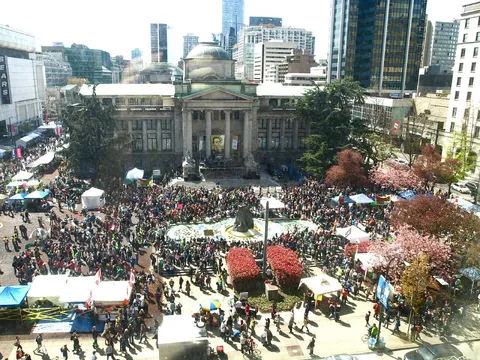 Language420A meeting time of five Californian schoolboys in 1971 that became the worldwide code for cannabis and the date of its yearly demonstrations.
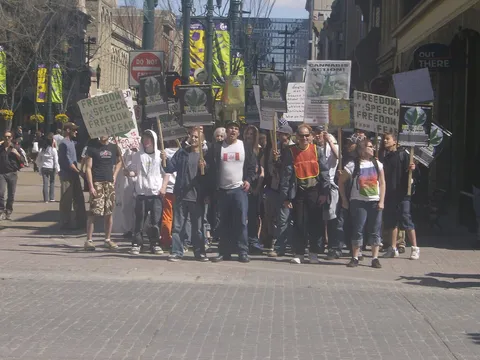 TraditionsThe Global Marijuana MarchOn the first Saturday of May, people in hundreds of cities march for legal cannabis. Brazil's supreme court had to rule that doing so is free speech.
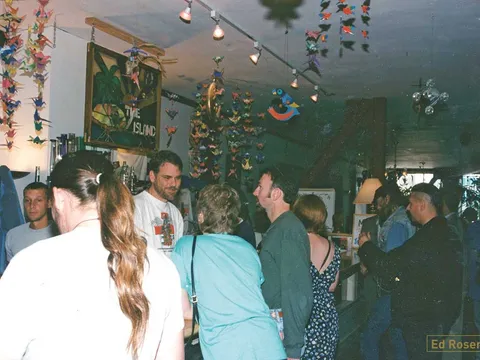 LanguageDispensaryAn old word for a place that hands out medicine, which in the United States became the name of the cannabis shop. The medical word was chosen because, for twenty years, medicine was the only legal ground cannabis could be sold on.
 PeopleMarc EmeryA Canadian bookseller turned seed merchant, called the Prince of Pot, who broke Canada's ban on cannabis literature, paid tax on his seed sales for seven years, and served four years in an American prison for them.
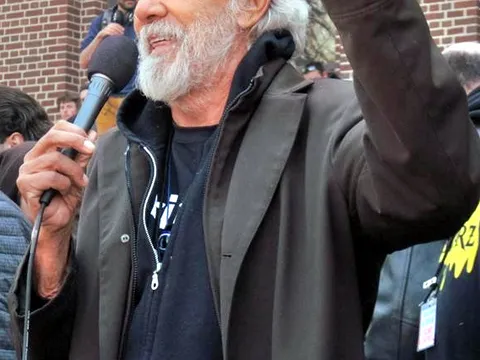 PeopleTommy ChongThe comedian who helped put cannabis users on screen with Cheech Marin, then served a federal prison sentence for a paraphernalia business. His comedy, prosecution and later campaigning connect popular culture with prohibition.
Did you know? all cases →
1923 · Canada
Canada, today's highest-scoring country, banned cannabis in 1923 without a word of debate in Parliament. Nobody has established why: there was almost no use, and the first seizure came nine years later.
The full story →1998 · Canada
Canada's Ross Rebagliati won Olympic snowboarding gold in 1998, lost it days later over a positive test for marijuana, and got it back when a sports court found the IOC had no rule covering it.
The full story →2003 · Canada
The first cannabis the government of Canada ever sold was grown 360 metres underground, in a disused section of a copper and zinc mine in Manitoba. Patients collected it from their doctor's office at about $5 a gram.
The full story →2003 · Canada
For a little over two years, from July 2001 to October 2003, possessing cannabis was no valid offence in Ontario, Canada: a court had struck down the ban, and the government's medical rules did not repair it.
The full story →The ceiling
The best score in the world is only 53 out of 100. Canada leads the index, but its caps on how much you may carry and grow keep it barely past the halfway mark.
People · Canada
From 1998 Marc Emery declared his mail-order cannabis seed sales to the tax office in Canada, paying nearly 600,000 dollars. Canada never charged him; it extradited him to the United States, which jailed him for five years.
Read the entry →
Datasets not part of the score
What other organisations publish about Canada, and where it stands among the countries each one covers. Each dataset has a page of its own, with a world map and every country's figure.
Use
UNODC · 2023
Cannabis use
32.4%of people aged 15+
12.65% · 201010.9% · 201112.2% · 201212.7% · 201314.73% · 201514.8% · 201720.7% · 201932.4% · 202320102023 ages 15+ · survey 2023 · 11,000,000 people · UNODC 2026
Source Survey ages and years vary, and some surveys include children. Rates are not age-standardised; do not compare countries directly.UNODC · 2018
Cannabis use at 15 and 16
21.57%in the past year
25.8% · 201023.05% · 201219.2% · 201421.56% · 201621.57% · 201820102018 Higher than 90% of 49 countriesLowestHighest26.3% ever · 13.5% in the past month · 2018 · ages 15–16 (Grade 10)
EUDA · 2024
Cannabis in wastewater
577.30mg of THC-COOH a day per 1,000 people
Higher than 94% of 33 countriesLowestHighestcities measured: 1 · 2,124,805 people served
Health Canada · 2024
Where people in Canada get their cannabis
72%bought from a legal source
37% · 201954% · 202064% · 202169% · 202273% · 202372% · 202420192024 15% from friends and family · 3% illegally · 5% grew it · 2024
WHO, Our World in Data · 2020
Alcohol drunk per person
9.89litres of pure alcohol a year
9.38 · 20009.38 · 20019.45 · 20029.50 · 20039.60 · 20049.75 · 20059.95 · 200610.09 · 200710.18 · 200810.23 · 200910.21 · 201010.17 · 201110.10 · 201210.05 · 20139.95 · 20149.92 · 20159.92 · 20169.95 · 20179.90 · 20189.90 · 20199.89 · 202020002020 Higher than 83% of 187 countriesLowestHighestper person aged 15 or over · 2020 · 9.38 in 2000 · 10.21 in 2010
Law
UNODC · 2024
Police contact for drug use or possession
26per 100,000 people
34 · 202127 · 202224 · 202326 · 202420212024 Higher than 39% of 101 countriesFewerMore10,847 people in 2024 · all drugs together
UNODC · 2024
Cannabis seized
26,860kg in 2024
14,631 · 201517,512 · 201617,050 · 201713,669 · 20183,587 · 201934,843 · 202063,190 · 202153,721 · 202210,811 · 202326,860 · 202420152024 Higher than 82% of 163 countriesLess seizedMore seized26,573 kg of herb · 287 kg of resin · 14,631 kg in 2015 · 34,843 kg in 2020
Society
Pew Research Center · 2025
Is using marijuana morally wrong?
19%call it immoral
Higher than 0% of 25 countriesFewer disapproveMore disapprove37% acceptable · 42% not a moral issue · 1,024 people asked
OpenAlex · 2025
Research on cannabis
16papers per million people
0.0 · 19680.2 · 19690.1 · 19700.2 · 19710.3 · 19720.4 · 19730.4 · 19740.2 · 19750.5 · 19760.6 · 19770.2 · 19780.4 · 19790.3 · 19800.1 · 19810.3 · 19820.1 · 19830.2 · 19840.3 · 19850.0 · 19860.3 · 19870.1 · 19880.3 · 19890.3 · 19900.3 · 19910.3 · 19920.3 · 19930.2 · 19940.2 · 19950.4 · 19960.3 · 19970.3 · 19980.4 · 19990.5 · 20000.9 · 20011.0 · 20021.5 · 20031.6 · 20041.8 · 20052.2 · 20062.3 · 20072.8 · 20082.6 · 20093.4 · 20103.6 · 20113.1 · 20124.6 · 20135.3 · 20145.5 · 20155.8 · 20166.7 · 201711 · 201813 · 201918 · 202018 · 202118 · 202217 · 202316 · 202416 · 202519682025 Higher than 97% of 176 countriesLowestHighest656 papers in 2025 · 6 in 1970 · 13 in 1990 · 142 in 2010
Cato and Fraser Institutes · 2023
Human Freedom Index
8.74of 10
8.90 · 20008.81 · 20018.79 · 20028.82 · 20038.84 · 20048.86 · 20058.85 · 20068.84 · 20078.83 · 20088.81 · 20098.76 · 20108.75 · 20118.73 · 20128.79 · 20138.86 · 20148.87 · 20158.87 · 20168.82 · 20178.79 · 20188.80 · 20198.42 · 20208.45 · 20218.71 · 20228.74 · 202320002023 Higher than 92% of 164 countriesLess freeFreerrank #12 of 165 · personal freedom 9.33 · economic freedom 7.92
V-Dem, Our World in Data · 2025
Civil liberties
0.90of 1 in 2025
0.85 · 19000.85 · 19010.85 · 19020.85 · 19030.85 · 19040.85 · 19050.85 · 19060.85 · 19070.85 · 19080.85 · 19090.85 · 19100.85 · 19110.85 · 19120.85 · 19130.83 · 19140.83 · 19150.83 · 19160.83 · 19170.83 · 19180.84 · 19190.84 · 19200.84 · 19210.84 · 19220.84 · 19230.84 · 19240.84 · 19250.84 · 19260.84 · 19270.84 · 19280.84 · 19290.84 · 19300.83 · 19310.83 · 19320.83 · 19330.85 · 19340.86 · 19350.86 · 19360.86 · 19370.86 · 19380.84 · 19390.84 · 19400.83 · 19410.83 · 19420.83 · 19430.83 · 19440.83 · 19450.86 · 19460.86 · 19470.87 · 19480.87 · 19490.88 · 19500.88 · 19510.88 · 19520.88 · 19530.88 · 19540.88 · 19550.88 · 19560.88 · 19570.88 · 19580.88 · 19590.90 · 19600.90 · 19610.90 · 19620.91 · 19630.91 · 19640.91 · 19650.91 · 19660.91 · 19670.91 · 19680.91 · 19690.92 · 19700.92 · 19710.92 · 19720.92 · 19730.92 · 19740.92 · 19750.93 · 19760.93 · 19770.93 · 19780.93 · 19790.92 · 19800.92 · 19810.92 · 19820.93 · 19830.93 · 19840.93 · 19850.93 · 19860.93 · 19870.93 · 19880.93 · 19890.93 · 19900.93 · 19910.93 · 19920.93 · 19930.93 · 19940.93 · 19950.93 · 19960.94 · 19970.94 · 19980.94 · 19990.94 · 20000.93 · 20010.93 · 20020.93 · 20030.93 · 20040.93 · 20050.93 · 20060.93 · 20070.93 · 20080.93 · 20090.93 · 20100.93 · 20110.93 · 20120.94 · 20130.94 · 20140.94 · 20150.93 · 20160.93 · 20170.93 · 20180.93 · 20190.93 · 20200.93 · 20210.90 · 20220.90 · 20230.90 · 20240.90 · 202519002025 Higher than 80% of 175 countriesFewer libertiesMore liberties0.84 in 1925 · 0.90 in 1961 · 0.93 in 1990
Our World in Data, World Bank · 2025
Population
41,651,653people in 2025
5,414,425 · 19007,002,961 · 19108,571,309 · 192010,191,122 · 193011,453,308 · 194013,741,740 · 195017,898,793 · 196021,440,022 · 197024,533,779 · 198027,789,437 · 199030,891,800 · 200034,196,900 · 201038,171,903 · 202041,651,653 · 202519002025 Higher than 81% of 196 countriesLowestHighest5,414,425 in 1900 · 13,741,740 in 1950 · 30,891,800 in 2000
CEPII
Former colonial rulers
Once ruled by United Kingdom; France
Statistics Canada · 2024
Government revenue from cannabis in Canada
C$2.49billion to governments in 2024/2025
1.61 · 20211.99 · 20222.23 · 20232.49 · 202420212024 C$4,314,898 thousand in sales by the cannabis authorities · 293,807 thousand federal excise · 947,467 thousand provincial excise
World Bank · 2025
Government effectiveness
88of 100
89 · 199690 · 199892 · 200093 · 200292 · 200391 · 200491 · 200590 · 200690 · 200790 · 200889 · 200989 · 201090 · 201191 · 201290 · 201391 · 201490 · 201591 · 201692 · 201790 · 201890 · 201986 · 202085 · 202188 · 202287 · 202388 · 202488 · 202519962025 Higher than 93% of 195 countriesLowestHighestestimate 1.76 on a scale of −2.5 to 2.5 · 2025 · 92 in 2000 · 90 in 2015
Transparency International · 2024
Corruption Perceptions Index
75of 100
84 · 201281 · 201381 · 201483 · 201582 · 201682 · 201781 · 201877 · 201977 · 202074 · 202174 · 202276 · 202375 · 202420122024 Higher than 91% of 178 countriesLowestHighest0 highly corrupt, 100 very clean · 2024 · 83 in 2015 · 77 in 2020
Pew Research Center · 2020
Most common religion
Christians
the largest group · 2020
World Bank · 2025
Income per person
$57,990per person
40,475 · 199039,139 · 199139,023 · 199239,622 · 199340,952 · 199441,618 · 199541,881 · 199643,241 · 199744,553 · 199846,465 · 199948,399 · 200048,774 · 200149,695 · 200250,140 · 200351,211 · 200452,357 · 200553,196 · 200653,762 · 200753,712 · 200851,552 · 200952,558 · 201053,681 · 201154,035 · 201254,712 · 201355,723 · 201455,661 · 201555,606 · 201656,612 · 201757,337 · 201857,584 · 201954,093 · 202056,995 · 202158,583 · 202258,088 · 202357,534 · 202457,990 · 202519902025 Higher than 87% of 187 countriesLowestHighestat purchasing power parity, 2021 dollars · 2025 · $40,475 in 1990 · $52,558 in 2010
World Bank · 2024
Development indicators
94.4%use the internet
0.4% · 19900.6% · 19910.9% · 19921.2% · 19932.4% · 19944.2% · 19956.8% · 199615.1% · 199724.9% · 199836.2% · 199951.3% · 200060.2% · 200161.6% · 200264.2% · 200366% · 200471.7% · 200572.4% · 200673.2% · 200776.7% · 200880.3% · 200980.3% · 201083% · 201183% · 201285.8% · 201387.1% · 201490% · 201591.2% · 201692.7% · 201794.6% · 201891.9% · 201992.3% · 202093.9% · 202194% · 202294.1% · 202394.4% · 202419902024 Higher than 84% of 195 countriesLowestHighest82.7% live in towns · 19.8% aged 65+ · life expectancy 82.1 · 2024 · 51.3% in 2000 · 80.3% in 2010
Wikidata · 2006
Parties for legal cannabis
Saskatchewan Marijuana Party
founded 2006 · dissolved 2,010
GDELT · 2025
Cannabis in the news
0.0131%of global news: cannabis articles from here
0.0285% · 20170.0631% · 20180.0425% · 20190.0192% · 20200.0168% · 20210.013% · 20220.0153% · 20230.0152% · 20240.0131% · 202520172025 Higher than 97% of 147 countriesLowestHighest2025 average, 348 days · 0.0631% in 2018 · 0.0168% in 2021
Plant and market
OpenStreetMap · 2026
Cannabis shops on the map
1,589shops mapped
Higher than 97% of 59 countriesFewer shopsMore shops38 per million people · 2026
GBIF · 2026
Records of the cannabis plant
818dated records
1 · 18583 · 18714 · 18745 · 18796 · 18827 · 18848 · 18879 · 188811 · 188912 · 189113 · 189214 · 189515 · 189616 · 189717 · 189818 · 189919 · 190020 · 190121 · 190324 · 190525 · 190628 · 191131 · 191832 · 192133 · 192234 · 192536 · 192739 · 192841 · 193042 · 193145 · 193246 · 193349 · 193455 · 193559 · 193767 · 193875 · 193978 · 194079 · 194285 · 194386 · 194487 · 194591 · 195092 · 195295 · 195497 · 1955103 · 1956104 · 1958105 · 1960107 · 1961109 · 1962111 · 1963114 · 1964117 · 1965118 · 1967134 · 1968138 · 1969142 · 1970621 · 1971630 · 1972640 · 1973645 · 1974653 · 1975661 · 1976668 · 1977673 · 1978676 · 1979677 · 1980678 · 1981683 · 1982688 · 1983689 · 1986690 · 1987691 · 1988693 · 1990694 · 1991697 · 1992698 · 1993699 · 1994701 · 1997706 · 1999707 · 2000708 · 2001709 · 2003710 · 2004712 · 2007713 · 2011716 · 2012717 · 2015720 · 2016728 · 2017738 · 2018739 · 2019752 · 2020768 · 2021780 · 2022795 · 2023803 · 2024815 · 2025818 · 202618582026 Higher than 94% of 128 countriesLowestHighest108 more without a date · 3 in 2026 · 19 by 1900 · 105 by 1960 · 707 by 2000
FAO · 2024
Hemp grown
14,500ha in 2024
32,500 · 201920,400 · 202022,500 · 202128,800 · 202222,100 · 202314,500 · 202420192024 Higher than 90% of 39 countriesLowestHighest17,551 t of seed
ClinicalTrials.gov · 2026
Clinical trials of cannabis medicines
126studies so far
1 · 20141 · 20155 · 201615 · 201725 · 201833 · 201940 · 202058 · 202178 · 202293 · 2023108 · 2024121 · 2025126 · 202620142026 Higher than 96% of 50 countriesLowestHighest5 actual starts in 2026 · as of 2026–10–26 · 40 by 2020
Enforcement 2 reports · the Cannabis Enforcement Tracker →
How the law above is applied: raids, seizures, fields destroyed, arrests and sentences, as recorded by the Cannabis Enforcement Tracker, our companion site.
- RaidWoman charged after raid on illegal Ottawa cannabis shop
Ottawa police raided an unlicensed cannabis and nicotine shop on Catherine Street on 19 October, seizing 13 kg of flower, hash, edibles, vapes and more than $10,000.
- EradicationOPP dismantle grow sites in Stone Mills and Madoc
Ontario's cannabis enforcement team searched properties in Stone Mills and Madoc on 7 October, seizing 1,072 plants, processed cannabis and a stolen vehicle worth over $1.8 million.
History 44 of 44 checked against a source
Score and entries per decade
53 today, from 100 before its first recorded change
This country's score Entries that moved the score Context only
20265 entries0 score changes
Manitoba Debate ✓
Manitoba proposes visibility and staffing changes for cannabis stores
Bill 56 would remove the provincial requirement that outsiders cannot see inside age-restricted cannabis stores and authorise regulations setting minimum staffing levels, including during specified hours. It does not remove the separate federal restriction on displaying cannabis products to people outside. The bill reached second reading on 6 October and committee hearings on 8 October; the reviewed legislature catalogue listed no enacted version. No operative staffing number or new consumer possession limit was established.
Other law ✓
Canada brings cannabis-drug and test-kit regulatory amendments into force
SOR/2025-244, published in December 2025, came into force on 1 October 2026. It aligns cannabis-drug administration with the new Controlled Substances Regulations, including dispensing, destruction records and cannabis test-kit registration. These are sector-specific regulatory amendments; the entry does not record a change to adult recreational possession or home-growing limits.
20252 entries0 score changes
Manitoba Easing ✓
Manitoba allows four cannabis plants at home
From 1 May 2025 a person 19 or older may grow up to four cannabis plants in their ordinary residence, and the household may not exceed four. The plants must be indoors, locked away from young people or otherwise out of their reach, and grown from seed or plant material that is not illicit. Quebec's ban on personal cultivation remains.
Other law ✓
Canada loosens its cannabis production and packaging rules
Amended regulations took effect. Micro-cultivators may grow on up to 800 square metres and micro-processors handle 2,400 kg a year; the 1 g limit on pre-rolls was dropped; packages may have transparent windows and need show only total THC and CBD; and small non-human research with up to 30 g no longer needs a licence.
20241 entry0 score changes
20232 entries0 score changes
Nunavut Tightening ✓
Nunavut prohibits smoking cannabis in publicly funded housing
On 31 May 2023 the Tobacco and Smoking Act came into force. A person shall not smoke in a private dwelling leased from a publicly funded housing provider, including the Nunavut Housing Corporation and staff housing rented to public servants. Smoking means a lit or heated device, including one that heats cannabis. The ban binds tenants once they receive written notice. The Department of Health describes the rule as covering cannabis use in those units, on balconies, and in hallways and shared spaces.
Other law ✓
Canada's Supreme Court lets provinces ban home growing
In Murray-Hall v Quebec the court held that Quebec's ban on growing cannabis at home, although the federal Act allows four plants, was a valid use of provincial powers.
20201 entry0 score changes
20191 entry0 score changes
20183 entries1 score change
Newfoundland and Labrador Other law ✓
Newfoundland and Labrador keeps home growing indoors
The Cannabis Control Regulations came into force on 17 October 2018. Up to four non-medical plants may be grown in the grower's ordinary dwelling, or in an enclosed structure on the premises. The yard itself is excluded. The plants must not be accessible to anyone under 19 or visible from a public place.
Legalisation ✓ Article
Canada legalises cannabis nationwide
The Cannabis Act made Canada the second country, and the first G7 member, to legalise. Adults may carry 30 g, grow four plants per household in most provinces, share with other adults and buy from licensed shops.
1553+38 points
Culture & science ✓
Cannabis companies reach the big American stock exchanges
Canopy Growth, founded in Ontario in 2013 as Tweed, began trading on the New York Stock Exchange, the first cannabis producer there. In July Tilray, another Canadian licensed producer, became the first cannabis company to go public on a major US exchange, opening on Nasdaq at 17 dollars a share; the price reached 214 dollars in September and had fallen to 29 by August 2019.
20161 entry0 score changes
20081 entry0 score changes
20051 entry0 score changes
20034 entries0 score changes
20021 entry0 score changes
20011 entry1 score change
20001 entry0 score changes
19992 entries0 score changes
Medical ✓
Canada's health minister begins exempting patients one by one
Allan Rock used Section 56 of the drug law to let two AIDS patients grow and use cannabis, and in October added fourteen more people who were very sick or dying. A hundred had applied. In August the health department offered 7.5 million dollars over five years for research into medical cannabis, and it looked for a firm to grow a supply.
Ontario Medical ✓
An Ontario judge exempts an AIDS patient from the cannabis ban
Justice Harry LaForme of the Ontario Superior Court granted Jim Wakeford a constitutional exemption from prosecution, so that he could possess and grow cannabis while the health ministry considered his application. Nineteen other patients had applied; government lawyers admitted the ministry had adopted only preliminary guidelines that week. The government did not appeal.
19982 entries0 score changes
Hemp ✓ Article
Canada starts its licensed industrial-hemp programme
Health Canada dates the Industrial Hemp Regulation Program to 12 March 1998, following research in 1994–1998. The first commercial growing licence followed in May 1998. This was a controlled industrial-hemp route, not general recreational cultivation permission.
Culture & science ✓
A Canadian snowboarder gets back an Olympic gold lost over marijuana
Ross Rebagliati won the Olympic snowboarding giant slalom at Nagano on 8 February 1998. Days later the International Olympic Committee took the gold medal away after his test was positive for marijuana; he said he had breathed others' smoke at a farewell party. The Court of Arbitration for Sport restored it, finding no agreement between the IOC and the skiing federation that covered marijuana. Its secretary general called it "purely a legal issue".
19961 entry0 score changes
19941 entry0 score changes
19901 entry0 score changes
19851 entry0 score changes
19761 entry0 score changes
19721 entry0 score changes
19691 entry1 score change
19612 entries1 score change
International ✓
Canada joins the Single Convention on Narcotic Drugs
Canada ratified the Single Convention on Narcotic Drugs of 1961 on 11 October 1961. The convention lists cannabis and cannabis resin among its controlled drugs and obliges its parties to limit their production, trade, possession and use to medical and scientific purposes.
Easing ✓ Article
Canada passes the Narcotic Control Act
Passed the same year as the Single Convention, the Act set a minimum of seven years for importing and a maximum of seven for possession, but dropped the mandatory six months in prison for possession, so judges could again give a fine or probation. Cannabis had been banned since 1923 but was barely used; arrests only took off later in the decade.
911+2 points
19541 entry0 score changes
19462 entries0 score changes
International ✓
Canada carries the 1925 Opium Convention over to the United Nations
Canada became a party on 11 December 1946 to the Protocol of 11 December 1946, which transferred to the United Nations the League of Nations' functions under the earlier drug treaties. It thereby remained bound by the International Opium Convention signed at Geneva in 1925, the first treaty to put Indian hemp under international control.
Enforcement ✓
Twenty-five cannabis arrests in sixteen years
For the whole period from 1930 to 1946 the Royal Canadian Mounted Police recorded only 25 cannabis arrests, and between 1946 and 1961 cannabis accounted for 2 per cent of all drug arrests in Canada. Cases rose to 2,300 in 1968 and 12,000 in 1972.
19381 entry1 score change
19371 entry0 score changes
19231 entry1 score change
Sources hover a number in the text to see its source
- Cited
- 35
- Websites
- 20
- Last reviewed
- History checked
- 44/44
Most cited
- laws-lois.justice.gc.ca7
- canada.ca6
- en.wiktionary.org2
- fr.wiktionary.org2
- justice.gc.ca2
- princeedwardisland.ca2
All 35 sources
- Cannabis Act (S.C. 2018, c. 16)archived
- Wiktionary — weed (English noun, sense "cannabis")archived
- Wiktionary — pot (English, etymology 2, "marijuana")archived
- Wiktionnaire — pot (French noun 3, "(Canada) (Familier) Cannabis ; marijuana")archived
- Wiktionnaire — herbe (French, sense 5, familiar, "la marijuana")archived
- Marihuana Medical Access Regulations, SOR/2001-227 (repealed)archived
- Cannabis Act, section 8 (current to 30 September 2026)Section 8(1)(a) forbids an adult from possessing more than 30 g of dried cannabis in public. Section 8(1)(b) forbids possessing any cannabis the person knows is illicit. Section 8(1)(e) forbids possessing more than four cannabis plants that are not budding or flowering.archived
- Government of British Columbia — Possession and purchasing limitsarchived
- Cannabis Regulations, R-009-2020 (Nunavut)Section 3; a person shall not possess more than 150 g of dried cannabis or its equivalentarchived
- Health Canada — Growing cannabis at home safelyAdults may grow up to four plants per household from lawful seed, buy seeds or immature flowering plants from an authorised retailer, and share up to 30 g of personally grown cannabis with another adult. Growing from a seed or plant known to come from an illegal source is illegal.archived
- Cannabis Act, section 12 (current to 30 September 2026)An adult may cultivate no more than four cannabis plants in the dwelling-house, and two or more adults who live there may not between them exceed four. Cultivating from seed or plant material the person knows is illicit is prohibited.archived
- Cannabis Regulation Act, CQLR c C-5.3 (LégisQuébec)Section 10archived
- Cannabis Regulation, M.R. 120/2018 (Manitoba)Sections 49 and 50, as amended by M.R. 33/2025archived
- Manitoba government — You can grow cannabis at homeIn force 1 May 2025; four plants, indoorsarchived
- Cannabis Control Regulations, NLR 93/18 (Newfoundland and Labrador)Section 7; in force 17 October 2018archived
- Northwest Territories Liquor and Cannabis Commission — CannabisFour plants per household, grown indoorsarchived
- Cannabis Control Act (New Brunswick), section 16Locked outdoor enclosure of at least 1.52 m, or a separate locked indoor spacearchived
- Cannabis Control Act (Prince Edward Island), section 12Private dwelling; written permission from the lessor; version 1 August 2023archived
- Cannabis Control Regulations (Prince Edward Island), sections 5 and 6Locked outdoor enclosure of at least 1.52 m, and indoor access limitsarchived
- Department of Justice Canada — Cannabis legalization and regulationarchived
- Health Canada — Cannabis laws and regulationsarchived
- Veterans Affairs Canada — Cannabis for Medical Purposes, Revised Reimbursement Policyarchived
- Victoria News — Police raid Victoria Cannabis Buyers Club one day after 4/20 (21 April 2026)archived
- The Globe and Mail — Cannabis Act review and the closing of the B.C. Compassion Club Society (26 September 2022)archived
- Cannabis Act, section 9 (current to 30 September 2026)An adult may not distribute more than 30 g of dried cannabis or its equivalent, and may not distribute a budding or flowering cannabis plant or more than four plants that are not budding or flowering. Distribute includes giving.archived
- Cannabis Act, Schedule 3 (current to 30 September 2026)Schedule 3 item 7 treats one cannabis plant seed as equivalent to 1 g of dried cannabis. Subsection 2(4) applies that equivalency.archived
- Health Canada — Legislative Review of the Cannabis Act, Chapter 8 (home cultivation)Adults may share up to 30 cannabis seeds and four non-flowering plants.archived
- Cannabis Act, section 10 (current to 30 September 2026)Selling cannabis is prohibited unless authorized under the Act.archived
- Health Canada — Classification of ingestible cannabis products, edible cannabis and cannabis extractsarchived
- Health Canada — Canadian Cannabis Survey 2024: Summaryarchived
- Health Canada — Cannabis in the provinces and territoriesarchived
- Canada Border Services Agency — Cannabis and the borderarchived
- Department of Justice Canada — Impaired driving lawsarchived
- Statistics Canada — Insights on Canadian Society: police-reported drug crime (29 October 2025)archived
- International Narcotics Control Board — Travellers carrying medicines containing controlled substances