Colombia
39/100
#7 of 196 worldwide
#2 of 12 in South America
The 'personal dose' of 20 g and up to 20 plants are protected by constitutional case law. A licensed medical industry exists; adult-use market bills have repeatedly fallen short.
In short all countries →
- Can I carry it?LimitedUp to 20 g, or 5 g of hashish, cannot be punished; police may still confiscate it in some public places
- Can I grow it?YesA few plants at home are legal
- Can I buy it?LimitedOn prescription only
- Can I use it in public?LimitedIn some places, with many restrictions
- What if I'm caught?A light penaltyFor a small amount, usually a fine, a referral to treatment or nothing at all; prison is rare
A rough guide read from the scores and the rules below, not legal advice. The details and the exceptions are in each segment: select an answer to jump to it.
Cannabis in Colombia not part of the score · all 18 datasets ↓
Who uses it
About 1 in 37
people aged 12–65 in Colombia used cannabis in the past year: about 1.1 million people.
- Past year
- 2.7%
- South America median
- 3%
- Aged 15–16, 2005
- 8.4%
UNODC · survey 2019
Source Past-year cannabis use among people aged 12–65. People who used cannabis in the past year, from a 2019 survey, applied to today's population aged 12–65. The population is approximate: the survey ages cut through an age group, or were not recorded and ages 15–64 are used.Survey ages and years vary, and some surveys include children. Rates are not age-standardised; do not compare countries directly.
UNODC World Drug Report 2026, annex table 1.2. Population from the World Bank, aged 12–65. The whole dataset →
Use across South America
7thhighest of 12 surveyed countries
- 🇬🇾 Guyana4.6%
- 🇸🇷 Suriname3.4%
- 🇨🇴 Colombia2.7%
- 🇵🇪 Peru1.6%
- 🇵🇾 Paraguay1.6%
Past-year use, latest survey of each. Survey years and ages differ. On the map →
Cannabis in figures
- Cannabis seized452,834kg in 2024 · 2024
- Cannabis shops on the map8shops mapped · 2026
- Research on cannabis1.5papers per million people · 2025
- Clinical trials of cannabis medicines2studies so far · 2026
- Cannabis in the news0.0042%of global news: cannabis articles from here · 2025
The dot: where it stands among the countries each dataset covers, lowest to highest. All datasets ↓
Score breakdown 39/100 · how the scores are made
Neighbours
- 🇨🇴 Colombia39
- 🇧🇷 Brazil23
- 🇵🇪 Peru21
- 🇪🇨 Ecuador18
- 🇵🇦 Panama11
- 🇻🇪 Venezuela10
The 'personal dose' of up to 20 g of cannabis (5 g of hashish) cannot be punished: in Sentencia C-221/94 the Constitutional Court ruled that personal use is protected by the right to free development of personality.[1] The 20 g threshold comes from Law 30 of 1986, the main narcotics statute; a 2009 constitutional amendment tried to re-prohibit possession, but the court has kept the personal-dose framework intact.[2][3] Courts have also protected somewhat larger amounts when clearly for personal supply.[3] Police can still confiscate in some public settings.[4] The court protected the personal dose in 1994. Law 30 defined the dose in 1986.
| Amount | What happens | Punishment | Fine |
| Up to 20 gCannot be punished; confiscation still possible in public | ToleratedPersonal-dose possession | — | — |
| Over 20 gCriminal prosecution; courts may still protect clearly personal supply | CriminalPossession beyond the personal dose | — | — |
Up to 20 plants may be grown exclusively for personal use. The written rules explicitly exempt this autocultivo from licensing and state quotas; the harvest, seeds, plants and derivatives may not be sold or given to a third party.[5] The Supreme Court also confirmed in 2015 that up to twenty personal-use plants did not constitute the cultivation crime.[6] Twenty plants were confirmed personal in 2015.
| Amount | What happens | Punishment | Fine |
| Up to 20 plants for exclusive personal useExempt from licensing and quotas; nothing may be sold or given away | ToleratedPersonal cultivation (autocultivo) | — | — |
| Larger or commercial growingProsecuted as a drug crime | CriminalUnlawful cultivation | — | — |
Users within the personal dose are not prosecuted under Sentencia C-221/94, though stops, searches and confiscation are common.[1][4] Trafficking carries long prison sentences.[4] The court protected the personal dose in 1994.
Buying and selling are illegal, and there is no rule protecting gifts.[3] Passing cannabis to another person can be treated as supply.[4] The court protected the personal dose in 1994.
The Constitutional Court struck down the blanket ban on public consumption in 2019.[7] Use is allowed in public, but the police code and municipalities restrict it around schools, parks, sports venues and where children are present, with fines and confiscation.[4] The court struck down the public-use ban in 2019.
There is no legal adult-use market; bills to create one have repeatedly failed in Congress, most narrowly in the Senate.[4] Medical products are available through pharmacies and clinics on prescription.[3] Colombia legalised medical cannabis in 2016. The Senate shelved the market bill in 2023.
Context not part of the score · every country, by topic →
Decriminalised but with no market. Adults may carry up to 20 g and grow up to 20 plants for personal use under court protection, and public use is allowed outside restricted areas.[1][7] Buying and selling stay illegal, and adult-use market bills have repeatedly failed in Congress.[3][4] The court protected the personal dose in 1994. Colombia's Senate sank adult use a second time in 2023.
Medical cannabis has been fully legal since 2016 under Law 1787, with prescriptions, product standards and patient access regulated by the health ministry.[8][3] Any doctor can prescribe; mostly compounded preparations, with partial insurance coverage in some cases.[3] Since a 2025 decree, pharmacies may also dispense medical flower on prescription.[3] Colombia legalised medical cannabis in 2016. Pharmacies were authorised to sell medical flower in 2025.
No law provides for cannabis clubs: there is no licence or legal category for them. An estimated 40 to 50 clubs and associations nevertheless operate, mostly in Bogotá, Cali and Medellín; there is no official count. They lean on rights that belong to individuals — the 20 g personal dose, home growing of up to 20 plants and court rulings on stockpiling and non-profit shared use — which lawyers point out do not extend to organisations. Some grow and share among members for a monthly or yearly fee, others are private rooms where each member brings their own dose; selling cannabis is the line clubs may not cross, and the penal code's cultivation and supply offences remain a risk. No closures or prosecutions of clubs were known by mid-2026, and police in Cali were reported to send park smokers to a club. A national federation of clubs, grouping 35 ventures in early 2026, is preparing a regulation proposal for the health ministry.[9][10]
Seeds for planting are handled under a justice ministry licence, and licensed producers may hand up to twenty seeds every six months to an unlicensed person to supply home growing.[5] Home growers, who may keep up to twenty plants, may not pass seeds or plants on to anyone else. Micropropagated plant material counts as seed for planting and stays within the licence system.[5] Twenty plants were confirmed personal in 2015.
Licensed non-psychoactive cannabis and hemp may contain less than 1% THC under the 2021 rules.[11] The Justice Ministry says this remains the applicable hemp threshold while the separate 0.3% fibre-and-grain rules in Law 2204 of 2022 await implementation.[11] Cultivation remains subject to ministry licensing.[11] Industrial uses were opened in 2021.
Since 2016 the state licenses cultivation, manufacture and export of medical cannabis, and many companies hold licences.[8][3] Nothing may be produced for the adult-use market.[3] Small and medium growers get quota priority and a share of manufacturing quotas.[3] Colombia legalised medical cannabis in 2016. Cannabis opened to industrial use in 2021.
All adult-use cannabis is bought illegally.[12] Bogotá is described as the main consumer market: the metropolitan police seized 3.7 tonnes of marijuana there in 2023, 3.6 tonnes in 2024 and about as much again by May 2025,[12] and say nearly all of it is for local use, sold in the districts of Suba, Bosa, Kennedy and Ciudad Bolívar.[12] One two-tonne load seized in May 2025 had come from the department of Cauca hidden in freight lorries, and police report marijuana flavoured with vanilla, chocolate and strawberry.[12] No national seizure total was found.[12]
There is no legal adult-use market for anyone, since bills to create one have repeatedly failed in Congress.[4] The personal-dose rules apply to whoever is in the country, but the only lawful supply is what a person grows; clubs that hand cannabis to members do so without legal cover.[9]
The 2013 law punishes driving under the influence of alcohol or under the effects of psychoactive substances.[13] It sets graded blood-alcohol levels but no threshold for THC or any other drug: the driver's state is established by a non-invasive test defined by the national forensic institute.[13] The fines and licence suspensions are those of the alcohol scale, doubled for drivers of public-service vehicles, school transport and driving instructors.[13] Causing a death while driving under the effect of a drug, where that was decisive, raises the penalty for negligent homicide by two-thirds to double.[13]
No count for cannabis alone was found, and the newest national figure located is from 2021:[14] the prison service then listed 18,553 people held for trafficking, manufacturing or carrying drugs of all kinds, one of the commonest offences among prisoners.[14]
No record for personal use.[1] Police-code fines apply for use in restricted places.[4]
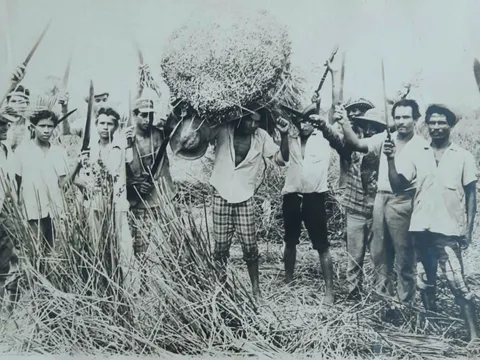
Colombia's cannabis story was written in the Sierra Nevada. In 1972 an anthropologist found highland peasants — many of them families displaced by La Violencia — growing cannabis as a cash crop below the Santa Marta massif: a pound fetched 100 to 300 pesos against 12.50 for a kilo of coffee, and wealthy buyers moved large quantities to the coast, often for export to the United States.[15] No local grower had yet been arrested — the police commissioner himself grew cannabis — though farmers knew American pressure had led to arrests elsewhere.[15] The highland crop fed an export trade to the United States while the plant stayed criminal at home.[15] A field study found marijuana farming in the Sierra Nevada in 1973.
Taking cannabis into or out of Colombia is a separate offence from possessing it, normally charged as smuggling or trafficking, with far heavier penalties. That holds almost everywhere, including between two places where cannabis is legal.
The rules that allow or tolerate small amounts inside Colombia do not cover the border, an airport or the post.
A prescription or medical card from another country is generally not recognised. Travellers who need a cannabis-based medicine should ask Colombia's embassy before travelling.[16]
General guidance that applies to almost every country, not a check of Colombia's customs rules.
Culture the atlas →
Did you know? all cases →
Colombia
Colombia lets adults grow up to 20 plants with no licence or registration — one of the most generous home-grow allowances anywhere — yet has no legal shops.
The full story →
Datasets not part of the score
What other organisations publish about Colombia, and where it stands among the countries each one covers. Each dataset has a page of its own, with a world map and every country's figure.
Use
UNODC · 2019
Cannabis use
2.68%of people aged 12–65
1.9% · 20032.27% · 20083.27% · 20132.68% · 201920032019 ages 12–65 · survey 2019 · 1,100,000 people · UNODC 2026
Source Survey ages and years vary, and some surveys include children. Rates are not age-standardised; do not compare countries directly.UNODC · 2005
Cannabis use at 15 and 16
8.36%in the past year
Higher than 47% of 49 countriesLowestHighest9.58% ever · 3.01% in the past month · 2005 · ages 15–16
WHO, Our World in Data · 2020
Alcohol drunk per person
4.24litres of pure alcohol a year
5.34 · 20005.34 · 20015.20 · 20025.14 · 20035.12 · 20045.23 · 20055.36 · 20065.38 · 20075.30 · 20085.13 · 20095.07 · 20105.06 · 20115.09 · 20125.06 · 20134.98 · 20145.02 · 20155.00 · 20165.01 · 20174.92 · 20184.92 · 20194.24 · 202020002020 Higher than 48% of 187 countriesLowestHighestper person aged 15 or over · 2020 · 5.34 in 2000 · 5.07 in 2010
Law
UNODC · 2024
Cannabis seized
452,834kg in 2024
258,221 · 2015193,078 · 2016239,421 · 2017264,444 · 2018376,127 · 2019534,559 · 2020490,984 · 2021391,069 · 2022421,167 · 2023452,834 · 202420152024 Higher than 96% of 163 countriesLess seizedMore seized452,834 kg of herb · 258,221 kg in 2015 · 534,559 kg in 2020
Society
OpenAlex · 2025
Research on cannabis
1.5papers per million people
0.0 · 19690.0 · 19800.0 · 19880.1 · 19890.0 · 19900.0 · 19910.0 · 19930.0 · 19940.0 · 19950.0 · 19960.1 · 19980.1 · 19990.1 · 20000.1 · 20010.1 · 20020.1 · 20030.1 · 20040.1 · 20050.1 · 20060.3 · 20070.3 · 20080.4 · 20090.3 · 20100.4 · 20110.4 · 20120.2 · 20130.4 · 20140.5 · 20150.5 · 20160.5 · 20170.4 · 20180.6 · 20190.8 · 20201.0 · 20211.2 · 20221.4 · 20231.3 · 20241.5 · 202519692025 Higher than 59% of 176 countriesLowestHighest78 papers in 2025 · 1 in 1990 · 18 in 2010
Cato and Fraser Institutes · 2023
Human Freedom Index
6.91of 10
5.97 · 20005.99 · 20016.02 · 20026.15 · 20036.39 · 20046.47 · 20056.52 · 20066.60 · 20076.62 · 20086.68 · 20096.72 · 20106.82 · 20116.77 · 20126.83 · 20136.92 · 20146.85 · 20156.96 · 20166.99 · 20176.98 · 20186.93 · 20196.69 · 20206.57 · 20216.90 · 20226.91 · 202320002023 Higher than 51% of 164 countriesLess freeFreerrank #81 of 165 · personal freedom 7.28 · economic freedom 6.38
V-Dem, Our World in Data · 2025
Civil liberties
0.77of 1 in 2025
0.34 · 19000.34 · 19010.34 · 19020.41 · 19030.44 · 19040.44 · 19050.44 · 19060.44 · 19070.44 · 19080.44 · 19090.47 · 19100.49 · 19110.49 · 19120.49 · 19130.49 · 19140.49 · 19150.49 · 19160.49 · 19170.49 · 19180.49 · 19190.49 · 19200.49 · 19210.49 · 19220.48 · 19230.47 · 19240.47 · 19250.47 · 19260.47 · 19270.47 · 19280.46 · 19290.49 · 19300.50 · 19310.51 · 19320.51 · 19330.51 · 19340.51 · 19350.53 · 19360.53 · 19370.53 · 19380.53 · 19390.53 · 19400.53 · 19410.52 · 19420.52 · 19430.52 · 19440.54 · 19450.41 · 19460.40 · 19470.28 · 19480.26 · 19490.26 · 19500.26 · 19510.26 · 19520.26 · 19530.29 · 19540.30 · 19550.30 · 19560.30 · 19570.44 · 19580.54 · 19590.54 · 19600.54 · 19610.54 · 19620.54 · 19630.54 · 19640.54 · 19650.54 · 19660.54 · 19670.54 · 19680.54 · 19690.54 · 19700.55 · 19710.55 · 19720.55 · 19730.52 · 19740.53 · 19750.53 · 19760.53 · 19770.43 · 19780.40 · 19790.40 · 19800.40 · 19810.42 · 19820.53 · 19830.55 · 19840.55 · 19850.53 · 19860.52 · 19870.51 · 19880.51 · 19890.52 · 19900.60 · 19910.62 · 19920.61 · 19930.61 · 19940.61 · 19950.61 · 19960.61 · 19970.61 · 19980.62 · 19990.62 · 20000.62 · 20010.60 · 20020.66 · 20030.67 · 20040.68 · 20050.68 · 20060.69 · 20070.69 · 20080.70 · 20090.75 · 20100.80 · 20110.80 · 20120.80 · 20130.81 · 20140.80 · 20150.81 · 20160.81 · 20170.76 · 20180.69 · 20190.69 · 20200.67 · 20210.79 · 20220.79 · 20230.74 · 20240.77 · 202519002025 Higher than 50% of 175 countriesFewer libertiesMore liberties0.47 in 1925 · 0.54 in 1961 · 0.52 in 1990
Our World in Data, World Bank · 2025
Population
53,425,635people in 2025
4,034,733 · 19004,944,811 · 19106,275,946 · 19207,946,343 · 19309,311,615 · 194011,766,991 · 195015,606,209 · 196020,811,790 · 197026,104,503 · 198032,440,064 · 199039,089,939 · 200044,777,325 · 201050,629,997 · 202053,425,635 · 202519002025 Higher than 86% of 196 countriesLowestHighest4,034,733 in 1900 · 11,766,991 in 1950 · 39,089,939 in 2000
CEPII
Former colonial rulers
Once ruled by Spain
World Bank · 2025
Government effectiveness
50of 100
52 · 199644 · 199843 · 200036 · 200242 · 200346 · 200445 · 200547 · 200648 · 200751 · 200849 · 200952 · 201054 · 201153 · 201254 · 201351 · 201452 · 201553 · 201652 · 201752 · 201853 · 201952 · 202052 · 202153 · 202252 · 202352 · 202450 · 202519962025 Higher than 44% of 195 countriesLowestHighestestimate -0.09 on a scale of −2.5 to 2.5 · 2025 · 43 in 2000 · 52 in 2015
Transparency International · 2024
Corruption Perceptions Index
39of 100
36 · 201236 · 201337 · 201437 · 201537 · 201637 · 201736 · 201837 · 201939 · 202039 · 202139 · 202240 · 202339 · 202420122024 Higher than 48% of 178 countriesLowestHighest0 highly corrupt, 100 very clean · 2024 · 37 in 2015 · 39 in 2020
Pew Research Center · 2020
Most common religion
Christians
the largest group · 2020
World Bank · 2025
Income per person
$18,779per person
9,999 · 19909,996 · 199110,196 · 199210,533 · 199310,928 · 199411,279 · 199511,303 · 199611,484 · 199711,344 · 199810,680 · 199910,813 · 200010,823 · 200110,925 · 200211,183 · 200311,608 · 200411,999 · 200512,637 · 200613,318 · 200713,591 · 200813,587 · 200914,037 · 201014,852 · 201115,279 · 201215,912 · 201316,480 · 201416,821 · 201517,003 · 201616,986 · 201717,104 · 201817,337 · 201915,861 · 202017,383 · 202118,459 · 202218,407 · 202318,482 · 202418,779 · 202519902025 Higher than 53% of 187 countriesLowestHighestat purchasing power parity, 2021 dollars · 2025 · $9,999 in 1990 · $14,037 in 2010
World Bank · 2024
Development indicators
79.3%use the internet
0% · 19900.1% · 19940.2% · 19950.3% · 19960.6% · 19971.1% · 19981.7% · 19992.2% · 20002.9% · 20014.6% · 20027.4% · 20039.1% · 200411% · 200515.3% · 200621.8% · 200725.6% · 200830% · 200936.5% · 201040.4% · 201149% · 201251.7% · 201352.6% · 201455.9% · 201558.1% · 201662.3% · 201764.1% · 201865% · 201969.8% · 202073% · 202172.8% · 202277.3% · 202379.3% · 202419902024 Higher than 48% of 195 countriesLowestHighest78.5% live in towns · 9.8% aged 65+ · life expectancy 77.9 · 2024 · 2.2% in 2000 · 36.5% in 2010
GDELT · 2025
Cannabis in the news
0.0042%of global news: cannabis articles from here
0.0048% · 20170.0042% · 20180.0029% · 20190.0023% · 20200.0021% · 20210.0026% · 20220.0043% · 20230.0031% · 20240.0042% · 202520172025 Higher than 92% of 147 countriesLowestHighest2025 average, 348 days · 0.0042% in 2018 · 0.0021% in 2021
Plant and market
OpenStreetMap · 2026
Cannabis shops on the map
8shops mapped
Higher than 59% of 59 countriesFewer shopsMore shops0.1 per million people · 2026
GBIF · 2026
Records of the cannabis plant
75dated records
1 · 19413 · 19526 · 19559 · 196812 · 196915 · 197117 · 197226 · 197327 · 197530 · 197739 · 198040 · 198141 · 198642 · 198943 · 199044 · 199645 · 199846 · 200147 · 200448 · 200750 · 201052 · 201553 · 201657 · 201960 · 202064 · 202169 · 202270 · 202372 · 202473 · 202575 · 202619412026 Higher than 72% of 128 countriesLowestHighest11 more without a date · 2 in 2026
ClinicalTrials.gov · 2026
Clinical trials of cannabis medicines
2studies so far
2 · 20192 · 20202 · 20212 · 20222 · 20232 · 20242 · 20252 · 202620192026 Higher than 14% of 50 countriesLowestHighest0 actual starts in 2026 · as of 2026–10–26 · 2 by 2020
Enforcement 1 report · the Cannabis Enforcement Tracker →
How the law above is applied: raids, seizures, fields destroyed, arrests and sentences, as recorded by the Cannabis Enforcement Tracker, our companion site.
- SeizurePolice seize 4.2 tonnes of marijuana hidden in a lime load in Huila
National Police found 4.2 tonnes of marijuana hidden among sacks of lime in a truck at the Patá toll booth near Neiva, Huila. One man was arrested.
History 26 of 26 checked against a source
Score and entries per decade
39 today, from 100 before its first recorded change
This country's score Entries that moved the score Context only
20262 entries0 score changes
Debate ✓
A Colombian bill would put adult-use cannabis in the constitution
On 20 July members of the House filed Proyecto de Acto Legislativo 017/2026, a constitutional amendment to Article 49. It would let adults use cannabis and put production, processing, distribution and sale under public licences, health controls and local taxes. The Chamber lists it as still in committee. The Supreme Court's July digest of congressional gazettes records it as Gazette 863 of 2026. It is a proposal.
Debate ✓ Article
A Colombian House committee backs a legal cannabis market
The First Committee of the House of Representatives approved in first debate a bill to regulate adult use: sales to adults through dispensaries, clubs of 10 to 350 members, up to 20 plants per adult at home, a 20% tax, and most cultivation licences reserved for peasant and ethnic growers. It was the ninth such bill since 2020; the earlier ones were all shelved. It still needed the full House and the Senate.
20251 entry0 score changes
20232 entries0 score changes
Debate ✓
Colombia's Senate sinks adult-use cannabis a second time
Six months after the first defeat, the Senate approved by 46 votes to 40 a motion by Senator Karina Espinosa to shelve the constitutional amendment regulating cannabis for adult use. The Conservatives, Centro Democrático, Cambio Radical and some Liberals voted to shelve it, and the proposal had to start again from the beginning.
Debate ✓
Colombia's Senate narrowly rejects a legal market
A constitutional amendment to allow regulated sales to adults had passed seven of its eight debates. It fell a few votes short in the last one. New versions have been introduced since and have also failed.
20211 entry0 score changes
20191 entry0 score changes
20181 entry0 score changes
20161 entry1 score change
20151 entry1 score change
20141 entry0 score changes
20121 entry0 score changes
20111 entry0 score changes
20091 entry0 score changes
20081 entry0 score changes
20021 entry0 score changes
19942 entries1 score change
International ✓
Colombia joins the 1988 UN convention against drug trafficking
Colombia ratified the United Nations Convention against Illicit Traffic in Narcotic Drugs and Psychotropic Substances of 1988 on 10 June 1994. Article 3 of the convention requires each party, subject to its constitutional principles, to make the possession, purchase and cultivation of drugs for personal consumption a criminal offence.
Easing ✓ Article
Colombia's Constitutional Court protects the personal dose
The court ruled that punishing an adult for carrying or using a personal dose, 20 g of cannabis, violates the right to free development of personality. The dose itself had been defined in a 1986 law that still punished it.
1130+19 points
19862 entries0 score changes
Other law ✓
Colombia clarifies that small quantities held for sale remain trafficking
Article 4 of Decree 3788 directed that drugs held for distribution or sale be punished under Article 33 of Law 30 even when the quantity did not exceed the personal-dose threshold. This implemented the statute's existing distinction between personal consumption and supply; it did not create a new cannabis quantity limit or exempt small sales. Article 60 made the decree effective on publication, recorded as 31 December 1986 in Official Gazette 37746.
Other law ✓
Colombia defines the personal dose
Law 30 defined the personal dose as up to 20 grams of marijuana or 5 grams of cannabis resin for one's own consumption, excluding any quantity held for distribution or sale. Article 51 originally imposed up to 30 days of arrest and a fine for a first personal-dose offence; repetition within twelve months brought one month to one year of arrest and a higher fine. It also provided compulsory treatment for medically established dependence. Article 101 made the law effective on sanction, 31 January 1986. The Constitutional Court's 1994 ruling later struck Article 51 while preserving the personal-dose definition.
19751 entry0 score changes
19731 entry0 score changes
19491 entry0 score changes
19461 entry0 score changes
19391 entry1 score change
19281 entry0 score changes
Sources hover a number in the text to see its source
- Cited
- 16
- Websites
- 14
- 1
- Last reviewed
- History checked
- 26/26
Most cited
- corteconstitucional.gov.co2
- cato.org1
- colombiareports.com1
- elpais.com.co1
- elplanteo.com1
- eltiempo.com1
All 17 sources
- Corte Constitucional de Colombia — Sentencia C-221/94archived
- Ministerio de Salud y Protección Social — Colombia Ley 30 de 1986 (PDF)archived
- LegalClarity — Is Marijuana Legal in Colombia? Laws for Locals & Tourists (8 August 2026)archived
- Cato Institute — Colombia should legalize adult marijuana use todayarchived
- Decreto 811 de 2021 (sustituye el Título 11 del Decreto 780 de 2016)Articles 2.8.11.1.3(7), 2.8.11.2.1.2 paragraph and 2.8.11.2.1.5: personal cultivation and no third-party transfersarchived
- Colombia Reports — Colombia decriminalizes marijuana cultivation up to 20 plantsarchived
- Corte Constitucional de Colombia — Sentencia C-253/19archived
- Secretaría del Senado — Colombia Ley 1787 de 2016archived
- El Planteo — Clubes de cannabis en Colombia: ¿cómo funcionan? (13 July 2026)archived
- El País (Cali) — Cali: un recorrido por la 'capital' de los clubes cannábicos (15 March 2026)archived
- Colombia Ministry of Justice — Cannabis for medicinal, scientific and industrial purposes¿Qué es cáñamo?: Decree 811/2021 below-1% definition remains applicable pending Law 2204/2022 implementing rules; cultivation licensingarchived
- El Tiempo — ¿Por qué Bogotá es el epicentro de la marihuana en Colombia? (12 May 2025)archived
- Ley 1696 de 2013 (Función Pública, Gestor Normativo)archived
- Radio Nacional de Colombia — Inpec reveló los delitos que más cometen los colombianos (21 May 2021)archived
- Cannabis and Cultural Groups in a Colombian MunicipioWilliam L. Partridge · In Cannabis and Culture, edited by Vera Rubin · Mouton · 1975 · pp. 153–161 · ISBN 90-279-7669-4
- International Narcotics Control Board — Travellers carrying medicines containing controlled substances