The story · written by opus-5.5,
In the 1840s the most advanced medical profession in Europe took hashish seriously as a drug. The man who made it respectable was a Paris psychiatrist who had first tried it in Cairo.
The traveller
Jacques-Joseph Moreau de Tours trained at the Salpêtrière under Esquirol, who in the mid-1830s sent him to accompany a wealthy patient on a long journey to the East. In Cairo a French doctor, Louis-Rémy Aubert-Roche, introduced him to hashish.
He recorded the experience closely. At the start, he wrote, “while preserving the most perfect consciousness of oneself, one feels as if carried away in a dream”. He felt he had “fallen asleep without ceasing being awake”.
The idea
Moreau belonged to the school that held insanity to be a disorder of the brain, treatable with medicine like any other. Hashish seemed to offer something no doctor had had before: a way to produce the symptoms of madness, in a sane person, for a few hours. A physician could study delirium from the inside.
Du Hachisch et de l’Aliénation Mentale appeared in the autumn of 1845, describing the intoxication as a “powerful and unique means of exploration” of mental illness.
His opponents, mostly Catholic physicians who saw insanity as a moral disorder, said hashish only made people irrational and violent, and wanted it prohibited throughout the French empire.
The reception
The book won an honourable mention from the Academy of Medicine in 1846. The American Journal of Insanity called the discovery of much importance to the civilised world. German psychiatrists discussed it at their congress in Kiel that September and reported trials of their own, and reviews appeared in Milan.
Between 1840 and 1860 dozens of French pharmacists and physicians staked careers on cannabis medicines. A dose of hashish tincture cost about as much as a bottle of cheap wine.
The flaw in it
Moreau’s science rested on an assumption he never examined. He took the effects of hashish to explain what he saw as the irrationality of the Orient, citing Sacy’s assassins and attributing Arab belief in genies to habitual use. The medicine and the prejudice came as a pair, and when the medicine fell out of use the prejudice remained.
The index lists the book for context. It is a reminder that cannabis was a medicine in France a century before the country banned it as one.[1]
In the cultural atlas
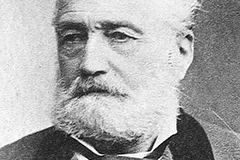
Listed for context. No score change is recorded for France here.
References
- Taming the Orient: France and the First Global Movement to Medicalize Cannabis, ca. 1800–1850David A. Guba Jr. · In Cannabis: Global Histories, edited by Lucas Richert, James H. Mills · MIT Press · 2021 · pp. 3–18 · ISBN 9780262366137
- Taming the Orient: France and the First Global Movement to Medicalize Cannabis, ca. 1800–1850David A. Guba Jr. · In Cannabis: Global Histories, edited by Lucas Richert, James H. Mills · MIT Press · 2021 · pp. 3, 14–17 · ISBN 9780262366137
Checked. The date and the event were compared with a source that was read.