Tanzania
8/100
#146 of 196 worldwide
#38 of 54 in Africa
Mainland Tanzania provides at least thirty years for unlawful cannabis cultivation. A separate small-personal-use tier allows a fine, prison or both; trafficking penalties can reach life imprisonment.
In short all countries →
- Can I carry it?NoIt is a crime
- Can I grow it?NoIt is a crime
- Can I buy it?NoThere is no legal source
- Can I use it in public?NoNot in public, and even at home the law does not protect it
- What if I'm caught?Fine or prisonUsually a fine; prison is possible
A rough guide read from the scores and the rules below, not legal advice. The details and the exceptions are in each segment: select an answer to jump to it.
Cannabis in Tanzania not part of the score · all 16 datasets ↓
Who uses it
About 1 in 500
people aged 15–64 (assumed) in Tanzania used cannabis in the past year: about 77,000 people.
- Past year
- 0.2%
- Africa median
- 3.1%
UNODC · survey 1999
Source Past-year cannabis use among people aged 15–64 (assumed). People who used cannabis in the past year, from a 1999 survey, applied to today's population aged 15–64. The population is approximate: the survey ages cut through an age group, or were not recorded and ages 15–64 are used. An earlier figure: UNODC's 2026 table has none for this country.Survey ages and years vary, and some surveys include children. Rates are not age-standardised; do not compare countries directly.
An earlier UNODC figure, as collected in Wikipedia's list of annual cannabis use by country. Population from the World Bank, aged 15–64. The whole dataset →
Use across Africa
27thhighest of 28 surveyed countries
- 🇹🇬 Togo1.0%
- 🇹🇩 Chad0.9%
- 🇩🇿 Algeria0.6%
- 🇹🇿 Tanzania0.2%
- 🇱🇾 Libya0.1%
Past-year use, latest survey of each. Survey years and ages differ. On the map →
Cannabis in figures
- Cannabis seized2,303,200kg in 2024 · 2024
- Cannabis shops on the map1shops mapped · 2026
- Research on cannabis0.1papers per million people · 2025
- Cannabis in the news0%of global news: cannabis articles from here · 2025
The dot: where it stands among the countries each dataset covers, lowest to highest. All datasets ↓
What they call it
- Bangi[1]Swahilicannabis; the Swahili word, linked to bhang and Indian Ocean exchange
Score breakdown 8/100 · how the scores are made
Neighbours
- 🇲🇼 Malawi11
- 🇲🇿 Mozambique11
- 🇧🇮 Burundi9
- 🇨🇩 DR Congo9
- 🇹🇿 Tanzania8
- 🇰🇪 Kenya6
- 🇷🇼 Rwanda6
- 🇺🇬 Uganda6
- 🇿🇲 Zambia3
The Act provides a separate penalty tier for small quantities proved to be for personal consumption, with the burden on the holder.[2] For the residual drug group, it allows a fine of at least 500,000 shillings, a three-year prison term, or both.[2] A 2022 appeal concerned a thirty-year cannabis-possession sentence, which was reversed because the evidence's chain of custody was not established.[3]
| Amount | What happens | Punishment | Fine |
| Small quantity proved for personal consumptionFine of at least 500,000 shillings, a three-year prison term, or both | CriminalPossession | Up to 3 years | At least TZS 500,000 |
Unlawful cultivation of prohibited plants carries at least thirty years in prison on the mainland.[2] In March 2022 the Court of Appeal upheld that sentence for a man linked to a field of 535 cannabis plants.[4]
| Amount | What happens | Punishment | Fine |
| Unlawful cultivation of prohibited plants (mainland)At least thirty years in prison; no fine tier stated | CriminalCultivation | At least 30 years | — |
Long sentences have been imposed for cannabis: the Court of Appeal upheld thirty years for cultivation in one 2022 case.[4] In another it overturned a thirty-year possession sentence because the prosecution had not established the chain of custody of the cannabis evidence.[3] The small-personal-use tier in the Act allows a fine, prison or both.[2]
Trafficking is defined to include giving, supplying, storing, possessing and distributing controlled drugs.[2] The revised Act sets at least thirty years for trafficking not more than 100 kg of cannabis, with larger amounts in the life-imprisonment tier.[2] These trafficking quantities are separate from the small-personal-use tier.[2]
| Amount | What happens | Punishment | Fine |
| Trafficking not more than 100 kg of cannabisAt least thirty years; larger amounts fall in the life-imprisonment tier | CriminalTrafficking | At least 30 years | — |
The Act's small-quantity and consumption rule allows a fine of at least 500,000 shillings, three years in prison, or both for drugs outside its specially listed group.[2] It also contains a separate offence concerning smoking, inhaling and other drug use.[2]
| Amount | What happens | Punishment | Fine |
| Small-quantity consumption outside the listed groupFine of at least 500,000 shillings, three years in prison, or both | CriminalConsumption | Up to 3 years | At least TZS 500,000 |
Context not part of the score · every country, by topic →
There is no legal recreational supply, and CBD is treated as cannabis — nothing is lawfully produced or sold.[2][5] Mainland law has a small-personal-use tier — a fine of at least 500,000 shillings, three years, or both — but the burden is on the holder to prove personal consumption, and trafficking penalties start at thirty years.[2] Long sentences have been imposed for cannabis, including thirty years for cultivation in a 2022 case.[4] The 2012 amendments made life imprisonment the penalty for possession and trafficking (2012 amendment).
No medical cannabis programme exists: the drug law punishes possession, cultivation and trafficking with no medical channel, and CBD is treated as cannabis.[1][5][2]
No cannabis clubs are known, and the law leaves no room for them: growing cannabis and supplying it to another person are both prohibited.[1][5]
On Mainland Tanzania, the amendment effective 2 October 2026 brings seeds, mature stalk and fibre into the cannabis definition. It also removes the drug-production-purpose limitation from the offence of possessing or supplying prohibited-plant seeds. Unauthorised seed possession and supply therefore fall under section 11, whose existing minimum sentence is thirty years. Cultivation remains prohibited. Zanzibar has a separate legal framework.[6][2][7]
No industrial-hemp exception exists: the October 2026 amendments bring mature stalk and fibre into the cannabis definition, and CBD is treated as cannabis.[6][5]
Mainland law prohibits unauthorised cannabis cultivation.[2] The drug-law amendments effective 2 October 2026 also broaden seed controls; the existing minimum cultivation sentence is thirty years.[6][7]
Figures reported by the government to the UN drugs office record 2,303,200 kg of herbal cannabis seized in 2024, against 1,757,560 kg in 2023.[8] The UN publishes them as kilogram equivalents, and countries count seizures differently, so the figures are not comparable across borders.[8] At home the drug authority reported a record 2,300 tonnes of all drugs seized in 2024, and keeps destroying farms: 3,007.5 hectares in a September–October 2024 crackdown alone.[9][10]
Mainland law provides no recreational retail permission for visitors.[2] Cannabis possession and supply fall within the drug-control offences, and the separate personal-use tier requires proof of personal consumption rather than sale or distribution.[2]
On the mainland, the Road Traffic Act's 2023 revised edition section 53 prohibits driving, attempting to drive or being in charge on a road or public place while drugs make proper control impossible.[11] Section 75(2)(b) provides TSh15,000–50,000 or two–five years in prison; section 33(1)(a) requires licence cancellation and disqualification for at least three years on a first section 53 conviction.[11] These are the published 2023 provisions, not a verified 2026 ticket tariff.[11] Zanzibar has a separate Road Transport Act: section 123(1)(a) also uses impaired control, and its published 2003 text provides a first-offence minimum fine equivalent to US$75 in shillings or at least six months in prison, or both.[12] Repeat convictions normally entail at least fifteen months' disqualification, subject to the court's special-reasons exception.[12] Later Zanzibar amendments, current testing procedures and a numeric THC cutoff were not verified; alcohol thresholds must not be applied to cannabis.[12]
Between June and September 2023 the drug authority arrested at least 69 suspects for trafficking cannabis across seven regions.[13] A September–October 2024 crackdown detained 17 suspects connected with cannabis cultivation and trafficking.[10]
A conviction is a criminal record.[1] Owners or occupiers who let premises be used for drugs face life imprisonment under the provisions the 2012 amendments introduced.[2]
The Swahili word for the plant is bangi, tied to bhang and the Indian Ocean exchange rather than any single voyage.[1] Smoking was already established on the coast by the 19th century, carried inland by Nyamwezi traders, before colonial Tanganyika consolidated its drug law in the Dangerous Drugs Ordinance of 1935.[1] The 2012 amendments then made life imprisonment the penalty for possession and trafficking (2012 amendment),[2] and the 2026 seed controls closed the last definitional gap.[6] Nineteenth-century travellers already suspected the loud coughing after a pipe was put on — the atlas keeps those accounts in the smoker's cough.[1]
Taking cannabis into or out of Tanzania is a separate offence from possessing it, normally charged as smuggling or trafficking, with far heavier penalties. That holds almost everywhere, including between two places where cannabis is legal.
A prescription or medical card from another country is generally not recognised. Travellers who need a cannabis-based medicine should ask Tanzania's embassy before travelling.[14]
General guidance that applies to almost every country, not a check of Tanzania's customs rules.
Culture the atlas →
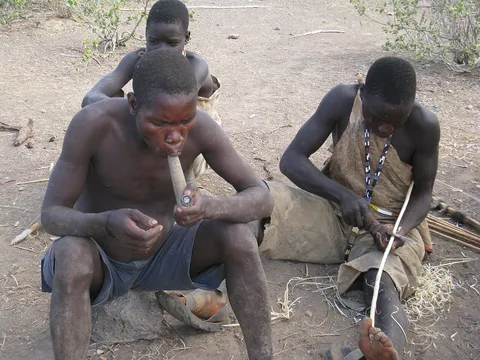 LanguageBangiThe Swahili word for cannabis, linked to bhang and Indian Ocean exchange. Its immediate source and route inland are less certain than a simple borrowing from Hindi suggests.
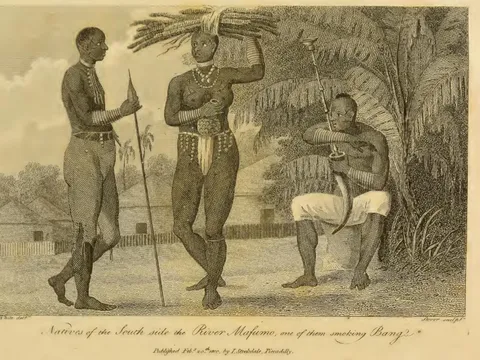 TraditionsThe smoker's coughIn nineteenth-century Africa the cough that followed a pipe of cannabis was often a performance. Travellers called it affected; Zulu smokers sang praises between coughs, and a lake island was said to have been found by hearing one.
Datasets not part of the score
What other organisations publish about Tanzania, and where it stands among the countries each one covers. Each dataset has a page of its own, with a world map and every country's figure.
Use
UNODC · 1999
Cannabis use
0.2%of people aged 15–64 (assumed)
survey 1999 · 77,000 people · earlier figure, not in UNODC 2026
Source Survey ages and years vary, and some surveys include children. Rates are not age-standardised; do not compare countries directly.WHO, Our World in Data · 2020
Alcohol drunk per person
10.95litres of pure alcohol a year
11.43 · 200011.43 · 200110.30 · 200210.07 · 200310.34 · 200411.53 · 200511.95 · 200611.63 · 200711.68 · 200811.51 · 200911.92 · 201011.80 · 201111.59 · 201211.62 · 201311.70 · 201411.65 · 201511.21 · 201610.65 · 201710.36 · 201810.36 · 201910.95 · 202020002020 Higher than 93% of 187 countriesLowestHighestper person aged 15 or over · 2020 · 11.43 in 2000 · 11.92 in 2010
Law
UNODC · 2024
Cannabis seized
2,303,200kg in 2024
68,230 · 201652,186 · 201710,930 · 202022,740 · 202120,580 · 20221,757,560 · 20232,303,200 · 202420162024 Higher than 99% of 163 countriesLess seizedMore seized2,303,200 kg of herb · 10,930 kg in 2020
Society
OpenAlex · 2025
Research on cannabis
0.1papers per million people
0.0 · 19980.0 · 20050.0 · 20060.0 · 20070.0 · 20080.0 · 20090.0 · 20100.0 · 20110.0 · 20120.0 · 20140.0 · 20170.0 · 20180.0 · 20190.0 · 20210.1 · 20220.1 · 20230.1 · 20240.1 · 202519982025 Higher than 11% of 176 countriesLowestHighest5 papers in 2025 · 1 in 2010
Cato and Fraser Institutes · 2023
Human Freedom Index
6.53of 10
6.65 · 20006.66 · 20016.67 · 20026.68 · 20036.63 · 20046.51 · 20056.52 · 20066.56 · 20076.51 · 20086.53 · 20096.73 · 20106.88 · 20116.83 · 20126.91 · 20136.75 · 20146.69 · 20156.62 · 20166.39 · 20176.36 · 20186.27 · 20196.24 · 20206.15 · 20216.30 · 20226.53 · 202320002023 Higher than 40% of 164 countriesLess freeFreerrank #100 of 165 · personal freedom 6.71 · economic freedom 6.27
V-Dem, Our World in Data · 2025
Civil liberties
0.67of 1 in 2025
0.31 · 19140.31 · 19150.31 · 19160.30 · 19170.30 · 19180.34 · 19190.34 · 19200.34 · 19210.34 · 19220.34 · 19230.34 · 19240.34 · 19250.34 · 19260.34 · 19270.34 · 19280.34 · 19290.34 · 19300.34 · 19310.34 · 19320.34 · 19330.34 · 19340.34 · 19350.34 · 19360.34 · 19370.34 · 19380.34 · 19390.34 · 19400.34 · 19410.34 · 19420.34 · 19430.34 · 19440.34 · 19450.34 · 19460.34 · 19470.34 · 19480.34 · 19490.34 · 19500.34 · 19510.34 · 19520.34 · 19530.32 · 19540.33 · 19550.33 · 19560.33 · 19570.35 · 19580.35 · 19590.36 · 19600.65 · 19610.64 · 19620.63 · 19630.63 · 19640.61 · 19650.59 · 19660.59 · 19670.58 · 19680.58 · 19690.58 · 19700.58 · 19710.56 · 19720.58 · 19730.58 · 19740.58 · 19750.58 · 19760.59 · 19770.59 · 19780.59 · 19790.59 · 19800.59 · 19810.60 · 19820.60 · 19830.60 · 19840.62 · 19850.64 · 19860.65 · 19870.65 · 19880.65 · 19890.66 · 19900.69 · 19910.75 · 19920.75 · 19930.75 · 19940.77 · 19950.77 · 19960.77 · 19970.77 · 19980.77 · 19990.77 · 20000.77 · 20010.77 · 20020.77 · 20030.77 · 20040.76 · 20050.76 · 20060.76 · 20070.76 · 20080.76 · 20090.76 · 20100.76 · 20110.76 · 20120.75 · 20130.74 · 20140.74 · 20150.71 · 20160.70 · 20170.68 · 20180.66 · 20190.64 · 20200.68 · 20210.75 · 20220.78 · 20230.78 · 20240.67 · 202519142025 Higher than 41% of 175 countriesFewer libertiesMore liberties0.34 in 1925 · 0.65 in 1961 · 0.66 in 1990
Our World in Data, World Bank · 2025
Population
70,545,865people in 2025
4,975,342 · 19004,773,506 · 19104,800,744 · 19205,519,397 · 19306,361,710 · 19407,625,152 · 19509,901,422 · 196013,492,674 · 197019,189,769 · 198026,110,210 · 199034,260,142 · 200044,758,491 · 201060,972,803 · 202070,545,865 · 202519002025 Higher than 89% of 196 countriesLowestHighest4,975,342 in 1900 · 7,625,152 in 1950 · 34,260,142 in 2000
CEPII
Former colonial rulers
Once ruled by United Kingdom
World Bank · 2025
Government effectiveness
47of 100
26 · 199634 · 199834 · 200036 · 200236 · 200338 · 200442 · 200544 · 200644 · 200743 · 200844 · 200945 · 201044 · 201142 · 201243 · 201344 · 201446 · 201547 · 201647 · 201744 · 201843 · 201943 · 202044 · 202145 · 202245 · 202347 · 202447 · 202519962025 Higher than 37% of 195 countriesLowestHighestestimate -0.26 on a scale of −2.5 to 2.5 · 2025 · 34 in 2000 · 46 in 2015
Transparency International · 2024
Corruption Perceptions Index
41of 100
35 · 201233 · 201331 · 201430 · 201532 · 201636 · 201736 · 201837 · 201938 · 202039 · 202138 · 202240 · 202341 · 202420122024 Higher than 52% of 178 countriesLowestHighest0 highly corrupt, 100 very clean · 2024 · 30 in 2015 · 38 in 2020
Pew Research Center · 2020
Most common religion
Christians
the largest group · 2020
World Bank · 2025
Income per person
$3,821per person
1,794 · 19901,786 · 19911,752 · 19921,718 · 19931,680 · 19941,686 · 19951,731 · 19961,756 · 19971,774 · 19981,811 · 19991,840 · 20001,900 · 20011,983 · 20022,060 · 20032,155 · 20042,253 · 20052,334 · 20062,424 · 20072,493 · 20082,561 · 20092,655 · 20102,780 · 20112,822 · 20122,925 · 20133,028 · 20143,111 · 20153,214 · 20163,318 · 20173,393 · 20183,485 · 20193,450 · 20203,493 · 20213,547 · 20223,621 · 20233,713 · 20243,821 · 202519902025 Higher than 14% of 187 countriesLowestHighestat purchasing power parity, 2021 dollars · 2025 · $1,794 in 1990 · $2,655 in 2010
World Bank · 2024
Development indicators
31.2%use the internet
0% · 19900% · 19960% · 19970% · 19980.1% · 19990.1% · 20000.2% · 20010.2% · 20020.7% · 20030.9% · 20041.1% · 20051.3% · 20061.6% · 20071.9% · 20082.4% · 20092.9% · 20103.2% · 20114% · 20124.4% · 20137% · 201410% · 201513.5% · 201614.5% · 201715.5% · 201816.6% · 201919.5% · 202022.9% · 202126.9% · 202228.4% · 202331.2% · 202419902024 Higher than 13% of 195 countriesLowestHighest36.2% live in towns · 3% aged 65+ · life expectancy 67.2 · higher education 4% · 2024 · 0.1% in 2000 · 2.9% in 2010
GDELT · 2025
Cannabis in the news
0%of global news: cannabis articles from here
0.0001% · 20170.0001% · 20180.0001% · 20190% · 20200% · 20210% · 20220% · 20230% · 20240% · 202520172025 Higher than 0% of 147 countriesLowestHighest2025 average, 348 days · 0.0001% in 2018 · 0% in 2021
Plant and market
OpenStreetMap · 2026
Cannabis shops on the map
1shops mapped
Higher than 0% of 59 countriesFewer shopsMore shops0.0 per million people · 2026
GBIF · 2022
Records of the cannabis plant
38dated records
1 · 18672 · 18903 · 18978 · 19119 · 193210 · 193611 · 195213 · 195316 · 195417 · 196118 · 196619 · 197320 · 198121 · 198224 · 198725 · 198926 · 199227 · 199329 · 200430 · 200532 · 200835 · 201136 · 201238 · 202218672022 Higher than 65% of 128 countriesLowestHighest0 more without a date · 2 in 2022
Enforcement 1 report · the Cannabis Enforcement Tracker →
How the law above is applied: raids, seizures, fields destroyed, arrests and sentences, as recorded by the Cannabis Enforcement Tracker, our companion site.
- EradicationTanzania upholds thirty years for growing cannabis but drops a possession count
Tanzania's Court of Appeal upheld Hamis Muhibu Abdallah's thirty-year sentence for cultivating cannabis after police found 535 plants on a farm.[@1] It quashed a separate possession conviction because the uprooted…
History 19 of 19 checked against a source
Score and entries per decade
8 today, from 100 before its first recorded change
This country's score Entries that moved the score Context only
20262 entries0 score changes
Tightening ✓ Article
Tanzania extends its cannabis prohibition to seeds
Mainland Tanzania brought seeds into the cannabis definition and removed the drug-production-purpose condition from the offence of possessing or supplying prohibited-plant seeds. The amendment operates within section 11’s existing minimum thirty-year sentence. The Attorney General’s registry records commencement on 2 October.
Debate ✓ Article
Tanzania moves to make holding cannabis seeds a crime
The Attorney General presented amendments widening the cannabis definition and the offence of holding or supplying prohibited-plant seeds. Parliament adopted the measure, and the final law commenced on 2 October 2026. The later commencement entry records the enacted seed controls.
20221 entry0 score changes
20211 entry0 score changes
20191 entry0 score changes
20172 entries0 score changes
Other law ✓ Article
Tanzania splits cannabis trafficking penalties at fifty kilograms
Tanzania introduced thirty years in prison for cannabis trafficking involving fifty kilograms or less, while larger quantities remained in the life-imprisonment tier. The amendment added possession and production to a trafficking definition that already covered giving and storing drugs, and sent lower-quantity cases to subordinate courts. It also rewrote the treatment alternative for certain drug-use convictions, requiring consent, a medical report and the court's assessment.
Debate ✓
Tanzania proposes thirty years for trafficking up to fifty kilos of cannabis
The government proposed a thirty-year trafficking tier for fifty kilograms or less of cannabis or khat, alongside life imprisonment above that amount. The bill also proposed adding possession to the existing trafficking definition and a medically assessed treatment route for certain people convicted of drug use. Parliament enacted the amendment later that year, with publication on 1 December.
20161 entry0 score changes
20151 entry1 score change
20121 entry0 score changes
19991 entry0 score changes
19962 entries0 score changes
International ✓
Tanzania joins the 1988 UN convention against drug trafficking
Tanzania ratified the United Nations Convention against Illicit Traffic in Narcotic Drugs and Psychotropic Substances of 1988 on 17 April 1996. Article 3 of the convention requires each party, subject to its constitutional principles, to make the possession, purchase and cultivation of drugs for personal consumption a criminal offence.
Tightening ✓ Article
Tanzania replaces colonial drug laws and separates small personal-use offences
Tanzania's new drug law prohibited unauthorised cannabis growing, possession, supply and use, with a separate tier for small amounts proved to be for personal consumption. Its original text provided a 200,000-shilling fine, seven years in prison, or both for that cannabis tier, while the main growing and supply offences could bring life imprisonment or a much larger fine. The law replaced the colonial noxious-plants and dangerous-drugs ordinances, took effect on 1 January 1996 and was amended in 2012 before its replacement in 2015.
19761 entry0 score changes
19351 entry0 score changes
19261 entry1 score change
19241 entry1 score change
18591 entry0 score changes
17221 entry0 score changes
Sources hover a number in the text to see its source
- Cited
- 14
- Websites
- 12
- Last reviewed
- History checked
- 19/19
Most cited
- elibrary.osg.go.tz2
- oagmis.oag.go.tz2
- africannewsagency.com1
- data.unodc.org1
- en.wikipedia.org1
- incb.org1
All 19 sources
- Wikipedia — Cannabis in Tanzaniaarchived
- Drug Control and Enforcement Act, Chapter 95, revised edition 2023Office of the Attorney General, Tanzania · Government Printer, Dodoma · 2025 · Sections 2, 11, 15–16, 18–19 and treatment provisions; Mainland Tanzania; includes amendments through 2022archived
- Agnetha Sebastian v Republic, Criminal Appeal 389 of 2020, [2022] TZCA 412Court of Appeal of Tanzania · 2022 · 11 July 2022; original judgment pp. 1–4 and 8–13; conviction reversed over chain-of-custody gap; reproduced by SheriaHubarchived
- Hamis Muhibu Abdallah v Republic, Criminal Appeal 288 of 2021, [2022] TZCA 142Court of Appeal of Tanzania · 2022 · Delivered 25 March 2022; pp. 1–4 and 14–17; cultivation conviction upheld, possession count quashedarchived
- Ultimate Kilimanjaro — Is cannabis or CBD legal in Tanzania?archived
- Tanzania — Written Laws (Miscellaneous Amendments) Act 6 of 2026Part VIII, sections 41–52, especially 42–43; Gazette 2 October 2026; assent dated 19 September 2026; read with Cap. 95 section 11.archived
- Tanzania Office of the Attorney General — Act 6 of 2026 registryRecords enactment 1 September and publication/commencement 2 October 2026; signed Act gives assent as 19 September.archived
- UNODC Data Portal — Drug seizures, reported seizures in kilogram equivalents (World Drug Report data)archived
- The Citizen — DCEA seizes record-breaking 2,300 tonnes of drugs in 2024 (10 January 2025)archived
- Xinhua via African News Agency — Tanzanian authorities destroy over 3,000 hectares of cannabis (11 October 2024)archived
- Tanzania Office of the Attorney General / Solicitor General — Road Traffic Act, Chapter 168, revised edition 2023Sections 33(1)(a), 53 and 75(2)(b); Government Printer edition published in 2025. Earlier editions number the drug-driving offence section 44.archived
- Zanzibar House of Representatives — Road Transport Act 7 of 2003, published textSection 123(1)–(7), printed pages 81–82 (PDF pages 93–94), read visually; later amendments and current monetary tariffs remain unverified.archived
- The Legitimate — Over 60 suspects arrested in Tanzania in 3 months on charges of trafficking cannabis (15 October 2023)archived
- International Narcotics Control Board — Travellers carrying medicines containing controlled substances
Also consulted
- Tanzania — Drug Control and Enforcement (Amendment) Act, 2017, bill as published on 30 October 2017 (PDF)archived
- Tanzania Daily News via AllAfrica — Tanzanian proposes amendments to the Drugs Control and Enforcement Act (1 September 2026)archived
- Drug Control and Enforcement Act, Chapter 95, section 2 (Tanzania Legal Information Institute)archived
- allAfrica — Tanzania proposes amendments to the Drugs Control and Enforcement Act (2026)archived
- Drug Control and Enforcement (General) Regulations, 2016, G.N. 173United Republic of Tanzania · 2016 · Published 13 May 2016; regulation 3, original Gazette PDF pp. 3–4archived