Malawi
11/100
#89 of 196 worldwide
#11 of 54 in Africa
The 2020 Cannabis Regulation Act legalised cultivation for medical and industrial use, including industrial hemp at up to 1% THC, under a licensing authority. Recreational use of the famous 'Malawi Gold' remains illegal.
In short all countries →
- Can I carry it?NoIt is a crime
- Can I grow it?NoIt is a crime
- Can I buy it?NoNo patient or adult-use purchase route verified
- Can I use it in public?NoNot in public, and even at home the law does not protect it
- What if I'm caught?Fine or prisonUsually a fine; prison is possible
A rough guide read from the scores and the rules below, not legal advice. The details and the exceptions are in each segment: select an answer to jump to it.
Cannabis in Malawi not part of the score · all 15 datasets ↓
Who uses it
Perhaps 1 in 33
people aged 15–64 (assumed) in Malawi used cannabis in the past year: about 390,000 people.
- Past year
- 3.1%
- Africa median
- 3.1%
This site’s estimate: there is no national survey.
Source Past-year cannabis use among people aged 15–64 (assumed). This site's figure: there is no national survey, so the median rate of surveyed countries in Africa is applied to people aged 15–64.Survey ages and years vary, and some surveys include children. Rates are not age-standardised; do not compare countries directly.
A median computed on this site from surveyed countries in Africa, using UNODC World Drug Report 2026 figures. Population from the World Bank, aged 15–64. The whole dataset →
Cannabis in figures
- Cannabis seized703kg in 2024 · 2024
- Cannabis shops on the map3shops mapped · 2026
- Research on cannabis0.1papers per million people · 2025
The dot: where it stands among the countries each dataset covers, lowest to highest. All datasets ↓
What they call it
- Chamba[1]Yaocannabis; the Yao word for Malawi's local sativa, Malawi Gold
Score breakdown 11/100 · how the scores are made
Recreational possession of chamba is a criminal offence. Under the Dangerous Drugs Act (Cap. 35:02), acting in contravention — including unlicensed possession under Regulation 4(a) of the Dangerous Drugs Regulations — draws a fine of K500,000 and up to life imprisonment, as amended in 1995.[2] Parliament confirmed in March 2024 that being found with chamba without a licence remains an offence and that the amendment "does not legalise smoking".[3] Courts impose well below the maximum in practice: eight years' hard labour for 134 kg was sent for High Court review over excess and fair-trial compliance.[4]
| Amount | What happens | Punishment | Fine |
| Unlicensed possession (Regulation 4(a), DDA s19(1))Maximum of life imprisonment | CriminalPossession | Life imprisonment possible | Up to MWK 500,000 |
Growing without a Cannabis Regulatory Authority licence is a crime under two regimes. The 2020 Act punishes anyone who cultivates, propagates, produces, processes, stores, distributes or uses cannabis in contravention with a K50 million fine and 25 years in prison — about US$70,000 at passage, according to AP reporting.[5][6] Cultivation is separately an offence under Regulation 6 of the Dangerous Drugs Regulations as read with section 19 of the Dangerous Drugs Act.[2] Police still uproot unlicensed gardens: in May 2024 Jenda police arrested two men growing 350 and 100 plants after they failed to produce permits.[7]
| Amount | What happens | Punishment | Fine |
| Unlicensed cultivation and related acts (2020 Act s50(1))About US$70,000 at 2020 passage (AP) | CriminalUnlicensed cultivation | Up to 25 years | Up to MWK 50,000,000 |
| Unlicensed cultivation (Dangerous Drugs Regulations reg 6, DDA s19(1))Maximum of life imprisonment | CriminalUnlicensed cultivation | Life imprisonment possible | Up to MWK 500,000 |
Police enforce actively, from roadblocks to tip-off raids: 30 bags (100 kg) seized at a Senzani checkpoint in October 2025,[8] 15 kg found in a Lilongwe bedroom in February 2026,[9] and two unlicensed growers arrested in Mzimba in May 2024.[7] Officers may arrest without warrant anyone reasonably suspected of an offence against the Dangerous Drugs Act.[2] Sentences can be severe — eight years' hard labour for a 17-year-old with 134 kg — but the High Court reviews such cases for excess and fair-trial compliance.[4]
Supply is punished as heavily as growing: distributing cannabis in contravention of the 2020 Act draws the same K50 million fine and 25 years.[5] Seizures show an export-scale trade: police recorded 952 trafficking cases and 36.6 tonnes seized in 1999 alone,[10] and road interceptions continue — 100 kg stopped in Ntcheu in October 2025[8] after 30-bag loads were already moving by vehicle. The crop's fame travels under its own name: Malawi Gold.
No legal source for adult use: licensing covers medicinal, industrial and scientific production only, and parliament has not decriminalised recreational use.[11]
Context not part of the score · every country, by topic →
Recreational cannabis is fully illegal: the licensing scheme covers medicinal, industrial and scientific production only, and parliament "has not decriminalized it for recreational use".[11] What is illegal is famous — Malawi Gold, the local sativa, draws cannabis tourists.[11] Parliament's March 2024 debate turned on the word chamba itself: the amendment regulated "a locally produced variety", while the Leader of the House stressed that growing it without a licence, or being found with it, stays an offence.[3] Its names are traced in chamba.
The Act provides for medicinal cannabis as approved final products — processed flowers, extracts, resin, crude oil, distillates and isolates — with qualified patients tracked through a registry and caregivers for minors and the critically ill.[5] Malawian clinicians argue the country should exploit the plant's medical and economic potential, including CBD-based therapies.[12] Licensed production so far is export- and research-oriented, and no patient-facing dispensing system is documented in the sources read.[13][14]
No cannabis clubs are known, and the law leaves no room for them: growing cannabis and supplying it to another person are both prohibited.[5][2]
The Cannabis Regulation Act 2020 puts cultivating, propagating, supplying, possessing and selling cannabis under licences from the Cannabis Regulatory Authority, and import or export under a ministerial permit.[5] Only seed that has been crushed or processed so it cannot germinate falls outside the controlled plant, so viable seed and planting material are lawful only within the licensed medicinal and hemp schemes.[5]
Industrial hemp is a licensed crop, defined as cannabis plant material with no more than 1% delta-9 THC, or another ceiling the Minister gazettes.[5] The Act licenses open-field hemp cultivation subject to security conditions — fencing or armed guards, intrusion alarms, monthly inspections, product bar-coding and distance from schools and markets.[5] First licences went out in 2021, 86 to 35 companies and cooperatives,[15] and licensed production is geared to processing and export as tobacco earnings fall.[13] Early results disappointed: a Mchinji cooperative leader said industrial hemp took long to find any buyer, with imported seed expensive, while high-THC cannabis had buyers on the ground — the gap the 2024 amendment addressed.[16]
The Cannabis Regulation Act 2020 created a Cannabis Regulatory Authority that licenses cultivation, processing, storage, export and research for medicinal, industrial and scientific purposes — part of a drive to replace tobacco as an export crop.[5][6] In April 2021 the Authority had issued 86 licences to 35 companies and cooperatives for industrial hemp production.[15] A March 2024 amendment brought the local variety — chamba — into the licensed system.[3] By late 2025 the Authority was issuing cultivation, processing and export licences as tobacco earnings declined.[13]
Police recorded 952 trafficking cases and seized 36.6 tonnes in 1999 alone.[10] The trade runs on in bulk: 100 kg stopped at a Senzani checkpoint in October 2025,[8] and 15 kg found in a Lilongwe bedroom in February 2026.[9] Destructions continued at scale: over three tonnes seized between September 2024 and August 2025 were burned at Nkhatabay in November 2025 on a magistrate's order,[17] and over five tonnes seized from unlawful possessors were torched in Salima in January 2026, unclaimed after six months as the law requires.[18] Growing and packing traditions — remote hillside plots, women cultivating and men selling, flowering tops bound in leaf-wrapped cobs — are described in chamba.
There is no legal recreational supply for anyone: possession without a licence is a criminal offence under the Dangerous Drugs Act, and parliament confirmed in 2024 that the law does not legalise smoking.[2][3] Medical visitors have no route either — no patient-access framework operates, medical cannabis is not available domestically or to tourists, and importing cannabis products, even with a prescription, remains legally risky and is not officially permitted.[14] Do not buy on the street: street sales are illegal.[14]
Road Traffic Act section 128 prohibits driving on a public road under the influence of a drug having a narcotic effect.[19] It also covers occupying the driver's seat with the engine running and sitting beside a learner as the licensed supervisor.[19] Drug-analysis evidence is admissible; police may require blood or urine samples, and refusal can lead to arrest.[19] The statutory text provides up to three years' imprisonment, or a fine or both; injury or death raises the prison ceiling to five years.[19] Section 60 requires licence and permit suspension of at least six months for a first offence, one year for a second and five years for a third or later offence.[19] The numerical concentration rule is for alcohol, not THC.[19] The source's monetary fine amounts were not verified against subsequent revisions and are not presented as current ticket tariffs.
Arrests run from street level to bulk: a 62-year-old woman held with 15 kg in Lilongwe in February 2026,[9] two growers with 350 and 100 plants in Mzimba in May 2024,[7] and 100 kg seized at Senzani in October 2025.[8] Punishment can be heavy — eight years' hard labour imposed on an unrepresented 17-year-old for 134 kg in June 2022 — but the High Court in Blantyre took the case up for review the next month over fair-trial and child-justice concerns.[4]
A conviction is a criminal record. Forfeited cannabis is burned or destroyed in front of a police officer of sergeant rank or above.[2] Unlicensed possession carries up to life imprisonment on the books,[2] and unlicensed growing or dealing up to 25 years plus a K50 million fine under the 2020 Act.[5]
Cannabis is chamba in Malawi, and the word travelled with the crop's fame: Malawi Gold, the local sativa sold in hard leaf-wrapped cobs. Duvall documents a deep vocabulary — pre-1915 Chichewa could discuss several cannabis varieties including one grown for oilseed, and Yao speakers gave the word chamba — and places the "chamba heartland" among Chichewa speakers in a 1906 account of smokers taking hemp "instead of food and drink" when tired.[1] The names are traced in chamba.[1] Duvall describes earth-pipe smoking stretching "from the Cape to the Congo" into the 1900s — a pipe of shaped earth that left nothing for police to find, and was made for that reason under prohibition; its use among the Ngoni, who moved north into today's Malawi, is described in the earth pipe.[1] A pre-1922 oral history recorded at Lake Malawi tells of an island discovered by "hearing the cough of a man who was smoking hemp," the performance cough described in the smoker's cough.[1] Malawi's Rastafari community, about 15,000 people, uses cannabis for spiritual and medicinal purposes;[16] its courtroom victories so far concern religious expression rather than the herb — in January 2020 the High Court ordered the country's 7,000-odd government schools to admit Rastafari children with dreadlocks.[20]
Taking cannabis into or out of Malawi is a separate offence from possessing it, normally charged as smuggling or trafficking, with far heavier penalties. That holds almost everywhere, including between two places where cannabis is legal.
A prescription or medical card from another country is generally not recognised. Travellers who need a cannabis-based medicine should ask Malawi's embassy before travelling.[21]
General guidance that applies to almost every country, not a check of Malawi's customs rules.
Culture the atlas →
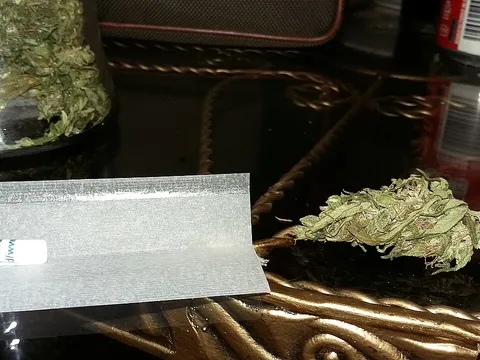 LanguageChambaMalawi's word for cannabis, one of the country's three famous C's along with its fish and its tea.
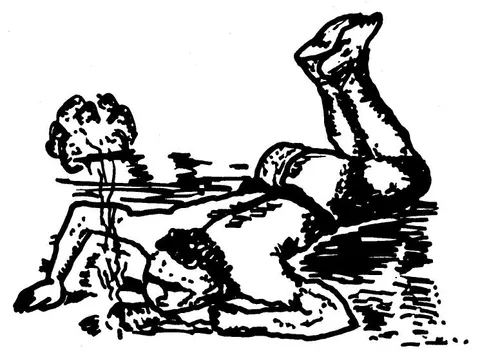 TraditionsThe earth pipeAcross southern and central Africa people smoked cannabis through a pipe made of nothing but soil, moulded on the surface or dug into the ground, often drawn on lying flat. Under prohibition, it left little durable evidence for police to find.
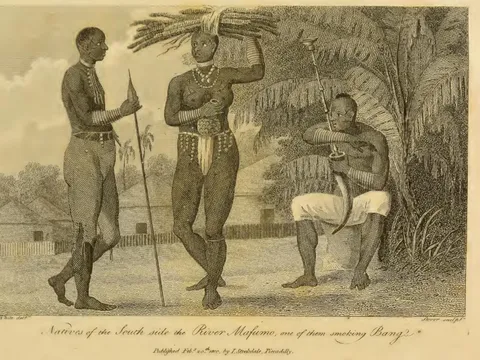 TraditionsThe smoker's coughIn nineteenth-century Africa the cough that followed a pipe of cannabis was often a performance. Travellers called it affected; Zulu smokers sang praises between coughs, and a lake island was said to have been found by hearing one.
Did you know? all cases →
Words · Malawi
Malawi has three famous C's: its fish, its tea and its chamba, the country's word for cannabis.
Read the entry →
Datasets not part of the score
What other organisations publish about Malawi, and where it stands among the countries each one covers. Each dataset has a page of its own, with a world map and every country's figure.
Use
UNODC
Cannabis use
3.07%of people aged 15–64 (assumed)
390,000 people · computed here: the median of surveyed countries in the region, or the figure of the country a territory is part of
Source Survey ages and years vary, and some surveys include children. Rates are not age-standardised; do not compare countries directly.WHO, Our World in Data · 2020
Alcohol drunk per person
3.61litres of pure alcohol a year
3.00 · 20003.00 · 20012.93 · 20022.90 · 20032.89 · 20043.13 · 20053.37 · 20063.55 · 20073.44 · 20083.46 · 20093.57 · 20103.71 · 20113.71 · 20123.68 · 20133.58 · 20143.37 · 20153.19 · 20163.13 · 20173.24 · 20183.24 · 20193.61 · 202020002020 Higher than 42% of 187 countriesLowestHighestper person aged 15 or over · 2020 · 3.00 in 2000 · 3.57 in 2010
Law
UNODC · 2024
Cannabis seized
703kg in 2024
142,098 · 202036,150 · 2021137,615 · 2022918,523 · 2023703 · 202420202024 Higher than 32% of 163 countriesLess seizedMore seized703 kg of herb · 142,098 kg in 2020
Society
OpenAlex · 2025
Research on cannabis
0.1papers per million people
0.0 · 19940.0 · 19980.0 · 20080.1 · 20090.0 · 20110.1 · 20130.1 · 20140.0 · 20150.1 · 20180.0 · 20190.0 · 20200.0 · 20220.9 · 20240.1 · 202519942025 Higher than 14% of 176 countriesLowestHighest2 papers in 2025
Cato and Fraser Institutes · 2023
Human Freedom Index
6.63of 10
6.10 · 20006.21 · 20016.38 · 20026.39 · 20036.35 · 20046.45 · 20056.46 · 20066.64 · 20076.72 · 20086.82 · 20096.80 · 20106.87 · 20116.73 · 20126.85 · 20136.77 · 20146.82 · 20156.89 · 20167.01 · 20176.93 · 20186.79 · 20196.75 · 20206.81 · 20216.83 · 20226.63 · 202320002023 Higher than 43% of 164 countriesLess freeFreerrank #94 of 165 · personal freedom 7.69 · economic freedom 5.14
V-Dem, Our World in Data · 2025
Civil liberties
0.81of 1 in 2025
0.06 · 19000.06 · 19010.06 · 19020.06 · 19030.06 · 19040.06 · 19050.06 · 19060.06 · 19070.06 · 19080.06 · 19090.06 · 19100.06 · 19110.06 · 19120.06 · 19130.06 · 19140.06 · 19150.06 · 19160.06 · 19170.06 · 19180.06 · 19190.06 · 19200.06 · 19210.06 · 19220.06 · 19230.06 · 19240.06 · 19250.06 · 19260.06 · 19270.07 · 19280.07 · 19290.07 · 19300.07 · 19310.07 · 19320.07 · 19330.07 · 19340.07 · 19350.07 · 19360.07 · 19370.07 · 19380.07 · 19390.07 · 19400.07 · 19410.07 · 19420.07 · 19430.07 · 19440.07 · 19450.07 · 19460.07 · 19470.07 · 19480.07 · 19490.07 · 19500.07 · 19510.07 · 19520.07 · 19530.07 · 19540.08 · 19550.08 · 19560.08 · 19570.08 · 19580.08 · 19590.12 · 19600.15 · 19610.15 · 19620.15 · 19630.13 · 19640.12 · 19650.08 · 19660.08 · 19670.08 · 19680.08 · 19690.08 · 19700.09 · 19710.09 · 19720.09 · 19730.09 · 19740.09 · 19750.09 · 19760.09 · 19770.09 · 19780.09 · 19790.09 · 19800.09 · 19810.09 · 19820.09 · 19830.09 · 19840.09 · 19850.09 · 19860.09 · 19870.09 · 19880.09 · 19890.09 · 19900.09 · 19910.09 · 19920.15 · 19930.35 · 19940.58 · 19950.60 · 19960.60 · 19970.60 · 19980.60 · 19990.61 · 20000.65 · 20010.65 · 20020.65 · 20030.68 · 20040.73 · 20050.73 · 20060.72 · 20070.72 · 20080.72 · 20090.73 · 20100.72 · 20110.73 · 20120.78 · 20130.77 · 20140.81 · 20150.78 · 20160.80 · 20170.83 · 20180.83 · 20190.87 · 20200.87 · 20210.82 · 20220.79 · 20230.80 · 20240.81 · 202519002025 Higher than 58% of 175 countriesFewer libertiesMore liberties0.06 in 1925 · 0.15 in 1961 · 0.09 in 1990
Our World in Data, World Bank · 2025
Population
22,216,120people in 2025
2,067,047 · 19001,922,933 · 19101,868,175 · 19202,142,711 · 19302,469,709 · 19402,950,299 · 19503,628,136 · 19604,633,949 · 19706,265,529 · 19809,545,860 · 199011,315,947 · 200014,826,466 · 201019,533,885 · 202022,216,120 · 202519002025 Higher than 69% of 196 countriesLowestHighest2,067,047 in 1900 · 2,950,299 in 1950 · 11,315,947 in 2000
CEPII
Former colonial rulers
Once ruled by United Kingdom
World Bank · 2025
Government effectiveness
40of 100
31 · 199636 · 199836 · 200029 · 200228 · 200332 · 200433 · 200534 · 200636 · 200742 · 200844 · 200945 · 201044 · 201144 · 201243 · 201344 · 201443 · 201542 · 201643 · 201742 · 201841 · 201939 · 202040 · 202138 · 202239 · 202339 · 202440 · 202519962025 Higher than 26% of 195 countriesLowestHighestestimate -0.60 on a scale of −2.5 to 2.5 · 2025 · 36 in 2000 · 43 in 2015
Transparency International · 2024
Corruption Perceptions Index
34of 100
37 · 201237 · 201333 · 201431 · 201531 · 201631 · 201732 · 201831 · 201930 · 202035 · 202134 · 202234 · 202334 · 202420122024 Higher than 38% of 178 countriesLowestHighest0 highly corrupt, 100 very clean · 2024 · 31 in 2015 · 30 in 2020
Pew Research Center · 2020
Most common religion
Christians
the largest group · 2020
World Bank · 2025
Income per person
$1,623per person
1,047 · 19901,104 · 1991994 · 19921,075 · 1993976 · 19941,141 · 19951,200 · 19961,221 · 19971,242 · 19981,250 · 19991,239 · 20001,150 · 20011,141 · 20021,176 · 20031,208 · 20041,215 · 20051,237 · 20061,318 · 20071,378 · 20081,450 · 20091,504 · 20101,533 · 20111,518 · 20121,556 · 20131,598 · 20141,598 · 20151,594 · 20161,613 · 20171,639 · 20181,687 · 20191,656 · 20201,688 · 20211,660 · 20221,649 · 20231,634 · 20241,623 · 202519902025 Higher than 2% of 187 countriesLowestHighestat purchasing power parity, 2021 dollars · 2025 · $1,047 in 1990 · $1,504 in 2010
World Bank · 2024
Development indicators
19%use the internet
0% · 19900% · 19970% · 19980.1% · 19990.1% · 20000.2% · 20010.2% · 20020.3% · 20030.3% · 20040.4% · 20050.4% · 20061% · 20070.7% · 20081.1% · 20092.3% · 20103.3% · 20114.4% · 20125.1% · 20135.8% · 20146% · 20156.3% · 20167% · 20178.8% · 201811.1% · 201913.9% · 202015.3% · 202116.8% · 202218% · 202319% · 202419902024 Higher than 8% of 195 countriesLowestHighest17.3% live in towns · 2.6% aged 65+ · life expectancy 67.6 · 2024 · 0.1% in 2000 · 2.3% in 2010
Plant and market
OpenStreetMap · 2026
Cannabis shops on the map
3shops mapped
Higher than 42% of 59 countriesFewer shopsMore shops0.1 per million people · 2026
GBIF · 2025
Records of the cannabis plant
10dated records
2 · 19113 · 19605 · 20156 · 20177 · 20188 · 20239 · 202410 · 202519112025 Higher than 48% of 128 countriesLowestHighest0 more without a date · 1 in 2025 · 3 by 1960
History 11 of 11 checked against a source
Score and entries per decade
11 today, from 100 before its first recorded change
This country's score Entries that moved the score Context only
Sources hover a number in the text to see its source
- Cited
- 21
- Websites
- 17
- 1
- Last reviewed
- History checked
- 11/11
Most cited
- faceofmalawi.com3
- southernafricalitigationcentre.org2
- bostonglobe.com1
- ccguide.org1
- faolex.fao.org1
- furtherafrica.com1
All 21 sources
- The African Roots of MarijuanaChris S. Duvall · Duke University Press · 2019 · Ch. 4 (pre-1915 Chichewa/Mang'anja cannabis vocabulary incl. 1892 Scott dictionary; Yao chamba word map); ch. 5 (leaf-wrapped packets; 1906 Chichewa "chamba heartland" account; pre-1922 Lake Malawi cough story); read in the local PDF · ISBN 9781478004530
- Malawi Government Trade Portal — Dangerous Drugs Act, Chapter 35:02 (PDF)Act 25 of 1956(F), commenced 1 April 1956; s19(1) offences and penalties (K500,000 and life imprisonment, as amended by Act 20 of 1995); s19(3) forfeiture; s20 arrest without warrant; read in full via pdftotextarchived
- Nation Online — MPs nod to Cannabis Regulation Amendment Bill (29 Mar 2024)archived
- Southern Africa Litigation Centre — High Court in Malawi to review harsh sentence imposed on youth for hemp possession (11 July 2022)17-year-old, 78 bags (134 kg), 15 June 2022; Reg 4(a) plus DDA s19(1), life maximum; 8 years' hard labour; High Court review 12 July 2022archived
- Cannabis Regulation Act, 2020 (Act No. 6 of 2020), assented 30 April 2020 (FAOLEX, PDF)Definitions (cannabis, industrial hemp at 1% THC, marijuana (chamba), medicinal cannabis, qualified patient); ss 24-25 licence types; s34 production practices; ss 47, 50-51 offences and penalties; read in full via pdftotextarchived
- Boston Globe (AP) — Malawi legalizes cannabis cultivation for certain usesUp to 25 years and a $70,000 fine for unlicensed growing/processing/distributionarchived
- Face of Malawi — Two men arrested for cultivating Indian hemp without permits (6 May 2024)Jenda Police, Mzimba; 350 plants plus 2 kg and 100 plants; samples to Lunyangwaarchived
- Face of Malawi — Two men arrested in Ntcheu for possession of 100kg of cannabis (15 Oct 2025)Senzani checkpoint; 30 bags, 100 kg; fake plates; charged under the Dangerous Drugs Actarchived
- Face of Malawi — 62-year-old woman arrested for possessing 15kg chamba stash in Lilongwe (4 Feb 2026)Kawale; tip-off raid; 15 kg in bedroom; charged with possession without a permitarchived
- PANA via MAPINC — Malawi: Wire: Malawi Illegal Drug Trade Booms (2000)952 trafficking cases in 1999; 36,569 kg seizedarchived
- GrowerIQ — How to get a cannabis license in Malawi2020 Act covers medicinal, industrial and scientific use only; parliament has not decriminalised recreational use; Malawi Gold tourism notearchived
- Malawi Medical Journal — Bandawe, Medical cannabis and cannabidiol: A new harvest for Malawi, 34(2) 2022Abstract and AJOL record; country benefits only if medical/scientific community leadsarchived
- HeKa Consultants — Malawi Positions Cannabis as Successor to Failing Tobacco Industry (Dec 2025)CRA issuing cultivation, processing and export licences as tobacco declinesarchived
- ZennJet — Malawi RED: medical cannabis travel guide (Aug 2025, PDF)No active patient-access framework; not available domestically or to tourists; importing even with a prescription legally risky; recreational chamba illegalarchived
- FurtherAfrica — Malawi issues 86 licenses for cannabis production (12 April 2021)86 licences to 35 companies and cooperatives for industrial hemp productionarchived
- Voice of America — Lameck Masina, Malawi parliament to debate cannabis farming (22 Mar 2024)Dimba's $200M rising to $700M claim; tobacco 13% of GDP, 60% of forex; Mchinji hemp cooperative's unsold crop and costly imported seed; Rastafari spokesman Galawanda; Drug Fight Malawi opposition; Leader of the House cautionarchived
- Malawi-Moto — Nkhatabay Police destroy tonnes of Indian hemp (10 Nov 2025)Over three tonnes seized Sep 2024–Aug 2025, burned at Nkhatabay on magistrate's order; read in full in the local extractionarchived
- Malawi24 — Malawi, poorest nation, burns billions of kwachas worth of cannabis (28 Jan 2026)Over five tonnes seized from unlawful possessors, torched in Salima; spokesperson Rebecca Ndiwate; six-month unclaimed rule; read in full via the CCGuide mirrorarchived
- Malawi Government Trade Portal — Road Traffic Act, Chapter 69:01 (PDF)Sections 60 and 128archived
- Southern Africa Litigation Centre — Malawi's Rastafarians win landmark dreadlock ruling (Jan 2020)Judge Zione Ntaba, 14 January order; 7,000-odd government schools to admit Rastafari children with dreadlocks; 15,000 Rastafarians in Malawiarchived
- International Narcotics Control Board — Travellers carrying medicines containing controlled substances