DR Congo
9/100
#118 of 196 worldwide
#22 of 54 in Africa
Recreational cannabis is prohibited. A 2022 ministerial order specifies licensing and controls for medical and scientific cannabis activities; an operating patient programme was not verified.
In short all countries →
- Can I carry it?NoIt is a crime
- Can I grow it?NoIt is a crime
- Can I buy it?NoThere is no legal source
- Can I use it in public?NoNot in public, and even at home the law does not protect it
- What if I'm caught?PrisonPersonal use can lead to prison or compulsory detention
A rough guide read from the scores and the rules below, not legal advice. The details and the exceptions are in each segment: select an answer to jump to it.
Cannabis in the DR Congo not part of the score · all 15 datasets ↓
Who uses it
Perhaps 1 in 33
people aged 15–64 (assumed) in the DR Congo used cannabis in the past year: about 1.8 million people.
- Past year
- 3.1%
- Africa median
- 3.1%
This site’s estimate: there is no national survey.
Source Past-year cannabis use among people aged 15–64 (assumed). This site's figure: there is no national survey, so the median rate of surveyed countries in Africa is applied to people aged 15–64.Survey ages and years vary, and some surveys include children. Rates are not age-standardised; do not compare countries directly.
A median computed on this site from surveyed countries in Africa, using UNODC World Drug Report 2026 figures. Population from the World Bank, aged 15–64. The whole dataset →
Cannabis in figures
- Cannabis seized1,800kg in 2024 · 2024
- Research on cannabis0.0papers per million people · 2025
- Cannabis in the news0%of global news: cannabis articles from here · 2025
The dot: where it stands among the countries each dataset covers, lowest to highest. All datasets ↓
Score breakdown 9/100 · how the scores are made
Neighbours · 9 of 10
Growing, selling, transporting and holding cannabis for smoking have been prohibited since the 1903 ban on growing and holding cannabis for smoking, whose article 1 states the prohibition.[2] A 1917 amendment extended it expressly to smoking and consumption in any other form.[2] Breaches carry fifteen days to a year of penal servitude and a fine of 100 to 1,000 francs, with either punishment available alone.[2] Researchers describe the cannabis law as unchanged since 1917.[3]
| Amount | What happens | Punishment | Fine |
| Holding cannabis for smokingPrison or a fine, or both | CriminalInfraction | 15 days – 1 year | — |
Cultivation falls under the same 1903 prohibition, whose article 1 bans growing cannabis for smoking.[2] The ordinance orders crops destroyed and makes growers pay for the destruction.[2] Field studies describe growers hiding plots far from homes and roads for fear of discovery and uprooting.[3]
| Amount | What happens | Punishment | Fine |
| Growing cannabis for smokingCrops ordered destroyed. Prison or a fine, or both | CriminalInfraction | 15 days – 1 year | — |
The statute sets fifteen days to a year of penal servitude, a fine, or either alone; it sets no small personal-use allowance.[2] The 2022 order refers breaches to the Penal Code and pharmacy and health legislation rather than setting sentences itself.[4] How often users are jailed is not shown by the statutes, but field studies describe a working fear of arrest and seizure that pushes growers to sell quickly and cheaply.[3] Seized sacks are publicly burned, including in the eastern cities of Goma and Bukavu.[3]
Sale and transport fall under the same 1903 prohibition as holding.[2] The 2022 order reserves authorised activities to medical and scientific purposes, leaving no personal gifting exemption.[4]
| Amount | What happens | Punishment | Fine |
| Selling or transporting cannabis for smokingPrison or a fine, or both | CriminalInfraction | 15 days – 1 year | — |
Consumption became an express offence with the 1917 amendment covering smoking and use in any other form, which also ordered smoking equipment seized and confiscated.[2] The 2022 order separately prohibits use outside a medical prescription.[4]
| Amount | What happens | Punishment | Fine |
| Smoking or otherwise consuming cannabisEquipment seized and confiscated. Prison or a fine, or both | CriminalInfraction | 15 days – 1 year | — |
There is no recreational route: the 2022 licensing controls prohibit activities for purposes other than medical and scientific use.[4] Imports of finished medical cannabis products need express authorisation under article 112.[4] An operating patient supply service was not verified, so access stays shut in practice.[4]
Context not part of the score · every country, by topic →
Cannabis is prohibited, yet the DR Congo counts among Africa's most significant producers, mostly for local consumption.[4][3] In the east, researchers found households for whom cannabis is the most important cash crop, with close to 90% of households in some producing areas relying on trade income and growers earning roughly 200 to 1,000 US dollars a year.[3] A Kinshasa anti-drug association study in the late 1990s already recorded rising production, with average cannabis plots growing from one to three hectares.[3] Smoking houses feature in daily life: in 2026 the government of Kasaï Oriental formally banned selling and using cannabis across the province, calling late-night smoking houses meeting places for criminals.[5]
The public-health law of 13 December 2018 allows narcotics cultivation, production, possession and sale for medical and scientific purposes under authorisation, and tasked the health minister with setting the conditions.[6] The 2021 ministerial order set five-year authorisations for Congolese organisations operating at industrial scale, with medical varieties capped at 0.2% THC and high CBD content.[7] A revised order in 2022 kept every non-medical purpose prohibited and barred prescribing or dispensing narcotics in kind.[4] No operating patient supply was verified, so the framework licenses production without reaching patients.[4]
The reviewed order provides for medical and scientific licensing, not recreational social clubs.[4] Article 97 excludes non-profit associations from its ordinary agricultural-operator provision.[4]
Unlicensed planting is banned: the 1903 prohibition covers growing cannabis for smoking and orders crops destroyed.[2] Licensed medical cultivation exists, reserved to authorised Congolese organisations at industrial scale with medical varieties capped at 0.2% THC.[7][4] No seed-specific exception was verified in the sources reviewed.[2][4]
The reviewed laws provide no general hemp exception: the 2022 order prohibits every activity for purposes other than medical and scientific use.[4] The law's THC ceiling applies to licensed medical cultivation, not to hemp as a crop.[4] Fibre or food uses of hemp have no separate regime in the sources reviewed.[4]
The 2022 order regulates licensed medical and scientific cannabis cultivation and production: industrial plots need at least five hectares, and smaller operations need a prior derogation.[4] Imports and exports of semi-finished and finished products need authorisation, while raw cannabis exports are prohibited.[4] The licences exist in the order, but no operating production for patients was verified.[4] Alongside this licensed framework, smallholder cannabis feeds a large illicit trade, with cross-border sellers fetching up to three times more outside the country.[3]
Figures reported by the government to the UN drugs office record 1,800 kg of herbal cannabis seized in 2024, against 1,200 kg in 2023, with the usual warning that countries count seizures differently.[8] Seized sacks are publicly burned, as in Goma and Bukavu in the east.[3] Researchers describe an active cross-border trade, with sellers fetching up to three times more by carrying cannabis into neighbouring Burundi.[3]
There is no legal recreational supply for anyone, so a visitor has no lawful way to buy cannabis.[4] The sources reviewed state no separate rule for visitors.[4]
Licence holders face withdrawal of their authorisation for breaches, illicit trafficking, recreational diversion or refusing inspection, under articles 119 and 120, which also provide a corrective-measures process.[4] Beyond the licensed sector, the ordinance-law punishes breaches with prison, a fine, or both.[2]
Cannabis smoking in the basin predates the colonial ban: in the Lulua Valley of the 1870s and 1880s, the Bena Riamba movement made sacramental smoking a bond of its society of friendship, and the theology fell to the religious leader Sangula Meta.[1] Their encounter with the German travellers Pogge and Wissmann in 1881 is recorded as a history entry, and the 1903 ban wrote prohibition over these customs.[2][3] Smoking technology travelled with the custom: calabash-based water pipes, earliest documented in Angola in 1832, were widespread from Sierra Leone to South Africa by the late 1800s, a history kept in the calabash water pipe.[1] So did its sounds: nineteenth-century travellers often suspected the loud coughing that followed a pipe, heard by Burton on the lower Congo in 1874, was put on, and the atlas keeps these accounts in the smoker's cough.[1] Colonial campaigns had pushed use almost entirely underground by 1940, and today many Congolese view participants as delinquent, with churches often a barrier to the trade.[3]
Taking cannabis into or out of DR Congo is a separate offence from possessing it, normally charged as smuggling or trafficking, with far heavier penalties. That holds almost everywhere, including between two places where cannabis is legal.
A prescription or medical card from another country is generally not recognised. Travellers who need a cannabis-based medicine should ask DR Congo's embassy before travelling.[9]
General guidance that applies to almost every country, not a check of DR Congo's customs rules.
Culture the atlas →
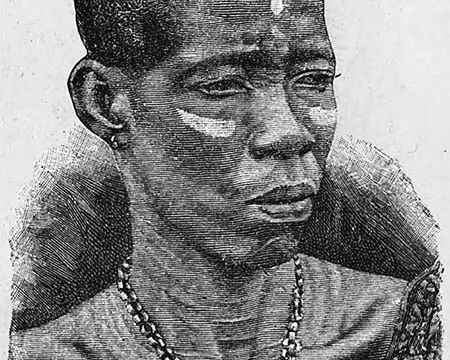 PeopleSangula MetaA religious leader of the Bena Riamba whose authority helped sustain a cannabis-centred political order in the nineteenth-century Congo Basin. Her surviving portrait and biography come through interested European observers.
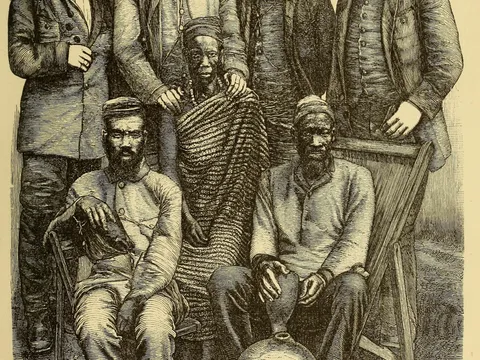 TraditionsThe Bena RiambaA cannabis-centred movement in the nineteenth-century Kasai whose shared pipes expressed friendship and allegiance. Its history also involves trade, political rivalry, coercion and colonial alliances.
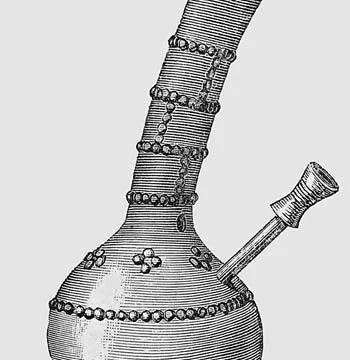 TraditionsThe Calabash Water PipeA hollow gourd made into a smoking vessel, documented in nineteenth-century Angola and across much of Africa. Its air-control opening also challenges histories that begin with the modern bong.
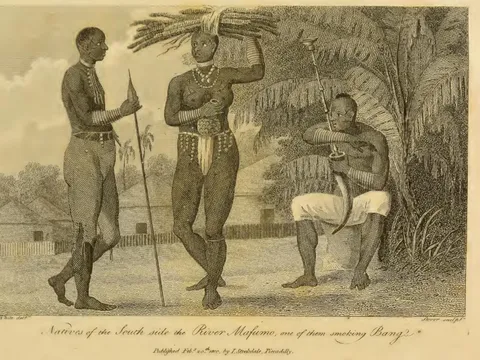 TraditionsThe smoker's coughIn nineteenth-century Africa the cough that followed a pipe of cannabis was often a performance. Travellers called it affected; Zulu smokers sang praises between coughs, and a lake island was said to have been found by hearing one.
Did you know? all cases →
History · DR Congo
Nineteenth-century visitors recorded a cannabis-centred movement among the Bashilenge in today's DR Congo. Its members called themselves Bena Riamba — ‘sons of hemp’ — and used a communal pipe for holidays, trade agreements and peace settlements.
Read the entry →
Datasets not part of the score
What other organisations publish about DR Congo, and where it stands among the countries each one covers. Each dataset has a page of its own, with a world map and every country's figure.
Use
UNODC
Cannabis use
3.07%of people aged 15–64 (assumed)
1,800,000 people · computed here: the median of surveyed countries in the region, or the figure of the country a territory is part of
Source Survey ages and years vary, and some surveys include children. Rates are not age-standardised; do not compare countries directly.WHO, Our World in Data · 2020
Alcohol drunk per person
1.92litres of pure alcohol a year
8.29 · 20008.29 · 20018.43 · 20028.68 · 20037.08 · 20045.52 · 20053.76 · 20063.92 · 20074.15 · 20083.65 · 20093.06 · 20102.40 · 20112.55 · 20122.64 · 20132.58 · 20142.44 · 20152.28 · 20162.20 · 20172.12 · 20182.12 · 20191.92 · 202020002020 Higher than 27% of 187 countriesLowestHighestper person aged 15 or over · 2020 · 8.29 in 2000 · 3.06 in 2010
Law
UNODC · 2024
Cannabis seized
1,800kg in 2024
100 · 2021200 · 20221,200 · 20231,800 · 202420212024 Higher than 44% of 163 countriesLess seizedMore seized1,800 kg of herb
Society
OpenAlex · 2025
Research on cannabis
0.0papers per million people
0.0 · 20200.0 · 20210.0 · 202520202025 Higher than 1% of 176 countriesLowestHighest3 papers in 2025
Cato and Fraser Institutes · 2023
Human Freedom Index
5.28of 10
4.46 · 20004.56 · 20014.86 · 20025.04 · 20035.14 · 20045.09 · 20055.24 · 20065.14 · 20075.14 · 20085.21 · 20095.29 · 20105.27 · 20115.16 · 20125.20 · 20135.30 · 20145.24 · 20155.12 · 20164.93 · 20174.96 · 20185.36 · 20195.22 · 20205.27 · 20215.28 · 20225.28 · 202320002023 Higher than 18% of 164 countriesLess freeFreerrank #136 of 165 · personal freedom 5.46 · economic freedom 5.03
V-Dem, Our World in Data · 2025
Civil liberties
0.42of 1 in 2025
0.06 · 19000.06 · 19010.06 · 19020.06 · 19030.06 · 19040.06 · 19050.06 · 19060.06 · 19070.06 · 19080.04 · 19090.04 · 19100.04 · 19110.04 · 19120.04 · 19130.04 · 19140.04 · 19150.04 · 19160.04 · 19170.04 · 19180.04 · 19190.03 · 19200.03 · 19210.03 · 19220.03 · 19230.03 · 19240.03 · 19250.03 · 19260.03 · 19270.03 · 19280.03 · 19290.03 · 19300.03 · 19310.03 · 19320.03 · 19330.03 · 19340.03 · 19350.03 · 19360.03 · 19370.03 · 19380.03 · 19390.03 · 19400.03 · 19410.03 · 19420.03 · 19430.03 · 19440.03 · 19450.04 · 19460.04 · 19470.04 · 19480.04 · 19490.03 · 19500.03 · 19510.03 · 19520.03 · 19530.03 · 19540.04 · 19550.04 · 19560.05 · 19570.06 · 19580.07 · 19590.21 · 19600.23 · 19610.23 · 19620.23 · 19630.23 · 19640.20 · 19650.14 · 19660.11 · 19670.11 · 19680.11 · 19690.10 · 19700.11 · 19710.11 · 19720.11 · 19730.11 · 19740.11 · 19750.11 · 19760.11 · 19770.11 · 19780.11 · 19790.11 · 19800.11 · 19810.11 · 19820.11 · 19830.11 · 19840.11 · 19850.11 · 19860.11 · 19870.12 · 19880.12 · 19890.18 · 19900.21 · 19910.21 · 19920.21 · 19930.21 · 19940.22 · 19950.23 · 19960.18 · 19970.27 · 19980.29 · 19990.30 · 20000.31 · 20010.32 · 20020.34 · 20030.37 · 20040.38 · 20050.38 · 20060.38 · 20070.38 · 20080.41 · 20090.42 · 20100.42 · 20110.42 · 20120.42 · 20130.43 · 20140.42 · 20150.40 · 20160.37 · 20170.40 · 20180.53 · 20190.49 · 20200.51 · 20210.51 · 20220.46 · 20230.40 · 20240.42 · 202519002025 Higher than 23% of 175 countriesFewer libertiesMore liberties0.03 in 1925 · 0.23 in 1961 · 0.18 in 1990
Our World in Data, World Bank · 2025
Population
112,832,473people in 2025
9,451,620 · 19008,599,666 · 19108,182,274 · 19209,220,147 · 193010,442,344 · 194012,294,293 · 195015,264,853 · 196020,137,442 · 197026,711,098 · 198036,684,065 · 199050,507,445 · 200068,563,038 · 201095,990,000 · 2020112,832,473 · 202519002025 Higher than 92% of 196 countriesLowestHighest9,451,620 in 1900 · 12,294,293 in 1950 · 50,507,445 in 2000
CEPII
Former colonial rulers
Once ruled by Belgium and Luxembourg
World Bank · 2025
Government effectiveness
18of 100
18 · 19969 · 19989 · 20007 · 20027 · 200313 · 200415 · 200518 · 200618 · 200718 · 200818 · 200917 · 201018 · 201119 · 201223 · 201323 · 201421 · 201524 · 201622 · 201721 · 201819 · 201917 · 202016 · 202116 · 202218 · 202317 · 202418 · 202519962025 Higher than 3% of 195 countriesLowestHighestestimate -1.68 on a scale of −2.5 to 2.5 · 2025 · 9 in 2000 · 21 in 2015
Transparency International · 2024
Corruption Perceptions Index
20of 100
21 · 201222 · 201322 · 201422 · 201521 · 201621 · 201720 · 201818 · 201918 · 202019 · 202120 · 202220 · 202320 · 202420122024 Higher than 10% of 178 countriesLowestHighest0 highly corrupt, 100 very clean · 2024 · 22 in 2015 · 18 in 2020
Pew Research Center · 2020
Most common religion
Christians
the largest group · 2020
World Bank · 2025
Income per person
$1,641per person
2,404 · 19902,129 · 19911,843 · 19921,538 · 19931,410 · 19941,362 · 19951,323 · 19961,228 · 19971,176 · 19981,089 · 1999981 · 2000931 · 2001929 · 2002953 · 2003988 · 20041,017 · 20051,036 · 20061,092 · 20071,138 · 20081,109 · 20091,167 · 20101,125 · 20111,182 · 20121,343 · 20131,393 · 20141,433 · 20151,389 · 20161,396 · 20171,432 · 20181,395 · 20191,361 · 20201,402 · 20211,484 · 20221,559 · 20231,602 · 20241,641 · 202519902025 Higher than 3% of 187 countriesLowestHighestat purchasing power parity, 2021 dollars · 2025 · $2,404 in 1990 · $1,167 in 2010
World Bank · 2024
Development indicators
19.7%use the internet
0% · 19900% · 19960% · 19970% · 19980% · 19990% · 20000% · 20010.1% · 20020.1% · 20030.2% · 20040.2% · 20050.3% · 20060.4% · 20070.4% · 20080.6% · 20090.7% · 20101.2% · 20111.7% · 20122.2% · 20133% · 20143.8% · 201510.1% · 201611.7% · 201813% · 201914.5% · 202016.2% · 202118% · 202219% · 202319.7% · 202419902024 Higher than 8% of 195 countriesLowestHighest44.7% live in towns · 3.1% aged 65+ · life expectancy 62.1 · 2024 · 0% in 2000 · 0.7% in 2010
GDELT · 2025
Cannabis in the news
0%of global news: cannabis articles from here
0% · 20170% · 20180% · 20190% · 20200% · 20210% · 20220% · 20230% · 20240% · 202520172025 Higher than 0% of 147 countriesLowestHighest2025 average, 348 days · 0% in 2018 · 0% in 2021
Plant and market
GBIF · 2026
Records of the cannabis plant
28dated records
2 · 19014 · 19035 · 19086 · 19138 · 19359 · 193610 · 193711 · 193912 · 195213 · 195514 · 195615 · 196217 · 196518 · 197120 · 197421 · 199322 · 200425 · 200926 · 202327 · 202528 · 202619012026 Higher than 63% of 128 countriesLowestHighest4 more without a date · 1 in 2026
History 12 of 12 checked against a source
Score and entries per decade
9 today, from 100 before its first recorded change
This country's score Entries that moved the score Context only
20261 entry0 score changes
20221 entry0 score changes
20211 entry0 score changes
20181 entry0 score changes
20051 entry0 score changes
19771 entry0 score changes
19761 entry0 score changes
19731 entry0 score changes
19171 entry0 score changes
19031 entry1 score change
18811 entry0 score changes
18551 entry0 score changes
Sources hover a number in the text to see its source
- Cited
- 9
- Websites
- 6
- 1
- Last reviewed
- History checked
- 12/12
Most cited
- droitcongolais.info3
- acp.cd1
- data.unodc.org1
- incb.org1
- journals.openedition.org1
- leganet.be1
All 9 sources
- The African Roots of MarijuanaChris S. Duvall · Duke University Press · 2019 · ch. 3, printed pp. 60-61 (calabash water pipes); ch. 5, printed pp. 105-106 (coughing accounts, Burton 1874 lower Congo); ch. 6, printed pp. 112-119 (Bena Riamba, Sangula Meta); read in the local PDF · ISBN 9781478004530
- Leganet.cd — Ordonnance-loi du 22 janvier 1903, mesures contre l'usage de fumer le chanvrearchived
- Ann Laudati — Living Dangerously (EchoGéo 48, 2019)archived
- DR Congo — Ministerial order 1250/CAB/MIN/SPHP/038/DCA/CPh/2022 of 24 November 2022 (Journal officiel, 6 March 2023)Articles 2, 72, 96–123, particularly 97, 100–102, 112 and 119–121archived
- Agence Congolaise de Presse — Kasaï Oriental, interdiction de vente et consommation de cannabis (25 May 2026)archived
- Law 18/035 of 13 December 2018 on the organisation of public healtharchived
- Ministerial Order 1250/CAB/MIN/S/0002/DC/OWE/2021 of 27 February 2021archived
- UNODC Data Portal — Drug seizures, reported seizures in kilogram equivalents (World Drug Report data)archived
- International Narcotics Control Board — Travellers carrying medicines containing controlled substances