Kenya
6/100
#154 of 196 worldwide
#41 of 54 in Africa
Cannabis held solely for personal use carries up to five years or a fine of up to 100,000 shillings. Where that is not shown, 1 to 100 grams carries a fine of at least 30 million shillings, thirty years in prison, or both.
In short all countries →
- Can I carry it?NoIt is a crime
- Can I grow it?NoIt is a crime
- Can I buy it?NoThere is no legal source
- Can I use it in public?NoNot in public, and even at home the law does not protect it
- What if I'm caught?PrisonPersonal use can lead to prison or compulsory detention
A rough guide read from the scores and the rules below, not legal advice. The details and the exceptions are in each segment: select an answer to jump to it.
Cannabis in Kenya not part of the score · all 17 datasets ↓
Who uses it
About 1 in 48
people aged 15–65 in Kenya used cannabis in the past year: about 740,000 people.
- Past year
- 2.1%
- Africa median
- 3.1%
UNODC · survey 2022
Source Past-year cannabis use among people aged 15–65. People who used cannabis in the past year, from a 2022 survey, applied to today's population aged 15–65. The population is approximate: the survey ages cut through an age group, or were not recorded and ages 15–64 are used.Survey ages and years vary, and some surveys include children. Rates are not age-standardised; do not compare countries directly.
UNODC World Drug Report 2026, annex table 1.2. Population from the World Bank, aged 15–65. The whole dataset →
Use across Africa
22ndhighest of 28 surveyed countries
- 🇨🇻 Cabo Verde2.4%
- 🇦🇴 Angola2.1%
- 🇰🇪 Kenya2.1%
- 🇲🇺 Mauritius1.1%
- 🇹🇬 Togo1.0%
Past-year use, latest survey of each. Survey years and ages differ. On the map →
What they think of it
“Is using marijuana morally acceptable?”
77% say it is morally unacceptable
- Acceptable 4%
- Not a moral issue 19%
- Depends or no answer 0%
- Unacceptable 77%
The 6th most disapproving of the 25 countries surveyed, where the median is 52%. On the map →
Source Pew Research Center, surveyed January to May 2025, 1,049 adults (topline, question 17g).Cannabis in figures
- Police contact for drug use or possession10per 100,000 people · 2024
- Cannabis seized28,153kg in 2024 · 2024
- Research on cannabis0.2papers per million people · 2025
- Cannabis in the news0.0002%of global news: cannabis articles from here · 2025
The dot: where it stands among the countries each dataset covers, lowest to highest. All datasets ↓
What they call it
- Bangi[1]Swahilicannabis; the Swahili word, also written bhang in Kenyan English
Score breakdown 6/100 · how the scores are made
Neighbours
- 🇪🇹 Ethiopia9
- 🇹🇿 Tanzania8
- 🇰🇪 Kenya6
- 🇺🇬 Uganda6
- 🇸🇴 Somalia3
- 🇸🇸 South Sudan2
Section 3 of the Narcotic Drugs and Psychotropic Substances (Control) Act, as amended in March 2022, gives cannabis (bhang) its own tier: a person who satisfies the court that the cannabis was solely for their own consumption faces up to five years in prison or a fine of up to 100,000 shillings, and the court may add a treatment or rehabilitation programme of at least six months.[1] Where that is not shown the trafficking section applies, which also covers possession: a fine of at least 30 million shillings or thirty years for 1 to 100 g, and at least 50 million shillings or fifty years above 100 g.[1][2]
| Amount | What happens | Punishment | Fine |
| Personal consumption (proved to court)Fine up to 100,000 shillings or up to five years; court may add six months or more of treatment or rehabilitation | CriminalPossession | Up to 5 years | Up to KES 100,000 |
| Possession treated as trafficking, 1 to 100 gFine of at least 30 million shillings or thirty years, or both | CriminalTrafficking | Up to 30 years | At least KES 30,000,000 |
| Possession treated as trafficking, above 100 gFine of at least 50 million shillings or fifty years, or both | CriminalTrafficking | Up to 50 years | At least KES 50,000,000 |
Section 6 punishes cultivating a prohibited plant, or letting premises be used for it, with a fine of 250,000 shillings or three times the plants’ market value, whichever is greater, up to twenty years in prison, or both.[1] Section 7 requires forfeiture of non-government land when the convicted person owns it, or a lessee grew with the owner’s consent, cooperation or assistance.[1] If the lessee acted without that involvement, the offender’s lease or right ends and possession returns to the owner.[1]
| Amount | What happens | Punishment | Fine |
| Cultivating a prohibited plant or letting premises be used for itFine of 250,000 shillings or three times the plants' market value, whichever is greater, up to twenty years, or both; land or lease consequences under section 7 | CriminalCultivation | Up to 20 years | Up to KES 250,000 |
Section 4 punishes trafficking, and possession it treats as trafficking, with a fine of at least 30 million shillings or thirty years in prison for 1 to 100 g, and at least 50 million shillings or three times the market value, or fifty years, above 100 g.[1]
| Amount | What happens | Punishment | Fine |
| Trafficking, 1 to 100 gFine of at least 30 million shillings or thirty years, or both | CriminalTrafficking | Up to 30 years | At least KES 30,000,000 |
| Trafficking, above 100 gFine of at least 50 million shillings or three times the market value, or fifty years | CriminalTrafficking | Up to 50 years | At least KES 50,000,000 |
Smoking, inhaling, sniffing or otherwise using a narcotic drug, or being found without excuse in a place people use for it, is an offence under Section 5 with a fine of not less than 250,000 shillings, at least five years in prison, or both.[1]
| Amount | What happens | Punishment | Fine |
| Using a narcotic drug or frequenting a place used for itFine of not less than 250,000 shillings, at least five years in prison, or both | CriminalUse | At least 5 years | At least KES 250,000 |
None. The national drug agency has repeatedly insisted cannabis remains prohibited despite legalisation petitions.[3]
Context not part of the score · every country, by topic →
There is no legal recreational supply — nothing is lawfully produced or sold. A person who satisfies the court the cannabis was solely for their own consumption faces up to five years or a fine of up to 100,000 shillings; otherwise possession is treated as trafficking, with at least 30 million shillings or thirty years for 1 to 100 g.[1][2] Courts in practice impose much shorter terms and fines for small amounts, but arrests are frequent.[2][3]
No medical cannabis programme exists.[3] A bill has been proposed in the Senate, but the drug agency insists cannabis remains prohibited.[3]
No cannabis clubs are known, and the law leaves no room for them: growing cannabis and supplying it to another person are both prohibited.[1][2]
The Narcotic Drugs and Psychotropic Substances (Control) Act defines cannabis as the flowering or fruiting tops, excluding the seeds and leaves when not accompanied by the tops.[4] Cultivating any cannabis plant counts as illicit traffic, so cuttings fall under the ban; the Act does not say whether seeds may be sold.[4]
No industrial-hemp exception was verified: the Act defines cannabis as the flowering or fruiting tops, excluding seeds and leaves when unaccompanied, but provides no separate hemp regime.[4] CBD has no lawful channel either, with no medical programme.[3]
No licensed production exists: cultivation is punished under section 6 with no licensing route, and the drug agency insists cannabis remains prohibited.[3][1]
Figures reported by the government to the UN drugs office record 28,153 kg of herbal cannabis seized in 2024, against 25,840 kg in 2023.[5] The UN publishes them as kilogram equivalents, and countries count seizures differently, so the figures are not comparable across borders.[5]
There is no legal recreational supply for anyone.[1] Cannabis held solely for one's own consumption carries up to five years in prison or a fine of up to 100,000 shillings;[1] using it carries a fine of not less than 250,000 shillings or at least five years;[1] and possession treated as trafficking carries, from one gram up to 100 grams, a fine of at least 30 million shillings, thirty years in prison, or both.[1][3]
The Traffic Act makes it an offence to drive, attempt to drive or be in charge of a vehicle while under the influence of an alcoholic drink or a drug 'beyond the prescribed limits'.[6] The penalty is a fine of up to 100,000 shillings, up to two years in prison, or both, with disqualification for twelve months.[6] The section itself gives no figure for cannabis, and no numerical THC cutoff has been verified.[6] The reviewed 2026 Drink-Driving Rules prescribe blood-alcohol concentrations, not THC; the cannabis-specific conviction trigger remains unverified.[6][7]
Cannabis accounts for most drug arrests.[8] Police statistics for 2016 show 776 people arrested in relation to cannabis, against 92 for heroin and 11 for cocaine.[8] Sentences can be heavy for very little: in one case reported in a 2021 study a man received two years in prison for a single "stick" worth twenty shillings.[8] No more recent national breakdown was found.
A conviction creates a criminal record.[1] Cultivation can also cost land or a lease under section 7: owner involvement determines whether non-government land is forfeited or an innocent owner recovers it.[1] Rights over government land revert to government. Sections 7(4) and 9–10 protect qualifying security and intermediate interests and require notice and an opportunity to be heard.[1]
The Swahili word for the plant is bangi — locally called bhang, banghi or bangi.[9][1] C. W. Hobley's 1902 survey already recorded bhang grown for home consumption in what is now western Kenya, smoked in gourd water-pipes with customs differing by people — see the 1902 survey.[10] The Rastafari sacrament remains subject to Kenya’s cannabis prohibitions.[11] In July 2026 the High Court dismissed a religious-use challenge, finding that the petitioners had not first pursued statutory licensing or exemption procedures and had not established the claimed rights violations.[11] The judge also called for a national cannabis debate.[11] Parliament has heard the other case: Ken Okoth tabled a Marijuana Control Bill in 2018 to replace prohibition with regulation, taxation and relief for past convictions (2018 bill).[12]
Taking cannabis into or out of Kenya is a separate offence from possessing it, normally charged as smuggling or trafficking, with far heavier penalties. That holds almost everywhere, including between two places where cannabis is legal.
A prescription or medical card from another country is generally not recognised. Travellers who need a cannabis-based medicine should ask Kenya's embassy before travelling.[13]
General guidance that applies to almost every country, not a check of Kenya's customs rules.
Culture the atlas →
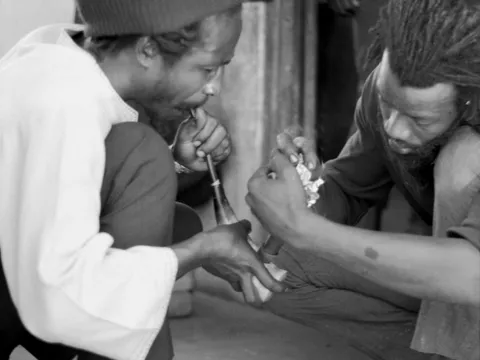 TraditionsThe Rastafari sacramentFor Rastafari, ganja is a holy herb smoked in shared reasoning. Several Caribbean countries have now written that into law.
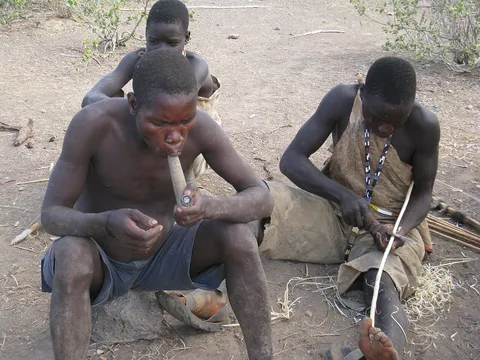 LanguageBangiThe Swahili word for cannabis, linked to bhang and Indian Ocean exchange. Its immediate source and route inland are less certain than a simple borrowing from Hindi suggests.
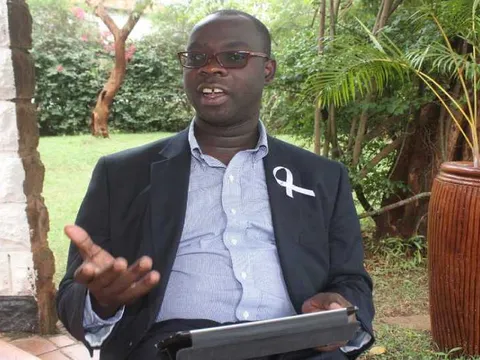 PeopleKen OkothThe Kenyan MP who proposed replacing cannabis prohibition with regulation, taxation and relief for people carrying convictions for its use.
Datasets not part of the score
What other organisations publish about Kenya, and where it stands among the countries each one covers. Each dataset has a page of its own, with a world map and every country's figure.
Use
UNODC · 2022
Cannabis use
2.1%of people aged 15–65
7.1% · 20042.1% · 20071.2% · 20172.1% · 202220042022 ages 15–65 · survey 2022 · 740,000 people · UNODC 2026
Source Survey ages and years vary, and some surveys include children. Rates are not age-standardised; do not compare countries directly.WHO, Our World in Data · 2020
Alcohol drunk per person
2.47litres of pure alcohol a year
2.16 · 20002.16 · 20012.16 · 20022.06 · 20032.07 · 20042.15 · 20052.38 · 20062.32 · 20072.31 · 20082.34 · 20092.51 · 20102.68 · 20112.75 · 20122.79 · 20132.80 · 20142.78 · 20152.85 · 20162.85 · 20172.87 · 20182.87 · 20192.47 · 202020002020 Higher than 31% of 187 countriesLowestHighestper person aged 15 or over · 2020 · 2.16 in 2000 · 2.51 in 2010
Law
UNODC · 2024
Police contact for drug use or possession
10per 100,000 people
4.8 · 202011 · 202310 · 202420202024 Higher than 24% of 101 countriesFewerMore5,760 people in 2024 · all drugs together
UNODC · 2024
Cannabis seized
28,153kg in 2024
4,402 · 20158,809 · 20168,617 · 20174,466 · 20183,774 · 201912,911 · 202011,713 · 20218,474 · 202225,840 · 202328,153 · 202420152024 Higher than 82% of 163 countriesLess seizedMore seized28,153 kg of herb · 4,402 kg in 2015 · 12,911 kg in 2020
Society
Pew Research Center · 2025
Is using marijuana morally wrong?
77%call it immoral
Higher than 76% of 25 countriesFewer disapproveMore disapprove4% acceptable · 19% not a moral issue · 1,049 people asked
OpenAlex · 2025
Research on cannabis
0.2papers per million people
0.0 · 19940.0 · 19960.0 · 19970.0 · 19990.1 · 20000.0 · 20010.0 · 20040.0 · 20060.0 · 20080.1 · 20090.0 · 20100.1 · 20110.1 · 20130.1 · 20150.0 · 20160.0 · 20170.1 · 20180.1 · 20190.2 · 20200.3 · 20210.3 · 20220.3 · 20230.2 · 20240.2 · 202519942025 Higher than 31% of 176 countriesLowestHighest14 papers in 2025 · 2 in 2010
Cato and Fraser Institutes · 2023
Human Freedom Index
6.59of 10
6.26 · 20006.29 · 20016.50 · 20026.54 · 20036.62 · 20046.80 · 20056.76 · 20066.85 · 20076.62 · 20086.65 · 20096.81 · 20106.81 · 20116.72 · 20126.64 · 20136.65 · 20146.58 · 20156.64 · 20166.52 · 20176.54 · 20186.54 · 20196.54 · 20206.63 · 20216.65 · 20226.59 · 202320002023 Higher than 41% of 164 countriesLess freeFreerrank #97 of 165 · personal freedom 6.53 · economic freedom 6.68
V-Dem, Our World in Data · 2025
Civil liberties
0.74of 1 in 2025
0.09 · 19000.09 · 19010.09 · 19020.09 · 19030.09 · 19040.09 · 19050.09 · 19060.11 · 19070.11 · 19080.11 · 19090.11 · 19100.11 · 19110.11 · 19120.11 · 19130.11 · 19140.10 · 19150.10 · 19160.10 · 19170.10 · 19180.10 · 19190.10 · 19200.10 · 19210.10 · 19220.10 · 19230.10 · 19240.10 · 19250.10 · 19260.10 · 19270.11 · 19280.11 · 19290.11 · 19300.11 · 19310.11 · 19320.11 · 19330.11 · 19340.11 · 19350.11 · 19360.11 · 19370.11 · 19380.11 · 19390.11 · 19400.11 · 19410.11 · 19420.11 · 19430.11 · 19440.12 · 19450.11 · 19460.11 · 19470.11 · 19480.12 · 19490.09 · 19500.09 · 19510.05 · 19520.05 · 19530.06 · 19540.06 · 19550.06 · 19560.08 · 19570.09 · 19580.09 · 19590.14 · 19600.14 · 19610.14 · 19620.25 · 19630.31 · 19640.31 · 19650.31 · 19660.31 · 19670.31 · 19680.29 · 19690.30 · 19700.30 · 19710.29 · 19720.29 · 19730.30 · 19740.28 · 19750.29 · 19760.29 · 19770.30 · 19780.30 · 19790.29 · 19800.29 · 19810.25 · 19820.25 · 19830.24 · 19840.24 · 19850.24 · 19860.24 · 19870.22 · 19880.22 · 19890.26 · 19900.30 · 19910.38 · 19920.43 · 19930.43 · 19940.44 · 19950.44 · 19960.44 · 19970.44 · 19980.44 · 19990.51 · 20000.51 · 20010.58 · 20020.64 · 20030.64 · 20040.64 · 20050.64 · 20060.62 · 20070.64 · 20080.65 · 20090.68 · 20100.68 · 20110.68 · 20120.70 · 20130.70 · 20140.70 · 20150.70 · 20160.66 · 20170.68 · 20180.68 · 20190.70 · 20200.74 · 20210.75 · 20220.78 · 20230.74 · 20240.74 · 202519002025 Higher than 48% of 175 countriesFewer libertiesMore liberties0.10 in 1925 · 0.14 in 1961 · 0.26 in 1990
Our World in Data, World Bank · 2025
Population
57,532,493people in 2025
3,950,614 · 19003,633,121 · 19103,566,429 · 19204,167,035 · 19304,808,498 · 19405,769,190 · 19507,695,310 · 196011,368,806 · 197016,018,465 · 198022,892,655 · 199030,642,893 · 200041,598,570 · 201052,217,327 · 202057,532,493 · 202519002025 Higher than 87% of 196 countriesLowestHighest3,950,614 in 1900 · 5,769,190 in 1950 · 30,642,893 in 2000
CEPII
Former colonial rulers
Once ruled by United Kingdom
World Bank · 2025
Government effectiveness
51of 100
45 · 199631 · 199831 · 200027 · 200228 · 200337 · 200437 · 200538 · 200641 · 200742 · 200842 · 200944 · 201044 · 201145 · 201246 · 201346 · 201447 · 201548 · 201649 · 201748 · 201849 · 201947 · 202047 · 202148 · 202248 · 202349 · 202451 · 202519962025 Higher than 46% of 195 countriesLowestHighestestimate -0.09 on a scale of −2.5 to 2.5 · 2025 · 31 in 2000 · 47 in 2015
Transparency International · 2024
Corruption Perceptions Index
32of 100
27 · 201227 · 201325 · 201425 · 201526 · 201628 · 201727 · 201828 · 201931 · 202030 · 202132 · 202231 · 202332 · 202420122024 Higher than 30% of 178 countriesLowestHighest0 highly corrupt, 100 very clean · 2024 · 25 in 2015 · 31 in 2020
Pew Research Center · 2020
Most common religion
Christians
the largest group · 2020
World Bank · 2025
Income per person
$5,995per person
4,177 · 19904,102 · 19913,947 · 19923,845 · 19933,833 · 19943,890 · 19953,941 · 19963,853 · 19973,872 · 19983,848 · 19993,757 · 20003,778 · 20013,681 · 20023,674 · 20033,744 · 20043,845 · 20053,971 · 20064,116 · 20074,003 · 20084,012 · 20094,212 · 20104,307 · 20114,388 · 20124,443 · 20134,559 · 20144,680 · 20154,770 · 20164,847 · 20175,018 · 20185,172 · 20195,057 · 20205,339 · 20215,492 · 20225,692 · 20235,842 · 20245,995 · 202519902025 Higher than 24% of 187 countriesLowestHighestat purchasing power parity, 2021 dollars · 2025 · $4,177 in 1990 · $4,212 in 2010
World Bank · 2024
Development indicators
35%use the internet
0% · 19900% · 19950% · 19960% · 19970.1% · 19980.1% · 19990.3% · 20000.6% · 20011.2% · 20022.9% · 20033% · 20043.1% · 20053.6% · 20064.4% · 20075.2% · 20086.1% · 20097.2% · 20108.8% · 201110.5% · 201213% · 201316.5% · 201416.6% · 201516.6% · 201617.8% · 201719.5% · 201822.7% · 201924.7% · 202027% · 202129.4% · 202232.1% · 202335% · 202419902024 Higher than 17% of 195 countriesLowestHighest31.9% live in towns · 3% aged 65+ · life expectancy 63.8 · higher education 10.4% · 2024 · 0.3% in 2000 · 7.2% in 2010
GDELT · 2025
Cannabis in the news
0.0002%of global news: cannabis articles from here
0.0001% · 20170.0003% · 20180.0003% · 20190.0002% · 20200.0001% · 20210.0003% · 20220.0002% · 20230.0002% · 20240.0002% · 202520172025 Higher than 48% of 147 countriesLowestHighest2025 average, 348 days · 0.0003% in 2018 · 0.0001% in 2021
Plant and market
GBIF · 2026
Records of the cannabis plant
6dated records
3 · 20144 · 20225 · 20236 · 202620142026 Higher than 37% of 128 countriesLowestHighest0 more without a date · 1 in 2026
Enforcement 1 report · the Cannabis Enforcement Tracker →
How the law above is applied: raids, seizures, fields destroyed, arrests and sentences, as recorded by the Cannabis Enforcement Tracker, our companion site.
- ArrestTwo arrested with 1,087 bhang rolls in Kiambu and Embu
Police arrested a suspected peddler with 800 rolls of bhang in Juja and a man with 287 rolls in Embu on 21 October, both held for arraignment.
History 15 of 15 checked against a source
Score and entries per decade
6 today, from 100 before its first recorded change
This country's score Entries that moved the score Context only
20261 entry0 score changes
20221 entry1 score change
20181 entry0 score changes
20171 entry0 score changes
19941 entry0 score changes
19921 entry0 score changes
19831 entry0 score changes
19731 entry0 score changes
19641 entry0 score changes
19611 entry0 score changes
19561 entry0 score changes
19331 entry0 score changes
19141 entry1 score change
19081 entry0 score changes
19021 entry0 score changes
Sources hover a number in the text to see its source
- Cited
- 13
- Websites
- 9
- 1
- Last reviewed
- History checked
- 15/15
Most cited
- new.kenyalaw.org4
- archive.org1
- capitalfm.africa1
- data.unodc.org1
- en.wikipedia.org1
- incb.org1
All 13 sources
- Kenya Law — Narcotic Drugs and Psychotropic Substances (Control) Actarchived
- Shahidi News — 30 years in prison or Sh30m fine if found with 100 grams of narcotic drugs (2022)
- Capital FM — NACADA insists marijuana still prohibited amid calls to legalize itarchived
- Narcotic Drugs and Psychotropic Substances (Control) Act, 1994 (Kenya Law)archived
- UNODC Data Portal — Drug seizures, reported seizures in kilogram equivalents (World Drug Report data)archived
- Kenya — Traffic Act (Cap. 403), section 44 (Kenya Law)archived
- Kenya Law — Traffic (Drink-Driving) Rules, Legal Notice 12 of 2026Regulation 3; alcohol-specific limits, no THC valuearchived
- Sub-Saharan Africa, Cannabis, and Contemporary Drug PolicyNeil Carrier · In Cannabis: Global Histories, edited by Lucas Richert, James H. Mills · MIT Press · 2021 · pp. 324 · ISBN 9780262366137
- Wikipedia — Cannabis in Kenyaarchived
- Eastern Uganda, an Ethnological SurveyC. W. Hobley · Royal Anthropological Institute · 1902
- High Court of Kenya — Rastafari Society of Kenya & others v Attorney General & others [2026] KEHC 11816 (15 July 2026)Paragraphs 35–47, 49–74 and 75–84archived
- The Standard — MP Okoth tables four-point bid to have bhang legalized (21 September 2018)archived
- International Narcotics Control Board — Travellers carrying medicines containing controlled substances