The story · written by opus-5.5,
South Africa banned dagga in November 1922. In December its own health department told the police not to enforce the ban in much of the country.
The objection
The new law classed dagga as a habit-forming drug and made possession an offence everywhere in the Union. Officials responsible for African affairs thought this unworkable and said so.
C. A. Wheelwright, the chief native commissioner in Natal, warned against making criminals “by a stroke of the pen” of older men for whom the habit was lifelong. If dagga could be outlawed as a noxious weed, he asked, would tobacco, tea and grapevines be next? He travelled to Pretoria with the chief magistrate of the Transkei to argue the case.
Their position, as put to the health department:
In many parts of Zululand the smoking early in the morning by the older men of a pipe-full of Insangu is a custom so deep-rooted as almost to amount to a religious rite.
Enforcing the law there, they said, would be impossible and might provoke “very undesirable incidents”.
The answer
The law was not changed. Instead the secretary for public health wrote that conditions in the towns and in remote African areas were very different, and that
the police will exercise judgement and discrimination, and avoid drastic or ill-advised attempts to enforce the letter of the law in remote localities where moderate Dagga smoking by some of the natives is of little importance.
What it meant
A national prohibition applied by geography and race. Intensive policing was confined by design, and in the remote reserves smoking was largely left alone.
The historian Thembisa Waetjen draws out the consequence. Because the law was not enforced on communal land, that land became the place where dagga was grown for sale. The uneven ban created the illegal trade’s geography, and with it a field for corruption among police and white landowners. By 1929 the press was reporting a national smuggling network run along the railways.
The longer view
The instruction is a rare document: a state admitting, in writing, that a law it had just passed could not be applied to the people who used the drug most. It took South Africa until 2018 to say the same thing in a court.
The index lists it for context. The written law is what the score follows, and that did not change.[1]
In the cultural atlas
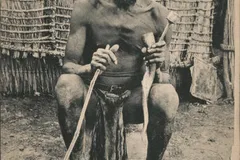
Listed for context. No score change is recorded for South Africa here.
References
- Dagga: How South Africa Made a Dangerous Drug, 1902–1928Thembisa Waetjen · In Cannabis: Global Histories, edited by Lucas Richert, James H. Mills · MIT Press · 2021 · pp. 86–100 · ISBN 9780262366137
- Dagga: How South Africa Made a Dangerous Drug, 1902–1928Thembisa Waetjen · In Cannabis: Global Histories, edited by Lucas Richert, James H. Mills · MIT Press · 2021 · pp. 89, 100 · ISBN 9780262366137
Checked. The date and the event were compared with a source that was read.