Germany
44/100
#5 of 196 worldwide
#2 of 45 in Europe
Since April 2024 any adult may carry 25 g. People who have lived in Germany for six months may keep 50 g at home, grow three plants and join a non-profit growing association. There are no shops, but medical cannabis is easy to obtain through pharmacies.
In short all countries →
- Can I carry it?YesLegal up to a limit
- Can I grow it?YesA few plants at home are legal
- Can I buy it?LimitedOnly as a resident member of a non-profit cultivation association, or on prescription
- Can I use it in public?LimitedIn some places, with many restrictions
- What if I'm caught?NothingIf you stay within the limits
A rough guide read from the scores and the rules below, not legal advice. The details and the exceptions are in each segment: select an answer to jump to it.
Cannabis in Germany not part of the score · all 29 datasets ↓
Who uses it
About 1 in 11
people aged 18–64 in Germany used cannabis in the past year: about 4.4 million people.
- Past year
- 8.8%
- Europe median
- 5.8%
UNODC · survey 2021
Source Past-year cannabis use among people aged 18–64. People who used cannabis in the past year, from a 2021 survey, applied to today's population aged 18–64. The population is approximate: the survey ages cut through an age group, or were not recorded and ages 15–64 are used.Survey ages and years vary, and some surveys include children. Rates are not age-standardised; do not compare countries directly.
UNODC World Drug Report 2026, annex table 1.2. Population from the World Bank, aged 18–64. The whole dataset →
Use across Europe
10thhighest of 44 surveyed countries
- 🇳🇱 Netherlands8.9%
- 🇭🇷 Croatia8.8%
- 🇩🇪 Germany8.8%
- 🇱🇮 Liechtenstein8.6%
- 🇨🇭 Switzerland7.6%
Past-year use, latest survey of each. Survey years and ages differ. On the map →
What they think of it
“Is using marijuana morally acceptable?”
25% say it is morally unacceptable
- Acceptable 31%
- Not a moral issue 42%
- Depends or no answer 2%
- Unacceptable 25%
The 4th least disapproving of the 25 countries surveyed, where the median is 52%. On the map →
Source Pew Research Center, surveyed January to May 2025, 1,006 adults (topline, question 17g).Cannabis in figures
- Offences for cannabis use or possession74per 100,000 people · 2024
- Police contact for drug use or possession144per 100,000 people · 2024
- Cannabis seized24,366kg in 2024 · 2024
- THC in cannabis sold (Europe)8.3%THC in herb · 2006
- Street price of cannabis (Europe)€10.00a gram of herb · 2024
The dot: where it stands among the countries each dataset covers, lowest to highest. All datasets ↓
What they call it
- Gras[1]Germancolloquial; Duden lists hashish and marijuana senses
- Hasch[2]Germanshort for Haschisch; the student movement's word
- Hanf[3]Germanthe standard word; same ancient root as English hempIn the atlas →
- Joint[4]Germana hand-rolled cannabis cigarette
Score breakdown 44/100 · how the scores are made
Neighbours · 9 of 10
- 🇨🇿 Czechia44
- 🇩🇪 Germany44
- 🇱🇺 Luxembourg37
- 🇳🇱 Netherlands37
- 🇨🇭 Switzerland30
- 🇧🇪 Belgium25
- 🇦🇹 Austria22
- 🇩🇰 Denmark20
- 🇫🇷 France14
Any adult may carry up to 25 g of dried cannabis.[5][6] Someone who has lived in Germany for six months may keep up to 50 g at home, and the amount they hold in total stops at 50 g.[5][7] More than 25 g and up to 30 g away from home, or more than 50 g and up to 60 g at home, is an administrative offence with a fine of up to €30,000; above that it is a crime with up to three years in prison or a fine.[8][9][6] Bringing cannabis into the country, or taking it out, is a crime.[10]
| Amount | What happens | Punishment | Fine |
| Up to 25 gAway from home; at home a resident may keep up to 50 g in total | Legal | — | — |
| Over 25 g, up to 30 gAt home, over 50 g and up to 60 g | AdministrativeAdministrative offence (Ordnungswidrigkeit) | — | Up to €30,000 |
| Over 30 gAt home, over 60 g; a criminal fine instead of prison is possible | CriminalCrime (Straftat) | Up to 3 years | — |
| A 'not small amount' (nicht geringe Menge), as set by the courts | CriminalCrime, especially serious case | 3 months – 5 years | — |
Someone who has lived in Germany for six months may grow up to three plants at that home, out of the reach of children.[11][7][6] Cannabis above the 50 g home limit must be destroyed.[6] A fourth plant is a crime with up to three years in prison or a fine, and growing to make a living from it up to five years.[9]
| Amount | What happens | Punishment | Fine |
| Up to 3 plantsResidents of six months, at their home | Legal | — | — |
| Over 3 plantsA criminal fine instead of prison is possible | CriminalCrime (Straftat) | Up to 3 years | — |
| Growing commercially (gewerbsmäßig) | CriminalCrime, especially serious case | 3 months – 5 years | — |
There are no shops. The only non-medical source besides home growing is a non-profit cultivation association: up to 500 members, minimum three-month membership, at most 25 g a day and 50 g a month (30 g and max 10% THC for ages 18–21).[6][12] A member must have lived in Germany for six months.[6][7][13] Many regions still have few licensed associations.
Context not part of the score · every country, by topic →
Adults may carry and use cannabis, but there is still no shop to buy it in. The legal routes are growing three plants at home or joining a non-profit growing association, and both are open only to people who have lived in Germany for six months.[6][7] Associations may hand out only flower and hashish; edibles such as THC gummies, and extracts, stay banned.[6] The government's evaluation found that in 2024 associations supplied less than 0.1% of the cannabis adults used and pharmacies 12 to 14%, much of it on private prescriptions. Most still came from the illegal market, typically through friends and acquaintances rather than street dealers.[14][15] Researchers at the economic institute DIW found no structural change in how much people use in the short term.[16]
Cannabis is no longer a narcotic in law: any doctor can prescribe it on an ordinary prescription, dispensed by pharmacies.[17] Statutory insurance covers extracts in standardised quality, and medicines containing dronabinol or nabilone, for a serious illness when a standard treatment is unavailable or unsuitable and there is a realistic chance of a noticeable benefit.[18] From 30 July 2026, the date the insurers' doctors' association gives for the change, that cover no longer includes dried flower.[19] A first insured prescription starts with a six-month trial of an authorised cannabis finished medicine.[18] A patient already on an extract or a compounded preparation before that date can continue without the trial.[19] Switching off flower needs a fresh insurer approval, unless the doctor is in a group excused from approval.[19] A private prescription is separate from this insured cover.[6] A government bill to require an in-person consultation before prescribing, aimed at telemedicine platforms, went through parliamentary hearings in January 2026. The bill, which would also ban mail-order dispensing of flower, was not put to a final vote before the summer recess and had not been passed as of September 2026.[20][21]
Non-commercial cultivation associations have been legal since 1 July 2024, each needing a permit from its state.[12] A member must have lived in Germany for six months.[6][7] By August 2026 a nationwide count found 455 approved out of 896 applications, with North Rhine-Westphalia and Lower Saxony ahead and Bavaria far behind.[22] Clubs complain of building rules, security requirements and paperwork that differ from state to state.[22] Even at full production they would cover only about 3.5 to 4.3% of estimated demand.[22]
Handling cannabis seeds is allowed unless they are meant for unlawful growing, and seeds for home growing may be imported only from other EU member states.[12] Cuttings without flowers count as propagation material: cultivation associations may hand out up to seven seeds or five cuttings a month per person, in person, to members and to other adults living in Germany.[12] Cuttings may not be shipped or delivered.[12]
Only farms may grow hemp, from certified EU varieties with at most 0.3% THC. Sowing must be reported to the Federal Office for Agriculture and Food by 1 July, which also tests plants during flowering.[23] After a record in 2024, the area fell in 2025 to 5,274 hectares on 496 farms, with Lower Saxony growing the most.[24] HHC, a semi-synthetic cannabinoid that had been sold as a legal alternative, has been banned under the law on new psychoactive substances since 21 June 2024, including its possession. The Federal Institute for Risk Assessment still found HHC gummies on sale in 2025, and makers switching to untested relatives of it.[25]
Commercial recreational production is not permitted at all; associations must grow for their own members with member labour.[12] The second step the government promised in 2023, regional pilot projects with licensed shops, never became law, and the federal agriculture office refused applications for such pilots on that ground.[26] The legal cannabis business is medical. Growing and importing medical cannabis need a licence from the federal medicines agency, BfArM.[17] Imports of medical flower almost tripled, from about 73 tonnes in 2024 to 201 tonnes in 2025, mostly from Canada and Portugal; the pharmacists' association ABDA puts the jump down to the growing number of private prescriptions.[15]
The government's evaluation put adult demand at about 743 tonnes a year.[14] In 2024 the cultivation associations supplied less than 0.1% of it and medical cannabis from pharmacies roughly 12 to 14%; home growing could not be measured.[14] The evaluators concluded that illegal production was probably still the main origin of the cannabis consumed, reaching users mostly through friends and acquaintances, with street dealing playing a minor part, and that the illegal share appeared to have shrunk in the first year.[14]
Germany has no shops, and its growing associations are closed to visitors. A member must be at least 18 and have lived in Germany for six months, shown with an official photo document.[13][7][6] A person may belong to only one association, and associations set a minimum membership of three months. A tourist has no legal way to buy cannabis, and carrying it across the border is a crime.[10]
Driving with at least 3.5 ng of THC per millilitre of blood serum is an administrative offence under section 24a, with a statutory fine ceiling of €3,000; combining that level with alcohol has a €5,000 ceiling.[27] Drivers under 21 or in their probationary period face a separate cannabis prohibition under section 24c, rather than permission up to 3.5 ng/ml.[28] Both provisions exempt THC from a medicine taken as prescribed for a specific illness.[27][28] That exemption does not permit unsafe driving: section 316 criminalises inability to drive safely due to intoxicants, with up to one year in prison or a fine, even without reaching the administrative threshold.[29]
Police crime statistics show how much of drug policing had been cannabis.[16] Recorded cannabis offences fell from about 174,000 in 2023 to about 62,000 in 2024, the year possession and home growing became legal on 1 April, close to a third of the earlier figure.[16] Researchers at the economic institute DIW put most of the fall down to conduct that is simply no longer a crime.[16]
Old convictions for conduct that is now legal can be deleted from the federal register on application.[6] The driving limit is 3.5 ng/ml THC in blood serum, with zero tolerance for novice drivers and under-21s.[6][27]
Hemp was once a farm crop with customs of its own. In Swabia and Baden young couples jumped the Midsummer fire hand in hand so that the hemp would grow 'three ells high', one of the rites James Frazer collected in The Golden Bough; it is described in the hemp dance.[30] The modern story begins with Hasch, the word and the drug of West Germany's student movement of the late 1960s.[2] The plant's German name, Hanf, is the same ancient word as English hemp. Across the border, East German state security reported hashish smuggled along the transit routes to West Berlin in 1970, and the GDR wrote its own narcotics law in 1973.[31][32] Campaigners have marched in the Hanfparade in Berlin every August since 1997.[33] Since 2024 members have also grown together in non-profit associations on the social-club model pioneered in Spain. The 2024 law is closely tied to Karl Lauterbach, a doctor who opposed legalisation for years, changed his mind in 2021 and steered it through as health minister.[34] Germans remain divided: in a 2025 Pew survey 31% called using marijuana morally acceptable, 25% unacceptable and 42% not a moral question.[35]
German researchers published 260 papers on cannabis in 2025, and 41 clinical trials with a cannabis treatment had been registered in Germany by October 2026.[36][37] The Cannabis Act itself is being studied: the law requires an evaluation, run by the EKOCAN project at the universities of Hamburg, Düsseldorf and Tübingen. Its first interim report, in October 2025, estimated adult demand at about 743 tonnes a year and traced where the cannabis came from.[14] The second, in April 2026, found a growing share coming from home growing and pharmacies, no rise in use that could be put down to the reform, and fewer young people sent to early-intervention programmes; it also said routine prescribing of high-THC medical cannabis was not justified by studies.[38] Researchers may hold, grow or import cannabis for science only with a permit, and doing so without one is a crime.[9]
Taking cannabis into or out of Germany is a separate offence from possessing it, normally charged as smuggling or trafficking, with far heavier penalties. That holds almost everywhere, including between two places where cannabis is legal.
The rules that allow or tolerate small amounts inside Germany do not cover the border, an airport or the post.
A prescription from another country is not recognised by itself. Within the Schengen area a patient can carry prescribed medicine for up to 30 days with a certificate issued by their home health authority; whether cannabis qualifies depends on both countries.[40]
General guidance that applies to almost every country, not a check of Germany's customs rules.
Legal to have, almost nowhere to get
Since April 2024 an adult may carry 25 g, but the law created no shops. The promised second step, licensed sales in pilot regions, never came.[6][26] Growing associations are the only legal supply apart from a home grow: by August 2026, 455 had been approved out of 896 applications.[22] In 2024 they covered less than 0.1% of what adults used.[14]
The prescription boom
When cannabis stopped being a narcotic in April 2024, any doctor could prescribe it on an ordinary prescription, and online clinics began issuing private prescriptions in large numbers.[17][15][20] Imports of medical flower nearly tripled in 2025, and pharmacies now supply a far larger share of German cannabis than the associations.[15][14] The government has proposed requiring an in-person consultation and banning mail-order flower; as of September 2026 the bill had not passed.[20][21]
Bavaria's own rules
Bavaria went further than the federal law. Its 2024 Cannabisfolgenbegrenzungsgesetz bans smoking and vaping cannabis at folk festivals such as the Oktoberfest, in beer gardens and in Munich's English Garden, and lets towns ban it in places such as outdoor pools.[39] It has also approved far fewer growing associations than North Rhine-Westphalia or Lower Saxony.[22]
Culture the atlas →
 TraditionsCannabis social clubsIn Spain, users found a gap in the law and grew their cannabis together in members-only associations. Uruguay later wrote the model into law.
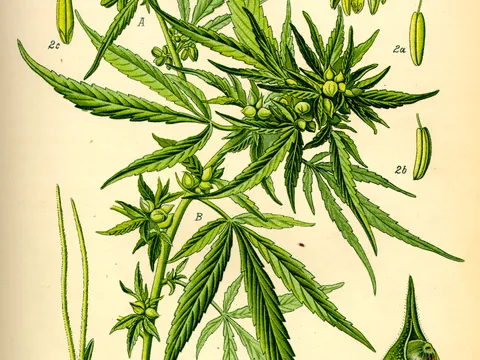 LanguageCannabisThe botanical name is a Scythian word that reached us through Greek and Latin. English "hemp" is the same word, borrowed much earlier and worn down by sound change.
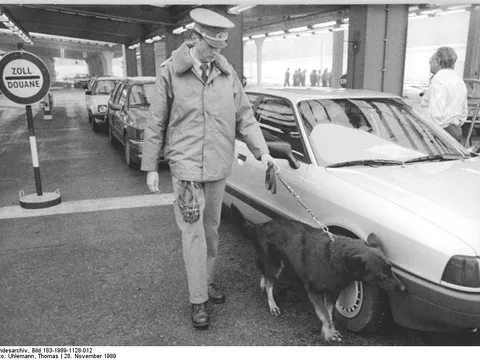 TraditionsHasch in the GDRThe shared hashish pipe of West Germany's 1968 movement, and the East German state that called it capitalist decay, policed a transit trade towards West Berlin, and wrote a narcotics law in 1973.
 PeopleKarl LauterbachA German doctor and epidemiologist who opposed legalising cannabis for years, changed his mind in 2021, and as health minister steered the law that from April 2024 let adults in Germany carry, grow and share it through clubs.
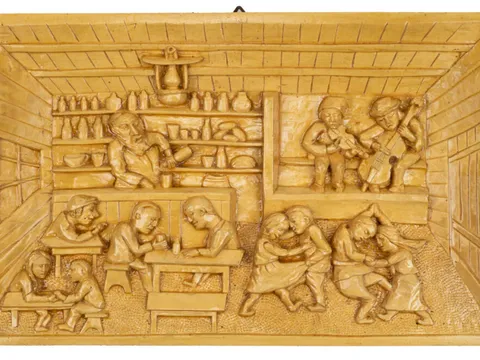 TraditionsThe hemp danceAcross Europe, farmers believed hemp would grow as tall as they could jump. Polish women leapt high around Shrovetide, Swabian couples jumped the Midsummer fire, and Ukrainian girls sowed hemp seed on St Andrew's Eve to learn whom they would marry.
Did you know? all cases →
Germany
In Germany you may grow three plants and carry 25 g — but giving any of it to a friend, even for free, is still a crime. That is why it scores 1 out of 10 for sharing.
The full story →Folklore · Europe
European farmers believed hemp grew as tall as they could jump. Women in Poland did the hemp dance on Shrove Tuesday; couples in Germany leapt the Midsummer fire crying for hemp three ells high.
Read the entry →
Datasets not part of the score
What other organisations publish about Germany, and where it stands among the countries each one covers. Each dataset has a page of its own, with a world map and every country's figure.
Use
UNODC · 2021
Cannabis use
8.8%of people aged 18–64
4.7% · 20074.8% · 20094.5% · 20126.1% · 20157.09% · 20188.8% · 202120072021 ages 18–64 · survey 2021 · 4,400,000 people · UNODC 2026
Source Survey ages and years vary, and some surveys include children. Rates are not age-standardised; do not compare countries directly.ESPAD
Is cannabis easy to get? (students, Europe)
41.1%of students say it is easy to get
Higher than 94% of 36 countriesLowestHighest45.9% of boys · 36.3% of girls · aged 15–16 · 2024
EUDA · 2013
Cannabis in wastewater
50.70mg of THC-COOH a day per 1,000 people
Higher than 24% of 33 countriesLowestHighestcities measured: 3 · 1,110,839 people served
ESPAD · 2024
Students who have tried cannabis (Europe)
17.4%of students have tried it
24.3% · 200318.7% · 200718.7% · 201121.6% · 201522% · 201917.4% · 202420032024 Higher than 81% of 36 countriesLowestHighestaged 15–16 · 2024 · 18.7% in 2011
Bavaria only, the one German state in the ESPAD trend database.
WHO, Our World in Data · 2020
Alcohol drunk per person
11.84litres of pure alcohol a year
13.82 · 200013.82 · 200113.48 · 200213.26 · 200313.07 · 200413.01 · 200512.89 · 200612.79 · 200712.60 · 200812.46 · 200912.41 · 201012.39 · 201112.39 · 201212.31 · 201312.23 · 201412.15 · 201512.17 · 201612.23 · 201712.22 · 201812.22 · 201911.84 · 202020002020 Higher than 97% of 187 countriesLowestHighestper person aged 15 or over · 2020 · 13.82 in 2000 · 12.41 in 2010
EUDA · 2024
People entering treatment for cannabis
52.1%of people entering drug treatment came for cannabis
Higher than 93% of 29 countriesLowestHighest18,923 of 36,349 people · 2024
Law
EUDA · 2024
Offences for cannabis use or possession
74per 100,000 people
123 · 2007121 · 2008122 · 2009119 · 2010121 · 2011127 · 2012141 · 2013157 · 2014159 · 2015175 · 2016199 · 2017215 · 2018223 · 2019226 · 2020217 · 2021209 · 2022208 · 202374 · 202420072024 Higher than 52% of 23 countriesFewerMore61,670 offences in 2024 · cannabis only · use or possession, not dealing · 99,562 in 2010 · 188,453 in 2020
UNODC · 2024
Police contact for drug use or possession
144per 100,000 people
305 · 2020267 · 2021255 · 2022252 · 2023144 · 202420202024 Higher than 68% of 101 countriesFewerMore120,255 people in 2024 · all drugs together
UNODC · 2024
Cannabis seized
24,366kg in 2024
5,451 · 20157,829 · 20169,026 · 201719,759 · 202224,628 · 202324,366 · 202420152024 Higher than 80% of 163 countriesLess seizedMore seized19,362 kg of herb · 5,004 kg of resin · 5,451 kg in 2015
Society
Pew Research Center · 2025
Is using marijuana morally wrong?
25%call it immoral
Higher than 12% of 25 countriesFewer disapproveMore disapprove31% acceptable · 42% not a moral issue · 1,006 people asked
OpenAlex · 2025
Research on cannabis
3.1papers per million people
0.0 · 19580.0 · 19590.0 · 19600.0 · 19620.0 · 19630.0 · 19650.0 · 19660.0 · 19670.0 · 19680.0 · 19690.0 · 19700.0 · 19710.0 · 19720.1 · 19730.1 · 19740.1 · 19750.0 · 19760.1 · 19770.1 · 19780.0 · 19790.0 · 19800.0 · 19810.0 · 19820.0 · 19830.0 · 19840.0 · 19850.0 · 19860.0 · 19870.0 · 19880.0 · 19890.1 · 19900.0 · 19910.0 · 19920.0 · 19930.1 · 19940.1 · 19950.1 · 19960.2 · 19970.3 · 19980.4 · 19990.4 · 20000.6 · 20010.8 · 20020.9 · 20031.1 · 20041.3 · 20051.2 · 20061.5 · 20071.8 · 20081.9 · 20091.9 · 20102.0 · 20112.2 · 20122.2 · 20132.2 · 20142.4 · 20152.5 · 20162.5 · 20172.6 · 20183.0 · 20193.1 · 20203.3 · 20213.2 · 20222.9 · 20233.5 · 20243.1 · 202519582025 Higher than 76% of 176 countriesLowestHighest260 papers in 2025 · 3 in 1970 · 5 in 1990 · 160 in 2010
Cato and Fraser Institutes · 2023
Human Freedom Index
8.67of 10
8.79 · 20008.74 · 20018.76 · 20028.79 · 20038.75 · 20048.74 · 20058.75 · 20068.73 · 20078.71 · 20088.71 · 20098.72 · 20108.74 · 20118.73 · 20128.78 · 20138.82 · 20148.83 · 20158.79 · 20168.76 · 20178.75 · 20188.76 · 20198.36 · 20208.37 · 20218.67 · 20228.67 · 202320002023 Higher than 90% of 164 countriesLess freeFreerrank #17 of 165 · personal freedom 9.27 · economic freedom 7.84
V-Dem, Our World in Data · 2025
Civil liberties
0.94of 1 in 2025
0.65 · 19000.65 · 19010.65 · 19020.65 · 19030.65 · 19040.65 · 19050.65 · 19060.65 · 19070.65 · 19080.65 · 19090.65 · 19100.65 · 19110.65 · 19120.65 · 19130.60 · 19140.57 · 19150.57 · 19160.57 · 19170.58 · 19180.74 · 19190.77 · 19200.77 · 19210.76 · 19220.76 · 19230.76 · 19240.76 · 19250.76 · 19260.76 · 19270.76 · 19280.76 · 19290.75 · 19300.75 · 19310.72 · 19320.19 · 19330.05 · 19340.05 · 19350.05 · 19360.05 · 19370.04 · 19380.03 · 19390.03 · 19400.03 · 19410.03 · 19420.03 · 19430.03 · 19440.97 · 19910.97 · 19920.97 · 19930.97 · 19940.97 · 19950.97 · 19960.97 · 19970.97 · 19980.97 · 19990.97 · 20000.97 · 20010.97 · 20020.97 · 20030.97 · 20040.97 · 20050.97 · 20060.97 · 20070.97 · 20080.97 · 20090.97 · 20100.97 · 20110.97 · 20120.96 · 20130.96 · 20140.96 · 20150.96 · 20160.96 · 20170.96 · 20180.96 · 20190.95 · 20200.95 · 20210.95 · 20220.95 · 20230.94 · 20240.94 · 202519002025 Higher than 91% of 175 countriesFewer libertiesMore liberties0.76 in 1925
Our World in Data, World Bank · 2025
Population
83,491,249people in 2025
55,775,391 · 190064,056,716 · 191063,273,356 · 192067,246,048 · 193071,740,083 · 194069,847,778 · 195072,811,635 · 196078,205,103 · 197078,315,373 · 198079,707,963 · 199081,797,255 · 200080,830,916 · 201083,628,711 · 202083,491,249 · 202519002025 Higher than 90% of 196 countriesLowestHighest55,775,391 in 1900 · 69,847,778 in 1950 · 81,797,255 in 2000
CEPII
Former colonial rulers
Once ruled by
World Bank · 2025
Government effectiveness
83of 100
90 · 199687 · 199889 · 200089 · 200286 · 200385 · 200487 · 200588 · 200689 · 200787 · 200888 · 200982 · 201085 · 201187 · 201287 · 201391 · 201491 · 201590 · 201689 · 201788 · 201890 · 201986 · 202088 · 202187 · 202285 · 202383 · 202483 · 202519962025 Higher than 90% of 195 countriesLowestHighestestimate 1.49 on a scale of −2.5 to 2.5 · 2025 · 89 in 2000 · 91 in 2015
Eurostat · 2026
Minimum wage
€2,343a month
1,444 · 20151,444 · 20161,506 · 20171,506 · 20181,561 · 20191,544 · 20201,585 · 20211,634 · 20221,997 · 20232,054 · 20242,161 · 20252,343 · 202620152026 Higher than 90% of 31 countriesLowestHighestgross, full time · January 2026 · €1,444 in 2015
Transparency International · 2024
Corruption Perceptions Index
75of 100
79 · 201278 · 201379 · 201481 · 201581 · 201681 · 201780 · 201880 · 201980 · 202080 · 202179 · 202278 · 202375 · 202420122024 Higher than 91% of 178 countriesLowestHighest0 highly corrupt, 100 very clean · 2024 · 81 in 2015 · 80 in 2020
Pew Research Center · 2020
Most common religion
Christians
the largest group · 2020
World Bank · 2025
Income per person
$62,824per person
42,355 · 199044,196 · 199144,744 · 199244,018 · 199345,005 · 199445,548 · 199545,888 · 199646,671 · 199747,642 · 199848,625 · 199949,956 · 200050,688 · 200150,487 · 200250,192 · 200350,786 · 200451,265 · 200553,307 · 200654,921 · 200755,514 · 200852,569 · 200954,826 · 201057,951 · 201158,110 · 201258,182 · 201359,203 · 201459,669 · 201560,505 · 201661,965 · 201762,481 · 201862,950 · 201960,300 · 202062,631 · 202163,778 · 202263,140 · 202362,655 · 202462,824 · 202519902025 Higher than 89% of 187 countriesLowestHighestat purchasing power parity, 2021 dollars · 2025 · $42,355 in 1990 · $54,826 in 2010
Wikimedia · 2026.792
Views of the cannabis article on Wikipedia
169page views in 2026–10
7,739 · 20154,900 · 20154,391 · 20154,636 · 20154,369 · 20154,349 · 20155,074 · 20163,999 · 20164,138 · 20163,718 · 20163,520 · 20163,802 · 20164,430 · 20162,962 · 20162,962 · 20163,059 · 20162,874 · 20162,929 · 20163,816 · 20172,985 · 20173,533 · 20172,780 · 20173,017 · 20172,680 · 20172,551 · 20172,341 · 20172,532 · 20172,617 · 201721,587 · 201728,094 · 201737,241 · 201830,701 · 201833,210 · 201827,713 · 201826,113 · 201819,769 · 201816,360 · 201816,312 · 201818,639 · 201829,520 · 201829,540 · 201827,825 · 201833,525 · 201927,135 · 201926,147 · 201921,677 · 201921,237 · 201921,590 · 201918,893 · 201920,372 · 201917,874 · 201917,868 · 201919,526 · 201917,438 · 201923,150 · 202022,435 · 202020,071 · 202019,986 · 202021,488 · 202019,963 · 202017,997 · 202017,107 · 202017,809 · 202017,067 · 202018,919 · 202017,716 · 202019,938 · 202118,569 · 202119,472 · 202117,217 · 202115,553 · 202114,031 · 202110,746 · 202111,563 · 202111,640 · 202122,641 · 202123,634 · 202120,294 · 202112,532 · 20229,032 · 20228,782 · 20228,945 · 202211,832 · 202212,488 · 202211,712 · 202212,152 · 202210,378 · 202216,971 · 202215,144 · 20229,997 · 202213,958 · 202311,789 · 202311,825 · 202316,858 · 202310,614 · 20239,424 · 202310,064 · 202313,625 · 202311,155 · 20239,451 · 20239,704 · 20237,657 · 20239,028 · 202414,060 · 202418,210 · 202425,921 · 202413,838 · 202412,267 · 202411,843 · 202410,124 · 20248,655 · 20248,791 · 20247,770 · 20249,245 · 20249,959 · 20258,666 · 202511,335 · 202510,235 · 20258,884 · 20258,340 · 20258,823 · 20258,399 · 20257,268 · 20257,737 · 20257,080 · 20257,612 · 20258,931 · 20267,879 · 20269,185 · 20268,138 · 20267,857 · 20267,747 · 20266,760 · 20265,373 · 20265,138 · 2026169 · 202620152026 Higher than 92% of 26 countriesLowestHighestCannabis als Rauschmittel · de Wikipedia
German Wikipedia, also read in Austria and Switzerland.
World Bank · 2024
Development indicators
93.5%use the internet
0.1% · 19900.2% · 19910.4% · 19920.5% · 19930.9% · 19941.8% · 19953% · 19966.7% · 19979.9% · 199820.8% · 199930.2% · 200031.7% · 200148.8% · 200255.9% · 200364.7% · 200468.7% · 200572.2% · 200675.2% · 200778% · 200879% · 200982% · 201081.3% · 201182.3% · 201284.2% · 201386.2% · 201487.6% · 201584.2% · 201684.4% · 201787% · 201888.1% · 201989.8% · 202091.4% · 202191.6% · 202292.5% · 202393.5% · 202419902024 Higher than 81% of 195 countriesLowestHighest82% live in towns · 23.2% aged 65+ · life expectancy 80.8 · higher education 76.7% · 2024 · 30.2% in 2000 · 82% in 2010
GDELT · 2025
Cannabis in the news
0.0076%of global news: cannabis articles from here
0.0107% · 20170.0125% · 20180.0134% · 20190.0108% · 20200.013% · 20210.0105% · 20220.0117% · 20230.0177% · 20240.0076% · 202520172025 Higher than 94% of 147 countriesLowestHighest2025 average, 348 days · 0.0125% in 2018 · 0.013% in 2021
Plant and market
EUDA · 2024
Street price of cannabis (Europe)
€10.00a gram of herb
7.26 · 20027.30 · 20037.20 · 20047.20 · 20058.20 · 20068.10 · 20077.90 · 20087.90 · 20098.70 · 20108.90 · 20119.10 · 20129.40 · 20139.20 · 201410.10 · 201510.00 · 201610.00 · 201710.20 · 20189.90 · 201910.00 · 202010.00 · 202110.00 · 202210.00 · 202310.00 · 202420022024 Higher than 50% of 28 countriesLowestHighest€9.70 a gram of resin · 2024 · €8.70 in 2010 · €10.10 in 2015
EUDA · 2006
THC in cannabis sold (Europe)
8.3%THC in herb
8.4% · 200211% · 200410.6% · 20058.3% · 200620022006 Higher than 30% of 27 countriesLowestHighest6.7% in resin · 2006
OpenStreetMap · 2026
Cannabis shops on the map
165shops mapped
Higher than 86% of 59 countriesFewer shopsMore shops2.0 per million people · 2026
GBIF · 2026
Records of the cannabis plant
923dated records
1 · 17772 · 18273 · 18304 · 18335 · 18517 · 18528 · 18559 · 185810 · 186612 · 186714 · 187915 · 188317 · 188418 · 188720 · 189021 · 189324 · 189629 · 190131 · 190232 · 190433 · 190635 · 191036 · 191237 · 191539 · 192040 · 192342 · 192943 · 1931100 · 1945101 · 1950102 · 1951103 · 1952104 · 1953106 · 1954107 · 1957108 · 1959110 · 1960111 · 1961112 · 1962114 · 1963117 · 1964119 · 1966120 · 1968121 · 1969133 · 1972134 · 1973136 · 1974137 · 1975140 · 1976143 · 1977146 · 1978147 · 1979157 · 1980159 · 1981169 · 1982188 · 1983201 · 1984209 · 1985217 · 1986233 · 1987243 · 1988280 · 1989286 · 1990291 · 1991292 · 1992299 · 1993306 · 1994315 · 1995341 · 1996357 · 1997378 · 1998393 · 1999408 · 2000413 · 2001415 · 2002418 · 2003422 · 2004425 · 2005434 · 2006440 · 2007449 · 2008457 · 2009461 · 2010470 · 2011480 · 2012495 · 2013502 · 2014515 · 2015523 · 2016537 · 2017561 · 2018580 · 2019624 · 2020671 · 2021736 · 2022786 · 2023833 · 2024898 · 2025923 · 202617772026 Higher than 95% of 128 countriesLowestHighest1,757 more without a date · 25 in 2026 · 110 by 1960 · 408 by 2000
FAO · 2024
Hemp grown
4,800ha in 2024
3,576 · 19614,973 · 19624,372 · 19634,548 · 19642,903 · 19652,598 · 19662,048 · 19671,875 · 19681,462 · 19691,698 · 19701,548 · 1971474 · 19720 · 19730 · 19740 · 19750 · 19760 · 19770 · 19780 · 19790 · 19800 · 19810 · 19820 · 19830 · 19840 · 19850 · 19860 · 19870 · 19880 · 19890 · 19900 · 19910 · 19920 · 20100 · 20110 · 20120 · 20133,600 · 20194,500 · 20204,600 · 20215,600 · 20222,900 · 20234,800 · 202419612024 Higher than 82% of 39 countriesLowestHighest3,576 ha in 1961 · 0 ha in 1980
ClinicalTrials.gov · 2026
Clinical trials of cannabis medicines
41studies so far
1 · 20103 · 20114 · 20124 · 20134 · 20145 · 20155 · 20167 · 201711 · 201815 · 201917 · 202022 · 202124 · 202233 · 202338 · 202440 · 202541 · 202620102026 Higher than 88% of 50 countriesLowestHighest1 actual starts in 2026 · as of 2026–10–26 · 1 by 2010 · 17 by 2020
Enforcement 1 report · the Cannabis Enforcement Tracker →
How the law above is applied: raids, seizures, fields destroyed, arrests and sentences, as recorded by the Cannabis Enforcement Tracker, our companion site.
- RaidRaids in Dortmund and Waltrop uncover grow op and arsenal
Police and prosecutors searched four flats, a company and two snack bars in Dortmund and Waltrop on 6 October, seizing a professional cannabis plantation, firearms and data carriers.
History 37 of 37 checked against a source
Score and entries per decade
44 today, from 100 before its first recorded change
This country's score Entries that moved the score Context only
20262 entries0 score changes
Medical ✓ Article
German health insurers stop paying for cannabis flower
From 30 July 2026 statutory health insurance no longer pays for dried cannabis flower. The health ministry's FAQ dates the same statute's entry into force as 29 July. Extracts in standardised quality, and medicines containing dronabinol or nabilone, can still be covered. A first insured prescription starts with a six-month trial of an authorised cannabis finished medicine. A patient already on an extract or a compounded preparation before 30 July can continue without that trial. A doctor can still prescribe flower as a private prescription.
Debate ✓
Germany's second evaluation of the Cannabis Act, and ministers call it a mistake
Two years after possession was legalised, the researchers evaluating the law published their second interim report. More of the cannabis used in Germany came from home growing and pharmacies, they found no rise in use that could be put down to the reform, and the growing associations played only a small part in pushing back the black market. Fewer young people were being sent to early-intervention programmes, and the routine prescribing of high-THC medical cannabis was not justified by studies. The health, interior and family ministers answered that the partial legalisation had been a mistake and that action was urgently needed.
20251 entry0 score changes
20231 entry0 score changes
20171 entry1 score change
20051 entry0 score changes
20042 entries0 score changes
Easing ✓
Germany's Constitutional Court rejects driving penalties based solely on trace THC detection
In 1 BvR 2652/03, the Federal Constitutional Court overturned a cannabis driving fine and driving ban and remanded the case. The lower courts had relied on THC below 0.5 nanograms per millilitre without distinguishing detection from a possible effect on driving. The Court required a concentration capable of supporting the statutory assumption of an abstract traffic danger and discussed the then-used 1 nanogram threshold. This limited trace-only findings under the existing traffic offence; it was neither a general guarantee of safe driving nor the later statutory THC limit.
Other law ✓
Germany's Constitutional Court rejects a renewed cannabis-law referral as inadmissible
In 2 BvL 8/02, the Federal Constitutional Court rejected a referral from Bernau's youth court seeking reconsideration of cannabis penalties after the 1994 constitutional decision. It found that the referral failed to establish the relevance of the challenged provisions to the case and did not satisfy the requirements for reopening questions covered by the earlier ruling. The operative decision was procedural inadmissibility, although its reasons addressed the renewed arguments. Existing cannabis penalties remained in place.
19971 entry0 score changes
19961 entry0 score changes
19941 entry1 score change
19931 entry0 score changes
19921 entry0 score changes
19901 entry0 score changes
19841 entry0 score changes
19821 entry0 score changes
19752 entries0 score changes
International ✓
East Germany joins the UN drug conventions
Two years after its Narcotic Drugs Act made producing, trafficking and consuming cannabis a crime, the German Democratic Republic signed on to the Single Convention and the Convention on Psychotropic Substances.
International ✓
Germany joins the 1972 Protocol amending the Single Convention
Germany ratified the Protocol amending the Single Convention on Narcotic Drugs on 20 February 1975. The Protocol, adopted in Geneva on 25 March 1972 and in force from 8 August 1975, strengthened the international control board and, among other changes, lets parties provide treatment, education, after-care and rehabilitation for people who use drugs, as an alternative to conviction or punishment or in addition to it.
19731 entry0 score changes
19711 entry1 score change
19702 entries0 score changes
Debate ✓ Article
East Germany's party newspaper says hashers do not read Marx
Neues Deutschland published Günter Böhme's article under the headline commonly translated as 'Hashers don't read Das Kapital', presenting Western drug culture as a distraction from socialist politics. Historian Ned Richardson-Little traces the phrase to the West German magazine konkret. The archive confirms the dated item; no new law resulted from it.
Enforcement ✓ Article
East Germany finds itself a transit route for hashish
In 1968 a single person was caught bringing hashish into East Germany. In 1970 there were 328 seizures totalling 142 kg of drugs, 141 kg of it hashish, almost all bound for West Berlin. The traffic, and the opening of transit roads to West Berlin in 1971 and 1972, preceded the Narcotic Drugs Act of 1973. Cannabis remained exceptionally hard to obtain for East Germans themselves until the border opened in 1989.
19611 entry0 score changes
19591 entry0 score changes
19451 entry0 score changes
19291 entry1 score change
19201 entry0 score changes
19071 entry0 score changes
18961 entry0 score changes
18901 entry0 score changes
18861 entry0 score changes
18721 entry0 score changes
Sources hover a number in the text to see its source
- Cited
- 40
- Websites
- 24
- Last reviewed
- History checked
- 37/37
Most cited
- gesetze-im-internet.de13
- duden.de4
- topagrar.com2
- abda.de1
- background.tagesspiegel.de1
- beck-aktuell.de1
All 41 sources
- Duden — Grasarchived
- Duden — Hascharchived
- Duden — Hanfarchived
- Duden — Jointarchived
- Konsumcannabisgesetz § 3 — permitted possessionarchived
- Bundesgesundheitsministerium — FAQ zum Cannabisgesetzarchived
- Konsumcannabisgesetz § 1 — definitions of home (Wohnsitz) and habitual residencearchived
- Konsumcannabisgesetz § 36 — BußgeldvorschriftenParagraph 1 no. 1; paragraph 2 (fine up to €30,000)archived
- Konsumcannabisgesetz § 34 — StrafvorschriftenParagraphs 1 (no. 1, 2), 3 (no. 1, 4)archived
- Konsumcannabisgesetz § 2 — handling of cannabis, including the ban on import and exportarchived
- Konsumcannabisgesetz § 9 — private home cultivationarchived
- Konsumcannabisgesetz (KCanG) — full textarchived
- Konsumcannabisgesetz § 16, Mitgliedschaft (gesetze-im-internet.de)archived
- Deutscher Hanfverband — Der erste Zwischenbericht zur Evaluation des CanG: Entwicklung des Cannabismarktes (EKOCAN, October 2025)archived
- ABDA — Die Apotheke: Zahlen, Daten, Fakten 2026, pp. 90–91, Medizinisches Cannabis2026archived
- DIW Wochenbericht 13/2026 — Teillegalisierung hat Cannabiskonsum kurzfristig nicht strukturell verändert (interview)archived
- Medizinal-Cannabisgesetz (MedCanG) — full textarchived
- Sozialgesetzbuch V § 31 — Arznei- und VerbandmittelSubsection 6. Insured cover for extracts, dronabinol and nabilone. Sentence 2 requires a six-month trial of an authorised cannabis finished medicine first.archived
- Kassenärztliche Bundesvereinigung — Cannabisarzneimittel (updated 20 August 2026)Dried flower left statutory-insurance cover on 30 July 2026. Patients already on an extract or a compounded preparation before that date are outside the six-month trial. Switching off flower needs a fresh approval unless the doctor is excused.archived
- Juravendis — MedCanG-Änderung 2026, Telemedizin-Einschränkung und Versandverbotarchived
- Business of Cannabis — Is cannabis legal in Germany in 2026?archived
- Hanf Journal — 455 Cannabis-Clubs genehmigt: Deutschlands Anbauvereinigungen wachsen trotz Bürokratie (13 August 2026)archived
- top agrar — Nische Nutzhanf: Das ist beim Anbau zu beachten (1 March 2024)archived
- top agrar — Nutzhanfanbau: Die Nische schrumpft (1 October 2025), on BLE figuresarchived
- BfR — Psychoaktive Wirkungen durch den Konsum von Hexahydrocannabinol (HHC)-haltigen Erzeugnissen zu erwarten, opinion 019/2025 (4 June 2025)archived
- Tagesspiegel Background — Konsumcannabis-Modellprojekte: BLE lehnt Modellvorhaben wegen fehlender zweiter Säule abarchived
- Straßenverkehrsgesetz § 24a (gesetze-im-internet.de)archived
- Straßenverkehrsgesetz § 24c — alcohol and cannabis prohibition for novice driversarchived
- Strafgesetzbuch § 316 — Trunkenheit im Verkehrarchived
- The Golden Bough: The Magic Art and the Evolution of Kings, Part I, Volume I (third edition)James George Frazer · Macmillan · 1911archived
- DDR im Blick — Störung und Missbrauch des Reise- und Güterverkehrs Berlin–BRD (state security report, 1970)archived
- Gesetz über den Verkehr mit Suchtmitteln (Suchtmittelgesetz), Gesetzblatt der DDR, Teil I (1973)archived
- Wikipedia — Hanfparadearchived
- Deutsche Welle via TNI/UNGASS on Drugs — German SPD health expert calls on next government to legalize cannabis (13 October 2021)archived
- Pew Research Center — In 25-country survey, Americans especially likely to view fellow citizens as morally bad (5 March 2026), survey of 2025archived
- OpenAlex — works mentioning cannabis or cannabinoids, by author country (datasets/openalex-cannabis-papers.csv)archived
- ClinicalTrials.gov — registered studies with a cannabis or cannabinoid intervention, as of 26 October 2026 (datasets/clinicaltrials-cannabis.csv)archived
- Universität Tübingen — Neue Zwischenergebnisse zur Evaluation des Konsumcannabisgesetzes (KCanG) (1 April 2026)archived
- beck-aktuell — Bayern beschließt Cannabis-Verbot für Volksfeste und Biergärten (16 April 2024)archived
- International Narcotics Control Board — Travellers carrying medicines containing controlled substances