Denmark
20/100
#43 of 196 worldwide
#17 of 45 in Europe
Possession is punished with fines. The medical cannabis programme became permanent in 2026, and Denmark hosts licensed producers. Christiania's open market was shut down in 2024.
In short all countries →
- Can I carry it?NoEven a small amount can bring a fine or a charge
- Can I grow it?NoIt is a crime
- Can I buy it?LimitedOn prescription only
- Can I use it in public?NoNot in public, and even at home the law does not protect it
- What if I'm caught?A light penaltyFor a small amount, usually a fine, a referral to treatment or nothing at all; prison is rare
A rough guide read from the scores and the rules below, not legal advice. The details and the exceptions are in each segment: select an answer to jump to it.
Cannabis in Denmark not part of the score · all 27 datasets ↓
Who uses it
About 1 in 15
people aged 16–64 in Denmark used cannabis in the past year: about 250,000 people.
- Past year
- 6.6%
- Europe median
- 5.8%
- Aged 15–16, 2024
- 6.3%
UNODC · survey 2023
Source Past-year cannabis use among people aged 16–64. People who used cannabis in the past year, from a 2023 survey, applied to today's population aged 16–64. The population is approximate: the survey ages cut through an age group, or were not recorded and ages 15–64 are used.Survey ages and years vary, and some surveys include children. Rates are not age-standardised; do not compare countries directly.
UNODC World Drug Report 2026, annex table 1.2. Population from the World Bank, aged 16–64. The whole dataset →
Use across Europe
17thhighest of 44 surveyed countries
- 🇳🇴 Norway6.9%
- 🇧🇬 Bulgaria6.7%
- 🇩🇰 Denmark6.6%
- 🇲🇰 North Macedonia6.6%
- 🇬🇧 United Kingdom6.5%
Past-year use, latest survey of each. Survey years and ages differ. On the map →
Cannabis in figures
- Police contact for drug use or possession224per 100,000 people · 2024
- Cannabis seized3,837kg in 2024 · 2024
- Cannabis shops on the map9shops mapped · 2026
- Cannabis in wastewater105.80mg of THC-COOH a day per 1,000 people · 2024
- Is cannabis easy to get? (students, Europe)41.1%of students say it is easy to get
The dot: where it stands among the countries each dataset covers, lowest to highest. All datasets ↓
Score breakdown 20/100 · how the scores are made
Possession of any amount is an offence. For small amounts for personal use the standard outcome is a fine that rises with repeat offences;[1] larger amounts or signs of dealing can bring prison.[1] The guideline fine for up to 9.9 g of hash is DKK 2,000 for a first offence, DKK 3,000 for a second and DKK 4,000 thereafter.[1] Fines replaced warnings in 2004.
| Amount | What happens | Punishment | Fine |
| Up to 9.9 gFirst offence; guideline fine for up to 9.9 g of hash | CriminalPossession of euphoriant substances | — | Up to DKK 2,000 |
| Up to 9.9 g (second offence)Second offence | CriminalPossession of euphoriant substances | — | Up to DKK 3,000 |
| Up to 9.9 g (third offence)Third and later offences | CriminalPossession of euphoriant substances | — | Up to DKK 4,000 |
Growing cannabis for its THC is illegal and prosecuted; penalties scale with the number of plants.[1] Larger grows face up to two years under the Euphoriants Act,[2] and trafficking-scale cases go under Penal Code section 191.[3] Licensed medical production and permitted industrial-hemp growing are exceptions.[4]
| Amount | What happens | Punishment | Fine |
| Growing for personal useFine under the charging guidance, scaling with plant numbers | CriminalCultivation of euphoriant substances | — | — |
| Larger or commercial growingFine or up to two years under the Euphoriants Act; trafficking-scale cases go under Penal Code section 191 (up to ten years) | CriminalCultivation of euphoriant substances | Up to 2 years | — |
Fines for users; prison for cultivation and dealing, with long sentences for organised trade.[1] Fines replaced warnings in 2004.
Supply is a crime.[4][1] Ordinary supply is punished under the Euphoriants Act with a fine or up to two years in prison; aggravated supply under Penal Code section 191 — to a considerable number of people, for a large payment or in otherwise aggravating circumstances — carries up to ten years.[2][3] The six-year maximum for serious supply dates to 1969.
| Amount | What happens | Punishment | Fine |
| Ordinary supply (Euphoriants Act)Fine or up to two years | CriminalUnlawful supply of euphoriant substances | Up to 2 years | — |
| Aggravated supply (Penal Code section 191)Considerable number of buyers, large payment or other aggravating circumstances | CriminalAggravated supply (Penal Code section 191) | Up to 10 years | — |
No legal adult-use source. Copenhagen's open hash market on Christiania's Pusher Street was dug up and closed in 2024.[5] Medical cannabis is dispensed by pharmacies on prescription.[6] Pusher Street was dug up and closed in 2024. The medical scheme became permanent in 2026.
Context not part of the score · every country, by topic →
There is no legal way to buy cannabis. Most adults buy hashish from dealers and smoke at home: possession of any amount is an offence, punished with fines that rise with repeat offences.[1] Copenhagen's open hash market on Pusher Street was dug up and closed in 2024, scattering the trade.[5] Use itself is not a separate offence, but users are fined through possession.[4] Pusher Street was dug up and closed in 2024.
A pilot programme that began in 2018 let any doctor prescribe cannabis products not otherwise approved as medicines, as flower and oils.[6] Parliament made it permanent from 1 January 2026, with partial reimbursement.[7] Low-THC products up to 0.2% sit outside the prescription route.[8] The pilot began in 2018. The medical scheme became permanent in 2026.
No club is confirmed. A Europe-wide survey of cannabis social clubs carried out in 2018 and 2019 received no answer from Denmark but, because of contradictory sources, could not rule out that clubs were active there.[9] No law in Denmark provides for them; Malta (since 2021) and Germany (since 2024) license non-profit cannabis associations, but only under their own laws.[10][11] Nothing more recent was found.[9]
Cannabis seeds are excluded from the controlled-substances order, so possession and sale are lawful;[4] germinating them is not, unless the resulting cultivation is licensed or permitted.[4] Cuttings are cannabis plant material and therefore controlled.[4] Licensed medical businesses may propagate and distribute plants or plant parts to licensed growers,[4] while low-THC industrial hemp may be grown under permit.[8] Clones are consequently confined to regulated licensed channels.[4][12]
Industrial hemp has been legal since 1998: growers register the crop with the Agricultural Agency and use approved varieties with no more than 0.2% THC.[13][14] CBD sits in a grey zone, sold as prescription products or unauthorised food rather than on an open consumer market.[14]
Denmark licenses cultivation and manufacture of medical cannabis and hosts several export-oriented producers.[15][7] The medical scheme became permanent in 2026.
The EU drugs agency's statistical bulletin records 522 kg of herbal cannabis and 3,315 kg of cannabis resin seized in Denmark in 2024, against 384 kg and 3,965 kg in 2023.[16] Herbal cannabis was seized on 1,395 occasions and resin on 14,751.[16] Countries record seizures differently, so the figures are not comparable across borders.[16]
There is no legal recreational supply for anyone.[1] Possession of any amount is an offence; for small amounts for personal use the standard outcome is a fine that rises with repeat offences.[1]
Denmark has a fixed limit of 1 nanogram of THC per millilitre of blood, alongside an offence of impaired driving; the rule does not apply to a substance taken in accordance with a medical prescription.[17] Police may stop and test at random, using an oral-fluid test after a physical test and blood taken at a hospital.[17] The driving ban runs from six months to ten years or for life, and prison of up to a year and a half is possible.[17]
A fine solely under the controlled-substances law does not appear on either the private or public criminal-record certificate, although a prison sentence does.[18] Driving is illegal above 0.001 mg THC per kg of blood; higher levels can bring conditional or unconditional licence disqualification.[19]
For half a century hashish was sold openly from stalls on Pusher Street, the main street of Copenhagen's freetown Christiania, until the residents dug the street up themselves in 2024.[5] The freetown began in 1971, when squatters took over an abandoned barracks; its defenders argued that concentrating the trade kept it out of the rest of society, the same reasoning as the Dutch coffeeshop.[20] Every May, Copenhagen's Global Marijuana March sets out from Christiania for the city hall square — smoking is illegal, but during the march the police look the other way.[21] Pusher Street was dug up and closed in 2024. The six-year maximum for serious supply dates to 1969.
Taking cannabis into or out of Denmark is a separate offence from possessing it, normally charged as smuggling or trafficking, with far heavier penalties. That holds almost everywhere, including between two places where cannabis is legal.
A prescription from another country is not recognised by itself. Within the Schengen area a patient can carry prescribed medicine for up to 30 days with a certificate issued by their home health authority; whether cannabis qualifies depends on both countries.[22]
General guidance that applies to almost every country, not a check of Denmark's customs rules.
The street that sold hash openly
Christiania's Pusher Street sold cannabis openly for decades until it was dug up and closed in 2024, ending the country's most famous open market.[5]
Culture the atlas →
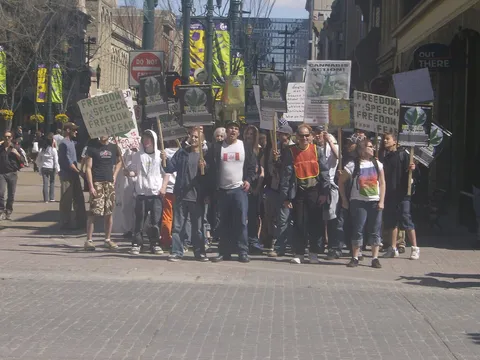 TraditionsThe Global Marijuana MarchOn the first Saturday of May, people in hundreds of cities march for legal cannabis. Brazil's supreme court had to rule that doing so is free speech.
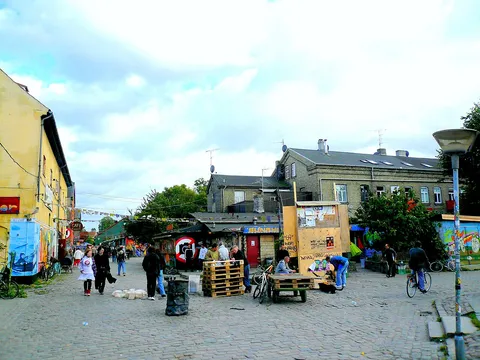 TraditionsPusher StreetFor half a century hashish was sold openly from stalls on one street of Copenhagen's self-governing freetown. In 2024 the residents dug the street up themselves.
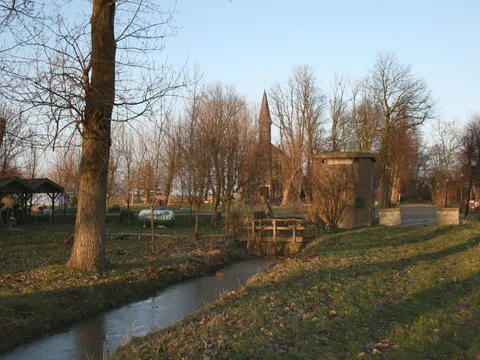 TraditionsRuigoordAn artists' village beside Amsterdam's harbour, linked to Christiania through the freetown movement. Its cannabis history includes the Highlife Cup and a festival with an explicit personal-use policy.
Did you know? all cases →
Places · Copenhagen
For half a century hashish was sold openly from stalls on Pusher Street in Christiania, the freetown in the capital of Denmark. In 2024, after a series of gang shootings, the residents dug up the street themselves.
Read the entry →
Datasets not part of the score
What other organisations publish about Denmark, and where it stands among the countries each one covers. Each dataset has a page of its own, with a world map and every country's figure.
Use
UNODC · 2023
Cannabis use
6.6%of people aged 16–64
5.5% · 20085.4% · 20106.9% · 20136.4% · 20176.3% · 20216.6% · 202320082023 ages 16–64 · survey 2023 · 250,000 people · UNODC 2026
Source Survey ages and years vary, and some surveys include children. Rates are not age-standardised; do not compare countries directly.UNODC · 2024
Cannabis use at 15 and 16
6.3%in the past year
Higher than 37% of 49 countriesLowestHighest2.2% in the past month · 2024 · ages 15–16
ESPAD
Is cannabis easy to get? (students, Europe)
41.1%of students say it is easy to get
Higher than 94% of 36 countriesLowestHighest45.4% of boys · 37.3% of girls · aged 15–16 · 2024
EUDA · 2024
Cannabis in wastewater
105.80mg of THC-COOH a day per 1,000 people
Higher than 73% of 33 countriesLowestHighestcities measured: 6 · 1,194,833 people served
ESPAD · 2024
Students who have tried cannabis (Europe)
12%of students have tried it
24% · 199922.2% · 200325.5% · 200718% · 201112.4% · 201517% · 201912% · 202419992024 Higher than 61% of 36 countriesLowestHighestaged 15–16 · 2024 · 24% in 1999 · 18% in 2011
WHO, Our World in Data · 2020
Alcohol drunk per person
9.49litres of pure alcohol a year
11.69 · 200011.69 · 200111.64 · 200211.55 · 200311.52 · 200411.33 · 200511.21 · 200611.00 · 200710.71 · 200810.48 · 200910.39 · 201010.11 · 20119.83 · 20129.55 · 20139.60 · 20149.61 · 20159.52 · 20169.50 · 20179.40 · 20189.40 · 20199.49 · 202020002020 Higher than 81% of 187 countriesLowestHighestper person aged 15 or over · 2020 · 11.69 in 2000 · 10.39 in 2010
EUDA · 2024
People entering treatment for cannabis
40.8%of people entering drug treatment came for cannabis
Higher than 83% of 29 countriesLowestHighest3,545 of 8,683 people · 2024
Law
UNODC · 2024
Police contact for drug use or possession
224per 100,000 people
301 · 2021332 · 2023224 · 202420212024 Higher than 85% of 101 countriesFewerMore13,488 people in 2024 · all drugs together
UNODC · 2024
Cannabis seized
3,837kg in 2024
4,209 · 20154,163 · 20166,929 · 20179,459 · 20182,954 · 20195,909 · 20203,427 · 20215,571 · 20224,348 · 20233,837 · 202420152024 Higher than 53% of 163 countriesLess seizedMore seized522 kg of herb · 3,315 kg of resin · 4,209 kg in 2015 · 5,909 kg in 2020
Society
OpenAlex · 2025
Research on cannabis
7.3papers per million people
0.2 · 19690.2 · 19710.7 · 19730.2 · 19760.2 · 19770.2 · 19840.2 · 19880.2 · 19890.3 · 19910.5 · 19920.2 · 19930.3 · 19960.3 · 19970.8 · 19980.8 · 19990.3 · 20000.3 · 20010.5 · 20020.8 · 20030.7 · 20041.5 · 20052.0 · 20062.2 · 20073.3 · 20082.8 · 20093.8 · 20104.2 · 20114.3 · 20124.7 · 20135.8 · 20146.5 · 20154.8 · 20168.3 · 20176.7 · 20188.5 · 20199.2 · 202012 · 202110 · 20229.2 · 202310.0 · 20247.3 · 202519692025 Higher than 89% of 176 countriesLowestHighest44 papers in 2025 · 23 in 2010
Cato and Fraser Institutes · 2023
Human Freedom Index
9.03of 10
9.08 · 20009.02 · 20018.99 · 20029.04 · 20039.06 · 20049.00 · 20059.03 · 20069.03 · 20078.97 · 20088.93 · 20098.93 · 20108.93 · 20118.94 · 20128.96 · 20138.98 · 20149.00 · 20159.00 · 20168.98 · 20178.95 · 20188.96 · 20198.73 · 20208.74 · 20218.96 · 20229.03 · 202320002023 Higher than 99% of 164 countriesLess freeFreerrank #2 of 165 · personal freedom 9.75 · economic freedom 8.02
V-Dem, Our World in Data · 2025
Civil liberties
0.96of 1 in 2025
0.93 · 19000.93 · 19010.93 · 19020.93 · 19030.93 · 19040.93 · 19050.93 · 19060.93 · 19070.93 · 19080.93 · 19090.93 · 19100.93 · 19110.93 · 19120.93 · 19130.93 · 19140.93 · 19150.93 · 19160.93 · 19170.93 · 19180.93 · 19190.94 · 19200.94 · 19210.94 · 19220.94 · 19230.94 · 19240.94 · 19250.94 · 19260.94 · 19270.94 · 19280.94 · 19290.94 · 19300.94 · 19310.94 · 19320.93 · 19330.93 · 19340.93 · 19350.93 · 19360.93 · 19370.93 · 19380.93 · 19390.69 · 19400.67 · 19410.65 · 19420.63 · 19430.59 · 19440.66 · 19450.95 · 19460.96 · 19470.96 · 19480.96 · 19490.96 · 19500.96 · 19510.96 · 19520.96 · 19530.96 · 19540.96 · 19550.96 · 19560.96 · 19570.96 · 19580.96 · 19590.96 · 19600.96 · 19610.97 · 19620.97 · 19630.97 · 19640.97 · 19650.97 · 19660.97 · 19670.97 · 19680.97 · 19690.97 · 19700.97 · 19710.97 · 19720.97 · 19730.97 · 19740.97 · 19750.97 · 19760.97 · 19770.97 · 19780.97 · 19790.97 · 19800.97 · 19810.97 · 19820.97 · 19830.97 · 19840.97 · 19850.97 · 19860.97 · 19870.97 · 19880.97 · 19890.97 · 19900.97 · 19910.97 · 19920.97 · 19930.97 · 19940.97 · 19950.97 · 19960.97 · 19970.97 · 19980.97 · 19990.97 · 20000.97 · 20010.97 · 20020.97 · 20030.97 · 20040.97 · 20050.97 · 20060.97 · 20070.97 · 20080.97 · 20090.97 · 20100.97 · 20110.97 · 20120.96 · 20130.96 · 20140.97 · 20150.97 · 20160.97 · 20170.96 · 20180.95 · 20190.94 · 20200.95 · 20210.96 · 20220.96 · 20230.96 · 20240.96 · 202519002025 Higher than 98% of 175 countriesFewer libertiesMore liberties0.94 in 1925 · 0.96 in 1961 · 0.97 in 1990
Our World in Data, World Bank · 2025
Population
6,009,169people in 2025
2,565,333 · 19002,886,076 · 19103,241,362 · 19203,545,296 · 19303,844,754 · 19404,268,408 · 19504,579,347 · 19604,928,674 · 19705,123,079 · 19805,141,024 · 19905,339,659 · 20005,547,865 · 20105,831,529 · 20206,009,169 · 202519002025 Higher than 42% of 196 countriesLowestHighest2,565,333 in 1900 · 4,268,408 in 1950 · 5,339,659 in 2000
CEPII
Former colonial rulers
Once ruled by
World Bank · 2025
Government effectiveness
92of 100
89 · 199691 · 199892 · 200097 · 200296 · 200395 · 200494 · 200596 · 200697 · 200796 · 200896 · 200991 · 201094 · 201192 · 201292 · 201390 · 201490 · 201590 · 201690 · 201792 · 201892 · 201992 · 202096 · 202194 · 202292 · 202391 · 202492 · 202519962025 Higher than 97% of 195 countriesLowestHighestestimate 1.96 on a scale of −2.5 to 2.5 · 2025 · 92 in 2000 · 90 in 2015
Transparency International · 2024
Corruption Perceptions Index
90of 100
90 · 201291 · 201392 · 201491 · 201590 · 201688 · 201788 · 201887 · 201988 · 202088 · 202190 · 202290 · 202390 · 202420122024 Higher than 99% of 178 countriesLowestHighest0 highly corrupt, 100 very clean · 2024 · 91 in 2015 · 88 in 2020
Pew Research Center · 2020
Most common religion
Christians
the largest group · 2020
World Bank · 2025
Income per person
$72,723per person
45,944 · 199046,493 · 199147,277 · 199247,082 · 199349,408 · 199450,645 · 199551,817 · 199653,237 · 199754,278 · 199855,704 · 199957,586 · 200057,925 · 200158,004 · 200258,101 · 200359,560 · 200460,798 · 200562,911 · 200663,251 · 200762,618 · 200859,186 · 200959,856 · 201060,392 · 201160,162 · 201260,746 · 201361,211 · 201462,059 · 201563,469 · 201664,989 · 201765,871 · 201866,759 · 201965,379 · 202069,328 · 202169,089 · 202268,994 · 202371,035 · 202472,723 · 202519902025 Higher than 95% of 187 countriesLowestHighestat purchasing power parity, 2021 dollars · 2025 · $45,944 in 1990 · $59,856 in 2010
Wikimedia · 2026.792
Views of the cannabis article on Wikipedia
3page views in 2026–10
1,703 · 20152,217 · 20152,059 · 20152,148 · 20152,431 · 20152,533 · 20152,887 · 20165,545 · 20162,189 · 20162,331 · 20161,888 · 20162,122 · 20161,403 · 20161,564 · 20162,890 · 20162,689 · 20163,101 · 20162,458 · 20163,990 · 20174,119 · 20173,232 · 20172,480 · 20172,503 · 20172,658 · 20171,976 · 20171,965 · 20172,473 · 20172,924 · 20172,716 · 20172,460 · 20173,837 · 20182,340 · 20182,428 · 20181,930 · 20181,978 · 20182,156 · 20181,578 · 20181,984 · 20182,258 · 20182,294 · 20182,520 · 20182,225 · 20182,808 · 20191,963 · 20191,594 · 20191,333 · 20191,440 · 20191,293 · 20191,215 · 20191,226 · 20191,292 · 20191,019 · 20191,197 · 20191,023 · 20191,320 · 20201,161 · 20201,248 · 20201,075 · 20201,144 · 2020936 · 2020956 · 20201,043 · 20201,068 · 20201,148 · 20201,119 · 2020906 · 20201,043 · 2021932 · 20211,032 · 2021927 · 2021724 · 2021598 · 2021649 · 2021495 · 2021576 · 2021536 · 20211,562 · 2021754 · 2021809 · 2022690 · 2022644 · 2022606 · 2022462 · 2022409 · 2022417 · 2022523 · 2022486 · 2022583 · 2022571 · 2022446 · 2022496 · 2023355 · 2023523 · 2023541 · 2023380 · 2023358 · 2023364 · 2023473 · 2023475 · 2023476 · 2023446 · 2023369 · 2023620 · 2024655 · 2024603 · 2024965 · 2024570 · 2024576 · 2024491 · 2024452 · 2024452 · 2024503 · 2024501 · 2024510 · 2024542 · 2025428 · 2025397 · 2025379 · 2025358 · 2025277 · 2025283 · 2025345 · 2025335 · 2025387 · 2025340 · 2025284 · 2025351 · 2026239 · 2026362 · 2026244 · 2026178 · 2026182 · 2026201 · 2026158 · 2026148 · 20263 · 202620152026 Higher than 8% of 26 countriesLowestHighestCannabis (rusmiddel) · da Wikipedia
World Bank · 2024
Development indicators
99.8%use the internet
0.1% · 19900.2% · 19910.4% · 19920.6% · 19931.3% · 19943.8% · 19955.7% · 199611.4% · 199722.7% · 199830.6% · 199939.2% · 200043% · 200164.2% · 200276.3% · 200380.9% · 200482.7% · 200586.7% · 200685% · 200785% · 200886.8% · 200988.7% · 201089.8% · 201192.3% · 201294.6% · 201396% · 201496.3% · 201597% · 201697.1% · 201797.3% · 201898% · 201996.5% · 202098.9% · 202197.9% · 202298.8% · 202399.8% · 202419902024 Higher than 97% of 195 countriesLowestHighest88.7% live in towns · 20.9% aged 65+ · life expectancy 82.3 · higher education 79% · 2024 · 39.2% in 2000 · 88.7% in 2010
Wikidata · 2001
Parties for legal cannabis
Cannabis Party
founded 2001
GDELT · 2025
Cannabis in the news
0.0008%of global news: cannabis articles from here
0.0043% · 20170.0039% · 20180.0014% · 20190.001% · 20200.001% · 20210.0006% · 20220.001% · 20230.0008% · 20240.0008% · 202520172025 Higher than 74% of 147 countriesLowestHighest2025 average, 348 days · 0.0039% in 2018 · 0.001% in 2021
Plant and market
EUDA · 2022
Street price of cannabis (Europe)
€a gram of herb
€8.50 a gram of resin · 2022
EUDA · 2024
THC in cannabis sold (Europe)
THC in herb
30.1% in resin · 2024
OpenStreetMap · 2026
Cannabis shops on the map
9shops mapped
Higher than 63% of 59 countriesFewer shopsMore shops1.5 per million people · 2026
GBIF · 2026
Records of the cannabis plant
287dated records
1 · 18592 · 18614 · 18645 · 18666 · 18727 · 18748 · 18759 · 187710 · 188312 · 188816 · 188917 · 189418 · 189719 · 189820 · 190521 · 193922 · 196326 · 198127 · 198933 · 199336 · 199539 · 199642 · 199748 · 199857 · 199967 · 200079 · 200195 · 2002109 · 2003123 · 2004126 · 2005133 · 2006146 · 2007160 · 2008166 · 2009170 · 2010173 · 2011175 · 2013176 · 2014178 · 2015179 · 2017180 · 2018181 · 2019187 · 2020208 · 2021224 · 2022245 · 2023257 · 2024276 · 2025287 · 202618592026 Higher than 84% of 128 countriesLowestHighest68 more without a date · 11 in 2026 · 67 by 2000
ClinicalTrials.gov · 2026
Clinical trials of cannabis medicines
11studies so far
1 · 20151 · 20161 · 20172 · 20182 · 20193 · 20206 · 20217 · 20228 · 20238 · 20249 · 202511 · 202620152026 Higher than 68% of 50 countriesLowestHighest2 actual starts in 2026 · as of 2026–10–26 · 3 by 2020
History 21 of 21 checked against a source
Score and entries per decade
20 today, from 100 before its first recorded change
This country's score Entries that moved the score Context only
20261 entry0 score changes
20242 entries0 score changes
Medical ✓
Denmark agrees to make its medical cannabis trial permanent
The government and opposition parties agreed that the prescription trial begun on 1 January 2018, extended in 2021 and due to end in 2025, would become permanent from 2026. It keeps its focus on multiple sclerosis, spinal cord injury, cancer and chronic pain, with better guidance for doctors; the health ministry's evaluation had found no new evidence strengthening the medical case.
Tightening ✓ Article
Christiania closes Pusher Street
For half a century hashish had been sold openly from stalls in Copenhagen's freetown. After a series of gang shootings, residents dug up the street themselves and the stalls were removed for good.
20231 entry0 score changes
20181 entry1 score change
20072 entries0 score changes
Tightening ✓
Denmark raises possession fines and clarifies social grounds for warnings
Law 526 strengthened the fine policy for unlawful drug possession and required sentencing to consider the substances' harmful effects. It qualified the normal restriction on warnings where social circumstances favoured a warning and possession resulted from strong dependence after prolonged, persistent drug misuse. The Danish Health Authority reported both the tougher fine policy and wider warning exception. The law took effect on 1 July 2007, following signature on 6 June.
Tightening ✓
Denmark introduces a blood-based prohibition on driving after specified drugs
Law 524 added a Traffic Act rule prohibiting driving or attempting to drive with substances classified as dangerous to road safety in the blood, alongside the existing impairment rule. It exempted substances taken in accordance with a lawful prescription and allowed police saliva and sweat samples and eye inspections. The reform covered illicit drugs including cannabis; its statutory rule did not require proof of impaired driving for the new blood-based offence. Implementing Order 655 counted THC only above 0.001 mg per kg of blood.
20041 entry1 score change
20031 entry0 score changes
19911 entry0 score changes
19842 entries0 score changes
Other law ✓
Denmark's replacement narcotics order retains cannabis in its strictest list
Order 559 replaced the 1981 narcotics order. List A defined cannabis as the above-ground parts of cannabis plants with resin still present, excluding hemp seeds and isolated hemp fibres. Section 2 prohibited possession, production, trade and import or export of List A substances except under exceptional permission from the health authority. The order continued existing controls rather than introducing Denmark's first cannabis ban. It took effect on publication on 30 November, after signature on 9 November 1984.
Enforcement ✓
A motorcycle gang takes over Christiania's drug market
After fighting among motorcycle gangs in the early 1980s, the Bullshit Motorcycle Club held sole control of the trade by 1984. It was cleared from the area in 1987, after a dismembered body was found in a bicycle shop. In 1989 the Danish parliament gave the freetown a legal footing.
19791 entry0 score changes
19751 entry0 score changes
19711 entry0 score changes
19693 entries1 score change
Easing ✓ Article
Denmark tells police to warn, not prosecute
A circular from the chief public prosecutor said that possession of a small amount of cannabis for personal use should be met with a warning. It stayed the standard response until 2004.
1122+11 points
Tightening ✓ Article
Denmark introduces a six-year maximum for serious drug supply
Law No. 276 of 18 June 1969 inserted Penal Code section 191, providing up to six years' imprisonment for unlawful drug transfer to many people, for substantial payment or in other particularly aggravating circumstances. Related conduct, including possession, required intent to transfer on those terms. Committee guidance reserved its cannabis application for serious commercial activity; this was not a six-year maximum for every personal-possession case. A later government bill expressly confirms commencement on 1 July 1969.
Debate ✓ Article
A Danish parliamentary committee calls for cannabis research and review of personal-use offences
The committee examining two drug bills found no clear basis for deciding controlled cannabis legalisation. It recommended more research into cannabis and the effects of legal controls on users, and inquiry into whether personal-use conduct should be removed from the drug law's offences. These were recommendations, not enacted legalisation or decriminalisation. The date is the committee report's issue date.
19641 entry0 score changes
19551 entry1 score change
19491 entry0 score changes
Sources hover a number in the text to see its source
- Cited
- 22
- Websites
- 14
- Last reviewed
- History checked
- 21/21
Most cited
- retsinformation.dk5
- cannabisfreedom.fyi2
- euda.europa.eu2
- ft.dk2
- laegemiddelstyrelsen.dk2
- bundesgesundheitsministerium.de1
All 22 sources
- Director of Public Prosecutions — Narcotics charging guidance (2026)archived
- EU technical report on drug legislation — Denmark: penalty under the Euphoriant Substances Act is a fine or up to two yearsSerious drug offences under PC section 191; the Euphoriant Substances Act penalty is a fine or up to two years.
- Danish Criminal Code (English) — section 191 on aggravated supply of euphoriant drugsSection 191(1): supply to a considerable number of persons, for a large payment or in aggravating circumstances carries up to ten years.archived
- Controlled Substances Order No. 405 of 26 March 2026 (Retsinformation)archived
- City of Copenhagen — Briefing on the permanent closure of Pusher Streetarchived
- Danish Medicines Agency — The medical cannabis schemearchived
- Act No. 439 of 6 May 2025 making the medical-cannabis scheme permanentarchived
- Health minister's answer on cannabis seeds and THC limits (18 August 2025)
- Pardal, Decorte, Bone, Parés & Johansson — Mapping Cannabis Social Clubs in Europe, European Journal of Criminology (2020, PDF)archived
- Malta — Authority on the Responsible Use of Cannabis Act (Cap. 628), licensing non-profit cannabis associations since 2021archived
- Bundesgesundheitsministerium — FAQ zum Cannabisgesetz (non-profit cultivation associations, since 2024)archived
- Justice minister's answer on possession and sale of cannabis seeds (19 June 2007)archived
- Danish Medicines Agency — development authorisation; commercial hemp up to 0.2% THC via the Agricultural AgencyCommercial cultivation of industrial hemp with no more than 0.2% THC is authorised by the Danish Agricultural Agency.archived
- GrowerIQ — hemp cultivation in Denmark (legal since 1998, registration, 0.2% THC)archived
- Order No. 1607 of 5 December 2025 on cannabis bulk and starting productsarchived
- EUDA — Statistical Bulletin 2026, seizures of drugs: cannabis (quantity and number of seizures)archived
- EUDA — Legal approaches to drugs and driving, country table (last updated May 2025)archived
- Danish Police — Private criminal-record certificatesarchived
- Road Traffic Act, Sections 54, 125 and 126 (Retsinformation)archived
- Cannabis Freedom Index — Pusher Street (atlas)archived
- Cannabis Freedom Index — The Global Marijuana March (atlas)archived
- International Narcotics Control Board — Travellers carrying medicines containing controlled substances