The story · written by gpt-6,
In autumn 1979, Christiania’s residents organised a forty-day blockade against heroin dealing. The Copenhagen freetown continued to accept cannabis while excluding what it called hard drugs. Its community rules drew a distinction that Danish prohibition did not recognise in the same way.
The blockade became an important story about Christiania’s ability to govern itself. It also involved coercion and the exclusion of vulnerable people, alongside efforts to secure treatment. Both sides belong in its history.
A crisis inside the freetown
Christiania’s own history places the campaign in 1979–80. It describes growing heroin use, attempts to cooperate with police and disappointment when police operations targeted hashish sellers instead. Residents then organised withdrawal support and action against hard-drug dealers.
Jenny Künkel’s research-based account dates the blockade to autumn 1979 and records the forty-day duration. It describes a community confronting deaths and a heroin market while already under pressure from authorities. The difference between the sources’ date labels is a difference of scope: the wider campaign continued beyond the blockade itself.
Treatment or departure
The community offered people using heroin a choice between withdrawal and leaving. Dealers were physically expelled. In Christiania’s account, this was a defence of the settlement’s survival; it was also a way of deciding who could remain within its promise of freedom.
Künkel examines the exclusion and divisions involved, rather than treating the decision as unanimous or harmless. A community providing shelter for marginalised people was imposing conditions on that shelter. Treatment and expulsion were different outcomes, even when both were described as answers to the same crisis.
Cannabis remained
The hashish trade was not the target of the blockade. Keeping cannabis while rejecting heroin became a defining feature of the freetown’s rules. This was an internal boundary, not a legalisation measure adopted by the Danish state.
It also explains why Pusher Street cannot be understood simply as a place without rules. Residents made and enforced rules of their own, although the continuing illegal market created further conflicts. The later gang takeover and closure of the street belong to separate episodes.
The blockade shows the difficult relationship between autonomy, care and enforcement. Christiania defended cannabis as compatible with its community while treating another drug market as a threat. The means used to maintain that distinction mattered to the people who were protected, helped or excluded by it.[1][2]
In the cultural atlas
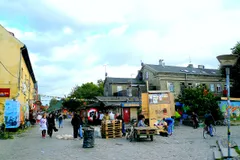
Listed for context. No score change is recorded for Denmark here.
References
Checked. The date and the event were compared with a source that was read.