United Kingdom
15/100
#57 of 196 worldwide
#22 of 45 in Europe
A Class B drug; small amounts often end in a warning or community resolution. Medical cannabis is legal since 2018 but almost exclusively through private clinics.
In short all countries →
- Can I carry it?NoIt is a crime
- Can I grow it?NoIt is a crime
- Can I buy it?LimitedOn prescription only
- Can I use it in public?NoNot in public, and even at home the law does not protect it
- What if I'm caught?Fine or prisonUsually a fine; prison is possible
A rough guide read from the scores and the rules below, not legal advice. The details and the exceptions are in each segment: select an answer to jump to it.
Cannabis in the United Kingdom not part of the score · all 25 datasets ↓
Who uses it
About 1 in 15
people aged 16–59 in the United Kingdom used cannabis in the past year: about 2.5 million people.
- Past year
- 6.5%
- Europe median
- 5.8%
UNODC · survey 2024
Source Past-year cannabis use among people aged 16–59. People who used cannabis in the past year, from a 2024 survey, applied to today's population aged 16–59. The population is approximate: the survey ages cut through an age group, or were not recorded and ages 15–64 are used.Survey ages and years vary, and some surveys include children. Rates are not age-standardised; do not compare countries directly.
UNODC World Drug Report 2026, annex table 1.2. Population from the World Bank, aged 16–59. The whole dataset →
Use across Europe
19thhighest of 44 surveyed countries
- 🇩🇰 Denmark6.6%
- 🇲🇰 North Macedonia6.6%
- 🇬🇧 United Kingdom6.5%
- 🇦🇹 Austria6.3%
- 🇨🇾 Cyprus6.0%
Past-year use, latest survey of each. Survey years and ages differ. On the map →
What they think of it
“Is using marijuana morally acceptable?”
35% say it is morally unacceptable
- Acceptable 32%
- Not a moral issue 31%
- Depends or no answer 3%
- Unacceptable 35%
The 6th least disapproving of the 25 countries surveyed, where the median is 52%. On the map →
Source Pew Research Center, surveyed January to May 2025, 1,006 adults (topline, question 17g).Cannabis in figures
- Offences for cannabis use or possession49per 100,000 people · 2017
- Police contact for drug use or possession191per 100,000 people · 2025
- Cannabis seized89,164kg in 2024 · 2024
- THC in cannabis sold (Europe)8.4%THC in herb · 2008
- Street price of cannabis (Europe)€3.32a gram of herb · 2010
The dot: where it stands among the countries each dataset covers, lowest to highest. All datasets ↓
What they call it
- Weed[1]British Englishthe everyday slang word
- Spliff[2]British Englisha cannabis cigarette; marked UK, Ireland, Commonwealth and JamaicaIn the atlas →
- Draw[3]British Englishslang for cannabis or a bag of it
- Dope[4]British Englishold slang for intoxicants, cannabis among themIn the atlas →
Score breakdown 15/100 · how the scores are made
Cannabis is a Class B drug: possession carries up to five years in prison and an unlimited fine.[5] In practice police in England and Wales use an escalation — a cannabis warning or community resolution first, a £90 penalty notice next, then arrest.[5] Of those who do reach court, about 60% are fined and 20% conditionally discharged; immediate custody is uncommon and usually a month or less.[5] The government rejected decriminalisation in 2026. London police piloted cannabis warnings in 2001.
| Amount | What happens | Punishment | Fine |
| Possession of a Class B drugUnlimited fine and/or up to five years; out-of-court disposals usual first | CriminalPossession of a controlled drug | Up to 5 years | — |
Growing any number of plants is production of a controlled drug, with up to 14 years on indictment.[5][6] A few plants for personal use typically bring a fine or community order.[5] The government rejected decriminalisation in 2026.
| Amount | What happens | Punishment | Fine |
| Production of a Class B drugUnlimited fine and/or up to 14 years on indictment | CriminalProduction of a controlled drug | Up to 14 years | — |
Supply, including giving cannabis to a friend, carries up to 14 years and an unlimited fine; the Sentencing Council's maximum for a Class B supply offence is 14 years' custody and/or an unlimited fine.[5][7]
| Amount | What happens | Punishment | Fine |
| Supply of a Class B drug (including giving to a friend)Unlimited fine and/or up to 14 years | CriminalSupply of a controlled drug | Up to 14 years | — |
Use is prosecuted through the possession offence.[5] Letting your premises be used for smoking cannabis is a separate offence.[5][6] The government rejected decriminalisation in 2026.
No legal adult-use source. Since November 2018 specialist doctors can prescribe cannabis; almost all of it — over 99% of prescriptions — comes through private clinics, which now serve tens of thousands of patients with flower delivered by pharmacy.[8][9] Specialists could prescribe cannabis from November 2018.
Context not part of the score · every country, by topic →
There is no legal way to buy cannabis for adult use: all of it is supplied illegally, mostly high-strength herbal cannabis, and used in private.[10] In England and Wales users who are caught usually get a cannabis warning, a community resolution or a £90 penalty notice before any prosecution; of those who reach court, about 60% are fined.[5] A 2025 London commission urged decriminalising small-quantity possession, and the government answered in 2026 that it has no plans to change the law.[11][12] The government rejected decriminalisation in 2026.
Legal since 1 November 2018, but only doctors on the specialist register may initiate it, and the NHS funds it for a handful of patients.[8] In November 2019 the medicines watchdog NICE approved two cannabis-based medicines, for two forms of epilepsy and for multiple sclerosis, and declined to recommend them for other conditions such as chronic pain.[9] The private route costs patients a consultation fee plus the product.[9][8] Prescription products include flower, oils and vape cartridges through clinics.[8] British doctors took up Indian hemp as a medicine in 1843. Specialists could prescribe cannabis from November 2018.
No law provides for clubs and cannabis remains a class B drug.[13] A federation, UK Cannabis Social Clubs, was founded in 2011 and by 2016 counted more than 80 clubs, most with 100 to 150 members and registered as non-profits.[13] Most have since gone: there were still dozens in 2019, but the pandemic, unpaid rents, infighting and arrests broke the movement, and one organiser was jailed for running a cannabis café.[13] Teesside Cannabis Social Club in Stockton-on-Tees is one of the few survivors and the only one that worked with the consent of the authorities, backed from the start by the Durham police commissioner; in 2024 more than 850 members paid £120 a year, and cannabis grown mostly by about a dozen members was sold on the premises.[13] Newer venues are opening as lounges for holders of private medical prescriptions, some with the apparent blessing of local police.[14] Tolerance is a matter of local police discretion, not national policy.[13][15][14]
The Misuse of Drugs Act's definition of cannabis leaves out the seed, so buying and holding seeds is not an offence.[16] Cultivating any plant of the genus Cannabis is unlawful without a licence, which covers germinating seeds and keeping cuttings, so cuttings cannot lawfully be sold.[16]
CBD foods have a separate approval process. The FSA’s board paper updated on 19 October 2026 sought agreement on recommendations for three high-purity CBD applications,[17] with proposed adult-only conditions and a 10 mg daily maximum.[17] Final authorisation decisions belong to ministers in England and Wales, with Northern Ireland’s health minister informed; this paper records recommendations.[17]
The Home Office licenses cultivation, mainly for pharmaceutical products and export, plus low-THC hemp.[6] The UK is a large exporter of cannabis-based medicines.[8] GW Pharmaceuticals won a cultivation licence in 1998.
All recreational cannabis is supplied illegally.[10] The most detailed estimate found is old: a 2018 report by the Institute of Economic Affairs, a think tank arguing for legalisation, put consumption in 2016/17 at 255 tonnes by just over three million users, worth about 2.55 billion pounds at ten pounds a gram, and described a market dominated by high-strength cannabis.[10] No recent official estimate was found.
There is no legal recreational supply for anyone, so a visitor has no lawful way to buy cannabis.[8] Whatever legal supply exists is medical, for patients with a prescription or registration.[9] The sources behind this profile describe no separate rule for visitors.
The THC limit is 2 micrograms per litre of whole blood in England and Wales and, since 21 October 2019, Scotland.[18][19][20] Exceeding the limit can be an offence without proof of impaired driving.[18] A roadside saliva screen for cannabis is followed by evidential testing; a positive screen alone is not the measured blood concentration.[18] Patients taking a lawfully supplied medicine as instructed can raise a medical defence to the specified-limit offence, but not to driving while impaired.[21] GOV.UK lists a minimum one-year driving ban, an unlimited fine and up to six months in prison, with the conviction recorded on the licence for eleven years.[18] Northern Ireland instead prosecutes driving while unfit through drugs, with a minimum one-year ban and a fine of up to £5,000; these Great Britain blood limits do not apply there.[22]
Home Office statistics for England and Wales count 269,321 drug seizures by police forces and Border Force in the year ending March 2025, the most since the series began in 1973, and cannabis was present in 72 per cent of them: 194,682 seizures, up 28 per cent on the year before.[23] Most police seizures are small. Of herbal cannabis seizures, 12 per cent weighed under one gram and 54 per cent between one gram and 500 g, and three quarters of plant seizures involved ten plants or fewer.[23] Police recorded 204,664 drug offences in the same year, up 12 per cent; the Home Office notes that each seizure also generates a recorded offence, so the two series move together.[23] The figures do not cover Scotland or Northern Ireland.[23]
A caution or conviction shows on criminal-record checks and can affect work and travel; a cannabis warning is recorded but not shown on a standard check.[5] Drug-driving has a very low THC limit.[5][6]
Britain met cannabis twice, a century apart. In 1839 William O'Shaughnessy, an Irish doctor in Calcutta, published his trials of Indian hemp on animals, himself and patients; within a few years British doctors were prescribing its tincture, and a medical journal gave its 1843 front pages to his findings.[24] In 1969 Baroness Wootton's committee told the Home Secretary that moderate use did no lasting harm and prison was the wrong answer for small possession — and was rejected, though the 1973 Act that followed halved the possession maximum from ten years to five.[25] The older folk custom survives in verse: on Halloween, Scots girls sowed hemp seed to dream of their husbands, as Burns recorded.[26] The modern street vocabulary calls cannabis dope and a cannabis cigarette a spliff.[4][2] In 1977 Bob Marley was fined £50 for cannabis at Marylebone Magistrates' Court while living in London.[27] Bob Marley is fined for cannabis in London. British doctors took up Indian hemp as a medicine in 1843. The Wootton report found moderate use harmless in 1969. Cannabis possession stayed criminal under the 1973 Act.
Britain ran one of the largest cannabis trials of its era: the MRC-funded CAMS study treated 630 multiple-sclerosis patients at 33 UK centres with oral cannabis extract, THC or placebo, finding no effect on the primary spasticity scale but improvements patients reported themselves.[28] GW Pharmaceuticals has worked under Home Office licences since 1998, and its Sativex mouth spray became the first licensed natural cannabis derivative, approved in the UK in 2010.[29]
Taking cannabis into or out of United Kingdom is a separate offence from possessing it, normally charged as smuggling or trafficking, with far heavier penalties. That holds almost everywhere, including between two places where cannabis is legal.
A prescription or medical card from another country is generally not recognised. Travellers who need a cannabis-based medicine should ask United Kingdom's embassy before travelling.[30]
General guidance that applies to almost every country, not a check of United Kingdom's customs rules.
Culture the atlas →
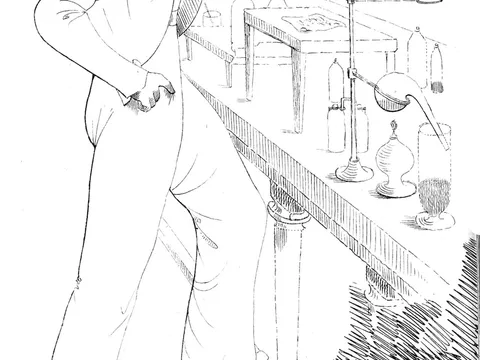 PeopleWilliam O'ShaughnessyAn Irish doctor in Calcutta who tested Indian hemp on animals, himself and his patients, and in 1839 brought cannabis into Western medicine as a remedy for pain, spasm and convulsions.
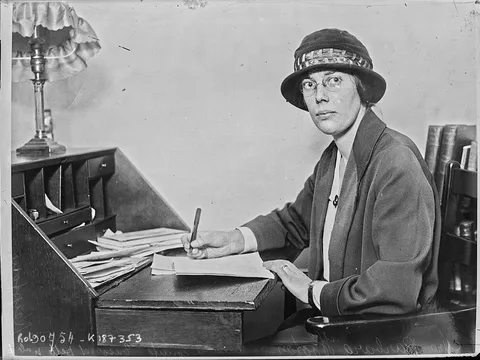 PeopleBarbara WoottonA British sociologist and one of the first women in the House of Lords, who chaired the committee whose 1969 report found moderate cannabis use harmless and said no one should go to prison for a small amount. The government rejected it, then halved the penalty.
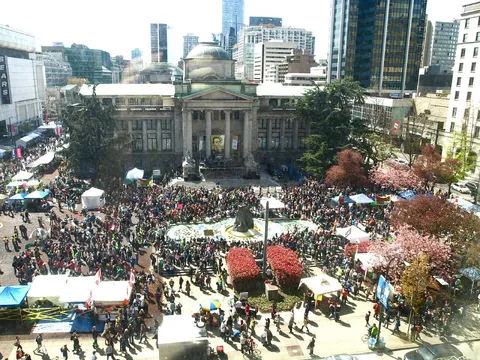 Language420A meeting time of five Californian schoolboys in 1971 that became the worldwide code for cannabis and the date of its yearly demonstrations.
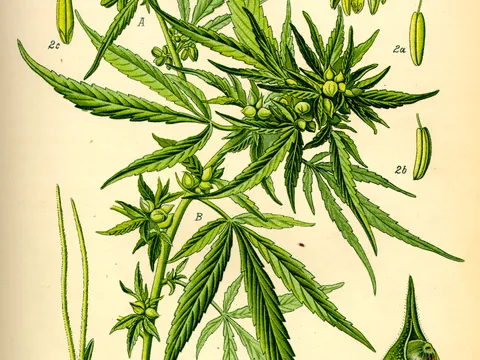 LanguageCannabisThe botanical name is a Scythian word that reached us through Greek and Latin. English "hemp" is the same word, borrowed much earlier and worn down by sound change.
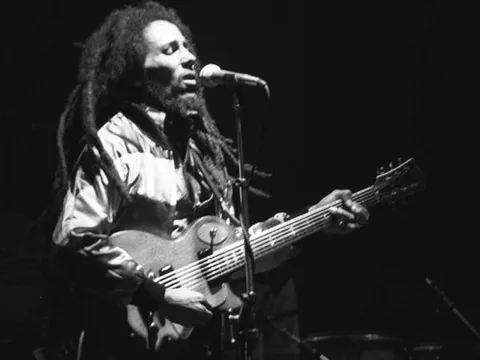 PeopleBob MarleyThe Jamaican singer who carried reggae, Rastafari and its sacramental herb to the world. He was jailed for ganja in Jamaica in 1968 and fined for it in London in 1977, and is remembered as cannabis's best-known ambassador.
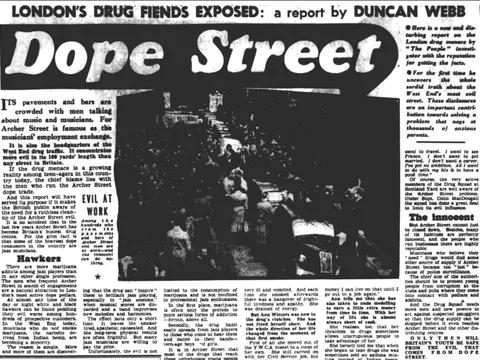 LanguageDopeA word that travelled from thick sauce to narcotic drugs. In British English it often means cannabis, but it has never named cannabis alone.
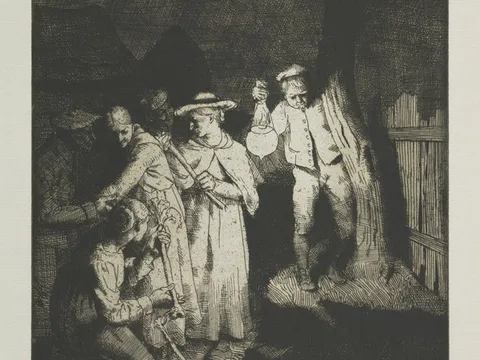 TraditionsHemp-seed divination at HalloweenRobert Burns recorded a Scottish courtship charm in which sowing hemp seed was supposed to reveal a future lover. The crop supplied the imagery; no cannabis was consumed.
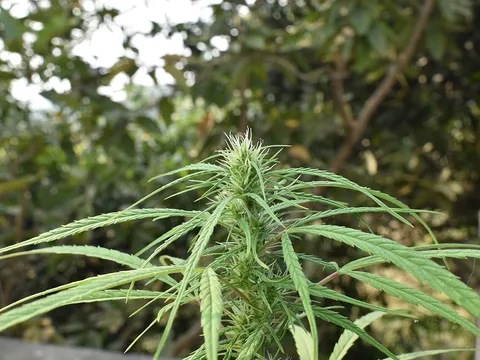 LanguageIndian hempThe name under which the British Empire, and then the world, first brought cannabis under control. It survives in the statute books of dozens of countries that have nothing to do with India.
Show all 10
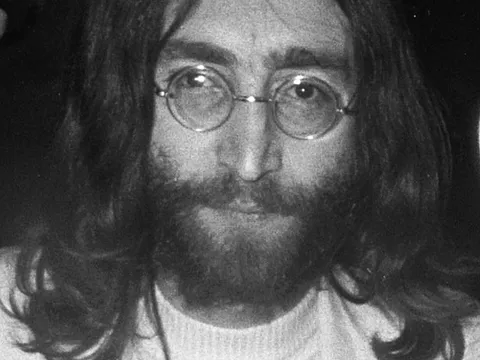 PeopleJohn LennonThe former Beatle who, with Yoko Ono, turned John Sinclair’s cannabis sentence into a concert and a song demanding his release. Their 1971 benefit brought international fame to an existing campaign.
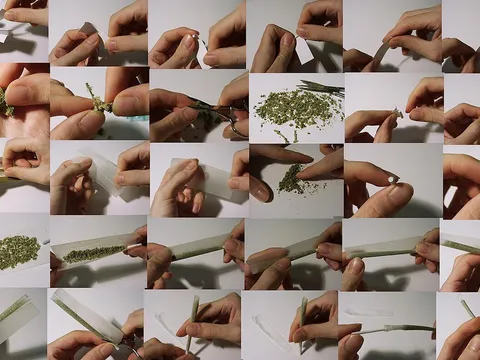 LanguageSpliffA Jamaican word of unknown origin for a cannabis cigarette. In Europe it came to mean one rolled with tobacco.
Did you know? all cases →
1563 · England
In 1563 Elizabeth I ordered every landowner with 60 acres or more in England to grow hemp, or pay a fine of five pounds. The navy needed rope. The same country, the United Kingdom, banned cannabis in 1928.
The full story →1920 · United Kingdom
When the United Kingdom wrote its first Dangerous Drugs Act in 1920, cannabis was not left out on purpose: the committee never discussed it. Police asked for hashish to be added and were told there was no evidence that the habit was at all common.
The full story →1925 · United Kingdom
When cannabis was declared a poison in the United Kingdom in 1925, the only objection raised in Parliament was about corn plasters: manufacturers who used it in them had five weeks to relabel millions of packets.
The full story →2016 · United Kingdom
In 2016 the United Kingdom was the world's largest producer of legal cannabis, 95 tonnes of it, while its government held that cannabis had no therapeutic value.
The full story →Customs · Scotland
Robert Burns recorded a Halloween charm in which sowing hemp seed was supposed to reveal a future lover.
Read the entry →
Datasets not part of the score
What other organisations publish about United Kingdom, and where it stands among the countries each one covers. Each dataset has a page of its own, with a world map and every country's figure.
Use
UNODC · 2024
Cannabis use
6.5%of people aged 16–59
6.7% · 20106.8% · 20116.29% · 20126.59% · 20136.69% · 20146.47% · 20156.6% · 20167.18% · 20177.6% · 20187.15% · 20197.4% · 20217.57% · 20226.84% · 20236.5% · 202420102024 ages 16–59 · survey 2024 · 2,500,000 people · UNODC 2026
Source Survey ages and years vary, and some surveys include children. Rates are not age-standardised; do not compare countries directly.EUDA · 2022
Cannabis in wastewater
0.00mg of THC-COOH a day per 1,000 people
Higher than 0% of 33 countriesLowestHighestcities measured: 1 · 822,456 people served
WHO, Our World in Data · 2020
Alcohol drunk per person
10.73litres of pure alcohol a year
12.28 · 200012.28 · 200112.42 · 200212.50 · 200312.51 · 200412.38 · 200512.19 · 200611.94 · 200711.61 · 200811.25 · 200910.95 · 201010.79 · 201110.57 · 201210.44 · 201310.44 · 201410.52 · 201510.64 · 201610.77 · 201710.82 · 201810.82 · 201910.73 · 202020002020 Higher than 90% of 187 countriesLowestHighestper person aged 15 or over · 2020 · 12.28 in 2000 · 10.95 in 2010
Law
EUDA · 2017
Offences for cannabis use or possession
49per 100,000 people
70 · 200778 · 200880 · 200986 · 201090 · 201182 · 201279 · 201370 · 201461 · 201556 · 201649 · 201720072017 Higher than 35% of 23 countriesFewerMore34,285 offences in 2017 · cannabis only · use or possession, not dealing · 59,750 in 2010
UNODC · 2025
Police contact for drug use or possession
191per 100,000 people
47 · 2020191 · 202520202025 Higher than 76% of 101 countriesFewerMore132,645 people in 2025 · all drugs together
UNODC · 2024
Cannabis seized
89,164kg in 2024
38,893 · 201518,804 · 201638,013 · 201722,804 · 201823,672 · 201920,687 · 202020,687 · 202136,047 · 202270,769 · 202389,164 · 202420152024 Higher than 90% of 163 countriesLess seizedMore seized85,007 kg of herb · 4,156 kg of resin · 38,893 kg in 2015 · 20,687 kg in 2020
Society
Pew Research Center · 2025
Is using marijuana morally wrong?
35%call it immoral
Higher than 20% of 25 countriesFewer disapproveMore disapprove32% acceptable · 31% not a moral issue · 1,006 people asked
OpenAlex · 2025
Research on cannabis
6.0papers per million people
0.0 · 19530.0 · 19540.0 · 19550.0 · 19560.0 · 19570.0 · 19590.0 · 19600.0 · 19610.0 · 19620.0 · 19630.0 · 19660.1 · 19670.0 · 19680.1 · 19690.1 · 19700.1 · 19710.2 · 19720.2 · 19730.2 · 19740.2 · 19750.3 · 19760.2 · 19770.1 · 19780.1 · 19790.2 · 19800.1 · 19810.1 · 19820.1 · 19830.1 · 19840.1 · 19850.2 · 19860.1 · 19870.3 · 19880.2 · 19890.2 · 19900.3 · 19910.2 · 19920.2 · 19930.3 · 19940.4 · 19950.5 · 19960.6 · 19970.7 · 19980.9 · 19991.1 · 20001.4 · 20011.7 · 20021.7 · 20032.1 · 20042.3 · 20052.2 · 20062.7 · 20072.7 · 20083.1 · 20093.5 · 20103.6 · 20113.7 · 20123.5 · 20133.8 · 20144.3 · 20154.5 · 20164.5 · 20174.7 · 20185.6 · 20195.7 · 20205.9 · 20215.5 · 20225.5 · 20235.6 · 20246.0 · 202519532025 Higher than 86% of 176 countriesLowestHighest416 papers in 2025 · 6 in 1970 · 13 in 1990 · 244 in 2010
Cato and Fraser Institutes · 2023
Human Freedom Index
8.60of 10
9.11 · 20009.07 · 20019.04 · 20029.03 · 20038.99 · 20048.90 · 20058.96 · 20068.92 · 20078.86 · 20088.84 · 20098.86 · 20108.81 · 20118.80 · 20128.86 · 20138.89 · 20148.92 · 20158.92 · 20168.83 · 20178.82 · 20188.78 · 20198.31 · 20208.36 · 20218.61 · 20228.60 · 202320002023 Higher than 88% of 164 countriesLess freeFreerrank #19 of 165 · personal freedom 9.12 · economic freedom 7.88
V-Dem, Our World in Data · 2025
Civil liberties
0.84of 1 in 2025
0.83 · 19000.83 · 19010.83 · 19020.83 · 19030.83 · 19040.83 · 19050.83 · 19060.83 · 19070.83 · 19080.83 · 19090.83 · 19100.83 · 19110.83 · 19120.83 · 19130.82 · 19140.82 · 19150.81 · 19160.81 · 19170.81 · 19180.82 · 19190.82 · 19200.82 · 19210.82 · 19220.82 · 19230.85 · 19240.85 · 19250.85 · 19260.85 · 19270.85 · 19280.85 · 19290.86 · 19300.86 · 19310.86 · 19320.86 · 19330.86 · 19340.86 · 19350.86 · 19360.86 · 19370.86 · 19380.84 · 19390.84 · 19400.84 · 19410.84 · 19420.84 · 19430.84 · 19440.84 · 19450.87 · 19460.87 · 19470.87 · 19480.87 · 19490.88 · 19500.88 · 19510.87 · 19520.87 · 19530.87 · 19540.87 · 19550.87 · 19560.87 · 19570.87 · 19580.87 · 19590.87 · 19600.87 · 19610.87 · 19620.87 · 19630.87 · 19640.88 · 19650.88 · 19660.88 · 19670.85 · 19680.85 · 19690.84 · 19700.84 · 19710.84 · 19720.84 · 19730.84 · 19740.84 · 19750.84 · 19760.84 · 19770.84 · 19780.84 · 19790.84 · 19800.84 · 19810.84 · 19820.84 · 19830.84 · 19840.84 · 19850.84 · 19860.84 · 19870.84 · 19880.84 · 19890.87 · 19900.87 · 19910.87 · 19920.87 · 19930.89 · 19940.89 · 19950.89 · 19960.89 · 19970.91 · 19980.93 · 19990.94 · 20000.94 · 20010.93 · 20020.93 · 20030.93 · 20040.93 · 20050.93 · 20060.93 · 20070.93 · 20080.93 · 20090.93 · 20100.93 · 20110.93 · 20120.91 · 20130.90 · 20140.90 · 20150.90 · 20160.92 · 20170.92 · 20180.91 · 20190.89 · 20200.88 · 20210.89 · 20220.89 · 20230.88 · 20240.84 · 202519002025 Higher than 66% of 175 countriesFewer libertiesMore liberties0.85 in 1925 · 0.87 in 1961 · 0.87 in 1990
Our World in Data, World Bank · 2025
Population
69,487,000people in 2025
41,089,602 · 190044,723,743 · 191046,564,792 · 192045,980,369 · 193048,108,804 · 194050,121,020 · 195052,538,548 · 196055,663,801 · 197056,282,102 · 198057,367,867 · 199059,057,333 · 200063,006,482 · 201067,351,860 · 202069,487,000 · 202519002025 Higher than 89% of 196 countriesLowestHighest41,089,602 in 1900 · 50,121,020 in 1950 · 59,057,333 in 2000
CEPII
Former colonial rulers
Once ruled by
World Bank · 2025
Government effectiveness
78of 100
87 · 199687 · 199889 · 200089 · 200287 · 200386 · 200491 · 200588 · 200687 · 200787 · 200884 · 200983 · 201083 · 201183 · 201281 · 201385 · 201485 · 201585 · 201684 · 201783 · 201881 · 201980 · 202079 · 202178 · 202275 · 202377 · 202478 · 202519962025 Higher than 87% of 195 countriesLowestHighestestimate 1.23 on a scale of −2.5 to 2.5 · 2025 · 89 in 2000 · 85 in 2015
Eurostat · 2020
Minimum wage
€1,599a month
952 · 2000977 · 20011,109 · 20021,064 · 20031,054 · 20041,135 · 20051,213 · 20061,315 · 20071,242 · 2008995 · 20091,076 · 20101,136 · 20111,202 · 20121,250 · 20131,251 · 20141,379 · 20151,512 · 20161,393 · 20171,400 · 20181,453 · 20191,599 · 202020002020 Higher than 77% of 31 countriesLowestHighestgross, full time · January 2020 · €1,135 in 2005 · €1,379 in 2015
Transparency International · 2024
Corruption Perceptions Index
71of 100
74 · 201276 · 201378 · 201481 · 201581 · 201682 · 201780 · 201877 · 201977 · 202078 · 202173 · 202271 · 202371 · 202420122024 Higher than 89% of 178 countriesLowestHighest0 highly corrupt, 100 very clean · 2024 · 81 in 2015 · 77 in 2020
Pew Research Center · 2020
Most common religion
Christians
the largest group · 2020
World Bank · 2025
Income per person
$53,993per person
33,531 · 199032,995 · 199133,332 · 199234,413 · 199336,026 · 199437,200 · 199538,076 · 199639,831 · 199741,005 · 199842,072 · 199943,818 · 200044,694 · 200145,265 · 200246,505 · 200347,317 · 200448,305 · 200549,001 · 200650,046 · 200749,629 · 200846,996 · 200947,683 · 201047,714 · 201148,100 · 201248,601 · 201349,763 · 201450,463 · 201551,168 · 201652,429 · 201752,983 · 201853,374 · 201947,931 · 202051,840 · 202153,980 · 202253,423 · 202353,412 · 202453,993 · 202519902025 Higher than 84% of 187 countriesLowestHighestat purchasing power parity, 2021 dollars · 2025 · $33,531 in 1990 · $47,683 in 2010
World Bank · 2024
Development indicators
95.5%use the internet
0.1% · 19900.2% · 19910.3% · 19920.5% · 19931% · 19941.9% · 19954.1% · 19967.4% · 199713.7% · 199821.3% · 199926.8% · 200033.5% · 200156.5% · 200264.8% · 200365.6% · 200470% · 200568.8% · 200675.1% · 200778.4% · 200883.6% · 200985% · 201085.4% · 201187.5% · 201289.8% · 201391.6% · 201492% · 201594.8% · 201690.4% · 201790.7% · 201892.5% · 201994.8% · 202096.2% · 202195.5% · 202295.4% · 202395.5% · 202419902024 Higher than 87% of 195 countriesLowestHighest83.2% live in towns · 19.5% aged 65+ · life expectancy 81.4 · 2024 · 26.8% in 2000 · 85% in 2010
Wikidata · 2015
Parties for legal cannabis
Cannabis Is Safer Than Alcohol
founded 2015 · dissolved 2,016
GDELT · 2025
Cannabis in the news
0.0223%of global news: cannabis articles from here
0.0185% · 20170.0246% · 20180.0258% · 20190.0214% · 20200.0245% · 20210.0267% · 20220.0237% · 20230.0215% · 20240.0223% · 202520172025 Higher than 99% of 147 countriesLowestHighest2025 average, 348 days · 0.0246% in 2018 · 0.0245% in 2021
Plant and market
EUDA · 2010
Street price of cannabis (Europe)
€3.32a gram of herb
4.39 · 20023.62 · 20033.66 · 20043.89 · 20053.98 · 20063.95 · 20073.59 · 20083.20 · 20093.32 · 201020022010 Higher than 7% of 28 countriesLowestHighest€3.32 a gram of resin · 2010
EUDA · 2008
THC in cannabis sold (Europe)
8.4%THC in herb
10.8% · 200210.7% · 200312.7% · 200413.48% · 200511.3% · 20068.4% · 200820022008 Higher than 33% of 27 countriesLowestHighest5.9% in resin · 2008
OpenStreetMap · 2026
Cannabis shops on the map
32shops mapped
Higher than 78% of 59 countriesFewer shopsMore shops0.5 per million people · 2026
GBIF · 2026
Records of the cannabis plant
815dated records
1 · 17995 · 18096 · 18387 · 18588 · 18659 · 186911 · 187012 · 187216 · 187519 · 187622 · 188024 · 188227 · 188631 · 188733 · 188836 · 189038 · 189240 · 189641 · 189743 · 190347 · 190451 · 190553 · 190654 · 190757 · 190885 · 190987 · 191088 · 191289 · 191690 · 191791 · 192092 · 192793 · 192895 · 192997 · 193098 · 193199 · 1932104 · 1933105 · 1934106 · 1935109 · 1937110 · 1939111 · 1940116 · 1941117 · 1949123 · 1950125 · 1951135 · 1952136 · 1953140 · 1955143 · 1956145 · 1957148 · 1958151 · 1959158 · 1960160 · 1961166 · 1962172 · 1963179 · 1964182 · 1965188 · 1966191 · 1968199 · 1969211 · 1970221 · 1971224 · 1972228 · 1973231 · 1974237 · 1975246 · 1976250 · 1977253 · 1978256 · 1979265 · 1980275 · 1981287 · 1982294 · 1983304 · 1984308 · 1985312 · 1987317 · 1988338 · 1989348 · 1990353 · 1991356 · 1992366 · 1993378 · 1994397 · 1995437 · 1996465 · 1997472 · 1998485 · 1999495 · 2000505 · 2001520 · 2002545 · 2003556 · 2004581 · 2005596 · 2006611 · 2007621 · 2008635 · 2009665 · 2010679 · 2011690 · 2012698 · 2013710 · 2014721 · 2015726 · 2016737 · 2017748 · 2018763 · 2019779 · 2020785 · 2021794 · 2022800 · 2023808 · 2024814 · 2025815 · 202617992026 Higher than 93% of 128 countriesLowestHighest1,393 more without a date · 1 in 2026 · 158 by 1960 · 495 by 2000
ClinicalTrials.gov · 2026
Clinical trials of cannabis medicines
48studies so far
1 · 20105 · 20117 · 20128 · 201311 · 201413 · 201517 · 201619 · 201722 · 201825 · 201928 · 202033 · 202135 · 202240 · 202342 · 202445 · 202548 · 202620102026 Higher than 92% of 50 countriesLowestHighest3 actual starts in 2026 · as of 2026–10–26 · 1 by 2010 · 28 by 2020
Enforcement 2 reports · the Cannabis Enforcement Tracker →
How the law above is applied: raids, seizures, fields destroyed, arrests and sentences, as recorded by the Cannabis Enforcement Tracker, our companion site.
- SentenceFive couriers jailed over 460 kg of cannabis flown to Birmingham
Five members of an eleven-strong smuggling gang were sentenced at Birmingham Crown Court for trying to bring 460 kg of cannabis from Thailand to Birmingham via Paris.
- SentenceCannabis grower jailed for life for shooting burglar dead
Adrian Frost, 61, was jailed for life with a 27-year minimum for murdering Connor Batty, who broke into his Hemsworth home with two others to steal his cannabis crop.
History 49 of 49 checked against a source
Score and entries per decade
15 today, from 100 before its first recorded change
This country's score Entries that moved the score Context only
20262 entries0 score changes
Hemp ✓
UK food regulator sets out conditions for first high-purity CBD authorisations
An updated Food Standards Agency board paper sought support for recommendations to ministers on three CBD food applications with at least 98% purity. Positive safety opinions were followed by proposed adult-use conditions, a maximum daily dose of 10 mg and warnings for vulnerable groups. Ministers in England and Wales would make the final authorisation decisions, with Northern Ireland’s health minister kept informed.
Debate ✓
UK government rejects the London commission's decriminalisation call
Asked whether it would review decriminalisation abroad, the government answered that it has no plans to commission such a review and no plans to change the law, citing clear scientific evidence of the harms of cannabis. The 2025 London Drugs Commission had urged removing natural cannabis from the Misuse of Drugs Act so that holding a small amount for personal use would no longer be a crime.
20251 entry0 score changes
20191 entry0 score changes
20181 entry1 score change
20171 entry0 score changes
20161 entry0 score changes
20091 entry1 score change
20051 entry0 score changes
20041 entry1 score change
20031 entry0 score changes
20012 entries0 score changes
Easing ✓ Article
Lambeth trials cannabis warnings instead of arrests
A local police pilot in the London Borough of Lambeth used confiscation and warnings for small amounts of cannabis held for personal use. It exercised existing police discretion while possession remained an offence. The Home Office said the pilot evaluation would help inform its decision on reclassification. The local experiment did not itself change the national drug classes.
Debate ✓ Article
Lords committee calls for faster progress on cannabis medicines
The House of Lords Science and Technology Committee published a follow-up to its 1998 medical-cannabis report. Its announcement criticised slow progress toward cannabis medicines and recalled the government's rejection of the earlier prescription recommendation. The report continued the debate over research and access; it did not enact a prescribing reform.
19982 entries0 score changes
Debate ✓ Article
House of Lords recommends prescription access to cannabis
The Science and Technology Committee published its report after an inquiry beginning in April 1998. It recommended urgent clinical trials and moving cannabis and resin to Schedule 2 to allow named-patient prescribing, while supporting continued prohibition of recreational use. Patient groups gave evidence. This corrects the previous 1997 dating and separates the 1997 conference from the parliamentary report; the recommendation itself did not change the law.
Medical ✓
Britain licenses a company to grow cannabis for research
Two doctors, Geoffrey Guy and Brian Whittle, founded GW Pharmaceuticals and the same year obtained a licence from the Home Office and the medicines regulator to cultivate, possess and supply cannabis for scientific research. Its mouth spray Sativex, a cannabis extract, became the first natural cannabis derivative to gain market approval in any country, and was approved in the United Kingdom in 2010 for multiple sclerosis.
19971 entry0 score changes
19941 entry0 score changes
19921 entry0 score changes
19911 entry0 score changes
19881 entry0 score changes
19821 entry1 score change
19801 entry0 score changes
19782 entries0 score changes
Debate ✓
The Legalise Cannabis Campaign is founded in Britain
The Legalise Cannabis Campaign was started to campaign for full legalisation of the use and distribution of cannabis in the United Kingdom. The chapter notes that such politicised campaigns failed in a hostile policy environment, and that arguments for medicinal cannabis were overwhelmed by them.
International ✓
United Kingdom joins the 1972 Protocol amending the Single Convention
United Kingdom ratified the Protocol amending the Single Convention on Narcotic Drugs on 20 June 1978. The Protocol, adopted in Geneva on 25 March 1972 and in force from 8 August 1975, strengthened the international control board and, among other changes, lets parties provide treatment, education, after-care and rehabilitation for people who use drugs, as an alternative to conviction or punishment or in addition to it.
19771 entry0 score changes
19732 entries1 score change
Easing ✓ Article
Britain's Misuse of Drugs Act takes effect
The Act sorted drugs into three classes and put cannabis in Class B. The maximum for possession was halved from ten years to five, the one recommendation of the Wootton Report that became law.
1113+2 points
Tightening ✓
Cannabis medicines are withdrawn in the United Kingdom
Cannabis-based medicines were finally withdrawn in the United Kingdom after decades of declining medical use. Recreational prohibitions were already in place, and the entry records medical context without a separate score movement.
19691 entry0 score changes
19672 entries1 score change
Tightening ✓ Article
Britain gives police the power to stop and search for drugs
Section 6 of the Dangerous Drugs Act 1967 let a constable who had reasonable grounds to suspect that a person was in possession of a drug unlawfully search that person, detain them for the search, and search any vehicle in which the constable suspected the drug was.
1511−4 points
Debate ✓
A full-page advertisement in The Times calls for cannabis law reform
The Society of Mental Awareness (SOMA), founded that year by Stephen Abrams, placed an advertisement in The Times to influence the terms of reference of the Wootton Committee, which the government had set up to examine the case for reform. The committee's report referred to it in its introduction; the government rejected the report.
19641 entry1 score change
19561 entry0 score changes
19461 entry0 score changes
19321 entry0 score changes
19281 entry1 score change
19251 entry0 score changes
19241 entry0 score changes
19232 entries0 score changes
Culture & science ✓
A Shropshire doctor reports hashish in ordinary tobacco
A doctor in Shrewsbury wrote in the British Medical Journal that a young woman had been left giggling and unable to move her legs after sniffing tobacco from a cigarette pouch, and that a local chemist had found cannabis in it. The Times ran it as "Hashish in Tobacco: A Disquieting Case", and an MP demanded that the brand be named and prosecuted. The Government Laboratory tested a number of brands, found no cannabis in any, and judged the chemist's test unreliable; customs concluded that if there had been any hashish, the smoker had added it. The one lasting result was a reliable test for cannabis in tobacco.
Enforcement ✓ Article
A mistaken London hashish prosecution ends in acquittal
Detectives arrested Thomas Garza and Idris Abdullah after asking to buy what the men described as opium. Laboratory analysis showed the seized substance was hashish, which was then legal to sell. The charge against Abdullah was withdrawn and a jury acquitted Garza of attempting to supply opium, but the case generated press demands to add cannabis to Britain's drug laws.
19201 entry0 score changes
19162 entries0 score changes
Other law ✓
Britain's wartime drug regulation leaves cannabis out
Regulation 40B under the Defence of the Realm Act made it an offence for anyone but doctors, pharmacists and vets to possess, sell or give away opium, and restricted cocaine to prescription. Indian hemp was not on its list, and the conference that drafted the regulation did not mention it. Its targets were cocaine and opium.
Tightening ✓ Article
Britain's Army Council restricts cannabis sales to service members
An Army Council order forbade selling Indian hemp to a member of the armed forces unless a doctor or pharmacist authorised it on a dated, signed prescription marked not to be repeated. The civilian wartime drug rule adopted in July omitted cannabis, so this remained a military restriction rather than a general ban.
18971 entry0 score changes
18961 entry0 score changes
18901 entry0 score changes
18431 entry0 score changes
17861 entry0 score changes
16521 entry0 score changes
15631 entry0 score changes
Sources hover a number in the text to see its source
- Cited
- 30
- Websites
- 21
- 1
- Last reviewed
- History checked
- 49/49
Most cited
- gov.uk5
- en.wiktionary.org4
- en.wikipedia.org2
- archive.reading.ac.uk1
- bmj.com1
- businessofcannabis.com1
All 31 sources
- Wiktionary — weed (slang: cannabis)archived
- Wiktionary — spliff (UK/Ireland/Commonwealth/Jamaica: a cannabis cigarette)archived
- Wiktionary — draw (slang: cannabis; a bag of cannabis)archived
- Wiktionary — dope (slang: recreational substances, cannabis among them)archived
- Sentencing Academy — Possession of a Class B drug
- Business of Cannabis — UK cannabis regulation overviewarchived
- Sentencing Council — Supplying a controlled drug (Class B maximum: 14 years and/or unlimited fine)archived
- Prohibition Partners — Medical cannabis in the UK: market overview, regulation and patient access 2025archived
- BMJ — Medical cannabis: patients turn to private clinics because of NHS void (PDF)
- Institute of Economic Affairs — UK's illicit cannabis market worth £2.5bn a year, finds new report (29 June 2018)archived
- OnLondon — mayor's commission seeks decriminalisation of small-amount possession (28 May 2025)archived
- UK Parliament — written answer on cannabis decriminalisation (10 September 2026, no plans to change the law)
- TalkingDrugs — The rise and fall of UK cannabis social clubs (24 April 2024)archived
- Wikipedia — Teesside Cannabis Clubarchived
- Volteface — "We have cannabis clubs in the UK?" (23 June 2016), republished by the Transnational Institutearchived
- Misuse of Drugs Act 1971, sections 6 and 37archived
- Food Standards Agency — CBD novel-food applications: recommendations to ministers on first authorisations (updated 19 October 2026)Sections 1.1–1.5 and 2.1–2.4; page update date, not authorisation datearchived
- GOV.UK — Drugs and driving: the lawarchived
- Scottish Government — Drug driving and medicine: drug limitsarchived
- GOV.UK — Drug driving (collection, with the specified limits)archived
- Department for Transport — Drug driving guidance for healthcare professionalsarchived
- Northern Ireland government — Drug drivingarchived
- Home Office — Seizures of drugs in England and Wales, financial year ending 2025archived
- Wellcome Collection — Cannabis Indica (Gunjah), plate from O'Shaughnessy, On the preparations of the Indian hemp, or gunjah (1839)archived
- Wikipedia — Wootton Reportarchived
- Robert Burns — Halloween, poem and author's explanatory notesarchived
- Cannabis: A HistoryMartin Booth · Thomas Dunne Books / St. Martin's Press · 2015 · ISBN 978-1-250-08219-0
- The Lancet — CAMS study abstract (Zajicek et al., 2003; 630 patients, 33 UK centres)archived
- University of Reading — GW Pharmaceuticals operates under Home Office licence; Sativex approved in the UK (2011)archived
- International Narcotics Control Board — Travellers carrying medicines containing controlled substances
Also consulted
- Forces of Necessity: Lay Advocacy and the Remedicalization of Cannabis in the UK, 1973–2004Suzanne Taylor · In Cannabis: Global Histories, edited by Lucas Richert, James H. Mills · MIT Press · 2021 · pp. 356–357 · ISBN 9780262366137