Ukraine
20/100
#42 of 196 worldwide
#16 of 45 in Europe
Possession of up to 5 g is an administrative offence. Medical cannabis became legal in August 2024; the first patients received prescribed capsules on 11 June 2026.
In short all countries →
- Can I carry it?NoEven a small amount can bring a fine or a charge
- Can I grow it?LimitedA few plants are treated far more leniently than dealing
- Can I buy it?LimitedPrescribed medicines began dispensing in June 2026 through a small pharmacy network; adult-use sales remain illegal
- Can I use it in public?NoNot in public, and even at home the law does not protect it
- What if I'm caught?Fine or prisonUsually a fine; prison is possible
A rough guide read from the scores and the rules below, not legal advice. The details and the exceptions are in each segment: select an answer to jump to it.
Cannabis in Ukraine not part of the score · all 23 datasets ↓
Who uses it
About 1 in 47
people aged 15–64 in Ukraine used cannabis in the past year: 560,000 people.
- Past year
- 2.1%
- Europe median
- 5.8%
- Aged 15–16, 2019
- 5.7%
UNODC · survey 2015
Source Past-year cannabis use among people aged 15–64. People who used cannabis in the past year, from a 2015 survey, applied to today's population aged 15–64.Survey ages and years vary, and some surveys include children. Rates are not age-standardised; do not compare countries directly.
UNODC World Drug Report 2026, annex table 1.2. Population from the World Bank, aged 15–64. The whole dataset →
Use across Europe
39thhighest of 44 surveyed countries
- 🇷🇴 Romania2.4%
- 🇷🇸 Serbia2.2%
- 🇺🇦 Ukraine2.1%
- 🇧🇦 Bosnia and Herzegovina1.6%
- 🇽🇰 Kosovo1.3%
Past-year use, latest survey of each. Survey years and ages differ. On the map →
Cannabis in figures
- Police contact for drug use or possession40per 100,000 people · 2024
- Cannabis seized2,062kg in 2024 · 2024
- Cannabis shops on the map2shops mapped · 2026
- Is cannabis easy to get? (students, Europe)7%of students say it is easy to get
- Hemp grown1,500ha in 2024 · 2024
The dot: where it stands among the countries each dataset covers, lowest to highest. All datasets ↓
Score breakdown 20/100 · how the scores are made
Neighbours
- 🇲🇩 Moldova21
- 🇺🇦 Ukraine20
- 🇵🇱 Poland14
- 🇷🇴 Romania11
- 🇸🇰 Slovakia11
- 🇷🇺 Russia11
- 🇭🇺 Hungary10
- 🇧🇾 Belarus5
Small personal possession without intent to sell is an administrative offence: a fine of 50 to 100 non-taxable minimum incomes, 20 to 60 hours of community work or up to fifteen days’ administrative arrest; voluntary surrender can remove liability.[4] Above the small amount, ordinary criminal possession carries a fine of 1,000 to 3,000 non-taxable minimums, corrective work for up to two years, probation supervision for up to five years or restriction of liberty for that period.[5] Large quantities, a group agreement or offending within a year after conviction under the same article can bring a larger fine or up to three years in prison; especially large quantities or involving a minor carry five to eight years.[5] The small ceiling is 5 g of dried cannabis, 0.5 g of resin or 0.3 g of extract; cannabis reaches the large tier at 500 g and the especially large tier at 2,500 g.[6] One fine unit here is UAH17, giving ordinary administrative fines of UAH850–1,700 and ordinary criminal fines of UAH17,000–51,000.[7][4][5]
| Amount | What happens | Punishment | Fine |
| Up to 5 gDried cannabis; fine, community work or detention | AdministrativeSmall amount, Article 44 | Up to 15 days | UAH 850 – UAH 1,700 |
| Above small but below large amountFine, corrective work, probation or restriction of liberty; no imprisonment in this tier | CriminalArticle 309(1) | — | UAH 17,000 – UAH 51,000 |
| Large amountPrison or a fine; statutory quantity threshold is inclusive | CriminalArticle 309(2) | Up to 3 years | UAH 34,000 – UAH 85,000 |
| Especially large amount | CriminalArticle 309(3) | 5–8 years | — |
Ordinary unlawful growing below ten cannabis plants falls in the administrative band: a fine and confiscation.[8] At ten plants the ordinary criminal tier begins; its penalties are a fine of 100 to 500 non-taxable minimum incomes, probation supervision for up to three years or restriction of liberty for that period.[9] Fifty or more plants, specified prior drug crimes or group growing for sale can bring three to seven years in prison.[9] The administrative fine is eighteen to one hundred non-taxable minimums, UAH306–1,700; the ordinary criminal fine is UAH1,700–8,500.[8][9][7]
| Amount | What happens | Punishment | Fine |
| Up to 9 plantsPlants confiscated | AdministrativeArticle 106-2 | — | UAH 306 – UAH 1,700 |
| Over 9 plants, up to 49 plantsFine, probation or restriction of liberty; no imprisonment in this tier | CriminalArticle 310(1) | — | UAH 1,700 – UAH 8,500 |
| Over 49 plants | CriminalArticle 310(2) | 3–7 years | — |
Even small personal possession can bring up to fifteen days’ administrative arrest, alongside fine and community-work options.[4] Small ordinary grows carry an administrative fine and confiscation; criminal possession and growing have separate sentencing ranges, including probation, restriction of liberty and imprisonment in aggravated cases.[8][5][9]
Unauthorised supply carries four to eight years in prison under Article 307.[10] Large quantities, specified places, involvement of a minor and other aggravating circumstances raise the range to six to ten years with confiscation; organised-group cases, especially large quantities or involvement of a young child carry nine to twelve years with confiscation.[10]
| Amount | What happens | Punishment | Fine |
| Ordinary unlawful supply | CriminalArticle 307(1) | 4–8 years | — |
| Large quantity or other statutory aggravationConfiscation of property | CriminalArticle 307(2) | 6–10 years | — |
| Especially large quantity, organised group or young childConfiscation of property | CriminalArticle 307(3) | 9–12 years | — |
Drug use in private is not itself a criminal offence; possession remains separately punishable.[11][12] Public or group use at educational, sporting and cultural venues, and other places where crowds gather, is a crime under Article 316: up to four years of restriction of liberty or three years in prison. Repetition or specified previous drug crimes can bring three to five years in prison.[13]
| Amount | What happens | Punishment | Fine |
| Public or group use at specified venuesRestriction of liberty is an alternative | CriminalArticle 316(1) | Up to 3 years | — |
| Repeat public use or specified previous drug offence (second offence) | CriminalArticle 316(2) | 3–5 years | — |
Context not part of the score · every country, by topic →
Adults have no legal recreational shop, and supplying cannabis remains a crime.[10] Small possession can bring administrative detention; the dried-plant ceiling is 5 g, with lower ceilings for resin and extracts.[4][6] The medical law operates through licensed medicines and prescriptions.[1]
Patients began receiving prescribed THC capsules on 11 June 2026, initially through six pharmacies in six cities.[2] The first three patients included a woman with multiple sclerosis and two wounded veterans with neuropathic or phantom pain.[2] The ten-day electronic prescription specifies the formulation and dose; pharmacies need the relevant licences and compounding quotas.[2] The Health Ministry continued preparing digital tools for wider pharmacy compounding in July 2026.[14]
Supplying cannabis to other adults remains a crime, including outside the pharmacy route.[10] Private collective growing has no recreational exemption from the cultivation offence.[9]
The narcotics law's definition of cannabis excludes seeds, and the general seed law exempts an individual's non-commercial storage and use of seed.[1][15] Germinating cannabis is nevertheless unlawful outside the authorised medical, scientific or industrial channels.[1] Commercial seed and planting material must be certified; medical growers must obtain certified seed from a registered seed or nursery operator.[16][15] A cutting is planting material and also a cannabis plant, so clones are confined to authorised cultivation and regulated trade.[1][15]
Industrial hemp remains subject to a 0.2% THC ceiling in dried straw during the transitional period.[17] The scheduled ceiling rises to 0.3% on 16 February 2027.[17] Commercial industrial cultivation uses the separate registered route under the narcotics law, while medical cultivation requires licensing and tracking.[1]
The 2024 law permits licensed, quota-controlled indoor cultivation of medical cannabis from certified seed under plant-by-plant electronic tracking.[1] Industrial hemp meeting the transitional 0.2% THC limit is grown through the separate registered commercial channel.[1][17]
Figures reported by the government to the UN drugs office record 2,061 kg of herbal cannabis seized in 2024, against 1,794 kg in 2023, and 1 kg of cannabis resin seized in 2024, against 3.1 kg in 2023.[18] The UN publishes them as kilogram equivalents, and countries count seizures differently, so the figures are not comparable across borders.[18]
There is no legal recreational supply for anyone.[1] Small personal possession without intent to sell can bring a fine, community work or up to fifteen days’ administrative arrest.[4] Above the small amount, possession is a criminal offence with penalties that depend on quantity and aggravating circumstances.[5] Travellers may carry prescribed cannabis medicines for personal use within the amount covered by their prescription.[19]
Administrative Code article 130(1) covers driving in a state of drug intoxication and refusal of the prescribed examination.[20] Official 2026 appellate case summaries confirm a UAH17,000 fine and one year's loss of driving rights for the ordinary first-offence provision.[21] A February case upheld a drug-driving conviction, treating the intoxication finding, rather than drug type or quantity, as decisive.[21] A September ruling set aside another conviction: a positive rapid test lacked mandatory laboratory confirmation and the medical report had other procedural defects.[22] These case outcomes should not be read as a universal rule that any positive screening result proves the offence.[22] Suspected drug intoxication is examined at a health facility under article 266 and the joint 2015 Instruction; testing and medical evidence matter.[22] A July appellate summary separately confirms that a properly established refusal can attract article 130 liability without proving intoxication.[23] No numeric THC allowance, general medical-cannabis defence or complete repeat-offence tariff was established here.[21][22][23]
A data analysis by Texty.org.ua, drawing on court statistics and the National Police's annual report, found more than 20,000 proceedings in 2024 under article 309 of the Criminal Code, possession without intent to sell, against about 17,000 under article 307 for sale.[24] Over 2014 to 2024 about 106,000 people were convicted under article 309, of whom more than 43,000 were released from punishment; the most common sentence is a fine, and convictions for possession were almost eight times as frequent as for sale.[24] One in four servicemen convicted in 2024 was convicted of a drug offence, 95 per cent of them under article 309.[24] The figures cover all drugs.[24]
Small personal possession is handled under the administrative code, while larger amounts can result in a criminal conviction.[4][5] Voluntary surrender can exempt the administrative offence.[4] Someone who voluntarily enters treatment for drug dependence can be exempted from the ordinary criminal possession offence under Article 309(4).[5]
Herodotus, writing about 440 BCE, described the Scythians of the Black Sea steppe raising cannabis smoke in felt tents — the oldest account of taking the plant for its effect.[25] See the Scythian vapour bath. Folk custom kept hemp close: unmarried Ukrainian girls sowed hemp seed on St Andrew's Eve to dream of their future husbands.[26] See the hemp dance. The Soviet Union banned unauthorised growing in 1934, though the republic's hemp fields stayed vast into the 1950s.[27] Hemp peaked under Soviet rule in 1940.
Taking cannabis into or out of Ukraine is a separate offence from possessing it, normally charged as smuggling or trafficking, with far heavier penalties. That holds almost everywhere, including between two places where cannabis is legal.
The rules that allow or tolerate small amounts inside Ukraine do not cover the border, an airport or the post.
A prescription or medical card from another country is generally not recognised. Travellers who need a cannabis-based medicine should ask Ukraine's embassy before travelling.[28]
General guidance that applies to almost every country, not a check of Ukraine's customs rules.
Culture the atlas →
 TraditionsThe Scythian vapour bathThe oldest description of people using cannabis for pleasure, by Herodotus about 440 BCE. Archaeology has since found the tents and the braziers.
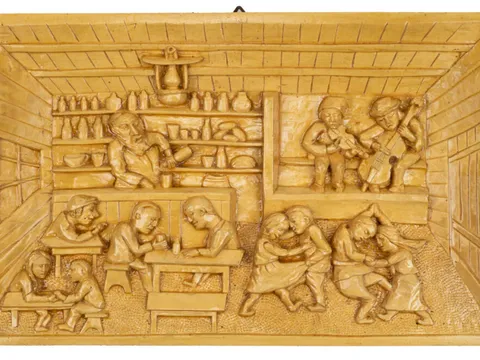 TraditionsThe hemp danceAcross Europe, farmers believed hemp would grow as tall as they could jump. Polish women leapt high around Shrovetide, Swabian couples jumped the Midsummer fire, and Ukrainian girls sowed hemp seed on St Andrew's Eve to learn whom they would marry.
Did you know? all cases →
Folklore · Ukraine
On St Andrew's Eve, girls in Ukraine sowed hemp seed to learn whom they would marry, then ran naked three times around the house.
Read the entry →
Datasets not part of the score
What other organisations publish about Ukraine, and where it stands among the countries each one covers. Each dataset has a page of its own, with a world map and every country's figure.
Use
UNODC · 2015
Cannabis use
2.13%of people aged 15–64
2.5% · 20072.9% · 20112.13% · 201520072015 ages 15–64 · survey 2015 · 560,000 people · UNODC 2026
Source Survey ages and years vary, and some surveys include children. Rates are not age-standardised; do not compare countries directly.UNODC · 2019
Cannabis use at 15 and 16
5.7%in the past year
Higher than 31% of 49 countriesLowestHighest7.1% ever · 2.6% in the past month · 2019 · ages 15–16, school survey
ESPAD
Is cannabis easy to get? (students, Europe)
7%of students say it is easy to get
Higher than 3% of 36 countriesLowestHighest9.4% of boys · 5.2% of girls · aged 15–16 · 2024
ESPAD · 2024
Students who have tried cannabis (Europe)
10.4%of students have tried it
13.6% · 199519.4% · 199920.3% · 200313.6% · 200710.8% · 20119.5% · 20157.9% · 201910.4% · 202419952024 Higher than 42% of 36 countriesLowestHighestaged 15–16 · 2024 · 19.4% in 1999 · 10.8% in 2011
WHO, Our World in Data · 2020
Alcohol drunk per person
9.24litres of pure alcohol a year
10.58 · 200010.58 · 200110.52 · 200210.24 · 200310.12 · 200410.28 · 200510.74 · 200611.48 · 200711.92 · 200811.83 · 200911.66 · 201011.53 · 201111.78 · 201211.42 · 201310.65 · 20149.73 · 20158.93 · 20168.71 · 20178.70 · 20188.70 · 20199.24 · 202020002020 Higher than 80% of 187 countriesLowestHighestper person aged 15 or over · 2020 · 10.58 in 2000 · 11.66 in 2010
Law
UNODC · 2024
Police contact for drug use or possession
40per 100,000 people
72 · 202024 · 202127 · 202238 · 202340 · 202420202024 Higher than 48% of 101 countriesFewerMore15,738 people in 2024 · all drugs together
UNODC · 2024
Cannabis seized
2,062kg in 2024
5,496 · 20151,375 · 20163,618 · 20173,398 · 20191,299 · 20201,606 · 20211,122 · 20221,797 · 20232,062 · 202420152024 Higher than 48% of 163 countriesLess seizedMore seized2,061 kg of herb · 1 kg of resin · 5,496 kg in 2015 · 1,299 kg in 2020
Society
OpenAlex · 2025
Research on cannabis
0.9papers per million people
0.0 · 20000.0 · 20050.1 · 20060.1 · 20070.0 · 20080.1 · 20090.1 · 20100.1 · 20120.1 · 20130.2 · 20140.2 · 20150.0 · 20160.4 · 20170.1 · 20180.5 · 20190.6 · 20200.5 · 20210.5 · 20220.6 · 20230.9 · 20240.9 · 202520002025 Higher than 49% of 176 countriesLowestHighest34 papers in 2025 · 3 in 2010
Cato and Fraser Institutes · 2023
Human Freedom Index
5.87of 10
6.13 · 20006.32 · 20016.57 · 20026.51 · 20036.57 · 20046.75 · 20056.86 · 20066.87 · 20076.81 · 20086.85 · 20096.81 · 20106.81 · 20116.87 · 20126.85 · 20136.30 · 20146.16 · 20156.53 · 20166.53 · 20176.54 · 20186.77 · 20196.70 · 20206.66 · 20215.85 · 20225.87 · 202320002023 Higher than 28% of 164 countriesLess freeFreerrank #119 of 165 · personal freedom 6.33 · economic freedom 5.24
V-Dem, Our World in Data · 2025
Civil liberties
0.58of 1 in 2025
0.02 · 19460.02 · 19470.02 · 19480.01 · 19490.01 · 19500.01 · 19510.01 · 19520.02 · 19530.12 · 19540.13 · 19550.13 · 19560.15 · 19570.15 · 19580.15 · 19590.15 · 19600.15 · 19610.15 · 19620.15 · 19630.15 · 19640.15 · 19650.15 · 19660.15 · 19670.15 · 19680.14 · 19690.15 · 19700.15 · 19710.15 · 19720.15 · 19730.15 · 19740.15 · 19750.15 · 19760.15 · 19770.15 · 19780.15 · 19790.15 · 19800.15 · 19810.15 · 19820.15 · 19830.15 · 19840.17 · 19850.25 · 19860.28 · 19870.29 · 19880.31 · 19890.66 · 19900.72 · 19910.79 · 19920.78 · 19930.79 · 19940.78 · 19950.75 · 19960.74 · 19970.73 · 19980.70 · 19990.69 · 20000.71 · 20010.73 · 20020.72 · 20030.73 · 20040.80 · 20050.84 · 20060.84 · 20070.84 · 20080.84 · 20090.76 · 20100.77 · 20110.78 · 20120.73 · 20130.61 · 20140.63 · 20150.66 · 20160.68 · 20170.68 · 20180.73 · 20190.76 · 20200.76 · 20210.59 · 20220.59 · 20230.55 · 20240.58 · 202519462025 Higher than 35% of 175 countriesFewer libertiesMore liberties0.15 in 1961 · 0.66 in 1990
Our World in Data, World Bank · 2025
Population
38,980,376people in 2025
23,480,335 · 190025,767,239 · 191028,263,326 · 192030,966,706 · 193033,928,663 · 194037,310,888 · 195042,824,099 · 196047,261,309 · 197049,955,147 · 198052,054,096 · 199049,556,654 · 200046,455,997 · 201044,680,008 · 202038,980,376 · 202519002025 Higher than 80% of 196 countriesLowestHighest23,480,335 in 1900 · 37,310,888 in 1950 · 49,556,654 in 2000
CEPII
Former colonial rulers
Once ruled by Russian Federation
World Bank · 2025
Government effectiveness
40of 100
27 · 199626 · 199830 · 200030 · 200232 · 200335 · 200433 · 200533 · 200635 · 200739 · 200839 · 200939 · 201039 · 201141 · 201239 · 201343 · 201441 · 201542 · 201642 · 201745 · 201844 · 201944 · 202044 · 202139 · 202241 · 202341 · 202440 · 202519962025 Higher than 26% of 195 countriesLowestHighestestimate -0.60 on a scale of −2.5 to 2.5 · 2025 · 30 in 2000 · 41 in 2015
Eurostat · 2026
Minimum wage
€173a month
14 · 200023 · 200130 · 200233 · 200331 · 200436 · 200559 · 200660 · 200769 · 200856 · 200976 · 201089 · 2011104 · 2012109 · 2013110 · 201463 · 201553 · 2016113 · 2017111 · 2018132 · 2019183 · 2020173 · 2021210 · 2022172 · 2023168 · 2024182 · 2025173 · 202620002026 Higher than 0% of 31 countriesLowestHighestgross, full time · January 2026 · €36 in 2005 · €63 in 2015
Transparency International · 2024
Corruption Perceptions Index
35of 100
26 · 201225 · 201326 · 201427 · 201529 · 201630 · 201732 · 201830 · 201933 · 202032 · 202133 · 202236 · 202335 · 202420122024 Higher than 42% of 178 countriesLowestHighest0 highly corrupt, 100 very clean · 2024 · 27 in 2015 · 33 in 2020
Pew Research Center · 2020
Most common religion
Christians
the largest group · 2020
World Bank · 2025
Income per person
$16,155per person
22,816 · 199020,784 · 199118,672 · 199216,012 · 199312,411 · 199410,983 · 19959,970 · 19969,754 · 19979,646 · 19989,704 · 199910,364 · 200011,379 · 200112,093 · 200213,343 · 200315,021 · 200415,611 · 200516,902 · 200618,374 · 200718,884 · 200816,093 · 200916,812 · 201017,784 · 201117,849 · 201217,889 · 201316,979 · 201415,404 · 201515,857 · 201616,310 · 201716,979 · 201817,637 · 201917,093 · 202017,846 · 202113,787 · 202215,917 · 202316,371 · 202416,155 · 202519902025 Higher than 48% of 187 countriesLowestHighestat purchasing power parity, 2021 dollars · 2025 · $22,816 in 1990 · $16,812 in 2010
Wikimedia · 2026.792
Views of the cannabis article on Wikipedia
23page views in 2026–10
129 · 2015280 · 2015432 · 2015527 · 2015515 · 2015403 · 2015557 · 2016582 · 2016552 · 2016531 · 2016527 · 2016523 · 2016460 · 2016482 · 2016509 · 2016692 · 2016768 · 2016654 · 2016779 · 2017854 · 2017687 · 2017793 · 2017759 · 2017678 · 2017673 · 2017695 · 2017811 · 20171,112 · 20171,119 · 2017800 · 2017918 · 2018833 · 2018930 · 20181,067 · 20181,391 · 20181,199 · 20181,040 · 20181,079 · 20181,146 · 20181,414 · 20181,356 · 20181,026 · 20181,500 · 20192,684 · 20192,073 · 20191,169 · 20192,811 · 20191,708 · 20191,322 · 20191,105 · 20191,224 · 20191,369 · 20191,510 · 20191,403 · 20191,099 · 20201,334 · 20201,162 · 20201,204 · 20201,343 · 2020955 · 20201,047 · 20201,091 · 20201,158 · 20209,378 · 20201,852 · 20201,659 · 20201,704 · 20211,262 · 20211,287 · 20211,621 · 20211,307 · 20211,413 · 20213,005 · 20211,316 · 20211,216 · 20211,364 · 20211,335 · 20211,284 · 20211,270 · 2022897 · 2022584 · 2022941 · 20221,188 · 20222,252 · 20221,176 · 20221,313 · 20221,058 · 20221,260 · 20221,233 · 2022961 · 20221,216 · 20231,670 · 20231,813 · 20232,915 · 20233,860 · 20237,053 · 202312,507 · 20234,474 · 20233,737 · 20233,251 · 20233,445 · 20235,134 · 20234,029 · 20243,868 · 20243,797 · 20243,957 · 20242,958 · 20242,057 · 20242,036 · 20243,048 · 20242,602 · 20242,605 · 20242,508 · 20242,491 · 20242,703 · 20252,338 · 20252,243 · 20252,254 · 20251,738 · 20251,394 · 20251,639 · 20251,557 · 20251,372 · 20251,154 · 20251,095 · 20251,061 · 20251,029 · 2026977 · 20261,068 · 2026950 · 2026782 · 2026985 · 20261,028 · 2026840 · 2026904 · 202623 · 202620152026 Higher than 46% of 26 countriesLowestHighestКанабіс · uk Wikipedia
World Bank · 2024
Development indicators
82.5%use the internet
0% · 19900% · 19930% · 19940% · 19950.1% · 19960.2% · 19970.3% · 19980.4% · 19990.7% · 20001.2% · 20011.9% · 20023.1% · 20033.5% · 20043.7% · 20054.5% · 20066.5% · 200711% · 200817.9% · 200923.3% · 201028.7% · 201135.3% · 201241% · 201346.2% · 201448.9% · 201553% · 201658.9% · 201762.6% · 201870.1% · 201975% · 202079.2% · 202180.5% · 202281.6% · 202382.5% · 202419902024 Higher than 54% of 195 countriesLowestHighest69.5% live in towns · 19% aged 65+ · life expectancy 74.7 · higher education 87.2% · 2024 · 0.7% in 2000 · 23.3% in 2010
GDELT · 2025
Cannabis in the news
0.0019%of global news: cannabis articles from here
0.0041% · 20170.0053% · 20180.0051% · 20190.0044% · 20200.0037% · 20210.0019% · 20220.002% · 20230.002% · 20240.0019% · 202520172025 Higher than 84% of 147 countriesLowestHighest2025 average, 348 days · 0.0053% in 2018 · 0.0037% in 2021
Plant and market
OpenStreetMap · 2026
Cannabis shops on the map
2shops mapped
Higher than 25% of 59 countriesFewer shopsMore shops0.1 per million people · 2026
GBIF · 2026
Records of the cannabis plant
796dated records
1 · 18222 · 18653 · 18664 · 18856 · 19029 · 190713 · 192215 · 192516 · 192617 · 193718 · 196319 · 196821 · 197022 · 197824 · 198325 · 200226 · 200528 · 200629 · 200737 · 200842 · 200949 · 201057 · 201166 · 201273 · 201374 · 201479 · 201582 · 201687 · 201797 · 2018109 · 2019158 · 2020279 · 2021394 · 2022457 · 2023540 · 2024706 · 2025796 · 202618222026 Higher than 92% of 128 countriesLowestHighest355 more without a date · 90 in 2026
FAO · 2024
Hemp grown
1,500ha in 2024
6,272 · 19925,000 · 19933,000 · 19942,100 · 19952,000 · 19962,370 · 19972,000 · 19981,900 · 19993,000 · 20002,100 · 20011,300 · 2002830 · 20032,000 · 20042,000 · 20052,000 · 20062,000 · 20072,000 · 20082,000 · 20092,041 · 20101,530 · 20111,548 · 20121,551 · 20131,522 · 20141,370 · 20151,481 · 20161,458 · 20171,463 · 20181,461 · 20191,450 · 20201,467 · 20211,478 · 20221,492 · 20231,500 · 202419922024 Higher than 74% of 39 countriesLowestHighest700 t of fibre · 575 t of seed · 3,000 ha in 2000
History 24 of 24 checked against a source
Score and entries per decade
20 today, from 100 before its first recorded change
This country's score Entries that moved the score Context only
20262 entries1 score change
Medical ✓
Ukraine prepares pharmacies to expand individually compounded cannabis medicines
Doctors and pharmacies were asked to prepare their electronic systems for wider use of cannabis medicines made to an individual prescription. Prescribing and dispensing go through the national e-prescription system, with movements also tracked in the cannabis accounting system. The Health Ministry’s July guidance followed the first patient dispensing in June.
Medical ✓ Article
Ukraine’s first patients receive prescribed cannabis capsules
Three patients in Vinnytsia became the first to receive prescribed medical-cannabis medicines. The Health Ministry reported six operating pharmacies in six cities; the first dispensing involved delta-9 THC capsules. This put the 2024 framework into practical use.
1920+1 point
20252 entries0 score changes
Medical ✓
Ukraine issues its first permit to import medical cannabis
The State Service for Medicinal Products and Drug Control granted the first permit to import a medical cannabis substance, registered in Ukraine and entered in the State Register of Medicines.
Medical ✓
Ukraine registers its first medical cannabis products
Three full-spectrum cannabis oils made by Curaleaf became the first medical cannabis products on Ukraine's State Register of Medicinal Products. As of the first quarter of 2025 no patient had yet been treated, with clinical protocols, pharmacy registration and distribution still being set up.
20242 entries0 score changes
Medical ✓ Article
Ukraine legalises medical cannabis
The medical-cannabis framework took effect, allowing licensed cultivation and providing for registered or pharmacy-compounded medicines on electronic prescription. Prescribing depended on imports and pharmacy readiness. The first verified dispensing followed on 11 June 2026.
Easing ✓
Ukraine adds probation to ordinary possession and growing penalties
From 28 March 2024, courts could impose probation supervision for ordinary criminal possession without intent to sell and ordinary unlawful cannabis growing, replacing arrest in those sentencing lists. Probation could last up to five years for possession and three years for cultivation, with reporting duties and restrictions on leaving Ukraine; fines and restriction of liberty remained options. The change formed part of a wider sentencing reform that also ordered replacement of unserved arrest sentences in arrest houses.
20232 entries0 score changes
Medical ✓
Ukraine's parliament adopts the medical cannabis law
Parliament adopted Law 3528-IX. President Zelenskyy signed it on 13 February 2024; its medical cannabis framework was to enter into operation six months after the law took effect.
Medical ✓
Ukraine's medical cannabis bill passes its first reading
A week after the health ministry gave its support, the bill passed with 268 votes. It was adopted in December, signed by the president on 13 February 2024 and took effect that August.
20201 entry0 score changes
20191 entry0 score changes
20091 entry0 score changes
20081 entry1 score change
20012 entries1 score change
International ✓
Ukraine joins the 1972 Protocol amending the Single Convention
Ukraine acceded to the Protocol amending the Single Convention on Narcotic Drugs on 27 September 2001. The Protocol, adopted in Geneva on 25 March 1972 and in force from 8 August 1975, strengthened the international control board and, among other changes, lets parties provide treatment, education, after-care and rehabilitation for people who use drugs, as an alternative to conviction or punishment or in addition to it.
Other law ✓ Article
Ukraine rewrites penalties for small possession and home growing
From 1 September 2001, the new criminal code made ordinary unlawful cannabis growing punishable by a fine, up to six months’ arrest or up to three years of restriction of liberty, with no plant-count minimum. It replaced the 1995 requirement of repetition after an administrative penalty for that ordinary criminal tier. The old code’s separate crime for repeated small personal possession disappeared; the Supreme Court later directed judges to handle small amounts administratively. Aggravated growing, including 500 or more plants and specified prior crimes, could bring three to seven years in prison.
1717+0 points
19952 entries1 score change
Other law ✓ Article
Ukraine eases growing penalties but criminalises public drug use
Parliament’s 1995 drug-law overhaul put ordinary first unlawful grows under an administrative fine and confiscation, while retaining crimes for repetition and aggravated growing. It also made open or group drug use at educational, sporting and cultural venues, and other crowded places, punishable by up to four years in prison or a fine, rising to three to five years in aggravated cases. The changes followed the 1991 removal of general penalties for non-prescribed use. The law was adopted in February and took effect on publication under a companion resolution that ordered releases and case closures for specified growers.
1317+4 points
Easing ✓
Ukraine orders releases for specified cannabis-growing convictions
Parliament ordered release from punishment for people convicted of ordinary prohibited cultivation, or its repeat-offence form, when it adopted the drug-law implementation resolution on 15 February 1995. Pending cases in those categories were to be closed, including cases whose sentences were not yet final or being served. The new law gave ordinary first cultivation an administrative fine and confiscation, while retaining criminal penalties for repetition and aggravated growing. The resolution expressly excluded specified other cultivation convictions from release.
19912 entries1 score change
International ✓
Ukraine joins the 1988 UN convention against drug trafficking
Ukraine ratified the United Nations Convention against Illicit Traffic in Narcotic Drugs and Psychotropic Substances of 1988 on 28 August 1991. Article 3 of the convention requires each party, subject to its constitutional principles, to make the possession, purchase and cultivation of drugs for personal consumption a criminal offence.
Easing ✓ Article
Ukraine removes penalties for drug use itself
A decree issued on 28 January 1991 removed drug use without a prescription from both the administrative offence and the repeat-offence crime introduced in 1987. It also narrowed compulsory treatment, set ordinary stays at six months to one year and ordered the release of people already confined for more than a year. People serving longer treatment orders were to have them shortened to one year, while courts could still extend confinement for specified misconduct up to a total of two years. Possession remained separately punishable, and parliament introduced a specific public-use crime in 1995.
1013+3 points
19871 entry1 score change
19841 entry0 score changes
19741 entry0 score changes
19641 entry0 score changes
19401 entry0 score changes
19341 entry1 score change
Sources hover a number in the text to see its source
- Cited
- 28
- Websites
- 16
- 1
- Last reviewed
- History checked
- 24/24
Most cited
- zakon.rada.gov.ua6
- advoksglobal.com5
- moz.gov.ua3
- court.gov.ua1
- data.unodc.org1
- en.wikipedia.org1
All 36 sources
- Law of Ukraine on Narcotic Drugs, Psychotropic Substances and Precursors, Articles 1, 12 and 15 (Verkhovna Rada)archived
- Ukraine Ministry of Health — First dispensing of medical cannabis medicines, 11 June 2026archived
- Wiktionary — трава (colloquial: a natural drug, cannabis)archived
- Ukraine Administrative Offences Code — Article 44, Rada text reproduced by Advoks GlobalFull article; official-text reproduction retrieved 25 October 2026: 50–100 non-taxable minimums, 20–60 hours or up to 15 days; voluntary surrender exemption.archived
- Ukraine Criminal Code — Article 309, Rada text reproduced by Advoks GlobalFull article; reproduction retrieved 3 October 2026; current ordinary, aggravated and especially large quantities penalties.archived
- Ukraine Health Ministry — Order 188, drug quantity tables (consolidated 2 June 2026)Table 1: cannabis 5/500/2500 g, resin 0.5/50/500 g, extracts 0.3/5/100 g; dry-weight determinationarchived
- Ukraine State Tax Service — non-taxable minimum income for finesarchived
- Ukraine — Law 1165-VI of 19 March 2009, Rada open-data reproduction2009 · Part I(1), administrative article 106-2; Part I(2), criminal article 310(1)–(2); Part II, commencement on publication.archived
- Ukraine Criminal Code — Article 310, Rada text reproduced by Advoks GlobalFull article; reproduction retrieved 9 October 2026; probation rather than arrest in part 1; 50-plant aggravated threshold in part 2.archived
- Ukraine Criminal Code — Article 307, Rada text reproduced by Advoks Globalarchived
- Ukrainian SSR Presidium — Decree 663-XII, original edition of 28 January 1991, reproduced from the Rada portal1991 · Parts II–IV (compulsory treatment and examination), V–VI (removal of use offences), VII (release and shortening of confinement); signature block.
- EUDA — Ukraine country overview, national drug laws (17 June 2016)National drug laws: private use distinguished from public/group use and possession. Older overview; its possession penalties are not used as current law.archived
- Ukraine Criminal Code — Article 316, Rada text reproduced by Advoks GlobalFull article; reproduction states official text retrieved 19 October 2026; corroborated against the Rada print edition of 7 September 2024 hosted by UNODC, PDF pp. 104–105.archived
- Ukraine Health Ministry — Preparing digital tools for medical cannabis, 21 July 2026archived
- Law of Ukraine on Seeds and Planting Material, Articles 12 and 15 (Verkhovna Rada)archived
- Cabinet of Ministers Resolution No. 776 of 21 June 2024 (Verkhovna Rada)archived
- Ukraine Cabinet — Resolution 770, controlled-substance schedules and industrial-hemp transitionTable I, List 3 note: 0.2% in dried straw until 16 February 2027, then 0.3%archived
- UNODC Data Portal — Drug seizures, reported seizures in kilogram equivalents (World Drug Report data)archived
- Ukraine Ministry of Health — Medical cannabis, patient questions and answersarchived
- Кодекс України про адміністративні правопорушення, Articles 44 and 106-2 (Verkhovna Rada)archived
- Ukraine judiciary — Khmelnytskyi appellate drug-driving case summary, 25 February 2026Case 688/3701/25; article 130(1), UAH17,000 and one-year ban; intoxication rather than drug quantity
- Rivne Court of Appeal — laboratory confirmation and defective rapid-test evidence, 21 September 2026Article 266; joint Instruction 1452/735 of 9 November 2015; Cabinet Resolution 1103; conviction overturned
- Ukraine judiciary — Kherson Court of Appeal on refusal of intoxication examination, 30 July 2026Case 766/152/26; appellate decision 13 July 2026; refusal independent of proof of intoxication; alcohol facts distinguished from general rulearchived
- Texty.org.ua — Імітація наркоборотьби: чому правоохоронна система карає споживачів, а не продавців (17 July 2025)archived
- Wikipedia — Scythiansarchived
- Early Diffusion and Folk Uses of HempSula Benet · In Cannabis and Culture, edited by Vera Rubin · Mouton · 1975 · pp. 43–44 · ISBN 90-279-7669-4
- USSR — decree of 27 October 1934 on prohibiting opium-poppy and Indian-hemp crops (Istmat reproduction)archived
- International Narcotics Control Board — Travellers carrying medicines containing controlled substances
Also consulted
- Ukraine — Code on Administrative Offences, Article 44 (kodeksy.com.ua)archived
- Ukraine — Criminal Code, Article 309 (kodeksy.com.ua)archived
- Ukraine — Criminal Code, Article 310 (kodeksy.com.ua)archived
- Wikipedia — Cannabis in Ukrainearchived
- Rubryka — New law legalizing medical cannabis comes into effect (August 2024)archived
- Wolf Theiss — Ukraine legalises medical cannabis to enhance patient carearchived
- CMS Expert Guide — Cannabis law and legislation in Ukrainearchived
- Ministry of Health of Ukraine — Electronic prescriptions for medical-cannabis medicinesarchived