Belgium
25/100
#27 of 196 worldwide
#10 of 45 in Europe
For adults, up to 3 g or one plant is the lowest prosecution priority — usually a simple police record. Medical access is confined to a few pharmaceutical products.
In short all countries →
- Can I carry it?LimitedUp to 3 g for adult personal use normally has low prosecution priority; prosecution and fines remain possible
- Can I grow it?LimitedA few plants are treated far more leniently than dealing
- Can I buy it?LimitedOn prescription only
- Can I use it in public?NoNot in public, and even at home the law does not protect it
- What if I'm caught?Prosecutorial discretionA simplified report is usual within the policy conditions; prosecutors can still bring charges
A rough guide read from the scores and the rules below, not legal advice. The details and the exceptions are in each segment: select an answer to jump to it.
Cannabis in Belgium not part of the score · all 26 datasets ↓
Who uses it
About 1 in 14
people aged 15–64 in Belgium used cannabis in the past year: 530,000 people.
- Past year
- 7.0%
- Europe median
- 5.8%
- Aged 15–16, 2024
- 8.1%
UNODC · survey 2018
Source Past-year cannabis use among people aged 15–64. People who used cannabis in the past year, from a 2018 survey, applied to today's population aged 15–64.Survey ages and years vary, and some surveys include children. Rates are not age-standardised; do not compare countries directly.
UNODC World Drug Report 2026, annex table 1.2. Population from the World Bank, aged 15–64. The whole dataset →
Use across Europe
14thhighest of 44 surveyed countries
- 🇨🇭 Switzerland7.6%
- 🇮🇪 Ireland7.4%
- 🇧🇪 Belgium7.0%
- 🇳🇴 Norway6.9%
- 🇧🇬 Bulgaria6.7%
Past-year use, latest survey of each. Survey years and ages differ. On the map →
Cannabis in figures
- Offences for cannabis use or possession287per 100,000 people · 2024
- Police contact for drug use or possession343per 100,000 people · 2023
- Cannabis seized10,694kg in 2024 · 2024
- THC in cannabis sold (Europe)14%THC in herb · 2024
- Street price of cannabis (Europe)€9.00a gram of herb · 2024
The dot: where it stands among the countries each dataset covers, lowest to highest. All datasets ↓
Score breakdown 25/100 · how the scores are made
Neighbours
- 🇩🇪 Germany44
- 🇱🇺 Luxembourg37
- 🇳🇱 Netherlands37
- 🇧🇪 Belgium25
- 🇫🇷 France14
Cannabis possession remains an offence. Adults with up to 3 g for personal use, without aggravating circumstances or public nuisance, normally receive a simplified police report and lowest prosecution priority. Prosecutors may still bring charges with reasons.[2] Since September 2026, the level-1 personal-use fine is €250 for a first offence, up to €500 for a qualifying repeat and up to €1,000 for a further repeat, including the 1.25 multiplier.[3][2] Specified public-place offences fall under level 2, which can include six months–three years in prison; classification depends on the place and circumstances, beyond the prosecution-priority policy.[4][5]
| Amount | What happens | Punishment | Fine |
| Personal-use offence eligible for level 1 — first offenceIncludes 1.25 multiplier; specified public places and aggravation have different rules | CriminalDrug Act, Article 2ter(1) | — | €250 – €250 |
| Level-1 repeat within one year after the first conviction (second offence)Includes 1.25 multiplier | CriminalArticle 2ter(1) | — | Up to €500 |
| Further level-1 repeat within one year after the second conviction (third offence)Includes 1.25 multiplier | CriminalArticle 2ter(1) | — | Up to €1,000 |
| Personal-use offence in specified public or institutional placesOther principal penalties or mitigation may apply; public road and public-access places included | CriminalLevel 2 — Article 2ter(2) and decree Article 61(2)(2) | 6 months – 3 years | — |
One plant for adult personal use receives the same low prosecution priority as 3 g, subject to the other conditions. Growing remains unlawful; the policy gives no immunity from prosecution.[2] Personal cultivation without statutory aggravation can fall under the level-1 regime; specified public or institutional places engage level 2.[4][3] Belgium limited police reporting for adult personal possession in 2003.
| Amount | What happens | Punishment | Fine |
| One plant for adult personal useSame low priority as 3 g; no immunity from prosecution | CriminalCultivation | — | — |
| Growing beyond one plantOutside the one-plant prosecution policy; purpose, place and aggravation determine the sentencing provision | CriminalCultivation | — | — |
Police normally send a simplified report for eligible small adult possession. Prosecutors retain discretion to prosecute with reasons; fines remain possible within the low-priority threshold.[2] Larger quantities and dealing can bring prison.[6] Belgium restored uniform low-priority handling in 2005.
Unauthorised supply is an offence under the drug law.[3] Since September 2026 the ordinary offence carries level 3, with prison of more than three–five years before mitigation; specified aggravated cases carry levels 4–6.[3][5] Facilitating another person’s use, including without payment, also falls under the drug-law penalties.[3]
| Amount | What happens | Punishment | Fine |
| Ordinary unlawful drug supplyLower bound is strictly more than three years; mitigation can reduce the level | CriminalLevel 3 — Article 2bis | 3–5 years | — |
| Specified aggravated supply — level 4Lower bound is strictly more than five years; statutory conditions and mitigation apply | CriminalArticle 2bis(3) | 5–10 years | — |
| Participation in a criminal organisation — level 5Lower bound is strictly more than ten years; mitigation can reduce the level | CriminalArticle 2bis(4) | 10–15 years | — |
| Leading role in a criminal organisation — level 6Lower bound is strictly more than fifteen years; mitigation can reduce the level | CriminalArticle 2bis(5) | 15–20 years | — |
Context not part of the score · every country, by topic →
There is no legal way to buy cannabis. Adults buy from dealers and use in private: up to 3 g for personal use normally brings only a simplified police report and the lowest prosecution priority, but fines and charges remain possible.[2] Use in public or near minors loses that protection and leads to prosecution.[7][8] Social clubs that pooled members' one-plant allowances were prosecuted and convicted.[8][6]
Sativex, containing THC and CBD, is the cannabis-based speciality the medicines regulator lists as authorised and available in Belgium.[9] Epidyolex received an EU marketing authorisation in 2019, but the regulator says it is not currently sold on the Belgian market.[9] Pharmacists may also dispense compounds made from pharmaceutical CBD when they comply with the applicable rules.[9]
Clubs have no legal basis; they lean on the directive that gives lowest priority to an adult's possession of 3 g or one plant, arguing that members may pool their one plant each.[10] The first, Trekt Uw Plant in Antwerp, was founded in 2006, went to court twice and was acquitted in 2010; others followed in Hasselt, Liège, Andenne and Namur.[10] In 2020 there were five registered clubs, the largest with about 400 members.[8] The courts have not accepted the model: organisers of the Mambo Social Club, raided in 2013, were convicted of possession, production and sale, the court ruling that the tolerance for personal possession cannot be stretched to a shared growing room, and the club stopped growing.[10][8] Antwerp activists founded Trekt Uw Plant in 2006.
The 2017 royal decree says growing cannabis plants "is prohibited and cannot be authorised", apart from hemp grown under EU farm rules, and it does not mention seeds.[4] Growing for personal use falls under the lighter penalties of the drug law, and one plant is treated with the same low priority as three grams.[4] Belgium restored uniform low-priority handling in 2005.
Industrial hemp farming uses approved EU varieties at no more than 0.3% THC.[11] In Flanders, registered farmers must declare cultivation before sowing through the agricultural application; plants must grow outdoors in the ground, without covers or containers.[11] CBD products have separate rules: analyses of seized Belgian samples used a 0.2% total-THC narcotic cutoff, while edibles and health claims fall outside the authorised categories.[12]
Medical cannabis cultivation is prohibited; the agricultural growing route covers approved industrial-hemp varieties at no more than 0.3% THC.[11] Separately, Article 6 provides activity authorisations for controlled-substance manufacture at a specified site for medical or scientific purposes.[13] The medicines regulator describes applications for medicine, investigational-product and active-ingredient manufacturers, with any required GMP authorisation obtained first.[13] This manufacturing route does not authorise a cannabis crop.[13][11]
The EU drugs agency's statistical bulletin records 9,983 kg of herbal cannabis and 711 kg of cannabis resin seized in Belgium in 2024, against 850 kg and 4,515 kg in 2023.[14] Herbal cannabis was seized on 886 occasions and resin on 17.[14] Countries record seizures differently, so the figures are not comparable across borders.[14]
No legal recreational supply exists. The adult 3 g/one-plant policy is a low prosecution priority, with no guaranteed immunity; fines and prosecution remain possible.[2] Belgium restored uniform low-priority handling in 2005.
The roadside THC saliva screen uses 25 ng/mL; evidentiary saliva analysis uses 10 ng/mL.[15] Blood analysis, where saliva testing or analysis cannot be performed under article 63, measures THC in plasma at a 1 ng/mL threshold.[15] These specimen-specific values are distinct from proof of actual impairment.[15] The current law allows an ordinary discretionary driving ban of eight days–five years.[15] The level-1 fine is €1,600–16,000 before additional decimes under the 2026 framework.[15]
The EU drugs agency's statistical bulletin records 45,123 cannabis-related drug law offences in Belgium in 2024, against 37,940 in 2023.[16] Of the 2024 total, 34,294 were for use or possession for use.[16] That is the highest figure in the series, which starts in 2007.[16] Countries count these differently (offences or offenders, criminal or administrative), so the figure is not comparable across borders.[16]
The police record made for small possession is not a conviction.[7] Roadside saliva tests apply a very low THC threshold.[7][8]
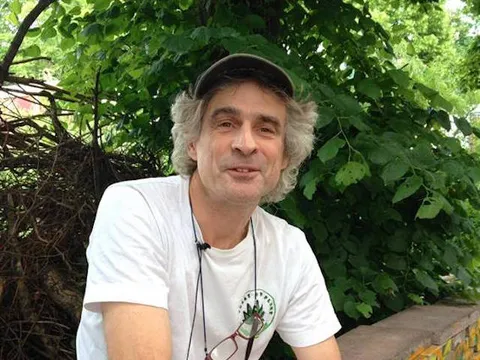
One plant became a movement. Dutch-born Antwerp activist Joep Oomen read the one-plant rule and asked whether someone else could tend the plant — the answer was Trekt Uw Plant, founded in 2006, Belgium's first cannabis social club, twice taken to court.[17] The courts never accepted the model: organisers pooling members' plants were convicted, the tolerance for personal possession unable to stretch to a shared growing room.[10][8] Antwerp activists founded Trekt Uw Plant in 2006. Belgium restored uniform low-priority handling in 2005.
Taking cannabis into or out of Belgium is a separate offence from possessing it, normally charged as smuggling or trafficking, with far heavier penalties. That holds almost everywhere, including between two places where cannabis is legal.
The rules that allow or tolerate small amounts inside Belgium do not cover the border, an airport or the post.
A prescription from another country is not recognised by itself. Within the Schengen area a patient can carry prescribed medicine for up to 30 days with a certificate issued by their home health authority; whether cannabis qualifies depends on both countries.[18]
General guidance that applies to almost every country, not a check of Belgium's customs rules.
Culture the atlas →
Did you know? all cases →
People · Belgium
Belgium tolerated one cannabis plant per adult. Joep Oomen reasoned that someone else could look after it — and founded a club where each member’s single plant grows in a shared room, with a name tag.
Read the entry →
Datasets not part of the score
What other organisations publish about Belgium, and where it stands among the countries each one covers. Each dataset has a page of its own, with a world map and every country's figure.
Use
UNODC · 2018
Cannabis use
7%of people aged 15–64
5% · 20045.1% · 20084.6% · 20137% · 201820042018 ages 15–64 · survey 2018 · 530,000 people · UNODC 2026
Source Survey ages and years vary, and some surveys include children. Rates are not age-standardised; do not compare countries directly.UNODC · 2024
Cannabis use at 15 and 16
8.1%in the past year
15% · 201113.6% · 20128.1% · 202420112024 Higher than 45% of 49 countriesLowestHighest10.7% ever · 2024 · ages 15–16
EUDA · 2013
Cannabis in wastewater
86.10mg of THC-COOH a day per 1,000 people
0.00 · 201176.00 · 201286.10 · 201320112013 Higher than 61% of 33 countriesLowestHighestcities measured: 6 · 1,531,089 people served
WHO, Our World in Data · 2020
Alcohol drunk per person
9.43litres of pure alcohol a year
11.42 · 200011.42 · 200111.39 · 200211.41 · 200311.30 · 200411.25 · 200511.15 · 200611.30 · 200711.32 · 200811.46 · 200911.33 · 201011.32 · 201111.33 · 201211.47 · 201311.56 · 201411.24 · 201510.79 · 201610.38 · 201710.28 · 201810.28 · 20199.43 · 202020002020 Higher than 81% of 187 countriesLowestHighestper person aged 15 or over · 2020 · 11.42 in 2000 · 11.33 in 2010
EUDA · 2024
People entering treatment for cannabis
27.3%of people entering drug treatment came for cannabis
Higher than 55% of 29 countriesLowestHighest3,260 of 11,928 people · 2024
Law
EUDA · 2024
Offences for cannabis use or possession
287per 100,000 people
141 · 2007145 · 2008155 · 2009144 · 2010169 · 2011171 · 2012201 · 2013250 · 2014236 · 2015227 · 2016251 · 2017252 · 2018265 · 2019264 · 2020242 · 2021248 · 2022250 · 2023287 · 202420072024 Higher than 91% of 23 countriesFewerMore34,294 offences in 2024 · cannabis only · use or possession, not dealing · 17,137 in 2010 · 31,540 in 2020
UNODC · 2023
Police contact for drug use or possession
343per 100,000 people
335 · 2020310 · 2021333 · 2022343 · 202320202023 Higher than 93% of 101 countriesFewerMore40,998 people in 2023 · all drugs together
UNODC · 2024
Cannabis seized
10,694kg in 2024
7,810 · 20151,408 · 20161,892 · 201717,398 · 20181,328 · 201915,060 · 202014,090 · 20215,823 · 20225,365 · 202310,694 · 202420152024 Higher than 68% of 163 countriesLess seizedMore seized9,983 kg of herb · 711 kg of resin · 7,810 kg in 2015 · 15,060 kg in 2020
Society
OpenAlex · 2025
Research on cannabis
5.4papers per million people
0.1 · 19530.1 · 19580.1 · 19630.1 · 19690.1 · 19760.1 · 19900.1 · 19910.4 · 19920.2 · 19930.4 · 19940.2 · 19970.1 · 19980.6 · 19990.8 · 20001.3 · 20011.5 · 20021.4 · 20031.6 · 20042.4 · 20051.8 · 20063.5 · 20073.2 · 20082.7 · 20095.3 · 20103.3 · 20113.5 · 20124.5 · 20134.8 · 20143.2 · 20152.8 · 20163.2 · 20174.9 · 20185.2 · 20194.8 · 20204.8 · 20215.5 · 20224.1 · 20234.0 · 20245.4 · 202519532025 Higher than 85% of 176 countriesLowestHighest64 papers in 2025 · 1 in 1990 · 63 in 2010
Cato and Fraser Institutes · 2023
Human Freedom Index
8.53of 10
8.78 · 20008.71 · 20018.71 · 20028.71 · 20038.69 · 20048.67 · 20058.58 · 20068.59 · 20078.56 · 20088.56 · 20098.49 · 20108.58 · 20118.51 · 20128.56 · 20138.55 · 20148.59 · 20158.46 · 20168.55 · 20178.55 · 20188.57 · 20198.31 · 20208.35 · 20218.49 · 20228.53 · 202320002023 Higher than 86% of 164 countriesLess freeFreerrank #23 of 165 · personal freedom 9.21 · economic freedom 7.58
V-Dem, Our World in Data · 2025
Civil liberties
0.95of 1 in 2025
0.85 · 19000.85 · 19010.85 · 19020.85 · 19030.85 · 19040.85 · 19050.85 · 19060.85 · 19070.84 · 19080.84 · 19090.84 · 19100.84 · 19110.84 · 19120.83 · 19130.52 · 19140.52 · 19150.52 · 19160.52 · 19170.60 · 19180.82 · 19190.85 · 19200.85 · 19210.85 · 19220.85 · 19230.85 · 19240.85 · 19250.85 · 19260.85 · 19270.85 · 19280.85 · 19290.85 · 19300.85 · 19310.85 · 19320.86 · 19330.86 · 19340.86 · 19350.86 · 19360.86 · 19370.86 · 19380.86 · 19390.53 · 19400.41 · 19410.40 · 19420.40 · 19430.40 · 19440.87 · 19450.93 · 19460.93 · 19470.93 · 19480.93 · 19490.92 · 19500.93 · 19510.93 · 19520.93 · 19530.93 · 19540.93 · 19550.93 · 19560.93 · 19570.93 · 19580.94 · 19590.94 · 19600.93 · 19610.94 · 19620.95 · 19630.95 · 19640.95 · 19650.95 · 19660.95 · 19670.95 · 19680.95 · 19690.95 · 19700.95 · 19710.95 · 19720.95 · 19730.95 · 19740.95 · 19750.95 · 19760.95 · 19770.95 · 19780.95 · 19790.96 · 19800.95 · 19810.95 · 19820.95 · 19830.95 · 19840.95 · 19850.95 · 19860.95 · 19870.95 · 19880.96 · 19890.96 · 19900.95 · 19910.96 · 19920.96 · 19930.96 · 19940.96 · 19950.96 · 19960.96 · 19970.96 · 19980.96 · 19990.96 · 20000.96 · 20010.96 · 20020.96 · 20030.96 · 20040.96 · 20050.96 · 20060.96 · 20070.96 · 20080.96 · 20090.96 · 20100.96 · 20110.96 · 20120.97 · 20130.97 · 20140.96 · 20150.96 · 20160.96 · 20170.96 · 20180.96 · 20190.95 · 20200.95 · 20210.96 · 20220.96 · 20230.95 · 20240.95 · 202519002025 Higher than 97% of 175 countriesFewer libertiesMore liberties0.85 in 1925 · 0.93 in 1961 · 0.96 in 1990
Our World in Data, World Bank · 2025
Population
11,941,781people in 2025
6,705,987 · 19007,427,418 · 19107,551,028 · 19208,029,570 · 19308,315,772 · 19408,617,442 · 19509,102,172 · 19609,630,508 · 19709,833,093 · 19809,960,968 · 199010,251,719 · 200010,936,619 · 201011,540,102 · 202011,941,781 · 202519002025 Higher than 58% of 196 countriesLowestHighest6,705,987 in 1900 · 8,617,442 in 1950 · 10,251,719 in 2000
CEPII
Former colonial rulers
Once ruled by
World Bank · 2025
Government effectiveness
79of 100
88 · 199687 · 199890 · 200092 · 200288 · 200387 · 200488 · 200583 · 200683 · 200785 · 200887 · 200986 · 201088 · 201188 · 201289 · 201386 · 201485 · 201582 · 201679 · 201780 · 201878 · 201977 · 202079 · 202181 · 202279 · 202379 · 202479 · 202519962025 Higher than 89% of 195 countriesLowestHighestestimate 1.32 on a scale of −2.5 to 2.5 · 2025 · 90 in 2000 · 85 in 2015
Eurostat · 2026
Minimum wage
€2,112a month
1,074 · 19991,096 · 20001,118 · 20011,140 · 20021,163 · 20031,186 · 20041,210 · 20051,234 · 20061,259 · 20071,310 · 20081,388 · 20091,388 · 20101,415 · 20111,444 · 20121,502 · 20131,502 · 20141,502 · 20151,502 · 20161,532 · 20171,563 · 20181,594 · 20191,594 · 20201,626 · 20211,658 · 20221,955 · 20231,994 · 20242,070 · 20252,112 · 202619992026 Higher than 84% of 31 countriesLowestHighestgross, full time · January 2026 · €1,210 in 2005 · €1,502 in 2015
Transparency International · 2024
Corruption Perceptions Index
69of 100
75 · 201275 · 201376 · 201477 · 201577 · 201675 · 201775 · 201875 · 201976 · 202073 · 202173 · 202273 · 202369 · 202420122024 Higher than 88% of 178 countriesLowestHighest0 highly corrupt, 100 very clean · 2024 · 77 in 2015 · 76 in 2020
Pew Research Center · 2020
Most common religion
Christians
the largest group · 2020
World Bank · 2025
Income per person
$63,488per person
41,640 · 199042,246 · 199142,719 · 199242,143 · 199343,369 · 199444,311 · 199544,809 · 199646,396 · 199747,205 · 199848,766 · 199950,456 · 200050,835 · 200151,472 · 200251,789 · 200353,407 · 200454,347 · 200555,368 · 200656,983 · 200756,788 · 200855,259 · 200956,240 · 201056,585 · 201156,357 · 201256,263 · 201357,003 · 201457,509 · 201557,901 · 201658,529 · 201759,358 · 201860,480 · 201957,334 · 202060,669 · 202162,603 · 202263,042 · 202363,311 · 202463,488 · 202519902025 Higher than 90% of 187 countriesLowestHighestat purchasing power parity, 2021 dollars · 2025 · $41,640 in 1990 · $56,240 in 2010
World Bank · 2024
Development indicators
95.8%use the internet
0% · 19900% · 19910.1% · 19920.2% · 19930.7% · 19941% · 19953% · 19964.9% · 19977.9% · 199813.8% · 199929.4% · 200031.3% · 200146.3% · 200250% · 200353.9% · 200455.8% · 200562% · 200666.8% · 200768.9% · 200874.5% · 200977.6% · 201081.6% · 201180.7% · 201282.2% · 201385% · 201485.1% · 201586.5% · 201687.7% · 201788.6% · 201890.3% · 201991.5% · 202092.8% · 202194% · 202294.6% · 202395.8% · 202419902024 Higher than 89% of 195 countriesLowestHighest87.6% live in towns · 20.6% aged 65+ · life expectancy 82.3 · 2024 · 29.4% in 2000 · 77.6% in 2010
GDELT · 2025
Cannabis in the news
0.0008%of global news: cannabis articles from here
0.0018% · 20170.0015% · 20180.001% · 20190.0007% · 20200.0007% · 20210.0009% · 20220.0012% · 20230.0009% · 20240.0008% · 202520172025 Higher than 74% of 147 countriesLowestHighest2025 average, 348 days · 0.0015% in 2018 · 0.0007% in 2021
Plant and market
EUDA · 2024
Street price of cannabis (Europe)
€9.00a gram of herb
5.00 · 20034.57 · 20045.72 · 20055.84 · 20066.13 · 20078.09 · 20087.62 · 20097.88 · 20108.01 · 20119.21 · 20129.29 · 20139.19 · 20149.78 · 20159.50 · 20169.60 · 20179.37 · 20189.00 · 20198.70 · 20209.10 · 20219.20 · 20229.60 · 20239.00 · 202420032024 Higher than 39% of 28 countriesLowestHighest€10.00 a gram of resin · 2024 · €7.88 in 2010 · €9.78 in 2015
EUDA · 2024
THC in cannabis sold (Europe)
14%THC in herb
6% · 200213.8% · 200313.29% · 200410.3% · 20056.7% · 20069.2% · 20079.1% · 20089.9% · 200911.1% · 201010.7% · 201113.17% · 201210.41% · 201313% · 201421.7% · 201512.11% · 201611.84% · 201713.69% · 20187.88% · 201910.9% · 202012% · 202115% · 202213% · 202314% · 202420022024 Higher than 67% of 27 countriesLowestHighest19% in resin · 2024 · 11.1% in 2010 · 21.7% in 2015
OpenStreetMap · 2026
Cannabis shops on the map
25shops mapped
Higher than 71% of 59 countriesFewer shopsMore shops2.1 per million people · 2026
GBIF · 2026
Records of the cannabis plant
1,049dated records
1 · 18532 · 18554 · 18565 · 18648 · 18659 · 186911 · 187212 · 187514 · 188317 · 188518 · 188619 · 188720 · 188821 · 188922 · 189224 · 189326 · 189427 · 189528 · 189631 · 190432 · 190734 · 191835 · 191937 · 192038 · 192139 · 192842 · 192943 · 193545 · 193846 · 193949 · 194050 · 194252 · 194656 · 194961 · 195063 · 195167 · 195268 · 195370 · 195471 · 195573 · 195674 · 195876 · 195980 · 196081 · 196283 · 196484 · 196686 · 196888 · 196990 · 197092 · 1971100 · 1972101 · 1973102 · 1975103 · 1976106 · 1977108 · 1979113 · 1981119 · 1982126 · 1983130 · 1984132 · 1986134 · 1987135 · 1988137 · 1989141 · 1990142 · 1991146 · 1992148 · 1993157 · 1994162 · 1995170 · 1996176 · 1997178 · 1998184 · 1999188 · 2000195 · 2001200 · 2002206 · 2003218 · 2004234 · 2005240 · 2006248 · 2007259 · 2008276 · 2009291 · 2010320 · 2011333 · 2012352 · 2013378 · 2014395 · 2015408 · 2016430 · 2017455 · 2018488 · 2019525 · 2020580 · 2021651 · 2022762 · 2023841 · 2024954 · 20251,049 · 202618532026 Higher than 95% of 128 countriesLowestHighest14 more without a date · 95 in 2026 · 80 by 1960 · 188 by 2000
FAO · 2024
Hemp grown
500ha in 2024
140 · 2018100 · 2019110 · 202090 · 2021110 · 2022270 · 2023500 · 202420182024 Higher than 56% of 39 countriesLowestHighestClinicalTrials.gov · 2026
Clinical trials of cannabis medicines
6studies so far
1 · 20102 · 20112 · 20122 · 20134 · 20144 · 20155 · 20165 · 20175 · 20185 · 20195 · 20205 · 20215 · 20225 · 20235 · 20245 · 20256 · 202620102026 Higher than 52% of 50 countriesLowestHighest1 actual starts in 2026 · as of 2026–10–26 · 1 by 2010 · 5 by 2020
Enforcement 1 report · the Cannabis Enforcement Tracker →
How the law above is applied: raids, seizures, fields destroyed, arrests and sentences, as recorded by the Cannabis Enforcement Tracker, our companion site.
- Arrest21 arrested as airport baggage-hall drug ring is dismantled
Belgian, French and Dutch police arrested 21 suspects in a Eurojust-coordinated action after an 18-month probe that began with 30 kg of cocaine abandoned at Brussels Airport.
History 20 of 20 checked against a source
Score and entries per decade
25 today, from 100 before its first recorded change
This country's score Entries that moved the score Context only
20262 entries0 score changes
Other law ✓ Article
Belgium replaces cannabis fines and drug sentence levels
The new sentencing framework sets a first personal-cannabis fine at €200 before the 1.25 multiplier, with higher ceilings for repeat cases. Specified public-place personal offences fall under level 2, while ordinary drug supply falls under level 3 and organised cases attract higher levels. The adult three-gram or one-plant low-prosecution-priority policy remains in the Justice Ministry’s guidance.
Other law ✓
Belgium brings drug-driving sentences into its new penalty framework
The revised road-traffic law places the ordinary positive drug-analysis offence at level 1, with a statutory fine of €1,600–16,000 before applicable additional decimes. A court may also impose a driving ban, with the ordinary discretionary range beginning at eight days. The THC screen, evidentiary saliva and plasma thresholds remain separate tests.
20241 entry0 score changes
20191 entry0 score changes
20171 entry0 score changes
20151 entry1 score change
20101 entry0 score changes
20061 entry0 score changes
20051 entry0 score changes
20041 entry0 score changes
20031 entry1 score change
19981 entry1 score change
19951 entry0 score changes
19841 entry0 score changes
19751 entry0 score changes
19691 entry0 score changes
19641 entry0 score changes
19461 entry0 score changes
19301 entry0 score changes
19211 entry1 score change
Sources hover a number in the text to see its source
- Cited
- 18
- Websites
- 15
- Last reviewed
- History checked
- 20/20
Most cited
- ejustice.just.fgov.be3
- euda.europa.eu2
- afmps-fagg.be1
- cannabisfreedom.fyi1
- cms.law1
- codedelaroute.be1
All 20 sources
- De Druglijn / VAD — Cannabis and its names in Belgian Dutcharchived
- Belgian Federal Justice — Cannabis: possession, prosecution discretion and sanctionsarchived
- Belgium — Drug-law amendment of 16 March 2026, in force 1 SeptemberArticles 4–5 and 32; levels 1–6 and personal-cannabis finesarchived
- Arrêté royal du 6 septembre 2017 réglementant les substances stupéfiantes et psychotropes, consolidated (Justel)archived
- Belgium — Criminal Code 2024, in force 1 September 2026Articles 2 and 36; temporal application, penalty ranges and mitigationarchived
- CMS Expert Guide — Cannabis law and legislation in Belgiumarchived
- Drug Policy Facts — Belgium: legal definition of personal use and allowable amountsarchived
- Wikipedia — Cannabis in Belgiumarchived
- Belgian medicines regulator — Medicines and other cannabis or cannabidiol productsSativex available, Epidyolex authorised but not marketed; pharmaceutical CBD compoundsarchived
- Leafly — Why Belgians urge you to pull your plant (updated 28 July 2020)archived
- Flemish Agriculture and Fisheries Agency — Hemp cultivation 2026Registration before sowing, EU varieties, 0.3% THC, outdoor agricultural cultivation; medical cultivation prohibitedarchived
- University of Liège — analysis of 213 CBD samples sold in Belgian shops (total THC above 0.2% is a narcotic)
- Belgian Federal Agency for Medicines and Health Products — activity authorisations, updated 17 September 2026Principes de base; Article 6 activity authorisations; pharmaceutical manufacturing and GMP prerequisitesarchived
- EUDA — Statistical Bulletin 2026, seizures of drugs: cannabis (quantity and number of seizures)archived
- Road Traffic Act of 16 March 1968 — articles 37bis, 61bis, 62ter and 63archived
- EUDA — Statistical Bulletin 2026, drug law offences: cannabis (totals and use-related)archived
- Cannabis Freedom Index — Joep Oomen (atlas)archived
- International Narcotics Control Board — Travellers carrying medicines containing controlled substances